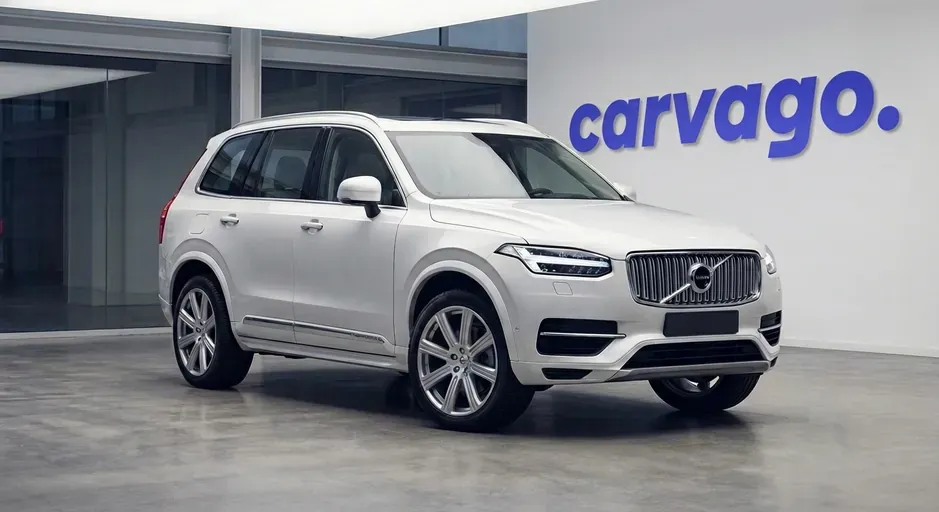
Review Volvo XC90: What do owners and experts really say?
Volvo XC90 review: real owner experience, common faults, engine picks and used prices — everything you need to know before you buy.
October 20, 2026
Verdict at a Glance
Who it suits: Families and long-distance drivers who need genuine seven-seat versatility and relaxed cruising comfort.
Recommended engine: The extended-range T8 plug-in hybrid for regular charging, or the all-wheel-drive diesel for motorway trips.
What to avoid: Early 2015–2018 models with recurring touchscreen glitches, or any car without documented recall repairs checked by VIN.
Introduction
The Volvo XC90 represents the Swedish brand’s flagship entry in the premium large SUV segment. Built on the Scalable Product Architecture (SPA), this second generation entered series production in January 2015, with initial European series customer deliveries commencing in May 2015 following limited initial handovers in April 2015.
Offered exclusively as a five-door Volvo XC90 SUV, the model received two significant revisions during its production run. A first facelift, revealed on 22 February 2019 with customer deliveries beginning in June 2019, introduced 48-volt mild-hybrid powertrains and an optional six-seat layout alongside the standard seven-seat configuration. Following the permanent conclusion of diesel manufacturing in March 2024, a second major facelift was revealed on 4 September 2024, reaching European customers in December 2024 with reworked exterior styling and updated cabin technology to sell alongside the all-electric EX90 through 2026.
Targeted primarily at families, corporate fleets, and drivers requiring genuine multi-passenger capability, the XC90 prioritises cabin versatility and long-distance transport. With a long production run spanning multiple revisions across the European pre-owned market, choosing the right specification requires understanding how its technology and mechanical packages evolved over time.
Owner Experiences: Common Faults and Recalls
Owner reports and specialist workshop findings for the second-generation Volvo XC90 show a vehicle that is mechanically durable in its core structures, but sensitive to electrical glitches and variant-specific mechanical wear. The early production years (2015–2018) generated the highest volume of owner complaints, predominantly concerning central screen stability, auxiliary systems, and drivetrain components on complex electrified and forced-induction powertrains.
On the plug-in hybrid T8 Twin Engine and Recharge models, tests describe and owners report recurring issues with the Electric Rear Axle Drive (ERAD) unit, particularly on 2016 to 2021 builds. Wear in the internal rotor shaft bearings and retention hardware causes a high-pitched mechanical whine or rumbling vibration from the rear axle during electric driving and regenerative braking. If neglected, bearing failure can contaminate the reduction gearbox oil with metallic debris and prompt hybrid system warnings. Specialists often address this by rebuilding the unit with upgraded bearings, while preventative reduction gear oil renewals help preserve the assembly. For early diesel Volvo XC90 D5 variants (2016–2019), owners frequently report a split in the braided high-pressure PowerPulse hose. When this line ruptures, escaping air produces a noticeable hiss under acceleration accompanied by sluggish off-the-line response, which is rectified by fitting a reinforced replacement hose.
Chassis and electronic concerns center on the optional air suspension and central display interface. On vehicles equipped with air suspension, tests describe and owners report corner or rear-axle sagging after standing overnight, primarily affecting 2015 to 2020 models. In many cases, this stems from leaking rubber bellows at the lower rolling folds; if left unaddressed, the air compressor runs continuously to maintain ride height, eventually leading to compressor motor overheating and electrical failure. Across all model years, the portrait touchscreen can suffer from software freezes, laggy startup responses, or cycling reboots. Because cabin heating, ventilation, and audio chimes are managed through this interface, system crashes temporarily disable temperature adjustments until the unit restarts.
Verified Safety Recalls
The second-generation XC90 has been subject to several significant European recall campaigns. Owners should verify that all recall rectifications have been logged by an authorized workshop.
Announcement Date
Affected Production Window
Scope & Defect (Official Notice)
Remedy
July 2025
May 2019 – June 2025
Braking functionality disabled in B-mode: The vehicle's braking functionality can be disabled while using 'B' mode (in plug-in hybrid cars) or One Pedal Drive (in pure electric cars), after coasting downhill for at least 1 minute and 40 seconds without pressing the pedals. (Worldwide: 76,365 vehicles across affected models)
Remote over-the-air or dealer software update. Official interim guidance advised avoiding 'B' mode on extended downhill descents until updated.
March / April 2025
April 2019 – November 2021
High-voltage battery overheating: The High Voltage battery may have a manufacturing defect which could cause the battery cells to overheat when fully charged, posing a fire risk when parked. (Pan-European / Worldwide)
Retailers inspect the battery pack, replace defective cell modules as required, and update control software.
March / May 2025
August 2024 – January 2025
Headlight outage: A fault in the front lighting system can cause low beam and high beam headlights to fail for 2 to 3 seconds, increasing accident risks. (Worldwide: 7,244 vehicles)
Software update applied to the lighting control module via workshop visit.
July 2019 / April 2020
2015 – 2017
Diesel intake manifold melting: Excessive carbon deposits could build up in the engine intake system, raising intake air temperatures and causing the plastic manifold to melt or deform, risking engine stall or fire. (Worldwide: >500,000 diesel units)
Engine software update, manifold cleaning or replacement, and installation of a cooling bleeder line.
When shopping for a hybrid Volvo XC90 or conventional variant, checking vehicle history documentation against manufacturer recall actions and booking an independent pre-purchase inspection through CarAudit remains essential.
🔍 What to check before buying
Request an authorized retailer confirmation by VIN to ensure all safety campaigns—especially high-voltage battery cell inspections and diesel intake manifold modifications—are fully completed.
On plug-in hybrid models, drive in pure electric mode and listen for high-pitched whining, grinding, or clunking noises from the rear axle during acceleration and regenerative braking.
On cars fitted with optional air suspension, ensure the body sits perfectly level after standing overnight, test all height adjustment settings, and listen for an overactive or excessively noisy compressor.
On D5 diesel models, accelerate firmly from low speeds to verify smooth boost delivery; listen for hissing air leaks from a split PowerPulse hose.
Test the central touchscreen thoroughly from a cold start, ensuring rapid boot-up, seamless reversing camera display, and immediate climate control responsiveness without system crashing.
Engines: Which One to Choose
Every second-generation Volvo XC90 is powered by a transversely mounted four-cylinder engine paired with an eight-speed torque-converter automatic transmission. The powertrain line-up spans front-wheel-drive and all-wheel-drive diesels, turbo and twincharged petrol units, 48-volt mild hybrids, and plug-in hybrids.
Engine
Fuel
Power
Gearbox
Drivetrain
Model years
D4
Diesel
140 kW (190 hp)
8-speed automatic
Front-wheel drive
2015–2018
D5 AWD
Diesel
165 kW (225 hp)
8-speed automatic
All-wheel drive
2015–2016
D5 AWD
Diesel
173 kW (235 hp)
8-speed automatic
All-wheel drive
2016–2019
B5 AWD
Diesel (mild hybrid)
173 kW (235 hp)
8-speed automatic
All-wheel drive
2019–2024
T5 AWD
Petrol
187 kW (254 hp)
8-speed automatic
All-wheel drive
2015–2018
T5 AWD
Petrol
184 kW (250 hp)
8-speed automatic
All-wheel drive
2018–2019
B5 AWD
Petrol (mild hybrid)
184 kW (250 hp)
8-speed automatic
All-wheel drive
2019–present
T6 AWD
Petrol
235 kW (320 hp)
8-speed automatic
All-wheel drive
2015–2018
T6 AWD
Petrol
228 kW (310 hp)
8-speed automatic
All-wheel drive
2018–2020
B6 AWD
Petrol (mild hybrid)
220 kW (300 hp)
8-speed automatic
All-wheel drive
2019–2022
T8 Twin Engine AWD
Plug-in hybrid petrol
300 kW (407 hp)
8-speed automatic
All-wheel drive
2015–2018
T8 Recharge AWD
Plug-in hybrid petrol
288 kW (390 hp)
8-speed automatic
All-wheel drive
2019–2021
T8 Recharge AWD
Plug-in hybrid petrol
335 kW (455 hp)
8-speed automatic
All-wheel drive
2021–present
Which engine to choose
For urban commuting and frequent short trips, the hybrid Volvo XC90 variants suit daily routines best, provided you can charge at home or work. The revised extended-range T8 plug-in hybrid introduced in late 2021 replaced the earlier mechanical supercharger with a more capable rear electric motor, delivering smooth electric drive around town without activating the petrol engine. Early T8 models offer modest pure-electric range, making the current extended-range version far more practical for emission-free commuting.
For mixed everyday driving without home charging, the mild-hybrid B5 petrol is the most straightforward option. Its integrated starter-generator smooths stop-and-go driving compared to older petrol units, though the transmission downshifts frequently on highway gradients due to vehicle weight. The older T6 and B6 petrol models deliver rapid straight-line pace, but their twincharged configuration runs thirstier under load.
For frequent long motorway journeys, a used diesel Volvo XC90 remains the rational choice. The D5 and mild-hybrid B5 diesel provide steady pulling power and longer cruising range between refuelling stops. The front-wheel-drive D4 is adequate for unladen cruising, but feels strained when fully occupied.
For towing horseboxes, boats, or heavy trailers, the all-wheel-drive diesels and the extended-range T8 are the most capable configurations. The diesel units provide low-rpm torque for controlled starts, while the later T8 combines combustion and electric traction to pull heavy loads confidently.
For detailed failure patterns, recurring component defects, and recall histories across these powertrains, refer to the owner experiences section.
Space & Practicality
Measurement
Standard (Mild-Hybrid / ICE)
Plug-in Hybrid (T8)
Length (mm)
4,950–4,953
4,950–4,953
Width without mirrors (mm)
1,923–1,958
1,923–1,958
Height (mm)
1,767–1,776
1,767–1,771
Wheelbase (mm)
2,984
2,984
Boot capacity – 7 seats erect (l)
302
262
Boot capacity – 5 seats erect / folded (l)
708 / 1,856–2,005
668 / 1,816–1,959
The second-generation Volvo XC90 SUV provides a family-focused interior configured primarily with seven individual seats across three rows. The middle tier features three separate seats that slide fore and aft independently and recline, allowing passengers to share knee room with the rearmost seats or maximise luggage space. An integrated child booster cushion in the centre seat further enhances daily practicality for families. The two rearmost seats fold flat into the cargo floor; while best suited to children or teenagers over longer distances, they can accommodate adults comfortably when middle-row occupants slide slightly forward. Folding both rear rows creates a flat, level loading floor with unobstructed access between the wheel arches. In plug-in hybrid variants, battery placement along the central tunnel and rear axle hardware slightly reduces underfloor storage, though primary cabin seating and main load area usability remain largely unaltered.
What the Tests Say
Road tests consistently describe the Volvo XC90 as a stable, long-legged cruiser rather than an agile corner-carver. On flowing motorways, the suspension delivers calm, floating compliance, particularly when fitted with optional air suspension. However, low-speed urban roads tell a different story: over sharp transverse ridges, sunken manholes, and broken tarmac, large alloy wheels send noticeable tremors into the passenger compartment. Through corners, body roll remains well checked and traction is reassuringly secure, yet the artificially weighted steering offers minimal road feel, and the chassis never fully disguises its considerable mass during rapid changes of direction.
The cabin earns widespread praise for assembly quality, matte wood veneers, and tactile finishes. Front seats stand out across professional evaluations as an ergonomic benchmark for back support and fatigue-free long-distance posture. The control layout proves more divisive. Testers frequently criticise the reliance on the central touchscreen for basic climate settings, which requires distracting sub-menu navigation while driving.
Facelift Improvements and Refinement
Later updates introduced thicker acoustic glass and extra sound insulation, noticeably calming wind and road roar at cruising speeds. While plug-in hybrids glide silently on electric power, testers agree that both four-cylinder petrol and diesel units sound strained and coarse under full throttle compared to rival six-cylinder engines. The enlarged, freestanding central screen fitted to later models resolves earlier interface lag, though the persistent absence of physical ventilation dials remains an annoyance.
Prices and Market Offer
All charts in this section are drawn from listings of the entire Volvo XC90 model family across all represented generations, rather than the reviewed generation alone, so this data does not establish a separate price level for the reviewed generation. Across the advertised model years, the median asking price stands at €39,900 for 2019 vehicles. For 2022 vehicles, the median asking price is €52,400, while listings for 2025 and 2026 reach €73,900 and €81,600 respectively.
The number of active Volvo XC90 listings on the market rose from 5,938 in April 2026 to 6,967 by September 2026, as shown in the monthly figures below.
Volvo XC90 - availability over time
Active listings over time
Month
Volvo XC90
2026-04
5 938
2026-05
6 264
2026-06
6 516
2026-07
6 736
2026-08
6 625
2026-09
6 967
Source Carvago
Aside from a brief dip to 6,625 listings in August, advertised stock trended upward over the period, giving buyers an extensive and expanding selection of vehicles to consider.
The median asking price of cars advertised today, built in 2019, is €39,900, compared to €81,600 for those built in 2026.
Volvo XC90 - median price by model year
Median advertised price by year of manufacture
Model year
Volvo XC90
2019
39 900
2020
43 900
2021
46 700
2022
52 400
2023
59 600
2024
65 800
2025
73 900
2026
81 600
Source Carvago
Buyers exploring older options will find that the median asking price of cars advertised today, built in 2021, is €46,700, while the median asking price of cars advertised today, built in 2024, reaches €65,800.
This depreciation curve traces how the Volvo XC90 loses value as it ages, shedding roughly 20% of its initial residual value in the first year and about 32% by age three. The chart below illustrates how that decline unfolds over time.
Volvo XC90 - value loss by age
Residual value by vehicle age
Vehicle age
Volvo XC90
New
80 500
1 yr
64 600
2 yrs
58 600
3 yrs
54 500
4 yrs
48 200
5 yrs
43 100
6 yrs
39 400
7 yrs
34 400
Source Carvago
Across the seven years shown, the model sheds approximately 57% of its initial residual value, retaining about 43%. Depreciation is steepest in the first year, after which the pace of value loss moderates significantly.
Between April and September 2026, advertised Volvo XC90 listings were split across hybrid, diesel, and petrol options, with hybrid listings increasing from 3,823 to 4,641 over the period. The chart below shows how the monthly volume of advertised cars tracked across each fuel type.
Volvo XC90 - supply by fuel over time
Supply composition by fuel type
Petrol
Diesel
Hybrid
Month
Petrol
Diesel
Hybrid
2026-04
684
1 427
3 823
2026-05
706
1 525
4 026
2026-06
772
1 518
4 219
2026-07
789
1 535
4 406
2026-08
789
1 447
4 383
2026-09
833
1 486
4 641
Source Carvago
In September 2026, hybrids heavily dominated available stock at 4,641 listings, compared to 1,486 diesel models and 833 petrol models. Buyers will find the broadest selection among hybrid versions, while diesel and petrol offer smaller but distinct pools of vehicles.
The chart below shows the average asking price for the Volvo XC90 from April 2026 to September 2026, starting at €55,800 in April and rising to €56,600 by June.
Volvo XC90 - price trend over time
Average price development over time
Month
Volvo XC90
2026-04
55 800
2026-05
56 100
2026-06
56 600
2026-07
56 800
2026-08
57 100
2026-09
56 900
Source Carvago
Values reached €57,100 in August 2026 before edging down to €56,900 in September, representing an overall change of about two percent from the initial €55,800. Across the months shown, these month-to-month movements remained very small relative to the price of the vehicle.
Versatile seven-seat cabin with individually sliding middle-row seats and a flat loading floor
Ergonomic front seats offering supportive posture and comfort on long journeys
Calm and stable motorway cruising manners with improved acoustic insulation on later versions
Cons
Four-cylinder petrol and diesel engines sound coarse under hard acceleration compared to six-cylinder rivals
Firm low-speed ride over sharp road imperfections and broken tarmac on large alloy wheels
Essential climate adjustments depend on the central touchscreen without physical dials
Frequently asked questions
Is a used XC90 reliable?
Core mechanical components of the Volvo XC90 are durable, though early production years show more frequent electrical and infotainment glitches. Complex hybrid components and optional air suspension also require documented maintenance to avoid costly repairs.
Which engine is best for motorway cruising?
A diesel Volvo XC90 such as the D5 or mild-hybrid B5 is the most practical choice, providing sustained pulling power and longer cruising range between refuelling stops. However, urban commuters with home charging benefit far more from the extended-range hybrid Volvo XC90 T8 introduced in late 2021.
What should you check before buying?
Confirm through an authorized retailer by VIN that all recall campaigns have been completed, particularly on early diesels and hybrids. A thorough inspection should also verify touchscreen operation and ensure electrified rear axles or optional air springs operate without fault.
What does a used model cost on the market?
Median asking prices across advertised listings start around €39,900 for 2019 vehicles. Pre-owned stock is heavily dominated by hybrid configurations, giving buyers the broadest selection on the used market.