Car battle
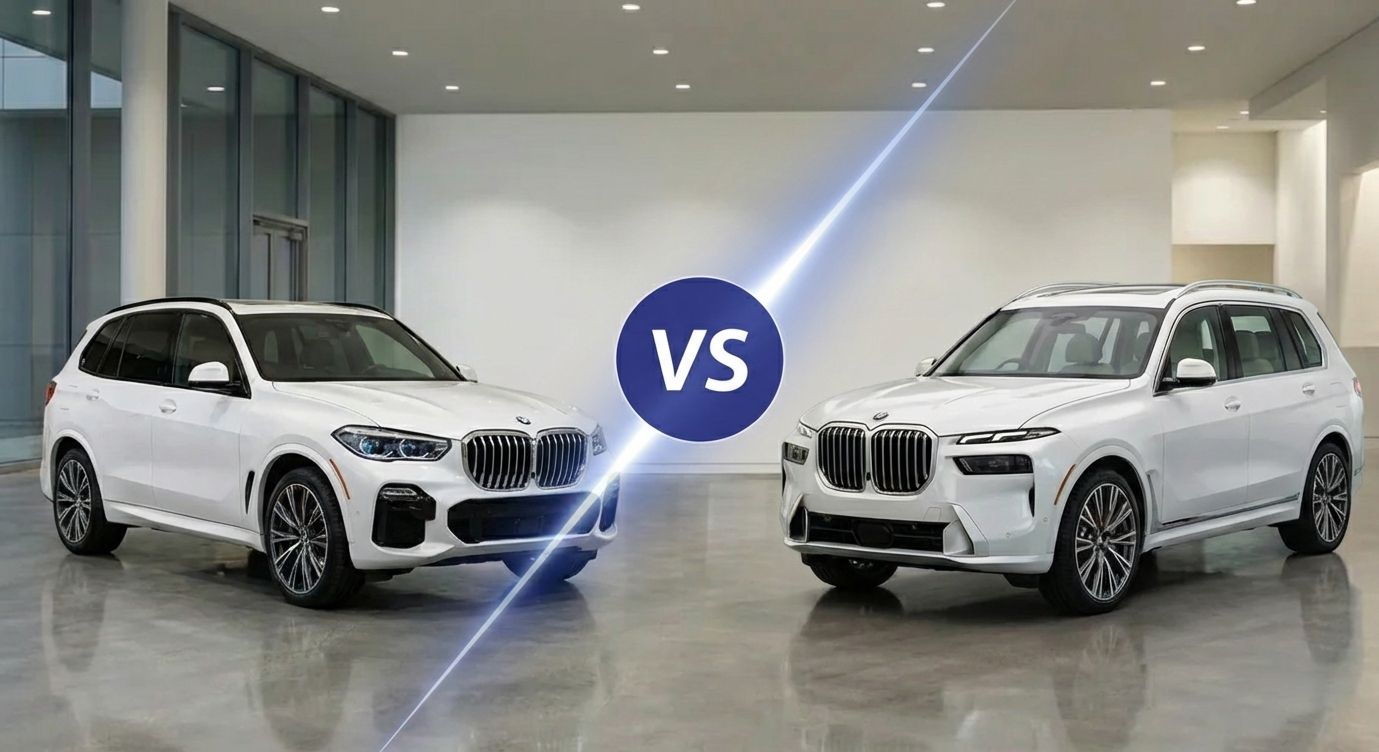
BMW X5 vs. BMW X7: Complete comparison 2026
Detailed comparison of the BMW X5 vs. BMW X7. Discover the main differences in space, equipment, and real-world driving characteristics. Read our verdict and make the right choice!
Oct 16, 2026
Articles
Car battle
Aston Martin DBX vs. Rolls-Royce Cullinan: A detailed comparison of performance, luxury, and features. Read our verdict and find out which premium SUV to choose.
April 18, 2026
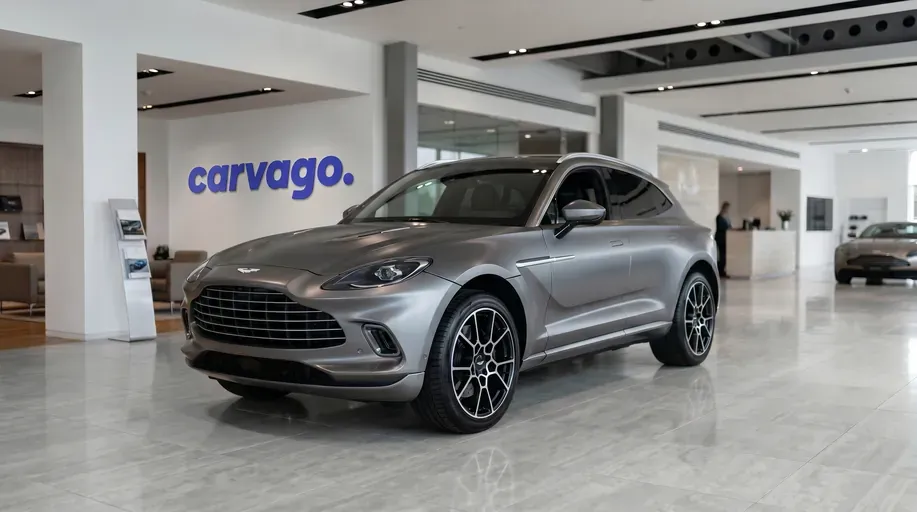
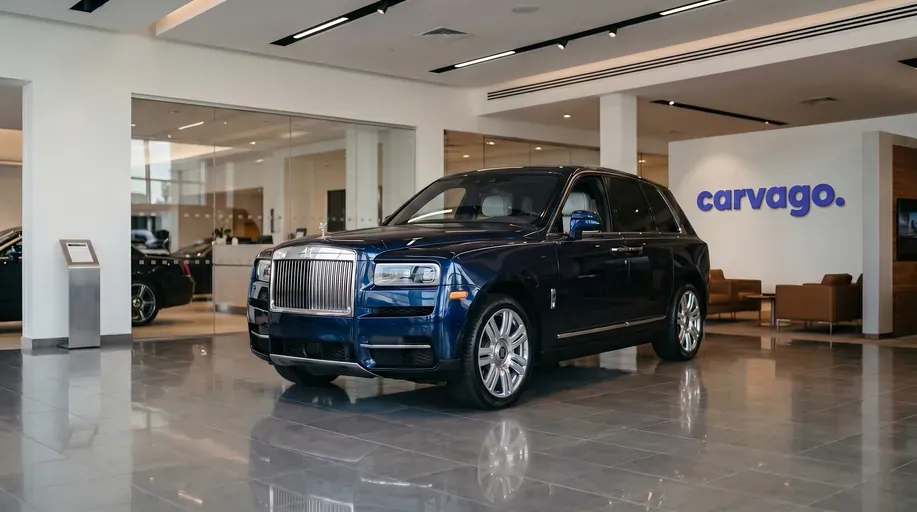
Aston Martin DBX represents the legendary British brand's first historical entry into the luxury SUV segment, where it successfully combines stunning sports dynamics with unmistakable elegance. In contrast, the Rolls-Royce Cullinan defines the absolute pinnacle of automotive opulence and majesty, offering its occupants an unparalleled level of comfort even on the most demanding journeys. Let's take a detailed look at how these two British aristocrats stand in direct comparison and which of them represents the better choice for your specific premium vehicle requirements.
When comparing the exterior dimensions of both luxury SUVs on the used car market, focusing on models roughly four years old (the first generation of both vehicles), it is immediately apparent that the Rolls-Royce Cullinan plays in a significantly more massive league. With a total length of 5341 mm, the Cullinan is a significant 302 mm longer than the sporty-styled Aston Martin DBX, which measures 5039 mm. This difference is also directly reflected in the wheelbase, where the Rolls-Royce offers a generous 3295 mm compared to 3060 mm for the Aston Martin. In terms of practical use, this means the Cullinan provides rear-seat passengers with much more legroom, which fully aligns with its focus on maximum comfort and frequent use with a personal chauffeur. On the other hand, the Cullinan's massive wheelbase and length require more caution when parking in the city and underground garages.
Another key difference is the overall height of both vehicles. While the Aston Martin DBX, with a height of 1680 mm, maintains a more athletic, aerodynamic silhouette typical of dynamically oriented SUVs, the Rolls-Royce Cullinan towers majestically at a height of 1835 mm. The 155 mm height difference provides the Cullinan's occupants with noticeably easier entry and an excellent "commanding" view of the surrounding traffic. However, the DBX benefits from its overall lower body structure through a lower center of gravity, which gives it significantly more confident and sportier handling in corners. The width of both vehicles (excluding mirrors) is surprisingly similar; the Aston Martin measures 1998 mm and the Cullinan roughly 2000 mm, although early specifications for the Cullinan stated a total width of up to 2164 mm depending on the measurement methodology.
The choice between these two models from a dimensional perspective clearly defines their different characters. If you are looking for an unmistakable road presence and uncompromising interior space, even at the cost of more cumbersome maneuverability in tight spaces, the British aristocrat Rolls-Royce Cullinan is the clear winner. Conversely, the Aston Martin DBX, with its slightly more compact and lower proportions, represents the ideal choice for drivers who require a practical and luxury SUV but do not want to give up a direct driving experience and everyday agility.
| Parameter | Aston Martin DBX SUV | Rolls-Royce Cullinan SUV |
|---|---|---|
| Length (mm) | 5039 | 5341 |
| Width (mm) | 1998 | 2000 - 2164 |
| Height (mm) | 1680 | 1835 |
| Wheelbase (mm) | 3060 | 3295 |
When choosing between four-year-old used cars in the ultra-luxury SUV segment, such as the Aston Martin DBX (1st generation) and Rolls-Royce Cullinan (1st generation), luggage compartment volume might seem like a purely technical detail. Yet, it is precisely practicality and everyday family usability that often decide which car becomes the favorite companion for weekend getaways. While both vehicles offer uncompromising premium craftsmanship and majestic dimensions, their approach to cargo transport exactly reflects their character – Aston Martin bets on sporty versatility, while Rolls-Royce offers a generous volume that can, however, be radically limited by the chosen interior equipment.
In its basic configuration, the Aston Martin DBX offers a very generous 632 liters of luggage space. This volume is perfectly sufficient for a weekend shopping trip or a longer vacation, while the excellent shaping of the trunk means you get space for several extra suitcases compared to more design-restricted competitors. Three sets of golf clubs fit in the back without any problems. On the other hand, the bulkier Rolls-Royce Cullinan has a slightly smaller basic space of 560 liters, which can be increased to 600 liters after removing the massive rear parcel shelf. Although the basic capacity is slightly lower, the Cullinan scores with an absolutely flat loading surface and unrivaled access thanks to the unique two-part tailgate called "The Clasp".
Fundamental differences in terms of flexibility occur when you need to transport bulkier cargo. The Aston Martin DBX features rear seats split in a practical 40:20:40 ratio, which when folded down provide a maximum volume of 1530 liters. The Rolls-Royce Cullinan, on the other hand, can transform into a true giant – if it is factory-equipped with the traditional three-seat rear bench (Lounge Seats), the backrests can be electronically folded to create a cargo space with an amazing volume of 1930 liters. However, there is one huge and important specific. A significant portion of Cullinans on the used car market are configured with so-called Individual Seats, i.e., two separate armchairs separated by a fixed center console with a cooling box and a glass partition. In this purely luxury variant, the rear seats cannot be folded at all, and the trunk capacity remains forever limited to the basic 560 liters.
As a result, this dimension fundamentally influences the final choice of vehicle. The Aston Martin DBX represents an agile and flexible choice for active families who require the certainty of a large trunk under all circumstances. The Rolls-Royce Cullinan, by contrast, is a car of absolute extremes – it can offer either the sovereignly largest volume in its class when folded, or in the configuration with separate armchairs, it voluntarily sacrifices practicality on the altar of perfect passenger comfort.
| Parameter | Aston Martin DBX SUV | Rolls-Royce Cullinan SUV |
|---|---|---|
| Basic volume (l) | 632 | 560 |
| Max. volume after folding seats (l) | 1530 | 1930 |
While the Aston Martin DBX guarantees a huge and practical trunk in every situation, the transport capacity of a used Rolls-Royce Cullinan drastically depends on whether the first owner chose folding seats or fixed luxury armchairs with a refrigerator.
Towing capacity for ultra-luxury SUVs is a key parameter for owners who expect not only maximum comfort and prestige from their vehicle, but also practicality for leisure activities and travel. Whether we look at the sporty Aston Martin DBX or the opulent Rolls-Royce Cullinan – in both cases, we are talking about the first generation, which forms an ideal and relevant offering in the market for approximately four-year-old used cars – in terms of towing power, these models offer completely identical and highly above-average values.
Interestingly, this generous standard and maximum towing capacity remains completely constant across all available engine options. For the Aston Martin DBX, this applies to both the base variant with 405 kW and the extremely powerful DBX707 (520 kW) and DBX S (535 kW) versions. It is exactly the same for the Rolls-Royce Cullinan, where you safely maintain the maximum value of 2700 kg with both the base twelve-cylinder (420 kW) and the uprated Black Badge version with 441 kW. Although some competing models in other classes often offer hybrid variants with significantly reduced towing capacity, in the case of these two uncompromising vehicles with purely internal combustion engines, you will not encounter such compromises at all.
In practice, these parameters mean that both cars can handle towing a luxury yacht, a heavy caravan, or a large horse trailer without the slightest problem. Alternatively, connecting even a smaller luggage trailer will provide the desired space for several extra suitcases, which is a reliable solution perfectly sufficient for weekend shopping or a longer holiday with the whole family.
In terms of towing ability and overall utility for towing, you won't go wrong with either of these models. They are completely equal in this regard, and the final choice of your dream SUV will thus depend purely on whether you prefer the sharper driving dynamics and sporting genes of the Aston Martin, or conversely, the unrivaled silence and absolute floating isolation on board the Rolls-Royce.
| Model and engine | Braked trailer (kg) | Unbraked trailer (kg) |
|---|---|---|
| Aston Martin DBX 4.0 V8 (405 kW) | 2700 | 750 |
| Aston Martin DBX707 (520 kW) | 2700 | 750 |
| Aston Martin DBX S (535 kW) | 2700 | 750 |
| Rolls-Royce Cullinan 6.8 V12 (420 kW) | 2700 | 750 |
| Rolls-Royce Cullinan 6.8 V12 Black Badge (441 kW) | 2700 | 750 |
When comparing the engine options of these two super-luxury SUVs, their differing philosophies are fully revealed. While the Aston Martin DBX bets on an aggressive and sporty character, the Rolls-Royce Cullinan relies on traditional British aristocracy in the form of a mammoth twelve-cylinder engine. For those interested in a used car roughly four years old, this means a choice between adrenaline and absolute serenity. Both models feature exclusively petrol engines, all-wheel drive, and automatic transmissions, but any form of electrification, such as mild-hybrid or plug-in hybrid systems, is completely absent. While the Aston Martin will delight drivers looking for uncompromising performance and the sharp soundscape of a sports car, the Rolls-Royce offers unrivaled velvety operation, where you are almost unaware of the massive engine's work inside the cabin.
Under the hood of the Aston Martin DBX, you will find exclusively a twin-turbocharged 4.0-liter V8 engine, which the British brand sources from its German partner, Mercedes-AMG. In the standard version, available in the first generation (2020–2025), this unit provides 405 kW of power and 700 Nm of torque, which is more than enough to reach 100 km/h in just 4.5 seconds. A classic nine-speed automatic transmission handles the power delivery to all four wheels.
For more demanding drivers and performance enthusiasts, the flagship DBX707 version has been available since 2022. It features an upgraded engine tuned to an impressive 520 kW (707 hp) with a massive 900 Nm of torque. To achieve acceleration from zero to one hundred in 3.3 seconds, it also uses a different nine-speed transmission, which in the DBX707 version utilizes a wet clutch for faster and sharper shifts. It should be noted that the newly announced DBX S version (available only from the end of 2025) is naturally not yet present on the four-year-old used car market.
| Engine Type | Fuel | Power (kW) | Torque (Nm) | Transmission |
|---|---|---|---|---|
| 4.0 V8 Twin-Turbo | Petrol | 405 | 700 | 9-speed auto |
| 4.0 V8 Twin-Turbo (DBX707) | Petrol | 520 | 900 | 9-speed auto |
The engine lineup for the Rolls-Royce Cullinan (first generation 2019–2024) is a celebration of traditional luxury, dominated by a majestic 6.75-liter twin-turbocharged V12 (often referred to as a 6.8 V12). In the standard version, which is most commonly found on the used market, the engine produces 420 kW and 850 Nm of torque. Its main task, however, is not to tear up the asphalt, but to provide a perfectly smooth, refined, and almost silent pull from any RPM. Power delivery is ensured by a velvety-shifting eight-speed automatic transmission from ZF.
For those who want a slightly more authoritative pull and a darker visual style, Rolls-Royce prepared the Black Badge variant. In this version, engineers slightly increased the V12's output to 441 kW (600 hp) and brought the torque up to a massive 900 Nm. Both of these engines strictly reject any modern downsizing trends and remain faithful to their enormous displacement. The new Series II generation only entered the market in May 2024, so it will not play a role for those interested in a four-year-old used car.
| Engine Type | Fuel | Power (kW) | Torque (Nm) | Transmission |
|---|---|---|---|---|
| 6.8 V12 Twin-Turbo | Petrol | 420 | 850 | 8-speed auto |
| 6.8 V12 Twin-Turbo (Black Badge) | Petrol | 441 | 900 | 8-speed auto |
The Aston Martin DBX is the clear choice for enthusiastic drivers looking for a sharp V8 and sporty emotions, while the Rolls-Royce Cullinan will satisfy those who demand absolute silence, refinement, and the endless power of a classic twelve-cylinder.
Choosing the right engine is crucial for long-term satisfaction with these ultra-luxury SUVs, with both brands taking a completely different approach to propulsion. While Aston Martin relies on the proven, explosive, and emotive V8 from the Mercedes-AMG workshops, oriented towards driving experiences, Rolls-Royce utilizes a technical gem in the form of a massive twin-turbocharged twelve-cylinder, which is instead tuned for absolute acoustic comfort and effortless pull without vibration. Our following recommendations for the four-year-old used car market are based on real-world operating experience, optimal power balance, verifiable mechanical reliability, and owner feedback.
This four-liter twin-turbocharged V8 represents the most rational and balanced choice for the used car market. We recommend the standard 1st generation version, produced from October 2020 to April 2025. Please note that it is no longer available as a new car, as it has been completely replaced by the more powerful but significantly more maintenance-intensive DBX707 variant. The engine technically excels with a great torque curve (700 Nm) with massive pull from the lowest revs and a fantastic, mechanical-sounding exhaust note. In terms of real-world consumption, it is possible to achieve around a reasonable 14 liters per 100 km during normal driving. It is a robust power unit where the main risk and weakness is excessive thermal load on the turbochargers and oil coking if the previous owner did not properly cool the car down after dynamic highway driving. When inspecting a used car, also carefully check the condition of the expensive brake components and suspension, which degrade faster due to high weight and a sharp pace. This engine is ideal for drivers with a dynamic style who are looking for the driving characteristics and emotions of a sports car but need the practicality of a family SUV for fast, long-distance travel across Europe.
The twelve-cylinder with the traditional 6.75-liter displacement is the absolute pinnacle of refinement and clearly the most suitable choice for the majestic Cullinan model. For the target market of roughly four-year-old used cars, the standard 1st generation version, which was available from October 2020 to May 2024 when it was replaced on the new car market by the refreshed Series II, makes the most sense. Technical strengths include a massive 850 Nm of torque available from just 1600 rpm, ensuring the car's legendary effortless pull and movement without any vibration. Although the engine itself is exceptionally mechanically reliable, the main risk is carbon buildup on the intake valves and clogged direct injectors. This occurs primarily in cars that spend most of their time in slow city traffic. You can recognize it by a slight fluctuation in idle speed or minor vibrations when cold. Prevention involves regular warming up of the unit on smooth highway routes and strictly refueling with premium fuel with additives. A car with this engine is primarily intended for calmer but highly demanding drivers or owners using chauffeur services, for whom absolute silence, perfect isolation from the outside world, and an unrivaled level of travel comfort are priorities.
In the luxury SUV category, it is quite common for official fuel consumption figures to differ significantly from real-world usage. Although fuel costs are not a primary constraint for those interested in a vehicle at this price point, overall consumption fundamentally affects the range per tank, which is a key comfort parameter during long highway journeys. Real-world data from owners on European fuel-sharing platforms, such as Spritmonitor.de, as well as long-term independent tests, clearly show that you cannot cheat physics. The combination of high weight, enormous power, and the aerodynamics of a large SUV simply requires an adequate supply of fuel.
The table below summarizes the average consumption for the most common engines of both first-generation models, which dominate the market for roughly four-year-old used cars (i.e., vehicles manufactured primarily between 2019 and 2022).
| Model and engine | Average consumption (l/100 km) |
|---|---|
| Aston Martin DBX 4.0 V8 (405 kW) | 14.3 |
| Aston Martin DBX707 4.0 V8 (520 kW) | 14.2 |
| Rolls-Royce Cullinan 6.75 V12 (420 kW) | 15.2 |
| Rolls-Royce Cullinan Black Badge 6.75 V12 (441 kW) | 16.3 |
A closer look at the data reveals that the Aston Martin DBX, with its relatively smaller four-liter V8 (the base of which comes from the Mercedes-AMG division), manages to be slightly more economical. An interesting finding is that even for the top-of-the-line and very popular DBX707 version, thanks to modern engine management, the real-world average consumption stays at a very similar level of around 14.2 liters per 100 kilometers. Conversely, the British aristocrat Rolls-Royce does not rely on any downsizing, and its massive twelve-cylinder engine with a traditional displacement of 6.75 liters demands a larger portion. In the base version, expect a long-term average of about 15.2 liters, while in the more powerful Black Badge version, consumption moves towards the 16.3 l/100 km mark. It should be added that as soon as these vehicles spend more time in heavy city traffic, the trip computer values for both British competitors very quickly attack the 20-liter mark.
From the perspective of a typical user, the difference of an average of 1 to 2 liters higher consumption for the Rolls-Royce primarily means that you will be a slightly more frequent guest at gas stations. Thanks to its lower curb weight and slightly more sophisticated aerodynamics geared towards sportier driving, the Aston Martin DBX is a more efficient choice for dynamic cross-continental travel. The Cullinan, on the other hand, quite understandably sacrifices part of its efficiency on the altar of unrivaled refinement, robustness, and absolute quietness of operation, which only a V12 configuration can offer.
In total, however, the average fuel consumption of these roughly four-year-old super-luxury used cars is certainly not a parameter that would decide the purchase on its own. The final choice between the Aston Martin DBX and the Rolls-Royce Cullinan rests on pure preferences in the character of the vehicle. You either choose a more aggressive and agile SUV with a slightly more economical V8, or you go for absolute majesty and smoothness, which are understandably traded for the slightly higher appetite of the traditional twelve-cylinder.
The table below shows the current market range of these luxury SUVs on the European market, converted to Euros. Prices may vary depending on mileage, history, and specific equipment.
| Model | Starting price of a used car | Price for well-maintained units / special equipment |
|---|---|---|
| Aston Martin DBX | approx. €103,000 | approx. €144,000 |
| Rolls-Royce Cullinan | approx. €247,000 | approx. €350,000 |
If you are looking for a sporty luxury SUV with British pedigree and want the maximum utility for your money, a used Aston Martin DBX is an exceptionally tempting choice. Its price on the used market corresponds to better-equipped and much more common premium SUVs from German brands. Conversely, the Rolls-Royce Cullinan, even as a four-year-old used car, requires a budget that operates in an entirely different galaxy. Buying a used Cullinan is not a matter of saving money, but rather shortening the long waiting times for a new vehicle and a desire for absolute luxury.
While the Aston Martin DBX represents a surprisingly affordable entry ticket into the world of prestigious British SUVs on the four-year-old used market, the Rolls-Royce Cullinan remains, even after years, an unattainable symbol of absolute abundance with more than double the price tag.
In standard automotive comparisons, we would start here with a general statement that both cars received a full five-star Euro NCAP rating, and then we would emphasize the importance of context and the year of testing. It is necessary to keep in mind that Euro NCAP testing protocols are constantly evolving and becoming stricter. New frontal crash simulations, cyclist detection, or complex intersection scenarios are taken into account, which is why percentage scores from different years cannot be directly compared. However, in the case of ultra-luxury used cars, such as the roughly four-year-old Aston Martin DBX and Rolls-Royce Cullinan models, we encounter a specific characteristic of the highest automotive class. Due to their enormous purchase price and low production volumes, these cars have never undergone Euro NCAP testing. Destroying several units worth hundreds of thousands of euros would simply be too costly for independent institutions.
The Aston Martin DBX therefore does not have any official Euro NCAP crash test certificate. However, this in no way diminishes its real-world safety on the road. During development, the brand relied on an extremely strong bonded aluminum platform designed for maximum torsional rigidity and reliable absorption of impact energy. In terms of active safety, the DBX was endowed with a generous package of technologies. Here we find adaptive cruise control, lane-keep assist, traffic sign recognition, blind-spot monitoring, rear cross-traffic warning, and autonomous emergency braking with pedestrian detection. Since the Aston Martin is primarily a car built for driving pleasure, these systems function more as discreet support and are not set to aggressively take control of the vehicle.
The same situation applies to the majestic Rolls-Royce Cullinan, which also completely lacks Euro NCAP laboratory data, and safety certification is not expected in the future either. Rolls-Royce relies primarily on the so-called "Architecture of Luxury," its own exceptionally rigid aluminum spaceframe. Furthermore, the car's massive curb weight exceeding 2.6 tons gives passengers an undeniable physical advantage in the event of an accident with a conventional car. Naturally, the Cullinan draws the best from the technological arsenal of its parent company, BMW. The result is a top-tier assistance package that, in addition to standard features, includes a night vision system with advanced wildlife and pedestrian detection, driver alertness assist, a sophisticated four-camera system with a panoramic view, and enhanced collision warning.
| Parameter | Aston Martin DBX | Rolls-Royce Cullinan |
|---|---|---|
| Year of testing | Not tested | Not tested |
| Adult occupant protection | - | - |
| Child occupant protection | - | - |
| Vulnerable road user protection | - | - |
| Safety assist systems | - | - |
Although neither model can offer precise percentage data from independent crash tests, in terms of current standards, both cars guarantee the absolute pinnacle of passive and active safety. The Rolls-Royce Cullinan offers a slightly more modern and comprehensive approach to protection, primarily thanks to the implementation of cutting-edge technologies from BMW's development centers, such as proactive night vision. In contrast, the Aston Martin DBX offers a complete but somewhat more traditional set of assistance features, which are calibrated with a greater emphasis on an undisturbed and natural sporty driving feel.
Although neither car has an official Euro NCAP rating due to their astronomical price, their massive aluminum structures and most advanced assistance technologies provide the occupants with an uncompromising level of protection.
In addition to standard equipment, each of the models offers several unique features that can be decisive for the customer. While the first bets on an absolute driving experience and sporting emotions, the second defines the very pinnacle of automotive luxury with an unrivaled emphasis on passenger comfort.
This model was designed from the outset to transfer the brand's typical sporting genes into a more practical body, which is also significantly reflected in the technology and accessories used.
The first SUV with the Spirit of Ecstasy figurine on the hood prides itself on absolute isolation from the disturbing influences of the outside world and detailed features that cannot be found in any other brand.
Breathtaking driving dynamics and agility reminiscent of sports cars
Very elegant exterior design with proportions that skillfully mask the SUV's size
Powerful and characterful V8 engine supplied by the AMG division
Lower curb weight ensuring better handling in corners
Emotional and rich exhaust sound
Outdated and less intuitive multimedia system without touchscreen support
Significantly less legroom and headroom in the rear seats compared to the Cullinan
Stiffer suspension tuning that doesn't offer such absolute filtration of bumps
The Aston Martin DBX is the perfect choice for enthusiastic drivers who require the practicality of an SUV but refuse to compromise on sporty driving and attractive British design. It is a dynamically oriented car that can convey emotions behind the wheel in a way that is not commonly found in this size and weight category.
Unsurpassed ride comfort thanks to the legendary "magic carpet ride" suspension
Fascinating cabin acoustic insulation and almost silent operation of the V12 engine
Royally spacious interior crafted from the most exclusive materials on the market
Almost unlimited individual configuration options within the Bespoke program
The embodiment of absolute prestige and an unmistakable majestic presence on the road
Significant curb weight and body roll that completely rule out a more dynamic driving style
Astronomical purchase prices on the used market and extreme costs for regular servicing
Very high fuel consumption of the majestic V12 engine
Strictly boxy and bulky design may not suit everyone's taste
The Rolls-Royce Cullinan represents the absolute pinnacle of automotive luxury for those seeking uncompromising travel comfort, perfect silence, and maximum social prestige. This model functions more as an opulent mobile palace than a classic family SUV, and will be especially appreciated by passengers desiring perfect isolation from the outside world.
Based on our own inspections via the CarAudit service, breakdown statistics, service bulletins, and long-term owner experiences, we have compiled an overview of the most common problems for both cars. Given the high prices of spare parts and the complexity of these models, a thorough independent technical inspection before purchase is an absolute necessity.
The Aston Martin DBX is a technologically very complex car, where specific faults appear mainly associated with on-board electronics and minor teething troubles of the first model years (2020–2022).
The Aston Martin DBX pleases with an overall robust engine from AMG but requires greater tolerance for the quirks of on-board electronics and older infotainment. The key to trouble-free operation is a carefully documented service history and 100% battery health.
The Rolls-Royce Cullinan benefits from the proven engineering base of the parent BMW Group (using a modified platform from the X7 and a V12 engine), however, its enormous weight and extremely rich equipment take their toll on consumables and air suspension.
Although the Cullinan is a mechanically reliable car with durable BMW technology, its massive weight accelerates the wear of brakes and the entire chassis. Potential risks to the wallet remain the possible servicing of the air suspension and the complex V12 engine.
When buying a used car, a thorough inspection is key. Here are a few specific points to focus on for these two models. Even though both cars represent the absolute pinnacle of British luxury and performance, specific ailments can start to appear in roughly four-year-old used cars. A detailed physical car inspection on a lift combined with diagnostics will help reveal these hidden problems. For maximum peace of mind when buying such expensive cars, we always recommend using the independent and certified CarAudit service.
The Aston Martin DBX is significantly more dynamics-oriented, offering an agile chassis and much sharper steering. The Cullinan, on the other hand, makes no pretense of sporting ambitions and places absolute emphasis on a smooth ride that maximally isolates the occupants from bumps and the outside world.
Under the hood of the Aston Martin, you'll find a four-liter twin-turbo V8 from the AMG division, which provides a very aggressive pull and a sporty sound profile. Rolls-Royce relies on a traditional massive 6.75-liter V12, which excels primarily in its incredibly quiet operation and completely effortless performance.
In terms of luxury and comfort, the Rolls-Royce Cullinan dominates unrivaled thanks to its famous air suspension and top-tier cabin soundproofing. While the Aston Martin is exceptionally luxurious, its stiffer suspension setup intentionally transmits more road information to the driver.
The trunk of the Aston Martin DBX offers a volume of 632 liters, making it a very practical SUV even for longer trips. The Rolls-Royce Cullinan provides 560 liters as standard, although this volume can be even smaller in used cars if they are equipped with fixed premium rear seats with a separate partition.
Both purchase and operating costs are significantly higher for the Cullinan model, including insurance and the fuel consumption of its V12 engine. Maintenance for the DBX is also very expensive, but thanks to sharing many electronic and engine components with Mercedes-Benz vehicles, the service network and spare parts availability may be slightly more favorable.
Sources: ADAC, aktualne.cz, auto.cz, autorevue.cz, autoweb.cz, cistadoprava.cz
This article was prepared using artificial intelligence tools. The section guarantor is Petr Dušek.
Detailed comparison of the BMW X5 vs. BMW X7. Discover the main differences in space, equipment, and real-world driving characteristics. Read our verdict and make the right choice!
Oct 16, 2026
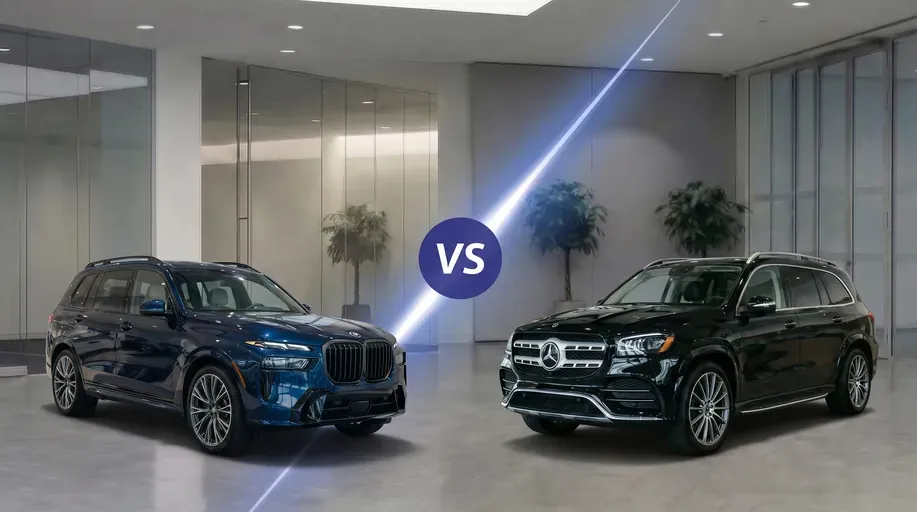
Detailed comparison of the BMW X7 vs. Mercedes-Benz GLS. Discover the real differences in equipment, driving characteristics, and spaciousness, and choose the right luxury SUV for you.
Oct 16, 2026
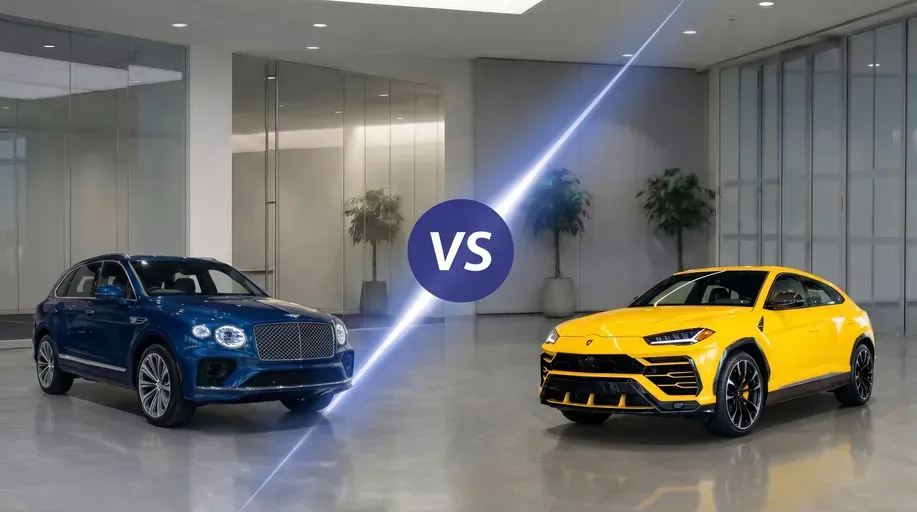
Detailed comparison of luxury SUVs Bentley Bentayga vs. Lamborghini Urus. Discover the real differences in performance, equipment, and comfort, and read our verdict.
Oct 16, 2026