Car battle
Audi Q7 vs. Audi Q8: A Complete 2025 Comparison
Audi Q7 vs. Audi Q8: Which luxury SUV is better for you? A detailed comparison of design, practicality, and driving performance to help you decide.
Apr 13, 2026
Articles
Car battle
Detailed comparison of the BMW X7 vs. Mercedes-Benz GLS. Discover the real differences in equipment, driving characteristics, and spaciousness, and choose the right luxury SUV for you.
April 18, 2026
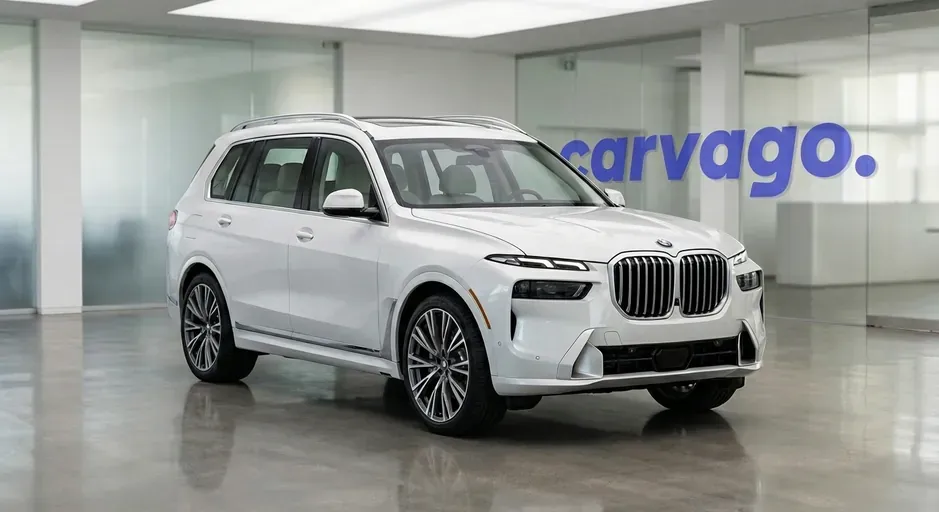
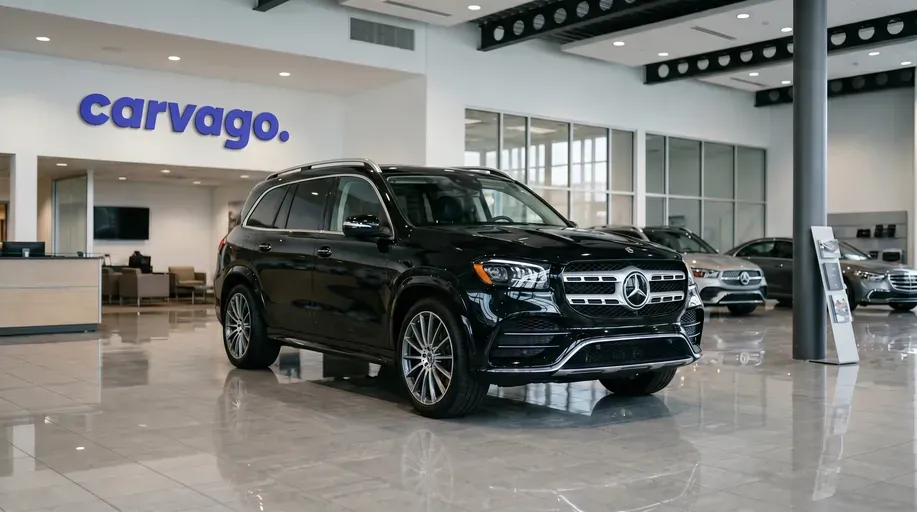
The BMW X7 represents the very pinnacle of Munich's luxury SUV lineup, offering an impressive combination of vast interior space, premium materials, and state-of-the-art technology. The Mercedes-Benz GLS, previously sold under the GL-Class designation and often rightfully referred to as the "S-Class of SUVs," is a more than worthy rival with its ultimate emphasis on unrivaled ride comfort, majesty, and prestige. Let's take a detailed look at which of these two exceptionally luxurious giants, at approximately four years of age, fares better in our direct comparison and represents a more attractive choice on the current used car market.
When it comes to full-size luxury SUVs, the BMW X7 and Mercedes-Benz GLS models represent the absolute pinnacle of the European market. Both vehicles possess majestic proportions that ensure immense respect on the road and promise uncompromising interior space. When choosing on the used car market – typically for vehicles from around 2020 to 2023 – it is important to compare how seemingly subtle millimeter differences manifest in daily use.
The Mercedes-Benz GLS has a slight edge in this duel in terms of length. With a length of up to 5,209 mm, it is just under 30 to 60 mm longer than its Bavarian competitor, depending on the specific model year. But for passengers, the most important factor is the wheelbase. In the GLS, this measures 3,135 mm, which is exactly 30 mm more than in the BMW X7. In practice, this benefit translates into slightly more generous legroom, especially for passengers in the second and third rows of seats.
The BMW X7, on the other hand, beats its rival in width. With an impressive width of exactly 2,000 mm, it is a significant 44 mm wider. You will feel this inside the car in the form of excellent shoulder room; on the other hand, the wider body might cause some trouble in older parking spaces or narrow underground garage entrances. Both cars exceed a height of 1.8 meters, providing a very dominant view of the road. Overall, it can be said that the Mercedes scores more with its maximum length and longitudinal comfort, while the BMW benefits from its wide stance and interior width.
| Parameter | BMW X7 SUV | Mercedes-Benz GLS SUV |
|---|---|---|
| Length (mm) | 5151 - 5181 | 5207 - 5209 |
| Width (mm) | 2000 | 1956 |
| Height (mm) | 1805 - 1835 | 1823 |
| Wheelbase (mm) | 3105 | 3135 |
When choosing a full-size family SUV from the largest on the market, such as the approximately four-year-old BMW X7 (G07 generation) and Mercedes-Benz GLS (X167 generation) models, luggage compartment volume plays a key role. For buyers planning to use these giants for family vacations, transporting sports equipment, or daily logistics with children, interior practicality is absolutely essential. Although both premium SUVs look majestic from the outside, their approach to interior space differs slightly, which can ultimately affect how much luggage you can pack without stress.
In terms of specific figures, the BMW X7 offers a very generous 750 liters in a standard five-seat configuration, while 326 liters remain after unfolding the third row of seats. When all rear rows are folded, you get a van-like 2,120 liters. In contrast, the Mercedes-Benz GLS makes the most of its even slightly larger dimensions, providing an impressive 890 liters in a five-seat configuration. With seven passengers on board, 355 liters are available, and after folding all rear seats, it creates a total of 2,400 liters. In practice, this means the Mercedes provides space for several extra suitcases or bulkier sports equipment. Nevertheless, both vehicles' specifications are more than sufficient for weekend shopping or a long vacation with the whole family.
An interesting feature of these approximately four-year-old generations (manufactured around 2022) is the integration of modern technology and its impact on the interior. Although both brands widely deployed 48V mild-hybrid technology in these models to reduce fuel consumption, the installation of support batteries and electric motors has not negatively affected the overall trunk capacity. Unlike many plug-in hybrid variants of other models, where you have to sacrifice part of the practicality due to large batteries, the luggage compartment volume here remains preserved across the entire range of engines.
| Parameter | BMW X7 SUV | Mercedes-Benz GLS SUV |
|---|---|---|
| Base volume (liters) | 750 | 890 |
| Maximum volume with seats folded (liters) | 2,120 | 2,400 |
From the perspective of pure luggage capacity, the battle between these two German giants is won by the Mercedes-Benz GLS. Its boxier and longer design allows for significantly more cargo in any seat configuration. While the BMW X7 loses slightly on paper, partly due to its more dynamically styled rear, in the real world, it still represents a massive and fully sufficient family car.
While both premium SUVs offer excellently usable and massive space for passengers and luggage, the Mercedes-Benz GLS is the more practical choice for families who frequently travel with a maximum load, thanks to its overall larger capacity.
The ability to tow heavy loads is one of the key parameters that customers of large luxury SUVs closely monitor. Whether you plan to tow a large motorboat, an oversized caravan, or a heavy horse trailer, the trailer weight and total towing capacity play a crucial role in the selection process. In this category, roughly four-year-old models of the BMW X7 (G07 generation) and Mercedes-Benz GLS (167 generation) represent the absolute pinnacle of what the current used car market offers.
Looking at the specific numbers, you will find that there are practically no differences between these two rivals. Both manufacturers have homologated their flagship SUVs to the maximum possible legislative limit. Both the BMW X7 and Mercedes-Benz GLS boast a standard and maximum braked trailer weight of 3,500 kg. Logically, the unbraked trailer weight for both competitors represents the European legislative maximum of 750 kg. This value remains completely consistent across all relevant engine variants from 2020 to 2022.
The situation regarding electrified versions is interesting. Unlike some smaller SUVs, where plug-in hybrid variants often suffer from significantly reduced towing capacity due to heavy batteries, these flagships rely primarily on advanced mild-hybrid systems (for example, in the GLS 450 or X7 xDrive40d). These systems do not limit the structural strength or cooling of the vehicle, so even in these more modern versions, there is no reduction in maximum towing capacity, and they remain at a full 3.5 tons.
In practice, these values mean absolute user freedom. A towing capacity of 3.5 tons is, of course, more than sufficient for a weekend purchase of heavy building materials, but above all, it offers huge space for several extra suitcases, safely handles even longer holidays with the largest twin-axle caravans, and is not afraid of professional use. Furthermore, the powerful engines of both vehicles and the standard air suspension ensure that you will hardly even know about the trailer behind you while driving.
Final Summary
From the perspective of towing capacity, the battle between the BMW X7 and Mercedes-Benz GLS is absolutely equal and has no clear winner. Both vehicles offer an identical 3,500 kg, which is the figurative ceiling for passenger cars. Your final choice of the ideal "tow car" should therefore depend more on specific brand preferences, overall control ergonomics, or the range of smart assistance systems for easier reversing with a trailer, which both brands handle in slightly different ways.
| Model and engine | Braked trailer weight (kg) | Unbraked trailer weight (kg) |
|---|---|---|
| BMW X7 xDrive30d (195 kW) | 3500 | 750 |
| BMW X7 xDrive40d (250 kW) | 3500 | 750 |
| BMW X7 xDrive40i (245 kW) | 3500 | 750 |
| BMW X7 M50i (390 kW) | 3500 | 750 |
| Mercedes-Benz GLS 450 (270 kW) | 3500 | 750 |
BMW X7 and Mercedes-Benz GLS offer exceptionally sophisticated engine palettes, where high performance, refinement, and increasingly electrification play a major role. For those interested in used cars approximately four years old (around the 2022 model year), it is essential that both manufacturers have widely implemented mild-hybrid (MHEV) systems into their power units. These technologies help reduce fuel consumption and ensure smoother starts without compromising the overall dynamics of the large SUV. All models from both brands rely exclusively on intelligent all-wheel drive (xDrive for BMW, 4MATIC for Mercedes) and modern multi-speed automatic transmissions. While the BMW X7 benefits from the more dynamic character of its excellent inline-six and V8 engines, the Mercedes-Benz GLS counters with the velvety operation of the EQ Boost system and the immense pulling power of its diesel and petrol units. Whether you are looking for a more economical diesel for long motorway journeys or a powerful V8 for the ultimate experience, both brands can deliver perfectly.
The foundation of the range for the G07 generation are brilliant turbocharged inline-six engines, topped by flagship V8s. In the used car market, the xDrive30d diesel engines (with 195 kW, later increased to 210 kW) and the more powerful xDrive40d variant, which delivers a sovereign 250 kW and 700 Nm of torque, are particularly popular. Petrol six-cylinders are ideally represented by the xDrive40i model. For sports driving enthusiasts, the M Performance division prepared models designated M50i and the newer M60i, which send a crushing 390 kW (530 hp) to all four wheels. If you are tempted by the absolute diesel peak, you might come across the unique quad-turbo diesel version M50d, boasting an impressive 294 kW and 760 Nm. However, it must be emphasized that according to historical data, production of the M50d engine was definitively ended in late 2020. If you are looking for a car roughly four years old (2021/2022 models), you will no longer encounter the M50d – its role for more demanding drivers has been successfully taken over by the more efficient xDrive40d version. All engines are paired as standard with the lightning-fast eight-speed Steptronic automatic transmission.
| Engine type | Fuel type | Power (kW) | Torque (Nm) | Transmission |
|---|---|---|---|---|
| xDrive40i | Petrol | 250 / 280 | 450 / 540 | 8-speed auto |
| M50i / M60i | Petrol | 390 | 750 | 8-speed auto |
| xDrive30d | Diesel | 195 / 210 | 620 / 650 | 8-speed auto |
| xDrive40d | Diesel | 250 | 700 | 8-speed auto |
| M50d | Diesel | 294 | 760 | 8-speed auto |
The Mercedes-Benz GLS generation X167 approaches power unit design with the same majesty as the vehicle itself. Among used cars, the reliable inline diesel six-cylinders GLS 350 d and the more powerful GLS 400 d, which produces 243 kW and offers the same 700 Nm of torque as the diesel equivalent from BMW, enjoy great popularity. Those who prefer petrol engines will very often reach for the GLS 450 model, supplemented by a starter-generator with EQ Boost technology, or choose the massive GLS 580 V8 delivering a massive 360 kW (489 hp) and 700 Nm. When examining newer model years, you may notice that from approximately 2023, the range expanded with a new diesel variant, the GLS 450 d. This model achieves an excellent output of 270 kW and 750 Nm of torque, but given its short history on the market, it will be more or less unavailable in the spectrum of four-year-old used cars. For customers without financial compromises, Mercedes has the AMG GLS 63 in reserve, crushing the asphalt with 450 kW (612 hp). The entire range of units uses the excellently tuned nine-speed 9G-TRONIC transmission as standard.
| Engine type | Fuel type | Power (kW) | Torque (Nm) | Transmission |
|---|---|---|---|---|
| GLS 450 | Petrol | 270 / 280 | 500 | 9-speed auto |
| GLS 580 | Petrol | 360 | 700 | 9-speed auto |
| AMG GLS 63 | Petrol | 450 | 850 | 9-speed auto |
| GLS 350 d | Diesel | 210 | 600 | 9-speed auto |
| GLS 400 d | Diesel | 243 | 700 | 9-speed auto |
| GLS 450 d | Diesel | 270 | 750 | 9-speed auto |
Both giant SUVs offer exceptionally sophisticated and powerful units. While a used BMW X7 will thrill with dynamic shifting and an overall slightly sportier suspension and transmission setup, the Mercedes GLS in versions roughly four years old wins with perfect silence, smoothness, and fluidity thanks to excellent mild-hybrids.
Choosing the right engine is a key decision for long-term satisfaction with nearly 2.5-ton luxury SUVs. Both manufacturers offer a wide range of power units from more economical six-cylinders to top-of-the-line V8s, but for the market of roughly four-year-old used cars, refined inline six-cylinders supported by mild-hybrid technology prove to be the best choice. These engines offer an excellent balance between everyday dynamics, real-world fuel consumption, and mechanical reliability, without the astronomical service costs that often accompany V8s.
The 3.0-litre inline six-cylinder diesel (engine code B57) with mild-hybrid technology is an absolutely ideal choice for the massive X7. This version appeared on the market in 2020 and successfully replaced the older xDrive30d and the more complex quad-turbo M50d version, whose production in this generation gradually ended.
From the perspective of the market for roughly 4-year-old cars (manufactured between 2020 and 2023), we recommend choosing the 3.0-litre inline six-cylinder petrol engine in the 167 model series. It is worth noting that the currently recommended diesel alternative, the GLS 450 d, only entered the range at the end of 2023 and will therefore not be easily found on the regular used car market. However, the petrol engine is exceptionally well-suited to the GLS's opulent character.
When choosing giant luxury SUVs like the BMW X7 and Mercedes-Benz GLS, it is necessary to account for the fact that official laboratory fuel consumption figures often differ significantly from real-world results. Physics simply cannot be cheated – we are talking about vehicles with a curb weight of around 2.5 tons and a massive frontal area. To get a more accurate picture of what awaits you at the gas station, we looked at real-world operating data based on the experiences of drivers themselves from the community platform Spritmonitor.de, which we compared and averaged with our internal database figures for vehicle generations available on the nearly new used car market (roughly four years old, or the closest younger variants).
Data source: Spritmonitor.de
| Model and engine | Average consumption (l/100 km) |
|---|---|
| BMW X7 xDrive40d | 7.7 |
| Mercedes-Benz GLS 450 d | 7.9 |
| Mercedes-Benz GLS 450 | 9.9 |
| BMW X7 xDrive40i | 10.1 |
| BMW X7 M50i | 12.3 |
A very clear trend is evident from the data above, where we have ranked the data from the most economical diesel versions to pure gasoline powertrains. Although diesel engines are currently in decline in many markets, they make absolute sense in the segment of such massive cars.
An interesting and somewhat surprising finding is how extremely evenly matched both models are. The differences between BMW and Mercedes for direct competitors amount to a maximum of two-tenths of a liter. The energy efficiency of both automakers has thus been brought almost to perfection in these generations.
The decisive factor for choosing the ideal engine should primarily be how the vehicle will be used. If you are a highway traveler who clocks up tens of thousands of kilometers across Europe annually, diesel engines labeled "d" are the clear choice in terms of operating costs and a much higher total range per tank.
For urban and suburban drivers who mostly drive shorter routes and want to avoid potential future problems with diesel particulate filters (DPF), a quieter gasoline alternative may make more sense. However, it is naturally necessary to expect that during frequent stop-and-go traffic in jams, the trip computer will easily show values well above the ten-liter mark. And although customers of such premium vehicles usually don't count every penny, the diesel variants clearly demonstrate that even operating a massive SUV can be unexpectedly cost-effective.
In conclusion, fuel consumption itself will likely not be the main decision criterion that should tip the scales. Both luxury SUVs offer excellently optimized power units with consumption that differs by absolutely negligible margins. Personal design preferences, the behavior of a specific chassis, and the current range of equipment available on the used car market will play a much more important role in the final selection.
Both of these majestic SUVs represent the pinnacle of their respective brands' lineups, which is naturally reflected in their purchase prices. If we focus on the used car market and look for vehicles roughly four years old (production year around 2021 to 2022), we encounter models that have already experienced their most significant depreciation. For a used car buyer, this represents an interesting opportunity to enjoy maximum luxury at a fraction of the original new car price.
BMW X7 (G07 generation, pre-facelift)
The supply of used BMW X7s on the European market is quite extensive. Prices for four-year-old examples currently start at approximately €58,000. For this amount, you typically get the base diesel version, the xDrive30d, with slightly higher mileage. The more popular and powerful xDrive40d (often with the attractive M Sport package and reasonable mileage) will cost you roughly €66,000 to €78,000. If you desire the top-of-the-line M50i V8, be prepared to pay at least €82,000.
Mercedes-Benz GLS (X167 generation, pre-facelift)
Large SUVs with the three-pointed star traditionally hold their value slightly better on the used market, and the GLS is no exception. Prices for roughly four-year-old vehicles start around €66,000 for the most modest diesel variants, the 350 d. The much more sought-after 400 d six-cylinder diesel with richer equipment (very often in the AMG Line) ranges from €74,000 to €91,000. Additionally, a unique feature of Mercedes is the ultra-luxurious Maybach 600 version, which plays in a league of its own on the used market, with prices often exceeding €124,000 even after several years.
| Engine / Equipment | BMW X7 (G07) | Mercedes-Benz GLS (X167) |
|---|---|---|
| Base diesel versions (30d / 350d) | from €58,000 | from €66,000 |
| More powerful diesels / high equipment (40d / 400d) | €66,000 – €78,000 | €74,000 – €91,000 |
| High-performance petrol V8 (M50i / 580) | €82,000 – €99,000 | €87,000 – €107,000 |
When choosing between these two premium cruisers, however, you should not just look at the lowest price tag. A crucial factor for the purchase should be a verifiable and complete service history. Potential out-of-warranty repairs of complex technologies, such as the sophisticated air suspension or the rear-axle steering system, can very quickly wipe out the initial savings from the purchase.
The BMW X7 represents a slightly more affordable choice on the used car market, while the Mercedes-Benz GLS holds its value a bit better, and its average purchase prices are roughly 10 to 15% higher.
In the premium family SUV segment, a top-tier level of passive and active safety is automatically expected. Generally, vehicles in this class commonly achieve the maximum five-star Euro NCAP rating (which, after all, was confirmed by the smaller siblings of both models from which these vehicles are technically derived). However, when evaluating the safety of used cars, it is always essential to perceive the context and the year of testing. The Euro NCAP methodology evolves dynamically and becomes stricter over time. While older tests focused mainly on the passive resistance of the bodywork, modern protocols strictly require reliable active assistants – including, for example, more demanding frontal collisions with a mobile barrier, detailed detection of cyclists, or crisis scenarios directly at intersections. Percentage results across different years are thus never directly comparable.
BMW X7
The largest Bavarian SUV is produced in smaller volumes and at a very high purchase price, which is why the independent organization Euro NCAP has never officially tested it for economic and capacity reasons. In practice, its safety potential is derived from its technical donor – the BMW X5 model, which underwent crash tests in 2018 and took home an excellent five stars. For the approximately four-year-old X7, although exact percentages from the latest testing facilities are missing, the car offers an excellently rigid structure. Its arsenal is complemented by highly advanced systems such as forward collision warning, precise lane keeping, and autonomous emergency braking. However, given its design date, the model has not passed the most modern certifications for evasive maneuvers in urban intersections.
Mercedes-Benz GLS
An identical situation can be observed with the Mercedes GLS. This Stuttgart giant has also not undergone laboratory Euro NCAP crash tests due to its exclusive market position. However, its robust chassis and electronic architecture come from the GLE model, which excelled in tests in 2019 and received a full five stars (moreover, with top-tier 91% adult protection and 90% child protection). The Mercedes-Benz GLS elevates this level with its massive weight, which brings a huge physical advantage to the occupants in the event of a collision with a standard-sized car. Furthermore, the technologies hidden in the Driving Assistance package are among the best on the used car market – the car can reliably prevent collisions, monitor blind spots, and react to sudden obstacles.
Final Comparison
Declaring a safer car purely based on laboratory numbers is not possible, as neither of the flagships can boast official tests. However, both approximately four-year-old used cars possess the most comprehensive safety package available on the market. Mercedes-Benz slightly benefits from a longer history of implementing predictive safety assistants, while BMW pleases with stable and absolutely precise calibration of its radars. Both models easily meet the demands of even the most discerning families.
| Parameter | BMW X7 | Mercedes-Benz GLS |
|---|---|---|
| Year of testing | Not tested | Not tested |
| Adult protection | - | - |
| Child protection | - | - |
| Vulnerable road user protection | - | - |
| Safety assistance systems | - | - |
Despite the absence of official data from independent crash tests, the extremely rigid construction and shared top-tier technology with smaller models guarantee absolutely first-class protection for the whole family in both vehicles.
In addition to standard luxury equipment, each of the models offers more than just basic functions and premium materials, with both manufacturers taking a very distinctive approach to bringing customers maximum added value and a technological edge.
The large SUV from Munich does not try to hide its sporty roots, but at the same time, it brings a range of highly practical and visually stunning solutions to family life.
The competitor from Stuttgart focuses on creating the perfect sanctuary from the outside world. Its technological innovations primarily aim for unrivaled passenger care and predictive vehicle behavior.
Great driving characteristics and more agile handling despite massive dimensions
Top-notch and user-friendly iDrive multimedia system
Excellent refinement and performance of straight-six engines (e.g. xDrive40d) and top-tier V8s
First-class interior craftsmanship with high attention to detail and luxury materials
Top-tier cabin soundproofing ensuring silence even at highway speeds
Controversial front grille design with giant kidneys may not suit everyone
Slightly less legroom in the third row of seats compared to the GLS
Smaller luggage capacity when fully occupied by all seven passengers
High prices for optional equipment and advanced assistance systems on the used car market
BMW X7 is an ideal choice for those who demand a certain level of driver engagement and dynamics even from a huge luxury SUV. It scores mainly with fantastic engines, top-notch infotainment, and a premium feel, making it a perfect highway cruiser with a slightly sporty touch.
Unrivaled interior space with a full-sized third row of seats where even adults can sit comfortably
Extremely smooth and comfortable ride thanks to the standard air suspension (Airmatic)
Huge luggage space and high interior versatility
Majestic and representative exterior design evoking an "S-Class on stilts"
Advanced MBUX system with excellent voice control and large displays
Noticeably more cumbersome and bouncy driving behavior in corners compared to the BMW
Touch controls on the steering wheel and a more complex MBUX menu structure take some getting used to
Due to extreme exterior dimensions, parking and maneuvering in narrow streets is very challenging
In some used units, creaking interior plastics may appear in the lower parts of the cabin
Mercedes-Benz GLS represents the absolute pinnacle in family comfort, maximum spaciousness, and a peaceful ride. It will primarily appeal to buyers whose main priority is luxurious and undisturbed travel, and who realistically plan to frequently use the full capacity of the vehicle for a large family.
Based on our long-term experience from service networks, recall reports, and outputs from our service for independent technical inspection of the car, we have compiled an overview of the most common problems you should watch out for with these luxury SUVs at around four years of age.
The BMW X7 (G07 generation), despite its massive build, is a technically very advanced car, which brings specific risks associated primarily with complex electronics and extreme stress on chassis components.
The basic six-cylinder engines in the BMW X7 are mechanically above-average in reliability; the greatest risk of overpriced service is thus represented by the complex air suspension and rapid brake wear due to extreme weight.
The Mercedes-Benz GLS (X167 generation) shares its architecture with the smaller GLE model, and its biggest pain points in four-year-old used cars are concentrated in the advanced onboard systems and the complex 48V onboard network.
The GLS offers absolute and unrivalled driving comfort, but potential used car buyers should be extremely careful about the condition of the 48V electrical network and carefully test the functionality of all interior electronics.
When buying a used car, a thorough inspection is key. Here are some specific points to focus on for these two luxury models, where a comprehensive car audit is almost a necessity given their technological complexity.
Mercedes offers a larger overall maximum trunk volume after folding all rear seats, an impressive 2,400 liters compared to 2,120 liters for the competing model. With a full occupancy of seven people, the situation is similar, as the three-pointed star provides 355 liters, while the Munich car offers 326 liters. In practice, the differences are almost imperceptible, and both cars represent the absolute top of the market in terms of family spaciousness.
Both cars are equipped with advanced air suspension as standard; however, Mercedes-Benz places a slightly greater emphasis on absolute isolation from bumps and so-called ride "floatiness". BMW has its chassis tuned slightly firmer, which allows it to better mask its massive weight and provide the driver with much more confidence in corners. However, if you are looking for the maximum level of swaying comfort on long journeys, the Stuttgart SUV is a slightly better choice.
Yes, these are among the few European SUVs on the market where even average-sized adults can sit relatively comfortably in the third row. The GLS model provides slightly more headroom and shoulder room in the very back thanks to its boxier rear body shape. In both vehicles, the rich equipment even for the rearmost passengers is pleasing, including their own climate control zones, cup holders, and USB ports for charging.
BMW's iDrive system has long been rated as more ergonomic, mainly thanks to the ability to control it with a classic rotary controller on the center console without having to take your eyes off the road. The competing MBUX system with giant displays dominates in excellent voice control and luxury graphics, but relies primarily on less certain touch inputs while driving. While the Munich representative suits more conservative drivers, the other model will dazzle lovers of modern technology and tablets.
Real-world combined fuel consumption for the popular and proven six-cylinder versions (such as the xDrive40d and GLS 400 d) most often ranges between 8.5 and 10 liters per 100 kilometers in practice. The Bavarian inline engine has long been rated by journalists and users as slightly more economical and overall more harmonious, making it easier to get below the eight-liter mark on country roads. Given the massive frontal areas and weight well exceeding 2.4 tons, these are highly respectable values for both brands.
Roughly four-year-old BMW X7 and Mercedes-Benz GLS models represent the absolute pinnacle of the luxury family SUV segment on the used car market, with both vehicles boasting top-tier technology and exceptionally efficient inline six-cylinder engines. While the Mercedes-Benz GLS wins in terms of uncompromising ride comfort, a slightly larger luggage compartment, and an overall smoothness evoking S-Class saloons, its Bavarian competitor counters with a more driver-focused character, a more agile chassis, and a more user-friendly iDrive infotainment system. If your main priority is maximum interior space for the family and absolute acoustic and chassis isolation from the outside world, the Stuttgart cruiser will be the best choice for you. However, if you demand a certain amount of sporty dynamics even from a nearly two-and-a-half-ton giant and appreciate slightly more favorable purchase prices, the BMW X7 will bring you much more daily driving pleasure.
Sources: ADAC, auto.cz, denik.cz, autorevue.cz, automix.cz, autickari.cz
This article was prepared using artificial intelligence tools. The section guarantor is Petr Dušek.
Audi Q7 vs. Audi Q8: Which luxury SUV is better for you? A detailed comparison of design, practicality, and driving performance to help you decide.
Apr 13, 2026
Volvo XC90 vs. Volkswagen Touareg: Which premium SUV is better? A detailed comparison, tests, and a clear verdict will help you choose.
Apr 14, 2026
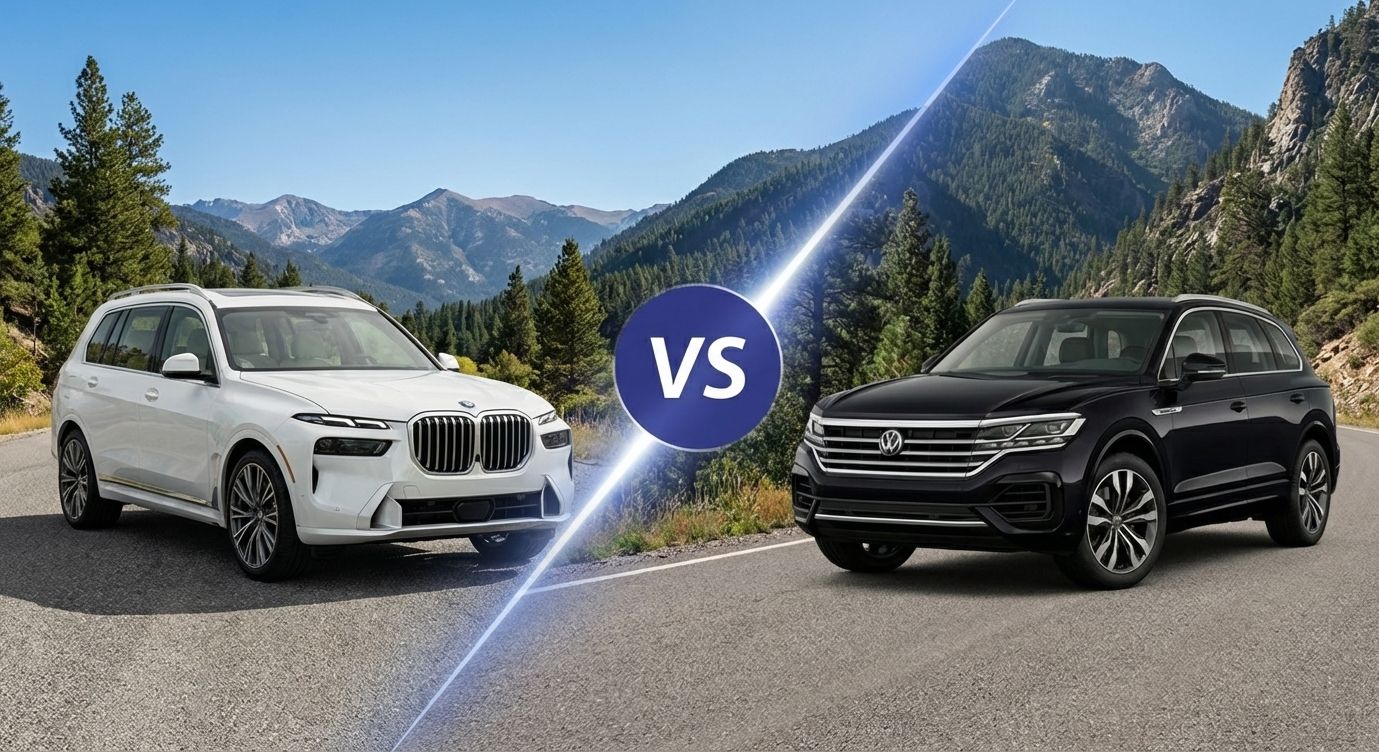
BMW X7 vs. Volkswagen Touareg. Our detailed comparison of design, performance, and practicality will help you choose the right luxury SUV.
Apr 14, 2026