Car battle
Audi Q7 vs. Audi Q8: A Complete 2025 Comparison
Audi Q7 vs. Audi Q8: Which luxury SUV is better for you? A detailed comparison of design, practicality, and driving performance to help you decide.
Apr 13, 2026
Articles
Car battle
Volvo XC90 vs. Volkswagen Touareg: Which premium SUV is better? A detailed comparison, tests, and a clear verdict will help you choose.
April 14, 2026
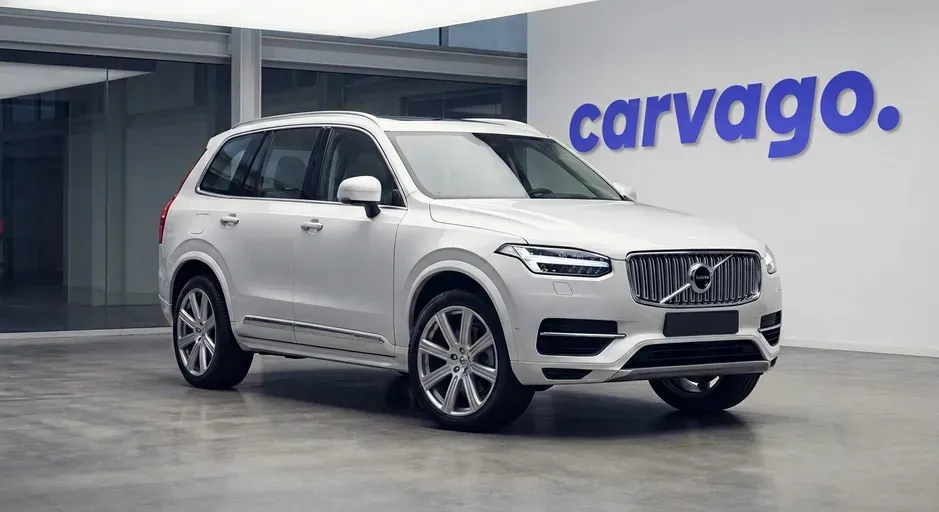
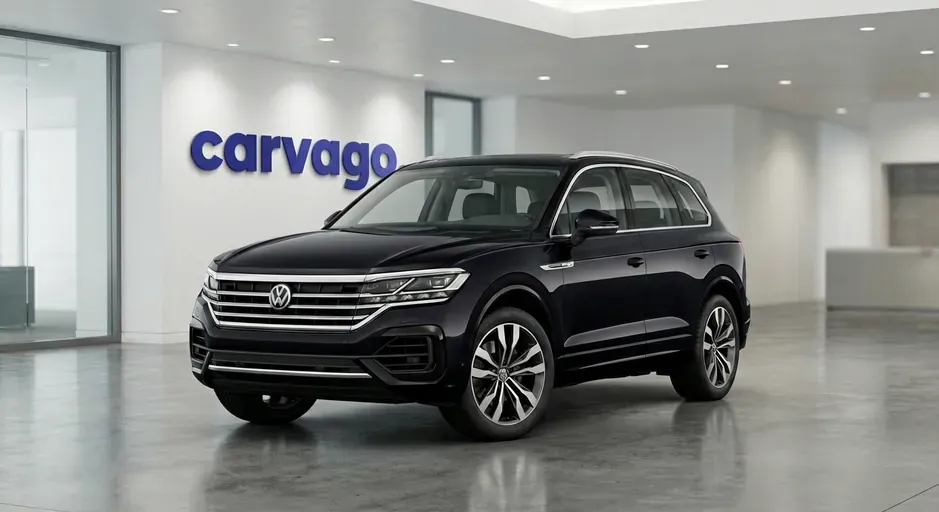
The Volvo XC90, a Swedish icon of safety and minimalist design, boasts a luxurious interior and advanced technologies. Against it stands the Volkswagen Touareg, a German engineering masterpiece that focuses on robustness, powerful engines, and impressive off-road capabilities, also known in some regions as the Volkswagen Touareg R-Line. Let's take a detailed look at how these two premium rivals fare in a head-to-head comparison.
At first glance of the Volvo XC90 and the Volkswagen Touareg, it's clear that both vehicles belong to the large SUV category. However, their philosophies differ in their basic proportions. While Volvo focuses on length and height, indicating a focus on maximum interior space and family use, Volkswagen counters with greater width and a lower build, giving it a more dynamic and sportier stance.
The biggest difference is noticeable in length. The second-generation Volvo XC90 is more than 7 centimetres longer than the third-generation Touareg. This added length directly translates into interior space and allows the Volvo to offer an optional third row of seats, making it a full-fledged seven-seater. This is a key advantage for large families. On the other hand, the shorter Touareg will be slightly more agile when manoeuvring in narrow city streets and crowded car parks.
In terms of width, the Touareg has a clear advantage, being approximately 5 centimetres wider than the XC90. This not only gives it a more robust appearance but also provides more shoulder room for the occupants and contributes to better stability in corners. The Volvo, on the other hand, is about 6 centimetres taller, which gives passengers a feeling of airiness, a better view from the car, and easier entry. However, the higher centre of gravity may be slightly noticeable during more dynamic driving.
The wheelbase is key to interior spaciousness and driving comfort. Here too, the Volvo dominates with a wheelbase that is a full 8 centimetres longer. The longer wheelbase has a positive effect, especially on the longitudinal space for rear-seat passengers, and contributes to excellent stability at high speeds on the motorway. The Touareg, with its shorter wheelbase, may feel slightly more agile when changing direction.
| Parameter | Volvo XC90 (2nd generation) | Volkswagen Touareg (3rd generation) |
|---|---|---|
| Length (mm) | 4950 - 4953 | 4878 |
| Width (mm) | 1923 - 2008 | 1984 |
| Height (mm) | 1771 - 1776 | 1712 - 1717 |
| Wheelbase (mm) | 2984 | 2899 - 2904 |
The size of the luggage compartment is a key factor in large SUVs, often deciding the purchase, especially for families. Both the Volvo XC90 and the Volkswagen Touareg offer impressive figures in this regard, but each focuses on slightly different priorities. While the Touareg excels in basic volume, the XC90 counters with maximum capacity and, above all, the versatility of a seven-seater layout.
In a direct comparison of standard five-seater versions, the third-generation Volkswagen Touareg comes out on top, offering a generous basic volume of 810 litres. This is significantly more than the second-generation Volvo XC90 (models around 2019-2021), which has a volume of 709 litres in a five-seater configuration. In practice, this difference becomes apparent when packing for a longer holiday, as the Touareg can fit one extra suitcase without needing to fold down the seats.
However, the situation is reversed when the rear seats are folded down. Here, the Volvo XC90 wins with a maximum capacity of up to 1874 litres compared to 1800 litres in the Touareg. The main advantage of the Volvo, however, is the option of a seven-seater version. With the third row of seats active, the boot shrinks to approximately 302 litres, but this flexibility can be priceless for large families. In plug-in hybrid versions, the volume is reduced in both models – the Touareg eHybrid still offers a decent 665 litres, while the XC90 T8 drops to 262 litres due to the placement of the batteries.
| Parameter | Volvo XC90 SUV | Volkswagen Touareg SUV |
|---|---|---|
| Basic volume (litres) | 709 | 810 |
| Max. volume with seats folded (litres) | 1874 | 1800 |
Towing capacity is one of the key differences between these two premium SUVs and can be an absolutely decisive factor for some buyers. If you are looking for a vehicle that can tow almost anything, the Volkswagen Touareg is the clear winner here.
The third-generation Volkswagen Touareg, produced since 2018, offers an impressive and uniform maximum braked trailer weight of up to 3,500 kg across all engine options. Whether you choose a diesel V6, a petrol engine, or even a plug-in hybrid version, you can always rely on this top-tier figure. This makes it the ideal partner for towing large caravans, horse trailers, or heavy boats.
On the other hand, the second-generation Volvo XC90 (from 2015) is somewhat more modest in this respect, although its capabilities will still be more than sufficient for most users. The highest values, 2,700 kg, are achieved by the more powerful diesel versions (e.g., D5, B5 Diesel) and petrol models (T6, B6). For the popular mild-hybrid petrol B5 versions and the T8 plug-in hybrids, expect a slightly lower capacity of 2,400 kg. It is therefore crucial to check the specification of the particular car, as the differences between individual engine options are significant.
For unbraked trailers, both models agree on the standard value of 750 kg.
So, if maximum towing power is your absolute priority, the Volkswagen Touareg is the unbeatable choice. For those who do not need to tow the heaviest loads but still appreciate great versatility, the Volvo XC90 offers a very solid, though not as dominant, alternative.
| Model and Engine | Braked towing capacity (kg) | Unbraked towing capacity (kg) |
|---|---|---|
| Volkswagen Touareg 3.0 V6 TDI | 3500 | 750 |
| Volkswagen Touareg 3.0 V6 TFSI | 3500 | 750 |
| Volkswagen Touareg 3.0 V6 eHybrid | 3500 | 750 |
| Volvo XC90 B5 Diesel / D5 | 2700 | 750 |
| Volvo XC90 B6 / T6 | 2700 | 750 |
| Volvo XC90 B5 (petrol) | 2400 | 750 |
| Volvo XC90 T8 Plug-in Hybrid | 2350 - 2400 | 750 |
When choosing an engine between the Volvo XC90 and the Volkswagen Touareg, we encounter two completely different approaches. Volvo bets on a single strategy: all its engines are two-litre four-cylinders, with performance differentiated by various forms of supercharging and electrification. On the other hand, Volkswagen offers a more traditional range dominated by six-cylinder engines and even a briefly available eight-cylinder, which will appeal to drivers who prefer the power and refinement of larger displacement engines. This differing philosophy fundamentally affects not only the dynamics and fuel consumption but also the overall character of both vehicles.
With the second generation of the XC90, produced since 2015, Volvo has taken the path of downsizing and electrification. The foundation is always the two-litre four-cylinder Drive-E engines. The range includes both mild-hybrid (designated "B") and powerful plug-in hybrid versions (designated "T8"). Diesels, such as the D4 and D5, were later replaced by the mild-hybrid B5 Diesel, which combines decent performance with lower emissions. The T5 and T6 petrol variants (supercharged by both a turbo and a compressor) were gradually replaced by the B5 and B6 mild-hybrids. The top of the range is the T8 plug-in hybrid, which, thanks to the combination of an internal combustion engine and an electric motor, offers astonishing performance and the ability to drive on pure electricity. All engines are paired with a smooth-shifting eight-speed Geartronic automatic transmission as standard.
| Engine Type | Fuel | Power (kW) | Torque (Nm) | Transmission |
|---|---|---|---|---|
| B5 (Mild-Hybrid) | Petrol | 184 | 350 | 8-speed automatic |
| B6 (Mild-Hybrid) | Petrol | 220 | 420 | 8-speed automatic |
| T8 Recharge (Plug-in) | Petrol/Electric | 288 - 335 | 640 - 709 | 8-speed automatic |
| D4 | Diesel | 140 | 400 | 8-speed automatic |
| D5 | Diesel | 173 | 480 | 8-speed automatic |
| B5 (Mild-Hybrid) | Diesel | 173 | 480 | 8-speed automatic |
The third-generation Touareg, introduced in 2018, is the complete opposite of the Volvo. The heart of the lineup is primarily the three-litre six-cylinder engines. The most common choice is the 3.0 V6 TDI diesel engine, available in two power variants, which provides massive torque and is ideal for long journeys and towing heavy trailers. For petrol lovers, there is the 3.0 V6 TFSI.
A unique find on the used car market is the 4.0 V8 TDI engine, which was only offered in 2019 and 2020. With 900 Nm of torque, it was one of the most powerful diesel engines ever in a passenger car. Like Volvo, VW also offers plug-in hybrids: the more economical eHybrid and the sport-tuned Touareg R. All engines are connected to an eight-speed Tiptronic automatic transmission and 4MOTION all-wheel drive.
| Engine Type | Fuel | Power (kW) | Torque (Nm) | Transmission |
|---|---|---|---|---|
| 3.0 V6 TFSI | Petrol | 250 | 450 | 8-speed automatic |
| eHybrid (Plug-in) | Petrol/Electric | 280 | 600 | 8-speed automatic |
| R (Plug-in) | Petrol/Electric | 340 | 700 | 8-speed automatic |
| 3.0 V6 TDI | Diesel | 170 | 500 | 8-speed automatic |
| 3.0 V6 TDI | Diesel | 210 | 600 | 8-speed automatic |
| 4.0 V8 TDI | Diesel | 310 | 900 | 8-speed automatic |
Summary:
Choosing the right engine is absolutely crucial for long-term satisfaction with a large premium SUV. While Volvo has opted exclusively for four-cylinder engines supplemented by electrification, Volkswagen has stuck to a more traditional approach with large-volume six-cylinder engines and, for a short time, even an eight-cylinder for the Touareg. Our recommendations are based on a combination of performance, real-world fuel consumption, owner feedback, and mechanical reliability.
The best choice for an XC90 from around 2020 is the diesel mild-hybrid four-cylinder designated B5. It offers an ideal balance of sufficient performance, favourable fuel consumption, and reliability. Although a 2.0-litre displacement may seem small for such a large car, thanks to twin-turbocharging and the support of a 48V mild-hybrid system, it delivers 235 horsepower and a solid 480 Nm of torque. The mild-hybrid system helps especially during acceleration, smooths out the operation of the start-stop system, and slightly reduces fuel consumption. In real-world driving, this engine can achieve a consumption of between 7.5 and 8.5 litres per 100 km, which is an excellent figure for an SUV weighing over two tonnes. The engine is refined and well-soundproofed, so its four-cylinder design does not disturb the occupants. In terms of reliability, it is a proven unit, but like any modern diesel, it requires regular longer journeys for proper regeneration of the diesel particulate filter (DPF). It is the ideal engine for drivers who frequently travel long distances and are looking for a maximally efficient and comfortable powertrain.
For the Volkswagen Touareg, the clear and most widespread choice is the 3.0 V6 TDI diesel six-cylinder, specifically in the more powerful variant with 286 horsepower and a massive 600 Nm of torque. This engine represents the classic school of thought and is a perfect fit for the character of a large SUV. Its main advantages are its velvety smooth operation, confident pull throughout the entire rev range, and the feeling of having power in reserve in any situation. Despite its larger displacement and two extra cylinders, its real-world consumption is only slightly higher than the Volvo's, typically between 8 and 9.5 liters per 100 km. The engine is paired with a smooth-shifting eight-speed Tiptronic automatic transmission and 4MOTION all-wheel drive. In terms of long-term reliability, these six-cylinders are among the best in the VW Group, but with used cars, it is essential to thoroughly check the service history. The unit is ideal for drivers who demand uncompromising power, often tow trailers, or appreciate the refinement and sound of a six-cylinder engine. For lovers of maximum performance, there was also a fascinating 4.0 V8 TDI version (310 kW/421 hp) from 2019-2020, but it is now very rare and more demanding to service on the used car market.
The on-paper consumption figures provided by manufacturers are one thing, but the everyday reality on the road often shows completely different numbers. This is doubly true for large and heavy SUVs like the Volvo XC90 and VW Touareg. To get the most accurate picture, we rely on data from hundreds of drivers on portals like the German Spritmonitor.de, which reflect actual operating costs.
Both cars offer modern mild-hybrid and plug-in hybrid powertrains, but their basic philosophies differ. While Volvo relies exclusively on turbocharged two-liter four-cylinder engines, the Volkswagen Touareg keeps larger-displacement six-cylinders in its lineup, complemented by a top-of-the-range eight-cylinder. This difference is logically reflected in fuel consumption.
The following table shows the average consumption of the most common engine versions of the second-generation XC90 and the third-generation Touareg, which are most relevant to the used car market.
| Model and Powertrain | Average Real-World Consumption (l/100 km) |
|---|---|
| Volvo XC90 B5 Diesel AWD (Mild-Hybrid) | 8.4 |
| Volvo XC90 B5 Petrol AWD (Mild-Hybrid) | 10.2 |
| Volvo XC90 T8 Recharge (Plug-in Hybrid) | 3.5 - 10.0* |
| VW Touareg 3.0 V6 TDI (210 kW) | 8.6 |
| VW Touareg 3.0 V6 TFSI | 11.5 |
| VW Touareg eHybrid / R (Plug-in Hybrid) | 4.0 - 11.0* |
*The consumption of plug-in hybrids varies extremely depending on the usage style. The low value corresponds to frequent charging and shorter trips, while the high value corresponds to driving with a depleted battery over longer distances.
The data clearly reveals several key insights. In the diesel version, the smaller two-liter engine of the Volvo XC90 B5 is slightly more economical than the 3.0 TDI six-cylinder in the Touareg, although the difference is not dramatic. In reality, it's around 8.4 l/100 km. The Touareg, with its more refined six-cylinder, averages about 8.6 l/100 km, which is still a very acceptable figure for such a large car.
A more significant difference appears with the petrol powertrains. The four-cylinder B5 in the Volvo averages around 10.2 l/100 km in real-world driving. The 3.0 TFSI six-cylinder in the Touareg is noticeably thirstier, and its consumption rarely drops below 11.5 l/100 km.
Plug-in hybrids are a separate chapter. Their laboratory-tested consumption of around two to three liters is, in practice, only achievable with daily charging and short-distance trips of up to about 40-50 km. Once the battery is depleted, for example on the motorway, the petrol consumption of both models rises to ten to eleven liters per hundred kilometers. They are therefore an ideal choice for drivers with regular access to a charger and predominantly shorter daily commutes.
For long-distance travelers, diesel engines remain the best choice. The Volvo will offer slightly lower running costs, while the Touareg counters with the superior refinement and authority of its six-cylinder engine. Consumption could thus be a deciding factor primarily for the petrol versions, where the difference is most striking. For diesels and hybrids, the choice will depend more on the driving profile and personal preferences.
A look at the used car market reveals a clear price difference between the Volvo XC90 and the Volkswagen Touareg. Although both models belong to the premium segment, the Swedish SUV is generally the more affordable option.
The second-generation Volvo XC90 (produced since 2015) holds its value, but it can be purchased for significantly lower prices compared to the Touareg. The prices of used models, of course, vary depending on the year of manufacture, mileage, engine, and equipment level.
The third-generation Volkswagen Touareg (produced since 2018) maintains a higher price tag on the used car market. This is due to both its newer platform and the strong demand for this model.
| Model | Approximate price (2020) | Market price range |
|---|---|---|
| Volvo XC90 | from €33,000 | approx. €21,000 – €76,000 |
| Volkswagen Touareg | from €39,000 | approx. €33,000 – €66,000 |
Summary: From a price perspective, the Volvo XC90 is clearly the more affordable choice. It offers a comparable level of luxury and space, but can be purchased on the used car market for significantly less money. The Volkswagen Touareg holds its value better and remains a more expensive car even when used, which reflects its more modern technology and position within the Volkswagen Group.
When it comes to safety, both the Volvo XC90 and the Volkswagen Touareg are at the absolute top. Both SUVs boast a five-star rating from Euro NCAP crash tests, but it's important to look at the details, especially the year the tests were conducted. The Euro NCAP methodology is constantly becoming stricter, so a direct comparison of percentage results from different years is not entirely conclusive.
Volvo builds its reputation on safety, and the XC90 is proof of that. The second generation, produced since 2015, underwent Euro NCAP tests in the year of its launch. It received a stunning rating that was, in many ways, ahead of its time. In the safety assist systems category, it was the first car in history to achieve a 100% score, a testament to its exceptionally advanced set of accident prevention technologies. Even years later, its results in adult (97%) and child (87%) protection remain top-notch. However, the 2015 tests did not yet include some scenarios that are common today, such as detecting cyclists when turning.
The third generation of the Volkswagen Touareg, introduced in 2018, underwent Euro NCAP tests in the same year. As a result, it was evaluated according to stricter criteria than the XC90, which already included tests for autonomous braking with cyclist detection. Despite the more demanding methodology, the Touareg received a full five stars and demonstrated excellent results in all key areas. Adult occupant protection was rated at 89% and child protection at 86%, figures very close to its Swedish competitor. In the safety assist systems category, it scored 81%.
Although both cars offer an exceptional level of safety, the Volkswagen Touareg has undergone a newer and more demanding set of tests. Its five-star rating from 2018 thus reflects more modern standards and the ability to respond to a wider range of risk situations that the methodology at the time took into account. While the Volvo XC90 set a new benchmark in 2015, especially in the area of assistance systems, its certification is older. For a used car buyer who emphasizes the latest standards in active and passive safety, the Touareg's more recent test may be a slight advantage. In practice, however, both models are at the absolute pinnacle and provide their occupants with first-class protection.
| Parameter | Volvo XC90 | Volkswagen Touareg |
|---|---|---|
| Year of testing | 2015 | 2018 |
| Adult occupant protection | 97 % | 89 % |
| Child occupant protection | 87 % | 86 % |
| Vulnerable road user protection | 72 % | 72 % |
| Safety assist | 100 %* | 81 % |
*Note: The 100% score in the safety assist category for the Volvo XC90 was achieved under the methodology valid in 2015. Under later, stricter assessments, the percentage would be lower.
In addition to standard equipment, each model offers several unique features that may be decisive for a potential buyer. Each manufacturer approaches innovation and comfort in its own way, which is reflected in the unique details and functions that define the character of these premium SUVs.
Volvo has long built a reputation as a brand focused on safety and minimalist, functional design. The XC90 continues this trend and adds several clever solutions that make everyday use more pleasant.
The third-generation Touareg became a showcase of the most advanced technologies for Volkswagen. It focuses primarily on digitalization, driving comfort, and innovative features that place it at the top of its segment.
Advantages:
Disadvantages:
Advantages:
Disadvantages:
Based on our own CarAudit inspections, breakdown statistics, and feedback from owners, we have compiled an overview of the most common problems that used car buyers should watch out for. Although both models are considered premium and generally reliable, neither is flawless, which is why a thorough technical inspection of the car before purchase is important.
The second-generation Volvo XC90 is a technologically advanced and safe car, but some of its modern systems can be a source of occasional problems, especially in older model years (before the 2019 facelift).
Overall, the problems with the Volvo XC90 are of a more minor nature, relating to electronics and consumable parts. More serious engine or transmission failures are less common, but with more complex versions (air suspension, hybrid), increased caution and a thorough physical inspection of the used car are warranted.
The third-generation Touareg is technically related to the Audi Q7 and Porsche Cayenne, which gives it a premium character but also complex technology that requires careful maintenance.
The Volkswagen Touareg is an overall solidly built car, but its biggest risk lies in the complexity of its systems. Problems with the air suspension and electronics can trouble owners, while the V6 diesel engine is reliable with proper maintenance. The key to trouble-free ownership is regular service and prevention.
When buying a used car, a thorough inspection is key, and you shouldn't underestimate it even with premium SUVs. Here are a few specific points to focus on with these two models to make your choice the best it can be.
The main difference is the number of seats. The Volvo XC90 offers seven seats as standard, while the Volkswagen Touareg is strictly a five-seater. However, in its five-seat configuration, the Touareg has a significantly larger basic boot volume (810 litres versus approx. 300 litres for the XC90 with the third row of seats up). After folding the seats down, the total maximum luggage capacity of both models is almost equal.
The Volkswagen Touareg focuses on a more dynamic drive and often offers more powerful six-cylinder engines (TDI and TSI) that provide commanding thrust. The Volvo XC90 relies exclusively on four-cylinder engines, including efficient plug-in hybrids, and its chassis is tuned primarily for comfort and a quiet ride. The Touareg is therefore more agile, while the XC90 is synonymous with comfortable travel.
Both cars are at the top in terms of safety and received five stars in Euro NCAP tests. However, the Volvo XC90 has a slight historical edge, mainly due to a wider range of advanced assistance systems in its standard equipment. The Volvo brand has long built its image on safety, and the XC90 is a prime example of this.
The Volvo XC90 is the ideal choice for larger families who need seven seats and place maximum emphasis on safety and comfort. The Volkswagen Touareg, on the other hand, will appeal to drivers looking for a premium SUV with dynamic driving characteristics, a powerful engine, and a large luggage compartment for five people. Your choice thus depends on your preference between passenger space and driving experience.
Sources: ADAC, auto.cz, mdcr.cz, techfocus.cz, autoweb.cz, autobox.cz
This article was prepared using artificial intelligence tools. The section guarantor is Petr Dušek.
Audi Q7 vs. Audi Q8: Which luxury SUV is better for you? A detailed comparison of design, practicality, and driving performance to help you decide.
Apr 13, 2026
Detailed comparison of the BMW X5 vs. BMW X7. Discover the main differences in space, equipment, and real-world driving characteristics. Read our verdict and make the right choice!
Apr 14, 2026
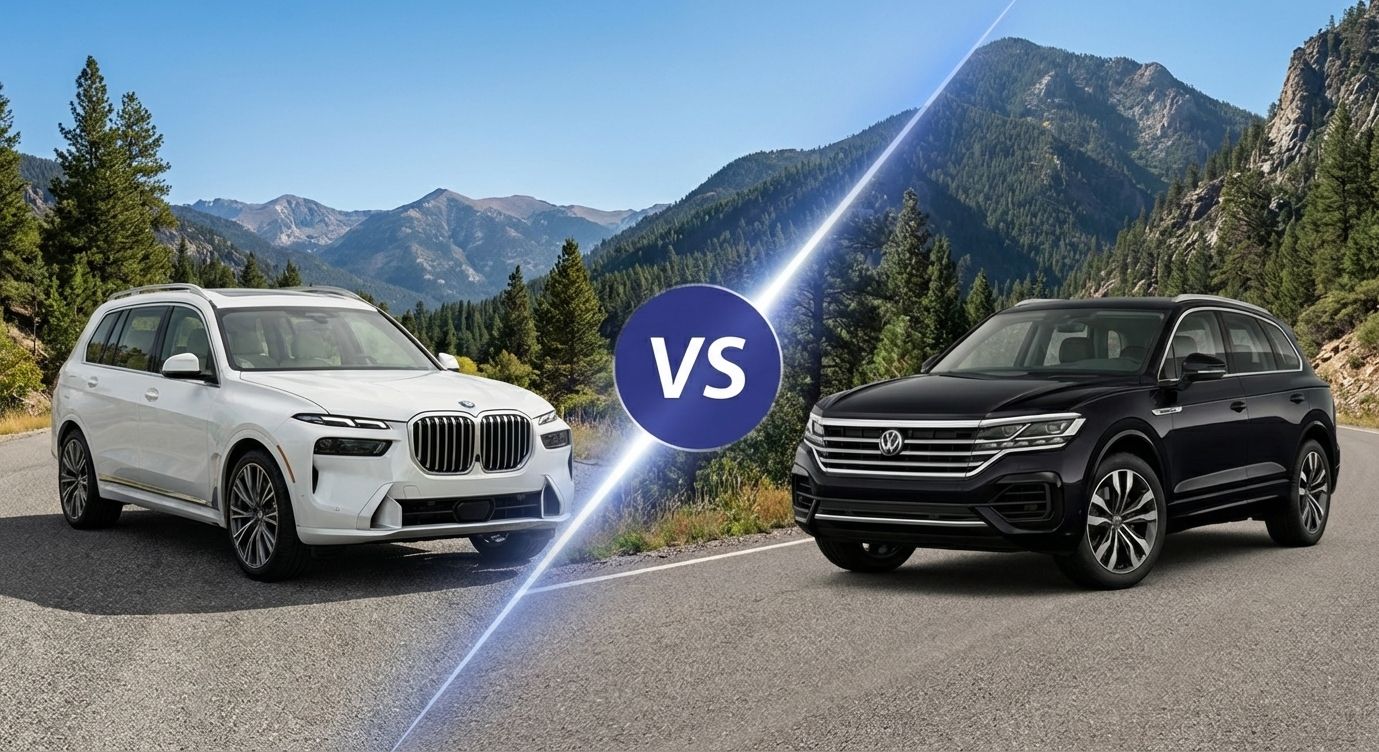
BMW X7 vs. Volkswagen Touareg. Our detailed comparison of design, performance, and practicality will help you choose the right luxury SUV.
Apr 14, 2026