Car battle
Audi Q7 vs. Audi Q8: A Complete 2025 Comparison
Audi Q7 vs. Audi Q8: Which luxury SUV is better for you? A detailed comparison of design, practicality, and driving performance to help you decide.
Apr 13, 2026
Articles
Car battle
BMW X7 vs. Volkswagen Touareg. Our detailed comparison of design, performance, and practicality will help you choose the right luxury SUV.
April 14, 2026
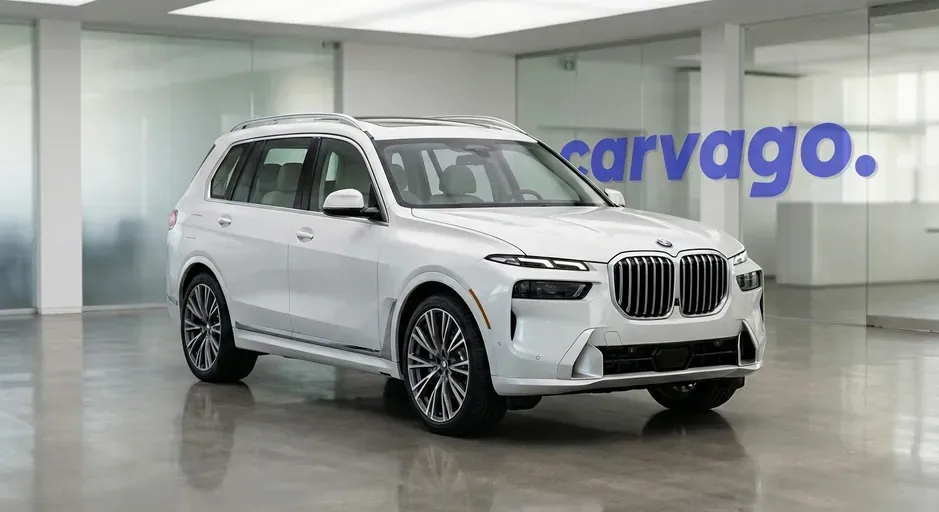
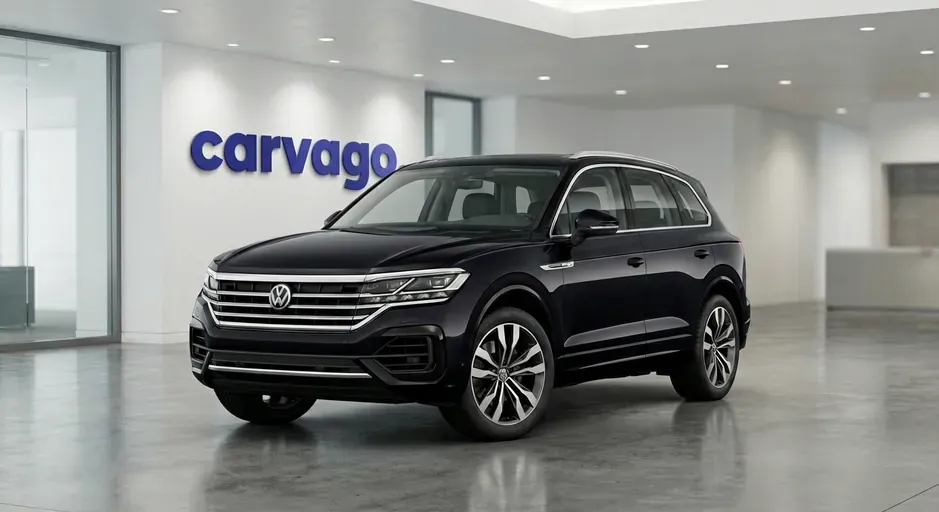
BMW X7 represents the pinnacle of luxury and spaciousness in the SUV segment, as envisioned by the Munich-based automaker, and offers uncompromising comfort combined with powerful engines. Against it stands the Volkswagen Touareg, a premium and technologically advanced model that is the flagship of the Wolfsburg brand and focuses on versatility and elegant design. This comparison will show which of these two German interpretations of a large SUV offers a better combination of features and value for demanding customers.
At first glance, it is clear that the BMW X7 and the Volkswagen Touareg are in slightly different size leagues. The BMW X7 is a full-size seven-seater SUV, which is clearly reflected in its monumental dimensions. It is designed to offer maximum space and comfort, and its presence on the road is unmissable. The Volkswagen Touareg, although also a large and premium SUV, has a more compact footprint and is a five-seater as standard, making it a more agile companion in city traffic.
The biggest difference is noticeable in length. At 5151 mm, the BMW X7 outgrows its competitor by a full 273 mm. This difference is key to the existence of the third row of seats and the generous legroom in the second row. The wheelbase is also longer, by a significant 201 mm, which translates into excellent driving stability on the motorway. In contrast, the Touareg, with its 4878 mm length and shorter wheelbase, is much easier to park and feels more nimble in narrow streets.
The BMW X7 also dominates in height (by 88 mm) and width (by 16 mm). The taller body structure gives the crew a better view of what is happening around the car and a feeling of safety, but at the same time it makes getting in slightly more difficult and raises the centre of gravity. The Touareg is lower and has a sportier, more dynamic feel. The minimal difference in width means that both cars require the driver's attention in narrow lanes and older car parks, but the Touareg has a slight advantage here too. The choice thus depends on priorities: the maximum space and dominance of the X7, or the more balanced and practical dimensions of the Touareg.
| Parameter | BMW X7 SUV | Volkswagen Touareg SUV |
|---|---|---|
| Length (mm) | 5151 | 4878 |
| Width (mm) | 2000 | 1984 |
| Height (mm) | 1805 | 1717 |
| Wheelbase (mm) | 3105 | 2904 |
The boot volume is a key parameter for large SUVs that often influences the purchase decision, and it is here that the BMW X7 and Volkswagen Touareg differ fundamentally. The difference stems from the different concepts of the two cars – while the Touareg is a classic five-seater SUV, the X7 offers three rows of seats as standard and can accommodate up to seven passengers. This has a dramatic impact on the basic usability of the luggage compartment.
The third-generation Volkswagen Touareg (from 2018) boasts one of the largest boots in its class. In its five-seater configuration, it offers a generous 810 litres. This space is easy to use, has a regular shape and can easily accommodate luggage for the whole family on a long holiday, sports equipment or a large shopping trip. In contrast, the BMW X7 (G07 generation) is much more variable in this respect. If you use all seven seats, the luggage space shrinks to a modest 326 litres. This is barely enough for a few smaller bags. However, as soon as you electrically fold down the third row of seats and turn the X7 into a five-seater, you get a very decent volume of 750 litres, which is almost comparable to the Touareg.
The biggest difference becomes apparent when maximum cargo space is needed. After folding down both the second and third rows of seats, the BMW X7 transforms into a small van with a cavernous 2120 litres of space. In this respect, it clearly dominates and shows the advantage of its overall size. The Touareg, after folding down the rear seats, still offers an excellent 1800 litres, which is more than sufficient for most situations, but it is not enough to match its Bavarian rival. It is also important to mention that the plug-in hybrid versions of the Touareg (eHybrid and R) have a slightly smaller boot due to the battery – the basic volume is 665 litres and the maximum is 1675 litres.
| Parameter | BMW X7 SUV | Volkswagen Touareg SUV |
|---|---|---|
| Basic volume (litres) | 326 (with 7 seats) / 750 (with 5 seats) | 810 (665 for plug-in hybrids) |
| Max. volume with seats folded (litres) | 2120 | 1800 (1675 for plug-in hybrids) |
The choice between these two cars from the point of view of the boot is therefore about priorities. If you regularly carry more than five people, the X7 is the only choice, but you have to accept the compromise of a small boot when fully occupied. If five seats are enough for you, the Touareg will offer a slightly larger and more practical boot in its basic configuration. For those who occasionally need to transport a really bulky load, however, the clear winner is the BMW X7.
For many buyers in the large SUV segment, the ability to tow a heavy trailer is a key factor. Whether it's a caravan for a family holiday, a horsebox or a boat, towing capacity is often decisive. In this respect, the battle between the BMW X7 and the Volkswagen Touareg brings a surprisingly clear result – a dead heat.
Both cars, across all relevant engine versions of the G07 generation for BMW and the third generation for Volkswagen, offer the same maximum braked trailer weight of a respectable 3500 kg. This value represents the practical maximum for passenger cars and ensures that neither model will let you down when performing demanding transport tasks. Whether you choose a diesel, petrol or, in the case of the Touareg, even a plug-in hybrid powertrain, the towing capacity remains unchanged.
The same is true for unbraked trailers, where both models can handle the standard 750 kg. This is great news for those interested in a used car – they don't have to limit their choice of engine for fear of lower practicality. In this discipline, therefore, neither car scores a point, and the choice will be based on completely different preferences.
| Model and Engine | Braked trailer weight (kg) | Unbraked trailer weight (kg) |
|---|---|---|
| BMW X7 (G07) - all engine versions | 3500 | 750 |
| Volkswagen Touareg (III) - all engine versions | 3500 | 750 |
The engine lineup is one of the biggest differences between the BMW X7 and the Volkswagen Touareg. While BMW relies on its tradition of refined inline-six and powerful V8 engines, Volkswagen focuses on robust V6 engines and is one of the few in the segment to also offer powerful plug-in hybrid variants. For the used car buyer, it is crucial that both models have previously offered unique and now-discontinued diesel engines with extreme torque, which represent a tempting but specific choice.
The engine range for the BMW X7 (pre-facelift G07 generation, produced until mid-2022) is built on three-litre inline-six engines, which are typical for the brand with their velvety refinement and willingness to rev. The base is the petrol xDrive40i and the diesel xDrive40d (which replaced the previously available xDrive30d). Both engines provide more than enough power for the large SUV and are paired as standard with xDrive all-wheel drive and an eight-speed Steptronic automatic transmission. For those looking for maximum performance, there is the M50i version with a turbocharged 4.4-litre V8. A speciality on the used car market is the M50d version, available only until 2020 – its inline-six diesel engine, boosted by four turbochargers, was a technical marvel and offered crushing torque.
| Engine Type | Fuel | Power (kW) | Torque (Nm) | Transmission |
|---|---|---|---|---|
| xDrive40i (3.0L I6) | Petrol | 245-250 | 450 | 8-speed auto |
| xDrive30d (3.0L I6) | Diesel | 195 | 620 | 8-speed auto |
| xDrive40d (3.0L I6) | Diesel | 250 | 700 | 8-speed auto |
| M50i (4.4L V8) | Petrol | 390 | 750 | 8-speed auto |
| M50d (3.0L I6) | Diesel | 294 | 760 | 8-speed auto |
The third-generation Volkswagen Touareg relies primarily on proven three-litre V6 engines. The most common is the 3.0 V6 TDI diesel engine, which was available in two power variants (170 kW and 210 kW) and is an ideal choice for drivers with high annual mileage due to its combination of power and reasonable fuel consumption. The petrol alternative is the 3.0 V6 TFSI. Like the X7, the Touareg also had a unique top-of-the-line diesel in its lineup – the monstrous 4.0 V8 TDI, which was sold only briefly until 2020 and its 900 Nm of torque makes it a legend. What the X7 from this period does not offer, however, are plug-in hybrids. The Touareg has two versions: the more economical eHybrid and the sporty Touareg R, which combine a petrol V6 with an electric motor and allow for purely electric driving.
| Engine Type | Fuel | Power (kW) | Torque (Nm) | Transmission |
|---|---|---|---|---|
| 3.0 V6 TFSI | Petrol | 250 | 450 | 8-speed auto |
| 3.0 V6 TDI | Diesel | 170 | 500 | 8-speed auto |
| 3.0 V6 TDI | Diesel | 210 | 600 | 8-speed auto |
| 4.0 V8 TDI | Diesel | 310 | 900 | 8-speed auto |
| eHybrid | Plug-in hybrid | 280 | 600 | 8-speed auto |
| Touareg R | Plug-in hybrid | 340 | 700 | 8-speed auto |
The right choice of engine is key to long-term satisfaction. This is doubly true for such large and heavy SUVs, as the engine must effortlessly handle the high weight while keeping running costs within reasonable limits. Our recommendations are based on a combination of performance, real-world fuel consumption, owner feedback, and mechanical reliability. BMW traditionally relies on its excellent inline-six engines, which offer a sporty character and velvety smooth operation, while Volkswagen bets on the proven and robust technology of its V6 TDI engines, known for their massive torque.
The inline-six diesel engine with mild-hybrid technology is an almost ideal choice for the BMW X7 G07 (produced from 2020). It offers a massive 700 Nm of torque, available at low revs, which allows the 2.5-tonne colossus to accelerate with absolute ease and without any noticeable effort. In addition, the mild-hybrid system contributes to smoother starts and reduces fuel consumption.
The six-cylinder turbodiesel is the most common and proven choice for the third-generation Touareg (from 2018). The version with 210 kW (286 hp) and 600 Nm of torque is the golden mean, providing more than enough performance for daily use and longer journeys. This engine is known for its robustness and reliability across the entire VW Group.
Official fuel consumption figures are one thing, but the reality of everyday driving often shows different numbers. This is doubly true for such large and heavy SUVs. To get the most accurate picture, we looked at data from drivers themselves, for example, from the German portal Spritmonitor.de, which collects real experiences from thousands of owners. And it is these figures that reveal how both cars perform in normal use.
On paper, the differences may seem small, but in practice, consumption depends on the specific engine and driving style. In the table below, we present the average real-world consumption for the most common engines of both models from years that are relevant to the used car market.
| Model and Engine | Average Real-world Consumption (l/100 km) |
|---|---|
| BMW X7 xDrive40i (3.0 R6 Petrol) | 10.5 - 11.5 |
| BMW X7 xDrive40d (3.0 R6 Diesel) | 8.5 - 9.5 |
| BMW X7 M50i (4.4 V8 Petrol) | 12.5 - 14.0 |
| Volkswagen Touareg 3.0 V6 TFSI (3.0 V6 Petrol) | 10.8 - 12.0 |
| Volkswagen Touareg 3.0 V6 TDI (3.0 V6 Diesel, 210 kW) | 8.7 - 9.8 |
| Volkswagen Touareg 4.0 V8 TDI (4.0 V8 Diesel) | 9.5 - 10.5 |
| Volkswagen Touareg R (3.0 V6 PHEV) | 3.0 - 5.0* |
*The consumption of a plug-in hybrid is highly dependent on regular charging. The value shown applies to the first 100 km with a charged battery.
Several trends are clear from the data. In a direct comparison of the six-cylinder diesels, which are the most common choice for both models, there is almost a consensus. BMW's modern inline-six in the 40d is, on average, a few tenths of a litre more economical than Volkswagen's V6 TDI, but in real-world operation, this difference is negligible. For long-distance travellers, both variants are an excellent choice that can keep consumption below the 10 l/100 km mark.
A similar pattern emerges with the petrol six-cylinders – both power units require an average of 11 litres. The powerful V8 versions are logically the thirstiest. However, the comparison between the petrol BMW M50i and the diesel Touareg V8 TDI is interesting here. Although they offer stunning performance, the V8 diesel in the Volkswagen is 2 to 3 litres per 100 km more economical in the real world.
The key difference comes from Volkswagen with its plug-in hybrid version, the Touareg R. For drivers who have the opportunity to charge regularly and whose daily mileage does not exceed 40-50 km, this is by far the most economical option. In this mode, you can drive with minimal petrol consumption. Conversely, if the battery runs out, consumption will approach that of the petrol six-cylinder. Therefore, consumption is not the main deciding factor unless you are considering the plug-in hybrid, which only the Touareg offers. In both diesel and petrol versions, the two cars are very similar, and the differences in fuel costs will be minimal.
When looking at the used car market, there is a clear price difference between the BMW X7 and the Volkswagen Touareg. Although both models offer a premium experience, their market positioning and purchase prices differ, which logically translates into the value of cars that are approximately four years old.
The third-generation Volkswagen Touareg (produced since 2018) represents the more affordable choice in this duel. For 2022 models, prices on the Czech used car market most often range from €54,000 to €60,000. The price, of course, depends on the specific engine, equipment level, and mileage, which for these vehicles is usually between 50,000 and 80,000 km. The Touareg thus offers technology related to the Audi Q7 or Porsche Cayenne at a significantly lower price, making it an attractive choice for drivers looking for maximum value.
The BMW X7 (G07) trades for significantly higher amounts on the used car market. For comparably old models from 2022, you should expect a price that usually ranges between €66,000 and €74,000, and it can be even higher for better-equipped or more powerful versions. The price difference compared to the Touareg thus amounts to several thousand euros. This difference is due not only to the more prestigious brand but also to the standard third row of seats, more luxurious interior materials, and often more advanced technology on board.
| Model | Approximate price range (2022 model year) |
|---|---|
| Volkswagen Touareg | €54,000 - €60,000 |
| BMW X7 | €66,000 - €74,000 |
Summary
While the Volkswagen Touareg is a smart choice for those who want a premium SUV with excellent technology for a more reasonable price, the BMW X7 justifies its price with a higher level of luxury, space, and prestige. The decision, therefore, depends on the buyer's priorities and budget – whether they prefer the more rational choice in the form of the Touareg or indulge in the more opulent and spacious X7.
When choosing a large family SUV, safety is an absolute priority. Although it might seem that both premium vehicles would offer top-notch protection, their paths diverge in the stringent Euro NCAP tests. It is important to realise that the methodology of these tests is constantly becoming stricter, and therefore the year of testing is a key factor for comparison. Newer tests place greater emphasis on active assistance systems and the protection of vulnerable road users.
It may come as a surprise to many that BMW's flagship model, the X7, has never undergone crash tests by the Euro NCAP organisation. However, this does not automatically mean it is an unsafe vehicle. The reason is more to do with pricing policy and lower sales volumes compared to more mass-market models. Euro NCAP focuses primarily on the best-selling cars on the European market. Although we do not have an official rating, the X7 is equipped with an extensive set of standard passive and active safety features, as befits a vehicle in this category. The body's rigidity and technology are largely shared with the X5 model, which received five stars in 2018.
The Volkswagen Touareg was tested by Euro NCAP in 2018 and received a full five-star rating. This result attests to a high level of safety across all monitored categories. It achieved an excellent 89% for adult occupant protection and 86% for child occupant protection. A score of 72% for the protection of vulnerable road users (pedestrians and cyclists) and 81% for assistance systems demonstrate that the Touareg was already equipped with modern safety technologies at the time of its launch.
Although the BMW X7 undoubtedly has a robust construction and modern technologies, the absence of an official rating from Euro NCAP is a significant drawback for some buyers. In contrast, the Volkswagen Touareg has its qualities confirmed by its five-star rating from 2018. Although several years have passed since the test and the methodology has become stricter again, its results still represent a very high standard of safety. For the customer for whom transparent and independently verified safety is key, the Touareg is the more certain choice.
| Parameter | BMW X7 | Volkswagen Touareg |
|---|---|---|
| Year of testing | Not tested | 2018 |
| Adult occupant protection | Not tested | 89 % |
| Child protection | Not tested | 86 % |
| Vulnerable road user protection | Not tested | 72 % |
| Assistance systems | Not tested | 81 % |
In addition to the standard equipment, each model offers several unique features that may be decisive for the customer. While BMW focuses on luxurious details and maximum comfort for seven passengers, Volkswagen concentrates on technological innovations and practicality for five.
The BMW X7 prides itself on a feeling of exclusivity and offers features that move it closer to luxury limousines than to ordinary SUVs.
The third-generation Touareg presents itself as the brand's technological leader, bringing features to the segment that were previously reserved for premium brands only.
Advantages:
Disadvantages:
Advantages:
Disadvantages:
Based on our own CarAudit inspections, breakdown statistics, and service data, we have compiled an overview of the most common problems that buyers of used cars should watch out for. Although both cars are technologically advanced, some specific faults may appear as the mileage increases.
The BMW X7 is generally considered a reliable car, but its complexity means that some areas require increased attention. Most reported problems relate to minor electronic glitches rather than serious mechanical failures, especially in younger model years.
Summary for the BMW X7: The problems are mostly minor and can be resolved with a software update. However, a careful independent inspection of the car's technical condition is important, especially for V8 engines, where the risk of costly repairs may be higher.
The third-generation Touareg shares its platform with premium siblings like the Audi Q7 or Porsche Cayenne and is considered a very solidly built car. Nevertheless, some typical problems of VW Group cars do appear.
Summary for the Volkswagen Touareg: The Touareg is a mechanically durable car, but its Achilles' heel can be the complex electronics, which can act up occasionally. A thorough, comprehensive inspection of the vehicle before purchase is essential here, focusing primarily on the functionality of all assistance systems and the condition of the air suspension.
When buying a used car, a thorough inspection is key, and premium SUVs are no exception. Here are a few specific points to focus on for the BMW X7 and the Volkswagen Touareg, as both models have their known weaknesses.
The BMW X7 (G07, from 2018) is a complex and technologically packed vehicle, which requires a careful inspection. A thorough physical inspection of the used car is an absolute necessity.
The third-generation Touareg (CR, from 2018) is generally reliable, but here too, there are areas that deserve attention. A comprehensive vehicle inspection is always a safe bet before buying.
The BMW X7 is larger overall and is the only one in this comparison to offer three rows of seats for seven passengers as standard. The Volkswagen Touareg is strictly a five-seater, but surprisingly offers a slightly larger basic boot volume (810 litres compared to 750 litres in the X7). However, when the seats are folded down, the X7 wins in maximum volume with 2120 litres versus the Touareg's 1800 litres.
Both models offer powerful six-cylinder and eight-cylinder engines, but the BMW X7 has the upper hand in performance, with top versions offering up to 530 horsepower. The Volkswagen Touareg has a maximum output of 462 horsepower in the plug-in hybrid version. The Touareg also focuses on more economical operation with plug-in hybrid variants, which the BMW X7 of this generation does not offer.
The Volkswagen Touareg is generally more economical, especially in the plug-in hybrid version, where combined consumption can drop to as low as 2.2 l/100 km. Even with purely combustion engines, the Touareg shows lower fuel consumption than a comparably powerful BMW X7. In the long term, service costs for the Volkswagen brand are usually lower than for premium brands like BMW.
The BMW X7 is focused on maximum luxury and comfort on long journeys, which is reflected in its standard air suspension and longer wheelbase. The Volkswagen Touareg also offers a high level of comfort and is more agile in city traffic due to its more compact dimensions. Both cars feature all-wheel drive and advanced assistance systems.
Yes, the price difference is significant. As the brand's flagship, the BMW X7 is in a higher price category, which corresponds to its more luxurious concept and standard seven-seat configuration. The Volkswagen Touareg is a more affordable alternative that still offers premium equipment and technology. The difference in the purchase price of both new and used cars can amount to tens of thousands of euros.
Sources: ADAC, svetmotoru.cz, garaz.cz, emobility.cz, motorvize.cz, autickar.cz
This article was prepared using artificial intelligence tools. The section guarantor is Petr Dušek.
Audi Q7 vs. Audi Q8: Which luxury SUV is better for you? A detailed comparison of design, practicality, and driving performance to help you decide.
Apr 13, 2026
Volvo XC90 vs. Volkswagen Touareg: Which premium SUV is better? A detailed comparison, tests, and a clear verdict will help you choose.
Apr 14, 2026
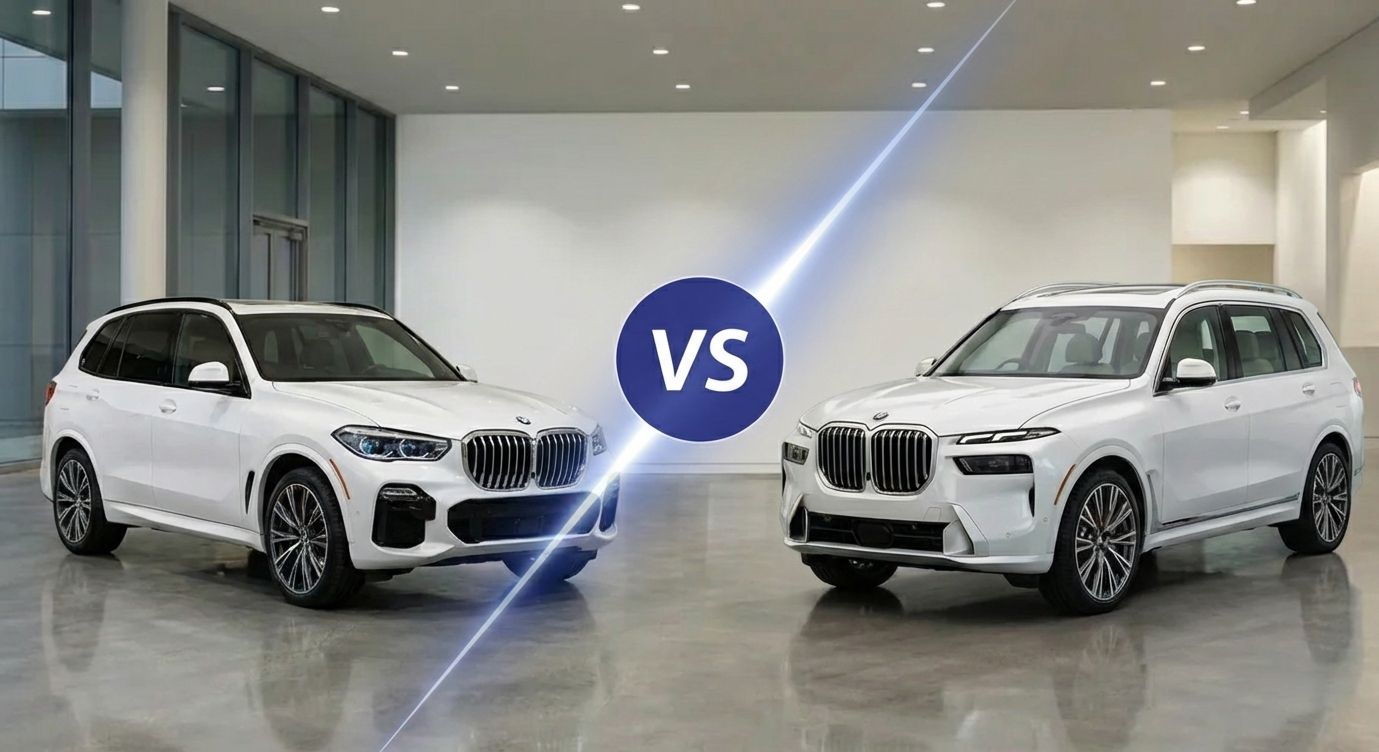
Detailed comparison of the BMW X5 vs. BMW X7. Discover the main differences in space, equipment, and real-world driving characteristics. Read our verdict and make the right choice!
Apr 14, 2026