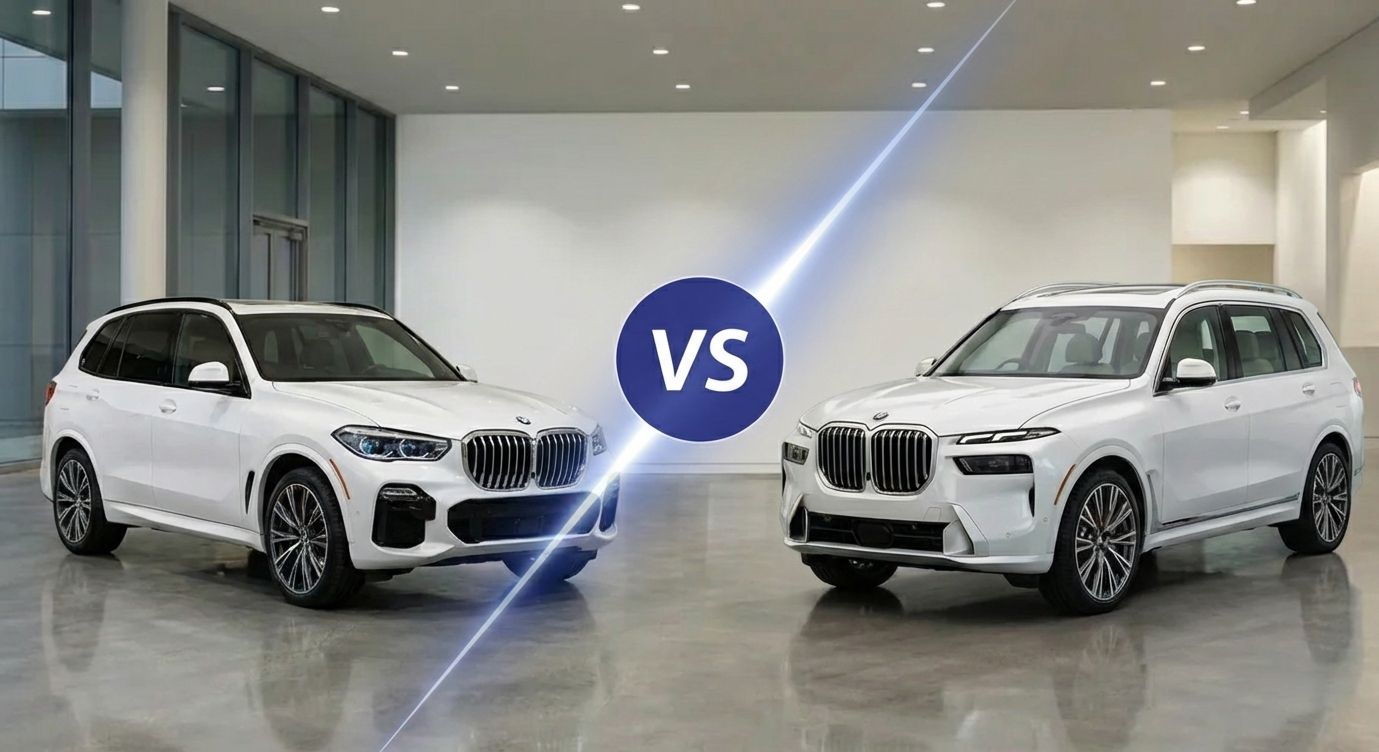
Car battle
BMW X5 vs. BMW X7: Complete comparison 2026
Detailed comparison of the BMW X5 vs. BMW X7. Discover the main differences in space, equipment, and real-world driving characteristics. Read our verdict and make the right choice!
Apr 14, 2026
Articles
Car battle
Audi Q7 vs. Audi Q8: Which luxury SUV is better for you? A detailed comparison of design, practicality, and driving performance to help you decide.
April 13, 2026
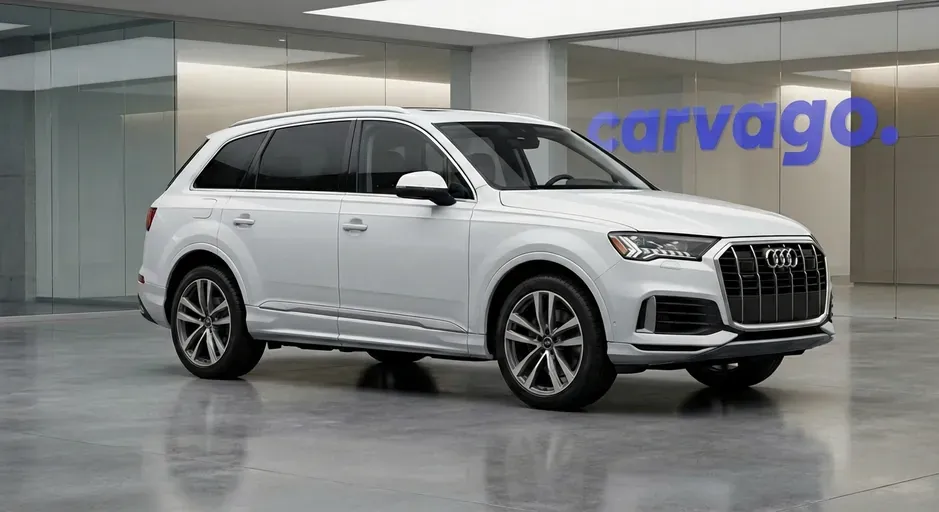
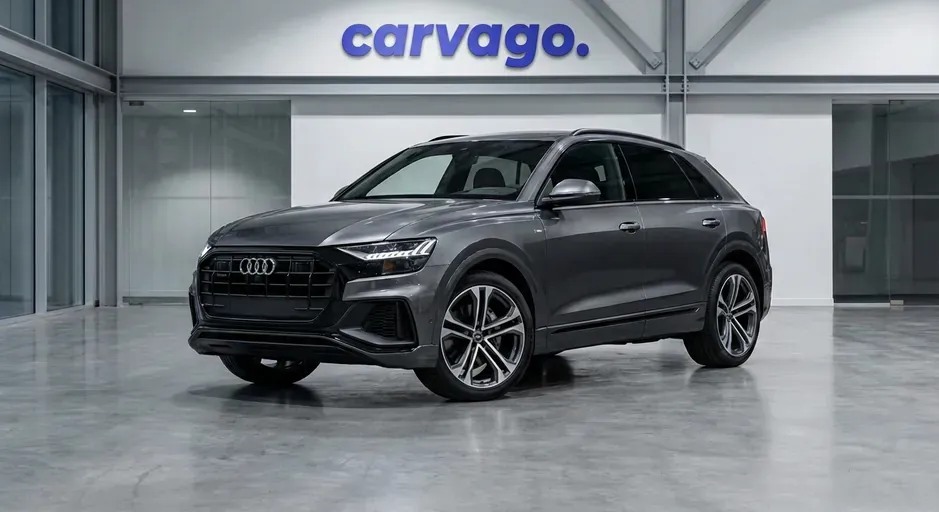
The Audi Q7 has long been the benchmark for a spacious and luxurious family SUV, offering room for up to seven passengers and uncompromising practicality in its generous interior. It is challenged by the Audi Q8, which presents a more emotive and sportier SUV-coupé style alternative, focusing primarily on bold design and more dynamic driving characteristics. Although both cars share a technical foundation, their characters are so different that they deserve a detailed comparison to help you discover which one is right for you.
Although the Audi Q7 and Q8 share the same technical platform, their exterior dimensions clearly reveal their different focuses. While the Q7 maximises interior space and practicality, the Q8 opts for a dynamic and muscular look. These differences are noticeable at first glance and play a key role in deciding which model will better suit your needs.
The biggest difference is in length and height. At 5063 mm, the Audi Q7 is a noticeable 77 mm longer than the Q8. This difference is mainly utilised in the rear of the car, allowing the Q7 to offer an optional third row of seats and a larger boot. At 1741 mm, it is also 36 mm taller, which gives the cabin a more airy feel and a better view. For large families or those who regularly carry bulky loads, the Q7 is clearly the more practical choice.
In contrast, the Audi Q8's proportions signal a sportier character. It is 25 mm wider than the Q7, which, combined with the lower body, creates an impression of stability and a hunkered-down stance. The lower, coupé-style roofline is the main design element that sets the Q8 apart. While this slightly limits headroom in the rear seats, it gives the car a more dynamic and aggressive look that will appeal to drivers who prefer style over maximum utility.
An interesting fact is that both models have the exact same wheelbase of 2995 mm. This means that the basic legroom for passengers in the front and second rows is very similar. The differences in overall length are therefore due to the longer body overhangs on the Q7.
| Parameter | Audi Q7 (4M, 2019–2023) | Audi Q8 (4M, 2018–2022) |
|---|---|---|
| Length (mm) | 5063 | 4986 |
| Width (mm) | 1970 | 1995 |
| Height (mm) | 1741 | 1705 |
| Wheelbase (mm) | 2995 | 2995 |
Practicality and luggage space are key factors in large SUVs, and this is where the Audi Q7 and Q8 differ significantly. While the Audi Q7 is designed as a supremely practical family car, the Q8 sacrifices some utility for its sportier design with a sloping rear. This difference is immediately apparent when looking at the boot volume figures.
The second-generation Audi Q7 (4M, after the 2019 facelift) is the clear winner in this discipline. In its basic five-seat configuration, it offers a huge boot space of 865 litres. This is a volume that can easily accommodate the luggage of an entire family for a long holiday, sports equipment, or a large shopping trip. Folding down the rear seats creates an almost perfectly flat surface and increases the transport capacity to an impressive 2050 litres, making the Q7 a real workhorse.
The Audi Q8, despite sharing its technical underpinnings with the Q7, offers a noticeably smaller boot due to its elegant SUV-coupé silhouette. The basic volume is 605 litres, which is still a very generous figure that is perfectly adequate for most everyday situations. However, the 260-litre difference in favour of the Q7 is not insignificant. With the seats folded down, the Q8 provides a maximum volume of 1755 litres. Here too, it lags behind its more practical sibling, but it still offers more than enough space for transporting bulky items.
It is also important to mention the plug-in hybrid versions, where the luggage space is reduced due to the battery storage. In the Audi Q7 TFSI e (around 2020), the basic volume drops to a still solid 650 litres. The Audi Q8 TFSI e from the same period offers 505 litres. Even in the electrified variants, the Q7 maintains its lead in practicality.
| Parameter | Audi Q7 (SUV) | Audi Q8 (SUV) |
|---|---|---|
| Basic volume (litres) | 865 | 605 |
| Maximum volume with seats folded (litres) | 2050 | 1755 |
The ability to tow a heavy trailer is a key parameter for many large SUV buyers. Whether you need to transport a boat, a caravan, or a horsebox, both the Audi Q7 and Q8 offer impressive figures, but with one crucial difference. While the Q7 is a more versatile powerhouse in this respect, the Q8 saves its maximum strength for a specific version.
The second-generation Audi Q7 (4M), especially after the 2019 facelift, is a real favourite for those who require maximum towing capacity. Most common engine options, such as the 45 TDI, 50 TDI, or 55 TFSI, can tow a braked trailer of up to 3500 kg with optional equipment (usually air suspension). Without this specification, the figure is around 2700 to 2800 kg. Remarkably, even the top-of-the-range 60 TFSI e plug-in hybrid retains the full 3500 kg capacity, making it an extremely versatile choice.
The Audi Q8, despite sharing the same technical platform, takes a slightly different approach to towing capacity. Most models from the relevant years, including the popular 45 TDI, 50 TDI, and 55 TFSI versions, have a standard maximum braked trailer weight of 2800 kg. This is still more than sufficient for most situations. However, if you're looking for the maximum, you have to turn to the only variant that matches the Q7 – the plug-in hybrid Q8 60 TFSI e, which can also tow 3500 kg.
For the buyer, this means a clear choice: if the absolute priority is the maximum towing capacity of 3.5 tonnes and you want to choose from more conventional engines, the Audi Q7 is a safer bet. If a solid 2.8 tonnes is enough for you, or you're looking for a plug-in hybrid with maximum power, the Q8 offers clearly defined and still very capable options.
| Model and Engine | Braked trailer weight (kg) | Unbraked trailer weight (kg) |
|---|---|---|
| Audi Q7 50 TDI (4M) | 2700 - 3500 | 750 |
| Audi Q7 55 TFSI e (4M) | 2700 - 3500 | 750 |
| Audi Q8 50 TDI (4M) | 2800 | 750 |
| Audi Q8 60 TFSI e (4M) | 3500 | 750 |
The Audi Q7 and Q8 share the same technical platform, which means their engine range is almost identical. For both models, the basis is formed by powerful three-litre six-cylinder engines, whether diesel (TDI) or petrol (TFSI), which are equipped with 48V mild-hybrid technology as standard to reduce consumption and provide a smoother ride. All engines are paired with an eight-speed Tiptronic automatic transmission and the legendary quattro all-wheel drive. The differences only appear in the top-of-the-range sports versions, where the Q8 offers an even more extreme variant than the Q7.
The Audi Q7's engine range is focused on confident and comfortable performance, ideal for family travel and long distances. The basis is the proven 45 TDI and 50 TDI diesel engines, which offer an excellent compromise between dynamics and fuel consumption. The petrol alternative is the 55 TFSI, which provides a more refined and quieter operation. For environmentally conscious drivers, plug-in hybrid versions 55 TFSI e and 60 TFSI e were also available. The pinnacle is the sporty SQ7 model, which was initially available with a massive eight-cylinder diesel and switched to an equally powerful petrol V8 from 2020.
Overview of Audi Q7 engines (4M, facelift 2019–2023)
| Engine | Fuel | Power (kW) | Torque (Nm) | Transmission |
|---|---|---|---|---|
| 45 TDI | Diesel | 170 | 500 | 8-speed Tiptronic |
| 50 TDI | Diesel | 210 | 600 | 8-speed Tiptronic |
| 55 TFSI | Petrol | 250 | 500 | 8-speed Tiptronic |
| 55 TFSI e | Plug-in Hybrid | 280 | 600 | 8-speed Tiptronic |
| 60 TFSI e | Plug-in Hybrid | 340 | 700 | 8-speed Tiptronic |
| SQ7 TDI (until 2020) | Diesel | 320 | 900 | 8-speed Tiptronic |
| SQ7 TFSI (from 2020) | Petrol | 373 | 770 | 8-speed Tiptronic |
The Audi Q8 shares its basic engine line-up with the Q7, including the popular six-cylinder 45 TDI, 50 TDI, and 55 TFSI, as well as the plug-in hybrid variants. Here too, at the top of the standard range is the sporty SQ8 model, which, like the SQ7, underwent a change from a diesel V8 to a petrol V8. However, the key difference and the ace up the Q8's sleeve is the existence of the top-of-the-line RS Q8 version. This model, which the Q7 does not offer, is powered by a brutal four-litre twin-turbocharged V8 and offers the dynamics of a supercar in an SUV-coupé body.
Overview of Audi Q8 engines (4M, 2018–2023)
| Engine | Fuel | Power (kW) | Torque (Nm) | Transmission |
|---|---|---|---|---|
| 45 TDI | Diesel | 170 | 500 | 8-speed Tiptronic |
| 50 TDI | Diesel | 210 | 600 | 8-speed Tiptronic |
| 55 TFSI | Petrol | 250 | 500 | 8-speed Tiptronic |
| 55 TFSI e | Plug-in Hybrid | 280 | 600 | 8-speed Tiptronic |
| 60 TFSI e | Plug-in Hybrid | 340 | 700 | 8-speed Tiptronic |
| SQ8 TDI (until 2020) | Diesel | 320 | 900 | 8-speed Tiptronic |
| SQ8 TFSI (from 2020) | Petrol | 373 | 770 | 8-speed Tiptronic |
| RS Q8 | Petrol | 441 | 800 | 8-speed Tiptronic |
For most drivers, the choice of engine will depend more on personal preference than on the differences between the models.
Choosing the right engine is absolutely key to long-term satisfaction with the car. We have compiled the following recommendations based on a combination of performance, real-world fuel consumption, owner feedback, and mechanical reliability. With both models built on the same platform, you will encounter a similar range of engines, but the character of each car favours a different choice.
For a large family SUV, which the Audi Q7 undoubtedly is, the more powerful version of the three-litre V6 diesel is the ideal choice. It offers a perfect balance of confident power, touring comfort, and reasonable running costs. With 210 kW (286 hp) of power and a massive 600 Nm of torque, the engine always has enough power, whether you're fully loaded for a holiday or towing a heavy trailer.
While the Q7 is primarily a practical family car, the Q8 with its SUV-coupé body targets style and dynamics. A refined and powerful petrol six-cylinder engine is better suited to this character. The 55 TFSI engine provides velvety smooth operation, instant throttle response, and a soundtrack that better matches the car's sporty-luxury focus.
Official fuel consumption figures are one thing, real-world operation is another. Especially with large and heavy SUVs like the Audi Q7 and Q8, driving style and route profile play a crucial role. To get the most accurate picture, we looked at data from real owners who carefully record their refuelling on the German portal Spritmonitor.de. This data gives us a much more realistic idea of the running costs that can be expected from the most common engine versions.
The following table shows the average consumption for the key engine versions of the 4M generation, which is relevant for the used car market for vehicles approximately four years old.
| Model and engine version | Average real-world consumption (l/100 km) |
|---|---|
| Audi Q7 45 TDI (170 kW) | 8.8 |
| Audi Q7 50 TDI (210 kW) | 9.4 |
| Audi Q7 55 TFSI (250 kW) | 11.8 |
| Audi Q8 45 TDI (170 kW) | 8.7 |
| Audi Q8 50 TDI (210 kW) | 9.2 |
| Audi Q8 55 TFSI (250 kW) | 11.5 |
As the data shows, the diesel six-cylinders are clearly the more economical choice. The difference between the weaker 45 TDI variant and the more powerful 50 TDI is negligible in practice, usually in the order of a few tenths of a litre. Most drivers will comfortably fit within the 8.5 to 9.5 l/100 km range with both versions, which is a very respectable figure for an over two-tonne SUV with all-wheel drive. For those who often drive long distances on the motorway, the TDI engines represent an ideal compromise between dynamics and running costs.
The 55 TFSI petrol six-cylinder offers smoother operation and higher performance but requires more frequent visits to the petrol station. Its real-world consumption is around 11.5 to 12 litres, but during dynamic driving or in city traffic, it's not a problem to exceed the 13 l/100 km mark. The slightly lower average consumption of the Q8 compared to the Q7 for both engine types can be attributed to slightly better aerodynamics and a marginally lower weight. In the real world, however, the differences are so small that the average user will hardly notice them.
Ultimately, fuel consumption should not be the deciding factor when choosing between the Q7 and Q8. With identical engines, the running costs are very similar. The choice will therefore depend more on personal preferences – whether you prefer the maximum practicality and the option of seven seats in the Q7, or the more stylish and sportier design of the five-seater Q8.
When comparing the prices of used Audi Q7 and Audi Q8 models, a clear trend is noticeable – the sportier-styled Q8 holds a higher price than its more practical sibling, the Q7. This difference is due not only to the Q8's later market launch date but also to its positioning as a more stylish and exclusive alternative.
The prices of used Audi Q7 models from 2020 to 2022 on the Czech market range widely, starting at approximately €47,000. For this price, you can get cars with higher mileage (often over 150,000 km) and the basic 45 TDI diesel engine.
Cars with the more sought-after 50 TDI (210 kW) engine, popular S line trim, and mileage under 100,000 km typically range from €53,000 to €65,000. The price further depends on specific equipment, such as air suspension, a panoramic roof, or advanced assistance systems. The plug-in hybrid versions or the more powerful SQ7 are priced even higher.
The Audi Q8, as an SUV-coupé, starts on the used car market at a higher price level. The cheapest units from 2020-2021 with higher mileage and the weaker 45 TDI engine rarely appear below the €57,000 mark.
Most of the offers are concentrated on the popular 50 TDI version in the S line trim. Here, prices for cars with reasonable mileage (up to 100,000 km) most often range between €66,000 and €82,000 and more. Similar to the Q7, optional equipment plays a key role here, which can increase the price by thousands of euros.
In conclusion, for a similar year of manufacture, mileage, and engine, the Audi Q8 will typically be €8,000 to €16,000 more expensive than the Audi Q7. The choice thus depends on the buyer's priorities – whether they prefer the practicality and seven seats of the Q7, or the dynamic design and exclusivity of the Q8.
When choosing a premium SUV, safety is a key factor, and in this area, both Audi models perform equally well at first glance – both boast a five-star rating from Euro NCAP. However, it is important to look at the details and the context of the tests. Both the Audi Q7 and Audi Q8 were tested in 2019, which means their results are directly comparable under the then-current, already quite strict protocols. These tests included more demanding scenarios than in previous years, such as cyclist detection and emergency braking in various situations.
The Audi Q7 underwent Euro NCAP crash tests in 2019 and received a full five stars. It achieved excellent results in individual categories: adult occupant protection was rated at 92% and child occupant protection at 86%. In the area of protecting vulnerable road users, such as pedestrians and cyclists, the Q7 scored 71%. Its arsenal of assistance systems, including autonomous emergency braking and lane keeping assist, was rated at 72%. These figures confirm that the Q7 remains a very safe family car even after its facelift.
Just a few weeks later in the same year, the more stylish SUV-coupé Audi Q8 also underwent Euro NCAP tests. The result was practically identical, also earning five stars. In the details, however, the Q8 performed marginally better. Adult occupant protection was evaluated at 93% and child protection at 87%. The score for the protection of vulnerable road users was an identical 71%, and the assistance systems scored one percentage point higher, at 73%. Euro NCAP states in its report that the Q8 shares most of its structure with the Q7, which explains the very similar results.
Although the percentage differences are minimal and practically negligible in the real world, on paper, the Audi Q8 is a hair better in both occupant protection and the rating of its assistance systems. Nevertheless, both models represent the absolute pinnacle of safety in their class, providing comprehensive protection thanks to their robust construction and modern electronic aids. The decision between them in terms of safety will therefore be more about personal preference than objective differences.
| Parameter | Audi Q7 | Audi Q8 |
|---|---|---|
| Year of testing | 2019 | 2019 |
| Adult occupant protection | 92 % | 93 % |
| Child occupant protection | 86 % | 87 % |
| Vulnerable road user protection | 71 % | 71 % |
| Assistance systems | 72 % | 73 % |
In addition to the standard equipment, each model offers several unique features that may be decisive for the customer. While the Audi Q7 focuses on maximum comfort and practicality for a large family, the Q8 counters with a sportier style and technological refinements.
The Audi Q7 made a huge leap in technology after its 2020 facelift, bringing it closer to its sibling, the Q8. Nevertheless, it retains unique features focused on practicality and comfort.
The Audi Q8 was conceived from the start as a more stylish and dynamic alternative to the Q7. Its equipment and design elements clearly prove this.
Based on our own CarAudit inspections, breakdown statistics, and service bulletins, we have compiled an overview of the most common problems that used car buyers should be aware of. Although both models are built on the same platform, their reliability differs slightly in the details.
The second-generation Q7 is considered dramatically more reliable than its predecessor. Nevertheless, it has not escaped a few typical ailments, although most of them are more of an annoying than a fatal nature.
Summary for the Q7: Most problems relate to the electronics and chassis in higher-mileage cars. The mechanical foundation is very solid. A careful physical inspection of the used car and a check of its service history are key.
The Audi Q8 shares its technology with the Q7, but as a newer model, it has already had some of its "teething problems" sorted out. Nevertheless, it has its own specific issues, often related to the mild-hybrid system.
Summary for the Q8: The main risk here is the more complex 48V mild-hybrid system in the early model years. Compared to the Q7, there are fewer reports of problems with the air suspension, which is also due to the lower average age of the cars on the market. An independent inspection of the car's technical condition is an absolute must here as well.
When buying a used car, a thorough inspection is key, and premium models like Audi Q7 and Q8 are no exception. Here are a few specific points to focus on with these two SUVs.
The main difference lies in their focus and seating capacity. The Audi Q7 is designed as a practical, family SUV with three rows of seats for seven passengers. In contrast, the Audi Q8 is a sportier SUV-coupé with five seats, placing a greater emphasis on design and a luxurious experience for the occupants.
For families with multiple children, the Audi Q7 is clearly the more practical choice. It offers seven seats and more overall interior space for passengers and luggage. While the Q8 is still spacious, it is designed for only five people, and its sloping roofline slightly limits rear headroom.
Both models share the same platform and offer similar engine options, including the quattro all-wheel-drive system. However, the Q8 comes with a more powerful engine as standard and is tuned to be sportier overall, with an emphasis on more dynamic driving characteristics. The Q7 focuses more on comfort and a smooth ride, although it also offers very good dynamics with the optional six-cylinder engine.
The Audi Q7 has a larger and more versatile luggage compartment. With the third row of seats folded down, it offers a volume of 770 litres, while the Q8 provides 605 litres. When all the rear seats are folded, the volume in the Q7 increases to 1950 litres, which is significantly more than in the Q8.
The higher price of the Audi Q8 reflects its positioning as a more stylish and luxurious model. You are paying for a bolder design, a sportier character, and often a richer standard equipment list. Although they are technically very similar, the Q8 targets customers for whom design and image are a priority over maximum practicality.
Sources: ADAC, pistonheads.com, topgear.com, electrek.co, motortrend.com, plugincars.com
This article was prepared using artificial intelligence tools. The section guarantor is Petr Dušek.
Detailed comparison of the BMW X5 vs. BMW X7. Discover the main differences in space, equipment, and real-world driving characteristics. Read our verdict and make the right choice!
Apr 14, 2026
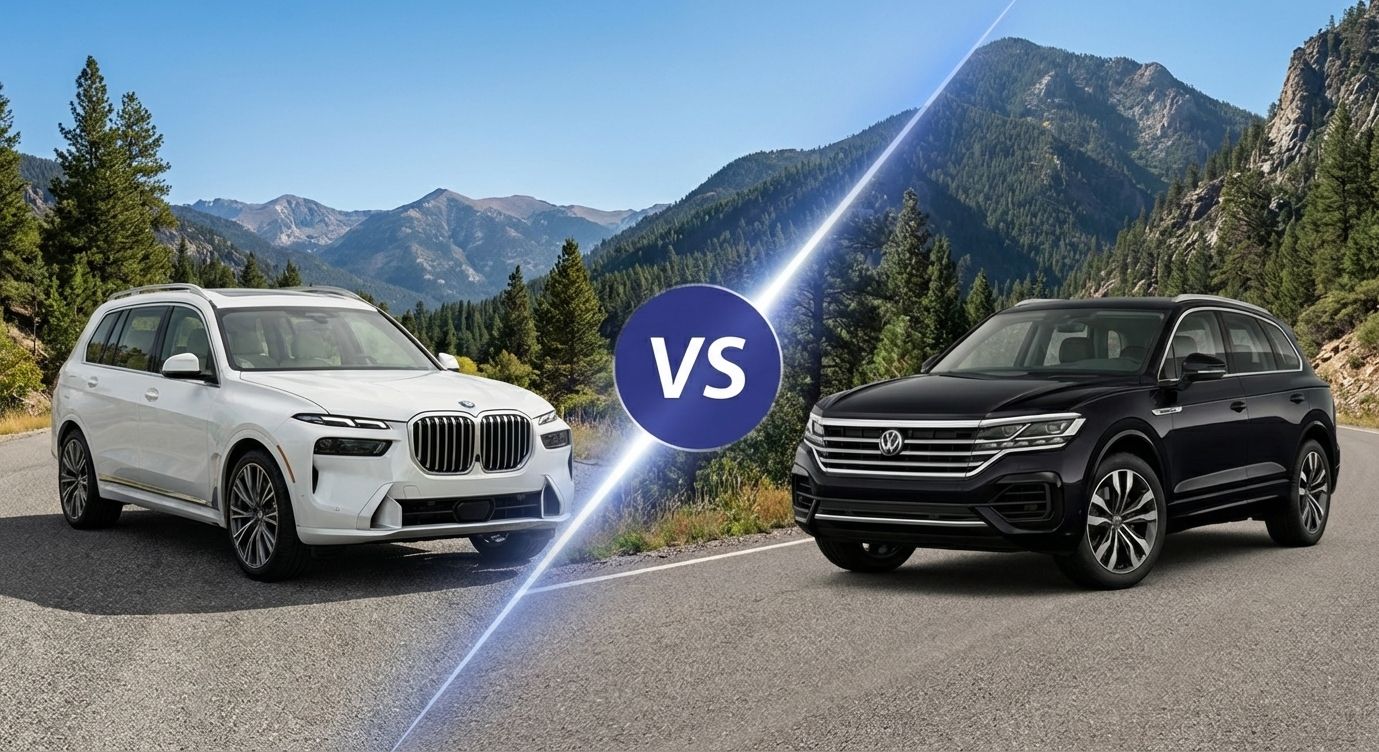
BMW X7 vs. Volkswagen Touareg. Our detailed comparison of design, performance, and practicality will help you choose the right luxury SUV.
Apr 14, 2026
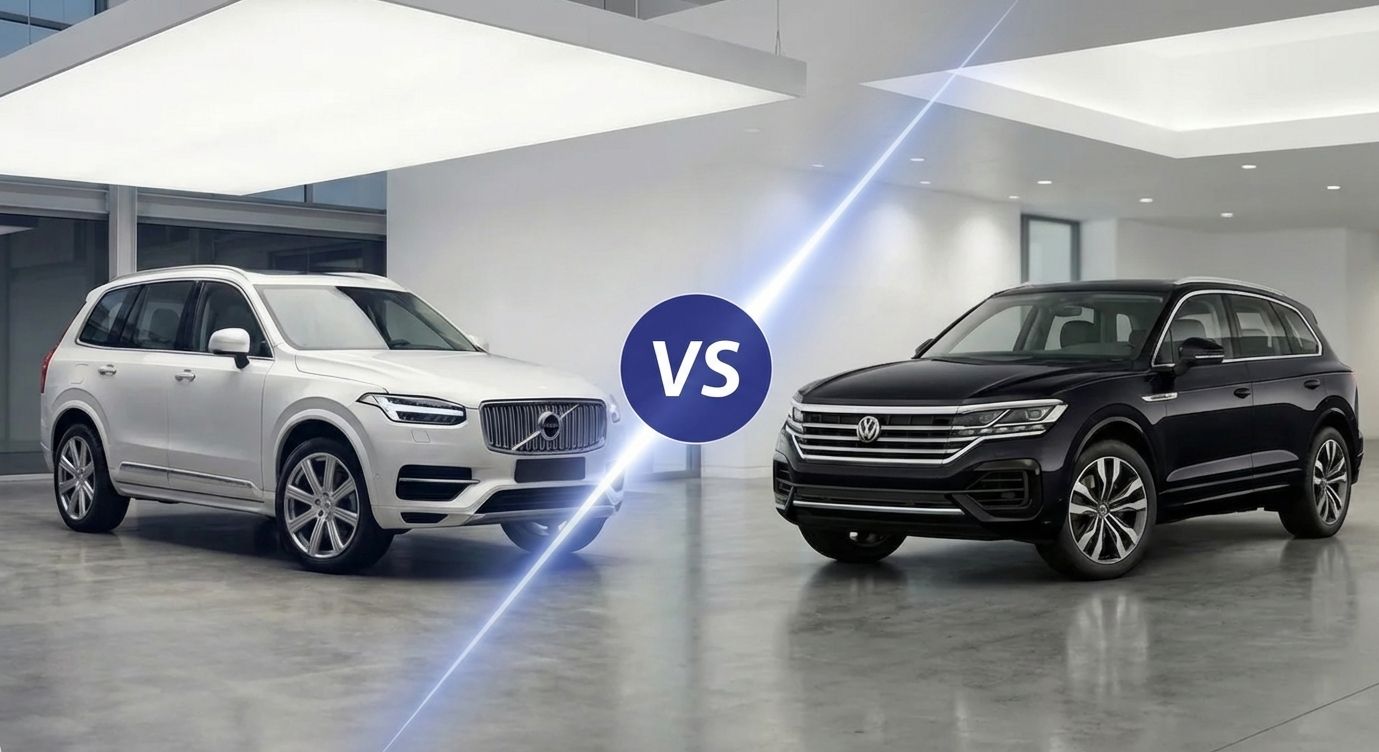
Volvo XC90 vs. Volkswagen Touareg: Which premium SUV is better? A detailed comparison, tests, and a clear verdict will help you choose.
Apr 14, 2026