Articles

Car battle

Porsche Cayenne vs. Volvo XC90: Complete comparison 2026

Detailed comparison of Porsche Cayenne vs Volvo XC90. Find out which of these premium SUVs offers better performance, comfort, and operating costs as a used car.

April 22, 2026

VS
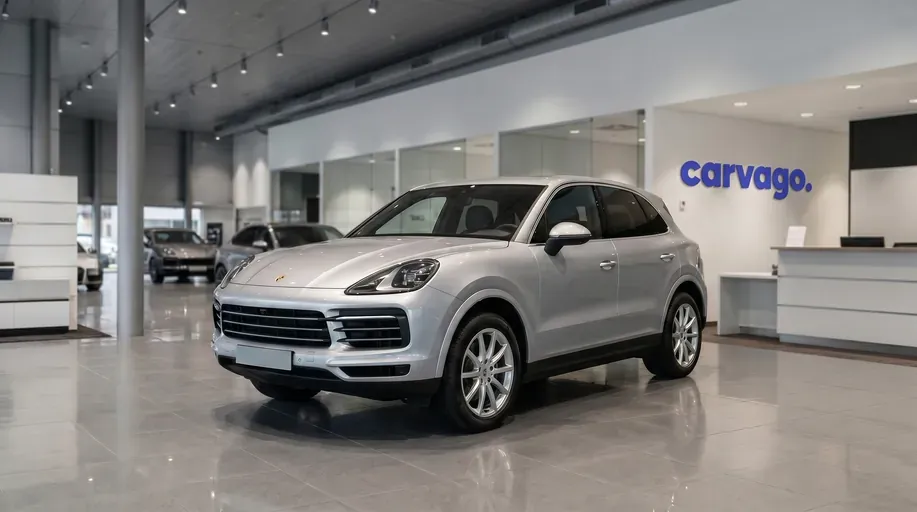
Porsche Cayenne

Porsche Cayenne

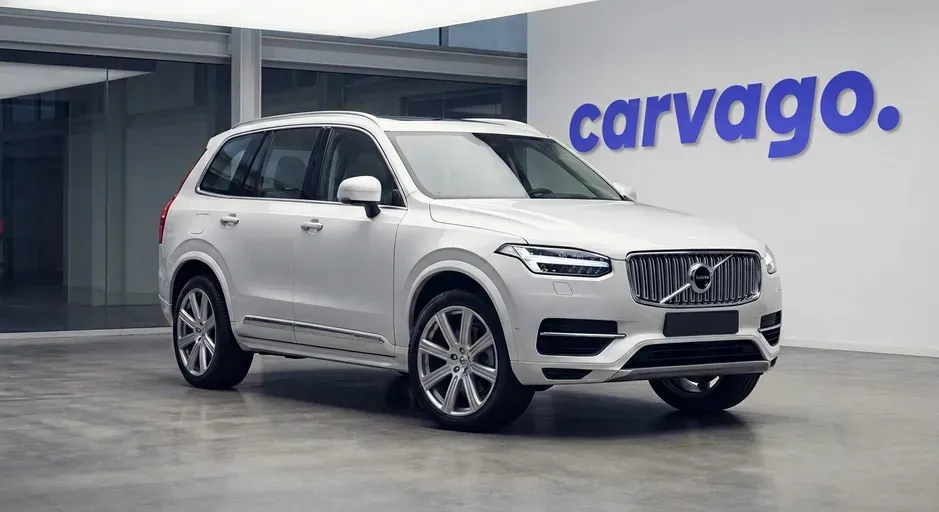
Volvo XC90

Volvo XC90

Introduction

The Porsche Cayenne is synonymous with the luxury sports SUV, clearly proving that even a large and exceptionally practical vehicle can offer the uncompromising driving dynamics typical of the iconic Stuttgart brand. Standing against it is the Volvo XC90, the embodiment of Nordic elegance and serenity, which has earned a worldwide reputation as an unsurpassed benchmark in family safety, spaciousness, and innovative minimalism. Let's take a detailed look at how these two premium giants with different approaches to luxury fare in our direct comparison and which one will be the right choice for your daily journeys.

Comparison of External Dimensions

When choosing a luxury SUV from the used car market, typically for models around four years old (Porsche Cayenne 9YA generation and Volvo XC90 2nd generation), exterior dimensions play a key role in how the car feels on the road and what it's like to live with. The Volvo XC90 is an overall larger vehicle – with a length of 4950 to 4953 mm, it is roughly 30 to 40 mm longer than the standard version of the Porsche Cayenne. The width of both cars in most versions confidently hovers around the 1.93 to 1.98 meter mark; however, the Volvo in the T8 plug-in hybrid powertrain reaches an impressive width of exactly 2008 mm. In terms of daily use, this means both vehicles require more generous parking spaces, but the slightly shorter and basically marginally narrower Cayenne gives the driver the advantage of better maneuverability in crowded underground garages and city centers.

However, the most significant differences defining the character of both cars can be found in height and wheelbase. The Scandinavian Volvo XC90 towers up to 1776 mm, while the Porsche Cayenne stays much closer to the ground with a maximum height of 1698 mm. In the stylish Cayenne Coupé versions, the roofline drops to a sporty 1636 mm. Furthermore, the Volvo benefits from a massive wheelbase of 2984 mm, which is a full 89 mm more than its German competitor. This significant advantage in height and length between the axles translates directly into a more airy cabin and the seamless integration of a third row of seats in the Swedish model, making the XC90 a clear choice for transporting larger families. Conversely, the lower body structure and shorter wheelbase of the Porsche Cayenne intentionally lower the car's center of gravity, shifting the choice towards drivers who prioritize first-class dynamics and handling approaching that of sports cars over absolute spaciousness.

ParameterPorsche Cayenne SUVPorsche Cayenne SUV CoupéVolvo XC90 SUV
Length (mm)4918 - 49304930 - 49424950 - 4953
Width (mm)19831983 - 19951931 - 2008
Height (mm)1696 - 16981636 - 16781771 - 1776
Wheelbase (mm)289528952984

Trunk Volume

When choosing a luxury family car, luggage capacity often plays a key role, as it determines overall daily practicality and usability. The difference between the Porsche Cayenne (9YA generation) and the Volvo XC90 (2nd generation), which today often form the backbone of the market for roughly four-year-old used cars, clearly shows the different approach of both manufacturers. While the Swedish Volvo places maximum emphasis on family utility and maintains a boxier body shape for the best possible use of interior space, the German Porsche, even in the world of large SUVs, prioritizes a sportier silhouette and uncompromising dynamics. For buyers, this means deciding between emotional flair and maximum transport capacity, which is pivotal especially for families with children.

If we look at the exact figures, the standard Porsche Cayenne SUV version offers an excellent base volume of 772 liters, which can be increased to 1,710 liters after fully folding the rear seats. If you choose the more stylish Cayenne Coupé body variant (also falling into the SUV category), you must expect compromises due to the sportily sloping roof – the base trunk volume here drops to 625 liters and the maximum to 1,540 liters. In contrast, the Volvo XC90 (also an SUV) scores primarily with its utilitarian shape and maximum capacity. In a five-seat configuration (behind the second row), the Volvo XC90 offers a standard volume of 680 liters. However, as soon as you fold the rear seats, the space expands to a massive 1,874 liters. This significant difference in usable height and trunk shape provides noticeable room for several extra suitcases, a capacity more than sufficient for a weekend shopping trip or a longer vacation.

It is also essential to mention that very popular plug-in hybrid powertrains come into play for both brands, where it is necessary to account for a reduction in space due to the battery placement under the trunk floor. For the hybrid versions of the Porsche Cayenne E-Hybrid, the base trunk shrinks to 645 liters (and 1,610 liters after folding), while for the Coupé E-Hybrid version, the base capacity drops even further to 460 liters. The Volvo XC90 in its T8 Recharge plug-in hybrid version, on the other hand, loses only an absolute minimum in terms of space – it offers 640 liters as base and a generous 1,816 liters after folding the seats, thanks to which it maintains its status as an ideal family hauler even after electrification.

In conclusion, if you are looking for uncompromising utility and rely on the car occasionally serving as a full-fledged family transporter for bulky items, the Volvo XC90 will serve you better. The Porsche Cayenne on the other hand, represents a great compromise for those who willingly sacrifice a bit of raw liter volume in exchange for a more aggressive and attractive appearance.

ParameterPorsche Cayenne SUVPorsche Cayenne Coupé SUVVolvo XC90 SUV
Base volume (l)772625680
Max. volume with seats folded (l)171015401874

Space Decision 📦

For families looking for maximum transport capacity and versatility, the more spacious Volvo XC90 is the clear winner, while the Porsche Cayenne will suit those who prefer sporty style and don't mind a slight compromise in luggage volume.

Discover the true condition of the car thanks to an independent inspection

Order CarAudit™

Trailer Weights

Towing capacity often plays a key role when choosing a large SUV, as it directly determines its overall practicality and everyday usability. For models around four years old, the approach of both brands to towing capacity differs quite fundamentally and thus appeals to a different target group of buyers.

The Porsche Cayenne (9YA generation) is an unquestionable powerhouse in the world of premium SUVs. For the vast majority of its standard engines and common E-Hybrid versions, it offers a maximum braked trailer weight of an impressive 3,500 kg. The only exceptions are the top-of-the-line plug-in hybrid models with extreme performance, such as the Turbo S E-Hybrid or the newer Turbo E-Hybrid, where the towing capacity is slightly reduced to 3,000 kg due to different technology and the weight of the installed batteries. However, this is still an exceptionally high value compared to the competition.

The second-generation Volvo XC90 approaches towing capabilities in a noticeably more civil manner, yet more than sufficiently for the vast majority of regular drivers. The maximum braked trailer weight ranges from 2,350 to 2,700 kg depending on the chosen engine. The highest values (2,700 kg) are achieved by the popular diesel and petrol variants (e.g., D5, B5 Diesel, or B6). In contrast, the popular T8 plug-in hybrid versions and base B5 models offer a reduced standard capacity of 2,350 to 2,400 kg. Regarding smaller loads, both SUVs can handle a standard unbraked trailer up to the maximum legally permitted weight of 750 kg without distinction.

In practice, these differences clearly define the real-world use of the vehicles. Both cars can easily handle an unbraked trailer, offering an ideal solution if you need space for a few extra suitcases. The parameters of the Swedish model are thus completely sufficient for weekend shopping or longer holidays, with the Volvo comfortably towing a standard family caravan or a smaller boat. The Porsche Cayenne, on the other hand, opens the door to much more demanding and professional use – it can easily take on the role of a workhorse and tow heavy dual-axle horse trailers, construction machinery, or even large luxury yachts.

In conclusion, if you often need to transport extreme loads and your lifestyle requires uncompromising towing power, the Porsche Cayenne will clearly be a better and more reliable companion for you. However, if you are looking for a versatile premium car for regular family and recreational towing, the on-paper lower parameters of the Volvo XC90 will not limit you in practice.
Model and engineBraked trailer weight (kg)Unbraked trailer weight (kg)
Porsche Cayenne (most versions incl. E-Hybrid and S)3500750
Porsche Cayenne Turbo S E-Hybrid / Turbo E-Hybrid3000750
Volvo XC90 B5 / T5 / T8 Plug-in Hybrid2350 - 2400750
Volvo XC90 B5 Diesel / D5 / B6 / T62700750

Overview of Most Common Motorizations

The approach to engine options for the Porsche Cayenne and Volvo XC90 is diametrically different, which fundamentally influences the overall driving experience, dynamics, and operating costs. With its current generation (9YA, produced since 2017), Porsche bets on pure performance and genuine sporting emotions, which is why you will find exclusively powerful, turbocharged V6 and V8 engines under its hood. In contrast, for its second-generation XC90 (which underwent significant electrification around 2020), Volvo chose the path of maximum efficiency, downsizing, and environmental friendliness. The brand completely abandoned larger power units, and all versions rely exclusively on 2.0-liter four-cylinder engines with advanced turbocharging. For those interested in a roughly four-year-old used car, this means a clear decision: the Cayenne is there for intoxicating dynamics and a rich engine sound, while the XC90 attracts with very refined and economical mild-hybrids (labeled B5, B6) or a powerful plug-in hybrid (T8). Both manufacturers then send power to all four wheels as standard through smooth eight-speed automatic transmissions.

Porsche Cayenne: A Symphony of Six and Eight Cylinders

Within the 9YA generation, the Porsche Cayenne offers a range of engines that will satisfy even the most demanding drivers and reliably overshadows most of the competition. The base of the range consists of a turbocharged 3.0 V6 engine with a solid output of 250 kW. If you are looking for efficiency without losing dynamics, the E-Hybrid version is very popular, combining the V6 with a powerful electric motor for a total combined output of 340 kW. The "golden mean" in terms of sportiness is the Cayenne S variant with a 2.9 V6 Twin-Turbo engine (324 kW). For true automotive enthusiasts, Porsche has prepared large-displacement 4.0 V8 engines, whether in the very driver-focused GTS version (338 kW), the formidable Turbo specification (404 kW), or the extreme Turbo S E-Hybrid variant, which, thanks to electric assistance, reaches an astronomical 500 kW and 900 Nm of torque. The absolute technological and driving pinnacle is the rarer Turbo GT version with an output of 471 kW. From the data available from the production years, it is clear that the older diesel engines, with which the Cayenne previously celebrated success (e.g., the S Diesel version from the previous 958 generation), are no longer offered at all in the 9YA generation. All modern engines rely exclusively on the top-tier eight-speed Tiptronic S automatic.

Engine TypeFuel TypePower (kW)Torque (Nm)Transmission
3.0 V6 Turbo (Cayenne)Petrol2504508-speed auto
2.9 V6 Twin-Turbo (Cayenne S)Petrol3245508-speed auto
4.0 V8 Twin-Turbo (Cayenne GTS)Petrol3386208-speed auto
4.0 V8 Twin-Turbo (Cayenne Turbo)Petrol4047708-speed auto
4.0 V8 Twin-Turbo (Cayenne Turbo GT)Petrol4718508-speed auto
3.0 V6 Turbo (Cayenne E-Hybrid)Plug-in Hybrid3407008-speed auto
4.0 V8 Twin-Turbo (Turbo S E-Hybrid)Plug-in Hybrid5009008-speed auto

Volvo XC90: Four-Cylinder Efficiency and Ubiquitous Electrification

The second-generation Volvo XC90 underwent a significant update for the 2020 model year, when the manufacturer gradually replaced the traditional D5 or T6 engines with new electrified units. On the four-year-old used car market, you will most often encounter these newer power units, which without exception rely on an advanced two-liter four-cylinder. A great choice for long highway hauls is Volvo's B5 mild-hybrid in the diesel version, producing 173 kW and a massive 480 Nm of torque, thanks to which the car rewards you with low fuel consumption. Its petrol counterpart, the B5, offers 184 kW, while the more powerful petrol variant, the B6 (using an interesting combination of a turbocharger and an electric compressor), reaches a generous 220 kW. At the absolute top of the range is the T8 Recharge plug-in hybrid version. This combines a two-liter petrol engine and a powerful electric motor driving the rear axle. The output of this version, after a battery upgrade (at the turn of 2021/2022), climbed from the original 288 kW to a staggering 335 kW. All cars use a comfortably tuned eight-speed Geartronic transmission. It is worth noting that while at the very beginning of production, weaker engines (such as the D3 and D4 versions) could have front-wheel drive only, in the current market of electrified used cars, AWD is the absolute standard.

Engine TypeFuel TypePower (kW)Torque (Nm)Transmission
2.0 B5 (Mild-Hybrid)Diesel1734808-speed auto
2.0 B5 (Mild-Hybrid)Petrol1843508-speed auto
2.0 B6 (Mild-Hybrid)Petrol2204208-speed auto
2.0 T8 RechargePlug-in Hybrid288 - 335640 - 7098-speed auto

Summary and Recommendation

The decision between the engines of these two models boils down to a question of your preferences and daily use. The Porsche Cayenne's engine range scores with immense power, top-tier V6 and V8 engines, and an extraordinary sporting character, which, however, comes at the cost of higher operating and service expenses. Volvo, on the other hand, dominates in the area of family comfort, operating economy, and the smooth operation of electrified four-cylinders – but logically without the chance to offer such exciting performance or a captivating engine sound as the Porsche. For drivers looking for a sporty feel, uncompromising speed, and who often desire a dynamic drive, the Cayenne (especially in the S versions or V8 models) is the clear winner. However, if you need a spacious, quiet, and calming family cruiser, prefer a more economical diesel mild-hybrid for long highway trips, or are looking for a PHEV for quiet city commuting with an eye on the family budget, Volvo XC90's modern units will perfectly meet your expectations.

Fire versus Water 🔥💧

While the Porsche Cayenne dazzles lovers of spirited driving with a range of explosive V6 and V8 engines, the Volvo XC90 excels in the role of a refined workhorse thanks to its exceptionally efficient, quiet, and economical electrified four-cylinders.

Choosing the right engine is crucial for long-term satisfaction, especially with premium SUVs where potential repairs can become significantly expensive. While Porsche focuses on sporty dynamics with the 9YA generation using turbocharged six- and eight-cylinder engines complemented by powerful plug-in hybrids, Volvo takes a completely different path with the second generation of the XC90. The Nordic carmaker bet on downsizing and offers exclusively two-liter four-cylinder engines, which it combines with mild-hybrid or plug-in hybrid technology to ensure the necessary performance and efficiency. The following recommendations are based on real-world experience, service requirements, and the overall reliability of four-year-old used cars, which currently make up the main part of the used car market.

For the Porsche Cayenne, we recommend: 3.0 V6 (Base Cayenne model, 250 kW)

The base 3.0-liter turbocharged V6, found under the hood of models sold between 2020 and 2023, is the most rational choice in terms of price/performance/reliability.

  • Why it's the best choice: While it doesn't offer the same crushing acceleration as the top-tier V8s, the 250 kW (340 hp) engine is more than sufficient for a heavy SUV (accelerating from 0 to 100 km/h in under 6 seconds). It is a proven group power unit (EA839) that is well-engineered, robust, and unlike the complex plug-in hybrid versions (E-Hybrid), there is no risk of astronomical expenses for repairing electrical drive components after the warranty expires.
  • Technical advantages: The engine offers a very linear power delivery with 450 Nm of torque available from low revs. It pairs perfectly with the smooth-shifting eight-speed Tiptronic S transmission. It ensures great flexibility for safe overtaking and can achieve surprisingly reasonable fuel consumption outside the city.
  • Known risks and how to spot them: In the city, expect fuel consumption that can easily hit 14 liters per 100 km. Mechanically, the engine is highly reliable, but at higher mileages, it may suffer from water pump failure or PCV valve wear (crankcase ventilation system). When inspecting a used car, carefully check for any coolant leaks after opening the hood and listen to the engine sound at idle – irregular running or whistling sounds can indicate a problem with the PCV valve.
  • Who it's best for: An ideal choice for drivers looking for a premium family SUV for everyday luxury travel who appreciate the top-tier driving characteristics of the Porsche Cayenne but don't necessarily need to break speed records at the expense of costly super-SUV maintenance.

For the Volvo XC90, we recommend: B5 AWD (Mild-hybrid, 173–184 kW)

Engines labeled B5 appeared on the market at the turn of 2019 and 2020, gradually replacing the pure internal combustion D5 and T5 versions. It is available in both petrol (184 kW) and diesel (173 kW) variants, always supported by a 48V mild-hybrid system.

  • Why it's the best choice: The B5 version represents the perfect golden mean. Although the T8 plug-in hybrid flagship with over 400 hp is very tempting, its powertrain extremely complexly combines a supercharger, turbocharger, and electric motor. The B5 engine is mechanically much simpler, which significantly reduces the risk of unexpected failures in a used car. Meanwhile, the mild-hybrid system provides a small electric boost during starts, masking turbo lag and imperceptibly smoothing out the start-stop system's operation.
  • Technical advantages: The B5 brings refined operation and decent fuel consumption to such a large car. The diesel variant easily handles long highway trips with consumption around 7 to 8 liters, while the petrol version usually ranges between 9 and 10 liters. Both variants are standardly paired with a smooth-shifting eight-speed automatic and all-wheel drive.
  • Known risks and how to spot them: The small two-liter engine is under significant mechanical stress when pulling a heavy SUV, which requires strict maintenance. Furthermore, if you drive the B5 Diesel version exclusively on short city trips, there is a risk of rapid diesel particulate filter (DPF) clogging. During the test drive, focus on the smoothness of the pull from low revs and the behavior of the transmission; any hesitation, jerky performance, or rough running may indicate a carbon-clogged engine from city driving. Checking the service history is absolutely crucial – strictly avoid cars where the oil was changed only after the factory-recommended 30,000 km; the correct interval for this engine is a maximum of 15,000 km or 1 year.
  • Who it's best for: A great and rational choice for pragmatically minded drivers who expect the maximum level of safety, a calm ride, and comfort for the whole family from their car. The diesel version will particularly please users driving long distances, while the petrol version will be a smoother and more reliable companion in suburban use.

Real Fuel Consumption

When choosing a used luxury SUV, such as a roughly four-year-old Porsche Cayenne (9YA generation) or Volvo XC90 (2nd generation), it is crucial to realize the vast difference between official laboratory data and everyday reality. While paper values often promise literal miracles – especially with the increasingly popular plug-in hybrids – road practice tends to be different. To obtain an accurate and objective picture of the true demands of both models, we analyzed the official figures and subsequently compared them with hundreds of real-world records and driver experiences from the crowdsourcing portal Spritmonitor.de, where owners themselves share their long-term fueling averages.

Model and EngineAverage Consumption (l/100 km)
Volvo XC90 B5 Diesel6.7
Volvo XC90 B5 (Petrol)8.6
Porsche Cayenne (Petrol)11.4
Porsche Cayenne S (Petrol)12.1
Volvo XC90 T8 (PHEV)1.2
Porsche Cayenne E-Hybrid (PHEV)3.1

The table above reflects official combined values for roughly four-year-old engines, sorted by drive type. Looking at the data and comparing it with real-world operation reveals several major trends. The most fuel-efficient family cruiser for long distances remains the diesel Volvo XC90 B5 Diesel. Although the paper 6.7 l/100 km becomes approximately 8 liters in the real world, this is still an excellent value for a car weighing over two tons. The petrol versions of both cars logically show a higher appetite. The base petrol Volvo B5 asks for about 9.5 liters in practice, while the larger six-cylinder units in the Porsche Cayenne typically consume 11.5 to 13 liters per 100 kilometers. However, plug-in hybrids often come as a surprise. The grand official values of 1.2 l/100 km for the XC90 T8 and 3.1 l/100 km for the Cayenne E-Hybrid only apply to short trips with a fully charged battery. As soon as the battery is depleted, the consumption of both vehicles often rises to the 8 to 10-liter mark. It turns out that on the highway, the relatively smaller two-liter engine in the Volvo cannot cheat physics and does not save fuel drastically for the heavy vehicle.

What does this mean for the average user and used car buyer? If you are among the drivers who commute longer distances and spend a lot of time on the highway, the diesel Volvo XC90 will be the most sensible choice from an economic standpoint. Plug-in hybrids (T8 and E-Hybrid) will primarily please those users who travel shorter distances in the city during the week and have the opportunity to charge the vehicle regularly at home or at work – then the investment in the PHEV version can pay off quickly. On the other hand, traditional petrol engines in the Porsche are chosen by drivers for whom consumption is not the main criterion and who prefer refined operation, power reserves, and fantastic sound performance on backroads.

In conclusion, although the difference in consumption between these two cars is evident, in this premium category, it usually does not play the role of the ultimate deciding factor. The differing values rather illustrate the overall character of both brands. The Volvo XC90 attracts with family efficiency, relaxed travel, and lower operating costs of the diesel versions. The Porsche Cayenne, on the other hand, prioritizes genuine sporting experiences and agility without any compromises, for which its owners are happy to pay extra at the gas station.

Price Range and Used Car Offerings

Although both vehicles fall into the luxury SUV category, they target a different clientele on the used car market. The Volvo XC90 has built a reputation as a more affordable premium family car, while the Porsche Cayenne remains a symbol of sporty luxury and prestige, which is clearly reflected in its second-hand price tag.

If we focus on the market for roughly four-year-old used cars (2021–2022 models), the differences in acquisition costs are vast. The Swedish SUV offers an excellent price-to-value ratio on the used market, as luxury family cars traditionally lose their original value more quickly. Porsche, on the other hand, holds its value slightly better in percentage terms, but due to its astronomical original price, the absolute financial drop is much more significant.

Acquisition Costs and Value Depreciation

Approximate prices for four-year-old models clearly show the different financial tiers these two vehicles occupy:

Model (2021–2022 models)Average price fromAverage price toMarket value depreciation
Volvo XC90€39,000€58,000Faster (advantageous for used car buyers)
Porsche Cayenne€74,000€132,000+Slower, but with a high absolute drop

When choosing a specific used unit, several key factors that significantly influence the final amount must be considered:

  • The Magic of Optional Equipment: With Porsche, it is quite common for the first owners to have spent tens of thousands of euros extra just on individual options – from air suspension and carbon-ceramic brakes to exclusive leather interiors. This means that two cars that look similar at first glance can have diametrically different prices on the used market.
  • Clear Equipment Levels: Volvo has its price list and equipment levels structured much more simply. On the market, you will most often encounter the luxury-oriented Inscription versions or the sportier R-Design (on newer models, Ultimate and Plus). Prices for used Volvos are therefore much more predictable.
  • Impact of Engine Choice on Price: The base mild-hybrid engines (B5) in the Volvo are the most affordable, while the powerful plug-in hybrids (Recharge) hold their value significantly higher. For Porsche, six-cylinder engines form the base of the market, but as soon as you reach for the more powerful S, GTS, or even Turbo variants, the price soars and can easily exceed the €123,000 mark even for older units.

Operating Costs and Service

The price of a used car is only the first step. It is crucial to keep in mind that operating and service costs for a Porsche Cayenne will always be substantially higher than for a Volvo. Whether it's hourly rates at authorized service centers, the price of spare parts, insurance, or premium tires specifically approved by the manufacturer, the Cayenne requires a very high budget even after years of operation. The Volvo XC90 is somewhat more user-friendly in terms of maintenance, although it still requires care appropriate for the luxury class of large SUVs.

Price vs. Prestige 💰

The Volvo XC90 is an exceptionally rational choice on the used market with an excellent price-to-value ratio, while purchasing a Porsche Cayenne requires a substantially higher budget, which is, however, rewarded with uncompromising quality and sporty DNA.

Safety and Euro NCAP Rating

Both vehicles earned the maximum five-star rating in Euro NCAP crash tests. However, when choosing a used premium SUV, it is crucial to put these results into the context of the time and consider the specific year of certification. The Euro NCAP methodology is constantly evolving and becomes significantly stricter every year. Therefore, percentage results from different years cannot be directly compared – what was enough for a top rating in the past would often represent only average by today's standards.

The Volvo XC90 was last tested in its current generation in 2015. At that time, it stunned the automotive world by achieving an unprecedented 100% in the safety assist category. This result reflected the fact that Volvo offered very innovative autonomous braking systems for both city and interurban traffic as standard equipment. However, the 2015 test protocols did not yet include modern measurement elements such as advanced simulations of collisions with cyclists, pedestrian detection when reversing, junction scenarios with oncoming cars, or stricter crash tests with the new mobile progressive deformable barrier. Furthermore, from today's perspective, the validity of this Euro NCAP certificate has already expired.

The Porsche Cayenne underwent third-generation crash tests slightly later, in 2017, when a stricter methodology was in place. This is clearly evident in the seemingly lower score for safety assistants (62%). The reason was not that the Cayenne was less safe, but the fact that lane-keeping systems were primarily offered as an option at the time, and therefore the stricter methodology did not include them in the rating. However, in terms of body rigidity and occupant protection, the Porsche performed excellently and demonstrated very good cabin stability and excellent structural durability, from which cars on today's used car market still benefit.

Comparison of Euro NCAP Results

ParameterPorsche CayenneVolvo XC90
Year of testing20172015
Adult occupant protection95 %97 %
Child occupant protection80 %87 %
Vulnerable road user protection73 %72 %
Safety assist systems62 %100 %

From the perspective of today's buyer of an approximately four-year-old used car, both cars offer top-tier protection, but from different starting points. Automakers continuously modernize their models through software and hardware updates to assistance systems, but the basic physical architecture remains the same. The Volvo XC90 still benefits from its careful construction and a sophisticated package of features with which it was ahead of its time in 2015, but its platform is slowly aging. In contrast, the Porsche Cayenne stands on a more modern architecture from 2017, which was already designed for the more demanding requirements of newer crash tests. In terms of the overall up-to-dateness of the passive construction and shell strength, the Porsche offers a more robust foundation corresponding to slightly more modern passive safety standards.

🛡️ Safe, but each from a different era

Although Volvo achieved a historic 100% for assistants, its result corresponds to the more lenient 2015 methodology. The more recently developed Porsche Cayenne, on the other hand, is built on a more modern 2017 construction that better reflects today's strict requirements for structural safety.

Comparison of Interesting Equipment Features

In addition to standard equipment, each of the models offers several unique features that can be decisive for the customer and clearly show a different approach to the concept of a luxury SUV. While Porsche scores with its sporting genes and top-tier engineering, Volvo focuses on Scandinavian well-being, maximum safety, and family practicality.

Porsche Cayenne: Engineering Excellence and Sporting DNA

  • Chassis and driving dynamics: In this generation, Porsche offers the advanced PDCC (Porsche Dynamic Chassis Control) system, which actively stabilizes body roll. Combined with rear-axle steering and PASM air suspension, it gives this large SUV the agility and stability you would expect more from a sports coupe.
  • Sport packages: The iconic Sport Chrono package brings not only the typical stopwatch on the dashboard but, above all, a driving mode selector directly on the steering wheel. Its central Sport Response button immediately prepares the engine and transmission for 20 seconds of maximum performance, which is an ideal feature for quick and safe overtaking.
  • Engines and body styles: Those interested in roughly four-year-old cars will appreciate the variety of the range. In addition to the classic SUV body, the more attractive Cayenne Coupé version is also available. Under the hood, you can choose from reliable six-cylinders to efficient plug-in hybrids (E-Hybrid) with a very usable pure electric range, up to brutal eight-cylinders in the top Turbo specifications.
  • Electronics and infotainment: The interior is dominated by the Porsche Communication Management (PCM) system with a large 12.3-inch display with crystal-clear resolution. It offers excellent response, sophisticated telematics, and detailed driving data that will please every enthusiastic driver.
  • Exclusive extras: Porsche's list of optional equipment is legendary. The Cayenne can be equipped, for example, with extremely durable carbon-ceramic brakes (PCCB), recognizable by their yellow calipers, or a top-of-the-line Burmester audio system.

Volvo XC90: Scandinavian Zen and Family Care

  • Smart family design: One of the smartest details Volvo offers is the integrated child booster seat in the middle seat of the second row. With just one movement, the seat adjusts for older children without the need to carry an external seat. Furthermore, the third row of seats (in seven-seater versions) folds flat very easily.
  • Iconic materials and craftsmanship: Higher trim levels, such as Inscription or Ultimate, boast a unique crystal gear selector knob. This design gem is handmade by the traditional Swedish glassworks Orrefors. The interior as a whole relies on relaxing minimalism and natural materials, such as light open-pore wood.
  • Advanced infotainment with Google: Cars from the turn of 2021 and 2022 began transitioning to modern infotainment built on the Android Automotive system. This brought integrated Google Maps, voice-activated Google Assistant, and, most importantly, the possibility of remote OTA (Over-The-Air) updates, thanks to which the onboard system constantly gains new functions and does not age.
  • Assistance systems and safety: Volvo traditionally dominates in safety. The advanced Pilot Assist system reliably combines adaptive cruise control with active lane keeping for calm highway journeys. Completely unique is the Run-off Road Protection system, which, in the event of the car leaving the road, absorbs vertical forces in the seats and protects the passengers' spines.
  • Premium audio: The optional Bowers & Wilkins audio system with its iconic tweeter on top of the dashboard is among the absolute best. Its special acoustic mode "Gothenburg Concert Hall" can conjure up breathtaking surround sound in the cabin, which is a highly sought-after item in used cars.

Key Advantages and Disadvantages

Porsche Cayenne

Pros

Top-tier driving characteristics that are unrivaled in the SUV category and reminiscent of sports cars

First-class build quality and luxury materials in the interior

Wide range of powerful six- and eight-cylinder engines with excellent response

Great capabilities for towing heavy trailers

High brand prestige and stable residual value on the used car market

Cons

Significantly higher purchase price as well as subsequent service and spare parts costs

Absence of a seven-seat layout (only 5 seats available)

Smaller luggage compartment volume and overall practicality compared to the Volvo

Higher fuel consumption for pure petrol and more powerful versions

Porsche Cayenne is an uncompromising choice for demanding drivers who require sports DNA and top-tier dynamics behind the wheel from their SUV. It represents the ideal car for those who can do without a third row of seats but fully appreciate luxury, performance, and exclusivity, for which they are willing to pay extra.

Volvo XC90

Pros

Exceptionally spacious interior with a very practical and genuinely usable layout for 7 passengers

Unrivaled emphasis on safety, top Euro NCAP results, and advanced assistance systems

Elegant and timeless Scandinavian design

Extremely comfortable orthopedic seats ideal for long family trips

Well-engineered plug-in hybrid versions (T8/Recharge) for efficient zero-emission city driving

Cons

Limited engine range consisting exclusively of four-cylinder units, which lack the sound profile and refinement of larger engines

Uninspiring driving experience and less precise steering; the car is tuned exclusively for comfort

Concentration of almost all controls (including climate control) into the touchscreen can be distracting while driving

The Volvo XC90 is primarily aimed at families for whom maximum safety, interior space, and travel comfort without compromise are absolute priorities. It is a very rational and practical choice for relaxed daily travel, where the driver prefers peace on board over sporty cornering.

Common Problems and Owner Complaints

Based on long-term owner experience, service reports, and our own detailed inspections carried out as part of an independent technical inspection of the car, we have compiled an overview of the most common problems. For roughly four-year-old used examples of these premium SUVs, it definitely pays to know the weak points before buying.

Porsche Cayenne (3rd generation, from 2018)

The third generation Porsche Cayenne (designated 9YA) is considered an above-average reliable car in the premium segment, but even here, specific faults appear with increasing mileage, the resolution of which corresponds to the high purchase price of the vehicle.

  • Brake system: Owners quite often complain about unpleasant squealing from the optional PSCB brakes (Porsche Surface Coated Brakes, recognizable by white brake calipers). In such a heavy and powerful SUV, premature wear of conventional brake pads and discs also appears much earlier.
  • Electronics and infotainment: The PCM (Porsche Communication Management) onboard system occasionally suffers from minor software bugs. This manifests as slow loading, touchscreen freezing, spontaneous restarts, or difficulties pairing a smartphone. Fortunately, most of these ailments are resolved by an authorized service center uploading the latest update.
  • Chassis and suspension: In models with adaptive air suspension (PASM), air leaks from the bellows or compressor wear can occur after exceeding the 100,000 km mark. A typical symptom is the parked vehicle leaning to one side or an error message on the instrument cluster.
  • Battery management (E-Hybrid): In plug-in hybrid versions, software anomalies related to high-voltage battery management or faults in the onboard charger module occasionally occur, requiring precise diagnostics in a specialized service center.

Porsche Cayenne: A reliable athlete with more expensive servicing

The third generation Porsche Cayenne is one of the very sturdy and mechanically durable cars with excellent engines. Minor shortcomings mainly concern software and consumable wear of the brakes, but expect naturally high prices for original parts.

Volvo XC90 (2nd generation, facelift from 2018)

Although the Volvo XC90 excels in passive and active safety, in terms of overall reliability, it pays the price for the complexity of its turbocharged four-cylinder powertrains and the huge amount of onboard electronics.

  • PHEV system (T8 / Recharge versions): The most feared and by far the most financially demanding problem of hybrid models is the failure of the ERAD (Electric Rear Axle Drive). The fault manifests as a loss of power on the rear axle, jerking during acceleration, unusual metallic noises, or oil leakage from the differential. Replacing the entire rear module is extremely expensive.
  • Engines (D5 and T6): In the popular D5 diesel versions with PowerPulse technology, the compressed air pressure hose (the system used to eliminate "turbo lag") quite often cracks, which you will hear as a loud hissing accompanied by a sudden loss of power. In the twin-charged petrol engines (T6), the crankcase ventilation membranes (so-called PCV module) or the mechanical supercharger seals fail over time.
  • Chassis and control arms: Air suspension in Volvos is more prone to pressure leaks and compressor failures than in the case of Porsche. In the heavy XC90, very rapid wear of the front lower control arm bushings also occurs, especially if the car is used daily in city traffic with many speed bumps.
  • Infotainment Sensus: The central vertical Sensus touchscreen is the brain of the entire car, through which the air conditioning is also controlled. Older hardware can react significantly slowly after startup. Users also report occasional "black screens," parking camera outages, or spontaneous restarts while driving. Regular installation of software updates is an absolute necessity here.

Volvo XC90: Emphasis on maintenance history and warranty

The Volvo XC90 offers unrivaled family comfort, but its complex technology requires absolutely flawless servicing. When buying a used car, we strongly recommend looking for a vehicle with a clearly documented history and ideally with an extended warranty that covers the risks associated with the ERAD system or air suspension.

Tips for Buying a Used Car

When buying a used car, a thorough inspection is key, and for such complex premium SUVs, this is doubly true. Therefore, a detailed independent technical inspection of the car's condition should always take place before the final decision. Here are some specific points to focus on for these two models:

When choosing a Porsche Cayenne:

  • Air suspension condition: Most models are equipped with adaptive air suspension. During testing, try all height modes. The compressor must not run constantly and should not make loud noises. If the car sags to one side after parking, it indicates an expensive pressure leak from the air bags.
  • Wear of special brakes (PSCB): The Cayenne is an extremely fast and heavy car that puts significant strain on the braking system. Check whether the car has standard steel brakes or the optional PSCB (Porsche Surface Coated Brakes) with mirror-finish discs and white calipers. They have great durability and don't dirty the wheels, but if they are at the end of their life, their replacement is astronomically expensive.
  • Transfer case behavior during cornering: During the test drive, try sharp turns at low speeds under throttle (for example, in a parking lot). If you feel vibrations, jerking, or hear bangs from the bottom of the car, it may signal excessive wear of the transfer case or differential.
  • Battery health in the E-Hybrid: For plug-in hybrid powertrains, notice the smoothness of the transition between pure electric and combustion power – there should be no noticeable jerk. It is also important to monitor the real electric range, which, combined with diagnostics, can reveal potential excessive degradation of the high-voltage battery.
  • PCM infotainment stability: During the drive, thoroughly test the responsiveness of the central screen and navigation. Sometimes the system can loop, freeze, or restart spontaneously. Slow reactions during the test should be a warning sign that the car's software requires professional intervention and an update.

When choosing a Volvo XC90:

  • PowerPulse system in diesel versions (D5/B5): These engines use a compressed air system for faster turbocharger spooling. However, the pressure hose often cracks or comes loose. During acceleration, this manifests as a noticeable hissing, a significant "turbo lag," and an overall slow throttle response.
  • Functionality of the electric rear axle drive (ERAD) in the T8 version: The T8 plug-in hybrid relies on an electric motor located directly on the rear axle. While driving in pure electric mode, turn off the radio, roll down the windows, and listen – high-frequency whining, clicking, or a distinct hum from the rear can mean the need for an early and very expensive replacement of the entire ERAD module.
  • Leaks through the panoramic roof: The XC90 often suffers from clogged sunroof drainage channels and leaking seals. Thoroughly feel the carpets in the interior (especially in the passenger footwell and the trunk) for dampness. Water here can permanently damage sensitive control units hidden in the floor.
  • Speed and responsiveness of the Sensus system: The infotainment with a vertical screen controls almost all car functions, including the air conditioning. Make sure that starting the system after the engine starts does not take an inappropriately long time and that the screen responds smoothly. If the system "lags" and freezes, it indicates the need for an expensive software update or, in the worst case, a damaged display module.
  • Play in the front axle: This large and heavy SUV puts a strain on the bushings on the front control arms. Try driving over speed bumps or rougher unevenness and listen carefully. Any dull thuds from the front wheels mean worn suspension parts that will require immediate investment.

FAQ: Most Frequently Asked Questions

The Volvo XC90 is more spacious overall and, unlike its German competitor, offers a practical third row of seats for up to seven passengers. While the Porsche Cayenne has a large trunk with a base capacity of 772 liters, the Volvo provides a more usable trunk shape and much more headroom. For large families and frequent transport of strollers, the Swedish model is clearly the more suitable and versatile choice.

The Porsche is tuned for top-tier sporty performance with precise steering and offers powerful six-cylinder or eight-cylinder engines that deliver real driving fun. Volvo, on the other hand, aims for maximum smoothness, comfortable family travel, and relies exclusively on calmer turbocharged four-cylinder engines. If you prefer dynamics and agility in corners, the Cayenne wins, while the XC90 is ideal for relaxed highway driving.

The Volvo XC90, especially in the popular Recharge plug-in hybrid version, offers lower average fuel consumption and the possibility of pure electric range for common city trips. Furthermore, hourly service rates, spare parts prices, and insurance for the premium Porsche are significantly higher. For more economical daily operation and cheaper maintenance, the Swedish representative is the better choice.

Both vehicles are among the absolute top on the market and boast a maximum five-star rating in strict Euro NCAP crash tests. However, the XC90 has a slight advantage thanks to its renowned passive safety philosophy and exceptionally rich standard equipment of assistance systems, including the Pilot Assist function. The Cayenne, on the other hand, excels in active safety, primarily due to extremely effective brakes and perfect stability in critical situations.

No, the Porsche Cayenne is designed exclusively as a five-seat SUV, and a third row of seats cannot be obtained for any surcharge. If you regularly need to transport six to seven people, your only option in this comparison is the Volvo XC90. It commonly offers a third row of seats and provides sufficient comfort on them even for older children.

Conclusion: Which Model to Choose?

Our Verdict

The final decision between these two premium giants depends primarily on your priorities and daily needs. The Volvo XC90 represents an ideal and rational choice for larger families, offering unrivaled interior space, top-tier safety, and up to a seven-seat configuration combined with more favorable operating costs. The Porsche Cayenne, on the other hand, targets demanding drivers who require sporty driving dynamics, powerful multi-cylinder engines, and unmistakable prestige from their SUV, for which they are willing to pay extra during purchase and subsequent servicing. If you are looking for a relaxed and maximally practical family cruiser, choose Nordic elegance; however, if you long for genuine emotions behind the wheel, the athlete from Stuttgart is guaranteed to thrill you.

Find your ideal car

Sources: ADAC, e15.cz, aktualne.cz, autotechnik.cz, emobility.cz, cistadoprava.cz

This article was prepared using artificial intelligence tools. The section guarantor is Petr Dušek.

Related articles

Car battle

Aston Martin DBX vs. Rolls-Royce Cullinan: Complete comparison 2026

Aston Martin DBX vs. Rolls-Royce Cullinan: A detailed comparison of performance, luxury, and features. Read our verdict and find out which premium SUV to choose.

Apr 18, 2026

Car battle

Bentley Bentayga vs. Rolls-Royce Cullinan: Complete comparison 2026

Detailed comparison of luxury SUVs Bentley Bentayga vs. Rolls-Royce Cullinan. Discover the differences in performance, equipment, and comfort. Our verdict will make your choice easier!

Apr 20, 2026

Car battle

BMW X7 vs. Volkswagen Touareg: Complete comparison 2026

BMW X7 vs. Volkswagen Touareg. Our detailed comparison of design, performance, and practicality will help you choose the right luxury SUV.

Apr 14, 2026

We accept online card payments as well as wire transfers.

visa payment provider logovisa-electron payment provider logomastercard payment provider logomaestro payment provider logodiners-club payment provider logodiscover payment provider logo