Car battle
Audi Q8 vs. Volvo XC90: Complete comparison 2026
Audi Q8 vs Volvo XC90: Detailed comparison of premium SUVs. Discover details about equipment, driving characteristics and read our verdict. Which one to choose?
Oct 16, 2026
Articles
Car battle
Detailed comparison of luxury SUVs Bentley Bentayga vs. Rolls-Royce Cullinan. Discover the differences in performance, equipment, and comfort. Our verdict will make your choice easier!
October 16, 2026
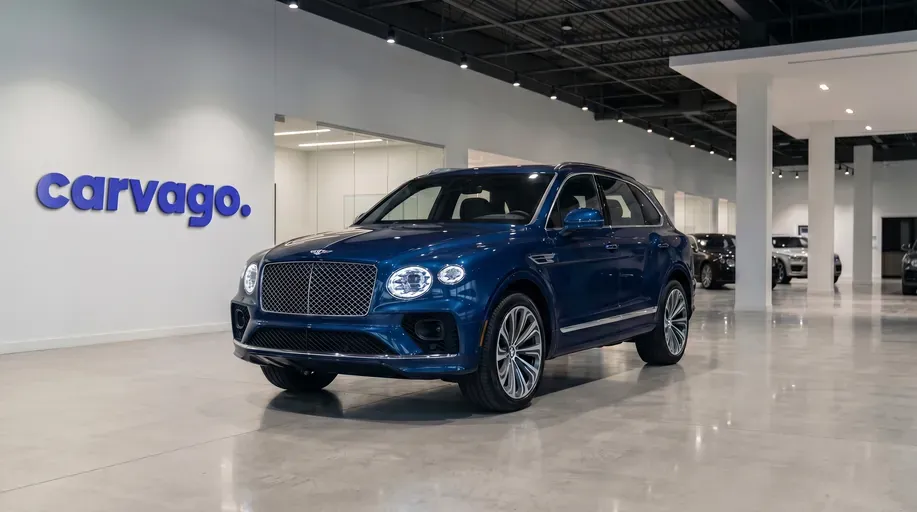
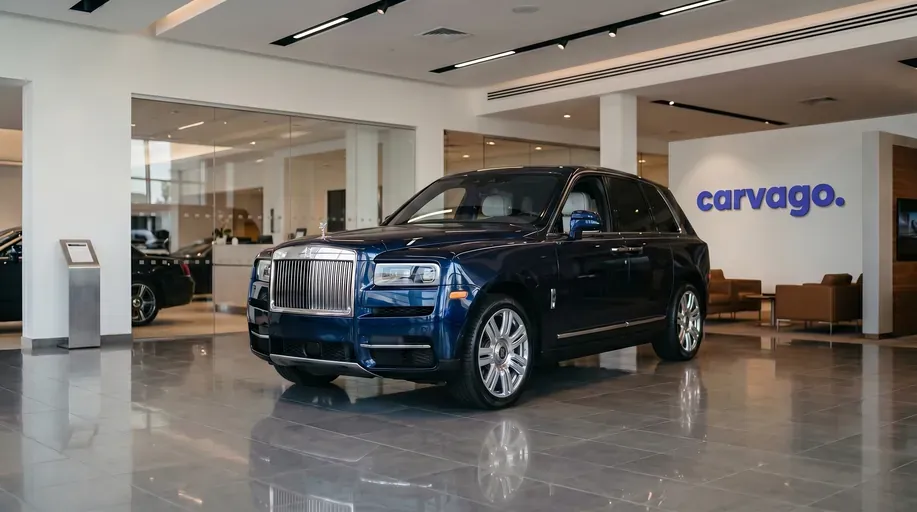
Bentley Bentayga is a pioneer in the ultra-luxury SUV segment, masterfully combining sporty dynamics with traditional British craftsmanship. In contrast, the Rolls-Royce Cullinan defines the absolute pinnacle of automotive luxury, offering uncompromising comfort and a majestic road presence reminiscent of the legendary magic carpet ride. In the following comparison, we take a detailed look at which of these two exceptional British aristocrats represents the better choice in a direct battle for the title of the ultimate luxury SUV.
When you place the Bentley Bentayga and Rolls-Royce Cullinan side by side, you will immediately notice the different approach to the proportions of a luxury SUV. While the Bentayga tries to mask its dimensions with sportier and smoother lines, evoking a more muscular and elevated gran turismo, the Cullinan proudly displays its majestic size. If we focus on models from the 2020 to 2022 period, i.e., current generation cars appearing on the used car market as roughly four-year-olds, the differences in external dimensions are very significant and directly affect daily life with these giants.
The Rolls-Royce Cullinan dominates primarily with its length. With a value of 5,341 mm, it is roughly 200 mm longer than the standard version of the Bentley Bentayga (5,125 to 5,144 mm depending on the version and year). This difference is most evident when looking for a parking space in the city center or in underground garages, where the Cullinan can be uncomfortably long for standard parking spots. Bentley responded to this disproportion in 2022 by introducing the extended version, the Bentayga EWB (Extended Wheelbase), which strongly competes with its British rival with a length of 5,305 mm; however, the standard model is noticeably more agile and easier to maneuver in city traffic.
Another key parameter where Rolls-Royce reigns supreme is the wheelbase. The massive 3,295 mm of the Cullinan exceeds the standard wheelbase of the Bentayga (2,995 mm) by a full 30 centimeters. In practice, this means absolutely unrivaled legroom for passengers in the second row, making the Cullinan the ultimate car for being driven by a personal chauffeur. Although Bentley extended the wheelbase to 3,175 mm in the EWB version, the Cullinan remains a step ahead in terms of pure interior volume, which will be especially appreciated by passengers seeking absolute comfort without any compromises.
When comparing width and height, we find that while both cars are comparable in width, the difference in height is significant. The width of the Cullinan is exactly 2,000 mm and the Bentayga 1,998 mm – in narrow streets or highway narrowings, both models will require the driver's maximum attention. However, the height difference is noticeable at first glance. With a height of 1,835 mm, the Rolls-Royce is more than 10 centimeters taller than the Bentley (1,728 mm). This provides the Cullinan not only with a better view of the road ahead and the typical noble driving position but also easier entry. The Bentayga, with its lower and sportier silhouette, conversely benefits from a lower center of gravity, which is positively reflected in more confident driving characteristics and less body roll in corners.
| Parameter | Bentley Bentayga SUV | Rolls-Royce Cullinan SUV |
|---|---|---|
| Length (mm) | 5125 - 5305 | 5341 |
| Width (mm) | 1998 | 2000 |
| Height (mm) | 1728 - 1742 | 1835 |
| Wheelbase (mm) | 2995 - 3175 | 3295 |
When choosing a premium car from the used car market, especially generations from around 2022, everyday practicality and family usability play an irreplaceable role despite all the luxury. Luggage capacity is one of the key factors determining whether a car is ideal only for representative travel or for full-fledged family life. The differences in the luggage compartment concepts of these two British aristocrats clearly show the manufacturers' different approaches to utility value. While one car represents a compromise between dynamic design and storage space, the other focuses on uncompromising dimensions that effortlessly offer space for several extra suitcases and are completely sufficient for weekend shopping or longer holidays.
Representing a slightly sportier approach is the first-generation Bentley Bentayga. In its most sought-after standard five-seat configuration (with traditional V8 or W12 internal combustion engines), it features a luggage compartment with a basic volume of 484 liters. If necessary, the rear seats can be folded down, creating a generous area and a total maximum transport capacity of 1,774 liters. For those interested in electrified driving, it is essential to note that the Bentayga Hybrid version shows a slightly reduced capacity due to battery placement, to 479 liters in the base and 1,769 liters with the backrests folded. We must also not forget that if you opt for the more exclusive four-seat variant, the rear fixed console prevents any folding, and the resulting volume uncompromisingly drops to just 387 liters.
On the opposite side of the spectrum stands the monumental Rolls-Royce Cullinan, which dominates not only on the road but also in the table of interior dimensions. In the standard configuration with a three-seat rear bench (Lounge Seats), it offers a trunk volume of 560 liters, which increases to approximately 600 liters after removing the parcel shelf. By folding these rear backrests, you get a huge maximum volume of up to 1,886 liters. Furthermore, this model excels in practical details; the base of the rear seats is cleverly raised above the trunk floor itself, so luggage cannot slide forward even during sharp braking and disrupt the comfort of the passengers. Thanks to significantly more generous dimensions, the Cullinan can handle the transport of substantially larger items without any trouble.
In terms of pure transport capacity, the British battle is clearly decided. The Bentley Bentayga is a practical and sufficiently spacious car for the vast majority of everyday situations; however, if you require staggering volume for the whole family and complete freedom when packing, the majestic Rolls-Royce Cullinan represents a much more generous choice.
| Parameter | Bentley Bentayga SUV | Rolls-Royce Cullinan SUV |
|---|---|---|
| Basic volume (liters) | 484 | 560 |
| Max. volume with seats folded (liters) | 1774 | 1886 |
While the Bentley Bentayga offers fully sufficient space for most common needs, the Rolls-Royce Cullinan, with its significantly larger trunk, is the absolute choice for those who require uncompromising transport capacity for longer trips.
Although both of these super-luxury SUVs boast breathtaking performance and monumental dimensions, their ability to tow heavy trailers differs surprisingly significantly. The weight of a braked trailer is often key for owners of vehicles in this category – whether it's transporting luxury yachts, heavy horse trailers, or extra-large caravans for a family holiday.
Bentley excels with an absolute maximum
The Bentley Bentayga (1st generation) absolutely dominates in this practical discipline. Its maximum towing capacity for a braked trailer is exactly 3,500 kg, which is the legislative maximum for regular passenger cars in Europe. A crucial advantage for those interested in a roughly four-year-old used car is that this value remains the same across all versions. Whether you choose the popular V8 engine, the majestic W12 twelve-cylinder, or the plug-in hybrid (Bentayga Hybrid), you always have the full 3.5-ton capacity at your disposal. Unlike other hybrids on the market, where batteries often limit towing power, Bentley makes no compromises here.
Rolls-Royce bets primarily on comfort
The Rolls-Royce Cullinan (1st generation), on the other hand, offers a maximum towing capacity for a braked trailer of 2,700 kg. Although the manufacturer may not state this figure at first glance in some data sheets, its homologated towing value is exactly 2.7 tons. For unbraked trailers, both models share the standard European limit of 750 kg. The lower capacity of the Cullinan is a direct trade-off for the specifically tuned chassis, which focuses on the legendary absolute comfort reminiscent of a "magic carpet ride" and logically gives way slightly to raw utility power.
What does this mean in practice?
In everyday life, this difference means a huge amount of flexibility in favor of Bentley. With the Bentayga, you can worry-free hitch up the largest twin-axle trailers with a pair of adult horses or a massive sea-going vessel. The Cullinan, with its 2.7 tons, can still confidently handle a medium-sized boat or a very spacious caravan (which is still sufficient for a generous weekend load), but with the very heaviest loads, it would reach its technical limits.
In conclusion, if you plan to use your ultra-luxury SUV as the ultimate tow vehicle for your demanding hobbies, the Bentley Bentayga is clearly the more versatile and uncompromising choice thanks to its 3,500 kg capacity. The Rolls-Royce Cullinan, on the other hand, makes sense where towing a trailer is more of an occasional occurrence without extreme loads.
| Model and Engine | Braked Trailer Weight (kg) | Unbraked Trailer Weight (kg) |
|---|---|---|
| Bentley Bentayga 4.0 V8 / 6.0 W12 (1st generation) | 3500 | 750 |
| Bentley Bentayga 3.0 V6 Hybrid (1st generation) | 3500 | 750 |
| Rolls-Royce Cullinan 6.8 V12 (1st generation) | 2700 | 750 |
When comparing the powertrains of the Bentley Bentayga and Rolls-Royce Cullinan, the differing approaches of these two British luxury brands to propulsion are clearly revealed. While Bentley offers a wide range of modern power units, including a more efficient plug-in hybrid and a dynamic V8, Rolls-Royce remains entirely faithful to the uncompromising philosophy of a single "velvety" twelve-cylinder under the hood. For those interested in used cars roughly four years old (around the 2022 model year), this means a fundamental difference: with Bentley, you can choose between high efficiency for daily driving, the agility of a lighter engine, or the brutal power of the W12. In contrast, the Cullinan represents the absolute pinnacle of traditional refinement, regardless of official fuel consumption figures. Both platforms rely fully on advanced eight-speed automatic transmissions from ZF and feature sophisticated all-wheel drive as standard.
The Bentley Bentayga stands out in the super-luxury class for its extraordinary range variability. For roughly four-year-old used cars, the twin-turbocharged 4.0 V8 petrol engine is the standard and most popular choice, providing an ideal compromise between agility and an impressive 404 kW of power. For environmentally conscious drivers focused more on shorter city trips, the Bentayga Hybrid model is available. It combines a 3.0 V6 engine with an electric motor (system output of 330 kW) and allows for pure emission-free local operation. At the absolute performance peak available for models around 2022 stands the Bentayga Speed version. It boasts a massive 6.0 W12 engine, delivering a staggering 467 kW and acceleration from the realm of supercars.
Note on availability for used cars: If you were looking for the once very popular Bentayga V8 Diesel (320 kW) with its massive torque or the very first generation of the standard non-sport W12 engine (447 kW) for high daily mileage, you will unfortunately not succeed with four-year-old cars. Both of these engine options were phased out of sale during 2019 and 2020 due to stricter emission standards and are no longer found on newer used cars. They are nevertheless shown in the table for the completeness of the generation.
| Engine Type | Fuel | Power (kW) | Torque (Nm) | Transmission |
|---|---|---|---|---|
| 3.0 V6 Hybrid | Petrol / PHEV | 330 | 700 | 8-speed auto |
| 4.0 V8 Diesel | Diesel | 320 | 900 | 8-speed auto |
| 4.0 V8 | Petrol | 404 | 770 | 8-speed auto |
| 6.0 W12 | Petrol | 447 | 900 | 8-speed auto |
| 6.0 W12 (Speed) | Petrol | 467 | 900 | 8-speed auto |
Unlike its competitor, Rolls-Royce does not follow current trends of electrification or downsizing. The Cullinan, in its first generation—which includes cars available on the current market for slightly used cars (2020-2024 model years)—is supplied exclusively with a majestic twin-turbocharged twelve-cylinder with a traditional displacement of 6.75 liters. However, this unit is not tuned for aggressive response at all. Its main advantage is absolute smoothness of operation and a massive delivery of torque even at near-idle speeds. The standard version produces 420 kW, which is enough for completely effortless and confident acceleration.
Customers preferring a slightly sharper visual and technical presence can choose the Black Badge variant. In this case, the power was increased to 441 kW and the torque jumped to a staggering 900 Nm with a slightly modified engine control unit map. An extremely interesting technological advantage of all Cullinan versions is that its automatic transmission, the so-called Satellite Aided Transmission, reads data from the onboard GPS navigation and downshifts well in advance of approaching sharp turns or hilly route profiles.
| Engine Type | Fuel | Power (kW) | Torque (Nm) | Transmission |
|---|---|---|---|---|
| 6.75 V12 | Petrol | 420 | 850 | 8-speed auto |
| 6.75 V12 (Black Badge) | Petrol | 441 | 900 | 8-speed auto |
The decision between this British elite is strictly governed by the preferences of the future driver and their willingness to make compromises:
While Bentley clearly scores with the Bentayga's flexible range of reliable engines from a plug-in hybrid to the extreme W12, Rolls-Royce confidently bets on 100% prestige and the absolute peace of the quiet 6.75-liter twelve-cylinder with the Cullinan.
When choosing a luxury SUV from the used market, typically around four years old, selecting the right engine is key to long-term satisfaction, reliability, and reasonable service costs. While Bentley has had a relatively wide range of engines in its history – from plug-in hybrids to earlier diesel engines and the massive W12 twelve-cylinder – Rolls-Royce strictly sticks to a single, highly exclusive architecture of a classic gasoline twelve-cylinder. From the perspective of daily usability, maintenance costs, and driving character, it is necessary to carefully consider what you truly expect from the car and which mechanical traps to watch out for when buying a used one.
Although the flagship W12 twelve-cylinder was a symbol of British engineering, for a used car from around 2021 or 2022, the 4.0 V8 twin-turbocharged gasoline engine makes by far the most sense from the overall range. Historical engines like the V8 Diesel were withdrawn from the market as early as 2019, and the W12 engine after 2020 appeared mostly only in the highly specific and rare Speed version. The eight-cylinder is thus the ideal compromise for models from recent years. Thanks to sharing the platform and mechanics with other group models (for example, Porsche or Audi vehicles), it offers much better availability of service and spare parts. The engine offers a massive 770 Nm of torque, perfectly smooth power delivery, and excellent agility, surpassing the heavier and more cumbersome W12 version in its willingness to turn thanks to a lighter front axle. Additionally, the cylinder deactivation system can bring real consumption down to a relatively solid 11 to 12 liters during steady driving. In terms of reliability, it is a very robust unit. However, for four-year-old used cars, it is recommended to thoroughly check the cooling system – carefully inspect the area around the water pump and thermostat, where leaks and minor coolant seepages may occur. Checking the service history of the eight-speed automatic transmission is also crucial; ideally, for cars with a mileage of around 80,000 kilometers, a preventive transmission oil change should have already taken place. This engine is a perfect choice for active drivers as well as for frequent highway trips across Europe.
Rolls-Royce simplifies the choice for customers because under the massive hood of the first-generation Cullinan (available from 2019–2024, before being replaced by the modernized Series II), you will find exclusively a twin-turbocharged V12 with the traditional displacement of 6.75 liters (internally designated as 6.8 V12). Although a more powerful Black Badge variant can be purchased, the standard version with 420 kW will fully satisfy the vast majority of buyers. Its main attraction is not a sharp sports response, but absolute silkiness, tomb-like silence inside the cabin, and an endless wave of 850 Nm of torque, which is available from as low as 1,600 rpm. In this configuration, the Cullinan is a perfect, effortless cruiser, but you must tolerate a higher appetite – real consumption commonly hits values above 16 liters. The twelve-cylinder itself shares its foundations with top BMW models, which ensures very good mechanical reliability for the car. However, the stumbling block for four-year-old used cars lies in the chassis and electrical system. As a future owner, you must focus on the functionality of the sophisticated air suspension. If the car cannot level its ride height smoothly and without suspicious compressor humming after starting, or if it leans to one side when parked, prepare for a very expensive replacement of the air springs or compressor. A frequent problem with luxury "garage queens" is also the rapid degradation of 12V batteries due to the huge amount of electronics on board. If the car was not regularly connected to a trickle charger, a weak battery will very soon trigger an avalanche of phantom system and display errors that can truly torment an inexperienced buyer.
When choosing ultra-luxury SUVs like the Bentley Bentayga and Rolls-Royce Cullinan, official fuel consumption figures are rarely the primary purchase criterion. However, the differences between official data and everyday reality can be vast. Manufacturers state values measured according to homologation standards (WLTP), which rarely correspond to the dynamics of these nearly three-ton behemoths, and certainly don't reflect the behavior of plug-in hybrids once the battery is depleted. For an objective comparison of nearly new used cars (focusing on roughly four-year-old vehicles, i.e., 1st generation from 2020–2022), we must consider long-term statistics from real drivers on community platforms like Spritmonitor.de in addition to factory data. These clearly show that the laws of physics cannot be cheated by any emission value label.
| Model and engine | Average consumption (l/100 km) |
|---|---|
| Plug-in hybrid powertrains | |
| Bentley Bentayga Hybrid | 3.3 (official) / ~9.5 (real) |
| V8 petrol engines | |
| Bentley Bentayga V8 | 13.0 |
| V12 petrol engines | |
| Bentley Bentayga Speed (W12) | 14.3 |
| Rolls-Royce Cullinan 6.8 V12 | 15.8 |
The interpretation of the data above clearly shows the different philosophies of the two brands. Bentley offers a much more diverse selection. The traditional Bentayga V8 engine can maintain a long-term average at a reasonable 13.0 l/100 km. For some, the real-world operation of the Bentayga Hybrid might be a surprising discovery. While the tables promise a consumption of 3.3 liters, if the system relies solely on the six-cylinder combustion engine with a depleted battery, consumption typically rises to 9 to 10 liters. (Historically, the unique and very efficient V8 Diesel version with consumption under 8 liters is also worth mentioning, but it is no longer found on the market for four-year-old cars). Conversely, Rolls-Royce makes absolutely no compromises with the first generation of the Cullinan (2020–2024) and bets on a single engine – the massive 6.8 V12 unit. This requires nearly 16 liters per hundred kilometers on average and has no problem significantly exceeding this value in heavy city traffic.
For a typical user, these numbers represent different approaches to using the car itself. If you spend a lot of time on morning commutes from the suburbs to the city center and have the option of daily charging, the Bentayga Hybrid is a great choice in terms of local costs and absolute silence. For highway mile-munchers traveling across Europe, the petrol Bentayga V8 is the ideal long-distance compromise. The Rolls-Royce Cullinan and, by extension, the twelve-cylinder Bentayga Speed, on the other hand, appeal to customers who don't have the word "compromise" in their vocabulary. Neither fuel consumption nor budget weighs as much for them as the absolute smoothness and effortless majestic pull of the twelve-cylinder, regardless of the driving situation.
Is fuel consumption even a deciding factor for a buyer choosing between these two cruisers? From a purely financial perspective, definitely not – owners generally don't track fuel bills. However, from the perspective of travel comfort and range, it can be a factor. The massive appetite of the twelve-cylinder Cullinan naturally means much more frequent visits to gas stations, which can unnecessarily fragment long highway journeys. If you value a long range on a single tank or the freedom of locally emission-free city driving, you will find more user flexibility in the range of nearly new Bentleys. Rolls-Royce, on the other hand, remains the ultimate choice where refueling is only a minor concern for a personal chauffeur.
Looking at the market for roughly four-year-old vehicles (model years 2021 to 2022), the distinct positioning of the two British automakers is fully revealed. Although both cars compete in the top league of luxury SUVs, their second-hand price levels and the extent to which they retain their value differ vastly.
The Bentayga underwent a significant facelift in 2020, meaning that roughly four-year-old cars already feature the more modern bodywork and redesigned infotainment. These models are becoming an exceptionally attractive choice on the used car market, as they have already moved past their steepest percentage drop in price.
The Cullinan is the absolutely uncompromising ruler of the market, regardless of age. Its first generation maintains a massive level of prestige, which is directly reflected in the astronomical sums sellers demand even for four-year-old units. A slightly used Cullinan easily costs as much as two Bentaygas of the same age combined.
| Brand and Model | Estimated Minimum Price | Estimated Maximum Price | Rate of Depreciation |
|---|---|---|---|
| Bentley Bentayga | €165,000 | €226,000 | Medium-fast |
| Rolls-Royce Cullinan | €350,000 | €453,000 | Extremely slow |
While a slightly used Bentley Bentayga represents a fantastic opportunity to buy for "reasonable" money due to natural depreciation, the Rolls-Royce Cullinan is the embodiment of absolute exclusivity, retaining astronomical value even after several years on the road.
Reviews of premium SUVs commonly begin with a general statement about earning five-star ratings from the independent organization Euro NCAP. At the same time, it is always appropriate to emphasize the context and the year of testing. Testing protocols are constantly evolving and becoming stricter – today's standards include complex frontal crash simulations, sophisticated cyclist detection, and evaluation of crisis scenarios at intersections. Percentage results from different years are therefore not directly comparable. In the case of the ultra-luxury car category, however, one fundamental difference comes into play: due to the astronomical purchase price and low production volumes, these models do not head to the laboratories for crash tests at all.
Bentley Bentayga (typically represented on the used car market by models after the 2020 facelift) has never officially undergone Euro NCAP tests. However, those interested in this luxury model need not have the slightest concern regarding safety. The Bentayga utilizes an exceptionally robust group platform shared with vehicles like the Audi Q7 or Porsche Cayenne, which have comfortably earned the full five-star rating in the past. Furthermore, Bentley complements this foundation with the top-tier safety package Bentley Safeguard Plus. This includes smart automatic emergency braking with higher efficiency, intersection assist, and emergency evasive maneuver assist. The night vision system is also very helpful. For a four-year-old used car, the vehicle still offers a highly up-to-date standard of technology.
The majestic Rolls-Royce Cullinan, the long-reigning king of luxury SUVs (on the four-year-old used car market, we are talking about model years around 2022), is in exactly the same position regarding crash tests. Given its extremely narrow focus, it remains uncertified. However, the car is built on a unique and massive aluminum architecture ("Architecture of Luxury") and fully benefits from advanced technologies belonging to the parent BMW Group. The Cullinan offers excellent active and passive safety features, from intelligent lane-keeping assist and speed limit monitoring to an infrared thermal camera that detects pedestrians and wildlife in total darkness well in advance.
Although the table of specific percentage results from the laboratories is understandably empty, from a safety perspective, nothing can be faulted in either vehicle. The Bentley Bentayga feels slightly more modern thanks to a significantly broader involvement of active assistants and semi-independent driving systems. The Rolls-Royce Cullinan, on the other hand, builds on a massive, almost impenetrable aura combined with top-tier electronics that discreetly help avoid a collision. Both giants thus offer their occupants the maximum available protection on the roads.
| Parameter | Bentley Bentayga | Rolls-Royce Cullinan |
|---|---|---|
| Year of testing | Not tested | Not tested |
| Adult occupant protection | - | - |
| Child occupant protection | - | - |
| Vulnerable road user protection | - | - |
| Safety assist systems | - | - |
Although neither of these luxury vehicles has ever undergone Euro NCAP crash tests due to their high exclusivity, thanks to advanced assistance systems and massive construction, both models guarantee absolutely top-tier protection.
In addition to standard equipment, each of these models offers something truly exceptional, and both British vehicles approach the definition of absolute luxury with their own, easily recognizable philosophy. Here is an overview of the unique features and technologies that set these two SUVs apart in everyday life and during extraordinary events.
Sportier driving characteristics and better handling thanks to active stabilizers
Significantly lower purchase price on the used car market compared to the Cullinan
Availability of a plug-in hybrid powertrain (PHEV) for more efficient city driving
Brilliant range of engines led by the great V8 or the iconic W12 with stunning dynamics
Excellent balance between driver focus and the ultimate luxury provided
Sharing some technological elements and the basic platform with cheaper VW Group vehicles (e.g., Audi Q8)
Ride comfort and bump absorption do not reach the absolute isolation of a Rolls-Royce
Less legroom and headroom in the rear seats in direct comparison with the Cullinan
The Bentley Bentayga represents the ideal choice for those who demand uncompromising British luxury but still want to enjoy the driving itself and more agile dynamics. Thanks to a wider range of engines and a slightly more accessible second-hand price tag, it is a more versatile and everyday-usable super-luxury SUV.
Absolutely unrivaled ride comfort thanks to the legendary "Magic Carpet Ride" air suspension
Completely unsurpassed cabin soundproofing even at high highway speeds
Iconic and velvety smooth 6.75 V12 engine providing an endless and smooth supply of power
Unprecedented level of craftsmanship and maximum brand prestige
Huge space in the back with the option of a glass partition separating the cabin from the luggage compartment
Astronomical purchase and long-term operating costs, including servicing
Completely lacking sporting ambitions and a more detached steering feel
Huge dimensions and high weight making maneuvering in tight spaces difficult
Enormous fuel consumption of the twelve-cylinder without the possibility of any electrified alternative
The Rolls-Royce Cullinan is the embodiment of the absolute pinnacle of automotive luxury, targeting customers who demand maximum isolation from the outside world and the highest possible social status. It will primarily suit those who prefer absolute silence and comfort, are not interested in sporty driving, and do not mind extreme maintenance costs.
Based on long-term user evaluations, service reports, recall campaigns, and findings from professional inspections of used cars, we have prepared a detailed overview of the most common problems you may encounter with these two luxury SUVs.
Although the Bentley Bentayga shares an advanced platform with premium Volkswagen Group models (Audi Q8, Porsche Cayenne), its immense weight and complex technology can require specific and very expensive maintenance for higher-mileage units.
The Bentley Bentayga benefits from a shared platform, which guarantees overall above-average mechanical reliability and the availability of many parts. The main risk with used cars is the extremely fast wear of brakes and tires and high hourly service rates, which is why a thorough physical inspection of the car before purchase is an absolute necessity.
The Rolls-Royce Cullinan represents the absolute pinnacle of automotive luxury, built on its own "Architecture of Luxury," while the powertrain and electronic systems are closely based on the best components from parent company BMW. Reliability is high, but the complexity of the unique equipment features requires maximum attention.
The basic mechanics under the hood of the Rolls-Royce Cullinan are exceptionally durable; problems usually concern only the complex and custom-made comfort features. Given that even a trivial failure of the servomotors costs thousands of euros, a detailed comprehensive inspection of the vehicle before signing the purchase agreement is crucial.
When buying a used car, a thorough physical inspection of the vehicle is key. Here are several specific points to focus on for these two models, which the certified CarAudit service can help you verify:
Rolls-Royce Cullinan offers a more generous luggage compartment with a volume of 560 liters, while the Bentley has a trunk size of 484 liters. Additionally, the Cullinan is equipped with a unique glass partition that separates the cabin from the luggage area to maintain maximum acoustic and thermal comfort when the tailgate is open. For family trips with more luggage, the British aristocrat with the Spirit of Ecstasy logo is therefore slightly more practical.
For drivers who prefer a more dynamic ride, the Bentley Bentayga is clearly better, especially in versions with the V8 engine or the flagship W12. It offers a more agile chassis, more precise steering, and sophisticated active roll stabilization, which provides much greater confidence in corners. In contrast, the Cullinan is intentionally tuned for absolute smoothness and detachment from the road, so it does not encourage fast driving on backroads at all.
Rolls-Royce represents the absolute pinnacle in terms of ride comfort and acoustic insulation thanks to its air suspension known as the "Magic Carpet Ride." It uses over 100 kg of insulation materials and special tires filled with acoustic foam for almost complete noise elimination. While the Bentayga is also extremely comfortable, it intentionally lets more sound from the engine and exhaust into the cabin to emphasize its sportier character.
Both heavy SUVs with large-displacement engines have very high fuel consumption, which in real-world driving often ranges between 15 and 20 liters per 100 km. However, Bentley has a huge advantage in that it also offers a plug-in hybrid version with a six-cylinder engine, allowing shorter distances in the city to be covered purely on electricity. The Cullinan relies exclusively on the traditional 6.75-liter twelve-cylinder and has no electrified or more economical alternative.
Yes, the Bentley Bentayga can be optionally equipped with a third row of seats, making it a more complete family SUV for transporting up to seven people. The Rolls-Royce Cullinan is designed exclusively as a generous four- or five-seater car with an emphasis on maximum luxury and space for rear passengers. If you absolutely need to occasionally transport more than five people in the car, the Bentley is the right choice.
Sources: ADAC, garaz.cz, aktualne.cz, motorvize.cz, autosalon.tv, autotrip.cz
This article was prepared using artificial intelligence tools. The section guarantor is Petr Dušek.
Audi Q8 vs Volvo XC90: Detailed comparison of premium SUVs. Discover details about equipment, driving characteristics and read our verdict. Which one to choose?
Oct 16, 2026
Audi Q7 vs. Audi Q8: Which luxury SUV is better for you? A detailed comparison of design, practicality, and driving performance to help you decide.
Oct 23, 2026
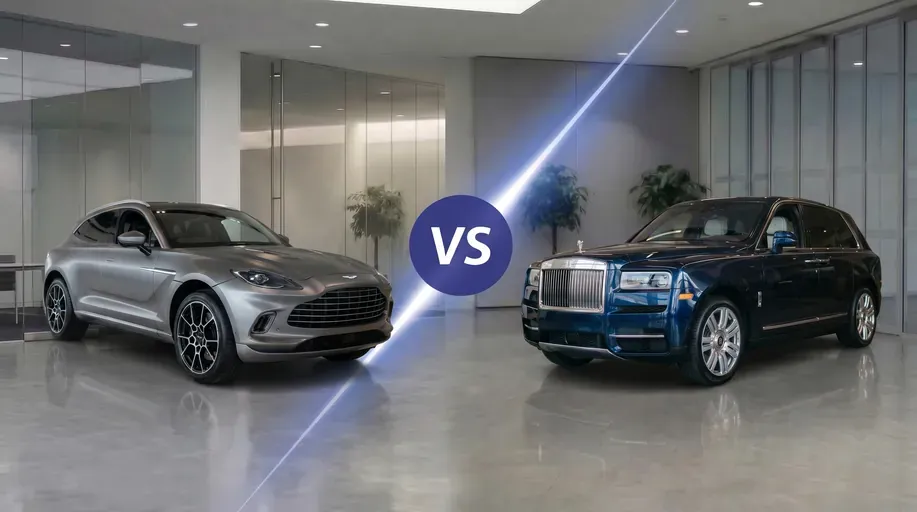
Aston Martin DBX vs. Rolls-Royce Cullinan: A detailed comparison of performance, luxury, and features. Read our verdict and find out which premium SUV to choose.
Apr 18, 2026