Review
Review Volkswagen T-Cross: What do owners and experts really say?
Volkswagen T-Cross review: real owner experience, cabin practicality, engine picks and common faults — everything you need before you buy.
Nov 2, 2026
Volkswagen Tiguan III review: real owner experience, engine picks, running costs and practicality — our expert verdict on the new SUV.
November 5, 2026
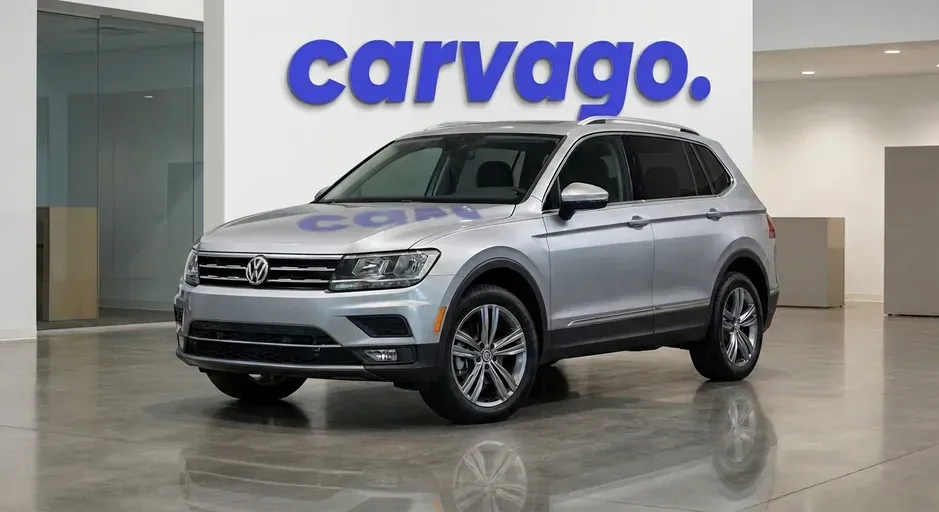
The Volkswagen Tiguan sits at the center of the European mid-size SUV segment, serving as a versatile family hauler and long-distance workhorse. This review focuses exclusively on the third generation, which entered production in late 2023. European order books opened in November 2023, with first customer deliveries following in March 2024.
Built on the MQB evo platform, this generation of the Volkswagen Tiguan SUV is sold strictly as a five-door, five-seat vehicle, with seven-seat duties now transferred to a separate model. The model has not received a mid-cycle facelift; running updates have instead focused on powertrain additions. Plug-in hybrid variants joined the line-up in February 2024, followed by the addition of all-wheel-drive petrol engines in February 2025.
Aimed at private buyers needing family practical space as well as business drivers and towing users requiring motorway stability, the third-generation Tiguan represents an evolutionary step for one of Europe's top-selling nameplates. This review details what prospective buyers should evaluate across its model years.
Customer deliveries of the third-generation Volkswagen Tiguan began in Europe in early 2024, meaning long-term reliability is not yet established. As of late 2026, the earliest production examples have accumulated between two and two and a half years of road use. While severe mechanical failures of the core combustion engines and automatic gearboxes have not emerged as a repeated pattern, early ownership feedback and professional tests highlight that electronic teething issues and software glitches represent the primary source of disruption.
Professional tests describe frequent instability in the central touchscreen, and owners report recurring software crashes, display blackouts, and sluggish response from climate control menus. Closely tied to these digital interfaces are cascading driver-assistance faults: owners describe simultaneous dropouts where systems including Front Assist, Lane Assist, and Travel Assist suddenly disengage, frequently returning only after the car has been switched off and allowed a full sleep cycle. Dealership software updates and over-the-air patches have resolved many central communication errors, though some owners report that persistent sensor dropouts required physical realignment of the windscreen camera. Low state-of-charge in the 12-volt auxiliary battery has also been identified as a frequent catalyst for spurious electrical warning messages during cold starts.
On models equipped with optional two-valve adaptive suspension and larger alloy wheels, owners report hollow knocking or clunking noises over cobblestones, sharp road ridges, and sunken manholes at low speeds. Workshops have addressed complaints with suspension control software updates and replacement top strut mounts or shock absorbers. While revised software dampens initial valve actuation, owners note that low-speed acoustic rumble remains audible, reflecting the combination of low-profile tyres and adaptive damping hardware. On the hybrid Volkswagen Tiguan, the heavier front axle places higher dynamic stresses on chassis components, though isolated early complaints regarding low-speed powertrain hesitations were resolved through transmission software recalibrations.
Safety campaigns have addressed two hardware faults on early production runs. In January 2025, an official European recall was issued for 2,605 vehicles worldwide produced between 13 May 2024 and 17 June 2024 with manually adjustable front seats. Due to defective protective felt on the seat height adjustment lever, the front seat belts may be torn in the event of a frontal crash, impairing restraining performance and increasing the risk of injury. Authorized workshops replace the front seat manual adjustment levers with modified parts containing the correct protective felt.
In September 2026, a broader multi-model campaign covering over 2.1 million vehicles manufactured between 24 September 2013 and 01 July 2024 included early third-generation vehicles. Moisture ingress could cause corrosion of a steering rack mounting bolt, which may subsequently fracture and potentially lead to a loss of steering capability. Workshops inspect and replace the steering rack subframe fastener with a corrosion-resistant bolt. Official advice specifies that driving to a workshop appointment is safe, provided no abnormal clattering sounds or changes in steering resistance appear from the front axle. When evaluating a used vehicle on the market, prospective buyers can independently verify digital service logs, safety campaign completion, and stored electronic faults through CarAudit.
The third generation of the automatic Volkswagen Tiguan comes standard with a dual-clutch transmission operated via a steering column selector, completely eliminating manual gearboxes from the range. The European powertrain catalogue spans mild-hybrid petrol units, traditional diesels, plug-in hybrids, and turbocharged petrol engines with all-wheel drive.
| Engine | Fuel | Power | Gearbox | Drivetrain | Model years |
|---|---|---|---|---|---|
| 1.5 eTSI | Mild-hybrid petrol | 96 kW (130 hp) | 7-speed automatic | Front-wheel drive | 2024–present |
| 1.5 eTSI | Mild-hybrid petrol | 110 kW (150 hp) | 7-speed automatic | Front-wheel drive | 2024–present |
| 2.0 TSI 4MOTION | Petrol | 150 kW (204 hp) | 7-speed automatic | All-wheel drive | 2025–present |
| 2.0 TSI 4MOTION | Petrol | 195 kW (265 hp) | 7-speed automatic | All-wheel drive | 2025–present |
| 2.0 TDI | Diesel | 110 kW (150 hp) | 7-speed automatic | Front-wheel drive | 2024–present |
| 2.0 TDI 4MOTION | Diesel | 142 kW (193 hp) | 7-speed automatic | All-wheel drive | 2024–present |
| 1.5 eHybrid | Plug-in hybrid | 150 kW (204 hp) | 6-speed automatic | Front-wheel drive | 2024–present |
| 1.5 eHybrid | Plug-in hybrid | 200 kW (272 hp) | 6-speed automatic | Front-wheel drive | 2024–present |
For urban commuting and frequent short trips, the hybrid Volkswagen Tiguan in either 1.5 eHybrid output makes the most sense if you have regular access to home or workplace charging, as it covers typical daily commutes on electricity alone. Buyers without home charging facilities are better served by the mild-hybrid petrol Volkswagen Tiguan; the lower-output 1.5 eTSI is adequate for town driving, but the stronger 1.5 eTSI is the most versatile choice for mixed everyday use, providing sufficient overtaking reserves when fully loaded.
Drivers who routinely cover high motorway mileages should look toward the diesel Volkswagen Tiguan. The front-wheel-drive 2.0 TDI delivers relaxed long-distance cruising and low open-road fuel consumption, though pulling power levels off at higher speeds.
For towing horseboxes, caravans, or driving in regions with severe winters, an all-wheel-drive Volkswagen Tiguan is necessary. The 2.0 TDI 4MOTION provides the highest towing capacities and strong low-down pulling power, while the 2.0 TSI 4MOTION engines suit buyers wanting all-wheel traction and brisk acceleration without a diesel engine.
For documented owner experiences, early software updates, and overall mechanical dependability, see the owner experiences section of this review.
The third-generation Volkswagen Tiguan SUV provides a versatile five-seat cabin focused on everyday family usability. Rear passengers benefit from ample legroom and headroom, accommodating tall adults comfortably behind tall front occupants. Modularity is a core strength: the rear bench slides fore and aft on rails and features adjustable backrest tilt, allowing drivers to balance passenger knee room against luggage volume. The split-folding rear backrest includes a load-through hatch within the central armrest, making it straightforward to carry long items while retaining two usable outer rear seats. In conventionally powered models, an adjustable luggage floor provides concealed storage for smaller items, whereas the hybrid Volkswagen Tiguan loses that underfloor compartment to accommodate the high-voltage traction battery.
| Parameter | Standard (Petrol / Diesel / Mild-Hybrid) | Plug-in Hybrid (eHybrid) |
|---|---|---|
| Length (mm) | 4,539 | 4,539 |
| Width (mm) | 1,842–1,859 | 1,842–1,859 |
| Height (mm) | 1,656–1,660 | 1,658 |
| Wheelbase (mm) | 2,677–2,680 | 2,677 |
| Boot capacity – seats upright (l) | 652 | 490 |
| Boot capacity – seats folded (l) | 1,650 | 1,486 |
Width variations reflect standard versus widened exterior body mouldings, measured excluding door mirrors. Height figures reflect vehicles fitted with factory roof rails.
On open roads, the Volkswagen Tiguan behaves as a stable, composed cruiser with low levels of wind and road noise. Steering response is predictable and neutral, and the all-wheel-drive Volkswagen Tiguan provides dependable traction in wet weather. Chassis tuning prioritises composure over agility, keeping body movements safe during abrupt lane changes, although the hybrid Volkswagen Tiguan feels noticeably heavier through sequential bends. While cruising remains quiet, the combustion engines sound strained under heavy throttle, the petrol unit becomes coarse once hybrid reserves are depleted.
Inside, ergonomic usability benefits from the touchscreen, illuminated temperature sliders, and a central multi-function rotary dial. The optional contoured front seats receive consistent praise for long-distance support and extensive adjustability. However, testers observe that interior material quality is uneven: hard, scratchy plastics on the lower dashboard and door panels fall short of premium expectations.
Professional road tests largely agree on the model's secure high-speed stability, long-distance seat comfort, and underwhelming lower-cabin plastics. Where verdicts diverge most is low-speed ride compliance. While setups with smaller wheels handle broken urban surfaces reasonably well, fitting larger optional wheels introduces sharp thumping over ridges and expansion joints, an edge only partially softened when equipped with optional adaptive dual-valve dampers.
All market figures and charts in this section are drawn from Carvago listings across the entire Volkswagen Tiguan model family, including earlier generations present in the data, rather than isolating the third generation alone. Consequently, this aggregated market overview does not establish a separate price level specifically for the reviewed generation. Across the broader model range, the median asking price sits at €24,000 for 2019 builds, moving to €32,900 for 2023 cars and reaching €45,800 for 2026 examples.
Between May and October 2026, advertised Volkswagen Tiguan listings moved between a high of 36,948 in July and a low of 33,558 in October. The chart below tracks how the volume of available listings developed across these six months, starting from 34,968 in May.
Active listings over time
| Month | Volkswagen Tiguan |
|---|---|
| 2026-05 | 34 968 |
| 2026-06 | 36 827 |
| 2026-07 | 36 948 |
| 2026-08 | 35 084 |
| 2026-09 | 35 578 |
| 2026-10 | 33 558 |
Source Carvago
With active listings consistently remaining above 33,000 throughout the period, buyers have had extensive choice in the market, despite moderate fluctuations from month to month.
Across Volkswagen Tiguan listings advertised today, the median asking price of cars built in 2019 is €24,000, whereas the median asking price of cars built in 2026 is €45,800. The chart below shows how these figures compare across consecutive model years.
Median advertised price by year of manufacture
| Model year | Volkswagen Tiguan |
|---|---|
| 2019 | 24 000 |
| 2020 | 26 000 |
| 2021 | 28 800 |
| 2022 | 29 000 |
| 2023 | 32 900 |
| 2024 | 41 400 |
| 2025 | 43 700 |
| 2026 | 45 800 |
Source Carvago
Buyers focusing on earlier model years see a median asking price among listings advertised today of €26,000 for 2020 models and €29,000 for 2022 models. For newer production, the median asking price of cars advertised today is €32,900 for 2023 models and €41,400 for 2024 models.
This depreciation curve shows how the Volkswagen Tiguan loses residual value as it ages, shedding roughly 18% in its first year and 39% by age three. The chart below illustrates the progression of this loss across seven years.
Residual value by vehicle age
| Vehicle age | Volkswagen Tiguan |
|---|---|
| New | 48 000 |
| 1 yr | 39 600 |
| 2 yrs | 36 000 |
| 3 yrs | 29 500 |
| 4 yrs | 27 700 |
| 5 yrs | 26 100 |
| 6 yrs | 23 400 |
| 7 yrs | 21 200 |
Source Carvago
Over the seven years tracked, the model sheds roughly 56% of its initial residual value. The steepest decline occurs over the first three years, after which the rate of annual depreciation moderates noticeably.
Between May 2026 and October 2026, advertised listings were led by conventional combustion engines, starting at 16,388 diesel and 13,787 petrol cars in May 2026. The monthly distribution across each recorded fuel type is detailed below.
Supply composition by fuel type
Petrol
Diesel
Hybrid
LPG
| Month | Petrol | Diesel | Hybrid | LPG |
|---|---|---|---|---|
| 2026-05 | 13 787 | 16 388 | 4 744 | 2 |
| 2026-06 | 14 986 | 16 970 | 4 835 | 1 |
| 2026-07 | 15 492 | 16 697 | 4 716 | 2 |
| 2026-08 | 15 115 | 15 335 | 4 570 | 4 |
| 2026-09 | 15 238 | 15 682 | 4 576 | 3 |
| 2026-10 | 14 499 | 14 819 | 4 176 | 2 |
Source Carvago
In October 2026, diesel and petrol options remained closely matched at 14,819 and 14,499 listings respectively, while hybrid models provided 4,176 choices. Buyers will find abundant supply across both petrol and diesel, whereas alternatives like LPG, with only 2 cars advertised, are extremely rare.
Between May 2026 and October 2026, the average asking price for the Volkswagen Tiguan started at €35,200 before easing slightly over the following months. The chart below illustrates how these monthly figures developed.
Average price development over time
| Month | Volkswagen Tiguan |
|---|---|
| 2026-05 | 35 200 |
| 2026-06 | 35 100 |
| 2026-07 | 34 800 |
| 2026-08 | 34 900 |
| 2026-09 | 34 600 |
| 2026-10 | 34 700 |
Source Carvago
Across the six months, the average moved from €35,200 down to €34,700 with small alternating fluctuations, representing a minimal overall change of roughly one percent.
Accommodating passenger space with a versatile sliding and reclining rear bench
Quiet, composed motorway cruising with supportive front seating
Broad powertrain selection covering mild-hybrid, plug-in hybrid, diesel, and all-wheel drive
Infotainment software instability, central display crashes, and driver-assistance dropouts
Firm low-speed ride and suspension knocking on optional large wheels
Hard, scratch-prone plastics across the lower cabin and door panels
Customer deliveries began in 2024, so long-term mechanical reliability is not yet established. While core engines and automatic gearboxes show no recurring systemic failures, early models frequently suffer from central touchscreen crashes and driver-assistance dropouts that require software updates.
Buyers with home or workplace charging benefit most from the hybrid Volkswagen Tiguan, which handles typical daily commutes on electric power alone. For mixed everyday driving without plug-in charging, the stronger mild-hybrid petrol offers the best balance, whereas high-mileage motorway drivers are best served by the front-wheel-drive diesel Volkswagen Tiguan.
No. This generation of the Volkswagen Tiguan is sold strictly in a five-seat configuration, with seven-seat duties transferred to a separate model in the brand's lineup.
Check the vehicle's VIN to confirm completion of safety campaigns concerning the steering rack mounting bolt and the manual front seat adjustment lever. During a test drive, verify that the touchscreen and assistance features function without crashing, and listen for low-speed front suspension knocking on models equipped with adaptive dampers.
Sources: volkswagen-newsroom.com, adac.de, autocar.co.uk, autobild.de, autoexpress.co.uk
This article was prepared using artificial intelligence tools. The section guarantor is Petr Dušek.
Volkswagen T-Cross review: real owner experience, cabin practicality, engine picks and common faults — everything you need before you buy.
Nov 2, 2026
Detailed comparison of the Renault Austral and Volkswagen Tiguan. Discover the differences in equipment, fuel consumption, and spaciousness. Our clear verdict will help you choose the right SUV.
Oct 16, 2026
Detailed comparison of Seat Ateca vs. Škoda Karoq. Discover the differences in engines, driving characteristics, and practicality, and read our final verdict.
May 13, 2026