Car battle
Ford Kuga vs. Škoda Karoq: Complete comparison 2026
Ford Kuga vs. Škoda Karoq: Which SUV is better? A detailed comparison, tests, and a clear verdict will help you choose the right car for you.
Apr 13, 2026
Detailed comparison of Seat Ateca vs. Škoda Karoq. Discover the differences in engines, driving characteristics, and practicality, and read our final verdict.
May 13, 2026
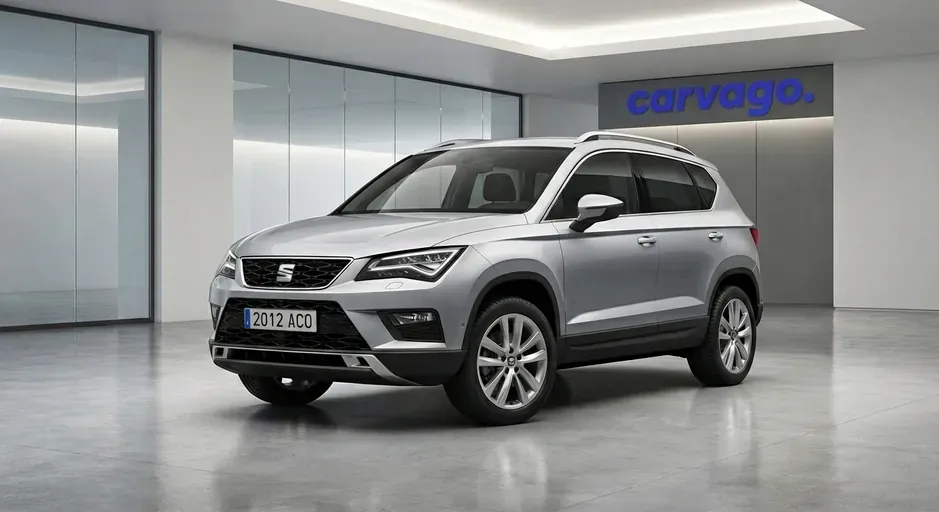
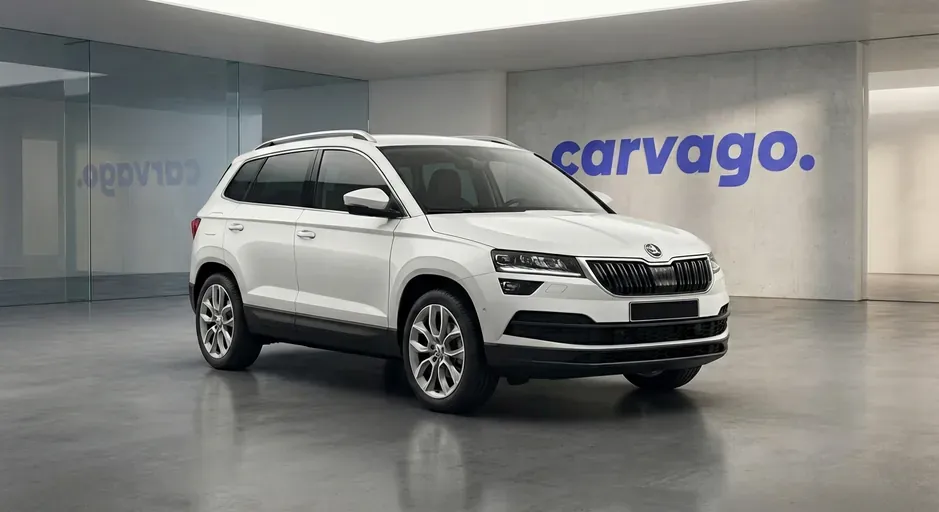
Seat Ateca, a dynamically tuned SUV from Spain (also available in its high-performance variant under the separate Cupra Ateca brand), has captured drivers' attention with its sportier design and agile driving characteristics. Its group sibling and direct competitor Škoda Karoq, which very successfully replaced the popular Yeti model in the Czech carmaker's portfolio, instead bets on renowned maximum practicality, excellent comfort, and clever spatial solutions for the family. Let's therefore take a look in our detailed comparison at which of these closely related yet characteristically different models represents the best possible choice on the used car market specifically for your needs.
When comparing the external dimensions of the Seat Ateca and Škoda Karoq models, it is essential to realize that both cars share the group's MQB A1 platform. If we focus on models roughly four years old, we find that these cars have a practically identical basic footprint. Both cars have the same width of 1841 mm and a wheelbase ranging from 2630 mm (for all-wheel drive versions) to 2638 mm (for front-wheel drive models). In practice, this means that whether you choose Spanish temperament or Czech practicality, both cars offer very similar interior space longitudinally and exactly the same level of difficulty when parking in narrow city streets or underground garages.
We begin to find slight differences when looking at the overall length. The Škoda Karoq, with a length of 4382 to 4390 mm (or up to 4398 mm for the specific outdoor Scout version), is slightly longer than the Seat Ateca, which measures 4363 to 4381 mm. Although the difference is in the range of millimeters – a maximum of less than two centimeters for standard versions – the Karoq benefits from this slight increase primarily in optimizing space in the rear of the car and the trunk. Conversely, the Ateca's shorter body further emphasizes its more compact and sportier proportions. As a result, the Karoq scores slightly better with families looking for every extra centimeter, while the Ateca appeals to drivers who prefer a visually more dynamic and tighter design.
The Seat Ateca sits lower to the ground with a height of 1601 to 1611 mm, which helps lower the center of gravity and benefits more confident handling during dynamic cornering. In contrast, the Škoda Karoq grows to a height of 1603 to 1629 mm. This taller build offers the advantage of slightly more generous headroom for passengers and a marginally higher seating position. You will appreciate this not only for more comfortable entry but also for a slightly better view of the surrounding traffic. The choice between these models in terms of external dimensions often depends on whether you prefer a sportier and more agile driving feel (Ateca) or prioritize maximum cabin airiness (Karoq).
| Parameter | Seat Ateca | Škoda Karoq |
|---|---|---|
| Width (mm) | 1841 | 1841 |
| Length (mm) | 4363 - 4381 | 4382 - 4398 |
| Height (mm) | 1601 - 1611 | 1603 - 1629 |
| Wheelbase (mm) | 2630 - 2638 | 2630 - 2638 |
When choosing a compact SUV, the size of the luggage compartment often plays a key role, especially for families and active travelers. Although the SEAT Ateca and Škoda Karoq are technological siblings sharing the same group platform, their approach to interior space differs slightly. While this difference is not gaping at first glance, every usable liter has its real justification in daily use, whether it's folding a stroller, transporting sports equipment, or packing for a vacation.
In a detailed comparison of figures, particularly relevant for roughly four-year-old used cars from the current selection, the Škoda Karoq has a slight lead. The standard trunk volume of the Karoq is a stable 521 liters across common engine options, which in practice represents a difference of 11 to 36 liters in favor of the Czech car. Furthermore, after completely folding the rear seats, the space in the Karoq increases to a generous 1630 liters. The SEAT Ateca, in most standard specifications, offers 510 liters as base and a maximum volume of 1604 liters. However, it is important to point out specific versions of the Ateca – specifically for all-wheel-drive vehicles (often in combination with more powerful 2.0 TSI or 2.0 TDI engines), the base capacity drops to 485 liters and the maximum to 1579 liters due to a different rear axle design.
In practice, these volume differences mean that the Škoda Karoq offers slightly better usability for family trips; especially after folding the rear row of seats, it provides more generous options and easily creates space for a few extra suitcases compared to its Spanish sibling. Nevertheless, the luggage compartment volume of the SEAT Ateca is fully sufficient for weekend shopping and longer vacations, even in the smaller all-wheel-drive versions. In conclusion, for a buyer of a used family car, the Karoq represents a slightly more practical and rational choice, while the Ateca can easily compensate for this minor deficit with its sportier styling.
| Parameter | Seat Ateca | Škoda Karoq |
|---|---|---|
| Base volume (liters) | 485 - 510 | 521 |
| Max. volume with seats folded (liters) | 1579 - 1604 | 1630 |
For those interested in a used SUV looking for maximum interior space, the logical favorite is the Škoda Karoq with its better luggage compartment utilization. While the Seat Ateca offers slightly fewer liters, especially in all-wheel-drive versions, it remains a highly practical companion for the everyday needs of a family of four.
When choosing a compact SUV, trailer weight is a key parameter for many drivers, fundamentally affecting the overall towing capacity and daily practicality of the vehicle. Whether you plan to tow a caravan or just occasionally attach a trailer with a load, the differences between the Seat Ateca and Škoda Karoq can play an important role when buying a roughly four-year-old used car. The standard braked trailer weight for the base engine versions (1.0 TSI) starts at 1,200 kg for the Škoda Karoq, while the Seat Ateca offers a slightly more generous 1,300 kg. The unbraked trailer weight, although not always primarily listed, reliably ranges between 670 and 750 kg for both vehicles, depending on the specific engine.
If you are looking for maximum towing power, both group siblings feature an impressive braked trailer capacity of up to 2,100 kg for the 2.0 TDI diesel (110 kW and 140 kW) and 2.0 TSI petrol (140 kW) versions with all-wheel drive. Although we won't find hybrid variants with significantly limited towing capacity in these model generations from 2020–2022, you will encounter reduced limits in front-wheel-drive models with the weaker 2.0 TDI diesel (85 kW), where the maximum drops to 1,500 kg. An interesting comparison is provided by the most popular mid-range engine, the 1.5 TSI – while the Seat Ateca allows towing between 1,600 and 1,800 kg depending on the gearbox, common versions of the Škoda Karoq from the same years mostly end at a limit of 1,500 kg.
These paper differences have clear practical impacts. The capacities of the base engines are perfectly sufficient for a weekend trip to the DIY store or a longer holiday with a smaller trailer. In contrast, the more powerful two-litre versions with a towing capacity exceeding 1,800 kg can easily pull a heavy caravan, providing the family with comfort and even space for a few extra suitcases. Ultimately, both SUVs are very capable towers, but when choosing base and mid-range petrol engines, the Seat Ateca offers slightly higher limits, making it a favorite for customers who appreciate a reserve in towing power but prefer petrol over diesel.
| Model and engine | Braked trailer weight (kg) | Unbraked trailer weight (kg) |
|---|---|---|
| Seat Ateca 1.0 TSI (81/85 kW) | 1300 | 670 |
| Seat Ateca 1.5 TSI ACT (110 kW) | 1600 - 1800 | 700 |
| Seat Ateca 2.0 TSI (140 kW) | 1900 | 750 |
| Seat Ateca 2.0 TDI (85 kW) | 1500 | 750 |
| Seat Ateca 2.0 TDI (110/140 kW) | 1800 - 2100 | 750 |
| Škoda Karoq 1.0 TSI (81/85 kW) | 1200 | 680 |
| Škoda Karoq 1.5 TSI (110 kW) | 1500 | 690 - 700 |
| Škoda Karoq 2.0 TSI (140 kW) | 1900 | 750 |
| Škoda Karoq 2.0 TDI (85 kW) | 1500 | 730 |
| Škoda Karoq 2.0 TDI (110/140 kW) | 1800 - 2100 | 750 |
Since both the Seat Ateca and Škoda Karoq share the proven MQB platform from the Volkswagen Group, their range of engines is almost identical from a technical standpoint. For buyers of roughly four-year-old used cars, this represents a major advantage in terms of spare parts availability and the proven reliability of the Group's technology. The range covers a wide spectrum of needs – from the economical entry-level 1.0 TSI three-cylinder intended mainly for the city, through the absolute sales hit in the form of the 1.5 TSI four-cylinder, to the powerful 2.0 TSI versions focused on dynamics. The golden mean and the most sought-after engine on the used car market is the 1.5 TSI petrol unit with 110 kW, which provides an ideal balance between performance and favorable fuel consumption thanks to cylinder deactivation technology. For drivers covering many highway miles, the popular 2.0 TDI diesel engine is an unquestionable all-rounder, also available with the reliable DSG automatic and an all-wheel-drive system. It is worth noting that neither car offers hybrid or plug-in hybrid powertrains in these generations. However, on the four-year-old used car market, buyers are more likely to appreciate this, as traditional internal combustion engines represent long-term service certainty. While budget-oriented drivers should choose petrol variants, those who regularly use the car for long-distance trips or tow a trailer should definitely go for the 2.0-liter diesel.
Within the Group, the Seat Ateca is profiled as a sportier alternative; however, the engine range exactly matches what we are used to in related models. When choosing a used car roughly 4 years old, you will mostly come across the modernized EVO range of units. The data shows that the older and once very popular 1.4 EcoTSI petrol engine completely disappeared from the range as early as 2018. The same fate befell the entry-level 1.6 TDI diesel, whose production ended in early 2020. These older units were fully replaced by the more modern 1.5 TSI engine (often labeled as ACT) and a detuned variant of the 2.0 TDI diesel with 85 kW, respectively. Only turbocharged units are available, both in combination with a six-speed manual transmission and a seven-speed dual-clutch DSG automatic. Those interested in maximum dynamics can search the market for the top-of-the-line 2.0 TSI version with 140 kW, which is standardly paired with the 4Drive all-wheel-drive system in the FR trim levels.
| Engine type | Fuel | Power (kW) | Torque (Nm) | Transmission |
|---|---|---|---|---|
| 1.0 TSI | Petrol | 81 / 85 | 200 | 6MT |
| 1.4 EcoTSI (until 2018) | Petrol | 110 | 250 | 6MT / 7DSG |
| 1.5 TSI ACT | Petrol | 110 | 250 | 6MT / 7DSG |
| 2.0 TSI | Petrol | 140 | 320 | 7DSG (4Drive) |
| 1.6 TDI (until 2020) | Diesel | 85 | 250 | 6MT / 7DSG |
| 2.0 TDI | Diesel | 85 / 110 | 250 / 340 - 360 | 6MT / 7DSG (optional 4Drive) |
Under the hood of the Škoda Karoq, you will find the same technical basis, with the Czech automaker's focus lying on maximum efficiency and comfortable travel. Similar to its Spanish sibling, a significant generational change of engines took place here between 2020 and 2021. The weaker and relatively noisy 1.6 TDI SCR diesel had to permanently give way to an innovated version of the more refined 2.0 TDI SCR from the EVO family. Customers can currently choose on the four-year-old car market primarily from the proven 1.0 TSI three-cylinder and the immensely popular 1.5 TSI ACT. The Karoq can also very often be found in a 4x4 version (using an inter-axle clutch formerly known as Haldex), especially in combination with the more powerful 2.0 TDI version (110 kW). Peak dynamics are represented by the 2.0 TSI (140 kW) version, which in the vast majority of cases for four-year-old used cars is tied to the attractive Sportline trim level and represents the smoothest and most powerful choice for highway travel with a petrol engine.
| Engine type | Fuel | Power (kW) | Torque (Nm) | Transmission |
|---|---|---|---|---|
| 1.0 TSI | Petrol | 81 / 85 | 200 | 6MT |
| 1.5 TSI ACT | Petrol | 110 | 250 | 6MT / 7DSG |
| 2.0 TSI | Petrol | 140 | 320 | 7DSG (4x4) |
| 1.6 TDI SCR (until 2020) | Diesel | 85 | 250 | 6MT / 7DSG |
| 2.0 TDI SCR | Diesel | 85 / 110 | 250 / 340 - 360 | 6MT / 7DSG (optional 4x4) |
Both models offer identical and field-proven Group technology without complex hybrid systems. For city and suburban driving, the 1.5 TSI petrol engine is an absolute safe bet, while for frequent long-distance highway driving with a full trunk, the popular 2.0 TDI diesel clearly leads the way.
Choosing the right engine is absolutely crucial for long-term satisfaction with the car. Our recommendations are based on real-world experience from service technicians, a balanced ratio of performance, actual fuel consumption, and mechanical reliability. Although both compact SUVs share the same platform and engine range from the Volkswagen Group, their slightly different suspension tuning and typical usage patterns call for different choices under the hood. The Seat Ateca relies on a stiffer, sportier suspension, while the Škoda Karoq is the benchmark for soft family comfort.
When looking for a used car around four years old (roughly 2021–2022 models), it is also necessary to keep in mind the availability of individual versions. As can be seen from the table of available model years, some units can no longer be found in such young cars – production of the popular 1.4 EcoTSI engine for the Ateca ended back in 2018, and the weaker 1.6 TDI diesel unit ended under the hood of the Karoq in 2020. We will therefore focus on modern engines.
| Model | Recommended engine | Power | Typical real-world consumption |
|---|---|---|---|
| Seat Ateca | 2.0 TDI | 110 kW | 5.0 – 6.0 l/100 km |
| Škoda Karoq | 1.5 TSI ACT | 110 kW | 6.0 – 6.5 l/100 km |
The Spanish SUV has a slightly stiffer and more confident suspension than its Czech sibling, making it a great companion for long journeys. The 2.0 TDI engine in the modern EVO generation is an absolutely ideal choice for this purpose, offering a great balance between dynamics, robustness, and operating economy.
The Škoda Karoq is primarily focused on family comfort, peace, and quiet. The 1.5 TSI four-cylinder petrol engine fits this character perfectly, as it doesn't require such high mileage for economic payback and handles daily mixed traffic and frequent starts much better.
The difference between manufacturers' official figures and real-world fuel consumption is often very surprising. Official consumption measured in laboratory conditions often does not match what drivers experience in everyday traffic. To determine the actual operating costs for cars approximately four years old (mainly model years 2021–2023), we looked at real-world user data. The data source for our comparison was the popular portal Spritmonitor.de, where thousands of owners meticulously record every refueling. As a result, we have an accurate and unbiased picture of the fuel consumption that can be expected from these two Volkswagen Group siblings in practice.
Data source: Spritmonitor.de
| Model and engine | Average consumption (l/100 km) |
|---|---|
| Petrol engines | |
| Škoda Karoq 1.0 TSI 81 kW | 5.8 |
| Seat Ateca 1.0 TSI 81 kW | 6.0 |
| Škoda Karoq 1.5 TSI 110 kW | 6.1 |
| Seat Ateca 1.5 TSI ACT 110 kW | 6.3 |
| Škoda Karoq 2.0 TSI 140 kW | 7.7 |
| Seat Ateca 2.0 TSI 140 kW | 8.0 |
| Diesel engines | |
| Škoda Karoq 2.0 TDI 110 kW | 5.2 |
| Seat Ateca 2.0 TDI 110 kW | 5.3 |
Several important trends clearly emerge from the table above. The most interesting finding is that the small turbocharged three-cylinder 1.0 TSI offers almost no significant fuel savings in practice compared to the more powerful four-cylinder 1.5 TSI. The larger engine doesn't have to work nearly as hard with the heavier body of a compact SUV, and thanks to active cylinder management (ACT) under low load, it achieves fuel consumption that is only a few tenths of a liter higher than the one-liter variant. Diesel 2.0 TDI units, on the other hand, confidently maintain their economic dominance, averaging just slightly above the five-liter mark, once again proving their unrivaled efficiency on long journeys. Both cars show very similar figures; however, the Škoda Karoq is slightly more economical in most engine versions, which can be attributed to subtle differences in aerodynamics or weight distribution.
For the typical user, this data provides a clear recommendation. If you spend most of your time in the city or on suburban roads and are looking for a car with a reasonable maintenance budget, the 1.5 TSI petrol engine represents an ideal balance between refined performance, solid dynamics, and acceptable fuel bills. Drivers covering large distances on highways should reach for the 2.0 TDI diesel version without hesitation, as it will reward them with excellent efficiency. Overall, however, fuel consumption is not a factor that should fundamentally decide the purchase between these two models. Given the identical group technology, the differences are so negligible that when choosing a four-year-old used car, you are best off focusing primarily on the current technical condition, the specific equipment level, and your personal preference for the design of one or the other SUV.
Looking at the market for roughly four-year-old used cars, we find that although the Seat Ateca and Škoda Karoq share the exact same platform (MQB A1) and most of the group's engines, their price levels differ quite noticeably. This difference is mainly due to the huge popularity of the local brand on the market, which ensures that the Czech used car holds its value slightly better than its Spanish sibling.
Škoda Karoq holds its price exceptionally well on the secondary market. Common models from 2021 and 2022 with the most popular 1.5 TSI or 2.0 TDI diesel engines start at roughly €18,000 if they have higher mileage. For younger vehicles in attractive trim levels (such as the stylish SportLine) or specifications with 4x4 drive and a seven-speed DSG automatic, prices easily exceed €25,000. Customers pay extra for the used Karoq's exceptionally practical interior solutions, very comfortable chassis, and ease of future resale.
Seat Ateca, on the other hand, plays the role of a slightly more affordable and sportier-tuned alternative. Compared to its sibling, it experiences a slightly faster depreciation, making it a very attractive buy on the used car market. Similarly aged and comparably equipped models can often be purchased for €1,000 to €2,000 less. You can find a four-year-old Ateca with a 1.5 TSI or 2.0 TDI engine starting just above €16,000. Top-of-the-line FR versions (focused on a sporty look) or Xcellence (with an emphasis on comfort) then typically range between €21,000 and €24,000.
| Model and specification | Most common engines | Typical price range (€) |
|---|---|---|
| Seat Ateca (Style, Reference) | 1.0 TSI / 1.5 TSI / 2.0 TDI | 16,000 – 20,000 |
| Seat Ateca (FR / Xcellence, DSG) | 1.5 TSI / 2.0 TDI | 20,000 – 24,000 |
| Škoda Karoq (Ambition / Style) | 1.0 TSI / 1.5 TSI / 2.0 TDI | 18,000 – 22,000 |
| Škoda Karoq (SportLine, 4x4, DSG) | 1.5 TSI / 2.0 TDI | 23,000 – 28,000 |
Interesting trend for buyers:
For families looking for value for money, the Seat Ateca makes sense as a "secret tip". Owners often praise its slightly firmer but more engaging chassis tuning. Another plus for the Spanish SUV is the fact that even after the 2020 facelift, it offers classic mechanical buttons and rotary climate controls, which are missing in some newer Volkswagen Group models. The Škoda Karoq, on the other hand, is the ideal choice for those who prefer the softest possible ride and a wider selection from the huge number of listings available on our market.
The Škoda Karoq holds its value excellently on the Czech market and promises an easy future resale, whereas the technically related Seat Ateca represents a more affordable choice with more attractive depreciation on the used car market.
Both models, the Seat Ateca and the Škoda Karoq, received the maximum five-star rating in tests by the independent organization Euro NCAP at the time of their market launch. However, when assessing the safety of cars that are now on the market as roughly four-year-old used vehicles, it is necessary to view the results in a broader temporal context. Euro NCAP test methodology is constantly evolving and becoming stricter. Today's protocols include more complex frontal impact simulations, advanced cyclist detection, and intricate scenarios involving intersections. Therefore, percentage results achieved many years ago cannot be directly compared with the ratings of the very latest models on the market.
The Seat Ateca underwent Euro NCAP safety tests in 2016. The car demonstrated an excellent level of passive safety, which was reflected in a score of 93% for adult occupant protection and 84% for child occupant protection. The score for safety assistance systems stood at 60%, reflecting the standards of the time when modern active features were not yet a common part of standard equipment. It is also important to mention that the validity of the original five-star certificate for the Ateca formally expired in January 2023, as the car in its original tested specification no longer meets the current, much stricter requirements of the organization.
The Škoda Karoq passed through the Euro NCAP testing laboratory a year later, in 2017. It likewise earned the full five stars and achieved an identical result of 93% in the adult occupant protection discipline as its Spanish sibling. In the area of child protection, the Karoq recorded a slightly lower score of 79%, while it performed slightly better in the protection of vulnerable road users (pedestrians and cyclists) with a rating of 73%. The score for assistance systems was 58%, which only confirms that models from this period shared a very similarly configured level of basic technological equipment.
Although both compact SUVs benefit from the shared group MQB platform and provide nearly identical and robust occupant protection during an actual impact, from the perspective of today's benchmarks, their standard active safety may be perceived as average. If you are looking for a nearly new used car and require the most comprehensive level of safety corresponding to modern standards, it is worth focusing on cars with better equipment. Examples containing optional assistance packages (such as adaptive cruise control, blind spot monitoring, or rear traffic alert) will offer significantly better protection and accident prevention.
| Parameter | Seat Ateca | Škoda Karoq |
|---|---|---|
| Year of testing | 2016 | 2017 |
| Adult occupant protection | 93 % | 93 % |
| Child occupant protection | 84 % | 79 % |
| Vulnerable road user protection | 71 % | 73 % |
| Safety assist | 60 % | 58 % |
Both models offer top-tier passive protection for occupants, but to achieve modern active safety standards, it is worth looking for a used car equipped with optional assistance systems.
In addition to standard equipment, each model offers several unique elements and technological solutions that can be decisive for the customer. Although both cars share the same technical foundation of the Volkswagen Group, their approach to added value and overall focus differs significantly.
Since its launch and subsequent facelift, the Ateca has positioned itself as a more driver-focused and emotive choice. It targets users who prefer a sharper look and a sportier feel behind the wheel.
The Czech SUV is synonymous with family use, maximum comfort, and everyday user-friendliness. It focuses on details that make life easier for all passengers on board.
Sportier and more agile driving characteristics thanks to a stiffer suspension setup
Attractive, sharp-edged, and more dynamic exterior design
Often a slightly more favorable purchase price on the used car market compared to Škoda
Lower curb weight benefiting overall dynamics and fuel consumption
Stiffer suspension results in poorer damping of bumps on rough roads
Interior workmanship and plastics used feel slightly cheaper and more dated
Absence of clever rear seat variability, which limits trunk flexibility
The Seat Ateca is an ideal choice for drivers who expect a sportier driving experience and a more dynamic look from their compact SUV. It represents a more affordable alternative that sacrifices a bit of family comfort in favor of better handling and more driving fun on the road.
Excellent driving comfort with more compliant suspension for rough country roads
Availability of the VarioFlex system (sliding, folding, and completely removable rear seats)
A wide range of practical "Simply Clever" solutions and cleverly designed storage spaces
Subjectively higher-quality interior materials and very good cabin soundproofing
Excellent residual value and huge interest on the used car market
More conservative and, for some customers, perhaps too inconspicuous design
Less engaging steering and slightly more body roll in sharper corners
Higher purchase price of comparable used cars compared to its Spanish sibling
The Škoda Karoq represents an exceptionally practical family SUV that places maximum emphasis on comfort, variability, and seamless everyday usability. It is perfect for buyers who appreciate a comfort-oriented chassis, a clever interior, and don't mind paying a bit extra for these traditional strengths of the Czech brand.
Based on long-term user experience, service bulletins, and data provided by the Comprehensive Car Audit, we have compiled an overview of the most common problems that used car buyers should watch out for.
The Seat Ateca is generally considered a more reliable SUV; however, sharing group technology also brings known ailments that are worth focusing on when choosing a used car.
The Ateca benefits from proven group technology, but the biggest headaches for owners are infotainment software glitches and potential wear of dry clutches in DSG transmissions. Regular servicing and timely software updates reliably eliminate most of these risks.
The Škoda Karoq shares the same MQB platform and engine range with the Ateca, so many technical problems are identical, but minor specifics of the popular Czech brand are also added.
Technically, the Karoq shares most ailments with its Seat sibling, but it also struggles with occasional noises from the more complex VarioFlex seats and malfunctioning locking sensors. Before buying, it pays to carefully check the state of the electronics and test the smoothness of the automatic transmission's shifting.
When buying a used car, a thorough inspection is key. Here are a few specific points to focus on for these two models, which should always be covered by a careful comprehensive car inspection.
Škoda Karoq is more practical thanks to the optional VarioFlex rear seat system, which allows you to slide the seats and change the boot volume from 479 to 588 litres. Seat Ateca offers a standard fixed volume of 510 litres, which is still an above-average value for family needs. However, for both models, the total volume decreases slightly if you opt for the all-wheel drive version.
The Seat is generally tuned more sportily, so it offers a stiffer chassis, less body roll and slightly sharper steering response. In contrast, the Škoda bets on maximum passenger comfort, has softer suspension and filters out bumps on broken roads better. The choice therefore depends purely on whether you prefer a more dynamic ride or a smooth and comfortable family drive.
Since both cars share the exact same platform and technology of the Volkswagen Group, their reliability and routine service costs are almost identical. For roughly four-year-old used cars, focus primarily on the oil change history of the DSG automatic transmissions and check the smoothness of the infotainment system. Mechanical parts and the popular TSI and TDI engines are very durable with regular maintenance.
The range of power units is essentially identical for both vehicles and covers a power spectrum from 110 to 190 hp. It includes the very popular 1.0 TSI and 1.5 TSI petrol engines as well as economical 2.0 TDI motorway diesels. A major difference only comes with the extreme sports versions, where the Spanish model has an offshoot in the form of the separate Cupra Ateca brand with 300 hp.
The Spanish model is ideal for drivers looking for a more emotional exterior design and who want to enjoy a sportier feel behind the wheel. The Czech representative, on the other hand, will better serve practically-minded families thanks to slightly higher driving comfort and a cleverly designed variable interior. In terms of price on the used car market, they move very similarly, so the decision is often made by the specific condition, equipment and documented service history of the given unit.
Sources: ADAC, e15.cz, svetmotoru.cz, elektromobil.cz, automix.cz, autowork.cz
This article was prepared using artificial intelligence tools. The section guarantor is Petr Dušek.
Ford Kuga vs. Škoda Karoq: Which SUV is better? A detailed comparison, tests, and a clear verdict will help you choose the right car for you.
Apr 13, 2026
Detailed comparison of DS 7 (Crossback) vs Lexus UX. Discover the differences in comfort, equipment, and reliability. Read our verdict and choose the best SUV.
Apr 8, 2026
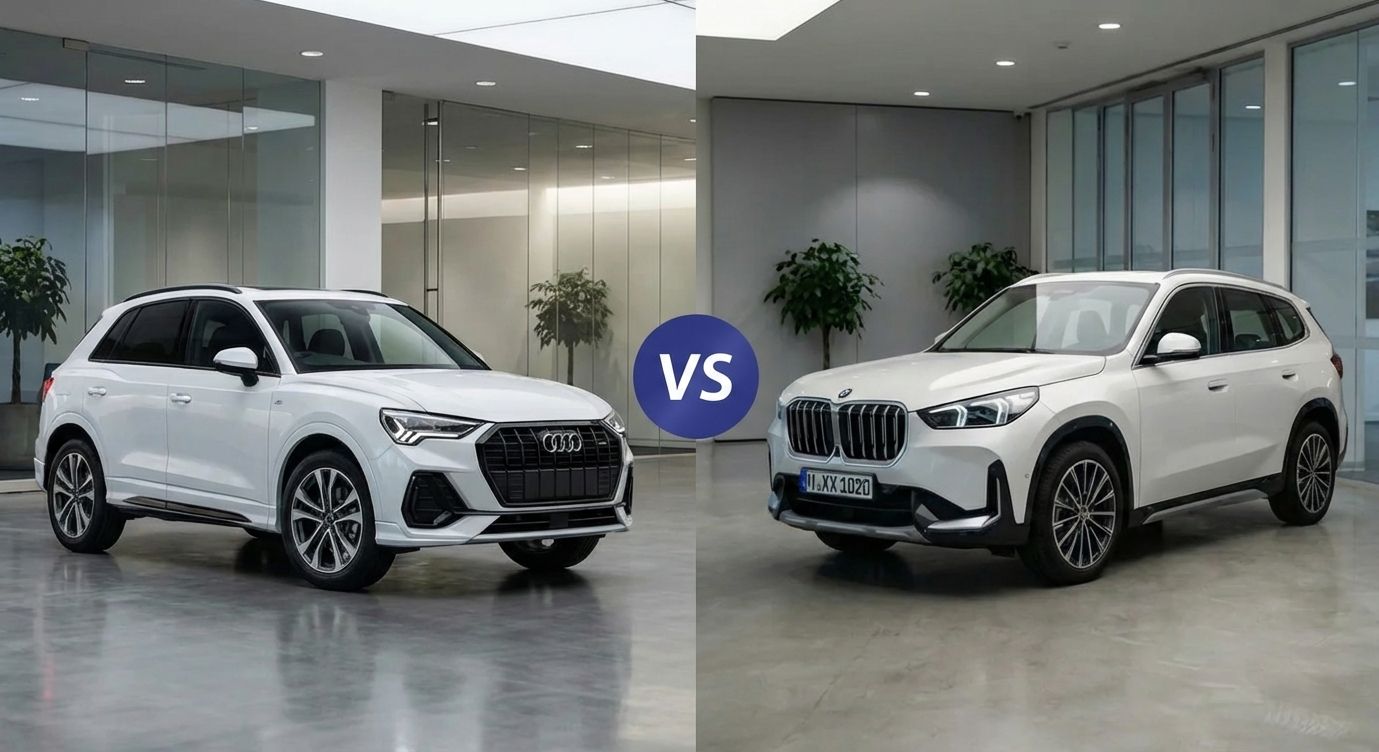
Audi Q3 vs BMW X1: Detailed comparison of design, performance, and practicality. Find out which premium SUV is the right choice for you in our verdict.
Nov 12, 2026