Car battle
BMW X1 vs. Volvo XC40: Complete comparison 2026
BMW X1 vs. Volvo XC40: Which premium SUV is better for you? Our detailed comparison and verdict will help you make the final decision.
Apr 14, 2026
Articles
Car battle
Audi Q3 vs BMW X1: Detailed comparison of design, performance, and practicality. Find out which premium SUV is the right choice for you in our verdict.
April 14, 2026
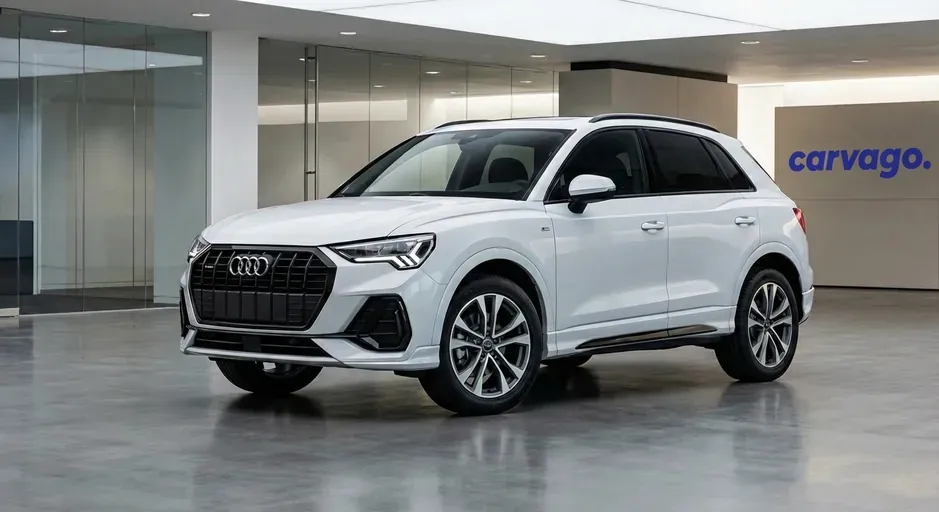
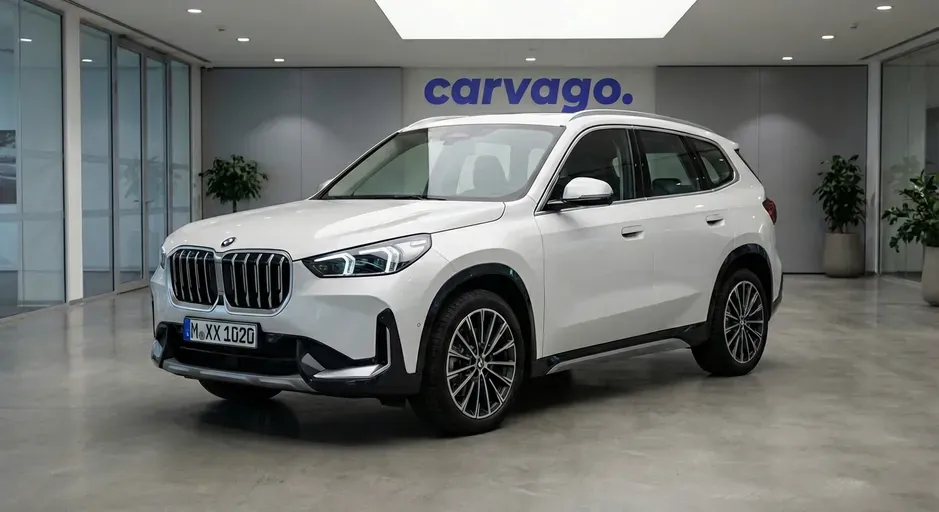
The Audi Q3 is the embodiment of the compact luxury and practicality you expect from the brand with the four rings, offering a refined ride with a premium interior. On the other hand, the BMW X1, also known as the BMW Brilliance Zinoro 60H, brings the typical driving pleasure and sporty character for which the Munich-based automaker is famous to the small SUV segment. In this comparison, we'll take a look at how these two premium crossovers stack up against each other and which one might be the right choice for you.
Looking at the exterior dimensions, it's clear that the second-generation Audi Q3 (F3) and the F48 generation BMW X1, which most often compete on the used car market, take a slightly different approach. The Audi is slightly larger in almost every dimension, giving it a more robust stance. However, with the arrival of the new X1 generation (U11) in 2022, the tables have turned completely, and the BMW has caught up with its Ingolstadt rival, even outgrowing it in some respects.
The Audi Q3 (F3) measures 4,484 mm in length, surpassing the then-current BMW X1 (F48) by a noticeable 37 mm. The Sportback variant is even longer at 4,500 mm. This difference can result not only in a slightly more spacious interior but also in a more confident road presence. However, the newer BMW X1 (U11) erases this lead, having grown to an identical 4,500 mm, making it a more evenly matched competitor for newer used Q3s.
In terms of width, the Audi Q3 (1,849 mm) again has the upper hand over the older X1 (1,821 mm), promising more shoulder room for occupants. However, the BMW X1 (F48) compensates for this with a slightly greater height (up to 1,598 mm compared to the Q3's 1,585 mm), which can mean more headroom. An interesting difference here is the Q3 Sportback version, which is noticeably lower at 1,567 mm, underlining its dynamic character. The new generation X1 (U11) is then significantly taller (up to 1,642 mm) and almost as wide as the Q3, giving it a more dominant SUV stance.
The key figure for interior space, the wheelbase, also plays into the hands of the Audi Q3. With a value of 2,680 mm, it offers 10 mm more than the BMW X1 (F48). This small difference can contribute to slightly better comfort for rear-seat passengers. But again, the latest generation BMW X1 (U11) with its 2,692 mm wheelbase surpasses this parameter, promising the most generous interior space of the models compared.
| Parameter | Audi Q3 SUV (F3) | Audi Q3 Sportback (F3) | BMW X1 (F48) | BMW X1 (U11) |
|---|---|---|---|---|
| Length (mm) | 4484 | 4500 | 4439–4447 | 4500–4505 |
| Width (mm) | 1849 | 1843 | 1821 | 1845 |
| Height (mm) | 1585 | 1567 | 1582–1598 | 1622–1642 |
| Wheelbase (mm) | 2680 | 2680 | 2670 | 2692 |
Practicality and boot volume are key factors in compact SUVs that often decide a purchase. In this respect, the Audi Q3 and BMW X1 are in a very close battle, but with a slightly different philosophy. While both models offer plenty of space for family needs, from weekend shopping to longer holidays, the BMW X1 has a slight lead in the overall figures, offering a slightly more generous basic volume.
The second generation of the Audi Q3 (type F3, from 2018) brought a significant improvement in practicality. In its basic configuration, it offers a boot with a volume of 530 litres. A major advantage is the standard sliding rear bench, which allows you to change the ratio between passenger and luggage space. Folding down the rear seats creates a space of up to 1525 litres. The Sportback variant with its sloping rear maintains the same basic volume of 530 litres, but the maximum capacity is slightly smaller due to the design, specifically 1400 litres.
The new generation of the BMW X1 (type U11, from 2022) sets new standards in this segment. With a basic volume of 540 litres, it slightly surpasses its competitor from Ingolstadt. After folding down the rear seats, which are split in a practical 40:20:40 ratio, the space expands to an impressive 1600 litres. However, you need to pay attention to the chosen engine – mild-hybrid versions have a slightly smaller boot (500 litres), and plug-in hybrids offer 490 litres due to the battery, which is still more than the hybrid Audi Q3 (380 litres).
While both cars are extremely practical, the BMW X1 offers a bit more raw volume, which can be decisive for those who regularly carry bulky loads. The Audi Q3 counters with a standard sliding bench and excellent usable space, but in total, it lags slightly behind the BMW. The difference is most noticeable in the plug-in hybrid variants, where the BMW maintains significantly greater practicality.
| Parameter | Audi Q3 SUV | Audi Q3 Sportback | BMW X1 SUV |
|---|---|---|---|
| Basic volume (litres) | 530 | 530 | 540 |
When it comes to practicality and towing capability, both models offer solid figures, but with a few key differences. For caravan owners or those who regularly transport heavier loads, the second-generation Audi Q3 (F3) will often be the more attractive choice. This is because it offers a higher maximum braked trailer weight in key engine versions.
While the basic petrol versions, such as the Audi Q3 35 TFSI, can handle a trailer weighing 1800 kg, which is 100 kg more than the comparable BMW X1 sDrive18i (F48), the main difference is seen in the all-wheel-drive diesel engines. The Audi Q3 in the 40 TDI quattro specification can tow up to 2200 kg. This is a noticeable 200 kg more than the most powerful diesel versions of the BMW X1, the xDrive20d and xDrive25d, whose maximum is 2000 kg. This difference can be the deciding factor in whether you can legally tow a larger caravan or a trailer with a boat.
A significant drop occurs with the plug-in hybrid variants. While the Audi Q3 45 TFSI e still offers a usable 1400 kg, which is sufficient for a smaller caravan or trailer, the F48 generation BMW X1 xDrive25e, with a value of just 750 kg, is practically limited to light unbraked trailers. For buyers who want to combine ecological operation with towing capabilities, the Audi is the clear winner.
| Model and Engine Version | Braked Trailer Weight (kg) | Unbraked Trailer Weight (kg) |
|---|---|---|
| Audi Q3 35 TFSI (110 kW) | 1800 | 750 |
| Audi Q3 40 TDI quattro (147 kW) | 2200 | 750 |
| Audi Q3 45 TFSI e (PHEV) | 1400 | 750 |
| BMW X1 sDrive18i (103 kW) | 1700 | 750 |
| BMW X1 xDrive20d (140 kW) | 2000 | 750 |
| BMW X1 xDrive25e (PHEV) | 750 | 750 |
When choosing an engine for the Audi Q3 or BMW X1, buyers are faced with a choice between two different philosophies. Audi relies on proven and refined four-cylinder TFSI and TDI engines that cover a wide performance spectrum, while BMW offers a more varied range including economical three-cylinders, powerful four-cylinders, and, last but not least, more sophisticated plug-in hybrid variants. The differences are reflected not only in dynamics and fuel consumption but also in the overall character of the drive, where Audi prioritises quietness and comfort, while BMW traditionally adds a sportier touch. In the context of used cars, we are focusing primarily on the second-generation Audi Q3 (F3, from 2018) and the second-generation BMW X1 (F48, 2015-2022).
The range of engines for the Audi Q3 generation F3 is straightforward and covers the needs of most drivers. The base is the 35 TFSI petrol engine, which is a 1.5-litre four-cylinder with 110 kW (150 hp), available with both manual and S tronic automatic transmissions. For those who drive longer distances, the 35 TDI and 40 TDI diesel engines are the ideal choice. Both are two-litre four-cylinder engines, with the less powerful version providing 110 kW (150 hp) and the more powerful one, always paired with quattro all-wheel drive, delivering up to 147 kW (200 hp). The top of the petrol range (not including the sporty RS Q3) is the 45 TFSI version with a two-litre engine producing up to 180 kW (245 hp). An interesting alternative is the plug-in hybrid version 45 TFSI e, which combines a 1.4 TFSI engine with an electric motor and offers a system output of 180 kW (245 hp).
| Engine Type | Fuel | Power (kW) | Torque (Nm) | Transmission |
|---|---|---|---|---|
| 35 TFSI | Petrol | 110 | 250 | 6-speed manual / 7-speed S tronic |
| 40 TFSI quattro | Petrol | 140 | 320 | 7-speed S tronic |
| 45 TFSI quattro | Petrol | 169 - 180 | 350 - 370 | 7-speed S tronic |
| 35 TDI | Diesel | 110 | 340 - 360 | 7-speed S tronic |
| 40 TDI quattro | Diesel | 140 - 147 | 400 | 7-speed S tronic |
| 45 TFSI e | Plug-in Hybrid | 180 (system) | 400 (system) | 6-speed S tronic |
The second-generation BMW X1 (F48) brought a fundamental change in the form of a switch to a front-wheel drive (sDrive) platform, while xDrive all-wheel drive remained available. The engine range is more diverse. The basic petrol variant is the sDrive18i with a turbocharged 1.5-litre three-cylinder engine producing 100-103 kW (136-140 hp). The more powerful petrol versions 20i and 25i already use two-litre four-cylinder engines. The diesel part of the range is very popular, starting with the three-cylinder sDrive16d (85 kW/116 hp) and continuing through the bestselling four-cylinder sDrive/xDrive18d (110 kW/150 hp) to the powerful xDrive20d (140 kW/190 hp). In this generation, BMW also offered a plug-in hybrid variant, the xDrive25e, combining a 1.5-litre three-cylinder engine with an electric motor for a system output of 162 kW (220 hp).
| Engine Type | Fuel | Power (kW) | Torque (Nm) | Transmission |
|---|---|---|---|---|
| sDrive18i | Petrol | 100 - 103 | 220 | 6-speed manual / 7-speed DCT |
| sDrive/xDrive20i | Petrol | 131 - 141 | 280 | 7-speed DCT / 8-speed Steptronic |
| xDrive25i | Petrol | 170 | 350 | 8-speed Steptronic |
| sDrive18d | Diesel | 110 | 330 - 350 | 6-speed manual / 8-speed Steptronic |
| xDrive20d | Diesel | 140 | 400 | 8-speed Steptronic |
| xDrive25d | Diesel | 170 | 450 | 8-speed Steptronic |
| xDrive25e | Plug-in Hybrid | 162 (system) | 385 (system) | 6-speed Steptronic |
For calm and economical driving around the city and its surroundings, the basic engine versions of both models – the Audi Q3 35 TFSI and the BMW X1 sDrive18i – will serve perfectly. The Audi offers one extra cylinder and a slightly more refined operation, while the BMW will surprise you with the fuel efficiency of its three-cylinder engine.
For drivers with high annual mileage, diesel engines are the clear choice. The Audi 35 TDI or the BMW 18d represent an ideal compromise between performance and fuel consumption. If you often drive on motorways or in the mountains, it is worth considering the more powerful 40 TDI quattro from Audi or the xDrive20d from BMW, which offer more power and the security of all-wheel drive.
For dynamically-oriented drivers, there are powerful petrol variants. The Audi 45 TFSI quattro provides significant dynamics and confidence. BMW, with its xDrive20i or xDrive25i models, offers a sportier ride and quicker throttle response.
For the eco-conscious and those who can charge regularly, there are plug-in hybrids. The BMW xDrive25e was more established in this generation, while Audi countered a bit later with the 45 TFSI e, but with a higher system output. The choice here depends on brand preference and the availability of specific units on the used car market.
Choosing the right engine is crucial for long-term satisfaction with a car. In this section, we will focus on the recommended engine options for the Audi Q3 and BMW X1, with our assessment based on a combination of performance, real-world fuel consumption, owner feedback, and mechanical reliability. Both manufacturers offer a wide range of engines, but not every one is the ideal choice for every driver. Our recommendations will help you select the power unit that best suits your needs and minimises the risk of expensive repairs.
For the second-generation Audi Q3 (F3, from 2018), the most sensible and versatile choice is the 110 kW 2.0 TDI diesel engine, which bears the commercial designation 35 TDI. This engine represents an ideal compromise between dynamics, running costs, and reliability, making it a favourite on the used car market.
Its greatest advantage is its excellent economy. In real-world driving, it's easy to achieve an average consumption of between 5.5 and 6.5 litres per 100 km, which is an excellent figure for an SUV of this size. With 340 Nm of torque (360 Nm in newer versions), the engine provides enough power for safe overtaking, even with a fully loaded car. It is the ideal partner for long motorway journeys, where it feels right at home – it's quiet, refined, and economical. The engine is available with both a manual and an S tronic automatic transmission, as well as with front-wheel drive or as a quattro. The version with 4x4 drive and an automatic gearbox is the most sought-after and practical variant.
In terms of reliability, the EA288 Evo series engines, to which this unit belongs, are among the best that the VW Group has produced in recent years. Nevertheless, regular maintenance is essential. In cars that have been driven predominantly on short city trips, there is a higher risk of the diesel particulate filter (DPF) becoming clogged. We therefore recommend taking the car for a longer drive regularly to allow regeneration to occur. Otherwise, it is a mechanically durable and proven power unit suitable for drivers with a higher annual mileage and for families who will appreciate its power and low running costs.
For the BMW X1 F48 generation (2015–2022), our favourite is the two-litre diesel designated 20d, ideally in combination with the xDrive all-wheel-drive system. This engine, with 140 kW (190 hp) and 400 Nm of torque, perfectly captures the sporty character of the BMW brand and lends the X1 confident dynamics that you often won't find in the competition.
The engine, with the internal code B47, is considered very reliable and represents a significant improvement over its problematic predecessor (N47). It offers excellent throttle response and linear power delivery across a wide rev range. Acceleration from 0 to 100 km/h in under 8 seconds is an impressive figure for a family SUV. Yet, the engine maintains great efficiency – real-world consumption is around 6 to 7 litres per 100 km, which is an excellent result considering the performance and 4x4 drive. The combination with the eight-speed Steptronic automatic transmission from Aisin is harmonious, shifting smoothly and quickly.
This engine option is ideal for dynamically-oriented drivers who want to enjoy the proverbial joy of driving but do not want to give up practicality and reasonable running costs. The xDrive system also adds confidence on wet or snowy roads. Although the B47 engine is reliable, some older units may have had issues with the EGR valve, which the manufacturer addressed through recall campaigns. When buying a used car, it is therefore a good idea to check if this service action was performed. For calmer drivers, the less powerful sDrive18d or xDrive18d version (110 kW/150 hp), which shares the same reliable foundation, is an excellent and even more economical alternative.
Official fuel consumption figures are one thing, but the everyday reality on the road often shows completely different numbers. To get the most accurate picture of the actual running costs of the Audi Q3 (F3 generation, from 2018) and the BMW X1 (F48 and U11 generations, from 2015), we turned to data from the drivers themselves. We used the extensive database of the German portal Spritmonitor.de, where thousands of owners meticulously record every refuelling. This allows us to compare how the two premium rivals fare in the real world.
The following table shows the average consumption of the most common engine options that are relevant for the market of used cars approximately four years old.
| Model and Engine | Average Real-World Consumption (l/100 km) |
|---|---|
| Audi Q3 35 TFSI (1.5 TSI, 110 kW) | 7.7 |
| Audi Q3 35 TDI (2.0 TDI, 110 kW) | 6.1 |
| Audi Q3 40 TDI (2.0 TDI, 140/147 kW) | 6.8 |
| BMW X1 sDrive18i (1.5, 100/103 kW) | 7.8 |
| BMW X1 sDrive18d (2.0d, 110 kW) | 5.8 |
| BMW X1 xDrive20d (2.0d, 140 kW) | 6.4 |
Data is based on figures from hundreds of drivers on Spritmonitor.de and may vary depending on driving style and conditions.
The data clearly shows several interesting trends. In a direct comparison of the basic diesel engines, the BMW X1 sDrive18d wins, consuming around 5.8 litres of diesel per 100 km on average, while the comparable Audi Q3 35 TDI uses approximately 6.1 litres. This difference is also evident in the more powerful versions with all-wheel drive, where the BMW X1 xDrive20d maintains a slight lead over the Audi Q3 40 TDI. For drivers who cover tens of thousands of kilometres per year, the more economical diesel engine in the BMW can be a noticeable advantage.
With petrol engines, the situation is very balanced. Both the Audi Q3 35 TFSI and the BMW X1 sDrive18i have a real-world fuel consumption of just under eight litres. This confirms that modern turbocharged engines are economical mainly during calm driving, but in the city or with a more dynamic style, they will demand more fuel. For drivers with lower annual mileage and more frequent city driving, the difference in consumption compared to diesel may not be significant enough to offset the potentially higher service costs of diesel engines.
Overall, if fuel consumption is a key factor for you, the BMW X1 offers a slight advantage, especially in its diesel variants. However, the differences are not dramatic and will not be a decisive criterion for many buyers. Both models offer solid economy for an SUV, comparable to the competition in the segment.
Looking at the used car market, we find that the Audi Q3 and BMW X1, approximately four years old (2020-2022 models), are in very similar price ranges. The decisive factors for the final price are primarily mileage, specific engine, equipment level, and the overall condition of the vehicle.
Used Audi Q3 models from 2020 to 2022 are typically available on the market in a price range from €21,000 to €36,000. Cheaper examples usually have the basic engine and higher mileage. Conversely, cars with more powerful engines, quattro all-wheel drive, and rich equipment (such as the S line package, virtual cockpit) will be closer to the upper end of this range.
The BMW X1 from the same period is sold at prices that largely overlap with the Audi Q3. Expect a price tag in the range of approximately €20,000 to €35,000. Here too, the specification is the most important factor. Basic models with front-wheel drive (sDrive) and lower mileage are at the lower end. Versions with xDrive all-wheel drive, more powerful engines, and the M sport package will naturally be more expensive. The average price for a 2020 model is around €22,000.
The price battle between the used Audi Q3 and BMW X1 has no clear winner. Their prices are so similar that the buyer's budget is unlikely to be the main factor swaying them one way or the other.
The final decision will therefore depend more on personal preferences and the specific offers on the market. We recommend comparing individual cars, their service history, equipment, and condition, as this is where the biggest differences in value for money can appear.
Although both cars boast a five-star rating from Euro NCAP, the results must be seen in the context of when the tests were conducted. The methodology and difficulty of the tests are constantly evolving, so a direct comparison of percentage scores between cars tested in different years is not entirely conclusive. Newer tests generally mean stricter criteria.
The second-generation Audi Q3 received its five-star rating in 2018. At that time, it achieved an excellent score of 95% for adult occupant protection and 86% for child protection. These figures demonstrate a robust body structure and effective restraint systems. In the area of vulnerable road user protection (pedestrians and cyclists), it scored 76%, and for assistance systems, it received 85%. Although these are still very good results, it should be noted that the 2018 tests did not yet include some of the more demanding scenarios that were introduced later, such as protection in a frontal collision with an oncoming vehicle or more advanced autonomous braking tests.
The new generation BMW X1 underwent Euro NCAP crash tests in 2022, under significantly stricter rules. Despite this, it earned a full five stars, highlighting its modern safety concept. The score of 86% for adult protection and 89% for child protection is nominally lower than the Q3's in adult protection, but it was achieved under more demanding conditions. For example, the 2022 tests introduced a new frontal impact with a moving barrier and analysed occupant protection in a far-side impact, where the X1 benefits from a new centre airbag. In the vulnerable road users category, the X1 scored 76%, but it excelled in assistance systems with a rating of 92%, reflecting the presence of the latest technologies that can better prevent collisions, for example, when turning.
Although both models are top-tier and provide a high level of protection, the BMW X1 has the upper hand in terms of safety. The reason is not only the more recent test date conducted under stricter standards but, above all, the significantly higher score in the assistance systems category. In practice, this means the X1 is equipped with a more modern and sophisticated set of technologies that actively help prevent accidents, which is crucial for occupant safety. While Audi's 2018 certification is still valid, the newer BMW tests better reflect current standards and technological advancements in automotive safety.
| Parameter | Audi Q3 | BMW X1 |
|---|---|---|
| Year of testing | 2018 | 2022 |
| Adult Occupant | 95 % | 86 % |
| Child Occupant | 86 % | 89 % |
| Vulnerable Road Users | 76 % | 76 % |
| Safety Assist | 85 % | 92 % |
In addition to the standard equipment, each model offers several unique features that can be decisive for the customer, with each taking a slightly different approach to appeal.
The second-generation Audi Q3 (from 2018) has focused on massive digitalisation and practicality inspired by the brand's larger models, which is reflected in everyday use.
The second-generation BMW X1 (F48, 2015–2022) focuses on the brand's traditional values – excellent driving characteristics – but adds a range of smart and practical solutions that make life on board more pleasant.
Advantages:
Disadvantages:
Advantages:
Disadvantages:
Based on our own CarAudit inspections, reliability statistics, and expert articles, we have compiled an overview of the most common problems that buyers of used Audi Q3 and BMW X1 cars should watch out for. Even premium brands are not immune to occasional technical issues, but it is important to distinguish between minor inconveniences and serious risks.
The second-generation Audi Q3 is generally considered a reliable car, but some areas require increased attention. Problems often relate to modern electronic equipment and specific engine versions.
Summary for the Audi Q3: Most of the problems with the second-generation Q3 are more in the nature of minor inconveniences that can be solved with software or preventive maintenance. A regular and meticulous service history is key.
The second-generation BMW X1 is a mechanically robust car that shares its technology with Mini models. Nevertheless, it has specific problems that are good to focus on, especially with diesel engines and chassis components.
Summary for the BMW X1: With the X1, it is crucial to check the history of recall campaigns and the condition of the diesel engine, especially the EGR system. The chassis and rubber components deserve a thorough inspection, but overall it is a reliable car with well-known technology.
When buying a used car, a thorough inspection is key. Even premium models like the Audi Q3 and BMW X1 have their specific weaknesses, which are good to focus on during selection to prevent expensive repairs in the future.
The BMW X1 is generally considered the sportier vehicle, offering more fun behind the wheel on country roads thanks to its stiffer chassis and more communicative steering. The Audi Q3, on the other hand, focuses more on comfort and a quiet ride, although it provides excellent grip with the optional quattro all-wheel drive.
Both cars are very similar in size. The BMW X1 has a slightly larger boot (540 litres compared to the Q3's 530 litres). However, the Audi Q3 counters with the ability to slide the rear seats, allowing for variable space for passengers or luggage.
The Audi Q3 is better suited for family use, primarily due to its more comfortably tuned suspension, which better filters out road imperfections. The interior's variability with the sliding rear bench also adds points for practicality in daily family operations. While the BMW X1 offers a bit more cargo space, its stiffer suspension may not suit all passengers.
Both brands are premium, so you should expect higher maintenance and service costs. In reliability ratings, both models perform averagely within their class. Some sources suggest that maintaining a BMW X1 can be slightly more expensive than an Audi Q3.
The interior of the BMW X1 is more driver-oriented and has a sportier feel, while the Audi Q3 focuses on a modern and clean design with a digital instrument cluster and high-quality materials. Users often praise the BMW's infotainment system for its intuitiveness. The Audi, on the other hand, scores points for its more modern-looking dashboard.
Sources: ADAC, autocar.co.uk, carbuyer.co.uk, insideevs.com, roadandtrack.com, electricvehicleweb.com
This article was prepared using artificial intelligence tools. The section is guaranteed by Petr Dušek.
BMW X1 vs. Volvo XC40: Which premium SUV is better for you? Our detailed comparison and verdict will help you make the final decision.
Apr 14, 2026
Detailed comparison of used SUVs Citroën C3 Aircross and Suzuki Vitara. Find out the differences in engines, equipment, or reliability and read our final verdict.
Apr 13, 2026
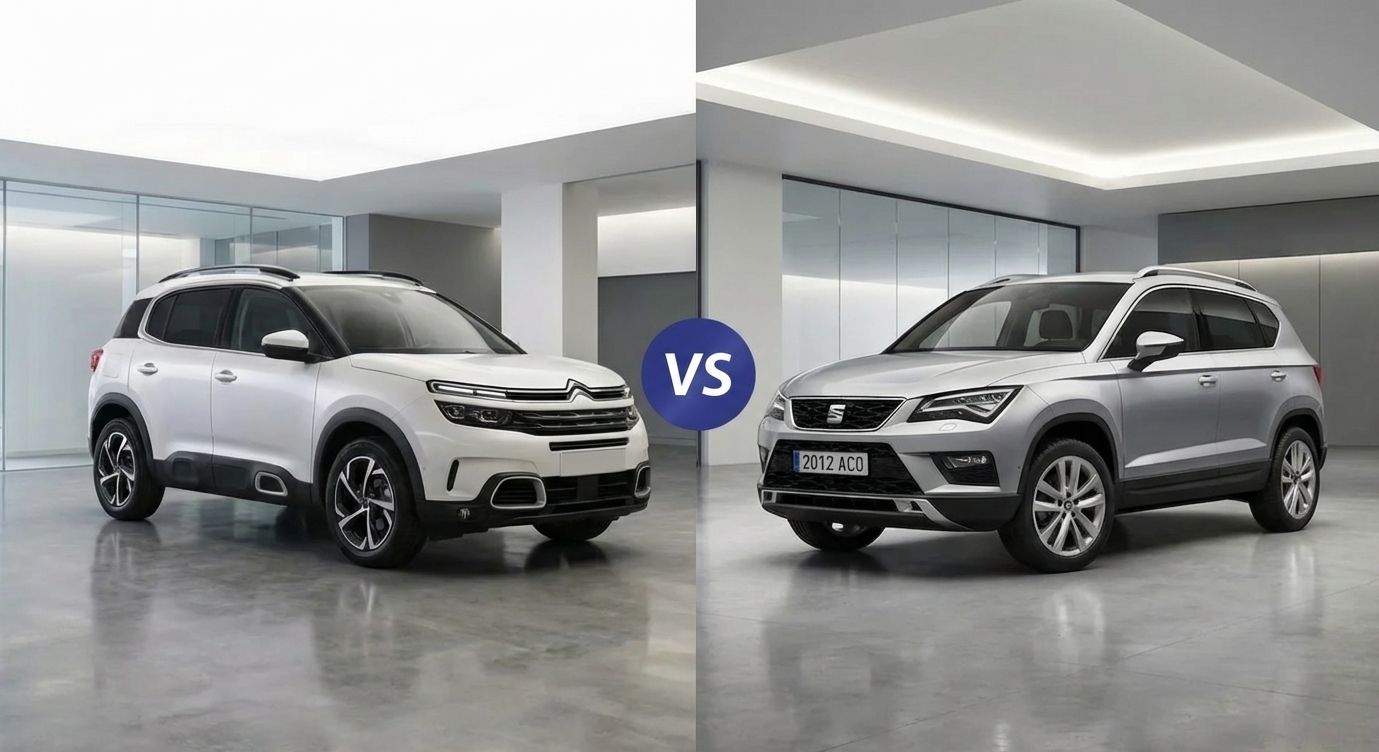
Detailed comparison: Citroën C5 Aircross vs. Seat Ateca. Find out which used SUV offers better comfort and equipment. Read the facts and our final verdict.
Apr 8, 2026