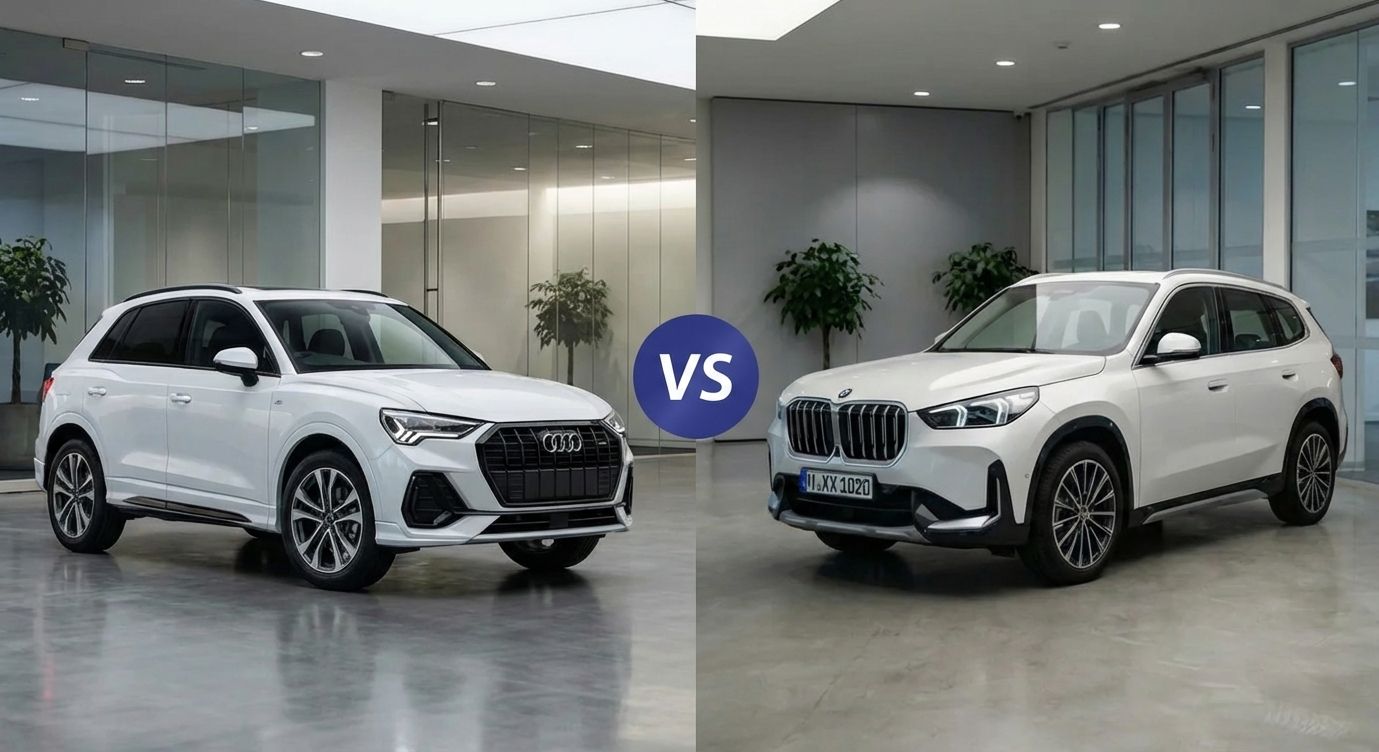
Car battle
Audi Q3 vs. BMW X1: A Complete 2025 Comparison
Audi Q3 vs BMW X1: Detailed comparison of design, performance, and practicality. Find out which premium SUV is the right choice for you in our verdict.
Apr 14, 2026
Articles
Car battle
Detailed comparison of used SUVs Citroën C3 Aircross and Suzuki Vitara. Find out the differences in engines, equipment, or reliability and read our final verdict.
April 13, 2026
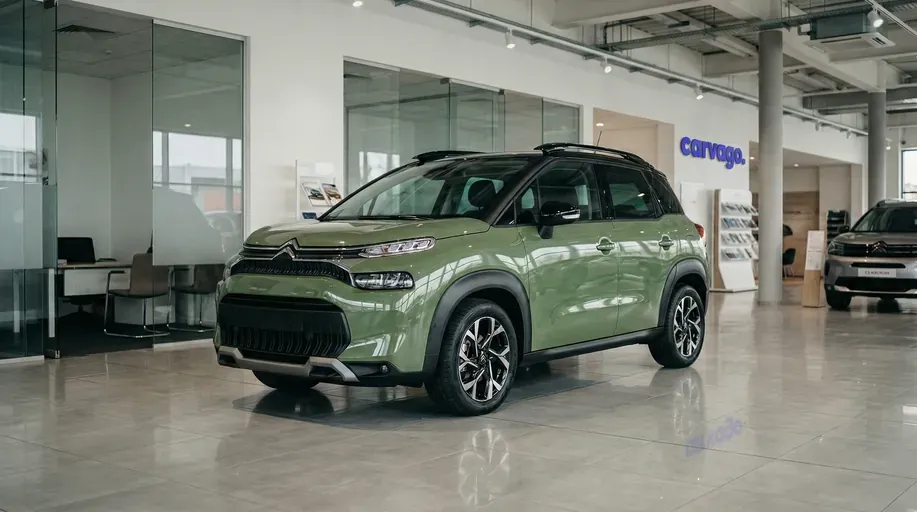
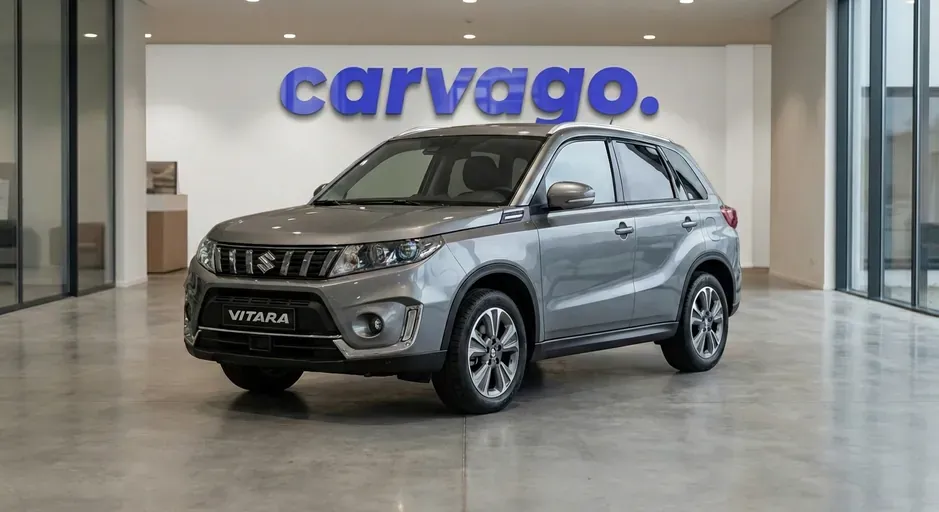
The French Citroën C3 Aircross, known simply as the Citroën Aircross in some non-European regions, brings a fresh design, exceptional driving comfort, and a strong emphasis on interior versatility to the compact SUV segment. Standing against it is the proven Japanese Suzuki Vitara, which is also sold under the name Suzuki Escudo in selected markets, scoring points primarily for its long-standing reliability, robust construction, and affordable all-wheel drive. In the following paragraphs, we will take a detailed look at the strengths and weaknesses of both popular models so you can easily judge which one will be the smarter choice for your daily travels.
When you place the Citroën C3 Aircross and Suzuki Vitara models side by side, at first glance they appear to be very similarly sized city crossovers. However, a closer look at the exterior dimensions of these four-year-old used cars reveals interesting differences. With a length of 4170 to 4175 mm, the Suzuki Vitara is slightly longer than its French competitor (4154 mm) and also offers a 19 mm wider body (1775 mm compared to 1756 mm for the Citroën). This slight increase helps the Japanese model achieve a somewhat more stable and robust stance on the road. The greater width adds valuable centimeters in the interior at elbow level, although when maneuvering in narrow underground garages, it may conversely slightly reduce the space for opening doors.
The fundamental difference, however, lies in the wheelbase, which is a key indicator of longitudinal interior spaciousness. The Citroën C3 Aircross boasts a wheelbase of 2604 mm, which is a significant 104 mm more than the Suzuki Vitara (2500 mm). As a result, the French car has its wheels pushed much further into the corners of the body, allowing it to provide rear-seat passengers with substantially more generous legroom. A longer wheelbase generally also means calmer vehicle behavior over bumps and a smoother ride. So, if you are buying a family car and expect to frequently carry adults or older children in the back, the C3 Aircross offers a significant advantage in this regard.
In terms of height, both cars are almost equal. The height of the Citroën is 1597 mm, while the Suzuki ranges between 1595 and 1610 mm depending on the chosen equipment and engine. Both cars thus fully meet what customers expect from this category: a slightly elevated driving position, very good visibility, and comfortable entry and exit. In the final decision, physical dimensions will play a role primarily in the car's architecture. If you choose the Vitara, you get a slightly wider build; conversely, the Citroën benefits from smarter use of enclosed space and a more substantial wheelbase for the benefit of rear passengers.
| Parameter | Citroën C3 Aircross SUV | Suzuki Vitara SUV |
|---|---|---|
| Width (mm) | 1756 | 1775 |
| Length (mm) | 4154 | 4170 - 4175 |
| Height (mm) | 1597 | 1595 - 1610 |
| Wheelbase (mm) | 2604 | 2500 |
When choosing a used compact SUV around four years old, trunk capacity is often one of the most important criteria. The everyday family utility of both cars differs significantly. While one car is designed with maximum emphasis on interior variability, the other opts for a more traditional layout. For buyers, this means a huge difference in practice in how much they can load.
The French Citroën C3 Aircross (first generation) excels thanks to its sliding rear bench, which makes the trunk an exceptionally flexible space. In the standard configuration, it offers a solid 410 liters, but by sliding the seats forward, it can be expanded to a generous 520 liters. With the backrests fully folded, the trunk expands to 1,289 liters. On the other hand, the Japanese Suzuki Vitara (second generation) has a base capacity of 375 liters and offers a maximum of 1,120 liters with the seats folded. Its trunk is perfectly sufficient for weekend shopping and daily routines, but it lags behind its French rival. In practice, the C3 Aircross provides space for several extra suitcases, which you will undoubtedly appreciate when the car needs to be sufficient for a longer vacation.
A fundamental difference for used car buyers comes with the individual engine versions. While the combustion and mild-hybrid versions of the Vitara do not restrict trunk space, in the full hybrid variant (1.5 Dualjet Hybrid), the traction battery stored under the floor significantly cuts into the available space. The base trunk volume for this model drops to just 289 liters, and the maximum capacity after folding is only 642 liters. In contrast, the C3 Aircross of this era makes no such spatial compromises. The result of this comparison is quite clear – the French representative is incomparably more adaptable and practical for active families, while the Vitara will better suit couples and users who are satisfied with more compact dimensions.
| Parameter | Citroën C3 Aircross SUV | Suzuki Vitara SUV |
|---|---|---|
| Base volume (liters) | 410 | 375 |
| Max. volume with seats folded (liters) | 1,289 | 1,120 |
While the Suzuki Vitara's volume is sufficient for daily commuting and regular errands, the Citroën C3 Aircross clearly wins in practicality thanks to its sliding seats and overall variability, making it the clear choice for families.
Comparing the towing capacity of these two popular crossovers clearly shows their different focuses, which is a key parameter for many buyers in terms of overall practicality. The roughly four-year-old Citroën C3 Aircross (first generation) is a typical representative of more urban family SUVs, and its towing capacity fully corresponds to this territory. Most of its engines, including the popular 1.2 PureTech petrol versions and the entry-level 1.5 BlueHDi diesel, allow for towing a standard braked trailer weighing 840 kg. A slightly higher maximum value is offered only by the more powerful BlueHDi 120 diesel variant, which can pull a braked trailer weighing up to 870 kg. An unbraked trailer for this French model can typically weigh 600 kg.
In contrast, the Suzuki Vitara (second generation) does not hide its more versatile and slightly off-road DNA. As standard, it starts at 1200 kg for a braked trailer for older purely petrol versions (1.4 Boosterjet) as well as newer full-hybrid variants (1.5 Dualjet Hybrid) with reduced capacity. However, if you opt for the most popular mild-hybrid specification, the 1.4 Boosterjet Hybrid, you even reach an excellent maximum weight of 1500 kg. The weight of an unbraked trailer for the Vitara ranges from 400 kg for standard purely internal combustion models to 600 kg for specifications equipped with a hybrid powertrain.
In practice, these numerical differences mean quite a lot. While the French crossover can easily handle a smaller trailer, which is perfectly sufficient for a weekend trip to a DIY store or hauling away autumn leaves, heavier loads are beyond its capabilities. The Suzuki Vitara, on the other hand, offers a much larger and safer margin. With it, you not only get additional space for a few extra suitcases, but its limits easily cover towing a small caravan, a horse trailer, or a boat for a longer summer holiday. This leads to a clear conclusion – for drivers who plan to use a tow bar regularly and for heavier loads, the Vitara is the clear favorite and by far the most practical choice of the pair.
| Model and engine | Braked trailer weight (kg) | Unbraked trailer weight (kg) |
|---|---|---|
| Citroën C3 Aircross 1.2 PureTech (81 - 96 kW) | 840 | 600 |
| Citroën C3 Aircross 1.5 BlueHDi (81 - 88 kW) | 840 - 870 | 600 |
| Suzuki Vitara 1.4 Boosterjet (103 kW) | 1200 | 400 |
| Suzuki Vitara 1.5 Dualjet Hybrid (75 kW) | 1200 | 600 |
| Suzuki Vitara 1.4 Boosterjet Hybrid (95 kW) | 1500 | 600 |
The range of powertrains for the Citroën C3 Aircross and Suzuki Vitara perfectly illustrates the different priorities of the two manufacturers, which is key for used car buyers. While the French representative bets on proven classics in the form of small-displacement turbo petrols and now rare diesel engines with exclusive front-wheel drive, the Japanese Vitara has bet everything on electrification in recent years and offers a very capable AllGrip four-wheel drive system. This creates a clear dividing line for buyers: the C3 Aircross will mainly appeal to fans of diesel and traditional soft driving with an emphasis on highway comfort, while the Vitara will appeal to drivers who prefer traction security on snow and economical hybrid technologies that significantly reduce consumption, especially in city traffic.
Under the hood of the first-generation Citroën C3 Aircross, you'll find typical engines from the French PSA Group. Among nearly-new used cars, you'll most often encounter the popular 1.2 PureTech three-cylinder petrol engine. For cars roughly four years old, the market base consists of the turbocharged version with 81 kW (110 hp). The top petrol choice is the more dynamic 96 kW (130 hp) variant, which is the only one standardly paired with the very smooth and reliable EAT6 six-speed torque converter automatic. A huge advantage of the C3 Aircross is undoubtedly the retention of 1.5 BlueHDi four-cylinder diesel engines, which are slowly becoming an endangered species in the small SUV category and represent the cheapest way to travel for drivers with high annual mileage. The car is a safe bet primarily for urban and road use, as Citroën simply did not offer all-wheel drive for this model.
| Engine | Fuel | Power (kW) | Torque (Nm) | Transmission |
|---|---|---|---|---|
| 1.2 PureTech 110 | Petrol | 81 | 205 | 6MT / 6AT |
| 1.2 PureTech 130 | Petrol | 96 | 230 | 6AT (EAT6) |
| 1.5 BlueHDi 100/110 | Diesel | 74 / 81 | 250 | 6MT |
| 1.5 BlueHDi 120 | Diesel | 88 | 300 | 6AT (EAT6) |
In the context of used cars from approximately 2020 onwards, it is important to mention that the weakest naturally aspirated 1.2 PureTech 82 unit is no longer in the range (its production for this model ended in 2019). Similarly, during 2020, the older 1.5 BlueHDi 100 diesel variant was replaced by a more modern version tuned to 81 kW.
The Japanese Vitara has undergone a very interesting evolution on the market since its launch. If you look for slightly older model years, you'll come across the classic 1.0 Boosterjet three-cylinder (82 kW) or the exceptionally praised and reliable 1.4 Boosterjet four-cylinder petrol (103 kW). However, from approximately the spring of 2020 (which perfectly corresponds to today's four-year-old used cars), the price lists have been dominated by the modernized 1.4 Boosterjet Hybrid unit. This advanced 48V mild-hybrid offers 95 kW and, thanks to the immediate assistance of the electric motor, boasts a great torque of 235 Nm from very low revs. In 2022, Suzuki added a full-hybrid 1.5 Dualjet Hybrid unit for frugal drivers, though it is exclusively paired with the AGS automated manual transmission. The real ace up the sleeve for most engines, however, is the sophisticated ALLGRIP 4x4 drive, which is a price and technological unique in this segment.
| Engine | Fuel | Power (kW) | Torque (Nm) | Transmission |
|---|---|---|---|---|
| 1.0 Boosterjet | Petrol | 82 | 170 | 5MT / 6AT |
| 1.4 Boosterjet | Petrol | 103 | 220 | 6MT / 6AT |
| 1.4 Boosterjet Hybrid | Petrol (Mild-Hybrid) | 95 | 235 | 6MT / 6AT |
| 1.5 Dualjet Hybrid | Petrol (Full-Hybrid) | 85 | 138 | 6AGS |
Note: Pure internal combustion 1.0 and 1.4 Boosterjet engines ended their journey in 2020 due to emission quotas. The original and popular 1.6 DDiS diesel engine ceased to be available as early as 2018, so you will almost certainly not encounter a diesel Vitara among used cars roughly 4 years old.
For highway travelers and out-of-town fuel economy hunters, the economical diesel in the Citroën is the clear favorite, but for trips to the mountains and the city, the unrivaled mild-hybrid Suzuki with its great all-wheel drive makes sense.
Choosing the right engine is crucial for long-term satisfaction with a vehicle. Our recommendations are therefore based on performance parameters, real-world fuel consumption, user feedback, and, above all, mechanical reliability. While the Citroën C3 Aircross relies on a typically French range of three-cylinder petrol engines and efficient diesel units, the second-generation Suzuki Vitara has in recent years taken the path of robust four-cylinder engines, enhanced by very successful and trouble-free mild-hybrid technology. When looking for a used car around four years old, you will encounter two different approaches – the Citroën scores with comfortable low-end torque and urban agility, while the Suzuki offers Japanese mechanical durability and the option of an excellent all-wheel-drive system.
This turbocharged three-cylinder represents by far the best compromise between purchase price, dynamics, and running costs in the first generation (which was produced until 2024). The engine stands out with its very pleasant torque (205 Nm), which kicks in at low revs, and real-world fuel consumption of around 6 to 6.5 liters per 100 km. It is perfect for suburban commuting, daily errands, or shopping. This is exactly the type of use where the otherwise excellent BlueHDi diesel versions would quickly suffer from oil dilution by diesel and particulate filter (DPF) clogging.
In terms of reliability, however, the PureTech unit has one major specific issue to watch out for – the timing belt immersed in oil (wet belt). When choosing a four-year-old used car, it is absolutely crucial to check the service history. Ensure that the oil was changed at intervals of no more than 15,000 km (ideally every 10,000 km) and that only the manufacturer-specified oil type was used. With neglected servicing, the belt material begins to crumble and clog the oil pump pickup screen, which can lead to fatal engine damage. The condition of the belt can be checked visually through the oil filler neck. If you find a meticulously maintained example, the 1.2 PureTech will reward you with refined, lively performance and very pleasant running costs.
On the market for roughly four-year-old used cars, this four-cylinder mild-hybrid is an absolute gem and one of the most reliable engines in the entire B-SUV segment. While the more powerful 1.5 Dualjet "full hybrid" can feel jerky and unrefined due to its pairing with an automated manual transmission, the 1.4 Boosterjet with a manual gearbox offers velvety smooth operation, excellent flexibility, and great dynamics. Thanks to the 48V mild-hybrid system, whose electric motor fills in the gaps before the turbocharger spools up, the throttle response is practically instantaneous.
The real-world fuel consumption is quite fascinating. Even with the excellent ALLGRIP all-wheel-drive system (which we highly recommend for a used Vitara), you can maintain a long-term average of just around 6 liters per 100 km, with the front-wheel-drive version being a few tenths more economical. The unit does not suffer from any fatal design flaws. The only minor drawback of the direct fuel injection technology is the risk of carbon buildup on the intake valves if driven constantly for "economy" in the city. Prevention is easy, however – occasionally, the warmed-up engine needs to be pushed into higher revs when merging onto a highway or on hills, and high-quality fuel with cleaning additives should be used. This engine is ideal for drivers looking for honest, mechanically durable technology without compromises, for people living in mountainous areas, and for those who demand reliability and longevity.
Fuel consumption figures provided by car manufacturers often diverge from the reality of daily operation for used cars. While official catalog values serve more as a theoretical basis for comparison, the actual appetite of individual engines is much better revealed by real data collected from users themselves. For the most accurate picture, we analyzed long-term data from the respected crowdsourcing portal Spritmonitor.de. We focused on the powertrains of both models that logically dominate the market for roughly four-year-old used cars (around the 2022 model year).
| Model and engine | Average consumption (l/100 km) |
|---|---|
| Citroën C3 Aircross 1.5 BlueHDi (81/88 kW) – Diesel | 5.1 |
| Suzuki Vitara 1.5 Dualjet Hybrid (85 kW) – Full hybrid | 5.6 |
| Suzuki Vitara 1.4 Boosterjet Hybrid (95 kW) – Mild hybrid | 6.2 |
| Citroën C3 Aircross 1.2 PureTech 110 (81 kW) – Petrol | 6.5 |
| Citroën C3 Aircross 1.2 PureTech 130 (96 kW) – Petrol | 6.8 |
| Suzuki Vitara 1.4 Boosterjet (103 kW) – Petrol | 6.8 |
Several very clear and perhaps surprising trends can be easily read from the collected data. Although diesels are slowly disappearing from the compact SUV market, French BlueHDi engines remain an absolutely unsurpassed choice when it comes to maximum savings – a real average consumption of just over five liters is clear proof of this. However, the comparison of petrol units, where the different approaches of the two manufacturers clash, is very interesting. Fashionable small three-cylinder turbocharged engines, such as Citroën's PureTech, may score points in laboratories, but in the real world full of starts with a heavier vehicle, they do not save nearly as much fuel. Here, the clever Japanese approach wins hands down. Suzuki's four-cylinder engines work effectively with mild-hybrid and full-hybrid assistance and can realistically push consumption below the six-liter mark, easily beating the "cleaner" three-cylinder competition on paper.
For a typical buyer, a very clear division of roles emerges. If you drive mainly in and around the city, the hybrid Vitara handles frequent starts in traffic jams much better. In particular, the 1.5 Dualjet system benefits from being able to drive exclusively on electricity at low speeds, which is a significant relief for the city driver's wallet. Conversely, if you spend most of your time on longer commutes or brisk motorway journeys, the diesel Citroën C3 Aircross will serve you reliably. Conventional, pure petrol engines (such as the older 1.4 Boosterjet or the more powerful 1.2 PureTech) represent an ideal middle ground for less demanding users with lower annual mileage.
So, will fuel consumption be the main deciding factor? For the vast majority of buyers, probably not. Aside from the exceptionally economical French diesel, the real differences in the prevailing petrol models for both brands are roughly within the range of one liter of fuel. Therefore, consumption will not be the absolute deal-breaker, but it will help you more accurately choose the technology that will painlessly match your daily routine and driving style.
When looking at the used car market, specifically at models around four years old (typically 2021 and 2022 production years coming from ended leases), you will encounter quite different pricing policies for both representatives. This directly reflects not only the overall popularity of the brands but, above all, the different rates of their value depreciation.
The French crossover is an exceptionally attractive choice on the used car market for drivers looking for the most utility and equipment for the least money. Models from 2021 and 2022 can currently be purchased under very favorable conditions:
The Suzuki Vitara, on the other hand, holds its original value exceptionally well. The reason is the long-term good reputation of the four-cylinder engines and the enormous interest in versions with all-wheel drive (AllGrip), which is a real rarity in the small city SUV segment:
| Model (2021–2022) | Approximate price from | Approximate price to | Value retention |
|---|---|---|---|
| Citroën C3 Aircross | €13,000 | €17,000 | Average (advantageous for used car buyers) |
| Suzuki Vitara | €16,000 | €21,000 | Excellent (very slow price drop) |
While a used Citroën C3 Aircross scores with a very friendly purchase price for a modernly equipped car, the Suzuki Vitara requires a higher initial investment, which it reliably compensates for with excellent value retention and the sought-after 4x4 drive.
Both vehicles boast the highest five-star safety rating from the independent organization Euro NCAP. However, it is crucial to put these results into the proper context and take into account the specific year of testing. Euro NCAP protocols and testing methodologies evolve and tighten over the years, which in practice means that percentage scores from different years cannot be simply and directly compared. What was enough for a full star rating less than a decade ago would likely not hold up today against much stricter tests – which now include advanced cyclist detection, complex intersection scenarios, or stricter requirements for autonomous emergency braking.
Citroën C3 Aircross underwent crash tests in 2017, earning an overall five-star rating. At the time, the car demonstrated very solid adult occupant protection with a score of 85% and child protection at 82%. Given the year of testing, however, the car has not yet undergone the most modern comprehensive tests focused on today's level of active safety. This is directly reflected in the weaker rating for assistance systems (60%) and pedestrian protection (64%). When choosing a roughly four-year-old used car, the Citroën offers a very good passive safety foundation, but the range of assistance technologies is more in line with the average of the time it was introduced.
Suzuki Vitara underwent Euro NCAP tests even slightly earlier, specifically in 2015. Although it was the very first compact SUV to earn five stars under the then newly tightened rules (which for the first time factored the presence of autonomous emergency braking into the overall score), from today's perspective, it is simply an old certification. In 2015, however, the Vitara recorded excellent results in its class: 89% for adult protection, 85% for child protection, and a highly above-average 75% for safety assist systems and pedestrian protection (76%). Four-year-old used Vitaras fall into the facelifted phase, so the equipment often includes blind spot monitoring or rear cross-traffic alert, even though the original safety structure is based on 2015 standards.
If we evaluate the overall safety standard from the perspective of today's benchmarks, both cars provide adequate protection proven by time and real-world traffic. Their full five-star certifications would, however, lose their validity in current strict tests. Although the Citroën has the advantage of a slightly newer homologation date from 2017, the Suzuki Vitara managed, even in its older test, to achieve an overall higher percentage score in all monitored categories, including more convincing results for assistance features and pedestrian protection.
| Parameter | Citroën C3 Aircross | Suzuki Vitara |
|---|---|---|
| Year of testing | 2017 | 2015 |
| Adult occupant protection | 85 % | 89 % |
| Child occupant protection | 82 % | 85 % |
| Vulnerable road users protection | 64 % | 76 % |
| Safety assist systems | 60 % | 75 % |
Although both models achieved the prestigious five stars in Euro NCAP tests, given they were tested in 2015 and 2017, it is important to keep in mind that their active assistance systems do not fully correspond to current, significantly stricter standards.
In addition to standard equipment, each of the models offers several unique features that can be decisive for the customer, and both cars clearly show their distinctive approach to adding value beyond the common basics. While the French representative scores primarily with flexibility and comfort, the Japanese competitor bets on functional technology and confidence in all weather conditions.
Excellent ride comfort with a chassis that absorbs bumps perfectly
High interior variability including practical sliding rear seats
Original and playful design with extensive personalization options
Economical and refined BlueHDi diesel engines (a big advantage for longer trips)
Above-average luggage capacity of up to 520 liters with the seats slid forward
Complete absence of all-wheel drive, even in the highest trim levels
More pronounced body roll during more dynamic cornering
Impractical climate control hidden within a slower touchscreen
Less precise gear shifts in manual transmissions
Citroën C3 Aircross is an ideal choice for smaller families and drivers who prioritize maximum daily comfort, flexible interior space, and distinctive style. Thanks to its variable rear seats and softer suspension, it offers excellent practicality for the city and longer journeys, provided you don't plan frequent trips off paved roads.
Optional and very capable AllGrip all-wheel drive
Renowned reliability and robust, durable construction
Confident and predictable driving characteristics with good road holding
Economical and trouble-free mild-hybrid and full-hybrid powertrains
Great price-to-equipment and value-for-money ratio on the used car market
Harder and cheaper-feeling plastics in the interior
Smaller base luggage capacity (375 liters) compared to competitors
Graphically outdated and occasionally slower multimedia system
Noticeably worse wind noise and cabin soundproofing at highway speeds
Suzuki Vitara will primarily appeal to pragmatic buyers and active individuals looking for mechanical durability, low maintenance, and affordable all-wheel drive. It is an honest and robust companion that may not offer the most luxurious interior finish, but makes up for it with confident driving characteristics in all conditions and efficient gasoline engines.
Based on failure statistics, service reports, and long-term owner experiences, supplemented by our own independent car technical condition check, we have compiled an overview of the most common problems that buyers of approximately four-year-old used cars should watch out for.
Citroën C3 Aircross offers high comfort and bold design, but for used models, it pays to pay increased attention to several specific technical weaknesses, especially under the hood.
While the C3 Aircross attracts with style and space, its 1.2 PureTech petrol engine requires careful monitoring of the timing belt condition and strict adherence to service intervals. When buying a used car, always demand a completely transparent maintenance history.
Suzuki Vitara has long been considered a very durable and mechanically reliable car, yet minor shortcomings appear in used cars, stemming primarily from the manufacturer's effort to maintain an affordable price tag.
The Vitara is an exceptionally robust car mechanically and engine-wise, without major hidden traps. Its weaker points are only the cheaper-feeling interior plastics, thinner paint, and oversensitive radar anti-collision assistant.
When buying a used car, a thorough inspection is key, and for both of these compact SUVs, there are specific areas you should focus on. For certainty and peace of mind, an independent technical inspection of the car is always the ideal choice, as it reveals any hidden defects before you sign the purchase agreement.
If you are looking for a vehicle with all-wheel drive, the Suzuki with its popular AllGrip system is the clear choice. The Citroën is offered exclusively with front-wheel drive, but for light off-roading, it can be equipped with the Grip Control electronic traction control system.
The French model excels with softer suspension and Advanced Comfort seats, making it an exceptionally comfortable car for broken city roads. Its Japanese competitor has a stiffer chassis, which is less supple but in return provides greater confidence and stability during faster cornering.
Four-year-old Suzuki vehicles rely primarily on very reliable four-cylinder petrol engines with mild-hybrid technology (1.4 BoosterJet), which helps to steadily reduce fuel consumption. The competitor from Citroën offers a choice between turbocharged 1.2 PureTech three-cylinder petrol engines and economical 1.5 BlueHDi diesel engines, which the other brand no longer offers.
Citroën offers a basic boot capacity of 410 litres, which can be increased to an excellent 520 litres thanks to practical sliding rear seats. The Vitara has a slightly smaller boot with a capacity of 375 litres (only 289 litres for the full-hybrid version), which is the price paid for the potential installation of a rear differential and battery.
The Japanese representative has long been among the above-average reliable cars with robust engines and a minimum of serious technical problems. With the French car, more attention needs to be paid to earlier 1.2 PureTech petrol engines, where it is crucial to follow shorter oil change intervals and monitor the condition of the timing belt.
Sources: ADAC, novinky.cz, aktualne.cz, autoweb.cz, techfocus.cz, portalridice.cz
This article was prepared using artificial intelligence tools. The section guarantor is Petr Dušek.
Audi Q3 vs BMW X1: Detailed comparison of design, performance, and practicality. Find out which premium SUV is the right choice for you in our verdict.
Apr 14, 2026
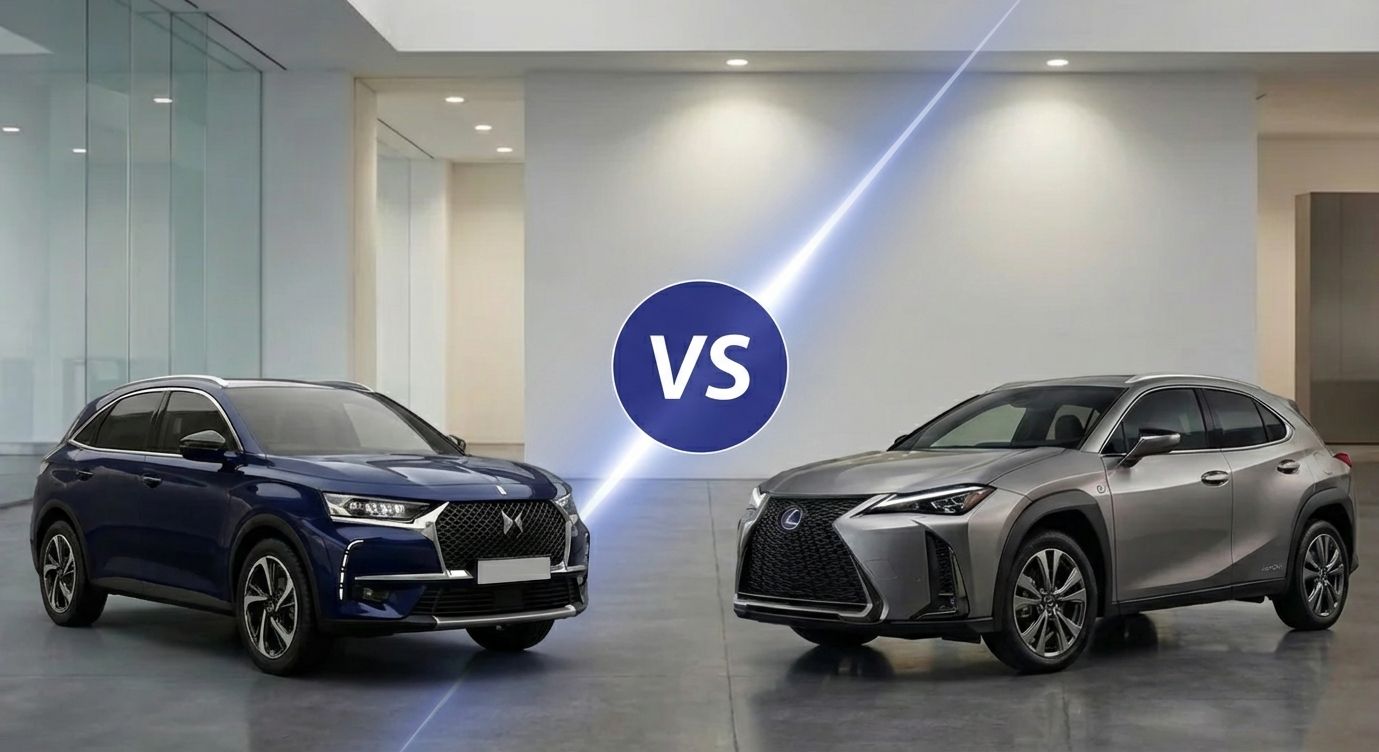
Detailed comparison of DS 7 (Crossback) vs Lexus UX. Discover the differences in comfort, equipment, and reliability. Read our verdict and choose the best SUV.
Apr 8, 2026
Opel Grandland vs. Seat Ateca: Which SUV to choose? Our detailed comparison will reveal the key differences and help you find the right car for you.
Apr 14, 2026