Car battle
Peugeot 3008 vs Renault Austral: Complete Comparison 2025
Peugeot 3008 vs Renault Austral. Which SUV is better? Detailed comparison, real-world data, and the final verdict will help you choose.
Apr 13, 2026
Articles
Car battle
Detailed comparison of DS 7 (Crossback) vs Lexus UX. Discover the differences in comfort, equipment, and reliability. Read our verdict and choose the best SUV.
April 8, 2026
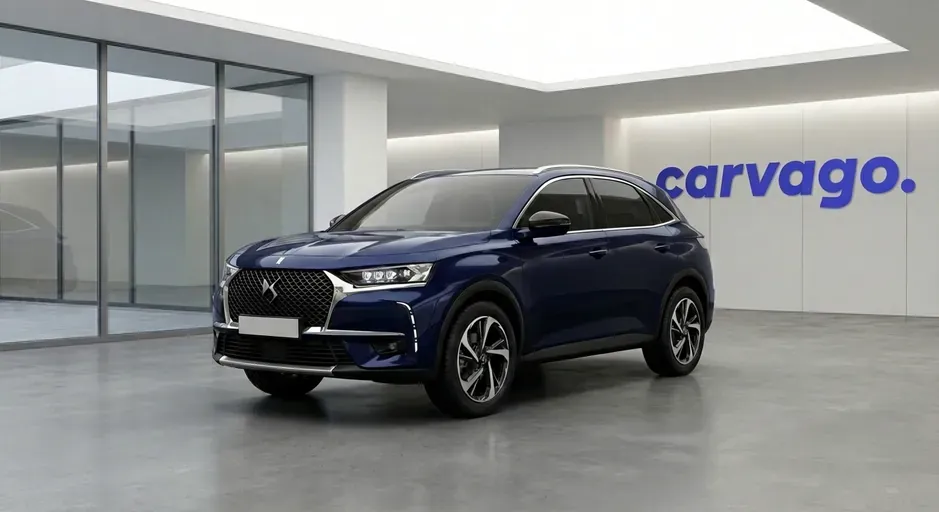
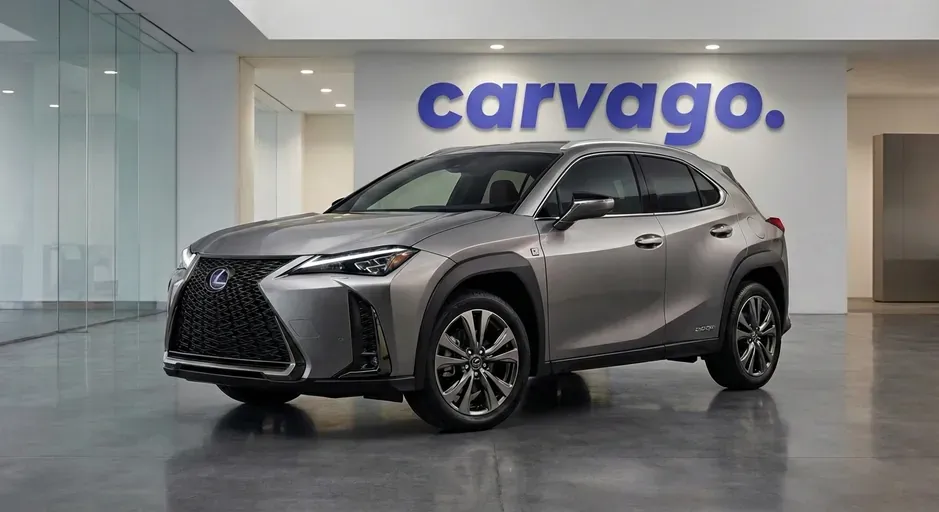
The luxury French SUV DS 7, formerly known and commonly available on the used car market under its original name DS 7 Crossback, attracts with its unmistakable avant-garde design and first-class level of driving comfort. Opposing it is the confident Japanese crossover Lexus UX, which instead bets on expressive sharp curves, legendary reliability, and advanced full hybrid or electric powertrains. Let's take a detailed look at how these two unconventional premium segment rivals stand in a direct comparison and which of them could be the best choice for your daily travel.
Looking at the exterior dimensions, it is clear at first glance that although both models target premium-oriented customers, each of them plays in a slightly different league. The French DS 7 (often also known by its former designation DS 7 Crossback) gives a much more robust and massive impression of a full-fledged family car. The Japanese Lexus UX, on the other hand, bets on very compact proportions, which with their low build and dynamic silhouette are closer to traditional hatchbacks with a raised chassis. This difference in approach has a fundamental impact on how the cars behave in the real world and how representatively they appear on the road. Clear advantages and disadvantages for different types of drivers thus result from the different concepts.
In terms of specific numbers, the DS 7 with its base length of 4573 mm is approximately 78 mm longer than the Lexus UX, which measures exactly 4495 mm. Even more striking is the difference in height – the DS 7 is roughly 100 mm taller, which contributes not only to an overall more confident appearance and a higher seating position behind the wheel but also to a better view of traffic. The body width is similar, where the DS 7, with a value exceeding 1895 mm, surpasses its Japanese competitor by a noticeable 55 mm. The longer wheelbase of the French car (2738 mm compared to 2640 mm for the Lexus) primarily benefits rear-seat passengers and overall ride smoothness, while the shorter wheelbase of the Lexus aids greater agility in tight corners.
The choice between these two models from the perspective of exterior dimensions thus depends primarily on the environment in which you will move most often. Lexus UX, thanks to its compact dimensions, narrower body, and shorter wheelbase, is an absolutely ideal companion for crowded city streets, where you can park it much more easily and maneuver skillfully through traffic. In contrast, DS 7 represents a significantly more spacious alternative with a generous footprint. While the larger body might trouble you a bit when maneuvering in narrow underground garages, it fully rewards you with excellent interior comfort and plenty of living space during family trips and long highway journeys.
| Parameter | DS 7 SUV | Lexus UX SUV |
|---|---|---|
| Width (mm) | 1895 - 1906 | 1840 |
| Length (mm) | 4573 - 4595 | 4495 |
| Height (mm) | 1618 - 1625 | 1520 - 1540 |
| Wheelbase (mm) | 2738 | 2640 |
When it comes to comparing practicality and luggage compartment volume, DS 7 and Lexus UX represent two completely different approaches, which can be a decisive factor for many buyers on the used car market. While the French SUV emphasizes family usability and generous space for long journeys, the Japanese crossover focuses more on urban agility and compact design, to which the trunk size had to be sacrificed. For families or active individuals who often transport sports equipment or simply need plenty of space, this difference is absolutely fundamental.
The French DS 7 model confidently dominates in this regard on the market for roughly four-year-old used cars. In its basic configuration, it offers a generous volume of 555 liters, which is space easily sufficient for weekend shopping and longer family vacations, where you get room for several extra suitcases. Furthermore, after folding the rear seats, the capacity increases to an impressive 1,752 liters. A huge advantage for those interested in electrified models is the fact that the popular E-Tense plug-in hybrid versions, thanks to the clever placement of batteries under the floor, do not lose a single liter of this above-average space and fully match the conventional internal combustion versions.
The Lexus UX, on the other hand, comes up significantly short in the luggage-carrying discipline, as its trunk is similar in volume to smaller hatchbacks. The standard hybrid version with front-wheel drive offers about 320 liters, but the situation is even more compromised for the sought-after all-wheel-drive variants (E-Four). In these, the rear electric motor reduces the capacity to just 283 liters. When the seats are folded, you get a maximum space of 1,231 liters. As a result, while the DS 7 fulfills the role of a full-fledged family car without compromise, the Lexus UX serves more as an exceptionally reliable and stylish car for couples who are fully satisfied with a smaller transport capacity for everyday city life.
| Parameter | DS 7 | Lexus UX |
|---|---|---|
| Basic volume (l) | 555 | 283 - 320 |
| Max. volume with seats folded (l) | 1752 | 1194 - 1231 |
Trailer weights, or towing capacity, represent one of the biggest technical differences between these two cars and play a key role for buyers with an active lifestyle. While the DS 7 as a classic luxury SUV bets on a more robust construction and powerful internal combustion and hybrid powertrains, the Lexus UX pays the price for its compact body and platform focused primarily on efficient urban operation. Although precise records for comparison are missing in the official tabular database for these specific models, completely different parameters follow from the manufacturers' technical specifications.
The French representative, the DS 7, standardly allows towing a braked trailer weighing between 1290 and 1850 kg, depending on the chosen engine. The great news is that even the popular E-Tense plug-in hybrid versions maintain a decent capacity and can handle a solid 1200 to 1550 kg. For an unbraked trailer, the DS 7 most often reaches the legislative maximum of 750 kg. Conversely, the Lexus UX, including the most widespread hybrid variants UX 250h or the newer 300h, is strictly limited to a maximum weight of 750 kg for both braked and unbraked trailers. The fully electric UX 300e version does not allow trailer towing at all.
In practice, these differences mean completely different use cases. The DS 7 can easily handle transporting a heavy caravan or boat, offers generous space for a few extra suitcases in a larger cargo trailer, and its total towing power is more than sufficient for weekend shopping or longer holidays with the whole family. The Lexus UX, on the other hand, will satisfy more basic utility needs – it will serve at most for hauling garden waste in a light trailer or for installing a bike rack on the tow bar.
Therefore, if you are choosing a used car around four years old and anticipate frequent towing of heavier loads, the DS 7 is clearly the more logical and practical choice of the two. The Lexus UX, by contrast, remains an excellent companion for stylish and economical daily commuting, but with very limited towing capabilities.
| Model and engine | Braked trailer (kg) | Unbraked trailer (kg) |
|---|---|---|
| DS 7 (internal combustion engines) | 1290 - 1850 | 750 |
| DS 7 E-Tense (PHEV) | 1200 - 1550 | 750 |
| Lexus UX (UX 250h / UX 300h) | 750 | 750 |
| Lexus UX 300e (Electric vehicle) | 0 | 0 |
When comparing the powertrains of roughly four-year-old used cars (around the 2022 model year), a fundamental difference in the philosophy of both manufacturers emerges. The DS 7 (formerly known as the DS 7 Crossback) bets on a traditional European approach, combining turbocharged petrol and diesel engines with powerful plug-in hybrids (PHEV). These plug-in hybrids represent the absolute top of the range, delivering up to 300 hp and being the only ones to provide all-wheel drive. In contrast, the Lexus UX prioritizes maximum efficiency in suburban traffic and overall mechanical reliability, which is why it completely omits diesel engines. Its main weapon is a highly efficient full-hybrid system, which, unlike the DS 7, does not require charging from the grid. The range is then complemented by a purely electric version. If you are a driver who spends a lot of time on motorways or requires high performance and dynamics, the DS 7 with E-Tense engines or an economical diesel will be the better choice. The Lexus UX, on the other hand, will appeal to calmer drivers and those looking for an agile car for the city, where full-hybrid technology guarantees unrivaled fuel consumption and legendary maintenance-free operation.
The basis of the range for the DS 7 from the 2021–2022 period is the economical 1.5 BlueHDi four-cylinder diesel with 96 kW (130 hp), which is an ideal choice for drivers with high motorway mileage. The petrol alternative consisted of 1.6 PureTech turbocharged four-cylinders in versions with 132 kW (180 hp) and 165 kW (225 hp). However, it is important to note that purely petrol engines gradually disappeared from the European range with the arrival of newer model years and modernization, being replaced by electrified variants. All mentioned internal combustion engines are standardly paired with an exceptionally smooth-shifting 8-speed automatic transmission and drive the front wheels exclusively. The pinnacle of the brand's innovation is the E-Tense plug-in hybrid versions. The basic E-Tense 225 offers a combined output of 165 kW (225 hp) with front-wheel drive, while the top-of-the-line E-Tense 4x4 300 adds a second electric motor to the rear axle. This not only increases the total system output to an impressive 221 kW (300 hp) and torque to 520 Nm but also, as the only version, ensures confident traction thanks to all-wheel drive.
| Engine | Fuel | Power (kW/hp) | Torque (Nm) | Transmission |
|---|---|---|---|---|
| 1.5 BlueHDi 130 | Diesel | 96 / 130 | 300 | 8-speed auto |
| 1.6 PureTech 180 | Petrol | 132 / 180 | 250 | 8-speed auto |
| 1.6 PureTech 225 | Petrol | 165 / 225 | 300 | 8-speed auto |
| E-Tense 225 | PHEV (Petrol + El.) | 165 / 225 | 360 | 8-speed auto |
| E-Tense 4x4 300 | PHEV (Petrol + El.) | 221 / 300 | 520 | 8-speed auto |
The Lexus UX is primarily built on electrification and driving smoothness. Although a purely naturally aspirated 2.0-liter petrol UX 200 with 126 kW (171 hp) was available in the early stages of production, this engine was removed from European price lists relatively early. The vast majority of used cars on the current market are thus equipped with the sophisticated UX 250h full-hybrid powertrain. This system combines a reliable naturally aspirated 2.0-liter four-cylinder with an electric motor and achieves a very decent combined output of 135 kW (184 hp). It is exceptionally efficient and, unlike the DS 7, you can purchase it either with front-wheel drive or as an AWD (using the E-Four system with a small independent electric motor at the rear). In the hybrid, power is transmitted via an electronically controlled planetary e-CVT gearbox, which ensures completely smooth acceleration. For those interested in locally emission-free driving, Lexus also prepared the fully electric UX 300e model with 150 kW (204 hp) and 300 Nm of torque. Models in the generation around 2021 (before the deployment of a significantly larger battery in 2023) offered a 54kWh battery, making this electric car primarily a great comfortable vehicle for daily commuting to work.
| Engine | Fuel | Power (kW/hp) | Torque (Nm) | Transmission |
|---|---|---|---|---|
| UX 200 | Petrol | 126 / 171 | 205 | CVT |
| UX 250h | Full Hybrid | 135 / 184 | 190 (+ El.) | e-CVT |
| UX 250h AWD | Full Hybrid | 135 / 184 | 190 (+ El.) | e-CVT |
| UX 300e | Electricity | 150 / 204 | 300 | 1-speed reduction |
While the DS 7 relies on French elegance supported by a wide range of plug-in hybrids and diesel engines, the Lexus UX paves the way for Japanese precision with an almost exclusive focus on exceptionally reliable self-charging hybrids. Choosing the right power unit is key to long-term satisfaction, as both manufacturers take very different approaches to electrification. The recommendations below reflect real-world market experience with roughly four-year-old used cars, where the ratio of real-world performance, fuel consumption, and mechanical durability plays a major role.
The E-Tense 225 plug-in hybrid version with front-wheel drive represents the most rational choice for a roughly four-year-old DS 7 (around the 2022 model year). The legendary and bulletproof 2.0 BlueHDi diesel disappeared from the range at the end of 2020, and the smaller 1.5 BlueHDi engine in models before 2023 can suffer from an undersized 8mm camshaft chain. Therefore, the E-Tense 225 version makes the most sense on the used car market – it combines a 1.6 PureTech petrol four-cylinder with an electric motor, giving the car a very solid 165 kW (225 hp).
For the Lexus UX, the choice on the used car market is absolutely clear – the UX 250h self-charging hybrid. The fourth generation of the hybrid system from Toyota and Lexus represents the absolute pinnacle of reliability and perfectly matches the character of this premium city crossover.
When choosing a used premium car around four years old, such as the DS 7 and Lexus UX, it is crucial not to rely solely on official laboratory data from manufacturers. Values measured according to the earlier NEDC or newer WLTP methodology are often more optimistic than daily reality. To get an accurate picture of actual operating costs, it is best to look at databases created by drivers themselves. By far the most faithful representation of the real fuel consumption of these cars is provided by user data from the Spritmonitor.de server, which forms the basis of our comparison of engines relevant to the used car market.
Source: Spritmonitor.de / news_site
| Model and engine | Average consumption (l/100 km) |
|---|---|
| DS 7 E-Tense (PHEV) 165–221 kW | 4.5 |
| DS 7 1.5 BlueHDi 96 kW | 5.7 |
| DS 7 1.6 PureTech 132–165 kW | 7.9 |
| Lexus UX 250h 135 kW | 5.6 |
| Lexus UX 200 126 kW | 7.0 |
Looking at the real-world data, it is clear that both manufacturers approach the issue of efficiency differently. The French DS 7 offers a classic and very wide range of fuels. The paper king is the E-Tense plug-in hybrid version, which in the real world achieves an average of around 4.5 l/100 km. However, one essential rule must be added here – this value is directly proportional to the frequency of charging. If you do not regularly recharge the heavy SUV from the grid, consumption skyrockets. In contrast, the traditional diesel engine in the DS 7 confirms its reputation as an economical workhorse and, with an average of 5.7 l/100 km, represents the most stable choice regardless of the route profile. Conversely, with the powerful petrol engine in the DS 7, performance takes its toll, and an average consumption approaching the eight-liter mark shows that downsizing in larger SUVs does not always bring miraculous savings.
The Japanese Lexus UX, on the other hand, bets almost exclusively on proven hybrid technology. The UX 250h variant is a masterpiece of efficiency. A long-term average of 5.6 l/100 km in practice means that the petrol "full-hybrid" can outperform even the diesel engine in the DS 7 in real-world traffic, without any need to plug the car in. The classic purely petrol UX 200 version (less represented on the used car market) is naturally thirstier with an average of 7.0 l/100 km, yet it performs significantly better compared to the conventional petrol engine in the DS 7.
For the average user, clear recommendations follow from these trends. If you spend most of your time in the city, in traffic jams, and on suburban roads, the Lexus UX 250h will be an unrivaled choice for you in terms of consumption and user comfort. It offers diesel-like fuel consumption but with the quietness and smoothness of petrol. If you swallow thousands of highway kilometers a month across the country, it still makes the most economic sense to go for the diesel DS 7 1.5 BlueHDi. The plug-in hybrid DS 7 E-Tense is then ideal for disciplined drivers who have the possibility of daily home or company charging and want to combine locally emission-free commuting with longer weekend trips.
Overall, operating costs associated with fuel consumption should be one of the decisive factors when choosing between these two cars. While the DS 7 scores with versatility and offers a specific type of drive for every driver (diesel, petrol, PHEV), the Lexus UX clearly proves that a precisely tuned self-charging hybrid represents one of the most versatile and least demanding solutions for efficient daily mobility today.
When choosing an approximately four-year-old premium car (model year 2021–2022), an interesting difference in the approach to the residual value of both models emerges. While the French DS 7 Crossback initially undergoes a slightly steeper price drop, which significantly favors used car buyers, the Japanese Lexus UX holds its value very firmly thanks to its reputation for bulletproof reliability.
| Vehicle condition and mileage | DS 7 Crossback | Lexus UX 250h |
|---|---|---|
| Base models (mileage over 100,000 km) | €16,000 – €22,000 | €20,000 – €24,000 |
| The golden middle way (mileage up to 80,000 km) | €22,000 – €28,000 | €24,000 – €31,000 |
| Premium versions (hybrids, low mileage) | €28,000 – €33,000 | €31,000 – €37,000 |
Price Verdict
If you are looking for ostentatious luxury equipment, sophisticated interior details, and generous space at the most advantageous purchase price, the DS 7 Crossback is a great choice that cleverly benefits from the depreciation of French luxury cars. If, on the other hand, you care about future value retention and low fuel consumption in city traffic, the Lexus UX will easily justify its higher purchase price at a used car dealership and reward you with above-average reliability.
Both compared cars, the DS 7 and Lexus UX, achieved the maximum five-star rating in independent Euro NCAP safety tests. However, when evaluating safety on the used car market, it is crucial to put these results into the correct context and take into account primarily the year the tests were conducted.
Euro NCAP testing protocols are constantly evolving and becoming stricter over the years. Percentage results from different years cannot be directly compared, as the requirements for obtaining the same number of points, especially in the areas of active safety and protection of vulnerable road users, are constantly increasing.
The DS 7 model (initially sold as the DS 7 Crossback) underwent crash tests in 2017. It showed very solid structural protection of the cabin with an excellent rating of 91% for adults and 87% for children. The car was already equipped with an automatic emergency braking (AEB) system as standard, which helped it achieve 76% for safety assistants at the time. However, it is necessary to mention that due to the gradual aging of standards, the validity of this Euro NCAP certification expired in January 2024. Although it is a very safe family SUV from a structural point of view, from today's perspective, the range of its assistance systems no longer fully corresponds to the strictest current standards, and the older architecture of the DS 7 thus lags slightly behind the most modern cars.
The Lexus UX underwent testing two years later, in 2019, when significantly stricter Euro NCAP evaluation rules were already in place. In adult protection, the car excelled with a score of 96%, and child protection reached a very good 85%. Mainly thanks to the implementation of the modern second-generation Lexus Safety System+ package, the car performed much better in protecting vulnerable road users (82%). This system already handled more advanced cyclist detection scenarios during the day and automatic pedestrian recognition even in poor lighting conditions at night.
| Parameter | DS 7 | Lexus UX |
|---|---|---|
| Year of testing | 2017 | 2019 |
| Adult protection | 91 % | 96 % |
| Child protection | 87 % | 85 % |
| Vulnerable road user protection | 73 % | 82 % |
| Safety assist systems | 76 % | 77 % |
Final Summary
Although both cars offer a high standard of passive safety and a full five-star rating from the time of their market launch, the Lexus UX represents a more modern and comprehensive choice. Because it underwent testing in 2019 according to more demanding criteria and features a more advanced generation of active assistants focused even on complex urban scenarios (e.g., night-time pedestrian detection), its safety equipment corresponds slightly better to the latest safety standards than the older architecture of the DS 7.
In addition to standard equipment, each model offers several unique features that may be decisive for the customer. Both vehicles bring much more than just basic equipment, with each choosing a completely different approach to offering the driver maximum luxury, comfort, and added value.
The French SUV focuses on a unique design experience and technology inspired by higher classes. The DS 7 (formerly sold with the Crossback suffix) is a showcase of French "haute couture" in the automotive world.
The compact crossover from Lexus, on the other hand, bets on technological reliability, quiet operation, and details inspired by traditional Japanese craftsmanship. It will particularly appeal to drivers looking for peace and perfect ergonomics without the need for plug-in charging.
Advantages:
Disadvantages:
Pros:
Cons:
Based on long-term user experience, breakdown statistics, service reports, and data regularly provided by our detailed comprehensive car audit, we have compiled an overview of the most common problems for both compared models. This information will help you focus on the weak points that buyers of roughly four-year-old used cars should pay the most attention to.
The French premium SUV attracts with its avant-garde design and top-tier comfort, but technically it requires a more careful approach and strict adherence to service intervals.
Models equipped with the DS Active Scan Suspension adaptive chassis provide excellent comfort, but the system depends on a camera located behind the windshield. If the glass in the camera area is dirty or a sensor fails (often after an unprofessional windshield replacement), the suspension goes into a backup – noticeably stiffer – mode.
Most complaints are directed at the central multimedia system. Especially with older software versions, slow responses, freezing during navigation rendering, or random screen restarts occur. The solution is usually a software update to the latest version at an authorized service center.
Summary for the DS 7:
The car offers exceptional style but hides some technical risks, especially with specific engines. The basis for trouble-free operation is verifiable and shortened service care. Before buying this model, an independent technical inspection focusing on the timing chain, hybrid system diagnostics, and checking for play in the adaptive chassis should be an absolute necessity.
The Japanese crossover is considered a benchmark for reliability. According to most consumer rankings and our own inspections, it is among the least problematic cars in its class. Problems are limited more to user details than mechanical failure.
Early models from 2019 and 2020 may experience issues with moisture condensation inside the rear connected LED light bar. Most of these defects were resolved under warranty by replacing the seals; however, for used cars, we recommend checking if water is leaking into the light.
Lexus UX Summary:
The Lexus UX represents a purchase with minimal risk. The drivetrain is "bulletproof," and problems are usually just minor user inconveniences. The only compromises are an outdated infotainment system and a smaller luggage compartment, but in terms of long-term reliability, Japanese engineering wins by a wide margin in this comparison.
When buying a used car, a thorough inspection is key. Here are some specific points to focus on for these two models. For maximum peace of mind before signing the purchase agreement, a detailed physical inspection of the used car by an experienced mechanic is always worth it.
The DS 7 is a significantly larger car and offers a spacious luggage compartment with a capacity of 555 liters, making it a very practical car for longer trips. In contrast, the Lexus UX is a compact city crossover whose trunk in the most popular hybrid version has a volume of only 320 liters. The DS 7 also provides rear-seat passengers with significantly more legroom and an overall sense of airiness.
The Lexus UX relies on an exceptionally efficient full-hybrid without the need for charging (UX 250h), which can typically be driven in city traffic with a consumption of around 5 l/100 km. The DS 7, on the other hand, offers powerful plug-in hybrid versions (E-Tense) that can travel up to 50 km purely on electricity but require regular charging from a socket. If you don't have the option of home charging, the Lexus is a much smarter choice in terms of both consumption and user convenience.
The DS 7 focuses on maximum suppleness and, in better-equipped versions, uses a camera-based road-reading system that adjusts damper stiffness in advance according to irregularities. While the Lexus UX doesn't have such an advanced chassis, it scores with top-tier cabin soundproofing, extremely smooth operation, and a lower center of gravity, which ensures more stable driving characteristics. While the French car feels like a luxury cruiser, the Japanese crossover is more agile and driver-friendly in cramped urban environments.
Thanks to its proven and structurally very durable hybrid technology without turbochargers or complex gearboxes, the Lexus UX ranks among the absolute top in reliability across the market. With the DS 7, which uses Stellantis group technology, owners may more frequently encounter minor quirks with the infotainment or onboard electronics. In terms of long-term operating costs for maintenance and unplanned repairs for used cars around four years old, the Lexus is clearly a safer investment.
For the role of the main family car, the DS 7 is the clear winner, primarily thanks to its overall robustness, spacious cabin, and huge trunk for strollers or luggage. The Lexus UX has very cramped rear seats, narrower rear doors, and installing child car seats is quite inconvenient here. The Japanese crossover thus makes more sense for couples, individuals, or as an exclusive second family car for regular daily commuting.
Sources: ADAC, lidovky.cz, idnes.cz, mobilmania.cz, autoservis.cz, bezpecneauto.cz
This article was prepared using artificial intelligence tools. The section guarantor is Petr Dušek.
Peugeot 3008 vs Renault Austral. Which SUV is better? Detailed comparison, real-world data, and the final verdict will help you choose.
Apr 13, 2026
Audi Q3 vs BMW X1: Detailed comparison of design, performance, and practicality. Find out which premium SUV is the right choice for you in our verdict.
Apr 14, 2026
Comparison of the Kia Sportage and Peugeot 3008. Find out which SUV offers better equipment, performance, and value for money in our detailed test and verdict.
Apr 2, 2026