Car battle
Hyundai Tucson vs. Kia Sportage: A Complete 2025 Comparison
Hyundai Tucson vs. Kia Sportage: A detailed comparison of design, engines, and practicality to help you choose. Read our final verdict.
Apr 13, 2026
Articles
Car battle
Comparison of the Kia Sportage and Peugeot 3008. Find out which SUV offers better equipment, performance, and value for money in our detailed test and verdict.
April 2, 2026
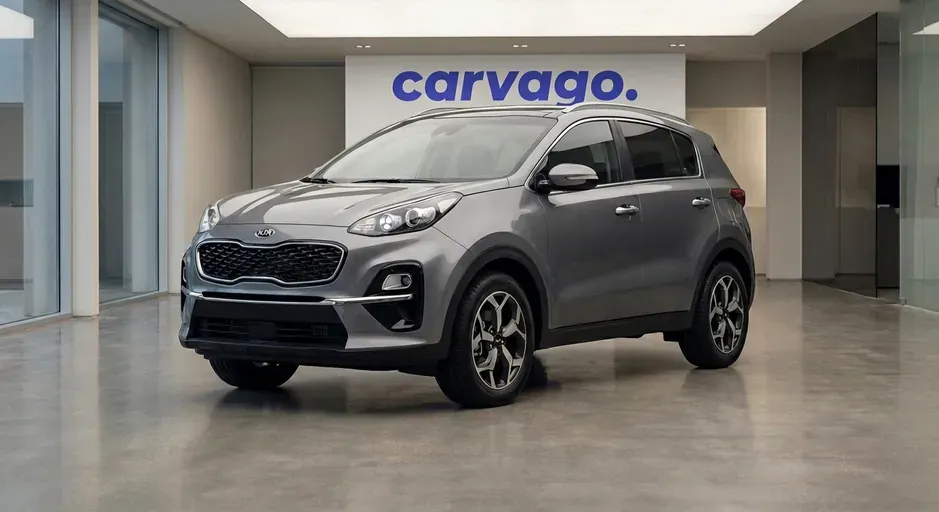
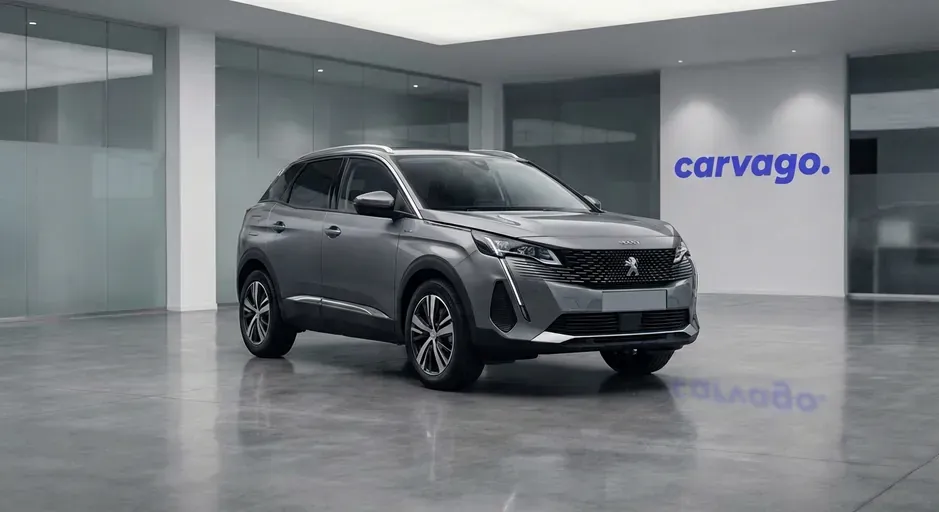
The Kia Sportage, the Korean brand's best-selling model worldwide, brings a bold design and renowned reliability to the family SUV segment, especially in its fourth generation (2017-2022). It is pitted against the French bestseller, the Peugeot 3008, which, in its facelifted second generation (from 2020), attacks the senses with an extravagant exterior and a futuristic interior concept featuring the i-Cockpit layout. Both of these distinctive mid-size SUVs target the same customers, but they do so in completely different ways, which promises an interesting comparison.
At first glance, it is clear that the fifth-generation Kia Sportage (codename NQ5) is a noticeably larger vehicle than the second-generation Peugeot 3008. The differences are apparent in all key dimensions, which directly reflects on the practical use and driving characteristics of both SUVs. While the Sportage offers a feeling of robustness and more interior space, the 3008 scores with agility and easier manoeuvring in city traffic.
The most significant difference is in length, where the Kia Sportage surpasses the Peugeot 3008 by a noticeable 68 mm. This increase primarily translates into more generous space for rear-seat passengers and a slightly larger luggage compartment. The Kia's 5 mm longer wheelbase also contributes to better stability at higher speeds. In contrast, the Peugeot, thanks to its more compact dimensions, fits more easily into tight parking spaces and feels more agile in narrow streets.
The Kia Sportage also dominates in width and height. It is 24 mm wider and 26 mm taller, which enhances its robust appearance and provides the crew with a better view from the vehicle and a sense of security. The taller body structure also makes getting in and out easier. The Peugeot 3008, with its more subtle measurements, has a sportier and more elegant feel, which may be a preferred quality for some drivers.
| Parameter | Kia Sportage (NQ5 generation) | Peugeot 3008 (2nd generation) |
|---|---|---|
| Length (mm) | 4515 | 4447 |
| Width (mm) | 1865 | 1841 |
| Height (mm) | 1650 | 1624 |
| Wheelbase (mm) | 2680 | 2675 |
In the family SUV category, boot size plays a key role, and it is here that significant differences emerge between the Kia Sportage and the Peugeot 3008. While the second-generation Peugeot 3008 (produced from 2016–2023) offers a solid volume sufficient for most needs, the newer generation Kia Sportage (codename NQ5, from 2022) has raised the bar for practicality significantly, becoming one of the leaders in the segment.
The standard Peugeot 3008 with an internal combustion engine has a luggage compartment volume of 520 litres. This is a value that is easily sufficient for a family holiday or large shopping trips. However, a problem arises with the plug-in hybrid versions, where the battery and other technology reduce the boot to just 395 litres, which is a significant limitation. With the rear seats folded down, the standard 3008 offers a total of 1482 litres, while the hybrid version offers 1357 litres.
The latest NQ5 generation of the Kia Sportage, on the other hand, excels. Even in its basic petrol engine version, it offers a staggering 591 litres. The hybrid versions are not far behind – the mild-hybrid provides 562 litres, the full-hybrid 587 litres, and even the plug-in hybrid variant with the largest battery offers an above-average 540 litres. This is more than the standard Peugeot 3008. With the seats folded down, the Sportage becomes a small van with a capacity of up to 1780 litres. For comparison, the previous generation Sportage (QL, until 2022) offered 503 litres (or 439 litres for the mild-hybrid), which put it on par with the Peugeot, but its successor is in a different league.
| Parameter | Kia Sportage (NQ5) SUV | Peugeot 3008 (Gen 2) SUV |
|---|---|---|
| Basic volume (litres) | 526 - 591 | 520 (395 for PHEV) |
| Max. volume with seats folded (litres) | 1715 - 1780 | 1482 (1357 for PHEV) |
The ability to tow a trailer is a key factor for many SUV buyers, and in this respect, the Kia Sportage and Peugeot 3008 differ significantly. In general, the Kia Sportage often offers higher values across generations and engine types, making it a more versatile choice for owners of caravans or boat trailers.
In the Kia Sportage QL generation (approximately 2018–2022), the 2.0 CRDi diesel engine particularly excelled, handling a braked trailer of up to 2200 kg. Even the popular 1.6 T-GDI petrol version managed a respectable 1900 kg. The newer NQ5 generation (from 2022) still performs excellently – diesel variants can tow up to 1950 kg, and modern mild-hybrid and full-hybrid petrol variants can handle 1650 kg. The exception is the Plug-in Hybrid, whose capacity is reduced to a more practical 1350 kg due to the weight of the batteries.
The second-generation Peugeot 3008 is a capable competitor in this discipline, but only with its top-of-the-line diesel engine. The 2.0 BlueHDi version can tow a trailer weighing up to 2000 kg, matching the more powerful Sportage versions. However, more common engine options are significantly more modest. The popular 1.2 PureTech three-cylinder petrol engine can handle a maximum of 1400 kg, and the 1.5 BlueHDi diesel engine can tow a trailer up to 1500 kg. Similar to the Kia, the hybrid variants (Plug-in Hybrid 225 and 300) have their capacity significantly limited to just 1250 kg.
For those who plan to regularly tow heavy trailers, the clear choice is the Kia Sportage with a diesel engine or the Peugeot 3008 with the 2.0 BlueHDi engine. However, for standard petrol and hybrid versions, the Kia has a clear advantage.
| Kia Sportage 1.6 T-GDI (QL) | 1600 - 1900 | 750 |
|---|---|---|
| Kia Sportage 2.0 CRDi (QL) | 1900 - 2200 | 750 |
| Kia Sportage 1.6 T-GDI Hybrid (NQ5) | 1650 | 750 |
| Kia Sportage 1.6 T-GDI Plug-in Hybrid (NQ5) | 1350 | 750 |
| Peugeot 3008 1.2 PureTech 130 | 1200 - 1400 | 750 |
| Peugeot 3008 1.5 BlueHDi 130 | 1300 - 1500 | 750 |
| Peugeot 3008 2.0 BlueHDi 180 | 2000 | 750 |
| Peugeot 3008 1.6 Plug-in Hybrid (225/300) | 1250 | 750 |
When choosing an engine, the paths of the Kia Sportage and Peugeot 3008 diverge significantly. While Peugeot has focused on fuel-efficient, small-displacement units and powerful plug-in hybrids, Kia offers a significantly broader and more traditional range, which in the used car market includes naturally aspirated and turbocharged engines, mild-hybrids, and in newer model years, advanced full-hybrid and plug-in hybrid systems. This difference is key – Kia satisfies almost everyone, from conservative drivers to technology enthusiasts. Peugeot, on the other hand, focuses on efficiency and electrified performance in its top versions, where all-wheel drive is provided exclusively by electric motors.
The Kia Sportage, especially in the market for cars around four years old, covers two generations: the facelifted fourth (QL, until 2022) and the all-new fifth (NQ5, from 2022). The older and very common QL models offered the reliable naturally aspirated 1.6 GDI (97 kW) engine as a solid, non-turbo base. For more dynamic driving, there was the turbocharged 1.6 T-GDI (130 kW), available with both manual and automatic transmissions and 4x4 drive. For high-mileage drivers, the economical 1.6 CRDi diesel engines were available in 85 kW and 100 kW variants.
The new NQ5 generation, which is beginning to appear on the used car market, has embraced modernity. The range is based on turbocharged 1.6 T-GDI engines with mild-hybrid technology (110 kW), complemented by a sophisticated full-hybrid (HEV) with a combined output of 169 kW and the top-of-the-line plug-in hybrid (PHEV) with 195 kW and standard all-wheel drive.
| Engine Type | Fuel | Power (kW) | Torque (Nm) | Transmission |
|---|---|---|---|---|
| 1.6 GDI (QL) | Petrol | 97 | 161 | 6MT |
| 1.6 T-GDI (QL) | Petrol | 130 | 265 | 6MT/7DCT |
| 1.6 CRDi (QL/NQ5) | Diesel | 85/100 | 280/320 | 6MT/7DCT |
| 1.6 T-GDI MHEV (NQ5) | Petrol Mild-Hybrid | 110 | 250 | 6MT/7DCT |
| 1.6 T-GDI HEV (NQ5) | Petrol Full-Hybrid | 169 | 350 | 6AT |
| 1.6 T-GDI PHEV (NQ5) | Petrol Plug-in Hybrid | 195 | 350 | 6AT |
The second-generation Peugeot 3008 (after the 2020 facelift) focused on smaller but efficient turbocharged engines. The basic and very popular petrol engine is the three-cylinder 1.2 PureTech (96 kW), which gives the car surprising dynamism. However, regular maintenance is crucial due to the timing belt running in oil. For long-distance journeys, the ideal choice is the four-cylinder 1.5 BlueHDi (96 kW) diesel, known for its low consumption and refinement.
The top of the range consists of plug-in hybrid versions. The Hybrid 225 (165 kW) combines a 1.6 PureTech petrol engine with an electric motor and front-wheel drive. The absolute pinnacle is the Hybrid4 300 (221 kW), which, thanks to a second electric motor on the rear axle, is the only version to offer all-wheel drive and impressive acceleration.
| Engine Type | Fuel | Power (kW) | Torque (Nm) | Transmission |
|---|---|---|---|---|
| 1.2 PureTech 130 | Petrol | 96 | 230 | 6MT/8EAT |
| 1.6 PureTech 180* | Petrol | 133 | 250 | 8EAT |
| 1.5 BlueHDi 130 | Diesel | 96 | 300 | 6MT/8EAT |
| Hybrid 225 | Petrol Plug-in Hybrid | 165 | 360 | 8EAT |
| Hybrid4 300 | Petrol Plug-in Hybrid | 221 | 520 | 8EAT |
*The 1.6 PureTech 180 engine was available until 2021 and was subsequently replaced by hybrid versions.
The Kia Sportage is the ideal choice for buyers who want a wide selection. Need a simple and reliable non-turbo engine? Choose the older 1.6 GDI. Looking for a powerful petrol all-wheel drive? The 1.6 T-GDI is for you. And if you're eyeing modern technology, the hybrid and plug-in hybrid versions of the new NQ5 generation are among the best on the market.
The Peugeot 3008 will appeal to drivers who prefer European style, low fuel consumption, and a sophisticated interior. The 1.5 BlueHDi diesel is a safe bet for long-distance drivers. The 1.2 PureTech petrol is enjoyable in and out of the city but requires a careful owner. If you desire high performance, quiet electric city driving, and 4x4 capability, the Hybrid4 300 version is a fascinating, albeit more expensive, choice.
Choosing the right engine is key to long-term satisfaction with your car. In our recommendations, we focus on the ideal combination of performance, real-world fuel consumption, owner feedback, and mechanical reliability to help you find the engine that best suits your needs. While Kia bets on a wider range of hybridized and more powerful units, Peugeot sticks to proven and exceptionally economical engines.
For the Sportage generation (NQ5, from 2022), which is currently the most relevant for the used car market, the best choice is the full-hybrid 1.6 T-GDI HEV version. This engine represents an excellent compromise between performance, economy, and refinement. With a combined output of 169 kW, it offers confident dynamics for safe overtaking even with a fully loaded car, all with the smooth and quick response of the automatic transmission.
The main strength of this powertrain lies in the effective collaboration between the petrol turbo engine and the electric motor. In city traffic and during calm driving, the car can often run purely on electricity, which significantly reduces consumption. Owners commonly achieve a real-world combined consumption of between 6 and 7 litres per 100 km, which is an excellent figure for an SUV of this size and performance. Unlike diesel engines, you don't have to worry about problems with the diesel particulate filter (DPF) during frequent short trips. This system is ideal for drivers looking for a versatile family car for daily commutes to work as well as for long holidays. So far, it has proven to be a very reliable powertrain with no known systematic problems.
For the second-generation Peugeot 3008 (especially after the 2020 facelift), the 1.5 BlueHDi diesel engine is a safe bet. Although diesels are less popular today, this unit is exceptionally economical, refined, and reliable with proper maintenance. With 96 kW of power and 300 Nm of torque, it provides enough power for normal driving and motorway journeys. Especially when paired with the eight-speed EAT8 automatic transmission, it offers a very comfortable and smooth driving experience.
Its main technical advantage is its low fuel consumption. It's not uncommon for drivers with a light foot to achieve consumption below 5 l/100 km when driving outside the city. The engine is an ideal choice for those who drive a high number of kilometres annually and frequently travel on motorways. However, it is necessary to remember the specifics of modern diesels:
For drivers with lower annual mileage, the 1.2 PureTech petrol engine can be an alternative, but it is essential to thoroughly check its service history. This engine has a wet timing belt (belt-in-oil), which can degrade and cause serious engine damage if the precisely prescribed type of oil is not used and service intervals are not followed. For this reason, the 1.5 BlueHDi diesel is a safer and more reliable choice for a used car buyer.
Official fuel consumption figures are one thing, but the day-to-day reality on the road is another. While the laboratory values of the WLTP cycle provide an initial idea, data from real drivers offers a much more accurate picture. For our comparison, we therefore drew on large European databases, such as Germany's Spritmonitor.de, where thousands of owners meticulously record every refuelling. We primarily compared the relevant generations for the nearly-new used car market: the fourth-generation Kia Sportage (QL, 2016-2022) and the second-generation Peugeot 3008 (P84, 2016-2023).
The following table shows the average consumption of the most common engine options found in cars that are approximately four years old.
| Model and Engine | Average Real-World Consumption (l/100 km) |
|---|---|
| Kia Sportage 1.6 GDI (97 kW) | 7.8 |
| Kia Sportage 1.6 T-GDI (130 kW) | 8.3 |
| Kia Sportage 1.6 CRDi (100 kW) | 6.5 |
| Peugeot 3008 1.2 PureTech (96 kW) | 7.1 |
| Peugeot 3008 1.6 PureTech (133 kW) | 7.9 |
| Peugeot 3008 1.5 BlueHDi (96 kW) | 5.8 |
At first glance, it is clear that the Peugeot 3008 has the upper hand in terms of efficiency, for both petrol and diesel engines. The biggest difference is with the diesel units, where the modern 1.5 BlueHDi in the Peugeot uses an average of 0.7 litres less fuel than the 1.6 CRDi in the Kia. For drivers with high annual mileage, this represents a significant saving. In practice, the Peugeot can be driven at five litres per 100 km without much difficulty, which is an excellent figure for an SUV.
A similar trend can be seen with the basic petrol engines. The three-cylinder 1.2 PureTech from Peugeot is livelier despite its smaller displacement and more economical in real-world operation than the naturally aspirated four-cylinder 1.6 GDI in the Kia. While the Kia's engine is structurally simpler and considered reliable, its consumption in city and motorway traffic can easily exceed eight litres per 100 km. The Peugeot's turbocharged three-cylinder is more sensitive to driving style, but it can be surprisingly frugal with calm driving. However, it is important to remember its specifics, such as the wet timing belt, which requires strict adherence to service intervals and the use of the correct oil. With the more powerful 1.6 T-GDI and 1.6 PureTech petrol variants, the differences in consumption are almost negligible; here, the deciding factors will be dynamics and driving characteristics.
So, for whom is each car more suitable? If running costs are your top priority and you drive tens of thousands of kilometres a year, the clear winner is the Peugeot 3008 with the 1.5 BlueHDi engine. Petrol-preferring drivers who are still mindful of consumption will also find a better partner in the Peugeot with the 1.2 PureTech engine. The Kia Sportage, on the other hand, scores points with more conservative drivers who appreciate the simplicity and proven technology of the naturally aspirated 1.6 GDI engine and are willing to accept its higher appetite for fuel. Its diesel engines are slightly thirstier, but they still represent a reasonable choice for a family SUV. In this duel, fuel consumption is therefore a significant factor that clearly speaks in favour of the French car.
When looking at the prices of used Kia Sportage and Peugeot 3008 cars from 2020 to 2022, we find that both models are in a very similar price range. However, the final price depends on a whole range of factors, such as the engine, equipment level, mileage, and the overall condition of the vehicle. Nevertheless, certain trends can be observed that may make the decision easier.
On the used car market, both models in basic specifications and with higher mileage can be purchased for prices slightly exceeding €16,000. With the Peugeot 3008, you will often encounter the popular 1.2 PureTech petrol engine. The Kia Sportage in these price ranges typically offers the naturally aspirated 1.6 GDi engine, which is considered a reliable, though not very dynamic, choice.
If you desire better performance and richer equipment, such as the GT Line versions on both models, be prepared to spend over €21,000. This is where subtle differences begin to emerge.
For the Peugeot 3008, the sought-after 1.5 BlueHDi diesel engines, combined with an automatic transmission and higher trim levels (e.g., Allure), climb towards the €25,000 mark and even higher for newer models (2022).
The Kia Sportage in higher specifications, for example with the turbocharged 1.6 T-GDI engine and all-wheel drive, ranges from €19,000 to €27,000. A major advantage can be the still-valid seven-year factory warranty, which keeps the used car's price higher but also gives the owner greater peace of mind.
| Model and Engine | Approximate Price Range (2020-2022) | Key Factors |
|---|---|---|
| Kia Sportage 1.6 GDi | €16,000 – €21,000 | Reliability, lower purchase price |
| Kia Sportage 1.6 T-GDI / CRDi | €19,000 – €27,000 | Performance, GT Line trim, valid warranty |
| Peugeot 3008 1.2 PureTech | €18,000 – €23,000 | Modern design, digital i-Cockpit |
| Peugeot 3008 1.5 BlueHDi | €19,000 – €26,000 | Economical diesel engine, automatic transmission |
Both cars hold their value relatively well, and the price differences are not dramatic. The Peugeot 3008 can be slightly more expensive in higher trims with a diesel engine, reflecting its popularity and the perceived premium quality of its interior. The Kia Sportage, on the other hand, scores points with the possible availability of 4x4 drive and, above all, the factory warranty, which is a strong argument even for a car that is several years old. It is always worthwhile to carefully check the service history and overall condition, as these factors will ultimately have the greatest impact on the final price and your satisfaction.
Although both models boast a five-star rating from Euro NCAP, there is a fundamental difference between them due to the time when the tests were conducted. The methodology for crash tests is constantly becoming stricter, and a direct comparison of percentage results from different years is not entirely conclusive. A more recent test usually means the car had to meet more demanding criteria.
The fifth-generation Sportage underwent crash tests in 2022 and received a full five stars. The tests were conducted according to a significantly stricter methodology than in the case of the older Peugeot test. The Sportage achieved excellent results in adult occupant protection (87%) and child occupant protection (86%). The slightly lower rating for the protection of vulnerable road users (66%) and safety assist systems (72%) reflects the more demanding requirements for modern safety technologies, such as autonomous braking with cyclist detection, which the commissioners specifically mentioned.
The second-generation Peugeot 3008 also received five stars in the Euro NCAP tests, but its tests were conducted back in 2016. The ratings for adult occupant protection (86%) and child occupant protection (85%) were excellent for their time and comparable to the Sportage's current results. However, a significant difference is evident in the safety assist systems category, where the 3008 scored 58%. This figure clearly shows how rapidly the field of active safety has advanced in the six years between the two tests.
Both cars provide a high level of passive safety, as evidenced by the occupant protection results. However, the Kia Sportage was tested according to much more modern and stringent standards. Its higher score in the safety assistants category (by 14 percentage points) confirms that it offers a more advanced and comprehensive package of active safety features that help prevent accidents. From this perspective, the Sportage is the safer choice, thanks to its more recent rating.
| Parameter | Kia Sportage | Peugeot 3008 |
|---|---|---|
| Year of testing | 2022 | 2016 |
| Adult Occupant Protection | 87 % | 86 % |
| Child Occupant Protection | 86 % | 85 % |
| Pedestrian Protection | 66 % | 67 % |
| Safety Assist Systems | 72 % | 58 % |
In addition to standard equipment, each model offers several unique features that may be decisive for the customer. While Kia focuses on rich equipment and practicality, Peugeot counters with avant-garde design and a unique interior concept.
The fourth-generation Kia Sportage (2016–2021) focuses on user comfort, clarity, and a wealth of features that make everyday use more enjoyable.
The second-generation Peugeot 3008 (from 2016) stands out primarily for its revolutionary interior and design details that give it a premium character.
Based on our own CarAudit inspections, breakdown statistics, and owner feedback, we have compiled an overview of the most common problems that used car buyers should watch out for. Although both models are popular in their classes, neither is flawless.
The fourth-generation Kia Sportage is generally considered a robust and reliable car, a fact confirmed by mechanics' experiences. Most problems are minor inconveniences rather than serious mechanical failures.
Summary for Kia Sportage: The fourth generation's problems are more operational in nature and it does not suffer from fatal defects. A thorough technical inspection of the car before purchase should reveal any potential shortcomings in the chassis or transmission.
The second-generation Peugeot 3008 made a huge leap in design and technology, but some modern systems have proven to be its weakness. Reliability is more dependent on the specific engine and the diligence of maintenance.
Summary for Peugeot 3008: With the Peugeot 3008, the risk of more expensive repairs is higher, especially for the 1.2 PureTech petrol engine and diesels with the AdBlue system. A comprehensive vehicle inspection is an absolute necessity here, focusing on the service history and diagnostics of the engine and emissions system.
When buying a used car, a thorough inspection is key, and you shouldn't underestimate it even with these reliable models. Here are a few specific points to focus on.
The Kia Sportage generally offers a slightly larger luggage compartment, with a volume ranging from 526 to 591 litres depending on the engine. The Peugeot 3008 has a boot volume of 520 litres. Thanks to its more traditional body shape, the Sportage also has a more practical and usable boot space.
The Kia Sportage is primarily focused on comfort; its chassis effectively absorbs bumps and ensures a comfortable ride. The Peugeot 3008 may have slightly stiffer suspension, which, combined with the small steering wheel, provides a sense of agility but can be less comfortable on poor-quality roads. Overall, the Sportage is considered a more versatile and comfortable choice for daily family use.
The Kia Sportage has a wider and more diverse range of power units, including petrol, diesel, mild-hybrid, full-hybrid, and plug-in hybrid variants. Additionally, all-wheel drive is available on many versions. The Peugeot 3008 focuses more on petrol and plug-in hybrid versions, with all-wheel drive reserved only for the most expensive hybrid model.
Both cars are considered to have average reliability in their segment. However, Kia has a clear and significant advantage, offering a unique seven-year factory warranty on the Sportage model. Peugeot offers a standard two-year warranty, which can be extended for an additional fee, meaning less security for the owner in the long run.
Both models boast modern interiors, but each follows a different philosophy. The Peugeot 3008 impresses with its futuristic i-Cockpit, featuring a small steering wheel and a high-mounted instrument cluster, which may not suit everyone. The Kia Sportage's interior is generally considered more ergonomic and user-friendly, with more intuitive controls and easily accessible technology.
Sources: ADAC, forbes.cz, mdcr.cz, autojournal.cz, autosalon.tv, fastcars.cz
This article was prepared using artificial intelligence tools. The section guarantor is Petr Dušek.
Hyundai Tucson vs. Kia Sportage: A detailed comparison of design, engines, and practicality to help you choose. Read our final verdict.
Apr 13, 2026
Opel Mokka vs Peugeot 2008. A detailed comparison of engines, design, and practicality. Find out which stylish SUV is the best choice for you.
Apr 14, 2026
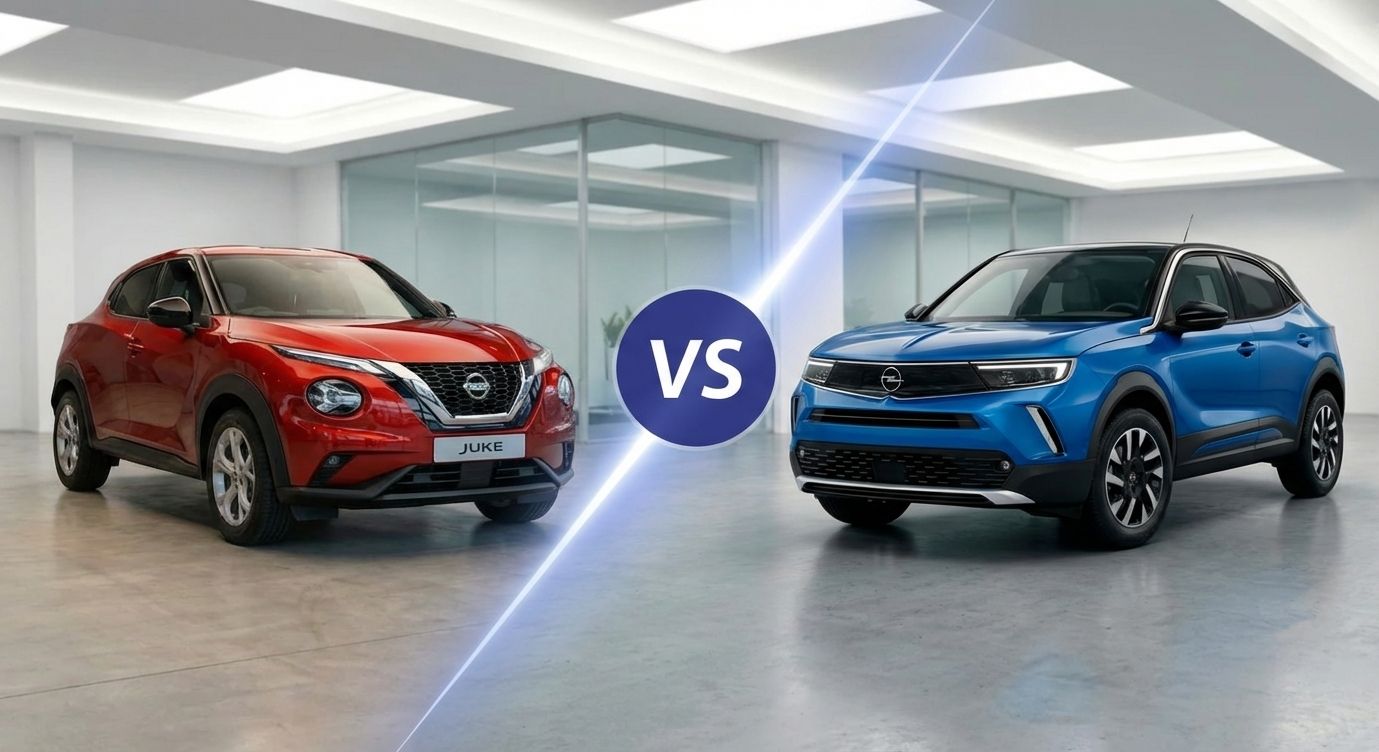
Nissan Juke vs Opel Mokka: A detailed comparison of design, ride, and features. Our verdict will help you choose the right compact crossover.
Apr 14, 2026