Car battle
Audi Q3 vs. BMW X1: A Complete 2025 Comparison
Audi Q3 vs BMW X1: Detailed comparison of design, performance, and practicality. Find out which premium SUV is the right choice for you in our verdict.
Apr 14, 2026
Articles
Car battle
Hyundai Tucson vs. Kia Sportage: A detailed comparison of design, engines, and practicality to help you choose. Read our final verdict.
April 13, 2026
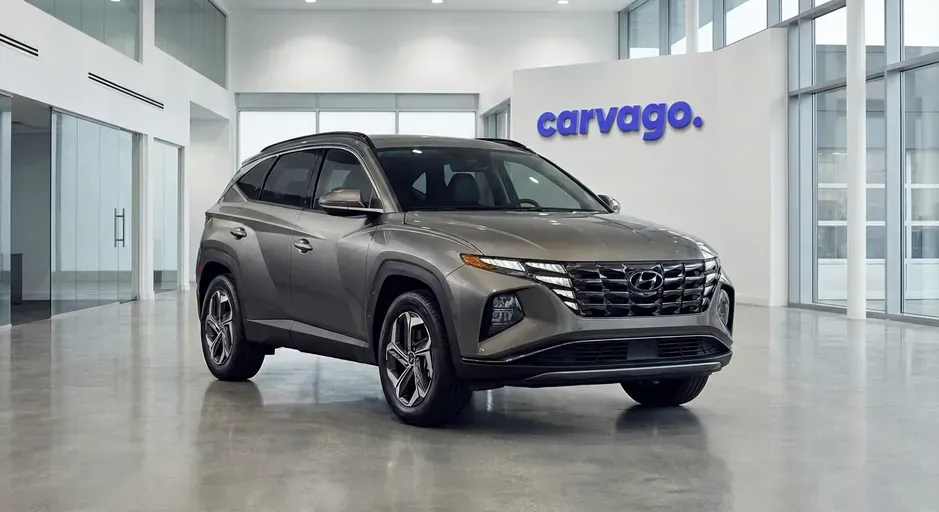
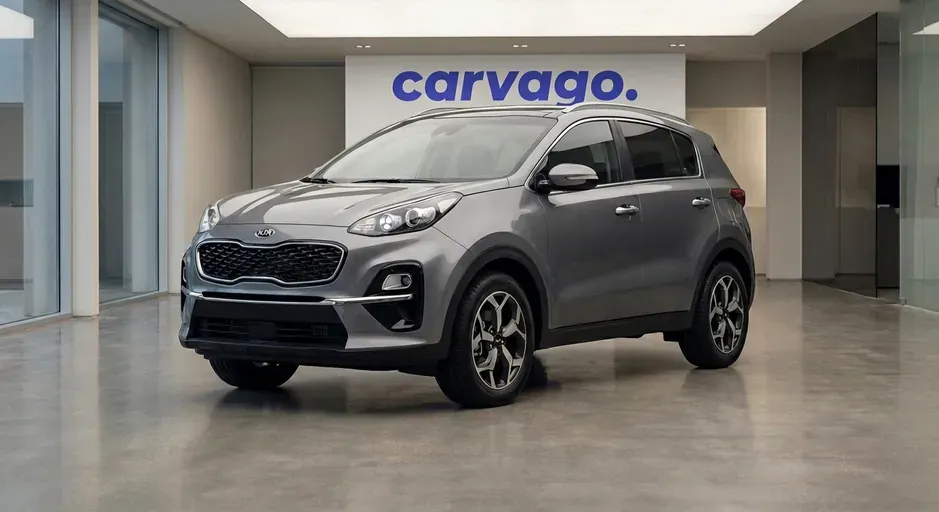
The Hyundai Tucson represents a bold design step, captivating primarily with its unique grille featuring hidden parametric lights. Its corporate sibling, the Kia Sportage, counters with an equally extravagant look, dominated by boomerang-shaped headlights and a sophisticated front end. Although both models are built on the same technical foundation, they differ in many respects, and we will now take a detailed look at which one might be the right choice for you.
Although the Hyundai Tucson and Kia Sportage have taken completely different design paths, a look at the dimensions table makes it clear that they are close relatives. The newer generations, the Tucson produced from 2020 and the Sportage from 2022, share the same technical platform, resulting in almost identical exterior dimensions. This is important news for the buyer – neither model has a significant practical advantage in this area.
Both cars are built on a chassis with an identical wheelbase of 2,680 mm and have the same width of 1,865 mm. In practice, this means they offer comparable interior space for passengers and are equally demanding in terms of parking space width. With a length of just over 4.5 metres and a height of 1,650 mm, both models rank among the larger compact SUVs, ensuring comfort on longer journeys without being too cumbersome in city traffic.
A very similar situation existed with the previous generations, which are widely available on the used car market (Tucson 2018–2020 and Sportage 2018–2022). Here too, the wheelbase was an identical 2,670 mm, and other dimensions differed by only a matter of millimetres. The Sportage was slightly longer and wider, while the Tucson countered with a negligibly taller body by one centimetre. The choice between these cars in terms of exterior dimensions thus depends more on design preference than on practical differences.
| Parameter | Hyundai Tucson (from 2020) | Kia Sportage (from 2022) | Hyundai Tucson (2018-2020) | Kia Sportage (2018-2022) |
|---|---|---|---|---|
| Length (mm) | 4500 - 4510 | 4515 | 4480 | 4485 - 4495 |
| Width (mm) | 1865 | 1865 | 1850 | 1855 |
| Height (mm) | 1650 | 1650 | 1645 | 1635 |
| Wheelbase (mm) | 2680 | 2680 | 2670 | 2670 |
Practicality and luggage space are key parameters for family SUVs, and it is in this discipline that both Korean models excel and are at the top of their class. Although they share the same technical platform, we find interesting differences here. The Hyundai Tucson slightly wins this battle, offering a few more litres in its most spacious variant than its corporate sibling. This difference can be decisive for families who often travel with a lot of luggage or sports equipment.
The Hyundai Tucson (NX4 generation, from 2020) in its basic petrol engine version impresses with a boot capacity of 620 litres. When the rear seats are folded down, a space of up to 1799 litres is created. The Kia Sportage (NQ5 generation, from 2022) is close behind with very solid figures of 591 litres in the basic configuration and 1780 litres with the seats folded. The difference in basic capacity is therefore noticeable and represents the equivalent of a small travel bag.
However, it is important to realise that the boot capacity of both models varies depending on the chosen powertrain. Electrified versions (mild-hybrid, full-hybrid, and plug-in hybrid) have a slightly smaller boot due to the battery placement. For example, the plug-in hybrid Tucson offers 558 litres, while the Sportage with the same powertrain has 540 litres. Even in these variants, the Hyundai maintains a slight lead. For the buyer, this means that although both cars are exceptionally practical, the Tucson systematically offers a little more space, which can be a deciding factor when choosing a family car.
| Parameter | Hyundai Tucson (SUV) | Kia Sportage (SUV) |
|---|---|---|
| Basic capacity (litres) | 546 – 620 | 526 – 591 |
| Maximum capacity (seats folded, litres) | 1721 – 1799 | 1715 – 1780 |
For many SUV buyers, the ability to tow a trailer is a key factor. Whether it's a caravan for a holiday, a trailer with building materials, or a boat trailer, towing capacity can be the deciding factor in a purchase. In this respect, the Hyundai Tucson and Kia Sportage, as technically related models, are very similar, but there are important differences worth noting.
In the latest generations (Tucson NX4 from 2020, Sportage NQ5 from 2022), the most popular engine options, such as the petrol 1.6 T-GDI or the diesel 1.6 CRDi (including mild-hybrid variants), have a braked towing capacity of a solid 1650 kg. This is sufficient for most medium-sized caravans or trailers. However, the diesel version of the Kia Sportage, the 1.6 CRDi, offers up to 1950 kg in some specifications, slightly surpassing its sibling and making it a more attractive choice for those who need to tow heavier loads. If we look at the previous generations (around 2018-2020), we would find powerful two-litre diesel engines (2.0 CRDi) in both models, which reigned supreme with a capacity of up to 2200 kg.
A significant difference arises with the electrified versions. While conventional hybrids (HEV) generally maintain the ability to tow 1650 kg, you have to expect a compromise with plug-in hybrid (PHEV) variants. Due to the higher weight of the batteries, the maximum braked towing capacity drops to 1350 kg. This is still enough for a smaller caravan or a light trailer, but it may not be sufficient for more demanding tasks. For unbraked trailers, the situation is identical – both models can handle the standard 750 kg.
As a result, for everyday use, both cars are equal partners. However, if you are looking for maximum towing power, the winner is a specific version of the diesel Kia Sportage or older models of both brands with the two-litre diesel engine.
| Model and Engine | Braked Towing Capacity (kg) | Unbraked Towing Capacity (kg) |
|---|---|---|
| Hyundai Tucson 1.6 T-GDI / Mild-Hybrid (from 2020) | 1650 | 750 |
| Hyundai Tucson 1.6 CRDi / Mild-Hybrid (from 2020) | 1650 | 750 |
| Hyundai Tucson 1.6 T-GDI Hybrid (HEV) | 1650 | 750 |
| Hyundai Tucson 1.6 T-GDI Plug-in Hybrid (PHEV) | 1350 | 750 |
| Kia Sportage 1.6 T-GDI / Mild-Hybrid (from 2022) | 1650 | 750 |
| Kia Sportage 1.6 CRDi Mild-Hybrid (from 2022) | 1650 - 1950 | 750 |
| Kia Sportage 1.6 T-GDI Hybrid (HEV) | 1650 | 750 |
| Kia Sportage 1.6 T-GDI Plug-in Hybrid (PHEV) | 1350 | 750 |
The Hyundai Tucson and Kia Sportage are technical siblings, which is most evident in their range of powertrains. In the latest generations (Tucson NX4 from 2020, Sportage NQ5 from 2022), both models have adopted the same strategy: a wide range of petrol and diesel engines with varying degrees of electrification. The foundation is the turbocharged 1.6 T-GDI four-cylinder and the 1.6 CRDi diesel. These are available in several variants – from mild-hybrid (MHEV) and full-hybrid (HEV) to plug-in hybrid (PHEV). For the buyer, this means one thing: whether they choose the Tucson or the Sportage, they get access to modern and almost identical technology. The differences lie more in the design and chassis tuning than in the heart of the car itself.
For the current generation of the Tucson, Hyundai has prepared a very diverse range that covers all modern trends. The base is the 1.6 T-GDI petrol engine with 110 kW (150 hp), available both as a pure combustion version and as a 48V mild-hybrid. The more powerful 132 kW (180 hp) variant is always a mild-hybrid. For drivers who cover long distances, there is the 1.6 CRDi diesel with 100 kW (136 hp), also supported by a 48V mild-hybrid system. The pinnacle of efficiency and performance are the fully electrified versions. The Hybrid (HEV) combines a petrol engine with an electric motor to achieve a system output of 169 kW (230 hp), while the Plug-in Hybrid (PHEV) offers an impressive 195 kW (265 hp) and the possibility of purely electric driving range. For all engine types, there is a choice between a manual, an intelligent manual (iMT), and a dual-clutch automatic transmission (7DCT), as well as between front-wheel and all-wheel drive.
| Engine Type | Fuel | Power (kW) | Torque (Nm) | Transmission |
|---|---|---|---|---|
| 1.6 T-GDI | Petrol | 110 | 250 | 6MT |
| 1.6 T-GDI 48V | Petrol (Mild-Hybrid) | 110 / 132 | 250 / 265 | 6iMT / 7DCT |
| 1.6 CRDi 48V | Diesel (Mild-Hybrid) | 100 | 320 | 7DCT |
| 1.6 T-GDI HEV | Petrol (Hybrid) | 169 (system) | 350 (system) | 6AT |
| 1.6 T-GDI PHEV | Petrol (Plug-in Hybrid) | 195 (system) | 350 (system) | 6AT |
The Kia Sportage faithfully mirrors its sibling's lineup. Here too, the cornerstone is the 1.6 T-GDI petrol engine in two power variants: 110 kW (150 hp) and a more powerful 132 kW (180 hp). Both are available as mild-hybrids (MHEV). For diesel enthusiasts, there is the 1.6 CRDi engine with 100 kW (136 hp) and mild-hybrid assistance. Just like the Tucson, the Sportage excels in its hybrid versions. The Full-hybrid (HEV) provides a combined output of 169 kW (230 hp) and offers an excellent compromise between performance and fuel economy. At the top is the Plug-in Hybrid (PHEV), which has a total output of 195 kW (265 hp) and, thanks to a 13.8 kWh battery, allows for dozens of kilometres of purely electric driving. The Sportage also offers a choice between manual and dual-clutch automatic transmissions, and 4x2 or 4x4 drive.
| Engine Type | Fuel | Power (kW) | Torque (Nm) | Transmission |
|---|---|---|---|---|
| 1.6 T-GDI | Petrol | 110 | 250 | 6MT |
| 1.6 T-GDI 48V | Petrol (Mild-Hybrid) | 110 / 132 | 250 / 265 | 7DCT |
| 1.6 CRDi 48V | Diesel (Mild-Hybrid) | 100 | 320 | 7DCT |
| 1.6 T-GDI HEV | Petrol (Hybrid) | 169 (system) | 350 (system) | 6AT |
| 1.6 T-GDI PHEV | Petrol (Plug-in Hybrid) | 195 (system) | 350 (system) | 6AT |
The choice of engine for these two models is purely a matter of personal preference and needs, not differences between the brands.
Choosing the right engine is key to long-term satisfaction with a car. In the case of the sibling models, the Tucson and Sportage, the choice is all the more interesting because they share virtually identical technology, but their typical configurations on the used car market may differ slightly. Our recommendations are based on a combination of performance, real-world fuel consumption, owner feedback, and mechanical reliability.
The turbocharged 1.6 T-GDI four-cylinder petrol engine, combined with mild-hybrid technology, represents the golden mean for the fourth-generation Tucson (from 2020). It offers an ideal compromise between dynamics, refinement, and running costs, making it an excellent choice for most drivers.
The 1.6 CRDi diesel engine, updated for the fourth generation after its facelift (2018-2022) and also used in the fifth generation (from 2022), is a safe bet for drivers with high annual mileage. The combination with mild-hybrid technology adds to its efficiency, especially in varied traffic conditions.
Official fuel consumption figures, measured under laboratory conditions of the WLTP cycle, are often optimistic. To get a realistic picture of running costs, it is much more valuable to look at data from actual owners. We therefore base our figures on the average values that drivers track long-term on portals such as Germany's Spritmonitor.de, focusing on generations relevant to the used car market, i.e., from around 2020.
The following table shows the average real-world consumption of the most common engine options for the Hyundai Tucson (4th generation, from 2020) and Kia Sportage (5th generation, from 2021).
| Model and Engine | Average Real-World Consumption (l/100 km) |
|---|---|
| Petrol Engines | |
| Hyundai Tucson 1.6 T-GDI (110 kW) | 7.1 |
| Kia Sportage 1.6 T-GDI (110 kW) | 7.2 |
| Mild-Hybrid Petrol Engines | |
| Hyundai Tucson 1.6 T-GDI MHEV (110 kW) | 6.8 |
| Kia Sportage 1.6 T-GDI MHEV (110 kW) | 6.9 |
| Full-Hybrid Petrol Engines | |
| Hyundai Tucson 1.6 T-GDI HEV (169 kW) | 6.2 |
| Kia Sportage 1.6 T-GDI HEV (169 kW) | 6.3 |
| Plug-in Hybrid Engines | |
| Hyundai Tucson 1.6 T-GDI PHEV (195 kW) | 2.1* |
| Kia Sportage 1.6 T-GDI PHEV (195 kW) | 2.2* |
| Mild-Hybrid Diesel Engines | |
| Hyundai Tucson 1.6 CRDi MHEV (100 kW) | 5.7 |
| Kia Sportage 1.6 CRDi MHEV (100 kW) | 5.8 |
\The consumption of plug-in hybrids is highly dependent on regular charging. The value shown applies to the first 100 km with a charged battery; on longer journeys without charging, consumption increases.*
From the table, it is clear at first glance that thanks to shared technology, both models are very similar in terms of fuel consumption. The differences within the same engine versions are practically negligible and fall within the range of statistical deviation. The key is therefore the choice of the powertrain itself. The mild-hybrid technology in petrol engines brings only a modest saving of around 0.3 litres per 100 km. A major breakthrough comes with the full hybrid version (HEV), which can reduce real consumption by almost a litre, something you will appreciate especially in urban and suburban traffic. For drivers with high annual mileage and frequent motorway journeys, the diesel engine remains the most economical choice, reliably staying below the six-litre mark.
As a result, fuel consumption is not a factor that should decide between the Tucson and the Sportage. Both cars have a virtually identical appetite. The decision should be based on which type of powertrain best suits your driving style – whether you prefer maximum economy on long journeys (diesel) or efficient city driving with lower emissions (full-hybrid).
When looking at the used car market, we find that the Hyundai Tucson and Kia Sportage hold their value very similarly and are among the most sought-after models. The price differences between them are often minimal and depend more on the specific year of manufacture, mileage, engine, and equipment level than on the brand itself.
Hyundai Tucson (4th generation, from 2020)
Four-year-old models of the fourth-generation Hyundai Tucson, i.e., cars from 2020 and 2021, are available on the used car market in a wide price spectrum. Basic 1.6 T-GDI petrol versions with a manual transmission and higher mileage can be purchased from around €16,000. Cars with lower mileage, an automatic transmission, or in higher trim levels, such as the popular N-Line, then climb to prices between €22,000 and €27,000.
Kia Sportage (end of 4th generation and beginning of 5th generation)
With the Kia Sportage, the situation is slightly different due to the generational change. Four-year-old cars can be either from the last years of the fourth generation's production (until 2021) or from the first years of the fifth generation (from the end of 2021).
Summary
Both cars are very evenly matched rivals on the used car market. In terms of price, they do not differ significantly for comparable model years and specifications. A slight advantage for those interested in the most modern design may be the fact that for a similar price as a 2020 Tucson, you can also get a fifth-generation Sportage from 2022, although likely in a more basic trim. The deciding factors in the choice will therefore be individual preferences, the specific condition of the car, and the offered equipment.
As befits modern family SUVs, both the Hyundai Tucson and Kia Sportage can boast the highest, five-star rating in the Euro NCAP crash tests. This is great news for buyers, but it's important to look at the context. The testing protocols are constantly becoming stricter, and therefore, ratings from different years are not directly comparable. A more recent test usually means the car had to meet stricter criteria.
The fourth-generation Hyundai Tucson underwent Euro NCAP tests in 2021 and took home a full five stars. It performed very well in the individual categories, scoring 86% for adult occupant protection and an even better 87% for child occupant protection. This attests to a robust construction and a well-designed interior. In the category of vulnerable road user protection, such as pedestrians and cyclists, it achieved 66%. The suite of assistance systems was rated at 70%. At the time of the test, the Tucson was praised, among other things, for its standardly equipped center airbag, which prevents injuries between the driver and front passenger in a side impact.
The fifth-generation Kia Sportage, which shares its technical platform with the Tucson, completed the crash tests a year later, in 2022. It also secured a five-star rating, and in some respects, it slightly surpassed its sibling. It scored 87% for adult occupant protection and 86% for child occupant protection. The score for vulnerable road user protection was identical to the Tucson's at 66%. However, in the key category of safety assistance systems, the Sportage performed slightly better with a score of 72%. The tests highlighted, for example, the well-functioning autonomous emergency braking system with cyclist detection.
Although both models offer a top level of passive and active safety, the more recent test and slightly better rating in the area of assistance systems give the Kia Sportage a slight advantage. Its results reflect testing according to slightly newer and stricter standards. In practice, however, both cars are very similar and are among the safest in their class. The percentage differences are minimal, and both vehicles provide excellent protection for the whole family.
| Parameter | Hyundai Tucson | Kia Sportage |
|---|---|---|
| Year of testing | 2021 | 2022 |
| Adult Occupant Protection | 86% | 87% |
| Child Occupant Protection | 87% | 86% |
| Vulnerable Road User Protection | 66% | 66% |
| Safety Assist Systems | 70% | 72% |
In addition to the standard equipment, each model offers several unique features that can be decisive for the customer, as both cars approach innovation and comfort in their own unique way.
The fourth-generation Hyundai Tucson (NX4) captivates primarily with its bold design and a fully digital interior concept aimed at tech-savvy drivers.
The fifth-generation Kia Sportage (NQ5) counters with a completely different, more organic design and an interior that emphasizes the connection between the driver and technology through a massive curved display.
Advantages:
Disadvantages:
Advantages:
Disadvantages:
Based on our own CarAudit inspections, reliability statistics, and service bulletins, we have compiled an overview of the most common problems that used car buyers should watch out for. Although the Hyundai Tucson and Kia Sportage are technically related vehicles and share many components, their reliability can differ in the details.
The fourth-generation Tucson is generally considered a reliable car, but a few recurring problems do appear. Most of them are solvable and shouldn't deter you from buying, but it's good to be aware of them and watch out for them when choosing a used car.
Summary for the Tucson: The problems tend to relate to individual components and are mostly solvable. These are not major design flaws. The key to trouble-free operation is a thorough technical inspection of the car before purchase and verification of its recall history.
The fifth-generation Sportage shares its technology with the Tucson, so similar issues may occur. Overall, however, it performs very well in reliability ratings, and the number of reported problems is relatively low.
Summary for the Sportage: The Kia Sportage is considered a very reliable SUV, and the reported problems are not widespread. They are mostly minor issues that can be resolved under warranty or during regular servicing. The behaviour of the dual-clutch transmission deserves the most attention; it should be smooth and free of any disruptive symptoms during a test drive.
A thorough inspection is key when buying a used car, and this is no different even for reliable models like the Tucson and Sportage. Here are a few specific points to focus on with these two models to avoid potential problems.
Although the Hyundai Tucson and Kia Sportage share the same technical platform and engines, they differ primarily in design and chassis tuning. The Tucson opts for a bolder, more futuristic look, while the Sportage appears slightly more conventional and sporty. The interiors also differ in layout and materials used, although both models offer modern technology.
The Hyundai Tucson has a slightly larger boot in its basic five-seater configuration, with a volume of up to 620 litres. The Kia Sportage offers a very similar figure, specifically up to 591 litres. When the rear seats are folded down, the difference is almost negligible, but the Tucson maintains a slight lead in overall cargo capacity.
Yes, there are subtle differences in tuning. The Hyundai Tucson is generally perceived as a more comfortably tuned car that better absorbs bumps. The Kia Sportage has a slightly stiffer chassis, which gives it a slightly sportier and more agile driving feel, which may be more attractive to some drivers.
Both cars are built on the same technology and their reliability is at a similar level, which is considered good within the class. The key difference lies in the warranty conditions. Kia traditionally provides a longer seven-year warranty limited to 150,000 kilometres, while Hyundai offers a five-year warranty with no mileage limit.
Since both models use identical engines, including hybrid variants, their real-world fuel consumption is practically the same. Minor variations may occur depending on the chosen equipment, wheel size, and aerodynamics of the specific version. In general, however, it cannot be said that one model is significantly more fuel-efficient than the other.
Sources: ADAC, whatcar.com, autocar.co.uk, greencarreports.com, automotive-fleet.com, chargedevs.com
This article was prepared using artificial intelligence tools. The section is guaranteed by Petr Dušek.
Audi Q3 vs BMW X1: Detailed comparison of design, performance, and practicality. Find out which premium SUV is the right choice for you in our verdict.
Apr 14, 2026
BMW X1 vs. Volvo XC40: Which premium SUV is better for you? Our detailed comparison and verdict will help you make the final decision.
Apr 14, 2026
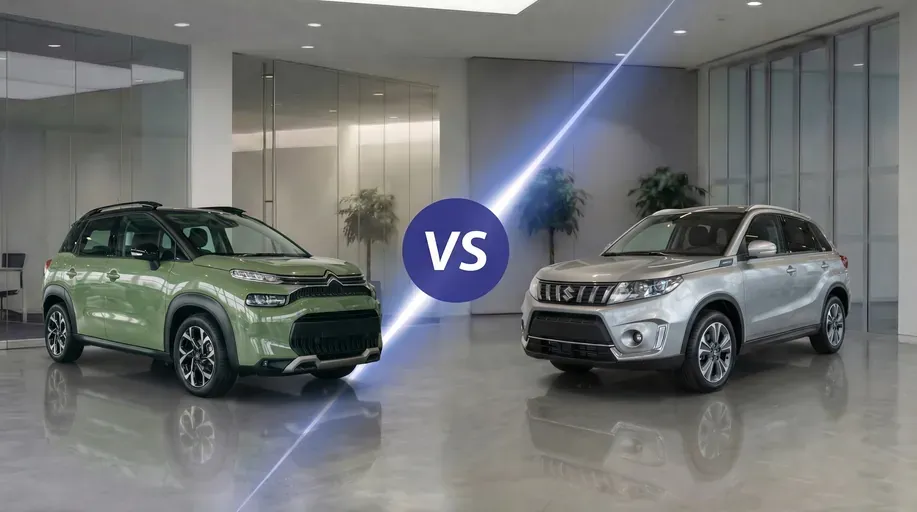
Detailed comparison of used SUVs Citroën C3 Aircross and Suzuki Vitara. Find out the differences in engines, equipment, or reliability and read our final verdict.
Apr 13, 2026