Car battle
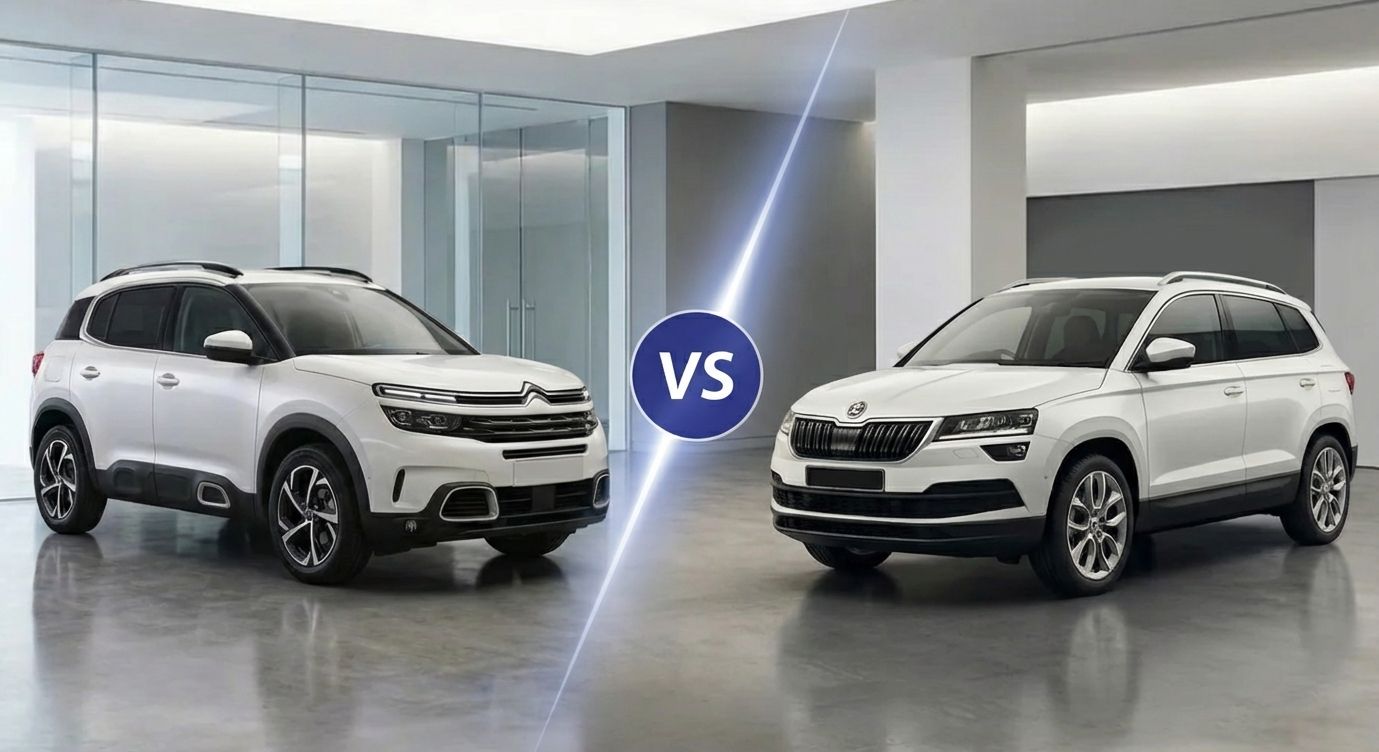
Citroën C5 Aircross vs. Škoda Karoq: Complete comparison 2026
Hesitating between the Citroën C5 Aircross and the Škoda Karoq? Our detailed comparison and verdict will help you choose the right SUV for your needs.
Apr 8, 2026
Articles
Car battle
BMW X1 vs. Volvo XC40: Which premium SUV is better for you? Our detailed comparison and verdict will help you make the final decision.
April 14, 2026
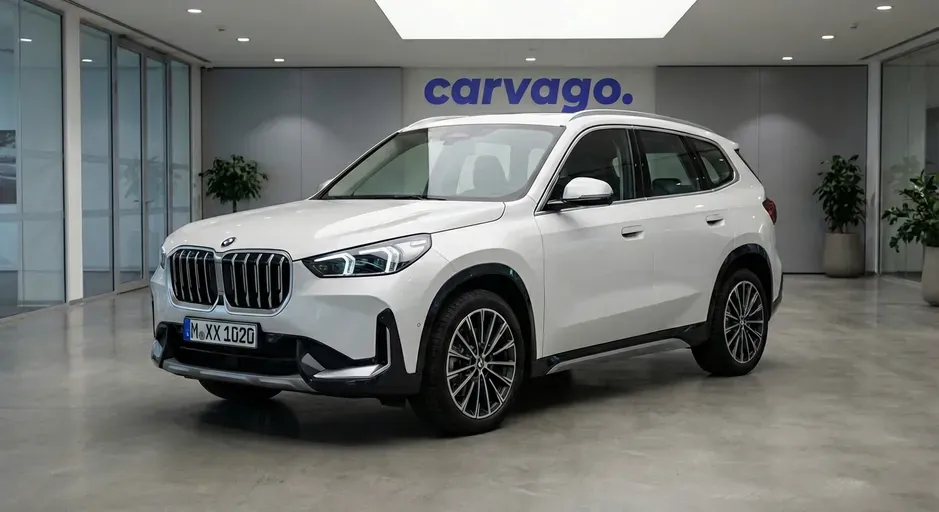
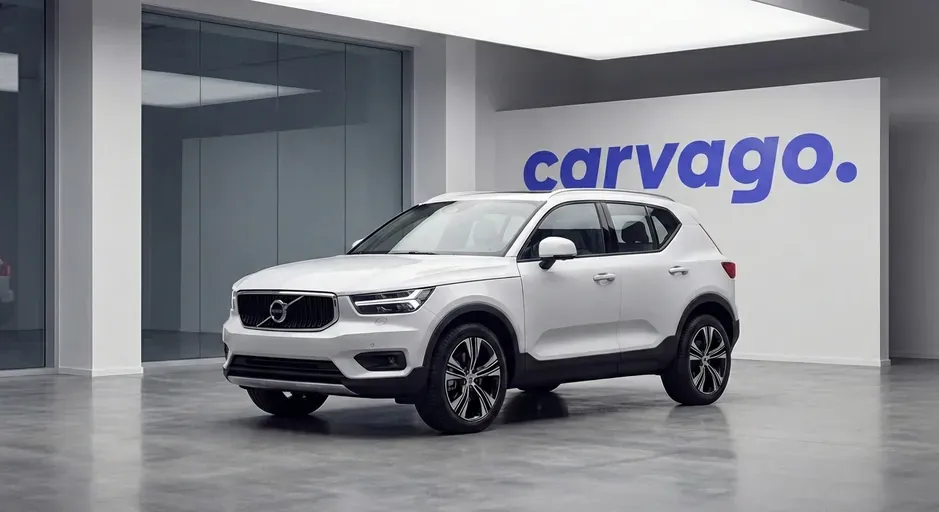
The BMW X1 is a popular premium compact SUV that serves as the gateway to the "X" model family, renowned for its sporty driving dynamics and high-quality interior. Competing against it is the Volvo XC40, which stands out with its distinctive Scandinavian design, emphasis on safety, comfort, and clever cabin solutions. In this article, we'll look at the battle between these two strong contenders to help you decide which one is the right choice for you.
Although both the BMW X1 and the Volvo XC40 fall into the same category of compact premium SUVs, a look at their exterior dimensions reveals different philosophies. The second-generation BMW X1 (F48, 2015-2022) opts for a sportier, longer, and lower silhouette. In contrast, the Volvo XC40 has a more robust and confident appearance, thanks to its greater width and height.
The biggest differences are in width and height. At 1863 mm, the Volvo XC40 is a noticeable 42 mm wider than the X1 (1821 mm), giving it a more stable stance and promising more shoulder room for passengers. The difference in height is even more significant, with the Volvo towering over the BMW by more than 5 centimetres (1652 mm vs. 1598 mm). This translates to a higher driving position and an overall airier feel in the XC40's cabin. Conversely, the BMW X1's lower centre of gravity contributes to more agile handling and easier manoeuvring in low-ceiling garages.
An interesting situation arises with the length and wheelbase. At 4447 mm, the BMW X1 is just under two centimetres longer than the Volvo (4425 mm). Paradoxically, however, the XC40 has a wheelbase that is more than three centimetres longer (2702 mm vs. 2670 mm). This demonstrates the clever use of space by the Swedish engineers, with the wheels pushed closer to the corners of the body. In practice, this usually means more generous legroom for the occupants, especially in the rear seats.
| Parameter | BMW X1 (F48, 2015-2022) | Volvo XC40 (1st gen, 2018-2024) |
|---|---|---|
| Length (mm) | 4439 - 4447 | 4425 - 4440 |
| Width (mm) | 1821 | 1863 |
| Height (mm) | 1582 - 1598 | 1647 - 1652 |
| Wheelbase (mm) | 2670 | 2702 |
For compact SUVs, boot size is often a deciding factor, especially for families. This is where one of the biggest differences between the BMW X1 and the Volvo XC40 becomes apparent. While both cars offer enough space for daily needs, the BMW X1 clearly aims for maximum practicality and volume, making it the favourite for those who frequently carry bulkier cargo.
The second-generation BMW X1 (F48, produced from 2015–2022), which is the most common on the used car market, offers a generous 505 litres in its standard configuration. After folding down the rear seats, which are split in a practical 40:20:40 ratio, an almost flat surface is created, and the space increases to 1550 litres. This is enough room not only for a family holiday but also for transporting sports equipment or small furniture. Be aware of the plug-in hybrid xDrive25e version, where the battery reduces the boot to a still-solid 450 litres.
The Volvo XC40 is slightly more modest in a direct comparison. Its boot offers 452 litres in its basic configuration (around 433 litres in older models). Although the space is well-shaped and easily accessible, it offers a maximum of 1328 litres with the seats folded down. This volume is perfectly adequate for regular shopping and weekend trips, but when packing for a longer holiday, the nearly 200-litre difference compared to the BMW can be noticeable. The electric and plug-in hybrid versions have an even smaller boot, typically around 405–419 litres, which further underscores Volvo's focus on style and everyday comfort rather than maximum transport capacity.
| Parameter | BMW X1 SUV | Volvo XC40 SUV |
|---|---|---|
| Basic volume (litres) | 505 | 452 |
| Maximum volume with seats folded (litres) | 1550 | 1328 |
The choice is therefore quite clear. If your absolute priority is the largest and most versatile luggage space possible, the BMW X1 is the undisputed winner. If a solid, albeit slightly smaller, boot for everyday use is sufficient and you appreciate the car's other qualities more, the Volvo XC40 will not disappoint in this regard.
When choosing a compact SUV, the ability to tow a trailer is also an important factor for many drivers. It is in this respect that the BMW X1 and Volvo XC40 differ, with the differences being particularly noticeable in the more powerful and hybrid versions.
The BMW X1 F48 generation (produced until 2022) offers a solid towing capacity. Most front-wheel-drive versions (sDrive) can handle a braked trailer weighing between 1700 and 1800 kg. If you opt for the all-wheel-drive xDrive variant, you can count on a maximum weight of up to 2000 kg, which is sufficient for most caravans or trailers with a boat. The major exception, however, is the plug-in hybrid xDrive25e version from this generation, whose capacity is limited to just 750 kg. This is a figure that can be completely restrictive for caravan owners or those who need to transport heavier loads.
The Volvo XC40 is often a step ahead in terms of towing capacity. Even the basic petrol engines can handle 1600 kg. More powerful petrol and diesel variants, such as the T5 or D4, can boast an excellent value of up to 2100 kg. However, the Swedish SUV shows its greatest advantage in its electrified versions. The T4 and T5 Recharge plug-in hybrid models can handle a respectable 1800 kg, which is a vast difference compared to the hybrid X1 of the F48 generation. Even the fully electric versions offer a solid 1500 to 1800 kg.
The key factor in your choice, therefore, is what type of powertrain you prefer. For conventional combustion engines, the cars are quite similar, though the top-of-the-line Volvo engine options are often 100 kg heavier. However, if you are considering a used plug-in hybrid and a tow hitch is a must-have, the Volvo XC40 is clearly the more practical choice.
| Model and Engine | Braked trailer weight (kg) | Unbraked trailer weight (kg) |
|---|---|---|
| BMW X1 sDrive18i (F48) | 1700 | 750 |
| BMW X1 xDrive20d (F48) | 2000 | 750 |
| BMW X1 xDrive25e (F48) | 750 | 750 |
| Volvo XC40 T3 | 1600 | 750 |
| Volvo XC40 D4 AWD | 2100 | 750 |
| Volvo XC40 Recharge T5 Plug-in Hybrid | 1800 | 750 |
The philosophies of BMW and Volvo diverge most significantly when it comes to engine selection. While the BMW X1 F48 generation (sold until 2022) relies on traditional, sporty petrol and diesel engines that are synonymous with driving pleasure, the Volvo XC40 was already heavily focused on electrification during these years. Volvo's lineup is therefore more diverse, including not only conventional power units but also mild-hybrids, plug-in hybrids, and even a fully electric version. The choice thus depends not only on preferred performance but also on lifestyle and a willingness to embrace new technologies.
The engine range for the second-generation BMW X1 (F48) showcases the best of what the Munich-based automaker offered at the time in terms of turbocharged three- and four-cylinder engines. The emphasis is on dynamics and efficiency, in both petrol and diesel variants. The base models come with front-wheel drive (sDrive), but the proven xDrive all-wheel-drive system is available for most of the more powerful engine options. Most used cars are equipped with the excellent eight-speed Steptronic automatic transmission. In 2020, the lineup was expanded to include the xDrive25e plug-in hybrid version, which represented the first step towards the electrification of the X1 model.
| Engine Type | Fuel | Power (kW) | Torque (Nm) | Transmission |
|---|---|---|---|---|
| sDrive18i | Petrol | 100 - 103 | 220 | 6-speed manual / 7-speed dual-clutch |
| sDrive20i | Petrol | 131 - 141 | 280 | 7-speed dual-clutch / 8-speed automatic |
| xDrive20i | Petrol | 131 - 141 | 280 | 8-speed automatic |
| xDrive25i | Petrol | 170 | 350 | 8-speed automatic |
| sDrive18d | Diesel | 110 | 350 | 6-speed manual / 8-speed automatic |
| xDrive18d | Diesel | 110 | 350 | 6-speed manual / 8-speed automatic |
| sDrive20d | Diesel | 140 | 400 | 8-speed automatic |
| xDrive20d | Diesel | 140 | 400 | 6-speed manual / 8-speed automatic |
| xDrive25d | Diesel | 170 | 450 | 8-speed automatic |
| xDrive25e | Plug-in Hybrid | 162 (system total) | 385 (system total) | 6-speed automatic |
From the outset, the Volvo XC40 offered a wide range of powertrains, but its lineup underwent the most significant transformation between 2020 and 2022. Conventional diesel engines (designated D3 and D4) were gradually phased out, making them rare in newer used models. They were replaced by mild-hybrid petrol variants (designated with the letter B), which reduce fuel consumption. However, Volvo's main advantage is its wide range of plug-in hybrids (Recharge T4 and T5) and, above all, the presence of a fully electric Recharge version, which the BMW X1 did not have in its portfolio at the time. This gives the Swedish SUV a significant advantage for customers looking for a modern and eco-friendly powertrain.
Note: The D3 and D4 diesel engines were discontinued around 2020 and are practically impossible to find in cars from later years.
| Engine Type | Fuel | Power (kW) | Torque (Nm) | Transmission |
|---|---|---|---|---|
| T2 | Petrol | 95 | 265 | 6-speed manual / 8-speed automatic |
| T3 | Petrol | 115 - 120 | 265 | 6-speed manual / 8-speed automatic |
| B3 | Mild-Hybrid | 120 | 265 | 7-speed dual-clutch |
| B4 | Mild-Hybrid | 145 | 300 | 7-speed dual-clutch / 8-speed automatic |
| D3 | Diesel | 110 | 320 | 6-speed manual / 8-speed automatic |
| D4 | Diesel | 140 | 400 | 8-speed automatic |
| Recharge T4 | Plug-in Hybrid | 155 (system total) | 425 (system total) | 7-speed dual-clutch |
| Recharge T5 | Plug-in Hybrid | 192 (system total) | 425 (system total) | 7-speed dual-clutch |
| Recharge P8 | Electric | 300 | 660 | 1-speed automatic |
Choosing the right engine is key to long-term satisfaction with a car. In this section, we will look at the recommended engine options for the BMW X1 and Volvo XC40, with our tips based on a combination of performance, real-world fuel consumption, owner feedback, and mechanical reliability. While the BMW X1 F48 generation (2015–2022) excels primarily with its economical and powerful diesel engines, the Volvo XC40 has focused on modern mild-hybrid petrol units that offer refinement and versatility.
If you are looking for the ideal compromise between dynamics, running costs, and reliability for the BMW X1, the two-litre diesel designated 20d is the best choice. This engine represents the golden mean in the lineup and is perfectly suited to the character of a family SUV that is not afraid of long journeys or a full load.
In recent years, Volvo has moved away from diesel engines and focused on electrification. In the case of the XC40, the best choice for the vast majority of drivers is the B4 petrol mild-hybrid. It offers refined performance, plenty of power, and thanks to mild-hybrid technology, slight fuel savings in the city.
The official consumption figures provided by manufacturers are one thing, but real-world operation is another. That's why we looked at data from drivers themselves, specifically from the German portal Spritmonitor.de, which collects consumption data from thousands of cars. For our comparison, we selected the BMW X1 (F48) generation, produced from 2015 to 2022, and the first generation of the Volvo XC40, which has been on the market since 2018. These models correspond to the age of cars that are currently most in demand on the used car market.
The following table shows the average real-world consumption of the most common engine versions you might consider when buying a car that is about four years old.
| Model and Engine Version | Average Real-World Consumption (l/100 km) |
|---|---|
| BMW X1 sDrive18i (1.5 Turbo, 100 kW) | 7.4 |
| BMW X1 sDrive18d (2.0 Diesel, 110 kW) | 6.1 |
| BMW X1 xDrive20d (2.0 Diesel, 140 kW) | 6.8 |
| Volvo XC40 T3 (1.5 Turbo, 115-120 kW) | 8.2 |
| Volvo XC40 B4 (2.0 Mild-Hybrid, 145 kW) | 8.5 |
| Volvo XC40 D3 (2.0 Diesel, 110 kW) | 6.4 |
The data clearly shows several interesting trends. In a direct comparison of the basic petrol engines, the 1.5-litre three-cylinder engine in the BMW X1 (sDrive18i) is noticeably more economical in the real world than the similarly sized but more powerful T3 three-cylinder in the Volvo XC40. A difference of almost one litre per hundred kilometres is not negligible. Interestingly, even the mild-hybrid technology in the B4 engine version of the Volvo does not bring significant fuel savings in practice; on the contrary, it seems to be slightly thirstier.
With diesel engines, the situation is more balanced. The two-litre diesels in both cars are among the best in their class, and their consumption is very similar. The BMW maintains a slight edge in fuel economy, especially with the front-wheel-drive sDrive18d version, which averages just over six litres in the real world. The Volvo with the D3 engine is only a few tenths of a litre behind, which is still an excellent result.
For drivers who spend most of their time in the city or on shorter routes, the petrol BMW X1 sDrive18i will likely be a better choice due to its lower consumption. Conversely, for long-distance travellers, both diesel models are an excellent and very balanced choice, with the BMW offering slightly lower fuel running costs. Ultimately, however, while BMW has a clear advantage with its petrol engines, the differences with the diesels are so small that consumption should not be the main deciding factor.
When entering the used premium compact SUV market, the BMW X1 and Volvo XC40, at around four years old, emerge as strong contenders with slightly different pricing strategies. Although both models offer high quality and prestige, their value on the used car market varies depending on the engine version, equipment, and overall brand perception.
For the BMW X1 F48 generation (produced until 2022), the price range on the used car market is somewhat wider. The most affordable units, typically with a three-cylinder petrol engine (sDrive18i) and basic equipment, can be purchased from around €21,000. These models often feature front-wheel drive.
On the other hand, more sought-after versions with diesel engines, such as the xDrive20d, and all-wheel drive are in higher price brackets. Cars with extensive equipment, which may include the M Sport package, a Head-Up Display, or better lights, easily surpass the €31,000 mark. In general, sport-oriented specifications and more powerful engines hold their value better, reflecting the dynamic image of the BMW brand.
The first-generation Volvo XC40 holds its value very well as a used car, which means a slightly higher starting price compared to the BMW. Basic petrol versions, such as the T3 with a manual transmission and in Momentum trim, start in the price range of €23,000 to €25,000.
Prices increase with the move to mild-hybrid (designated with the letter B) or more powerful diesel engines and higher trim levels like R-Design or Inscription. Well-equipped models with all-wheel drive (AWD), for example in the B4 variant, are commonly sold for prices between €29,000 and €35,000. Volvo prides itself on safety and comfort, and these qualities, along with an attractive Scandinavian design, keep its residual value high.
| Model and Engine (approximate prices) | Lower Price Level | Higher Price Level |
|---|---|---|
| BMW X1 (sDrive18i/d) | from €21,000 | up to €27,000 |
| BMW X1 (xDrive20i/d) | from €27,000 | over €31,000 |
| Volvo XC40 (T2/T3) | from €23,000 | up to €29,000 |
| Volvo XC40 (B4/D4 AWD) | from €29,000 | over €35,000 |
As a result, the BMW X1 is often the more affordable choice if you are looking for a basic model with front-wheel drive. It offers a wider price range, giving buyers more options. On the other hand, the Volvo XC40 holds its value better, which means a slightly higher initial investment that can pay off upon subsequent resale. The deciding factor will always be the specific condition of the car, its history, mileage, and above all, the level of equipment, which plays a key role in the final price of premium brands.
When choosing a premium compact SUV, safety is a key factor. Both the BMW X1 and the Volvo XC40 boast a five-star rating from Euro NCAP, which is the highest possible award. However, it is important to look at the details and, above all, the year the tests were conducted. The testing methodology is constantly becoming stricter, and therefore, results from different years cannot be directly compared. Newer tests place much greater emphasis on advanced assistance systems and the protection of vulnerable road users.
The latest generation of the BMW X1 underwent Euro NCAP crash tests in 2022 and immediately received a full five stars. The tests were conducted under significantly stricter rules than at the time of the Volvo XC40's testing. The score for the BMW is impressive in all key areas: adult occupant protection reached 86%, and child occupant protection an even better 89%. In the category of vulnerable road user protection (pedestrians and cyclists), the X1 scored 76%, and for its safety assistance systems, it received an excellent 92%. These results reflect the car's modern construction and the presence of the latest technologies, such as advanced autonomous braking that also reacts to cyclists and pedestrians when turning, or a new centre airbag between the front seats.
The Volvo XC40 earned five stars from Euro NCAP tests in 2018. At the time, it was one of the best results, especially in adult occupant protection, where the XC40 excelled with an extraordinary score of 97%. It achieved 87% for child occupant protection, 71% for vulnerable road user protection, and 76% for assistance systems. Although these figures are still very good, it should be emphasized that the tests were conducted several years ago. Since then, the Euro NCAP methodology has become significantly stricter, especially in the area of active safety and the assessment of assistance systems. The original 2018 rating is no longer valid under current rules.
Although both cars are at the pinnacle of safety in their class, the newer BMW X1 has a clear advantage in this regard. Its five-star rating comes from much more demanding tests in 2022, which means it had to meet stricter criteria, especially in the area of active safety. The high score of 92% for assistance systems confirms that the X1 offers a more modern and comprehensive package of safety technologies. The Volvo XC40 is still an extremely safe car with a robust construction, as evidenced by its phenomenal result in adult occupant protection. However, its technologies were evaluated according to older and less demanding standards. For a buyer looking for a car with the most up-to-date safety equipment, the BMW X1 is the clear choice.
| Parameter | BMW X1 | Volvo XC40 |
|---|---|---|
| Year of Euro NCAP testing | 2022 | 2018 |
| Adult Occupant Protection | 86% | 97% |
| Child Occupant Protection | 89% | 87% |
| Vulnerable Road User Protection | 76% | 71% |
| Safety Assist Systems | 92% | 76% |
In addition to standard equipment, each model offers several unique features that may be decisive for the customer, as they focus on different priorities. While BMW bets on sporty driving characteristics and traditional ergonomics, Volvo emphasizes smart storage solutions and innovative safety technologies.
The second-generation BMW X1 (F48) adheres to the brand's traditional values and focuses primarily on the driver. However, it also offers several clever solutions that enhance its everyday usability.
The Volvo XC40 takes a completely different approach to the interior and its functionality. It focuses on minimalist design, innovative materials, and a range of smart details that make life on board easier.
Advantages:
Disadvantages:
Advantages:
Disadvantages:
Based on our own CarAudit inspections, breakdown statistics, and owner feedback, we have compiled an overview of the most common problems that used car buyers should watch out for. Although both models are considered reliable, no car is without its flaws.
The second-generation BMW X1 is generally considered a robust and reliable car that does not suffer from major and expensive systemic failures. Most reported issues relate to minor electrical faults or wear and tear of specific components.
Summary for BMW X1: Most problems are of a minor nature and do not affect key and expensive components. A thorough technical inspection of the car before purchase and regular servicing, especially changing the oil in the automatic transmission, are the keys to trouble-free ownership.
The Volvo XC40 has built a reputation as a safe and reliable car, with most reported problems related to software and electronics, which the manufacturer often resolves with updates.
Summary for Volvo XC40: The problems with the Volvo XC40 are almost exclusively software-related and concern comfort electronics and assistance systems. Mechanical problems are rare. Before buying, it is essential to check whether the car has the latest software installed and whether all recalls have been applied. A comprehensive vehicle inspection is also strongly recommended here.
When buying a used car, a thorough inspection is key, and premium models like the BMW X1 and Volvo XC40 are no exception. Here are a few specific points to focus on with these two SUVs.
The BMW X1 has a slightly larger luggage compartment with the seats folded down, specifically 540 liters compared to 452 liters in the Volvo XC40. However, Volvo compensates for this with smarter interior storage solutions, such as large door bins and a practical waste bin. When it comes to passenger space, both models are very similar.
The BMW X1 focuses on a sportier and more dynamic driving experience, with precise steering and a greater sense of connection to the road. The Volvo XC40, on the other hand, prioritizes comfort, offering a calm and relaxed ride, making it an ideal companion for long journeys. The choice, therefore, depends on whether you prefer a sporty drive or maximum comfort.
Both cars are among the safest in their class, but the Volvo XC40 has a slight edge. It received higher ratings in NHTSA crash tests, and the Volvo brand is generally synonymous with safety. The BMW X1 also offers a wide range of safety assistants, of course, but many of them are optional extras, whereas the Volvo has a richer standard equipment list.
The BMW X1's design is sportier and more aggressive, which is also reflected in its driver-oriented interior. The Volvo XC40 opts for a minimalist and elegant Scandinavian design that feels more airy and calm. The Volvo's interior is dominated by a large vertical touchscreen, while the BMW uses its traditional iDrive system with a horizontal screen.
The Volvo XC40 typically has a slightly lower base purchase price than the BMW X1. It also tends to hold its value slightly better over the long term. In terms of running costs, both models are comparable, although BMW maintenance can be slightly more expensive in some cases.
Sources: ADAC, garaz.cz, auto.cz, autoweb.cz, chytreauto.cz, autosystem.cz
This article was prepared using artificial intelligence tools. The section guarantor is Petr Dušek.
Hesitating between the Citroën C5 Aircross and the Škoda Karoq? Our detailed comparison and verdict will help you choose the right SUV for your needs.
Apr 8, 2026
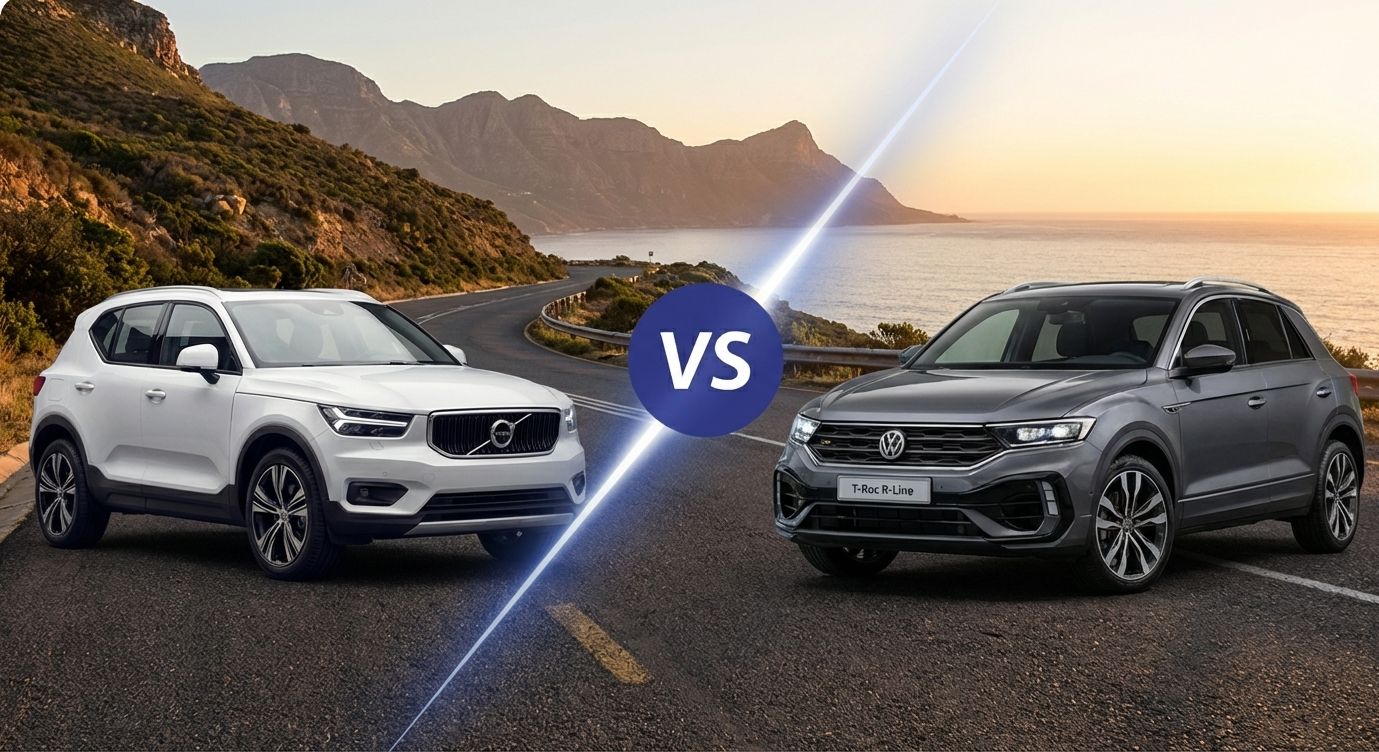
Undecided between a Volvo XC40 and a VW T-Roc? Our comparison will help you choose. Discover the main differences, real-world impressions, and a clear verdict.
Apr 14, 2026
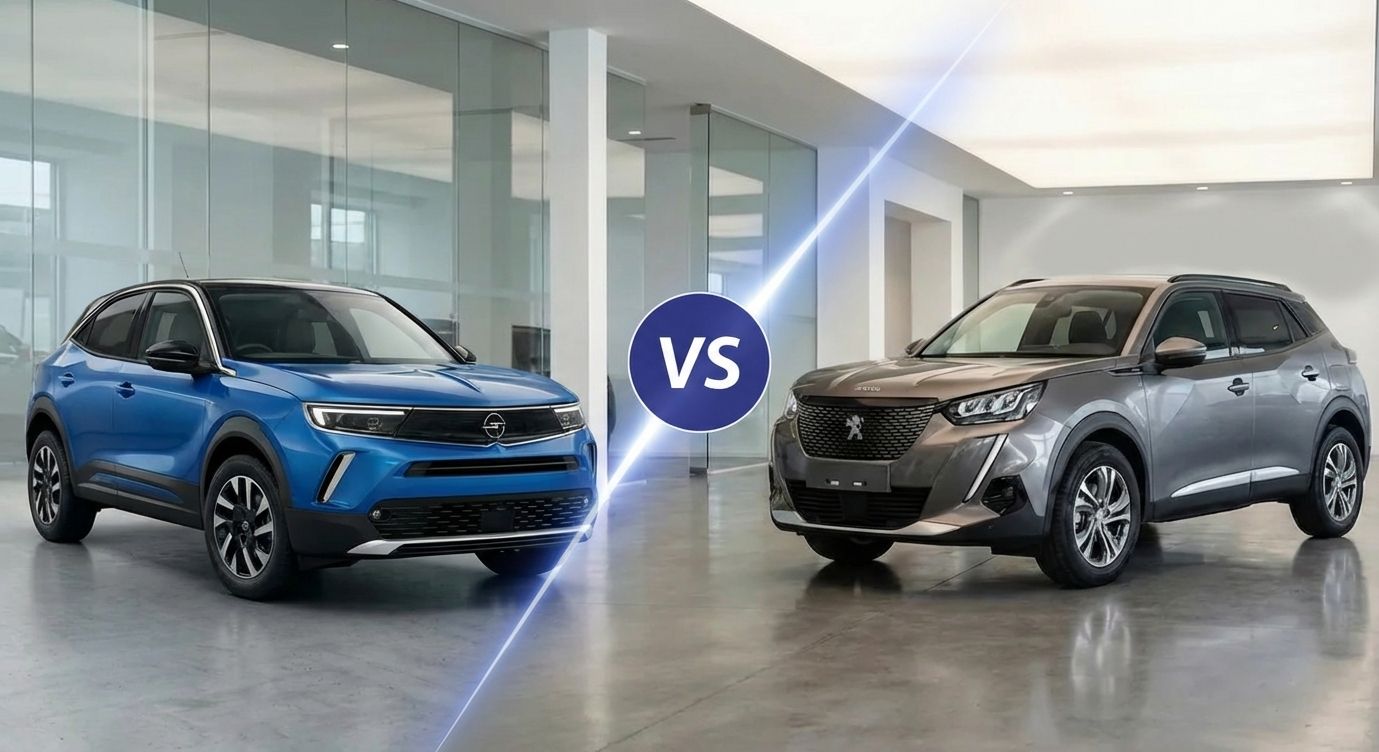
Opel Mokka vs Peugeot 2008. A detailed comparison of engines, design, and practicality. Find out which stylish SUV is the best choice for you.
Apr 14, 2026