Car battle
Audi Q3 vs. BMW X1: A Complete 2025 Comparison
Audi Q3 vs BMW X1: Detailed comparison of design, performance, and practicality. Find out which premium SUV is the right choice for you in our verdict.
Apr 14, 2026
Articles
Car battle
Opel Mokka vs Peugeot 2008. A detailed comparison of engines, design, and practicality. Find out which stylish SUV is the best choice for you.
April 14, 2026
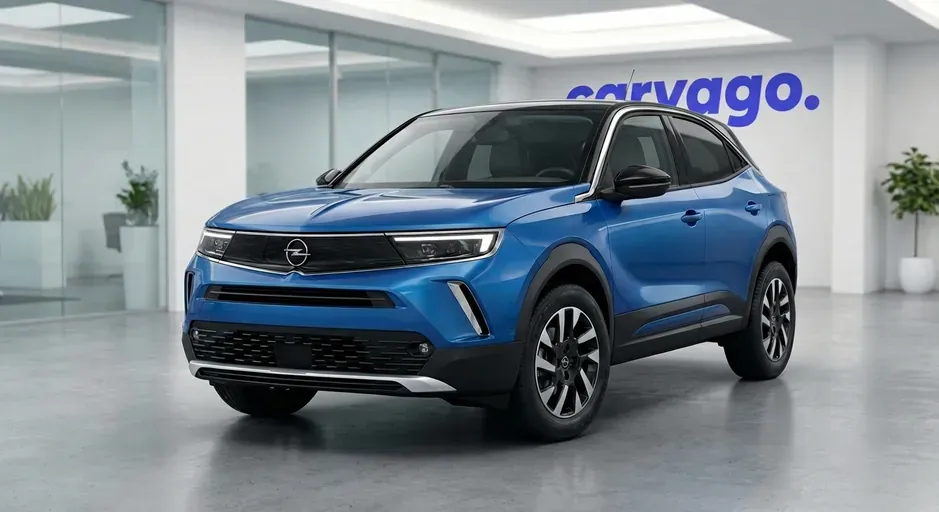
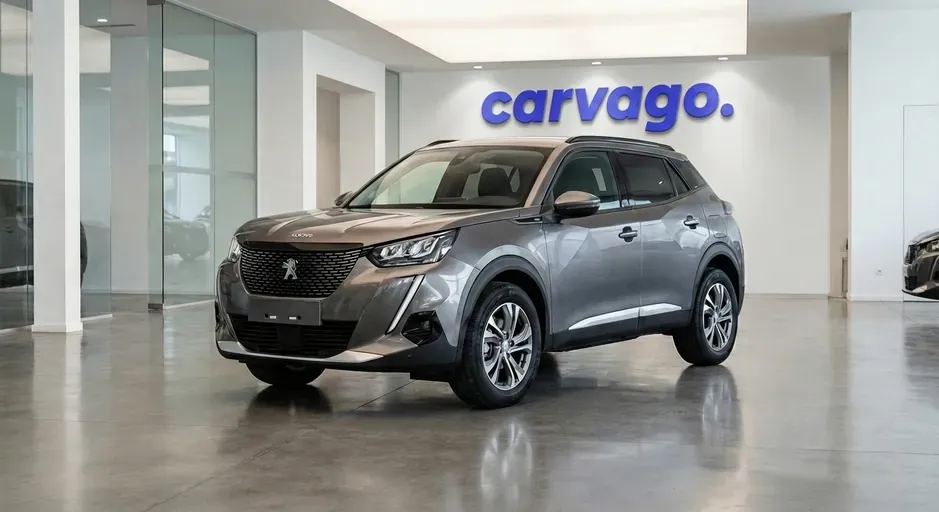
The Opel Mokka, also known as the Vauxhall Mokka in the British market, enters the fray as a representative of German design with a bold and unmistakable face. It is pitted against its French corporate sibling, the Peugeot 2008, which entices with its futuristic interior and elegant curves. Although both cars share the same technical foundation, each offers a unique perspective on what a modern urban crossover should look like, and we will now take a detailed look at which one might be the right choice for you.
Although the Opel Mokka and Peugeot 2008 fall into the same category of small urban SUVs, it is clear at first glance that each targets a slightly different customer. The main difference lies in the overall length of the body. At 4300 mm, the Peugeot 2008 is a noticeable 15 centimetres longer than the Opel Mokka, which measures 4151 mm. This difference is very apparent in practice and is one of the key factors when choosing.
The greater length of the Peugeot 2008 translates directly into a more spacious interior and a larger boot, making it a more practical choice for smaller families. In contrast, the Opel Mokka, with its more compact dimensions, is better suited to dense city traffic, where the driver will appreciate easier manoeuvrability and simpler parking in tight spaces. The choice between these two cars thus depends on whether you prefer interior space or agility in the city streets.
The longer body of the Peugeot is also supported by a larger wheelbase, which is almost 5 cm longer than the Mokka's. This has a positive effect, especially on the legroom for rear-seat passengers. The difference in width is minimal, with the Mokka being less than two centimetres wider, which is almost unnoticeable in practice. The height of both cars is virtually identical. The Peugeot therefore makes better use of its larger footprint for crew comfort, while the Opel bets on maximum compactness.
| Parameter | Opel Mokka (B) | Peugeot 2008 (2nd generation) |
|---|---|---|
| Length (mm) | 4151 | 4300 |
| Width (mm) | 1785 | 1770 |
| Height (mm) | 1534 | 1530 |
| Wheelbase (mm) | 2557 | 2605 |
Practicality and boot size are key parameters for compact SUVs, often deciding the purchase, especially for families. In this head-to-head battle, the Peugeot 2008 has a clear advantage, offering significantly more and more versatile luggage space than its more stylish German competitor.
The second-generation Opel Mokka (produced since 2021) has a basic boot capacity of 350 litres. This is a value that is easily sufficient for a weekly shop or a weekend trip for two. However, the second-generation Peugeot 2008 (on the market since 2020) is noticeably more generous. It offers a basic volume of 405 litres (in pre-facelift versions) up to 434 litres (after the 2023 update), which is enough space even for a family holiday. It is also important to mention that, unlike the Mokka, the electric Peugeot e-2008 retains the same boot volume as the combustion version. In contrast, the Opel Mokka Electric has to sacrifice 40 litres for the batteries, offering only 310 litres.
The biggest difference becomes apparent when the rear seats are folded down. While the Mokka provides a maximum of 1105 litres (1060 for the Electric), the Peugeot 2008 outclasses its rival with a huge 1467 litres. This difference of more than 350 litres in practice means space for several extra suitcases or sports bags and elevates the practicality of the French SUV to the level of cars a class above.
| Parameter | Opel Mokka SUV | Peugeot 2008 SUV |
|---|---|---|
| Basic volume (litres) | 350 (310 for Electric) | 405 - 434 |
| Max. volume with seats folded (litres) | 1105 (1060 for Electric) | 1467 |
When choosing a compact SUV, the ability to tow a trailer is also a factor for many potential buyers. Whether it's a small caravan for weekend trips or a trailer for hauling garden materials, towing capacity is an important practical parameter. In the case of the Opel Mokka and Peugeot 2008, however, the situation is very evenly matched, and choosing one model over the other based on this criterion will not be easy.
Both cars, the Opel Mokka (generation B, from 2021) and the Peugeot 2008 (2nd generation, from 2020), offer almost identical values for their main combustion engines. Both petrol and diesel versions can handle a braked trailer weighing up to 1200 kg. This value is standard in the segment and will suffice for most common needs, such as attaching a smaller caravan or a trailer with a motorcycle.
A slight difference occurs with the hybrid variants. Both the Mokka 1.2 DI Turbo Hybrid and the Peugeot 2008 1.2 Hybrid have their towing capacity slightly reduced to 1100 kg. Crucial information for those interested in eco-friendly operation is that the purely electric versions – the Opel Mokka Electric and the Peugeot e-2008 – are not homologated for towing a trailer, so their maximum weight is zero. For unbraked trailers, the differences are minimal, in the order of tens of kilograms. The Mokka can handle approximately 620–640 kg, while the Peugeot 2008, depending on the engine, can handle 595–640 kg.
In the end, if you are considering a combustion or hybrid version, neither model will give you a significant advantage in terms of towing capacity. The decision thus shifts to other aspects of the vehicle.
| Opel Mokka (petrol/diesel) | 1200 | 620 - 640 |
|---|---|---|
| Peugeot 2008 (petrol/diesel) | 1200 | 595 - 640 |
| Opel Mokka (hybrid) | 1100 | ~620 |
| Peugeot 2008 (hybrid) | 1100 | ~630 |
| Opel Mokka Electric / Peugeot e-2008 | 0 | 0 |
Since the Opel Mokka and Peugeot 2008 share the same CMP platform from the Stellantis group, their engine offerings are nearly identical. This is great news for buyers, as in both cases, they get modern and efficient power units. The choice, therefore, focuses more on subtle nuances in available power outputs and on your preferred type of powertrain – petrol, diesel, or purely electric. Both models primarily rely on the acclaimed 1.2-litre turbocharged three-cylinder engine, previously offered an economical 1.5-litre diesel, and have had a fully electric version in their portfolio from the start. Recently, modern mild-hybrid variants have also enriched the lineup.
The engine range for the Mokka is straightforward and covers all key requirements. The foundation is the 1.2 DI Turbo petrol three-cylinder engine in two power versions. For drivers with high annual mileage, an economical 1.5 Diesel four-cylinder engine was available in the first years of production (until around 2023). A major attraction is the purely electric version, the Mokka Electric, which was later updated with a more powerful motor and a larger battery for a longer range. The latest addition is a mild-hybrid version that reduces fuel consumption in the city.
| Engine Type | Fuel | Power (kW) | Torque (Nm) | Transmission |
|---|---|---|---|---|
| 1.2 DI Turbo | Petrol | 74 | 205 | 6-speed manual |
| 1.2 DI Turbo | Petrol | 96 | 230 | 6-speed manual / 8-speed automatic |
| 1.5 Diesel | Diesel | 81 | 250 | 6-speed manual |
| Hybrid 48V | Petrol | 100 | 230 | 6-speed dual-clutch |
| Electric | Electric | 100 | 260 | Automatic |
| Electric (Long Range) | Electric | 115 | 260 | Automatic |
The Peugeot 2008 uses identical engines, but in the past, it offered a slightly wider range of power outputs, especially for the 1.2 PureTech petrol engine. It was also available in a top version with 155 hp, which the Mokka did not offer. Here too, the economical 1.5 BlueHDi diesel engine was gradually phased out (around 2023) and is now only available on the used car market. The electric e-2008 mirrors the development of the Mokka Electric, including the later introduction of a more powerful version with an extended range. Peugeot also recently added a modern hybrid system to its lineup.
| Engine Type | Fuel | Power (kW) | Torque (Nm) | Transmission |
|---|---|---|---|---|
| 1.2 PureTech 100 | Petrol | 74 | 205 | 6-speed manual |
| 1.2 PureTech 130 | Petrol | 96 | 230 | 6-speed manual / 8-speed automatic |
| 1.2 PureTech 155 | Petrol | 114 | 240 | 8-speed automatic |
| 1.5 BlueHDi 110 | Diesel | 81 | 250 | 6-speed manual |
| 1.5 BlueHDi 130 | Diesel | 96 | 300 | 8-speed automatic |
| Hybrid 136 | Petrol | 100 | 230 | 6-speed dual-clutch |
| e-2008 | Electric | 100 | 260 | Automatic |
| e-2008 (156hp) | Electric | 115 | 260 | Automatic |
Choosing the right engine is key to long-term satisfaction with a car. Although the Opel Mokka and Peugeot 2008 are built on the same technical platform and share nearly identical power units, their availability and transmission combinations have varied slightly over the years. Our recommendations are based on a combination of performance, real-world fuel consumption, owner feedback, and mechanical reliability.
This power unit represents the ideal compromise between dynamics and running costs for the Mokka. With 130 hp, the turbocharged three-cylinder offers enough power for brisk city driving, confident overtaking on country roads, and comfortable motorway travel. The engine features a respectable torque of 230 Nm available at low revs, which contributes to a feeling of flexibility. Real-world fuel consumption ranges between 6 and 7 litres per 100 km with a normal driving style.
The biggest and well-known risk of this engine (internal designation EB2) is its design with a timing belt running in an oil bath. During frequent short trips or if oil change intervals are not followed and the wrong specification is used, the belt can degrade. Its particles can then clog the oil pump strainer, leading to a loss of oil pressure and, in the worst case, catastrophic engine failure. For a used car buyer, it is therefore absolutely essential to check the service history and ensure that oil of the correct specification (e.g., Total Quartz Ineo First 0W-30) was always used and changed on time. This engine is thus an ideal choice for drivers who cover mixed routes and whose car regularly warms up sufficiently. For those who drive tens of thousands of kilometres annually, the economical 1.5 Diesel (81 kW) engine was also worth considering, but its sale was discontinued in 2023.
€20,000.
€17,000 - €21,000+ |
While the Peugeot 2008 holds its value slightly better and its price reflects a more premium focus and richer equipment, the Opel Mokka is a more pragmatic choice. It offers very similar technology and driving characteristics, but often at a slightly more favourable price. A difference of a few thousand euros can be a deciding factor for many buyers. If your main criterion is budget and the best possible price-to-utility ratio, the Mokka will likely be the slight favourite. However, if you appreciate design details and are willing to pay extra for them, the Peugeot 2008 will not disappoint.
Safety is a key factor when choosing a family car, and both the Opel Mokka and Peugeot 2008 have undergone Euro NCAP crash tests. However, it is important to view the results in the context of when the tests were conducted. The methodology is constantly becoming stricter, and percentage ratings from different years cannot be directly compared.
The Opel Mokka was tested by Euro NCAP in 2021 and received four stars. The tests were conducted under a newer, more demanding methodology that places greater emphasis on active assistance systems and the protection of vulnerable road users. The Mokka achieved solid results in adult occupant protection (73%) and child occupant protection (75%). In the category of protecting vulnerable road users, such as pedestrians and cyclists, it scored 58%, and for its assistance systems, it received 64%. These values reflect modern standards, although the absence of some more advanced assistants, such as for cyclist protection, prevented it from earning a fifth star.
The Peugeot 2008 underwent Euro NCAP tests in 2019, and its rating is specific. Depending on the equipment, it received either four or five stars. The version with standard equipment achieved four stars, while the model equipped with the optional Safety Pack earned a full five stars. This pack includes a more advanced autonomous emergency braking system with pedestrian and cyclist detection. The better version achieved an excellent 93% for adult protection, 84% for child protection, 73% for vulnerable road user protection, and 73% for assistance systems. The standard version scored 91% for adult protection, 84% for child protection, but only 62% for pedestrian protection and 68% for assistants.
Although the five-star Peugeot 2008 (with the optional pack) shows higher percentage figures, it must be emphasised that it was tested according to older and less demanding criteria from 2019. The Opel Mokka was tested in 2021, when the requirements for assistance systems and protection in more complex crash scenarios were higher. For a used car buyer, this means that even the four-star Mokka offers a very high and modern standard of safety. While the Peugeot 2008 with full safety equipment is a step ahead on paper, it is crucial to verify whether a specific car is actually equipped with it.
| Parameter | Opel Mokka | Peugeot 2008 (Safety Pack) |
|---|---|---|
| Year of testing | 2021 | 2019 |
| Adult occupant protection | 73 % | 93 % |
| Child occupant protection | 75 % | 84 % |
| Vulnerable road user protection | 58 % | 73 % |
| Assistance systems | 64 % | 73 % |
In addition to standard equipment, each model offers several unique features that may be decisive for the customer. While Opel focuses on bold design and clear digitalisation, Peugeot counters with a futuristic interior concept and sophisticated details.
The second-generation Opel Mokka differs from its French sibling primarily through its straightforward and minimalist approach, both in its design and interior.
The Peugeot 2008 tries to impress primarily with its sophisticated and driver-oriented interior and its elegant, almost aggressive exterior.
Advantages:
Disadvantages:
Advantages:
Disadvantages:
Based on our own technical car inspections, failure statistics, and feedback from owners, we have compiled an overview of the most common problems that used car buyers should watch out for. Although the Mokka and the 2008 share the same technical platform, they exhibit both specific and common ailments.
The second-generation Opel Mokka is generally considered more reliable than its predecessor, but it still has certain problems, many of which it shares with its French sibling.
Summary for the Opel Mokka: The problems mostly concern minor electronic faults and the 1.2 PureTech engine, where honest and regular maintenance is key. These are not major flaws, but they require attention when buying.
The Peugeot 2008 shares most of its technology with the Mokka, and therefore the list of potential problems is very similar. However, some manifest more frequently or in a different form.
Summary for the Peugeot 2008: As with the Mokka, the main bogeyman here is the 1.2 PureTech engine and its specific maintenance requirements. Other problems are of a more minor nature and relate to electronics and occasional interior build quality issues. A careful check of the service history is key.
A thorough inspection is crucial when buying a used car. Although both models are considered relatively reliable, they have their specifics that are good to focus on. A thorough independent vehicle technical inspection can save you future worries and unexpected expenses.
The Peugeot 2008 offers a more spacious luggage compartment with a volume of 434 litres. In contrast, the Opel Mokka has a smaller boot with a volume of 350 litres. For families needing more cargo space, the 2008 model is the more practical choice.
Both models use very similar technology from the Stellantis group, including identical engines like the 1.2 PureTech/Turbo petrol engine. In terms of reliability, both cars are similar, although some statistics slightly favor the Peugeot. The choice of engine will therefore be more a matter of preferred performance than concerns about reliability.
The Peugeot 2008 is longer overall and has a longer wheelbase, which has a positive effect on the interior space. Rear-seat passengers will thus have more legroom in the Peugeot. The Mokka is more compact and slightly more conservative with its interior space.
The Opel Mokka bets on a bold and modern design with its characteristic "Vizor" front grille. The Peugeot 2008 has a more elegant and sophisticated feel. In terms of driving, the Mokka is perceived as slightly more agile and direct in its steering, while the 2008 focuses more on comfort and a smoother ride.
For family use, the Peugeot 2008 appears to be the more practical choice. It offers a larger boot and a more spacious interior for rear-seat passengers. The Opel Mokka is an excellent choice for individuals or couples who don't need maximum space and appreciate its distinctive style and agile driving characteristics.
Sources: ADAC, motor1.com, topgear.com, insideevs.com, wardsauto.com, cleantechnica.com
This article was prepared using artificial intelligence tools. The section guarantor is Petr Dušek.
Audi Q3 vs BMW X1: Detailed comparison of design, performance, and practicality. Find out which premium SUV is the right choice for you in our verdict.
Apr 14, 2026
BMW X1 vs. Volvo XC40: Which premium SUV is better for you? Our detailed comparison and verdict will help you make the final decision.
Apr 14, 2026
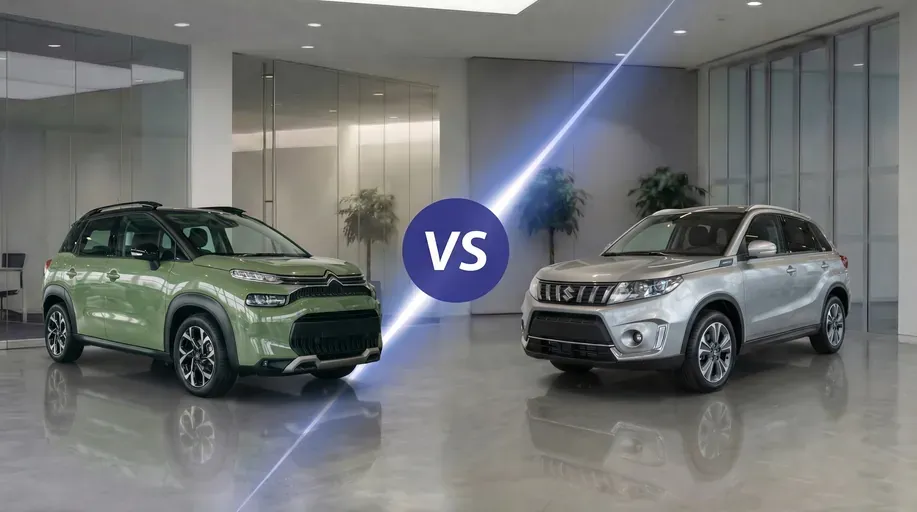
Detailed comparison of used SUVs Citroën C3 Aircross and Suzuki Vitara. Find out the differences in engines, equipment, or reliability and read our final verdict.
Apr 13, 2026