Car battle
Audi Q3 vs. BMW X1: A Complete 2026 Comparison
Audi Q3 vs BMW X1: Detailed comparison of design, performance, and practicality. Find out which premium SUV is the right choice for you in our verdict.
Oct 22, 2026
Articles
Car battle
Nissan Juke vs Opel Mokka: A detailed comparison of design, ride, and features. Our verdict will help you choose the right compact crossover.
October 22, 2026
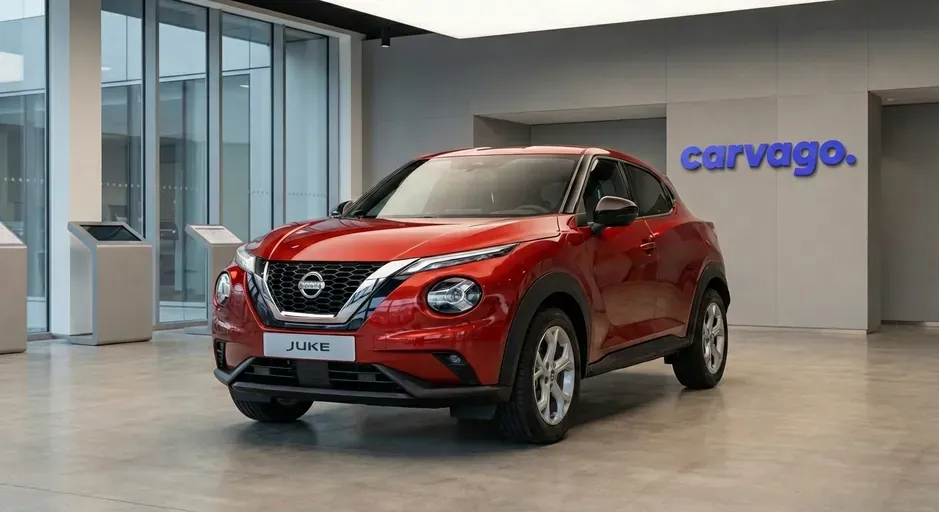
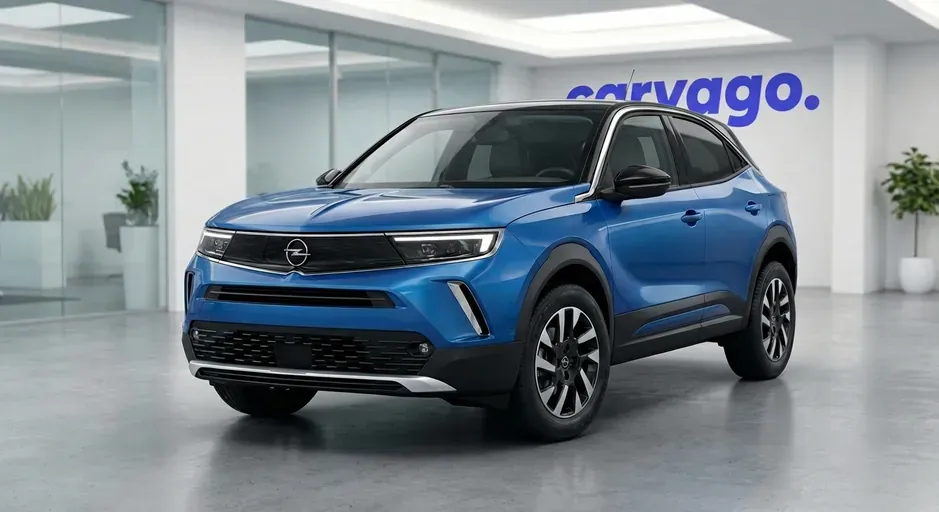
The Nissan Juke is a bold crossover that has always stood out from the crowd with its unique and often polarizing design, and its second generation confidently continues this trend. Against it stands the Opel Mokka, which in its latest generation has undergone a dramatic transformation, introducing a completely new design language for the brand, and is also known in the UK as the Vauxhall Mokka. Let's take a detailed look at how these two stylish rivals stack up against each other and which one might be the right choice for you.
When we place the Nissan Juke and the Opel Mokka side by side, it's clear at first glance that they each target a slightly different customer, even with their dimensions. The second-generation Nissan Juke (F16) is slightly larger in all respects than its German competitor. This gives it a more robust appearance and promises more interior space, which families will particularly appreciate.
The second-generation Opel Mokka (B), on the other hand, focuses on a more compact and agile take on the urban crossover. It is shorter, narrower, and, above all, significantly lower, which gives it a sportier silhouette. This difference is not only noticeable when parking in crowded streets but also in the overall driving experience, which feels more agile.
The biggest difference is in length and height. The Juke is 59 mm longer, and its wheelbase has grown by a noticeable 79 mm. This has a positive effect, especially on legroom for rear-seat passengers. The 61 mm greater height also means a more airy cabin and better visibility from the car. The choice is therefore clear: if you prefer spaciousness and the feel of a larger car, the Juke is the right choice. If easy manoeuvrability and a sportier style are your priorities, the Mokka will be a better partner.
| Parameter | Nissan Juke SUV | Opel Mokka SUV |
|---|---|---|
| Length (mm) | 4210 | 4151 |
| Width (mm) | 1800 | 1785 |
| Height (mm) | 1595 | 1534 |
| Wheelbase (mm) | 2636 | 2557 |
Practicality and luggage space are key parameters in the compact SUV segment, and this is where the Juke and Mokka differ significantly. For families or active individuals who often transport sports equipment or bulkier cargo, the size of the boot can be a deciding factor. At first glance, it is clear that the Nissan Juke offers a more generous solution in this regard.
In a direct comparison of the standard combustion engine versions, the Juke has a clear advantage. Its luggage compartment offers a basic volume of 422 litres, which is an above-average value in its class. In contrast, the Opel Mokka has a more modest volume of 350 litres. The 72-litre difference in practice means space for one smaller suitcase or several extra shopping bags. The difference is even more pronounced after folding down the rear seats, where the Juke offers up to 1305 litres, while the Mokka only provides 1105 litres. This 200-litre difference is already noticeable, for example, when moving furniture or transporting bicycles.
The situation changes slightly with the electrified versions. The hybrid drive in the Nissan Juke has taken its toll in the form of a reduction in boot space to a still-solid 354 litres, almost matching the combustion-engine Mokka. On the other hand, the purely electric Mokka Electric has the smallest boot of the entire comparison due to the batteries located in the floor – a mere 310 litres. For customers, the choice is therefore clear: if the absolute priority is maximum boot volume, the standard petrol Juke wins. If you are considering an electric variant, you have to make do with the smallest space in the Mokka.
| Parameter | Nissan Juke SUV/Off-road | Opel Mokka SUV/Off-road |
|---|---|---|
| Basic volume (litres) | 422 (Hybrid: 354) | 350 (Electric: 310) |
| Maximum volume with seats folded (litres) | 1305 (Hybrid: 1237) | 1105 (Electric: 1060) |
The ability to tow a trailer may not be a top priority for small urban crossovers, yet it can be a deciding factor for many buyers. Whether you need to haul away garden waste or attach a small caravan for a weekend trip, the differences between the Nissan Juke and the Opel Mokka are worth noting.
At first glance, the two cars are very similar. The second-generation Nissan Juke (F16) with the standard 1.0 DIG-T petrol engine offers a slightly higher maximum braked trailer weight of 1250 kg. The second-generation Opel Mokka (B) with the 1.2 Turbo petrol engines and the 1.5 Diesel lags only slightly behind with a value of 1200 kg. The 50 kg difference plays almost no role in practice, and both values are sufficient for smaller caravans or standard trailers.
However, significant differences emerge with the electrified versions. If you are considering a hybrid Nissan Juke, be prepared for a major limitation – it can only tow 750 kg. This is only enough for the lightest unbraked trailers. In contrast, the Opel Mokka offers a fully electric version, which officially cannot tow a trailer at all, and a mild-hybrid variant with a capacity of 1100 kg, which is still a very usable value.
For those interested in the highest possible towing capacity, the Juke is the slight winner with standard combustion engines. However, if you prefer an electrified powertrain, the situation is more complex. While the Mokka Electric can't tow anything, its mild-hybrid version is significantly more practical than the full-hybrid Juke.
| Model and Engine | Braked trailer weight (kg) | Unbraked trailer weight (kg) |
|---|---|---|
| Nissan Juke 1.0 DIG-T (84 kW) | 1250 | 643 |
| Nissan Juke 1.6 Hybrid (69 kW) | 750 | ~500 |
| Opel Mokka 1.2 DI Turbo (74-100 kW) | 1200 | 620-640 |
| Opel Mokka 1.5 Diesel (81 kW) | 1200 | 640 |
| Opel Mokka 1.2 DI Turbo Hybrid (100 kW) | 1100 | ~600 |
| Opel Mokka Electric | - | - |
When it comes to engine choice, the Nissan Juke and Opel Mokka take completely different paths. While the Juke bets on simplicity, offering only two, albeit well-thought-out, variants, the Mokka tries to appeal to the widest possible range of customers with a diverse palette of petrol, diesel, and electrified powertrains. This differing strategy is key – the Juke is a straightforward choice, whereas the Mokka requires the buyer to think more deeply about their needs.
For the second-generation Juke (from 2019), Nissan significantly simplified its lineup. The core is a turbocharged three-cylinder petrol engine, which is perfectly adequate for everyday driving. An innovative hybrid version was added later, which excels primarily in urban traffic.
| Engine Type | Fuel | Power (kW) | Torque (Nm) | Transmission |
|---|---|---|---|---|
| 1.0 DIG-T | Petrol | 84 | 200 | 6-speed manual / 7-speed DCT |
| 1.6 Hybrid | Petrol/Electric | 105 (system) | 148 (comb. engine) / 205 (electric motor) | multi-modal automatic |
The second-generation Opel Mokka (from 2020) uses the Stellantis group platform, which allows it to offer a wide range of powertrains. Customers can choose between several power variants of the petrol engine, an economical diesel, a mild-hybrid, and a purely electric version.
| Engine Type | Fuel | Power (kW) | Torque (Nm) | Transmission |
|---|---|---|---|---|
| 1.2 Turbo | Petrol | 74 | 205 | 6-speed manual |
| 1.2 Turbo | Petrol | 96 | 230 | 6-speed manual / 8-speed automatic |
| 1.5 Diesel | Diesel | 81 | 250 | 6-speed manual |
| 1.2 Hybrid 48V | Petrol/Electric | 100 | 230 | 6-speed e-DCT |
| Electric | Electric | 100 | 260 | automatic |
| Electric Long Range | Electric | 115 | 260 | automatic |
The choice of engine between these two models clearly defines the driver's priorities.
Choosing the right engine is key to long-term satisfaction with a car. Our recommendations are based on a combination of performance, real-world fuel consumption, owner feedback, and mechanical reliability. While the second-generation Nissan Juke focuses on simplicity with one main petrol engine and a later hybrid, the Opel Mokka offers a wider range of power units from the Stellantis group.
In the second-generation Nissan Juke (from 2019), the turbocharged one-litre three-cylinder is practically the only choice, not counting the later-introduced hybrid version. Fortunately, it is a very successful engine that is perfectly adequate for a car of an urban and suburban character. The unit with the internal code HR10DDT, developed in collaboration with Renault, offers 84 kW (114 hp) of power and 200 Nm of torque (with an overboost function), which ensures pleasant dynamics, especially at low and medium revs. In real-world operation, expect fuel consumption between 6 and 7 litres per 100 km; in the city, it's possible to drive for less. The engine is equipped with a timing chain and direct injection, which is good news in terms of longevity. It avoids serious systemic problems, but like any direct-injection engine, it can suffer from carbon deposit build-up during frequent short trips. Slower throttle response when starting off, especially in the version with the automatic DCT gearbox when cold, is more of a characteristic than a flaw. This engine is ideal for drivers looking for a versatile and reliable powertrain for daily driving and occasional longer journeys.
The more powerful version of the turbocharged 1.2 Turbo three-cylinder, known as PureTech from the Stellantis group (formerly PSA), is the best choice for the Opel Mokka. With 96 kW (130 hp) of power and 230 Nm of torque, it gives the lightweight crossover very brisk dynamics that surpass the on-paper similarly powerful Juke. The engine is refined, has a characteristic sound, and forms a harmonious whole in conjunction with the eight-speed automatic transmission. In practice, fuel consumption is around 6.5 to 7 l/100 km. However, there is one big 'but' that every prospective used car buyer must know about – the timing belt that runs in an oil bath. This solution is extremely sensitive to the quality and specification of the engine oil. Using the wrong oil or extending the replacement intervals leads to the degradation of the belt, whose particles can clog the oil pump strainer and cause fatal engine damage. When buying, it is absolutely essential to check the service history and insist on using only the prescribed oil. Many service centres recommend shortening the timing belt replacement interval to 60-80 thousand km as a precaution. This engine is therefore intended for drivers who appreciate its liveliness and dynamics but are aware of the need for careful and uncompromising maintenance.
The on-paper consumption figures provided by manufacturers are one thing, real-world operation is another. To get the most accurate picture, we looked at data from real drivers, for example, from extensive databases like Germany's Spritmonitor.de. This data often better reflects what fuel costs you can actually expect with a used car. We focused on the most common engine versions of the generations that are around four years old – the Nissan Juke F16 (from 2019) and the Opel Mokka B (from 2020).
| Model and Engine | Average Real-World Consumption (l/100 km) |
|---|---|
| Nissan Juke 1.0 DIG-T 84 kW | 6.4 |
| Nissan Juke 1.6 Hybrid 105 kW | 5.3 |
| Opel Mokka 1.2 Turbo 96 kW | 6.5 |
| Opel Mokka 1.5 Diesel 81 kW | 4.8 |
Looking at the numbers, it is clear that both models offer economical variants, but each chooses a different strategy. The basic turbocharged three-cylinder petrol engines, the 1.0 DIG-T in the Juke and the 1.2 Turbo in the Mokka, are very similar in real-world consumption, hovering around 6.5 litres per 100 km in combined operation. So, don't expect a major difference in this area.
The differences become apparent with alternative powertrains. The Opel Mokka has retained a diesel engine, which will please drivers with high annual mileage who often drive on motorways. The 1.5 Diesel engine will reward them with excellent fuel consumption, which in reality easily stays below five litres.
Nissan, on the other hand, has completely abandoned diesel and offers a full hybrid system as an economical alternative. Its strength is particularly evident in urban and suburban traffic, where frequent use of the electric drive brings consumption down to the 5-litre mark. On the motorway, however, its advantage over diesel diminishes, and consumption can be higher.
Fuel consumption is therefore an important factor between these crossovers. Your choice should be guided primarily by where you plan to drive most often. For long-distance routes, the diesel Mokka is the more economical choice, while for those who mainly drive in the city and its surroundings, the Juke Hybrid may be a more economical and refined option.
When looking at the used car market, the Nissan Juke and Opel Mokka are in similar price ranges, but with slight differences that can influence buyers' decisions. Generally, the Opel Mokka holds a slightly higher price as a used car than a comparably old and equipped Nissan Juke.
For models that are approximately four years old, i.e., cars from 2021 to 2022, the price gap between the two models widens slightly.
Price differences are not solely determined by age and mileage. For both models, higher trim levels with features like LED lights, navigation, parking cameras, or better upholstery hold their value better. Similarly, cars with an automatic transmission tend to be more expensive.
While the Nissan Juke offers a turbocharged 1.0-litre three-cylinder 1.0 DIG-T as its base engine, the Opel Mokka counters with a slightly larger 1.2-litre Turbo. However, differences in engine options do not have as significant an impact on the final used car price as the overall condition, history, and trim level.
Ultimately, the Nissan Juke is often the more affordable choice, while the Opel Mokka justifies its slightly higher price with a more modern interior concept and often richer equipment at a given price point.
Although both models have undergone Euro NCAP crash tests, their results and the context of the testing differ significantly. A direct comparison of percentage results is difficult because each car was rated in a different year and according to different, stricter criteria. The Euro NCAP methodology is constantly being tightened, making newer tests more demanding to achieve a high rating.
The second-generation Nissan Juke underwent Euro NCAP tests in 2019 and came away with a full five-star rating. It achieved excellent results, particularly in adult occupant protection, where it scored 94%, which remains a top-tier value even years later. It also performed very well in child occupant protection (85%) and vulnerable road user protection (81%). The score for safety assist systems (73%) reflects the 2019 standards, which included features like an emergency braking system and lane-keeping assist.
The Opel Mokka was tested in 2021 under an updated and more stringent methodology. It received four stars. The lower overall rating is partly due to the more demanding requirements for modern assistance systems and the protection of pedestrians and cyclists. It scored 73% for adult occupant protection and 75% for child occupant protection. The difference was more pronounced in the protection of vulnerable road users (58%) and in the safety assist systems rating (64%), where more advanced scenarios were already being tested.
Although the Opel Mokka was tested later under more demanding criteria, the Nissan Juke shows significantly higher percentage scores in all key areas. Its results in adult and child protection are commanding, and its overall five-star rating gives it a clear lead in passive safety. While the Mokka meets modern standards, its four stars and noticeably lower scores across categories place it second in this direct comparison.
| Parameter | Nissan Juke | Opel Mokka |
|---|---|---|
| Year of Testing | 2019 | 2021 |
| Overall Rating | ★★★★★ | ★★★★☆ |
| Adult Occupant Protection | 94 % | 73 % |
| Child Occupant Protection | 85 % | 75 % |
| Vulnerable Road User Protection | 81 % | 58 % |
| Safety Assist Systems | 73 % | 64 % |
In addition to standard equipment, each model offers several unique features that can be decisive for the customer, and each approaches this in its own way.
The Nissan Juke has always tried to stand out, and the second generation continues this trend. It focuses primarily on extravagant design and technologies that make time spent on board more enjoyable.
The Opel Mokka relies on a minimalist yet technologically advanced approach. Its main weapon is the modern concept of the dashboard and a clean design that is reflected in the overall user experience.
Advantages:
Disadvantages:
Advantages:
Disadvantages:
Based on our own CarAudit inspections, breakdown statistics from the German TÜV, and feedback from owners, we have compiled an overview of the most common problems that buyers of used cars should look out for. Although both models are relatively modern, a few typical weaknesses have already emerged.
The second generation of the Nissan Juke is generally perceived as more reliable than its predecessor. Most problems relate to minor electronic flaws or software bugs, which the manufacturer has gradually addressed. Nevertheless, it is good to check some areas more thoroughly.
Summary for the Nissan Juke: Problems with the second-generation Juke are rather isolated and often solvable with a software update. These are not major mechanical flaws. Nevertheless, a thorough comprehensive vehicle inspection and a check of the service history are fundamental for peace of mind.
The second-generation Opel Mokka shares its technology with other models from the Stellantis group (e.g., Peugeot 2008), which means they have common strengths and weaknesses. With the Mokka, special attention should be paid primarily to the engine and electronics.
Summary for the Opel Mokka: The Mokka is an attractively designed car, but the 1.2 PureTech engine poses a serious risk if the previous owner neglected maintenance. A thorough check of the service history and technical condition is an absolute must here. Other problems are of a more minor nature, but they can be annoying.
When buying a used car, a thorough inspection is key. Here are a few specific points to focus on with these two models to avoid potential problems.
The Nissan Juke has a slightly larger luggage compartment, offering 422 litres in its basic configuration. The Opel Mokka provides 350 litres, but stands out with a more practical shape and a wider opening. In terms of passenger space, both cars are very similar, but the Mokka can feel more airy thanks to its more conventional interior design.
The Nissan Juke focuses on a more agile and fun driving experience, which you'll appreciate especially in the city and on country roads. The Opel Mokka, on the other hand, offers a calmer and more comfortable ride, which is better suited for longer journeys and absorbing bumps. Its steering is calmer and the chassis feels more mature overall.
According to TÜV Report reliability statistics, the Opel Mokka generally shows fewer faults than the Nissan Juke in comparable age categories. While the Mokka often ranks in the top third of the charts, the Juke tends to be in the bottom half. For both models, however, regular maintenance and a verifiable service history are key.
The Opel Mokka offers a wider range of engines, including petrol, diesel, and a purely electric version, the Mokka-e. The second-generation Nissan Juke (from 2019) focuses primarily on a turbocharged one-litre three-cylinder engine, later supplemented by a full hybrid variant. For those interested in a diesel or an electric car, the Mokka is the only choice.
The Opel Mokka features a modern "Pure Panel" digital dashboard with two connected screens, but retains physical buttons for key functions like air conditioning. The Nissan Juke has a more traditional approach with round air vents and a separate infotainment display, which some may prefer. The Juke also often offers bolder colour combinations and interior personalisation.
Sources: ADAC, evo.co.uk, topgear.com, autonews.com, automobilemag.com, cleantechnica.com
This article was prepared using artificial intelligence tools. The guarantor for this section is Petr Dušek.
Audi Q3 vs BMW X1: Detailed comparison of design, performance, and practicality. Find out which premium SUV is the right choice for you in our verdict.
Oct 22, 2026
BMW X1 vs. Volvo XC40: Which premium SUV is better for you? Our detailed comparison and verdict will help you make the final decision.
Apr 14, 2026
Detailed comparison of used SUVs Citroën C3 Aircross and Suzuki Vitara. Find out the differences in engines, equipment, or reliability and read our final verdict.
Apr 13, 2026