Car battle
Hyundai Tucson vs. Peugeot 3008: A Complete 2025 Comparison
Hyundai Tucson vs Peugeot 3008: A detailed comparison of design, engines, and features. Find out which SUV is the better choice for you in our big test.
Apr 13, 2026
Articles
Car battle
Detailed comparison: Citroën C5 Aircross vs. Seat Ateca. Find out which used SUV offers better comfort and equipment. Read the facts and our final verdict.
April 8, 2026
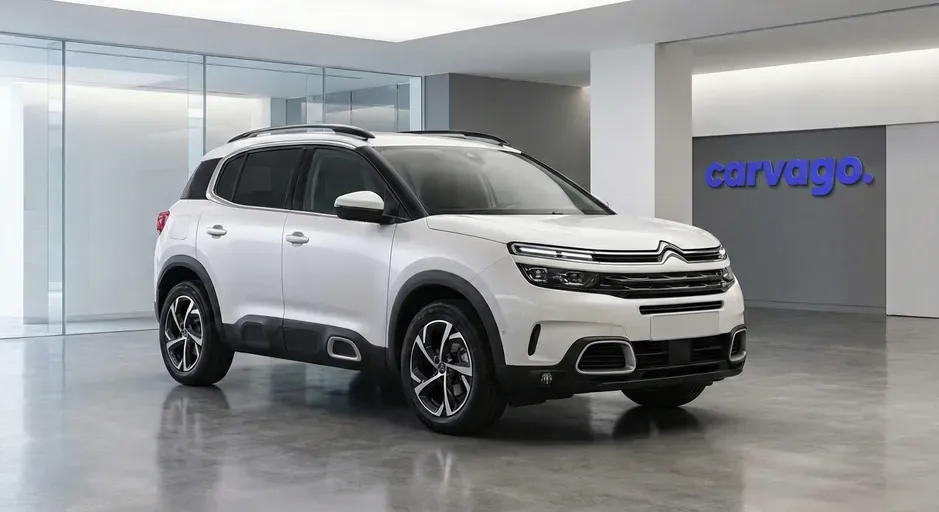
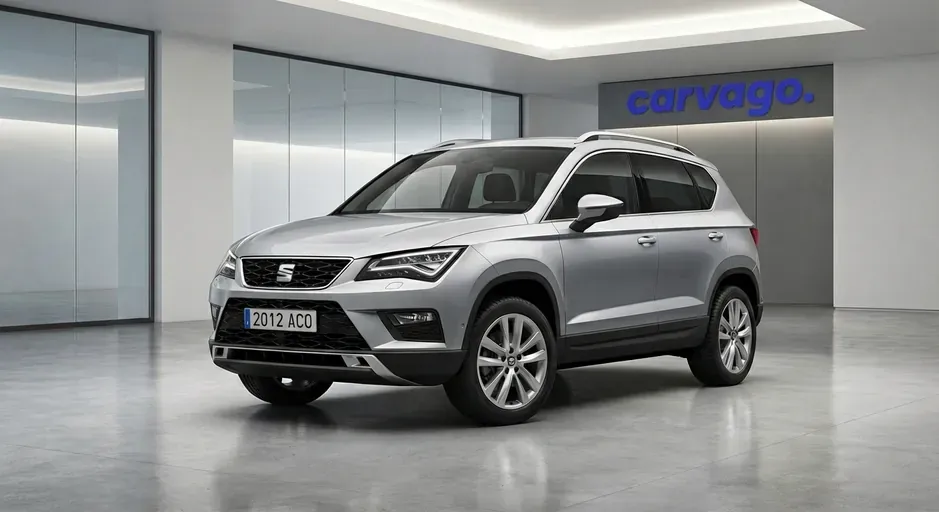
The Citroën C5 Aircross, also sold in selected Asian markets under the names Dongfeng Citroën Tianyi or Tianyi Beyond, represents a distinctive French vision of a compact SUV with a maximum emphasis on smooth ride comfort and avant-garde design. Its challenger today is the Seat Ateca, whose top sports version can also be found on the roads under the independent Cupra Ateca brand. This one, on the other hand, attracts with more dynamic driving characteristics, sharp edges, and proven group technology. In the following lines, we will compare both models in detail and find out which of the two completely different approaches makes more sense when buying a used family car.
Looking at the external dimensions, it is clear at first glance that although both models fall into the popular category of compact SUVs, their creators approached them with a different philosophy. The French representative ranks among the larger cars in its class and bets on a more robust build, while the Spanish competitor keeps its proportions more in check, making it a very agile companion for city traffic. For those interested in a roughly four-year-old used car, this means a clear choice between maximizing interior space and easier parking.
The Citroën C5 Aircross measures 4500 mm in length, surpassing the Seat Ateca by a substantial 119 to 137 mm (the Ateca measures 4363 to 4381 mm depending on the year and version). Even more important, however, is the difference in wheelbase. The French model boasts a value of 2730 mm, which is almost ten centimeters more than the Seat (2630–2638 mm). This value has a positive effect on the Citroën's longitudinal space for rear-seat passengers and contributes to a calmer and smoother ride on the highway. Conversely, the Seat's shorter wheelbase and smaller overall length mean significantly easier maneuvering in narrow underground garages or when parallel parking in tight spots in the city center.
There is also a significant difference in the height of both cars. While the Seat Ateca stays closer to the ground with a height of 1601 to 1611 mm and offers a driving position closer to classic hatchbacks, the Citroën C5 Aircross has grown to a height of 1688 mm. The nearly nine-centimeter taller build gives the Citroën a more majestic "off-road" look and guarantees a higher seating position with an excellent overview of what's happening in front of the car. In terms of width, both competitors are very similar; the C5 Aircross at 1859 mm surpasses the Ateca (1841 mm) by only 18 millimeters, which you will hardly notice in real traffic. Overall, the C5 Aircross is an ideal choice for families looking for an optically and factually larger and smoother car, while the Ateca will appeal to drivers who prefer a more compact, clearer, and more agile format to drive.
| Parameter | Citroën C5 Aircross SUV | Seat Ateca SUV |
|---|---|---|
| Length (mm) | 4500 | 4363 - 4381 |
| Width (mm) | 1859 | 1841 |
| Height (mm) | 1688 | 1601 - 1611 |
| Wheelbase (mm) | 2730 | 2630 - 2638 |
When choosing a family SUV, the luggage compartment plays one of the most important roles, as it directly determines the daily practicality and usability of the car. Whether you plan to regularly transport sports equipment, bulky strollers, or are just looking for a car for comfortable packing for a family holiday, differences in transport capacity can fundamentally affect your user comfort. In short, boot volume is not just a number in the registration document, but a factor that decides how easily you can fit your family life on four wheels. In this regard, the Citroën C5 Aircross and Seat Ateca represent two slightly different philosophies of approach to interior space.
The first-generation Citroën C5 Aircross is known in the compact SUV segment as an exceptionally practical companion that thinks primarily of the family. Its standard luggage compartment offers a generous 580 liters, which represents a difference of 70 liters in favor of the French car compared to its Spanish competitor. The Seat Ateca (5FP generation) has a volume of 510 liters in its basic front-wheel-drive version. Both values are easily sufficient for weekend shopping and longer holidays, but the Citroën also benefits from the presence of three individual and longitudinally sliding rear seats. If you slide them all the way forward, you get up to 720 liters of basic volume, which means space for several extra suitcases. After completely folding the rear backrests, the Citroën's total capacity grows to an impressive 1630 liters, while the Seat Ateca offers a very similar 1604 liters in its maximum configuration.
When buying on the used car market, however, it is necessary to take into account the structural differences of certain engines, which reduce the total boot capacity in both models. The installation of traction batteries in the plug-in hybrid version of the Citroën C5 Aircross (PHEV) reduces the basic space to 460 liters and offers 1510 liters after folding the seats. You will find a similar loss of free space in the Seat Ateca in versions equipped with all-wheel drive (4Drive). Due to the installation of the propeller shaft and rear differential, the basic boot volume is reduced to 485 liters, with the maximum volume falling to 1579 liters. Overall, the Citroën C5 Aircross is the ideal choice for those who require unrivaled variability and absolute family spaciousness. The Seat Ateca, on the other hand, will appeal to buyers who are satisfied with a solid class average and are looking for a reasonable compromise between compact external dimensions and a decent boot.
| Parameter | Citroën C5 Aircross SUV | Seat Ateca SUV |
|---|---|---|
| Basic volume (liters) | 580 | 510 |
| Max. volume with seats folded (liters) | 1630 | 1604 |
Trailer weight, or total towing capacity, is a decisive factor for many drivers. It determines the level of practicality of the vehicle and how much it will limit your plans. When comparing these two compact SUVs, typically sought after in the four-year-old used car market, a significant difference in the philosophy of both brands emerges. While the Spanish representative is considered a robust workhorse built even for very heavy loads, the French one focuses primarily on first-class passenger comfort, which is reflected in its noticeably more modest towing capabilities.
For the base engines of both cars, such as the 1.0 TSI in the Seat or the 1.2 PureTech in the Citroën, the standard braked trailer weight remains at a very similar level of 1300 to 1350 kg. However, the true difference in the character of the cars is only revealed by the more powerful power units. The maximum braked trailer weight for the Seat Ateca with the popular 2.0 TDI engine (110 kW or 140 kW) reaches an impressive 2100 kg. The Citroën C5 Aircross, in its most powerful older 2.0 BlueHDi 180 version, tops out at a maximum of 1650 kg, and if you opt for the more popular economical 1.5 BlueHDi 130 diesel, expect a limit of only between 1250 and 1450 kg.
When buying on the used car market, it is necessary to pay close attention to the specifications of plug-in hybrid engines. If you choose the Citroën C5 Aircross PHEV (in 180 or 225 variants), the maximum permitted trailer weight drops to a modest 1300 kg due to the additional weight of the heavy batteries. The Seat Ateca did not go the plug-in hybrid route in its current generation, which, while it did not bring a purely electric range, preserved high towing capacity across all internal combustion versions.
In everyday operation, these numbers play a huge role. The Citroën C5 Aircross is primarily suitable for shorter hauls and smaller loads. It will easily handle a classic trailer, providing additional space for a few extra suitcases or for hauling garden waste. Its limits are entirely sufficient for weekend shopping and longer holidays, if you spend them, for example, in a tent or an apartment. However, if your priorities include towing a heavy twin-axle caravan, a larger boat, or a horse trailer, the C5 Aircross will no longer suffice. This is where the robust construction of the SEAT Ateca fully excels, providing the driver with significantly greater confidence, stability, and power reserve even when towing a two-ton load.
In terms of towing power, the comparison has a clear winner. Drivers who regularly tow heavy trailers and need to rely 100% on their SUV as a workhorse will clearly appreciate the SEAT Ateca. The Citroën C5 Aircross, on the other hand, will appeal to families primarily looking for a smooth and extremely comfortable ride, who have a tow hitch mainly for the occasional bike rack or small trailer.
| Model and engine | Braked trailer weight (kg) | Unbraked trailer weight (kg) |
|---|---|---|
| Citroën C5 Aircross 1.2 PureTech (96 kW) | 1300 - 1350 | 690 - 750 |
| Citroën C5 Aircross 1.5 BlueHDi (96 kW) | 1250 - 1450 | 730 - 750 |
| Citroën C5 Aircross 2.0 BlueHDi (130 kW) | 1650 | 750 |
| Citroën C5 Aircross Plug-In Hybrid (110 - 133 kW) | 1300 | 750 |
| SEAT Ateca 1.0 TSI (81 - 85 kW) | 1300 | 650 - 680 |
| SEAT Ateca 1.5 TSI ACT (110 kW) | 1600 - 1800 | 690 - 730 |
| SEAT Ateca 2.0 TDI (110 kW) | 1800 - 2100 | 740 - 750 |
| SEAT Ateca 2.0 TDI (140 kW) | 2100 | 750 |
The range of power units for the Citroën C5 Aircross and SEAT Ateca clearly shows the different approach of both carmakers to the compact SUV market, which is key for the buyer's final decision. While the French Citroën has focused on electrification, maximum efficiency, and comfortable travel in recent years, the Spanish SEAT bets on the proven classics from the VW Group with an emphasis on dynamics and versatility. For those interested in an approximately four-year-old used car, this means a clear choice: the C5 Aircross scores with drivers looking for economical plug-in hybrids or refined petrol and diesel engines, but exclusively with front-wheel drive. In contrast, the Ateca offers traditional and highly sought-after internal combustion engines, including powerful two-liter petrol and diesel units, which can be combined with advanced all-wheel drive (4Drive) in more powerful versions. So, if you are looking for low fuel consumption in the city and quiet operation, the Citroën will appeal to you; however, if you prefer confidence in the snow, more frequent highway driving, and a sharper performance, the SEAT is the natural favorite.
Looking at the used car market (especially models around 2021–2022), the backbone of the Citroën C5 Aircross range consists of turbocharged 1.2 PureTech three-cylinder engines and exceptionally economical 1.5 BlueHDi four-cylinder diesel engines. These standard units provide an identical output of 96 kW (130 hp) and can be purchased with either a manual or a very smooth-shifting eight-speed EAT8 automatic transmission. Older and more powerful internal combustion versions – the 1.6 PureTech petrol (133 kW) and the 2.0 BlueHDi diesel (130 kW) – were gradually withdrawn from the range by 2021 and are no longer available on the younger used car market. Their place was taken by electrified variants. Those interested in more ecological operation can choose from advanced plug-in hybrids (PHEV) with a combined output of 133 kW (180 hp) or 165 kW (225 hp). In model years from 2023 onwards, a modern mild-hybrid unit, the Hybrid 136, also appears. However, the entire model range has one major limitation for cottagers and mountain dwellers – regardless of the engine, the C5 Aircross relies exclusively on front-wheel drive.
| Engine type | Fuel | Power (kW) | Torque (Nm) | Transmission |
|---|---|---|---|---|
| 1.2 PureTech 130 | Petrol | 96 | 230 | 6-speed manual / 8-speed EAT8 |
| 1.6 PureTech 180 (discontinued 2021) | Petrol | 133 | 250 | 8-speed EAT8 |
| 1.5 BlueHDi 130 | Diesel | 96 | 300 | 6-speed manual / 8-speed EAT8 |
| 2.0 BlueHDi 180 (discontinued 2020) | Diesel | 130 | 400 | 8-speed EAT8 |
| Hybrid 136 (from 2023) | Petrol (MHEV) | 100 | 230 | 6-speed e-DSC6 |
|---|---|---|---|---|
| Plug-In-Hybrid 180 | Petrol (PHEV) | 133 | 360 | 8-speed e-EAT8 |
| Plug-In-Hybrid 225 | Petrol (PHEV) | 165 | 360 | 8-speed e-EAT8 |
The SEAT Ateca relies almost exclusively on proven Group internal combustion engines without the presence of complex hybrid systems, which suits many used car buyers in terms of predictable service costs. The base for roughly four-year-old vehicles on the market is the 1.0 TSI three-cylinder, however, the much more sought-after is the completely versatile 1.5 TSI four-cylinder with 110 kW (150 hp) and a cylinder deactivation system (ACT) for fuel savings. For motorway drivers with higher annual mileage, the economical 2.0 TDI diesel is the ideal choice. A major advantage of the Ateca over its French rival is the option of 4Drive all-wheel drive. This can typically be found in the top versions – the 2.0 TDI diesel (110 kW) or the dynamically tuned 2.0 TSI petrol (140 kW), which come standard with a lightning-fast seven-speed dual-clutch DSG transmission. Older vehicles from the beginning of production may also offer the smaller 1.6 TDI diesel or 1.4 EcoTSI petrol, which, however, gradually disappeared from the range after 2018 and 2020.
| Engine type | Fuel | Power (kW) | Torque (Nm) | Transmission |
|---|---|---|---|---|
| 1.0 TSI | Petrol | 81 / 85 | 200 | 6-speed manual |
| 1.4 EcoTSI (discontinued 2018) | Petrol | 110 | 250 | 6-speed manual / 7-speed DSG |
| 1.5 TSI ACT | Petrol | 110 | 250 | 6-speed manual / 7-speed DSG |
| 2.0 TSI 4Drive | Petrol | 140 | 320 | 7-speed DSG |
| 1.6 TDI (discontinued 2020) | Diesel | 85 | 250 | 6-speed manual / 7-speed DSG |
| 2.0 TDI | Diesel | 85 / 110 | 300 / 340 | 6-speed manual / 7-speed DSG |
Choosing the right engine is absolutely crucial for a used car for your long-term satisfaction and protection against unexpected service expenses. The following recommendations are based on real owners' experiences, mechanical reliability ratings, actual fuel consumption, and the overall harmony of the powertrain with the character of the car. While the Spanish SUV scores with its lightness and makes the most sense with an agile petrol engine, the French representative is a born long-distance cruiser that best suits an economical diesel.
The Citroën C5 Aircross is synonymous with wafting comfort and soft absorption of motorway kilometres, for which a diesel engine is best suited. The ideal and most widespread candidate on the market for roughly four-year-old used cars (around the 2022 model year) is the 1.5 BlueHDi four-cylinder diesel with 96 kW, optimally paired with the smooth-shifting eight-speed EAT8 automatic transmission. Although the larger 2.0 BlueHDi (133 kW) was an exceptionally sturdy choice, it only appears in databases until 2020, so you will unfortunately no longer come across it in newer four-year-old used cars.
For the vast majority of four-year-old used car buyers, the 1.5 TSI ACT petrol four-cylinder with 110 kW (150 hp) makes the most sense for the SEAT Ateca. Although you will often encounter the economical 2.0 TDI diesel or, conversely, the basic 1.0 TSI three-cylinder in the listings, it is the 1.5-litre that represents the mechanically bulletproof sweet spot in terms of dynamics, consumption, and future service costs.
Official fuel consumption figures provided by manufacturers in promotional materials often differ in real-world driving, which is why data from actual users is a much more reliable indicator. For a comparison of approximately four-year-old used cars (generations produced around 2020–2022), we relied on aggregated data from the community portal Spritmonitor.de, where thousands of drivers faithfully record every refueling. While the paper WLTP cycle values in technical certificates often seem unrealistically optimistic, real-world numbers accurately reveal the true efficiency of individual engine options for the Citroën C5 Aircross (1st generation) and the Seat Ateca (5FP generation).
| Model and engine | Average consumption (l/100 km) |
|---|---|
| Petrol engines | |
| Seat Ateca 1.0 TSI 85 kW | 6.6 |
| Seat Ateca 1.5 TSI ACT 110 kW | 6.9 |
| Citroën C5 Aircross 1.2 PureTech 96 kW | 7.2 |
| Citroën C5 Aircross 1.6 PureTech 133 kW | 7.8 |
| Seat Ateca 2.0 TSI 4Drive 140 kW | 8.6 |
| Diesel engines | |
| Seat Ateca 1.6 TDI 85 kW | 5.7 |
| Citroën C5 Aircross 1.5 BlueHDi 96 kW | 5.8 |
| Seat Ateca 2.0 TDI 110 kW | 6.1 |
| Citroën C5 Aircross 2.0 BlueHDi 130 kW | 6.5 |
| Plug-in hybrid drives | |
| Citroën C5 Aircross Hybrid 225 165 kW | 4.5* |
(Note: For plug-in hybrids, real-world consumption depends fundamentally on the frequency of home charging. The database value of 1.4 l/100 km is achievable only on very short trips with a full battery.)
When interpreting this data, we encounter several important trends. First, small turbocharged three-cylinder engines (1.0 TSI in the Seat and 1.2 PureTech in the Citroën) do not bring significant fuel savings in such large and heavy SUVs compared to more powerful four-cylinders. Specifically, for the Seat Ateca, the difference in consumption between the base one-litre engine and the much more dynamic 1.5 TSI unit is absolutely minimal. This is primarily due to the advanced Group cylinder deactivation technology (ACT) in the larger engine and the fact that the smaller unit has to "struggle" more with the heavy vehicle. Overall, Citroën shows slightly higher consumption for petrol engines, which can be attributed to the car's different aerodynamics and different software tuning of the torque converter automatics compared to the Group's DSG dual-clutch transmissions. In contrast, the diesel engines (TDI and BlueHDi) for both cars remain very close to each other and prove that for highway trips and family SUVs, diesel is still the king of efficiency – it's realistically possible to drive with values around 6 litres even with a fully loaded vehicle.
From the perspective of a typical user, this list means only one thing: think carefully about where your most frequent routes lead. If you are looking for a car mainly for city driving and suburban commuting, the petrol Seat Ateca 1.5 TSI makes the most sense, offering an excellent balance of performance and consumption. If you have the possibility of daily home or workplace charging and routes within tens of kilometres, the plug-in hybrid C5 Aircross is an interesting choice, although purchasing this used car tends to be slightly more expensive and consumption rises sharply once the battery is depleted. For highway travelers, families going on holiday frequently, and drivers on a tight fuel budget, the clear favorites are the 2.0 TDI diesel variants from Seat, or the excellent and refined 1.5 BlueHDi or more powerful 2.0 BlueHDi from Citroën. These guarantee predictable expenses, no matter how you load the car.
In the end, fuel consumption itself may not be the deciding factor that causes you to cross one of the vehicles off your shortlist. It is much more important to choose the right type of powertrain. From an overall numerical perspective, however, the Seat Ateca emerges as the slight winner. Its Group TSI Evo generation engines and proven TDI blocks are considered the benchmark for efficiency even on the secondary market, and their real-world effectiveness is hard to beat.
When looking for a used family SUV roughly 4 years old (model years 2021 to 2022), you will encounter a very similar starting line for both models. However, as requirements for equipment and engine options increase, the price gap begins to widen. The Seat Ateca generally holds its value slightly better, especially in top-tier specifications and with all-wheel drive.
The French contender attracts with a high level of comfort and a very attractive price-to-value ratio. For 2022 models, you can also find attractive post-facelift models, which gave the car a more modern look.
The Spanish SUV from the Volkswagen Group family is built on identical technology to the Škoda Karoq. It scores points primarily for its all-wheel drive (4Drive) option and excellent pairing with DSG automatic transmissions. All models from these years have already undergone the major facelift from 2020.
| Vehicle category (mileage and equipment) | Citroën C5 Aircross | Seat Ateca |
|---|---|---|
| Basic version / higher mileage | €15,000 – €17,000 | €14,000 – €17,000 |
| Optimal condition / mid-range trim | €17,000 – €20,000 | €17,000 – €21,000 |
| Top condition / premium trim, 4x4 / PHEV | €20,000 – €24,000 | €22,000 – €26,000 |
In conclusion, both models represent a sensible choice on the secondary market, though each appeals to a slightly different clientele. If your priority is absolute family comfort and you are looking for a fully equipped, relatively younger car for slightly less money, the C5 Aircross is a more financially advantageous target. However, if you strictly require a precise dual-clutch automatic, confident handling, 4x4 drive, or even a slightly sporty design (FR version), you will need to prepare a slightly higher budget for a well-maintained Seat Ateca.
Both cars can boast a maximum five-star rating in independent Euro NCAP crash tests (in the case of the Citroën, when equipped with the optional safety pack). However, it is absolutely crucial to put these results into the correct chronological context. The methodology and testing protocols are constantly evolving and becoming stricter over the years. For this reason, percentage scores from different testing years cannot be directly and simply compared. Newer testing years include much more demanding frontal crash simulations, more advanced cyclist detection, and complex emergency scenarios at intersections that were not evaluated at all in earlier years.
The Citroën C5 Aircross underwent Euro NCAP crash tests in 2019. While it earned a very solid four stars in its standard equipment, models equipped with the Safety+ pack achieved the full five-star result. This car was tested according to newer and stricter rules that placed great emphasis on active safety and the car's ability to prevent accidents. The French SUV thus demonstrated the functionality of advanced autonomous emergency braking (AEB) systems, which react not only to pedestrians but also to cyclists. This was reflected in the excellent rating for safety assistance systems and outstanding protection for adult occupants.
The Seat Ateca, on the other hand, completed Euro NCAP crash tests back in 2016, when, as a hot new arrival at the time, it received a full five stars in standard equipment without hesitation. The car excelled particularly in areas of passive safety, as clearly evidenced by its impressive 93% score for adult occupant protection. However, it must be kept in mind that in 2016, the requirements for active electronic assistants were nowhere near as high as they are today. The lower percentage score in the safety assist category thus accurately reflects the level of required technology at that time. Furthermore, given the age of this specific test, the validity of the Euro NCAP certificate for the Ateca model officially expired in 2023, which is a standard administrative procedure for older vehicle generations.
In terms of an overall conclusion, both SUVs represent exceptionally safe and robust family cars. However, thanks to its more recent certification date and a wider range of modern active assistants, the Citroën C5 Aircross offers a more comprehensive safety package that is much closer to current standards. While the Seat Ateca possesses absolutely top-tier passive protection for adults inside the cabin, its assistance systems do not stand up to direct comparison with the much stricter requirements of newer testing protocols from today's perspective.
| Parameter | Citroën C5 Aircross | Seat Ateca |
|---|---|---|
| Year of testing | 2019 | 2016 |
| Adult occupant protection | 89 % | 93 % |
| Child occupant protection | 86 % | 84 % |
| Vulnerable road user protection | 67 % | 71 % |
| Safety assist systems | 82 % | 60 % |
In addition to standard equipment, each model offers several unique features that can be decisive for the customer's final choice. While the French representative relies on uncompromising comfort and smart family variability, its Spanish rival scores with a sportier design and top-tier digital technologies.
Citroën has long focused on comfort, and the C5 Aircross is perfect proof of that. It focuses primarily on a smooth ride and maximum care for the passengers.
The Seat Ateca, on the other hand, will appeal to drivers looking for more agile driving characteristics, confidence behind the wheel, and a modern digital ecosystem inside the car.
Advantages:
Disadvantages:
Advantages:
Disadvantages:
Based on long-term feedback from owners, breakdown statistics, service reports, and data provided by our detailed physical inspection of a used car, we have compiled an overview of the most common problems for both of these models. Approximately four-year-old cars from the used market are in a period where the specific weaknesses of individual engines and onboard electronics are fully manifesting.
The Citroën C5 Aircross is considered one of the most comfortable SUVs in its class; however, its French origin brings specific service requirements, especially regarding the power units and onboard systems.
Summary for Citroën C5 Aircross:
It is a very comfortable and spacious car, but the main concerns are the engines. For the petrol three-cylinder, a fully documented service history with shortened oil change intervals is key; for diesels, potential investments in the AdBlue system must be expected. Most other faults are limited to minor software glitches.
The Spanish sibling of the Škoda Karoq benefits from proven Volkswagen Group technology. It is mechanically robust, but it hasn't escaped teething troubles, especially after the arrival of new generations of assistance and entertainment systems.
Summary for SEAT Ateca:
In terms of long-term reliability, the Ateca is among the better in its class. The power units are durable with basic maintenance, and the mechanics are robust. Pay close attention to the maintenance history of automatic transmissions and check the coolant level when buying. Software problems with the infotainment can be annoying, but they do not threaten the car's drivability.
When buying a used car, a thorough inspection is key. Whichever of these models you choose, a detailed used car check using an independent CarAudit inspection should be an absolute matter of course. Here are some specific points to focus on for these two models, especially for cars approximately four years old.
The Citroën C5 Aircross offers a significantly larger luggage compartment, with a basic volume of 580 liters that can be increased to a fantastic 720 liters by sliding the rear seats forward. The Seat Ateca has a standard trunk volume of 510 liters, which drops to 485 liters for all-wheel-drive versions. If you are looking for maximum transport capacity for family vacations, the French representative is the clear winner.
Citroën is the king of comfort in the used SUV field thanks to its specific shock absorbers with hydraulic stops and softly padded seats. In contrast, the Seat Ateca has a noticeably firmer chassis, which is less compliant over bumps but provides much sportier and more confident handling in corners. The choice therefore depends entirely on whether you prefer a smooth "wafting" ride or driving enthusiasm.
In terms of versatility and interior space, the two cars differ fundamentally. The Citroën features three individual, sliding, and reclining seats in the second row, which also makes it easier to fit three child car seats side by side. The Seat Ateca relies on a classic split rear bench, which does not offer longitudinal sliding or backrest angle adjustment, although it provides a surprising amount of legroom for adult passengers.
You can commonly find the Seat Ateca with the advanced 4Drive all-wheel-drive system, making it a very capable car in poor traction conditions. In contrast, the Citroën C5 Aircross does not offer 4x4 at all and relies only on the optional Grip Control system, which only electronically optimizes the traction of the front wheels. For frequent trips to the mountains or light off-roading, the Spanish model is therefore a much more suitable choice.
For used cars around four years old, the Seat Ateca is considered a safe bet, especially with the proven 1.5 TSI gasoline engines or the economical 2.0 TDI diesels. With the 1.2 PureTech gasoline engine from Citroën, it is necessary to carefully monitor the condition of the timing belt, so it is often safer to opt for the BlueHDi diesel versions among used cars. From a long-term perspective and ease of service, the Volkswagen Group technology under the Seat's hood has a slight edge.
Sources: ADAC, aktualne.cz, lidovky.cz, autoservis.cz, autohome.cz, automotodrom.cz
This article was prepared using artificial intelligence tools. The section guarantor is Petr Dušek.
Hyundai Tucson vs Peugeot 3008: A detailed comparison of design, engines, and features. Find out which SUV is the better choice for you in our big test.
Apr 13, 2026
Opel Mokka vs Peugeot 2008. A detailed comparison of engines, design, and practicality. Find out which stylish SUV is the best choice for you.
Apr 14, 2026
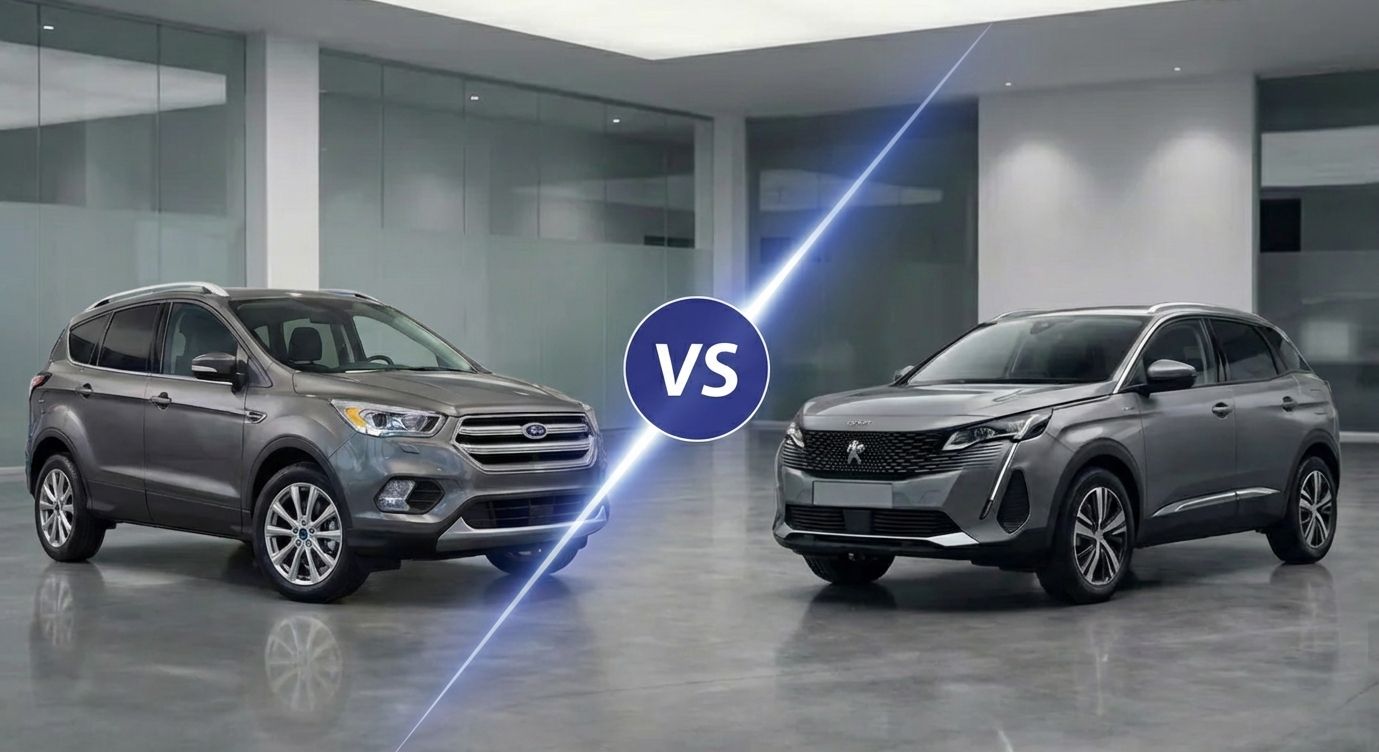
Ford Kuga vs Peugeot 3008: Which family SUV is better? A detailed comparison, real-world insights, and a clear verdict to help you choose.
Apr 13, 2026