Car battle
Audi Q3 vs. BMW X1: A Complete 2025 Comparison
Audi Q3 vs BMW X1: Detailed comparison of design, performance, and practicality. Find out which premium SUV is the right choice for you in our verdict.
Apr 14, 2026
Articles
Car battle
Ford Kuga vs Peugeot 3008: Which family SUV is better? A detailed comparison, real-world insights, and a clear verdict to help you choose.
April 13, 2026
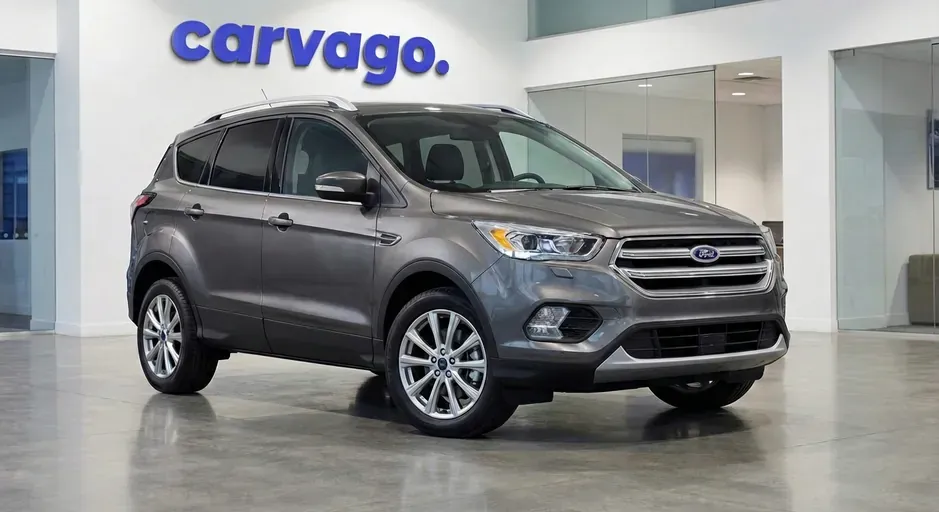
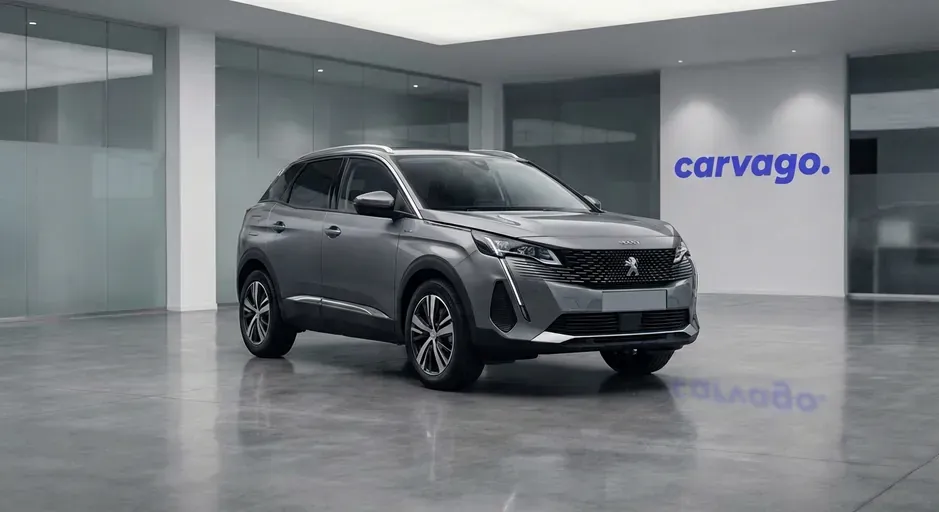
The Ford Kuga, also known as the Ford Escape in some parts of the world, is a stalwart in the family SUV market, relying on proven technology and practicality. It faces off against the Peugeot 3008, a French rival with a bold design and an i-Cockpit interior that aims to captivate with its extravagant approach. In this comparison, we'll look at the key differences between these two popular models to help you decide which one is right for you.
At first glance at the Ford Kuga and Peugeot 3008, it's clear that both cars are targeting the same customer but are taking different paths to get there, which is also reflected in their exterior dimensions. The Ford Kuga is larger than its French competitor in all key parameters. This difference is not negligible and significantly affects both the interior space and the car's behaviour in the city and on the open road.
The most significant difference is in the overall length, where the Kuga is more than 16 centimetres longer than the 3008. This has a positive impact on the interior space, especially in the rear seats and the luggage compartment. The Kuga thus appears to be a more robust and family-oriented SUV. In contrast, the Peugeot 3008, with its more compact dimensions, is better suited to narrow city streets and smaller parking spaces, where it is easier to manoeuvre. The choice between them often depends on whether you prefer maximum interior space or agility in city traffic.
A similar trend continues with width and height. The Kuga is about 4 centimetres wider, which contributes to better stability at higher speeds and a feeling of safety on board. The taller bodywork, in turn, offers a better view from the car. The Kuga's longer wheelbase of 3.5 cm ensures a quieter and more comfortable ride on motorways. Although the Peugeot 3008 is slightly smaller, its dimensions are designed with an emphasis on dynamic looks and efficiency, making it a more agile and sportier-looking car.
| Parameter | Ford Kuga (3rd generation) | Peugeot 3008 (2nd generation) |
|---|---|---|
| Length (mm) | 4614 - 4629 | 4447 |
| Width (mm) | 1883 | 1841 |
| Height (mm) | 1650 - 1663 | 1624 |
| Wheelbase (mm) | 2710 | 2675 |
The size of the luggage compartment is one of the most important parameters for family SUVs, and this is where the Kuga and the 3008 differ significantly. The choice between them will depend on whether you prefer maximum volume for everyday family needs, or rather the total capacity for carrying large loads and the practicality of the hybrid versions.
At first glance, the second-generation Peugeot 3008 (produced between 2016 and 2023) has a clear advantage in its basic configuration. With a volume of 520 litres, it is at the top of its class and can easily accommodate a pram, holiday luggage and a large shop. The third-generation Ford Kuga (from 2020) is noticeably more modest with its 435 litres. However, the situation is slightly reversed when the rear seats are folded down, with the Kuga offering slightly more – 1534 litres compared to 1482 litres in the Peugeot, making it a slightly better mover.
But the crucial difference comes with the choice of hybrid drive. While the Ford Kuga (both full-hybrid and plug-in hybrid) boot shrinks only minimally to a still very usable 405 litres, the Peugeot 3008 Plug-in Hybrid pays a much bigger price for the batteries. Its luggage compartment shrinks to just 395 litres, losing its main competitive advantage. For those interested in an electrified powertrain, the Ford Kuga is clearly the better and less compromising solution in terms of practicality.
| Parameter | Ford Kuga (3rd gen) | Peugeot 3008 (2nd gen) |
|---|---|---|
| Basic volume (litres) | 435 (405 for hybrid versions) | 520 (395 for hybrid versions) |
| Max. volume with seats folded (litres) | 1534 (approx. 1517 for hybrid versions) | 1482 (1357 for hybrid versions) |
When choosing a family SUV, the ability to tow a trailer is also a key factor for many drivers. Whether it's a caravan for a holiday, a trailer with a boat or just a trailer with building materials, differences in towing capacity can be decisive. In this respect, the Ford Kuga proves to be a more versatile and powerful partner, generally offering higher limits than its French rival.
The third-generation Ford Kuga (from 2020) excels primarily with the 2.0 EcoBlue diesel engine, which can handle a braked trailer weighing up to 2100 kg. This is a value that is easily sufficient for a large caravan or a horsebox. The popular 1.5 EcoBoost petrol engine also performs very well with a capacity of 1800 kg. With the hybrid versions, however, you need to choose more carefully. While the full-hybrid (2.5 FHEV) can manage a solid 1500–1600 kg, the plug-in hybrid (2.5 PHEV) was initially limited to 1200 kg, but its capabilities later rose to a still rather average 1500 kg.
The second-generation Peugeot 3008 (on sale until 2023) can match the Kuga in its top-of-the-range 2.0 BlueHDi diesel version, which can tow a respectable 2000 kg. This puts it among the best in its class. With the petrol engines, however, the difference is more noticeable. The more powerful 1.6 PureTech can handle 1550 kg and the basic three-cylinder 1.2 PureTech can handle a trailer weighing up to 1400 kg. The biggest weakness of the Peugeot is its plug-in hybrid variants (HYBRID 225 and HYBRID4 300), which are both rated at only 1250 kg. This is enough for a smaller unbraked trailer, but for owners of larger caravans it is a significant limitation.
For those who plan to regularly use the towing hitch to its maximum capacity, the Ford Kuga, especially with a diesel engine, is the clear choice. While the Peugeot 3008 with a strong diesel engine is also a very capable tower, it lags behind the Kuga in other engine options, and especially in the hybrid versions.
| Model and Engine | Braked trailer weight (kg) | Unbraked trailer weight (kg) |
|---|---|---|
| Ford Kuga 2.0 EcoBlue (140 kW) | 2100 | 750 |
| Ford Kuga 1.5 EcoBoost (110 kW) | 1800 | 750 |
| Ford Kuga 2.5 FHEV (112 kW) | 1500 - 1600 | 750 |
| Ford Kuga 2.5 PHEV (112 kW) | 1200 - 1500 | 750 |
| Peugeot 3008 2.0 BlueHDi (130 kW) | 2000 | 750 |
| Peugeot 3008 1.6 PureTech (133 kW) | 1550 | 750 |
| Peugeot 3008 1.5 BlueHDi (96 kW) | 1300 - 1500 | 750 |
| Peugeot 3008 1.6 HYBRID (225/300) | 1250 | 750 |
Choosing an engine for the Ford Kuga and Peugeot 3008 is a key decision that will fundamentally affect not only the running costs but also the overall character of the car. Ford has opted for a wide range of powertrains with an emphasis on various forms of electrification, including a full-hybrid, which the Peugeot lacks. Conversely, the French model counters with economical and time-tested small-displacement engines and a pair of powerful plug-in hybrids, one of which also offers all-wheel drive.
The third-generation Ford Kuga, produced since 2020, presents a very diverse range of engines on the used car market. The base is the three-cylinder petrol 1.5 EcoBoost, which provides decent dynamics for everyday driving. For those interested in diesel, the 1.5 EcoBlue and the more powerful 2.0 EcoBlue engines were available in the first years of production (until around 2022), with the latter also briefly offered as a mild-hybrid. But the Kuga's main strength lies in its electrified range. Particularly unique is the 2.5 FHEV (Full Hybrid) version, which combines a petrol engine with an electric motor and recharges itself while driving – ideal for those who want to drive economically without having to deal with plug-in charging. The top of the range is the 2.5 PHEV (Plug-in Hybrid) with the ability to travel over 60 km on pure electricity.
Note: The 1.5 EcoBlue and 2.0 EcoBlue diesel engines (including the mild-hybrid) are no longer available in new cars, but they are still available on the used car market from 2020–2022 and represent an economical choice for drivers with high annual mileage.
| Engine Type | Fuel | Power (kW) | Torque (Nm) | Transmission |
|---|---|---|---|---|
| 1.5 EcoBoost | Petrol | 110 | 240 | 6-speed manual |
| 1.5 EcoBlue | Diesel | 88 | 300 | 6-speed manual / 8-speed automatic |
| 2.0 EcoBlue mHEV | Diesel (Mild-Hybrid) | 110 | 370 | 6-speed manual |
| 2.0 EcoBlue | Diesel | 140 | 400 | 8-speed automatic |
| 2.5 FHEV (Hybrid) | Petrol/Electric | 140 | 200 (comb. engine) | eCVT |
| 2.5 PHEV (Plug-in) | Petrol/Electric | 165 | 200 (comb. engine) | eCVT |
The second-generation Peugeot 3008 post-facelift (from 2020) builds on a proven foundation. The most common and very popular engines on the used car market are the three-cylinder petrol 1.2 PureTech and the economical four-cylinder diesel 1.5 BlueHDi. Both offer 96 kW (130 hp), which is more than enough for a typical family SUV, and are available with both a manual and a comfortable eight-speed automatic transmission. For those looking for more power, there are the plug-in hybrid versions. The less powerful HYBRID 225 with front-wheel drive offers a combined output of 165 kW (225 hp), while the top model HYBRID4 300 has all-wheel drive and an impressive system output of 220 kW (300 hp).
Note: The more powerful 1.6 PureTech (133 kW) and 2.0 BlueHDi (130 kW) combustion engines were offered only briefly after the facelift and are less common on the used car market. The main offering thus consists of the 1.2 PureTech and 1.5 BlueHDi units.
| Engine Type | Fuel | Power (kW) | Torque (Nm) | Transmission |
|---|---|---|---|---|
| 1.2 PureTech | Petrol | 96 | 230 | 6-speed manual / 8-speed automatic (EAT8) |
| 1.5 BlueHDi | Diesel | 96 | 300 | 6-speed manual / 8-speed automatic (EAT8) |
| 1.6 PureTech | Petrol | 133 | 250 | 8-speed automatic (EAT8) |
| HYBRID 225 | Petrol/Electric | 165 | 360 | 8-speed automatic (e-EAT8) |
| HYBRID4 300 | Petrol/Electric | 220 | 520 | 8-speed automatic (e-EAT8) |
Ford Kuga is the ideal choice for drivers who want the benefits of a hybrid drive without the hassle of charging (FHEV version), or for those who can charge regularly and want to maximize electric driving (PHEV version).
Peugeot 3008 will appeal to those interested in economical long-distance driving (1.5 BlueHDi) or those who are satisfied with a lively and refined basic petrol engine (1.2 PureTech). For performance enthusiasts, the HYBRID4 300 version is the clear choice, turning the family SUV into an unexpectedly fast car.
The right choice of engine is key to long-term satisfaction with the car. In our recommendations, we therefore focus on the ideal combination of performance, real-world fuel consumption, owner feedback, and mechanical reliability. For each model, we select the engine that represents the best compromise for most drivers in the used car market.
For the third-generation Ford Kuga, our clear choice is the full-hybrid (FHEV) version, which combines a 2.5-liter naturally aspirated petrol engine with an electric motor. This system, whose reliability has been proven by years of operation in other brands, offers an excellent balance between performance, comfort, and above all, low running costs without the need for external charging. With a total output of 190 horsepower, the Kuga has enough power for safe overtaking even when fully loaded, while boasting an exceptionally smooth and quiet ride, especially in the city, where it often runs purely on electricity. In real-world driving, fuel consumption easily stays between 5.5 and 6.5 liters per 100 km, which is an excellent figure for an SUV of this size. The absence of a turbocharger and a particulate filter eliminates potentially expensive service procedures known from turbocharged engines. It is an ideal choice for drivers who cover mixed routes and are looking for a reliable, economical, and comfortable car.
In the case of the second-generation Peugeot 3008, the 1.5 BlueHDi four-cylinder diesel engine is a safe bet. This engine is considered one of the most economical and reliable in its category. With 130 horsepower and 300 Nm of torque, it provides the car with more than enough dynamism for daily driving and longer motorway journeys. Its greatest advantage is its phenomenal fuel consumption, which in the real world easily stays below 5 liters per 100 km. Furthermore, the engine is refined and, in combination with the eight-speed EAT8 automatic transmission, forms a perfectly matched pair that ensures a smooth and comfortable ride. Although it is a reliable unit, with used cars, it is necessary to pay attention to the condition of the AdBlue injection system, which can be sensitive to the quality of the urea solution. Like any modern diesel, it is not suitable for frequent short city trips due to DPF filter regeneration. It is the perfect engine for drivers with high annual mileage who will appreciate low running costs and comfort on long journeys.
The paper values for consumption stated by manufacturers are one thing, but the daily reality on the roads often shows different numbers. To get the most accurate picture, we looked at data from drivers themselves, specifically from the German portal Spritmonitor.de, where thousands of owners keep detailed records of their refueling. We are comparing the third-generation Ford Kuga (from 2020) and the second-generation Peugeot 3008 (ideally after the 2020 facelift), which are the cars currently most in demand on the used car market.
| Model and Engine | Average Real-World Consumption (l/100 km) |
|---|---|
| Ford Kuga 1.5 EcoBoost (110 kW) | 7.4 – 8.2 |
| Ford Kuga 1.5 EcoBlue (88 kW) | 5.8 – 6.5 |
| Ford Kuga 2.5 FHEV (full-hybrid) | 5.9 – 6.4 |
| Peugeot 3008 1.2 PureTech (96 kW) | 7.1 – 7.8 |
| Peugeot 3008 1.5 BlueHDi (96 kW) | 5.5 – 6.1 |
| Peugeot 3008 1.6 Hybrid (PHEV) | 2.5 – 5.5 (highly dependent on charging) |
| Ford Kuga 2.5 PHEV (plug-in hybrid) | 2.8 – 5.8 (highly dependent on charging) |
Looking at the real numbers, it is clear that in a direct comparison of the basic engine options, the situation is quite balanced. The 1.2 PureTech three-cylinder petrol engine in the Peugeot is a few tenths of a liter more economical than the 1.5 EcoBoost from Ford, which averages around 7.8 l/100 km. However, this difference is not dramatic and can easily be offset by the driver's driving style.
More significant differences appear with the diesel engines. The 1.5 BlueHDi unit in the Peugeot 3008 confirms its reputation as an economical engine, and in real-world operation, it can be driven with an average of around 5.7 l/100 km. The Ford Kuga with the 1.5 EcoBlue engine is slightly thirstier, with its consumption averaging just over six liters. For drivers who cover tens of thousands of kilometers annually, mostly on motorways, the Peugeot may be a slightly more advantageous choice in the long run.
An interesting alternative is the full-hybrid Kuga (FHEV), which in the real world achieves consumption comparable to the diesel version, especially in the city and on country roads. The plug-in hybrid variants (PHEV) of both models are a specific chapter. Their extremely low paper consumption is only achievable with regular charging from an external source. If the owner charges daily and drives short distances, petrol consumption can be around 2-3 l/100 km. Conversely, on longer journeys with a depleted battery, consumption will approach the values of conventional petrol engines.
In conclusion, it cannot be definitively said that one model is significantly more economical than the other. The difference in consumption is more a matter of choosing a specific engine. While the Peugeot scores with slightly lower consumption from its 1.5 BlueHDi diesel engine, Ford offers an attractive full-hybrid variant that can be just as economical without the need for external charging. For most buyers, fuel consumption will probably not be the main factor that decides the winner of this duel.
When looking at the used car market, we find that the price gap between the Ford Kuga and the Peugeot 3008 is not dramatically wide, but there are differences. Both models hold their value relatively well, which attests to their popularity. Nevertheless, certain trends can be observed that may play a role in the decision-making process.
Ford Kuga: Wider Range and Affordable Base Versions
The third-generation Ford Kuga, produced since 2019, appears on the used car market in a wide price range. The oldest and most used models with the 1.5 EcoBoost petrol engine and in basic trim can be purchased from around €16,000. These cars usually have higher mileage and basic equipment.
The golden mean is represented by models from 2020 and 2021 with reasonable mileage and in popular trim levels like Titanium or the sporty ST-Line. Here, prices most often range from €19,000 to €25,000. The price depends mainly on the engine, with diesel versions and plug-in hybrids usually at the upper end of this range.
Peugeot 3008: Higher Base Price and Emphasis on Style
The Peugeot 3008, after its 2020 facelift, holds its value a bit more tenaciously, thanks to its attractive design and the perceived premium quality of its interior. The price tags for used models from 2020 to 2022 start slightly higher than the Kuga, usually around €18,000.
Most of the offerings are concentrated in the price range between €20,000 and €27,000. For this money, you can get a car with low mileage and in attractive Allure or GT Line trims. Higher trim levels are more common for the 3008 on the used car market, which contributes to a higher average price. The most expensive are the GT versions and plug-in hybrid variants.
Key Factors Influencing the Price:
In conclusion, it can be said that the Ford Kuga offers a slightly more affordable entry into the world of these SUVs, especially if you are content with a basic engine and trim. The Peugeot 3008 maintains a slightly higher price tag, which it justifies mainly with its design and interior craftsmanship. However, the differences blur with better-equipped and more powerful versions, where the prices are very similar.
Although both models boast a five-star rating from the independent Euro NCAP organization, the results must be viewed in the context of their time. The testing methodology is constantly becoming stricter, so a direct comparison of percentage scores from different years is not entirely meaningful. A more recent test usually means the car had to meet more demanding criteria, especially in the areas of assistance systems and the protection of vulnerable road users.
The Ford Kuga underwent Euro NCAP crash tests in 2019 and received a full five stars according to the then-current, already quite strict methodology. The car demonstrated a high level of protection for adult occupants with a score of 92% and also performed very well in protecting child passengers (86%). Its modern design and equipment were also reflected in the categories undergoing the most development – the Kuga scored 82% for the protection of vulnerable road users (pedestrians, cyclists) and received a 73% rating for its safety assist systems. These results confirm that the Kuga was equipped with modern and functional safety features at the time of its launch.
The Peugeot 3008 also earned five stars, but its test was conducted back in 2016. Although it achieved very solid numbers in adult (86%) and child (85%) protection, comparable to the Kuga, a noticeable difference is seen elsewhere. The older methodology was not as demanding regarding active safety and pedestrian protection. This is reflected in the safety assist systems rating, where the 3008 scored 58%, and in the protection of vulnerable road users, where it achieved 67%. It is clear that at the time of the test, technologies like autonomous braking with cyclist detection or advanced lane-keeping assist were not as standard as they were three years later.
Although both cars offer a high level of passive safety, the winner in this category is the Ford Kuga. The reason is simple – it was tested according to newer and stricter standards, which is primarily reflected in a significantly better score for safety assist systems and the protection of pedestrians and cyclists. A three-year difference in testing represents a significant technological leap in the automotive world. The Kuga thus offers a more comprehensive and modern safety package that better meets current safety demands.
| Parameter | Ford Kuga | Peugeot 3008 |
|---|---|---|
| Year of testing | 2019 | 2016 |
| Adult Occupant Protection | 92% | 86% |
| Child Occupant Protection | 86% | 85% |
| Vulnerable Road User Protection | 82% | 67% |
| Safety Assist | 73% | 58% |
In addition to standard equipment, each model offers several unique features that can be decisive for a potential buyer, and each takes its own approach.
The third-generation Ford Kuga relies on the brand's proven values – excellent driving characteristics, practicality, and technological advancement that remains user-friendly.
The Peugeot 3008 stands out from the competition primarily with its bold design and uniquely conceived interior, which evokes the feeling of a premium car.
Based on our own CarAudit inspections, breakdown statistics, and service data, we have compiled an overview of the most common problems that buyers of used Ford Kuga and Peugeot 3008 cars should watch out for. Although both models are popular in the SUV segment, each has its specific weak points that are good to know in advance.
The third-generation Ford Kuga is generally considered more reliable than its predecessor, yet it does have certain typical faults. Most of them relate to specific engine versions and more complex systems.
Summary for the Ford Kuga: The problems are mainly concentrated on specific engine versions (especially the early plug-in hybrids) and minor electronic issues. The mechanical basis of the car is solid. A careful technical inspection of the car before purchase and checking the recall history are key.
The Peugeot 3008 is a very successful car in terms of design and driving, but its reputation is marred by several known and quite serious problems, especially with the petrol engines.
Summary for the Peugeot 3008: The biggest risk is clearly the 1.2 PureTech engine and its timing belt. A physical inspection of the used car with a thorough check of the engine and service history is an absolute must. The diesel versions are a safer choice from the engine's point of view, but you have to reckon with the potential costs of repairing the AdBlue and DPF systems. Most of the other problems are more in the nature of minor inconveniences than major failures.
A thorough inspection is key when buying a used car. Although both models are considered reliable, they have their specific areas to focus on to prevent expensive repairs. An independent technical inspection of the car is always a safe bet.
The Peugeot 3008 offers a slightly larger boot in its basic configuration, with a volume of 520 litres compared to 412–475 litres for the Ford Kuga (depending on the position of the sliding rear seats). However, the Ford Kuga has a slight edge with the rear seats folded down, with a maximum volume of up to 1534 litres. The Kuga's practicality is enhanced by the sliding rear seats, which allow you to choose between more legroom for passengers or more space for luggage.
The Ford Kuga places a greater emphasis on agile and sportier driving performance with precise steering that provides the driver with better feedback. The Peugeot 3008, on the other hand, focuses more on comfort, refinement, and a relaxed ride, which is ideal especially for longer journeys on the motorway. The choice therefore depends on the preference between a more fun or a more comfortable drive.
Both cars are average in terms of reliability, but each has its specifics. For the Ford Kuga, problems with the Powershift automatic transmission are sometimes mentioned, which is why the manual transmission is considered a safer choice. With the Peugeot 3008, especially the 1.2 PureTech engine, it is necessary to monitor the condition of the timing belt, and in diesel versions, the AdBlue system, which can be prone to malfunctions.
The interior of the Peugeot 3008 is bold and futuristic in design, with the i-Cockpit layout, a small steering wheel, and a large digital display. The Ford Kuga, on the other hand, has a more traditional and functional dashboard, where everything is intuitive and within easy reach. The Kuga thus prioritises simplicity and ergonomics, while the 3008 focuses on style and a modern atmosphere.
For families, the Ford Kuga is often recommended as a more balanced choice overall due to its practicality, especially its sliding rear seats, and better driving characteristics. The Peugeot 3008 scores points with a larger basic boot volume and a more premium feel in the cabin. The final decision depends on whether the family prefers flexibility and driving experience (Kuga) or design and comfort (3008).
Sources: ADAC, pistonheads.com, topgear.com, caranddriver.com, automobilemag.com, hybridcars.com
This article was prepared using artificial intelligence tools. The section guarantor is Petr Dušek.
Audi Q3 vs BMW X1: Detailed comparison of design, performance, and practicality. Find out which premium SUV is the right choice for you in our verdict.
Apr 14, 2026
BMW X1 vs. Volvo XC40: Which premium SUV is better for you? Our detailed comparison and verdict will help you make the final decision.
Apr 14, 2026
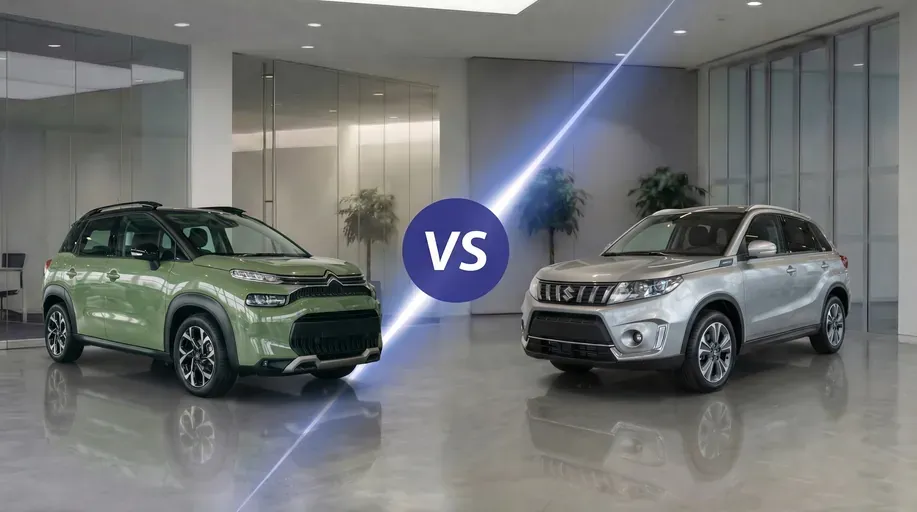
Detailed comparison of used SUVs Citroën C3 Aircross and Suzuki Vitara. Find out the differences in engines, equipment, or reliability and read our final verdict.
Apr 13, 2026