Car battle
Audi Q3 vs. BMW X1: A Complete 2025 Comparison
Audi Q3 vs BMW X1: Detailed comparison of design, performance, and practicality. Find out which premium SUV is the right choice for you in our verdict.
Apr 14, 2026
Articles
Car battle
Hyundai Tucson vs Peugeot 3008: A detailed comparison of design, engines, and features. Find out which SUV is the better choice for you in our big test.
April 13, 2026
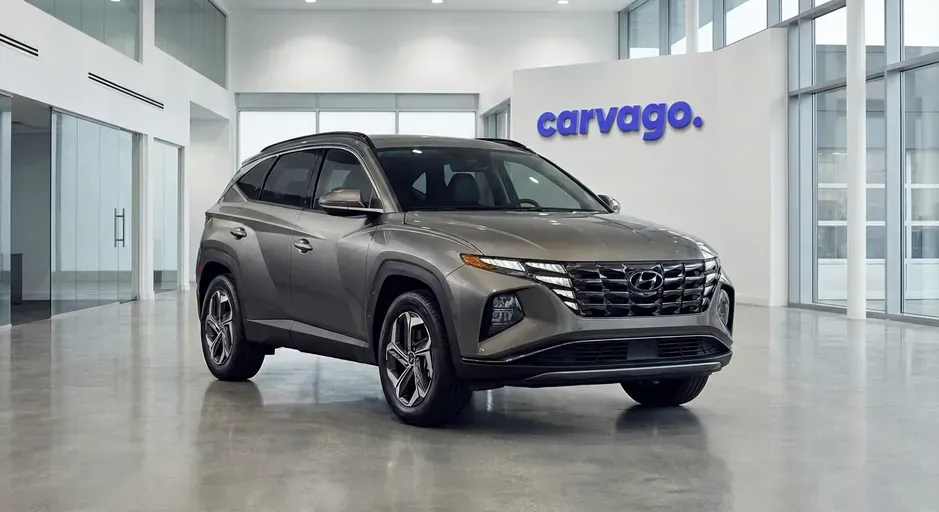
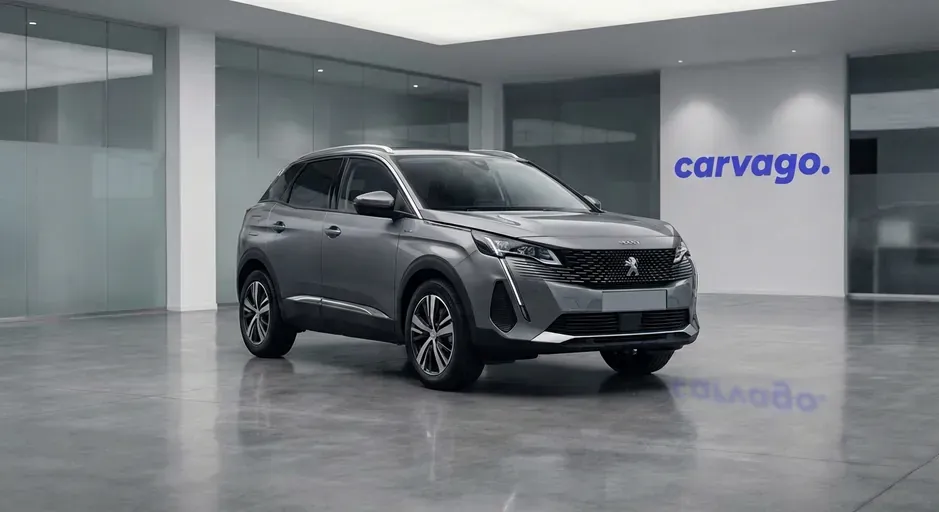
The Hyundai Tucson, whose second generation was also known as the Hyundai ix35 in some markets, is a globally successful and boldly designed SUV. It faces off against the Peugeot 3008, which has transformed from a vehicle with MPV elements into an elegant and technologically advanced SUV with a distinctive French charm. This article will compare both models in detail to help you determine which of these popular crossovers best suits your needs.
When comparing exterior dimensions, it is immediately clear that the Hyundai Tucson is a larger vehicle in every respect than the Peugeot 3008. This difference is reflected not only in the interior space but also in its overall presence on the road, where the Tucson appears more robust and substantial, while the 3008 maintains a more compact and agile silhouette.
With a length of up to 4510 mm, the Tucson surpasses its French competitor by a noticeable 63 mm. This, along with a slightly longer wheelbase (2680 mm vs. 2675 mm), promises more generous space for occupants, especially in the rear seats. For families with children or those who often carry adult passengers, every extra millimetre can be a key argument. The Peugeot 3008, on the other hand, is more agile for manoeuvring and parking in narrow city streets thanks to its shorter length.
The Tucson is also 24 mm wider and 26 mm taller. The greater width (1865 mm) translates into a feeling of airiness in the interior and comfort for three passengers in the back, while the taller build (1650 mm) makes getting in easier and provides a better view from the car. With its dimensions, the Peugeot 3008 feels more dynamic and may feel more manageable to the driver in tight conditions. The choice thus depends on your priorities – whether you prefer maximum interior space or agility and easy parking.
| Parameter | Hyundai Tucson (3rd generation) | Peugeot 3008 (2nd generation) |
|---|---|---|
| Length (mm) | 4500 - 4510 | 4447 |
| Width (mm) | 1865 | 1841 |
| Height (mm) | 1650 | 1624 |
| Wheelbase (mm) | 2680 | 2675 |
One of the key parameters when choosing a family SUV is undoubtedly practicality and the size of the luggage compartment. In this respect, the Hyundai Tucson and the Peugeot 3008 differ more than it might seem at first glance. While the Peugeot offers a solid and perfectly adequate space for most situations, the Hyundai raises the bar in its class significantly higher, becoming the clear choice for those who need to transport bulkier cargo.
The second-generation Peugeot 3008 (produced from 2016–2023) has a very respectable 520-litre boot in its standard configuration. After folding down the rear seats, an almost flat loading area is created, and the space increases to 1482 litres, which is comfortably sufficient for a weekend shopping trip or a longer holiday. However, a significant difference arises with the plug-in hybrid versions, where the battery reduces the usable volume to just 395 litres. This is a compromise that those interested in the electrified variant must take into account.
The third-generation Hyundai Tucson (from 2020) absolutely excels in this discipline. Even the basic petrol versions offer a staggering 620 litres, a figure that could be the envy of some cars in a higher class. After folding the seats, the space expands to an almost cavernous 1799 litres. But most importantly, the Tucson retains its generous boot even in its hybrid variants. The full-hybrid offers 616 litres, and even the plug-in hybrid still provides an above-average 558 litres, thereby surpassing even the standard version of the Peugeot 3008.
| Parameter | Hyundai Tucson (Gen 3, from 2020) | Peugeot 3008 (Gen 2, 2016-2023) |
|---|---|---|
| Basic volume (litres) | 546 - 620 | 395 - 520 |
| Max. volume with seats folded (litres) | 1721 - 1799 | 1357 - 1482 |
Towing capacity is a key parameter for SUV category vehicles that can be a deciding factor in a purchase. In this regard, the Hyundai Tucson and Peugeot 3008 differ in their philosophy. While the Tucson offers a more consistent and generally higher standard across relevant engine options, the 3008 has a wider range – from more modest figures in the basic engines to very solid performance in the top diesel versions.
The third-generation Hyundai Tucson (from 2020) will please those looking for certainty. Most common engine options, whether it's the 1.6 T-GDI petrol, mild-hybrid variants, or the full-hybrid, can all handle a braked trailer of up to 1650 kg. This is an excellent value for most users who need to tow a caravan, boat, or a trailer with materials. The exception is the plug-in hybrid version, whose capacity drops to a still usable 1350 kg. Those looking for a used model from the older second generation might find a real workhorse – the 2.0 CRDi versions could tow up to 2200 kg. The unbraked trailer weight for the Tucson is a standard 750 kg.
The second-generation Peugeot 3008 (2016-2023) requires the buyer to make a more careful choice of engine according to their towing needs. The basic 1.2 PureTech petrol engine can handle a trailer weighing from 1150 to 1400 kg. The 1.5 BlueHDi diesel is slightly better, managing 1300 to 1500 kg. However, the real specialist for heavy loads is the two-litre 2.0 BlueHDi diesel, which can tow up to 2000 kg. In contrast, the hybrid versions are similar to the Tucson, with their capabilities limited to 1250 kg. The unbraked trailer weight for the Peugeot ranges between 600 and 750 kg, depending on the engine.
For normal family use with occasional trailer towing, the Tucson is a safe bet thanks to its consistently high capacity. But if you're looking for a car capable of regularly towing very heavy loads, the Peugeot 3008 with the 2.0 BlueHDi engine becomes the clear favorite.
| Model and Engine | Braked towing capacity (kg) | Unbraked towing capacity (kg) |
|---|---|---|
| Hyundai Tucson (from 2020) | ||
| 1.6 T-GDI (110 kW) | 1650 | 750 |
| 1.6 T-GDI Mild-Hybrid (110/132 kW) | 1650 | 750 |
| 1.6 T-GDI Hybrid (169 kW) | 1650 | 750 |
| 1.6 T-GDI Plug-in Hybrid (195 kW) | 1350 | 750 |
| Peugeot 3008 (2016-2023) | ||
| 1.2 PureTech (96 kW) | 1150 - 1400 | 660 - 690 |
| 1.5 BlueHDi (96 kW) | 1300 - 1500 | 685 - 695 |
| 1.6 PureTech (133 kW) | 1500 - 1550 | 745 |
| 2.0 BlueHDi (110/130 kW) | 2000 | 745 |
| Hybrid / Hybrid4 (165/220 kW) | 1250 | 750 |
The choice of engine is key, and this is where the paths of the Hyundai Tucson and Peugeot 3008 diverge significantly. While Hyundai bets on the widest and most diverse range possible, including petrol, diesel, mild-hybrids, full hybrids, and plug-in hybrids, Peugeot focuses on a smaller number of proven and efficient units. This different philosophy gives buyers a clear choice between maximum diversity in the Tucson and targeted efficiency in the 3008.
For the generation most commonly found on the used car market (the transition from the second to the third generation, around 2018-2022), Hyundai offers a truly extensive range of engines. The basis for older models was the naturally aspirated 1.6 GDI petrol engine, ideal for calmer drivers looking for simplicity. However, the turbocharged 1.6 T-GDI, which provides excellent dynamics, is much more popular. With the arrival of the third generation (from late 2020), the Tucson fully embraced electrification. Both petrol and diesel engines received 48V mild-hybrid technology to reduce consumption, and two key variants were added: the powerful and economical full hybrid (HEV) and the even more powerful plug-in hybrid (PHEV). Unlike Peugeot, the Tucson offers all-wheel drive not only on the plug-in hybrid but also on the mild-hybrid and conventional versions.
| Engine Type | Fuel | Power (kW) | Torque (Nm) | Transmission |
|---|---|---|---|---|
| 1.6 GDI | Petrol | 97 | 161 | 6-speed manual |
| 1.6 T-GDI | Petrol | 110 / 130 | 265 | 6-speed manual / 7-speed automatic |
| 1.6 T-GDI 48V | Petrol (Mild-Hybrid) | 110 / 132 | 265 | 6-speed intelligent manual / 7-speed automatic |
| 1.6 CRDi | Diesel | 85 / 100 | 280 / 320 | 6-speed manual / 7-speed automatic |
| 1.6 CRDi 48V | Diesel (Mild-Hybrid) | 100 | 320 | 7-speed automatic |
| 1.6 T-GDI HEV | Petrol (Hybrid) | 169 | 350 | 6-speed automatic |
| 1.6 T-GDI PHEV | Petrol (Plug-in Hybrid) | 195 | 350 | 6-speed automatic |
The second-generation Peugeot 3008 (2016-2023) built its reputation on award-winning turbocharged engines. The basic petrol unit is the three-cylinder 1.2 PureTech, which, despite its small displacement, is surprisingly flexible and refined, and is perfectly adequate for normal driving. For more demanding drivers, the four-cylinder 1.6 PureTech was available. On the diesel side, the economical and reliable 1.5 BlueHDi engine reigns supreme. In the early years of production, the more powerful 2.0 BlueHDi was also available, which is now a sought-after choice for drivers with high annual mileage. After the 2020 facelift, Peugeot focused on plug-in hybrids: the powerful front-wheel-drive HYBRID and the top-of-the-line HYBRID4 version with all-wheel drive and a system output of 300 horsepower.
It is important to note that the more powerful 1.6 PureTech and 2.0 BlueHDi engines were withdrawn from the range in later years and replaced by the hybrid versions.
| Engine Type | Fuel | Power (kW) | Torque (Nm) | Transmission |
|---|---|---|---|---|
| 1.2 PureTech | Petrol | 96 | 230 | 6-speed manual / 8-speed automatic |
| 1.6 PureTech | Petrol | 133 | 250 | 8-speed automatic |
| 1.5 BlueHDi | Diesel | 96 | 300 | 6-speed manual / 8-speed automatic |
| 2.0 BlueHDi | Diesel | 130 | 400 | 8-speed automatic |
| HYBRID | Petrol (Plug-in Hybrid) | 165 | 360 | 8-speed automatic |
| HYBRID4 | Petrol (Plug-in Hybrid) | 220 | 520 | 8-speed automatic |
Choosing the right engine is absolutely key to long-term satisfaction with a car. It's not just about performance, but also about reliability, running costs, and the character the engine gives the car. In the following recommendations, we will focus on the ideal choices for a used Hyundai Tucson and Peugeot 3008, considering real-world fuel consumption, owner feedback, and mechanical durability.
In the case of the fourth-generation Tucson (from 2020), the ideal choice is the turbocharged 1.6 T-GDI petrol engine supplemented by a 48V mild-hybrid system. This represents a happy medium in the entire range. Compared to the diesel, it is more refined and better suited for mixed driving conditions, while also not being as complex and being more affordable on the used car market than the full hybrid.
For the second-generation Peugeot 3008 post-facelift (from 2020), the 1.5 BlueHDi four-cylinder diesel engine is a safe bet for reliability and operational efficiency. Although customers often opt for the 1.2 PureTech three-cylinder petrol engine, it is unfortunately notorious for problems with its wet timing belt, which can degrade and clog the engine's lubrication system. In this respect, the diesel engine is a more reliable and suitable choice for the character of an SUV.
The official consumption figures provided by manufacturers often differ from everyday reality. While the WLTP laboratory cycle is more accurate than older methodologies, it still falls short of real-world demands from roads, weather, and driving styles. For an objective comparison, we have therefore used data from owners themselves, for example, from the German portal Spritmonitor.de, which collects real consumption data from thousands of vehicles. This gives us a much more accurate picture of how much fuel both cars actually consume.
When comparing the relevant generations for the used car market – the fourth-generation Tucson (from 2020) and the second-generation 3008 post-facelift (from 2020) – interesting differences emerge that can influence the choice of a specific engine.
| Model and Engine | Average Real-World Consumption (l/100 km) |
|---|---|
| Hyundai Tucson 1.6 T-GDI (110 kW) | 7.5 - 8.5 |
| Hyundai Tucson 1.6 CRDi (100 kW) | 6.0 - 6.8 |
| Hyundai Tucson 1.6 T-GDI Hybrid (169 kW) | 6.0 - 7.0 |
| Peugeot 3008 1.2 PureTech (96 kW) | 7.0 - 7.8 |
| Peugeot 3008 1.5 BlueHDi (96 kW) | 5.5 - 6.2 |
| Peugeot 3008 Plug-In Hybrid (165 kW) | 2.5 - 4.0 (with regular charging) |
From the table, it is clear that in a direct comparison of diesel engines, the Peugeot has a slight edge. Its 1.5 BlueHDi is about half a litre more economical in real-world driving than the 1.6 CRDi in the Tucson. For drivers who cover tens of thousands of kilometres annually, mainly on motorways and main roads, the 3008 will be a slightly more financially advantageous choice.
With basic petrol engines, the situation is more balanced. The 1.2 PureTech three-cylinder in the Peugeot 3008 is more economical on paper, but in practice, its lead over the 1.6 T-GDI four-cylinder in the Tucson diminishes. Especially under higher loads, such as driving on the motorway or with a fully occupied car, both engines will consume between 7 and 8 litres. The Peugeot's three-cylinder may be slightly more economical in the city, but the Tucson offers more refined running.
€29,000 |
Both cars start at a very similar price point. However, for the same money, the Hyundai Tucson will often offer you a more powerful base engine and potentially all-wheel drive, making it a more pragmatic choice. The Peugeot 3008, on the other hand, holds its value thanks to its attractive design and sophisticated interior, where you pay extra for style and French charm. The choice, therefore, depends on your priorities – whether you prefer maximum utility and performance, or you favour design and a premium feel.
When choosing a family SUV, safety is a key factor, and at first glance, it may seem that the Hyundai Tucson and Peugeot 3008 are on equal footing – both boast a five-star rating from the independent organisation Euro NCAP. However, there is a crucial difference that lies in the date of testing. The methodology of crash tests is constantly becoming stricter, and therefore, percentage results from different years cannot be directly compared. A more recent test usually means that the car had to meet more demanding criteria.
The fourth-generation Hyundai Tucson was tested by Euro NCAP in 2021 and received a full five-star rating according to the then-current and stricter methodology. The car demonstrated an excellent level of protection, as evidenced by the individual results. In the adult occupant protection category, it scored 86%, and for child occupants, it achieved an even better 87%. A score of 70% for safety assist systems indicates a modern suite of active safety features that were standard at the time of testing to achieve the highest rating. Its weaker point is the protection of vulnerable road users (pedestrians and cyclists), with a score of 66%, however, overall, it is a vehicle that meets current high safety standards.
The second-generation Peugeot 3008 received its five-star rating back in 2016. Despite the older test date, its results in occupant protection are still very good – it scored 86% for adult protection and 85% for child protection. For the protection of vulnerable road users, it achieved 67%. The biggest difference is noticeable in the safety assist systems category, where the Peugeot scored 58%. This lower score reflects the standards of the time, when advanced assistance systems, such as autonomous emergency braking or lane-keeping assist, were not as widespread or were not part of the standard equipment that is evaluated.
Although both cars achieved the highest five-star rating, the Hyundai Tucson offers a more modern and comprehensive safety package. Its 2021 tests were conducted under significantly stricter criteria, especially in the area of assistance systems, which play an increasingly important role in accident prevention. The Peugeot 3008 is still a very safe car with a solid structure, but its suite of electronic aids corresponds to the standards of 2016. For a buyer who places maximum emphasis on the latest active safety technologies, the Tucson is the clear choice.
| Parameter | Hyundai Tucson | Peugeot 3008 |
|---|---|---|
| Euro NCAP Test Year | 2021 | 2016 |
| Adult Occupant Protection | 86 % | 86 % |
| Child Occupant Protection | 87 % | 85 % |
| Vulnerable Road User Protection | 66 % | 67 % |
| Safety Assist | 70 % | 58 % |
In addition to standard equipment, each model offers several unique features that can be decisive for the customer, with each taking a different approach to innovation and comfort.
The fourth-generation Hyundai Tucson (from 2020) has opted for a bold design and massive interior digitalisation, which is apparent at first glance.
The second-generation Peugeot 3008 (after the 2020 facelift) continues the successful i-Cockpit concept, adding a touch of premium quality and sophisticated technology.
Advantages:
Disadvantages:
Advantages:
Disadvantages:
Based on our own CarAudit inspections, breakdown statistics, and service data, we have compiled an overview of the most common problems that used car buyers should be aware of. Neither model suffers from major design flaws, but both have specific areas that require attention.
The fourth-generation Hyundai Tucson generally performs well, but a few recurring problems do appear, especially related to the gearboxes and electronics.
Summary for the Tucson: The problems are mostly software-related and can be solved with an update. However, a thorough check of the dual-clutch transmission and the service history is essential for a used car. Overall, these are minor inconveniences rather than major technical threats.
The second-generation Peugeot 3008 is considered a reliable car, but it has a few notorious weaknesses, mainly centred around certain engines and the AdBlue system.
Summary for the 3008: The biggest risk is the 1.2 PureTech engine and its timing belt. With diesel versions, it is necessary to anticipate possible problems with the AdBlue system. However, if you choose a well-maintained unit with a clear service history, especially with the 2.0 BlueHDi diesel or 1.6 PureTech petrol engine, it is a very reliable choice.
When buying a used car, a thorough inspection is key and should not be underestimated, even with relatively new vehicles. Here are a few specific points to focus on with these two models, as each has its own specifics that can trouble a future owner. The best choice is always a comprehensive vehicle inspection, which will reveal even hidden defects.
The clear winner in this category is the Hyundai Tucson. It offers a basic boot volume of around 620 litres, while the Peugeot 3008 provides approximately 520 litres. For families needing a large luggage space, the Tucson is therefore the more practical choice.
The Peugeot 3008 focuses on a futuristic and premium-feeling interior with its i-Cockpit layout and a large curved display. In contrast, the Hyundai Tucson opts for a more practical and user-friendly layout, emphasizing spaciousness and ease of use. In terms of design, the 3008 is bolder, while the Tucson appears modern and robust.
The Hyundai Tucson offers a wider range of engine options, including mild-hybrid, hybrid, and plug-in hybrid variants. The Peugeot 3008 focuses on efficient hybrid and plug-in hybrid systems, which are characterized by their refined and quiet operation. In terms of fuel consumption, the Peugeot 3008 generally has a slight advantage, especially in its hybrid versions.
For family use, the Hyundai Tucson appears to be more suitable, primarily due to its larger boot space and more spacious interior overall. It also offers excellent versatility and practicality for everyday use. While the Peugeot 3008 offers slightly less space, it counters with a high level of comfort and a premium interior feel.
Yes, the driving dynamics of the two cars are different. The Peugeot 3008 aims for a sportier feel with a stiffer chassis and sharper steering, which may not suit everyone. The Hyundai Tucson, on the other hand, is focused on comfort and a smooth ride, making it a more comfortable companion for longer journeys and rough roads.
In this regard, the Hyundai Tucson has a clear advantage, offering all-wheel drive with several of its engine options. The Peugeot 3008 is only available with front-wheel drive, where traction in poor conditions is partially compensated for by an intelligent traction control system. For drivers who often travel in more demanding conditions, the Tucson is the better choice.
Sources: ADAC, whatcar.com, autoexpress.co.uk, thetruthaboutcars.com, caranddriver.com, electricvehicleweb.com
This article was prepared using artificial intelligence tools. The section guarantor is Petr Dušek.
Audi Q3 vs BMW X1: Detailed comparison of design, performance, and practicality. Find out which premium SUV is the right choice for you in our verdict.
Apr 14, 2026
BMW X1 vs. Volvo XC40: Which premium SUV is better for you? Our detailed comparison and verdict will help you make the final decision.
Apr 14, 2026
Detailed comparison of used SUVs Citroën C3 Aircross and Suzuki Vitara. Find out the differences in engines, equipment, or reliability and read our final verdict.
Apr 13, 2026