Car battle
Audi Q3 vs. BMW X1: A Complete 2025 Comparison
Audi Q3 vs BMW X1: Detailed comparison of design, performance, and practicality. Find out which premium SUV is the right choice for you in our verdict.
Apr 14, 2026
Articles
Car battle
Ford Kuga vs. Škoda Karoq: Which SUV is better? A detailed comparison, tests, and a clear verdict will help you choose the right car for you.
April 13, 2026

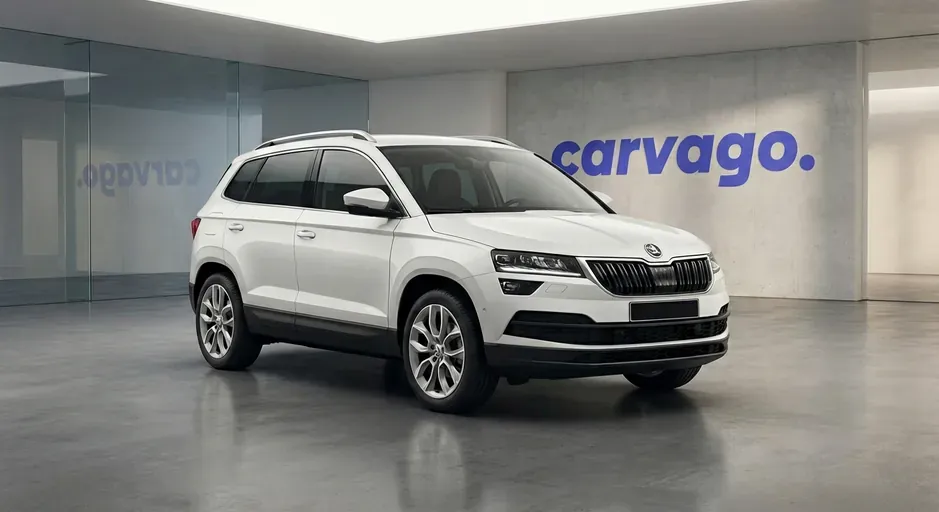
The Ford Kuga, a globally successful SUV also known as the Ford Escape in some markets, attracts drivers with its dynamic design and a wide range of modern powertrains. It faces off against the Škoda Karoq, a stalwart in the compact SUV segment that prides itself on practicality, spaciousness, and the clever solutions typical of the Czech carmaker. Let's take a detailed look at how these two popular rivals stack up against each other in key disciplines.
Looking at the exterior dimensions, it is immediately clear that although the Ford Kuga and the Škoda Karoq both belong to the popular SUV category, they are aimed at slightly different customers. The Ford Kuga is significantly larger in all respects, with its dimensions closer to the mid-size SUV class. In contrast, the Škoda Karoq is a prime example of a compact SUV that emphasizes agility and practicality in urban traffic.
The biggest difference is noticeable in length. The third-generation Kuga (from 2020) measures over 4.6 meters, while the Karoq stays under the 4.4-meter mark. The difference of more than 23 centimeters is substantial and clearly translates into interior space. The Kuga thus offers noticeably more room for the crew, especially in the rear seats, as well as a more voluminous luggage compartment. For families who often travel long distances, this is a key advantage. The Karoq, on the other hand, scores points for its compactness, which makes parking and maneuvering in narrow streets easier.
The Kuga also outgrows its Czech rival in other parameters. It is about 4 cm wider and approximately 5 cm taller, giving it a more massive and confident stance on the road. The wheelbase is also longer, by a significant 7 centimeters. This parameter directly affects the longitudinal space in the cabin and contributes to better stability at higher speeds on the motorway. The choice is therefore clear: if you are looking for maximum space and the feel of a large car, the Kuga is the right choice. If you prefer agility and easy handling in the city, the Karoq will be a better companion.
| Parameter | Ford Kuga (from 2020) | Škoda Karoq (from 2017) |
|---|---|---|
| Length (mm) | 4614 - 4629 | 4382 - 4390 |
| Width (mm) | 1883 | 1841 |
| Height (mm) | 1650 - 1663 | 1603 - 1629 |
| Wheelbase (mm) | 2710 | 2630 - 2638 |
In the family SUV category, luggage space is often a deciding factor. This is where it becomes clear how well the designers have managed the interior layout and how the car will serve in daily duties and on holiday. In this battle, the Škoda Karoq has the upper hand, confirming the brand's reputation for focusing on maximum utility value.
The Škoda Karoq in its first generation (produced since 2017) offers a generous 521 litres of volume in its basic seating configuration. This is a figure that places it at the top of the segment. In contrast, the third-generation Ford Kuga (in production since 2020) has a standard volume of up to 475 litres. However, the Kuga counters with a practical feature in the form of a sliding rear bench seat, which allows the boot volume to be varied, albeit at the cost of less legroom for rear passengers.
The situation becomes more complicated for the Ford Kuga with its electrified versions. If you come across a used full-hybrid or plug-in hybrid, be aware that the batteries located under the floor have reduced the luggage space to 412 litres. When the rear backrests are folded down, the differences become even more pronounced. While the Karoq offers a transport capacity of up to 1630 litres, the Kuga provides a maximum of 1534 litres (slightly less for the hybrid variants).
| Parameter | Ford Kuga SUV | Škoda Karoq SUV |
|---|---|---|
| Basic volume (litres) | 412 - 475 | 521 |
| Max. volume with seats folded (litres) | 1534 | 1630 |
For families and users who prioritize the largest and most storable boot, the Škoda Karoq is the clear winner. Its luggage compartment is uncompromisingly large and highly usable. While the Ford Kuga loses out in absolute numbers, its variability with sliding seats may be an interesting bonus for some. When choosing a used car, however, it is crucial to check whether it is a hybrid version, which significantly reduces the practicality of the boot.
The ability to tow a trailer is a key factor for many SUV buyers, and in this respect, the Kuga and Karoq differ, especially depending on the chosen engine. Overall, the Ford Kuga often offers a higher towing capacity, but the Škoda Karoq competes well in key versions.
The Ford Kuga excels primarily with its diesel engines. The 2.0 EcoBlue variant can handle a braked trailer weighing up to 2100 kg, which is a top figure in the segment, ideal for large caravans or heavy loads. The popular 1.5 EcoBoost petrol engine also performs very well, managing a respectable 1800 kg. In contrast, the hybrid versions represent a compromise. While the Full-Hybrid can tow a solid 1500–1600 kg, the Plug-in Hybrid is significantly limited to 1200–1500 kg, which is the price for the possibility of pure electric driving.
The Škoda Karoq is also a very capable tower, matching the Kuga in its most sought-after specifications. The top 2.0 TDI version with all-wheel drive can, like the Kuga, handle a braked trailer weighing up to 2100 kg. However, a key difference lies with the popular 1.5 TSI petrol engine, which can tow a standard 1500 kg, 300 kg less than the comparable Kuga. The basic 1.0 TSI engine with a capacity of 1200 kg is more suitable for smaller unbraked trailers. For unbraked trailers, both models are practically the same and can handle the standard 750 kg.
Therefore, if maximum towing capacity is the absolute priority, the diesel 4x4 versions of both cars are an equal choice. However, for those interested in a petrol engine, the Ford Kuga has a clear advantage.
| Model and Engine | Braked trailer weight (kg) | Unbraked trailer weight (kg) |
|---|---|---|
| Ford Kuga 1.5 EcoBoost (110 kW) | 1800 | 750 |
| Ford Kuga 2.0 EcoBlue (110/140 kW) | 2100 | 750 |
| Ford Kuga 2.5 Plug-in Hybrid | 1200-1500 | 750 |
| Škoda Karoq 1.5 TSI (110 kW) | 1500-1800 | 690-750 |
| Škoda Karoq 2.0 TDI 4x4 (110 kW) | 1800-2100 | 750 |
| Škoda Karoq 2.0 TSI 4x4 (140 kW) | 1900 | 750 |
When it comes to engine choice, the paths of the Ford Kuga and Škoda Karoq diverge dramatically. While the third-generation Kuga has embraced extensive electrification, offering several hybrid powertrain options, the Karoq sticks to the proven and time-tested TSI and TDI engines from the VW Group. This gives used car buyers a clear choice: either modern, fuel-efficient technologies with the option of electric driving, or traditional but highly effective and reliable power units.
In its third generation (from 2020), the Ford Kuga offers one of the widest ranges of engines in its class, with electrification playing a key role. The only purely internal combustion petrol engine is the award-winning three-cylinder 1.5 EcoBoost, which delivers 110 kW (150 hp) and is exclusively paired with a manual transmission and front-wheel drive. For those interested in diesel, the 1.5 EcoBlue (88 kW/120 hp) and the mild-hybrid 2.0 EcoBlue mHEV (110 kW/150 hp) were available in the first years of production (until around 2022). They represent an interesting option on the used car market. The most powerful diesel variant remains the 2.0 EcoBlue (140 kW/190 hp) with an automatic transmission and all-wheel drive, ideal for towing trailers. However, the Kuga's main advantage is its hybrids. The Full-hybrid (FHEV) with a 2.5 Duratec engine and a system output of 140 kW (190 hp) operates without external charging and is available with both front-wheel and all-wheel drive. The top of the range is the Plug-in hybrid (PHEV) with an output of 165 kW (225 hp), which can travel over 60 km on electricity alone, making it an excellent choice for daily commuting with minimal costs.
| Engine Type | Fuel | Power (kW) | Torque (Nm) | Transmission |
|---|---|---|---|---|
| 1.5 EcoBoost | Petrol | 110 | 240 | 6MT |
| 1.5 EcoBlue | Diesel | 88 | 300 | 6MT / 8AT |
| 2.0 EcoBlue mHEV | Diesel (Mild-Hybrid) | 110 | 370 | 6MT |
| 2.0 EcoBlue AWD | Diesel | 140 | 400 | 8AT |
| 2.5 FHEV | Petrol (Full-Hybrid) | 140 | 200 | eCVT |
| 2.5 PHEV | Petrol (Plug-in Hybrid) | 165 | 200 | eCVT |
The Škoda Karoq offers a more straightforward but no less high-quality engine portfolio. The base is the economical one-litre three-cylinder 1.0 TSI with 81 kW (110 hp), which is perfectly adequate for urban and suburban driving. The golden mean and the most common choice for customers is the four-cylinder 1.5 TSI (110 kW/150 hp) with ACT cylinder deactivation technology, which reduces fuel consumption during relaxed driving. For dynamically-oriented drivers, there is the top-of-the-line 2.0 TSI (140 kW/190 hp), available exclusively with 4x4 drive and a DSG transmission, which turns the Karoq into a very agile SUV. The diesel engines are primarily represented by the modern and refined 2.0 TDI Evo unit. The less powerful 85 kW (115 hp) version replaced the older 1.6 TDI engine (found in models up to 2020) and is an excellent choice for economical long-distance travel. The more powerful 110 kW (150 hp) variant is an absolute all-rounder, available with both front-wheel and all-wheel drive.
| Engine Type | Fuel | Power (kW) | Torque (Nm) | Transmission |
|---|---|---|---|---|
| 1.0 TSI | Petrol | 81 | 200 | 6MT |
| 1.5 TSI | Petrol | 110 | 250 | 6MT / 7DSG |
| 2.0 TSI 4x4 | Petrol | 140 | 320 | 7DSG |
| 2.0 TDI | Diesel | 85 | 300 | 6MT / 7DSG |
| 2.0 TDI | Diesel | 110 | 340 / 360 | 6MT / 7DSG |
| 2.0 TDI 4x4 | Diesel | 110 | 360 | 7DSG |
When choosing an engine for a family SUV, it's crucial to consider how you will most often use the vehicle. While the third-generation Ford Kuga has opted for a wide range of electrified powertrains, including mild-hybrid, full-hybrid, and plug-in hybrid, the Škoda Karoq sticks to the proven TSI and TDI engines from the VW Group. Our recommendations are based on a combination of performance, real-world fuel consumption, owner feedback, and mechanical reliability.
This full-hybrid powertrain represents the best compromise in the entire Kuga lineup. It combines a naturally aspirated petrol engine running on the efficient Atkinson cycle with an electric motor and an eCVT automatic planetary gearbox. The result is an output of 190 horsepower, which gives the car decent dynamics, but its main strength lies elsewhere – in its smoothness and low real-world fuel consumption. Unlike the plug-in hybrid, you don't need to charge it, and compared to the diesel, it is better suited for shorter routes and city driving.
The 1.5 TSI engine is the golden mean for the Karoq and an absolutely ideal choice for most customers. This four-cylinder turbocharged petrol engine with 150 horsepower and 250 Nm of torque provides the car with confident dynamics for safe overtaking even when fully loaded. Its biggest advantage, however, is the ACT (Active Cylinder Technology) system, which automatically deactivates two cylinders under low load.
Official fuel consumption figures are one thing, but the day-to-day reality on the road is often different. To get the most accurate picture of the actual running costs of the Ford Kuga and Škoda Karoq, we drew data from hundreds of real owners from European databases, such as the German portal Spritmonitor.de. These figures reveal how both models perform in everyday use.
In a direct comparison of popular engine versions of the generations available on the market as approximately four-year-old used cars (Ford Kuga III from 2020, Škoda Karoq I post-facelift), the differences in conventional engines are minimal, but interesting trends still emerge.
| Model and Engine | Average Real-World Consumption (l/100 km) |
|---|---|
| Ford Kuga 1.5 EcoBoost (110 kW) | 6.8 |
| Škoda Karoq 1.5 TSI (110 kW) | 6.5 |
| Ford Kuga 1.5 EcoBlue (88 kW) | 5.2 |
| Ford Kuga 2.0 EcoBlue (110 kW) | 5.9 |
| Škoda Karoq 2.0 TDI (110 kW) | 5.6 |
| Ford Kuga 2.5 FHEV (Full-hybrid) | 5.7 |
| Ford Kuga 2.5 PHEV (Plug-in hybrid) | ~2.5* |
| Škoda Karoq 2.0 TSI 4x4 (140 kW) | 8.2 |
*The consumption of a plug-in hybrid is highly dependent on the frequency of charging. On short trips with a charged battery, it can be close to zero, while on longer journeys without charging, it rises above 6 l/100 km.
It is clear from the table that in the most frequently compared engine versions – the 1.5 petrol and 2.0 diesel – the Škoda Karoq has a slight edge, requiring a few tenths of a litre less fuel in real-world operation. However, this is not a dramatic difference that should be the main decision-making criterion. For drivers with high annual mileage, especially on motorways, the diesel versions of both models remain the most economical choice.
The key difference emerges in the area of electrification. Here, the Ford Kuga clearly dominates thanks to its offering of full-hybrid (FHEV) and plug-in hybrid (PHEV) versions, which the Škoda Karoq does not offer in this generation. The full-hybrid is an excellent choice for those who frequently drive in the city and in traffic jams, where it can operate with very low consumption without the need for external charging. The plug-in hybrid, in turn, makes sense for drivers who have the ability to charge regularly and whose daily routes fit within the electric range (approx. 50-60 km). For them, running costs can be reduced to a minimum.
Therefore, if you are hesitating between a conventional petrol or diesel engine, fuel consumption should not play a major role – the differences are negligible. It only becomes a deciding factor when you are considering a hybrid powertrain. In that case, the Ford Kuga is the only and clear choice of the two.
When deciding between a Ford Kuga and a Škoda Karoq on the used car market, the purchase price plays a key role. Although they are direct competitors, their price tags can vary depending on the year of manufacture, mileage, engine, and equipment. Generally, the Škoda Karoq, as a highly sought-after model on the domestic market, holds its value better, which is reflected in slightly higher prices.
A used Škoda Karoq from the first years of production (approx. 2018–2020) can be purchased in the price range of €14,000 to €21,000. For this price, you will most often get cars with a 1.5 TSI petrol engine or a 1.6 TDI diesel engine and a low to medium equipment level. If you are looking for better-equipped versions, models with 4x4 drive, or newer model years (2021 and younger), the price can easily exceed €21,000 and can even reach €29,000.
The third-generation Ford Kuga, which came to the market in 2019, is often slightly more affordable as a used car than its Czech rival. Older models from the beginning of production (2019–2020) can be found with a price tag starting at around €15,000. The average price for a 2019 model is around €15,000 to €16,000.
Cars with higher equipment levels, such as the popular ST-Line, or with a hybrid drive, then range from €19,000 to €25,000 depending on age and condition. Compared to the Karoq, you can get a younger or better-equipped car for similar money.
When comparing the prices of used cars, the Ford Kuga emerges as a slightly more affordable option. For a similar price to the Škoda Karoq, you can often get a newer car or richer equipment. On the other hand, the Škoda Karoq holds its value better, which can be an advantage when it comes to resale. The deciding factor will therefore be the specific offer, the condition of the car, and the buyer's preferences – whether they prefer the slightly lower purchase price and potentially better equipment of the Kuga, or bet on the certainty and smaller loss of value of the Karoq.
Although both cars boast a five-star rating from the independent Euro NCAP organization, it is crucial to understand the context of the time in which they were tested. The methodology and safety requirements are constantly becoming stricter, and therefore a direct comparison of percentage results from different years can be misleading. A more recent test usually means that the car had to meet stricter criteria, especially in the area of assistance systems.
The Ford Kuga underwent Euro NCAP crash tests in 2019 and received a full five stars. It achieved impressive results in the individual categories: 92% for adult occupant protection and 86% for child protection. The protection of vulnerable road users, such as pedestrians and cyclists, was rated at 82%, and the safety assistance systems category earned 73%. The 2019 tests already included more demanding scenarios and placed greater emphasis on the functionality of autonomous emergency braking with pedestrian and cyclist detection, in which the Kuga performed well.
The Škoda Karoq received its five-star rating in 2017. In adult occupant protection, it achieved an excellent 93%, which is one percentage point more than the Kuga. In child occupant protection, the result was 79%, and for pedestrian protection, the Karoq scored 73%. However, a significant difference can be seen in the assistance systems category, where the Karoq scored 58%. This lower score reflects the standards of the time, which were not yet as strict on the range and performance of active safety features, such as the lane-keeping system, which was not standard equipment in the tested car.
Looking at the data, it is clear that both models provide a high level of passive safety. However, the Ford Kuga was tested according to a newer and stricter methodology from 2019, which is particularly evident in the significantly better rating for assistance systems and the protection of vulnerable road users. This suggests that the Kuga offers a more modern and comprehensive active safety package that can better prevent accidents. Although the Karoq has a slightly better score in adult protection, the Kuga wins thanks to more modern technologies and proven protection in more demanding tests.
| Parameter | Ford Kuga | Škoda Karoq |
|---|---|---|
| Year of testing | 2019 | 2017 |
| Adult protection | 92 % | 93 % |
| Child protection | 86 % | 79 % |
| Pedestrian and cyclist protection | 82 % | 73 % |
| Assistance systems | 73 % | 58 % |
Both models offer more than just basic equipment, and each has its own distinctive approach to added value that can be decisive for the buyer.
The Ford Kuga focuses on drivers who appreciate not only practicality but also a great driving experience and modern technology. It offers a wide range of powertrains, including advanced hybrid variants that were not always standard in this class.
The Škoda Karoq builds on the brand's traditional values: well-thought-out practicality, spaciousness, and clever details that make everyday life easier. It is a car for those looking for maximum utility and comfort.
Advantages:
Disadvantages:
Advantages:
Disadvantages:
Based on our own CarAudit inspections, breakdown statistics, and owner feedback, we have compiled an overview of the most common problems that buyers of used Ford Kuga and Škoda Karoq cars should look out for. Although both models are generally considered reliable, there are specific areas that deserve increased attention.
The third-generation Ford Kuga is a complex car whose reliability largely depends on the specific engine and software version. Most reported problems relate to minor electronic glitches rather than serious mechanical failures.
Summary for the Kuga: The problems are mainly concentrated on electronics and software, which are often solvable with updates. For PHEV versions, it is necessary to check the recall history. Mechanical problems are less common but require a thorough technical inspection of the car before purchase.
The Škoda Karoq benefits from proven Volkswagen Group technology, which results in good overall reliability. Nevertheless, there are areas where problems occur more frequently, especially in cars from the first years of production.
Summary for the Karoq: Most known issues, such as the 1.5 TSI engine jerking, have been resolved with software updates. The DSG automatic transmission and the 4x4 drive deserve the most attention, where a verifiable service history is key. Other problems are of a more minor and cosmetic nature. Here too, a comprehensive vehicle inspection is the best way to avoid future worries.
When buying a used car, a thorough inspection is key, and these two models are no exception. Although both cars are generally reliable, they have their specific areas that are good to focus on to prevent expensive repairs.
The third-generation Ford Kuga is a modern and complex car, which also brings specific risks. A thorough physical inspection of the used car is an absolute must.
The Škoda Karoq is a very popular used car, but even with it, diligence pays off. A comprehensive vehicle inspection will reveal hidden defects.
The Škoda Karoq offers a larger basic boot volume, specifically 521 litres. The Ford Kuga has slightly less as standard, with a stated volume of up to 475 litres (412 litres for hybrid versions). However, with the rear seats folded down, the difference narrows, with the Karoq providing 1630 litres compared to the Kuga's 1534 litres.
The Ford Kuga has a wider range of power units, including petrol, full hybrid, and plug-in hybrid variants with outputs from 150 to 243 horsepower. The Škoda Karoq focuses on conventional petrol and diesel engines with outputs from 115 to 190 horsepower. The Kuga thus also targets customers interested in electrified powertrains.
In general, the TSI engines in the Škoda Karoq are considered very reliable. Some Ford Kuga engines, particularly the 1.5 EcoBoost, have had reported vibration issues in the past. The PowerShift automatic transmission in the Ford can also be more prone to failure at higher mileages.
The Ford Kuga is often praised for its agile and fun driving characteristics, which are more reminiscent of a classic hatchback than an SUV. The Škoda Karoq, on the other hand, is more focused on comfort and practicality, offering a calmer and more comfortable ride. The choice, therefore, depends on the driver's preferences.
Although the Karoq has a larger boot in its basic configuration, the Ford Kuga is an overall longer and wider car with a longer wheelbase. This results in slightly more space for rear-seat passengers, especially in the legroom area. For families with children, the Kuga might therefore be slightly more comfortable in terms of interior space.
Sources: ADAC, mdcr.cz, auto.cz, fdrive.cz, autozive.cz, autickar.cz
This article was prepared using artificial intelligence tools. The section guarantor is Petr Dušek.
Audi Q3 vs BMW X1: Detailed comparison of design, performance, and practicality. Find out which premium SUV is the right choice for you in our verdict.
Apr 14, 2026
Detailed comparison of Jaguar E-Pace vs Volvo XC40. Explore performance, equipment, and our verdict to help you choose the best compact premium SUV.
Apr 14, 2026
BMW X1 vs. Volvo XC40: Which premium SUV is better for you? Our detailed comparison and verdict will help you make the final decision.
Apr 14, 2026