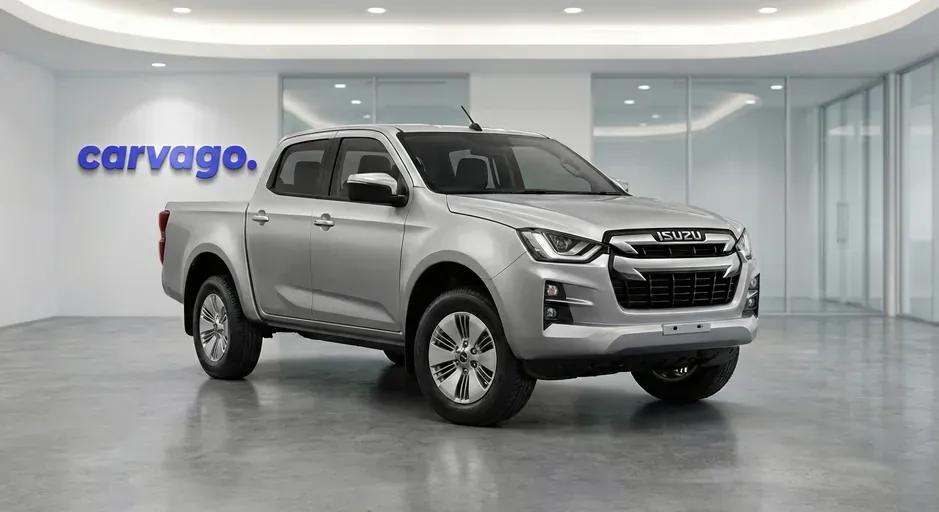
Review
Review Isuzu D-Max: What do owners and experts really say?
Isuzu D-Max review: real owner experience, towing limits, common faults and running costs — everything you need to know before you buy.
Oct 21, 2026
Volkswagen Amarok review: real owner experience, towing capacity, engine picks, running costs and our expert verdict before you buy.
November 7, 2026
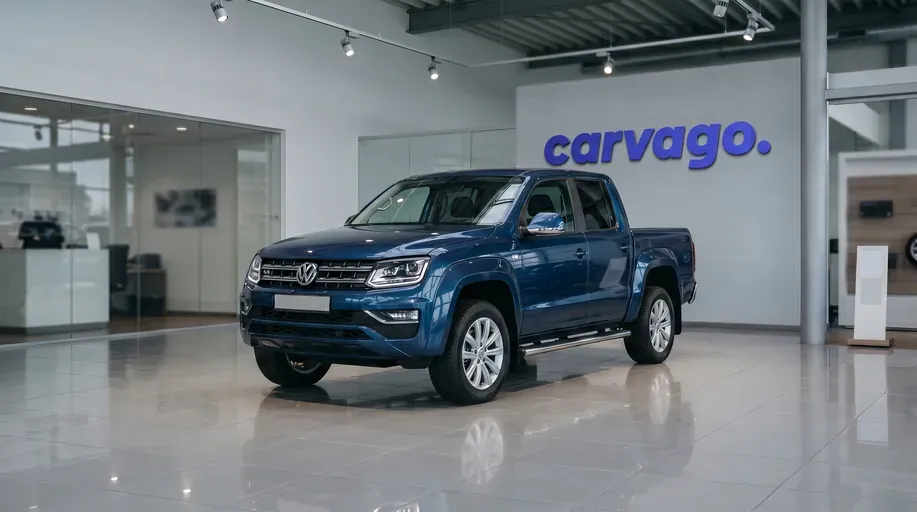
The second-generation Volkswagen Amarok occupies the mid-size pick-up segment, built on a robust ladder-frame platform developed through an industrial partnership. Following its world premiere in July 2022, initial European customer deliveries commenced in December 2022, followed by general market availability from May 2023. Production remains active and ongoing.
Across European markets, the Volkswagen Amarok pick-up is sold exclusively as a four-door DoubleCab. While a two-door single-cab variant was engineered for other continents, European distribution focuses strictly on the five-seat double-cab configuration to bridge workhorse utility with passenger transport.
The vehicle primarily attracts trade professionals, agricultural operators, and commercial fleets requiring serious trailer towing capability and four-wheel-drive traction in unpaved terrain. At the same time, it appeals to private buyers seeking an all-weather utility vehicle suited to carrying bulky outdoor equipment.
Because customer deliveries of the second-generation Volkswagen Amarok commenced in Europe in late 2022 and rolled out more broadly across 2023, long-term fleet reliability is still becoming established. Early reports from operating environments and professional testing indicate that the mechanical core of the vehicle is robust, while early ownership concerns primarily involve on-board operating software and interface stability.
The most frequent complaint recorded across professional tests and official technical bulletins concerns the central portrait touchscreen, which is fitted standard across the range. The interface handles navigation, multimedia, and primary climate control functions. Drivers and testers have documented intermittent interface freezes, delayed startup responses, temporary black screens, and wireless smartphone projection dropouts. Because temperature, airflow, and seat-heating adjustments rely on digital soft-keys on the screen, a display crash temporarily prevents heating and ventilation adjustments while driving. Volkswagen Commercial Vehicles deployed formal software updates to address boot-up stability and connectivity dropouts, which resolve the underlying lockups in most instances.
Beyond software latency, road tests and early owners describe two operational quirks worth noting. On the automatic transmission fitted to the diesel engines, reviewers and owners report minor driveline shudder or hesitant gear selection between the lowest gears during cold morning startups before the transmission fluid reaches full operating temperature. In addition, on models equipped with lane-keeping assistance, drivers report occasional false "keep hands on the wheel" warnings during long, straight highway journeys, despite holding the steering wheel normally.
European safety authorities and manufacturer recall registers record three official safety campaigns affecting the second-generation diesel Volkswagen Amarok:
| Issue | Production Window | Scope | Defect & Workshop Action |
|---|---|---|---|
| Electronic brake booster software | 10 January 2025 – 12 June 2025 | Worldwide (8,078 vehicles; 756 in Germany) | A potential loss of power brake assistance from the electronic booster module can increase pedal travel and braking distances. Dealers apply an updated control module software flash. |
| Driver’s seat belt anchorage | 12 October 2022 – 08 February 2023 | Worldwide (European and global batches) | The driver’s seat belt may have been routed through the plastic trim cover rather than the structural anchorage eyelet, risking failure under load. Dealers inspect the routing and re-anchor or replace the belt assembly if needed. |
| Propshaft flange fastening | 22 March 2023 – 28 April 2023 | Worldwide (isolated batch of 21 vehicles) | Propshaft fastening screws on the gearbox side were not tightened to specified torque, risking eventual loss of drive. Workshops retorque the connection to factory specification. |
For buyers evaluating a used Volkswagen Amarok 4x4, mechanical wear is heavily dictated by how previous owners utilised the vehicle. Pick-up trucks deployed for forestry, construction, or heavy trailer towing warrant a close look at the underbody. Impact damage to the ladder-frame rails, bash plates, transfer-case shielding, and the electrical trailer socket is common when vehicles have tackled rough terrain. If an optional retractable roller shutter or hard tonneau is fitted over the rear bed, blocked drainage channels can route rainwater into the cargo bay rather than expelling it beneath the vehicle. Verifying the undercarriage condition and ensuring routine service completion can also be arranged through an independent pre-purchase inspection like CarAudit.
European buyers of the second-generation diesel Volkswagen Amarok choose exclusively from turbocharged diesel engines, each paired with an all-wheel-drive system. Depending on the specific engine variant, the pick-up is equipped with either a manual gearbox or a ten-speed automatic transmission.
| Engine | Fuel | Power | Gearbox | Model years |
|---|---|---|---|---|
| 2.0 TDI | Diesel | 125 kW (170 hp) | 6-speed manual | 2023–present |
| 2.0 TDI | Diesel | 151 kW (205 hp) | 10-speed automatic | 2023–present |
| 3.0 V6 TDI | Diesel | 177 kW (240 hp) | 10-speed automatic | 2022–present |
Short trips and utility use
Due to complex exhaust aftertreatment systems featuring selective catalytic reduction and particulate filters, no diesel engine in this lineup is suited to a continuous regime of short, cold-start urban errands. For municipal fleets, forestry, and utility operators requiring a dedicated work vehicle for local duties, the single-turbo 2.0 TDI is the practical option. Its manual gearbox and mechanical focus keep operating costs down, though the long shift throws require deliberate inputs.
Mixed daily driving
The bi-turbo 2.0 TDI represents the most balanced configuration for drivers splitting their mileage between worksites, rural roads, and highway travel. Its sequential turbocharger setup provides responsive mid-range pulling power while consuming less fuel than the six-cylinder. In stop-and-go commuter traffic, an automatic Volkswagen Amarok with this bi-turbo engine delivers smooth progress without driver fatigue.
Motorway cruising
For drivers who spend significant time covering long distances on high-speed motorways, the 3.0 V6 TDI is the most composed choice. While the four-cylinder units can sound vocal under heavy acceleration, the V6 remains quiet at sustained cruising speeds. Its permanent all-wheel-drive setup also ensures constant road-holding on wet tarmac without requiring the driver to manually toggle drive modes.
Towing and heavy hauling
Anyone regularly hauling heavy trailers or operating near maximum gross combination weight ratings should select the 3.0 V6 TDI. Its low-end pulling power moves heavy combinations from a standstill on steep inclines without straining the driveline. The bi-turbo 2.0 TDI is also capable of towing heavy trailers, but on long highway climbs it must operate higher in its rev range and downshift more frequently to hold its speed.
For documented service bulletins, verified safety campaigns, and reported faults, refer to the owner experiences section.
| Dimension | DoubleCab pickup |
|---|---|
| Length | 5,350 mm |
| Width (excluding mirrors) | 1,910 mm |
| Height | 1,871–1,884 mm |
| Wheelbase | 3,270 mm |
| Cargo bed volume (to sidewall edge) | 985 l |
Load beds on pickup trucks lack standardized enclosed luggage figures; cargo capacity reflects open bed volume up to the side rails.
Inside the four-door Volkswagen Amarok pickup, four adults travel with sufficient legroom and head clearance aided by a sculpted headliner. Accommodating three passengers across the rear bench is noticeably tighter, as lateral space is limited and an elevated central floor tunnel intrudes into middle-seat foot space. Daily cabin utility is enhanced by the folding seat base: while the rear backrest is bolted permanently to the rear cab wall, the lower cushion splits 60:40 and flips upward against the seatback to expose an enclosed, level floor area for tools or weather-sensitive luggage.
Outside, the open load bed accepts a standard Euro-pallet between the wheel arches, whether loaded crosswise or lengthwise. Cargo is secured using standard floor-mounted anchor rings or optional adjustable sidewall tie-down tracks, while the tailgate opening matches the width needed for commercial freight loading.
On open roads, the Volkswagen Amarok rides with greater composure than traditional commercial rivals, settling into a relaxed motorway cruise. Unladen, however, the leaf-sprung rear axle produces noticeable shudder and vertical fidgeting over broken asphalt, an effect worsened on versions fitted with larger optional wheels. Steering is light and accurate enough in routine driving, with body lean kept in check during regular cornering. When pushed into rapid evasive lane changes, the chassis reacts sluggishly, with indirect responses and delayed front-end turn-in. Cabin isolation is a highlight, as wind noise is well suppressed and the V6 diesel runs quietly.
Inside, the cabin blends functional utility durability with passenger-car styling. Front seating is supportive with a commanding driving position. Hard plastics remain prevalent throughout lower cabin zones, reflecting its commercial vehicle foundations. Ergonomics are compromised by the digital interface: physical shortcut switches below the central display are straightforward to operate, but burying core climate controls inside the vertical touchscreen makes basic adjustments distracting while driving.
Professional evaluations broadly agree that the Volkswagen Amarok pickup delivers refined cruising compared to typical commercial workhorses. They diverge, however, on handling agility; while several tests find it composed around town, more rigorous dynamic evaluations highlight ponderous emergency maneuvering and an unwieldy turning circle. No mid-cycle facelift has been introduced to the European second-generation model.
All the charts in this section reflect listings on Carvago across the broader Volkswagen Amarok model family, encompassing earlier iterations alongside the current vehicle, so they do not establish an isolated price level for the reviewed generation alone. Across this combined market offer, the median asking price stands at €35,000 for 2019 vehicles and reaches €61,900 for 2026 examples. Later manufacturing years reflect modern equipment and updated vehicle platforms, with 2023 listings recording a median asking price of €53,000.
Between May and October 2026, the number of advertised Volkswagen Amarok models stayed within a narrow range, moving from 1,395 listings at the start to a peak of 1,472 in July. The chart below tracks how monthly availability shifted across this timeframe.
Active listings over time
| Month | Volkswagen Amarok |
|---|---|
| 2026-05 | 1 395 |
| 2026-06 | 1 423 |
| 2026-07 | 1 472 |
| 2026-08 | 1 439 |
| 2026-09 | 1 464 |
| 2026-10 | 1 386 |
Source Carvago
For prospective buyers, this level of supply translates into broad choice across the market, as active listings consistently hovered near 1,400 vehicles before closing at 1,386 in October 2026.
Among used listings advertised today, the median asking price stands at €35,000 for vehicles built in 2019 and reaches €61,900 for those built in 2026.
Median advertised price by year of manufacture
| Model year | Volkswagen Amarok |
|---|---|
| 2019 | 35 000 |
| 2020 | 37 000 |
| 2021 | 37 900 |
| 2022 | 48 400 |
| 2023 | 53 000 |
| 2024 | 54 900 |
| 2025 | 58 800 |
| 2026 | 61 900 |
Source Carvago
Buyers exploring earlier build years from 2019 to 2021 encounter median asking prices between €35,000 and €37,900, whereas models built in 2022 step up to €48,400 and extend to €61,900 for 2026 examples.
This depreciation curve illustrates how the model sheds residual value over time, losing 18% of its initial value in the first year and 27% by age three.
Residual value by vehicle age
| Vehicle age | Volkswagen Amarok |
|---|---|
| New | 61 600 |
| 1 yr | 50 500 |
| 2 yrs | 47 900 |
| 3 yrs | 45 200 |
| 4 yrs | 37 600 |
| 5 yrs | 35 000 |
| 6 yrs | 32 100 |
| 7 yrs | 28 800 |
Source Carvago
Across the seven years shown, the model sheds 53% of its initial residual value. The sharpest drop occurs in the first year, after which annual depreciation slows markedly between ages one and three.
Between May 2026 and October 2026, advertised listings consisted entirely of diesel models, moving from 1,395 in May to 1,385 in October. The breakdown across recent months illustrates this distribution below.
Supply composition by fuel type
| Month | Diesel |
|---|---|
| 2026-05 | 1 395 |
| 2026-06 | 1 423 |
| 2026-07 | 1 472 |
| 2026-08 | 1 438 |
| 2026-09 | 1 463 |
| 2026-10 | 1 385 |
Source Carvago
With 1,385 diesel vehicles and 0 listings for any alternative fuel in October 2026, buyers will realistically find only diesel options on the market.
The chart below tracks the average asking price for the Volkswagen Amarok from May 2026 to October 2026, starting at €51,600.
Average price development over time
| Month | Volkswagen Amarok |
|---|---|
| 2026-05 | 51 600 |
| 2026-06 | 51 700 |
| 2026-07 | 52 000 |
| 2026-08 | 52 600 |
| 2026-09 | 52 600 |
| 2026-10 | 52 700 |
Source Carvago
Across the six months, the average moved from €51,600 to €52,700, an increase of roughly 2% that reflects only minor variation relative to the vehicle's overall price level.
Composed motorway cruising with effective cabin noise isolation
Practical load bed shaped to carry a standard Euro-pallet between the wheel arches
Upward-folding rear seat cushions create a protected, enclosed cargo area inside the cab
Fidgety unladen ride over broken surfaces and ponderous emergency handling
Infotainment software prone to startup delays and freezes that temporarily disable climate controls
Limited rear middle-seat room due to a prominent floor tunnel and narrow lateral space
Long-term fleet reliability is still becoming established, but early reports indicate a mechanically robust core. The most frequent ownership complaints involve software latency and temporary freezes on the central touchscreen, alongside official safety recalls that should be verified by VIN.
The bi-turbo 2.0 TDI offers the best balance for mixed everyday driving thanks to lower fuel consumption and responsive mid-range pulling power. For frequent heavy trailer towing or sustained motorway cruising, the diesel Volkswagen Amarok with the 3.0 V6 TDI is the most composed choice.
Inspect the underbody for off-road damage and verify through CarAudit that all safety recall campaigns have been completed by VIN. A cold-start test drive should also confirm that the transmission shifts smoothly and the touchscreen responds without freezing.
The four-door Volkswagen Amarok seats four adults comfortably and cruises quietly, but unladen ride comfort is fidgety over broken asphalt. Three passengers across the rear bench will find foot space constrained by the floor tunnel, and touchscreen-based climate controls distract while driving.
Sources: vwpress.co.uk, vwn-presse.de, adac.de, service.gov.uk, autocar.co.uk
This article was prepared using artificial intelligence tools. The section guarantor is Petr Dušek.
Isuzu D-Max review: real owner experience, towing limits, common faults and running costs — everything you need to know before you buy.
Oct 21, 2026
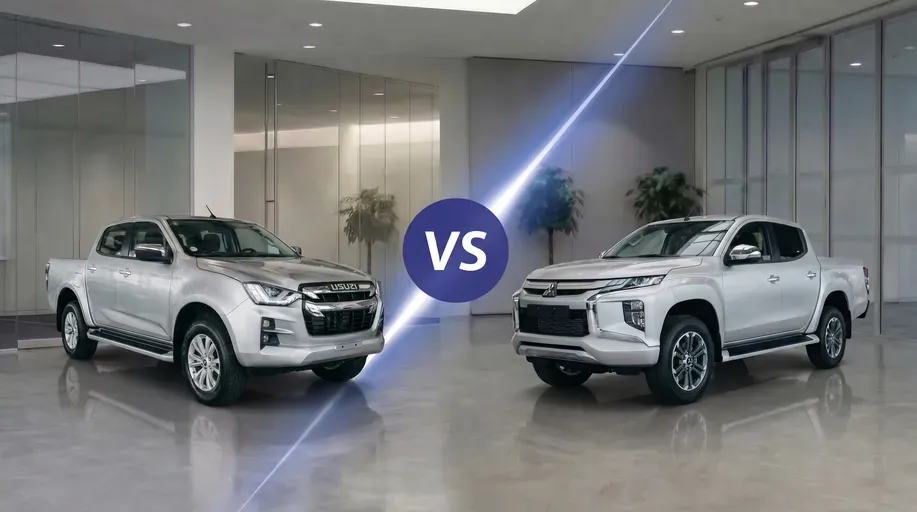
Isuzu D-Max vs Mitsubishi L200 (Triton): Detailed comparison of popular pick-ups. Discover the differences in off-road performance, equipment and reliability and find the winner.
Apr 21, 2026
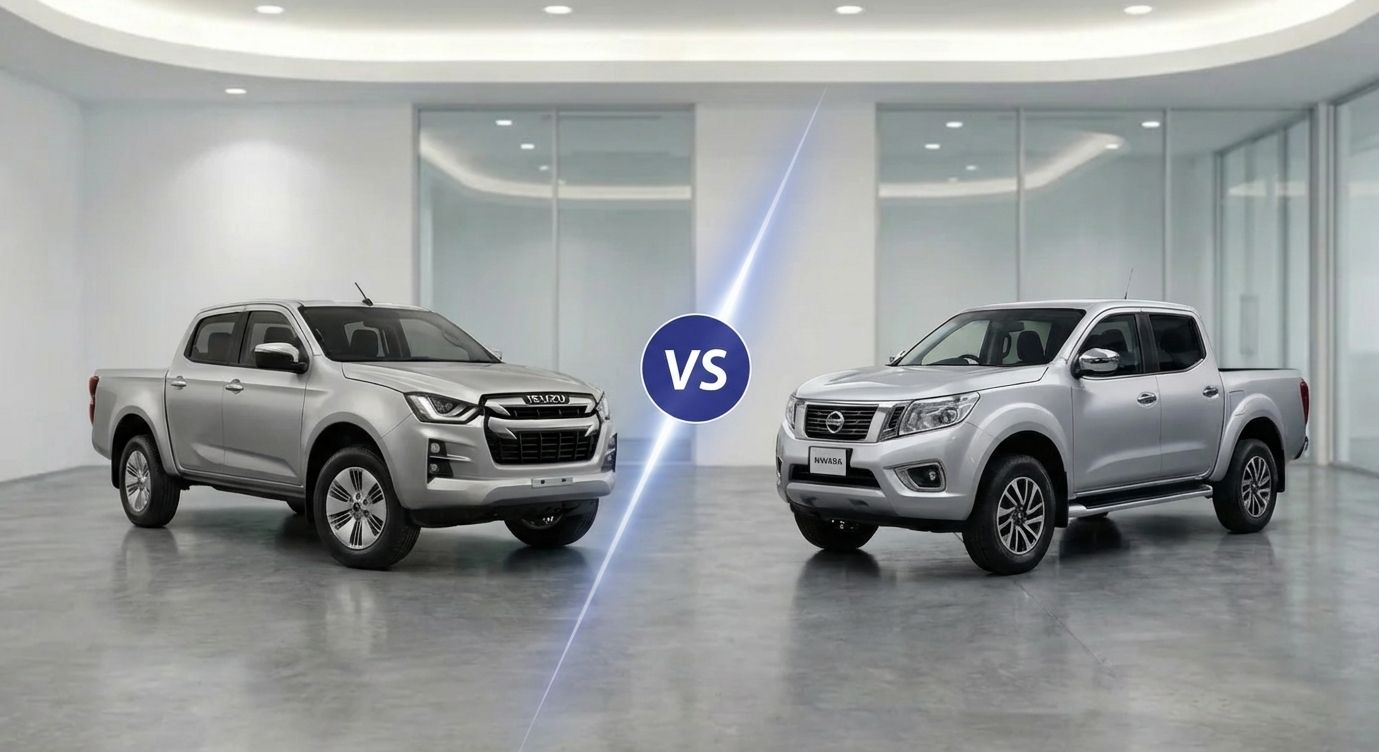
Isuzu D-Max vs. Nissan Navara: Which pick-up is better? Our detailed comparison, tests, and verdict will help you choose the right vehicle.
Apr 14, 2026