Car battle
Mitsubishi L200 vs. Nissan Navara: Complete comparison 2026
Comparison of the Mitsubishi L200 (Triton) and Nissan Navara (NP300). Find out which pickup has better driving characteristics and equipment. Read our final verdict!
Apr 20, 2026
Articles
Car battle
Isuzu D-Max vs Mitsubishi L200 (Triton): Detailed comparison of popular pick-ups. Discover the differences in off-road performance, equipment and reliability and find the winner.
April 21, 2026
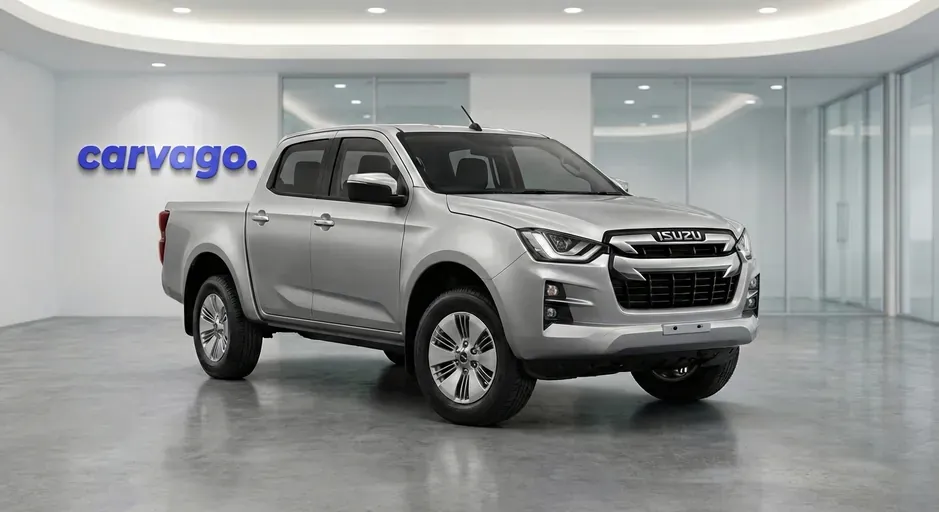
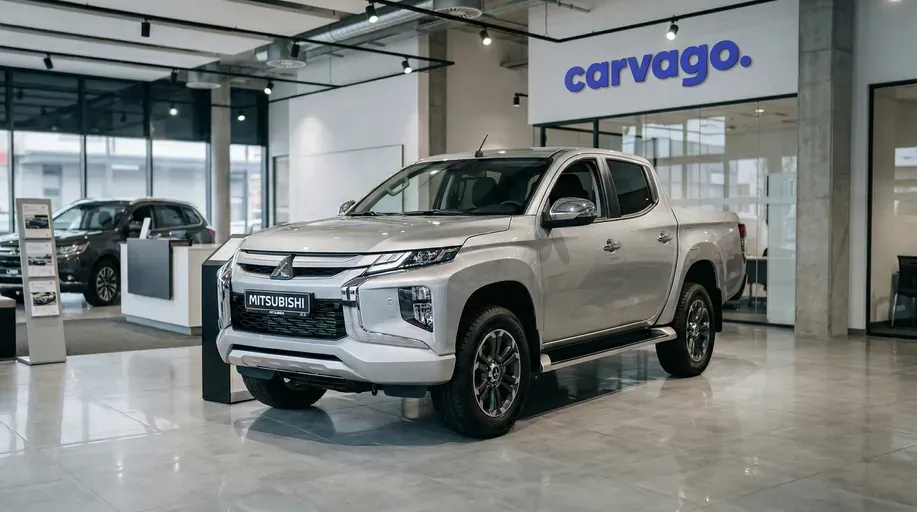
Isuzu D-Max, also sold under the Chevrolet D-Max name in some global markets, is a robust and reliable workhorse with an excellent reputation for handling the most demanding off-road and work tasks. Its direct challenger is the popular Mitsubishi L200, also known globally as the Mitsubishi Triton or Strada, which aims to score points with an attractive combination of uncompromising utility, distinctive design, and surprising driving comfort. Let's take a detailed look at how these two popular pickups stack up in a direct comparison and which one represents the smarter choice for your specific needs.
When comparing the external dimensions of these two popular workhorses, we find that the Isuzu D-Max is slightly bulkier in most respects. Focusing on relevant models roughly four years old (third generation for both vehicles), the Isuzu offers a length of up to 5320 mm and a width reaching 1870 mm, depending on the cab type. The Mitsubishi L200 is slightly more compact, with a maximum length of 5305 mm and a width of 1815 mm. The Isuzu's greater width provides the benefit of a wider interior and more shoulder room. However, it can be a slight disadvantage when parking in tight urban spaces, and this is where the Mitsubishi L200 scores points for better maneuverability thanks to its narrower build.
A more significant and fundamental difference for driving characteristics can be found in the wheelbase. While the Mitsubishi L200 maintains a conservative 3000 mm, the Isuzu D-Max boasts a value of 3125 mm. The longer wheelbase of the Isuzu contributes to exemplary directional stability during highway travel and ensures calmer vehicle behavior when towing a heavy trailer. On the other hand, the shorter wheelbase of the Mitsubishi L200 clearly favors off-road capabilities. It significantly improves the breakover angle, which drivers will appreciate especially when tackling sharp crests in challenging terrain. The height of both pickups is very similar, ranging between 1770 and 1790 mm.
From an overall perspective of external dimensions, it primarily depends on how the vehicle is used. The Isuzu D-Max, with its wider stance and longer wheelbase, represents a robust choice for towing trailers and comfortable long journeys with maximum stability. The Mitsubishi L200, conversely, benefits from its more compact proportions and shorter wheelbase as a more agile and nimble companion that weaves more easily through rugged terrain and city traffic.
| Parameter | Isuzu D-Max Pickup | Mitsubishi L200 Pickup |
|---|---|---|
| Width (mm) | 1810 - 1870 | 1785 - 1815 |
| Length (mm) | 5270 - 5320 | 5195 - 5305 |
| Height (mm) | 1770 - 1790 | 1775 - 1780 |
| Wheelbase (mm) | 3125 | 3000 |
Luggage compartment volume, in this case more accurately the capacity and dimensions of the open cargo area (bed), is an absolutely key factor for most buyers when choosing a pick-up. Whether you plan to use the vehicle as a tough workhorse on a construction site, a forestry special, or a lifestyle vehicle for a family with a heap of camping equipment, differences in total capacity play a huge role. The fundamental difference between the Isuzu D-Max and Mitsubishi L200 models (in an ideal comparison of roughly four-year-old third-generation used cars) lies primarily in the width and overall depth of the bed, which directly affects the usable volume.
Due to the different construction of pick-ups, the standard transport volume varies exclusively according to the chosen cab, with volume values to the upper edge of the bed sides calculable in liters. The Isuzu D-Max offers a theoretical bed volume of approximately 1,177 liters for the most sought-after Double Cab version, while the slightly more subtle Mitsubishi L200 has around 1,061 liters. For extended cabs, referred to as Space Cab at Isuzu and Club Cab at Mitsubishi, the difference is roughly 1,353 liters compared to 1,291 liters. Logically, the largest loading area is provided by purely work versions with a single cab (Single Cab), where the Isuzu D-Max holds nearly 1,746 liters compared to 1,581 liters for the Mitsubishi L200. Since these are utility vehicles with an external bed, the volume cannot be maximized by folding the rear seats as we know it from station wagons or SUVs (although in the Double Cab, the rear bench can be flipped up to transport smaller valuables inside).
In practice, these liter differences mean a significant advantage for the Isuzu D-Max. A wider and deeper bed provides space for a few extra suitcases and substantially eases the transport of bulkier construction materials. With the Isuzu, you will have fewer worries when fitting a standard Euro pallet between the rear wheel arches, but even the Mitsubishi L200 is perfectly sufficient for weekend shopping or a longer off-road-oriented vacation. In neither brand will you find hybrid variants in these generations on the used car market, where traction batteries would negatively limit the loading volume. Both cars thus maintain their hallmark as reliable workhorses without exception.
| Parameter | Isuzu D-Max Single Cab | Mitsubishi L200 Single Cab | Isuzu D-Max Space Cab | Mitsubishi L200 Club Cab | Isuzu D-Max Double Cab | Mitsubishi L200 Double Cab |
|---|---|---|---|---|---|---|
| Base volume (liters) | 1746 | 1581 | 1353 | 1291 | 1177 | 1061 |
| Max volume with seats folded down (liters) | Not applicable | Not applicable | Not applicable | Not applicable | Not applicable | Not applicable |
Thanks to its wider and deeper loading area, the Isuzu D-Max offers slightly more cargo volume in all cab versions than the Mitsubishi L200, making it the ultimate choice for craftsmen and adventurers alike.
The ability to tow heavy trailers is often a key parameter for pickup owners, as these vehicles frequently serve as primary workhorses for transporting heavy machinery, construction materials, or large animal trailers and boats. When comparing approximately four-year-old used cars (third generation of both models), we find a fairly noticeable difference in this discipline, which may represent a decisive factor for many interested parties.
The Isuzu D-Max (in its 3rd generation since 2020) is a clear leader in towing capacity. Most versions sold with Double Cab and Space Cab can handle a braked trailer with a maximum legally permitted weight of up to 3,500 kg. The Mitsubishi L200 (in its 3rd generation, sold until roughly 2022) lags slightly behind these values. It can tow a maximum of 3,100 kg in the Double Cab version and 3,000 kg in the Club Cab version.
Regarding differences in specific versions, Isuzu offers a slightly variable value for basic work specifications with a single cab (Single Cab), where towing capacity can start as low as 2,500 kg and rise to a maximum of 3.5 tonnes depending on modifications. Traditional full-hybrid variants are not offered in these generations of pickups, so potential capacity limitations due to batteries do not apply here. The weight of an unbraked trailer is standardly limited by European legislation to 750 kg for both vehicles.
The difference of 400 to 500 kilograms on the tow bar in favor of Isuzu represents a huge advantage in practice. The D-Max gives you the necessary reserve and space for heavier loads – whether it's bulkier construction material, transporting a heavier excavator to a construction site, or towing a large caravan on a long holiday. While the Mitsubishi L200 does a great job and handles common loads with ease, you simply hit its ceiling with the heaviest limit trailers.
If you plan to use a pickup primarily as a tool for towing extremely heavy loads at the very limit of this vehicle class, the Isuzu D-Max is the clear choice, offering significantly higher versatility and absolute certainty.
| Model and Engine | Braked Trailer Weight (kg) | Unbraked Trailer Weight (kg) |
|---|---|---|
| Isuzu D-Max Double / Space Cab 1.9 Diesel (120 kW) | 3500 | 750 |
| Isuzu D-Max Single Cab 1.9 Diesel (120 kW) | 2500 - 3500 | 750 |
| Mitsubishi L200 Double Cab 2.2 Diesel / 2.4 DI-D (110 - 133 kW) | 3100 | 750 |
| Mitsubishi L200 Club Cab 2.2 Diesel / 2.4 DI-D (110 - 133 kW) | 3000 | 750 |
In terms of engine options, the Isuzu D-Max and Mitsubishi L200 represent quite different philosophies, even though both manufacturers eventually had to resort to inevitable downsizing due to emission standards. For a buyer looking for an approximately four-year-old used car, this means betting on sophisticated, smaller-displacement turbodiesels. Isuzu decided to play an extremely economical card for the European market – its current D-Max is powered exclusively by the 1.9 Diesel (Ddi) engine. Its greatest advantages are overall lower operating costs and excellent fuel consumption.
On the other hand, Mitsubishi bet on a brand-new 2.2 Diesel unit for its latest generation of the L200 model in our market, replacing the popular 2.4 DI-D engine. While the Isuzu represents an ideal choice for budget-oriented drivers or corporate fleets with high mileage, the Mitsubishi, with its higher torque, targets users requiring relentless towing power in more demanding terrain. It is important to note that sales of the Mitsubishi L200 in Europe ended in the autumn of 2022, and therefore vehicles from the 2019–2022 model years represent one of the last and most affordable options to acquire this iconic pick-up with a modern engine.
The third generation of the Isuzu D-Max (available from the turn of 2020 and 2021 to the present) relies exclusively on the proven turbocharged four-cylinder designated as 1.9 Diesel in the market for younger used cars. Despite its somewhat smaller displacement, this unit can deliver a sufficient output of 120 kW and a torque of 360 Nm with the help of a variable geometry turbocharger. It thus handles not only daily driving but also solid work tasks without unnecessary demands on fuel consumption. Older used cars (from 2012 to 2017) used a larger 2.5 Diesel unit turbocharged by two turbochargers, and in very old pieces from the first generation, you could even find a powerful 3.0 Diesel under the hood. In the context of current four-year-old used cars, however, you will only encounter the 1.9-liter. It can be paired with either a classic six-speed manual transmission (6MT) or a comfortable six-speed automatic (6AT).
| Engine type | Fuel | Power (kW) | Torque (Nm) | Transmission |
|---|---|---|---|---|
| 1.9 Diesel | Diesel | 120 | 360 | 6MT / 6AT |
| 2.5 Diesel | Diesel | 120 | 400 | 6MT / 5AT |
| 3.0 Diesel | Diesel | 120 | 333 / 360 | 5MT / 4AT |
Note: Models equipped with 2.5 Diesel and 3.0 Diesel engines appear on the market exclusively as older model years. Production of the generation with the 2.5 Diesel engine ended in 2017.
Under the hood of the latest generation L200 representatives (from 2019–2022) operates an all-aluminum four-cylinder 2.2 Diesel engine meeting the strict Euro 6d-TEMP standard. Although the maximum power stopped at a more modest 110 kW (150 hp), it is fully compensated by a torque of 400 Nm available from low revs, which you will appreciate mainly when towing heavy loads. For those interested in slightly older model years (2015–2019), the dynamic 2.4 DI-D unit is very attractive. Especially its uprated version, the 2.4 DI-D+, offers an output of 133 kW and an above-average 430 Nm of torque, making it a popular choice for drivers looking for a high-performance used car. If you come across very old vehicles (manufactured before 2015), they will most likely be powered by the more outdated 2.5 DI-D or even the historic 2.5 TD engine. Mitsubishi offered engines as standard with six-speed transmissions (five-speed units can be found in older 2.4 DI-D and 2.5 models).
| Engine type | Fuel | Power (kW) | Torque (Nm) | Transmission |
|---|---|---|---|---|
| 2.2 Diesel | Diesel | 110 | 400 | 6MT / 6AT |
| 2.4 DI-D | Diesel | 113 | 380 | 6MT |
| 2.4 DI-D+ | Diesel | 133 | 430 | 6MT / 5AT |
| 2.5 DI-D / DI-D+ | Diesel | 100 / 131 | 314 / 400 | 5MT / 5AT |
| 2.5 TD | Diesel | 73 / 85 | 240 | 5MT / 4AT |
Note: 2.4 DI-D units disappeared from European dealers' offerings after the facelift in 2019. Legendary models with a 2.5-liter displacement then come exclusively from generations that ended in 2015.
While the Isuzu D-Max, with its 1.9-liter diesel, is the king of efficiency and thus becomes the sensible choice for high mileage, the Mitsubishi L200 relies on massive pull and scores with those who regularly transport heavy loads and thus utilize the generous torque in reserve.
Choosing the right engine for work pickups is crucial for your long-term satisfaction, mechanical reliability, and fuel efficiency. While large-displacement units once ruled under the hoods of these workhorses, the market for approximately four-year-old used cars shows a completely different reality – the trend of effective downsizing has fully taken hold here. In its current generation, Isuzu relies on an exceptionally durable 1.9-liter turbodiesel, which is one of the few on the market to use a maintenance-free chain for the timing drive. Mitsubishi, on the other hand, equipped its last imported L200 models with a very refined 2.2 DI-D engine, famous especially for its excellent synergy with the legendary Super Select all-wheel-drive system. Our engine recommendations are based on real-world operating experience, long-term durability, and owner feedback.
In the third generation (available between 2020–2024), which currently represents the ideal target when searching for a roughly four-year-old used car, the 1.9 Ddi engine is essentially the only choice on our market. Fortunately, it is an exceptionally reliable and proven unit that working drivers swear by.
For the Mitsubishi L200 from 2019–2022, we recommend opting for the sophisticated 2.2 DI-D engine. As is clear from the availability data for this model, sales of the L200 were discontinued on our market at the end of 2022. Units equipped with this power unit thus represent the youngest and, for the purchase of a late-model used car, by far the most sensible option you can find under the L200 name.
When choosing a work pickup, fuel consumption plays a vital role, but manufacturer figures often diverge significantly from everyday reality. Especially for large, heavy four-wheel-drive vehicles with a boxy shape, it pays to monitor real-world operating data directly from drivers. For our comparison, we used information from the independent user platform Spritmonitor.de, which we linked with aggregated values for the engines and generations that currently dominate the market for approximately four-year-old used cars.
| Model and engine | Average fuel consumption (l/100 km) | news_site |
|---|---|---|
| Isuzu D-Max 1.9 Diesel (2nd gen., 2017–2020) | 7.0 | Spritmonitor.de |
| Isuzu D-Max 1.9 Diesel (3rd gen., 2020–2024) | 8.6 | Spritmonitor.de |
| Mitsubishi L200 2.4 DI-D (3rd gen., 2015–2019) | 7.2 | Spritmonitor.de |
| Mitsubishi L200 2.2 Diesel (3rd gen., 2019–2022) | 7.7 | Spritmonitor.de |
Looking at the table, several interesting trends can be observed. The main one is the surprising finding that downsizing does not always work for utility vehicles as engineers might hope. Paradoxically, the newer, third-generation Isuzu D-Max with the base 1.9 Diesel engine shows higher average consumption in practice than its predecessor with the same unit. This is the price for a more modern, significantly more robust, and heavier vehicle construction combined with a stricter measurement cycle. A similar, though less drastic, trend is shown by the Mitsubishi L200 – the older 2.4 DI-D diesel four-cylinder from 2015–2019 was long considered one of the most fuel-efficient engines in its class. Its modernized and slightly smaller successor, the 2.2 Diesel, which is most relevant for today's buyer of a four-year-old used car, takes about half a liter more from the tank, yet Mitsubishi still maintains very respectable figures within the segment.
What does this mean for the typical user? If you are among the drivers who spend a lot of time on regular roads or during longer highway commutes with a relatively empty vehicle, you will most likely achieve slightly better results with the Mitsubishi L200 2.2 Diesel and appreciate its more economical performance. Conversely, the small-displacement 1.9 Diesel engine under the hood of the Isuzu D-Max has to work much harder when the bed is fully loaded, when towing 3.5-ton trailers, or in slow, demanding terrain. Its real-world appetite under load thus readily climbs towards the 9-liter mark. In purely urban traffic with frequent starts, both models are quite close in terms of fuel thirst.
From an overall perspective, consumption cannot be labeled as a definitive "gamechanger" that should decide the entire battle on its own. The values for both Japanese rivals move within very similar and fully acceptable ranges. When searching for the right used car, the primary factors should instead be the overall technical condition, a verifiable service history, and whether you will utilize their off-road strengths, rather than a difference of a few deciliters of diesel per hundred kilometers.
When choosing a roughly 4-year-old pickup, both models fall into the category of robust workhorses that hold their value exceptionally well. While the third-generation Isuzu D-Max was a newcomer to the European market at the time with a more modern approach, the Mitsubishi L200 was sold in its popular and proven fifth generation after a significant facelift. Given that the L200 model gradually withdrew from the European market at the end of 2023, these used cars are becoming interesting and sought-after commodities.
The Mitsubishi L200 represents a more affordable choice on the used car market. Used units from 2020 and 2021 with mileage over 150,000 km can be purchased starting from approximately €22,000. 2021 models with an average mileage of around 100,000 km are currently moving on the secondary market in the price range from €25,000 to €27,000. If you are looking for better-preserved pieces in higher trim levels (e.g., Intense) with mileage under 50,000 km, prepare an amount approaching €29,000. The advantage of the L200 is the relatively wide selection in dealerships thanks to its long-term popularity with Czech companies.
The Isuzu D-Max holds its price significantly more firmly, which is due to its reputation for extreme reliability and a noticeable premium shift in the third generation. The cheapest used units with higher mileage (around 120,000 km) are priced above the €29,000 mark. Newer vehicles from 2021 and 2022 with mileage up to 50,000 km are most often sold in the range of €35,000 to €39,000. Top-equipped versions, such as the popular V-Cross or LSE trims with automatic transmission, often and easily cross the €41,000 mark on the used market.
| Model and specification | Average mileage | Approximate price (EUR) |
|---|---|---|
| Mitsubishi L200 2.2 DI-D | 100,000 - 150,000 km | €22,000 - €26,000 |
| Mitsubishi L200 2.2 DI-D | 30,000 - 60,000 km | €28,000 - €30,000 |
| Isuzu D-Max 1.9 Ddi | 80,000 - 120,000 km | €29,000 - €33,000 |
| Isuzu D-Max 1.9 Ddi (top trims) | 20,000 - 50,000 km | €37,000 - €43,000 |
Factors affecting used car prices:
While the Mitsubishi L200 represents a more affordable path to a nearly new and still very capable pickup, you will pay more on the used market for the technologically newer and more premium-finished Isuzu D-Max, but the reward will be a slower loss of value.
Although sellers often entice buyers with the fact that both vehicles have achieved five-star safety ratings in their long history (or in other global tests such as the Australian ANCAP), in the case of the European Euro NCAP methodology, it is absolutely crucial to emphasize the importance of context and the specific year of testing. Testing protocols are constantly evolving and becoming drastically stricter. For this reason, percentage results from different years cannot be fairly and directly compared. While older methodologies focused primarily on passive safety and body damage during a physical impact, newer ones take into detailed account advanced active accident prevention systems, complicated offset crash simulations, protection against whiplash injuries, and comprehensive detection of cyclists and pedestrians at intersections.
The Isuzu D-Max was tested according to modern and highly strict protocols in 2020, subsequently undergoing a retest in 2022 to confirm its maximum five-star rating. These demanding tests already included modern scenarios of a frontal impact into a mobile barrier. The vehicle features excellent safety elements, including a standard center airbag (which effectively prevents the driver and passenger from colliding during a severe side impact) and an advanced Autonomous Emergency Braking (AEB) system capable of recognizing not only other cars but also vulnerable cyclists and pedestrians.
In contrast, the Mitsubishi L200 (even in its latest facelifted generation sold today as a roughly four-year-old used car) is structurally and safety-wise based on tests that took place back in 2015. In this testing year, the vehicle achieved four stars. Although, for example, in the pedestrian protection category it shows a numerically better percentage result than the newer D-Max, it is a perfect example of the incomparability of tests. In 2015, pedestrian protection was mainly assessed based on the structural deformation zone of the hood, and strict tests of active braking before an approaching cyclist were not practiced. The L200 lost the highest possible rating at that time precisely due to the absence of standard modern electronic assistants. The vehicle's certification according to the regulations of that time has already expired, and when compared to completely new standards, the vehicle lags significantly behind in active protection.
The overall comparison clearly shows that if passive and active occupant protection is an absolute priority for you, the Isuzu D-Max brings a safety package that is a whole generation more modern and much more comprehensive, confidently meeting the current standards of today's traffic.
| Parameter | Isuzu D-Max | Mitsubishi L200 |
|---|---|---|
| Year of testing | 2020 (revised 2022) | 2015 |
| Adult occupant protection | 86 % | 81 % |
| Child occupant protection | 86 % | 84 % |
| Vulnerable road user protection | 69 % | 76 % |
| Safety assist systems | 83 % | 64 % |
While the Mitsubishi L200 still offers a robust foundation of passive safety, the Isuzu D-Max is demonstrably a safer choice for the occupants on the used car market thanks to its fresh five-star rating and modern active assistants.
In addition to standard equipment, each of the models offers several unique features that can be decisive for the customer, with both brands approaching the addition of functional value in their own specific way.
The third generation of this Japanese workhorse focused on radical improvements in safety and on-board comfort without losing any of its legendary durability. For users, this means a shift from a purely work machine to the role of a full-fledged family and lifestyle vehicle.
The latest European generations of the Mitsubishi L200 are characterized by a distinctive, masculine "Dynamic Shield" design, but under the skin, they hide technologies focused primarily on handling, traction, and unexpected comfort for rear-seat passengers.
Full 3,500 kg towing capacity and very high payload capacity
Maximum five-star Euro NCAP safety rating (model from 2020 onwards)
Rich standard equipment of modern driver assistance systems (ADAS)
Renowned mechanical reliability and extreme durability in heavy off-road conditions
Significant leap in build quality and interior comfort compared to the previous generation
The 1.9-liter engine is noisier and less refined at higher revs
Stiffer tuning of the rear leaf springs causes a bouncy ride when the bed is empty
Slower response of the infotainment touchscreen
The Isuzu D-Max is the ultimate indomitable workhorse, excelling with its massive towing capacity, robustness, and high level of active and passive safety. It is an ideal choice for tradespeople, farmers, and companies needing a reliable towing machine for demanding conditions, who can overlook the slightly rougher character of the diesel four-cylinder engine.
Advanced Super Select 4WD-II all-wheel-drive system with a center differential (can be driven in 4x4 mode even on dry asphalt)
Excellent maneuverability in tight spaces thanks to the smallest turning radius in its class
Sharp and modern front grille design (Dynamic Shield)
More favorable purchase price on the used car market and an attractive price/performance ratio
Lower maximum towing capacity (3,100 kg) lags behind the class standard
More outdated interior architecture and weaker onboard technology carried over from the previous generation
Future maintenance and availability of used cars may be affected by the brand's withdrawal from official sales in Europe
The Mitsubishi L200 will appeal to drivers looking for an agile and stylish pickup with a fantastic and versatile all-wheel-drive system that provides confidence on snow and wet asphalt. Due to its compromised towing capacity and older cabin design, it makes more sense for an active lifestyle and leisure activities rather than hard daily work on a construction site.
Based on data from detailed used car inspections, service center statistics, and long-term user experiences, we have compiled an overview of the most common problems that buyers of roughly four-year-old Isuzu D-Max and Mitsubishi L200 models should pay particularly close attention to.
Isuzu D-Max (3rd generation, from 2019) is considered a very durable workhorse, yet even this modern iteration has its specific weak points.
The third-generation Isuzu D-Max represents a mechanically very robust car that requires regular long trips for trouble-free operation and, in the case of frequent trailer towing, earlier fluid changes.
Mitsubishi L200 (6th generation, 2019–2023) is mechanically an evolution of a proven design, but it also has recurring problems associated mainly with the chassis and fuel system.
The Mitsubishi L200 offers a great all-wheel-drive system, but used car buyers should focus on the condition of the fuel and cooling systems, as well as possible material fatigue on the rear axle due to heavy overloading.
When buying a used car, a thorough inspection is key. Here are some specific points to focus on for these two models. Given that these are work pickups that often serve in demanding conditions, a thorough physical car inspection is the most important step before the purchase itself.
The Mitsubishi L200 has an advantage thanks to its advanced Super Select 4WD-II system, as it allows for four-wheel drive even on dry asphalt. The Isuzu D-Max relies on a classic part-time drive system, but the modern generation offers a rear differential lock, which significantly improves its off-road capability. Ultimately, both vehicles can handle very demanding terrain without major issues.
The Isuzu D-Max is the better towing vehicle, as it can handle a braked trailer weighing up to 3,500 kg as standard. The Mitsubishi L200 has a towing capacity limited to 3,100 kg for most newer versions, which may be limiting for some more demanding users. If you frequently tow heavy construction machinery or horse trailers, the Isuzu is the more suitable choice.
The Isuzu D-Max is renowned for its extreme durability, and its 1.9-liter engine benefits from the brand's years of experience in manufacturing heavy commercial vehicles, ensuring a long service life. The Mitsubishi L200 with the 2.2 DI-D engine is also very mechanically reliable but may be slightly more prone to particulate filter issues during frequent short trips. Routine maintenance costs are comparable, but the D-Max has a reputation on the used car market as the ultimate and indestructible workhorse.
On regular roads, the Mitsubishi L200 feels more comfortable overall because its suspension better dampens bumps when driving with an empty bed. The Isuzu D-Max is noticeably stiffer, and its purely utility focus is reflected in a less compliant ride without a load. However, the third-generation D-Max (from 2020 onwards) largely compensates for this shortcoming with a significantly more modern interior and premium cabin soundproofing.
Both vehicles offer a payload exceeding the one-ton mark, which fully meets all requirements for full-fledged commercial vehicles. However, the Isuzu D-Max has a slightly deeper and overall wider cargo area, making it easier to transport bulky materials or standardized Euro pallets. Although a wide range of practical accessories and canopies can be chosen for both models, the Isuzu offers slightly better practicality for everyday heavy work.
Sources: ADAC, denik.cz, lidovky.cz, dopravniinfo.cz, fdrive.cz, portalridice.cz
This article was prepared using artificial intelligence tools. The section guarantor is Petr Dušek.
Comparison of the Mitsubishi L200 (Triton) and Nissan Navara (NP300). Find out which pickup has better driving characteristics and equipment. Read our final verdict!
Apr 20, 2026
Detailed comparison: Mitsubishi L200 (Triton) vs Toyota Hilux. Find out which used pick-up offers better equipment, performance, and price. Our verdict here!
Apr 14, 2026
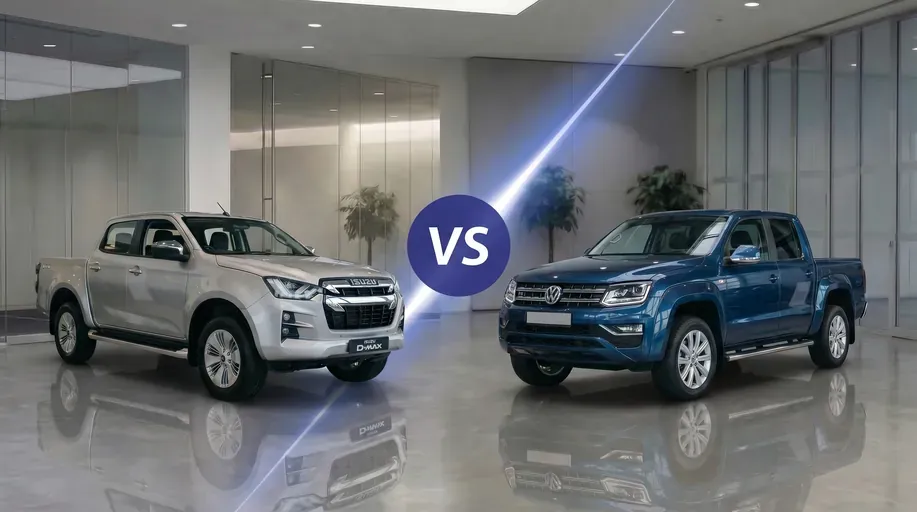
Detailed comparison of the Isuzu D-Max and Volkswagen Amarok. Find out which pickup offers better reliability and equipment. Read our verdict before buying a used car!
Apr 17, 2026