Articles

Car battle

Mitsubishi L200 vs. Nissan Navara: Complete comparison 2026

Comparison of the Mitsubishi L200 (Triton) and Nissan Navara (NP300). Find out which pickup has better driving characteristics and equipment. Read our final verdict!

April 20, 2026

VS
Mitsubishi L200

Mitsubishi L200

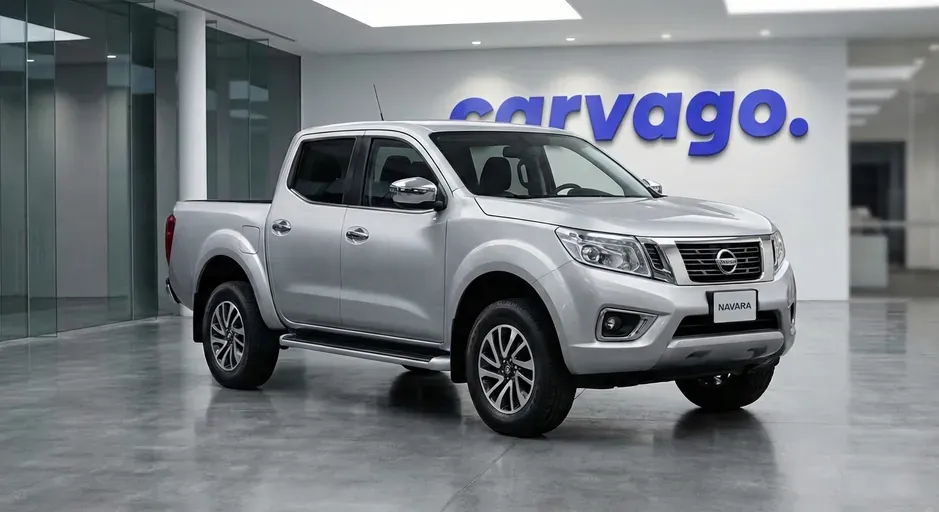
Nissan Navara

Nissan Navara

Introduction

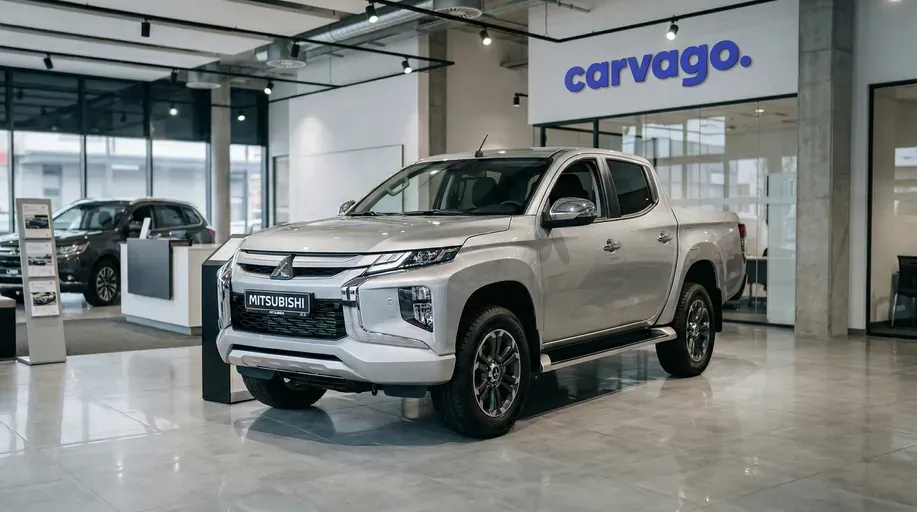
Mitsubishi L200, sold in many markets also under the names Mitsubishi Triton, Strada, or as the rebranded Fiat Fullback, is a proven Japanese pick-up with a reputation as a tough off-road workhorse. Standing against it is the Nissan Navara, which is globally known also under the designation Frontier or NP300 and whose robust technical foundation has also served related models such as the Renault Alaskan. Let's take a detailed look at how these two popular rivals stand in a head-to-head battle and which of them offers a more attractive combination of utility, reliability, and everyday driving comfort.

Comparison of External Dimensions

External dimensions and proportions

When choosing a used pickup truck about four years old, which on the market corresponds to the D231 generation for Nissan and the 3rd modern generation for Mitsubishi, external dimensions play a crucial role both for off-road capability and everyday usability. At first glance, the Nissan Navara gives a slightly more massive and wider impression, which is confirmed by the data itself. The Double Cab version of the Nissan, at 5330 mm in length, is slightly larger than the Mitsubishi L200, which measures a maximum of 5305 mm. However, a more noticeable difference can be found in the width – the Navara offers 1850 mm as standard (and even 1885 mm for the special AT32 version), while the Mitsubishi L200 reaches only 1815 mm in its widest configuration. The Nissan thus offers a more stable stance and a slightly more generous interior width for the occupants.

The most fundamental difference for driving characteristics, however, is the wheelbase. While the Mitsubishi L200 maintains its traditionally compact 3000 mm wheelbase, the Nissan Navara relies on an extended platform with a value of 3150 mm. This difference of a substantial 150 mm has a huge impact in practice. The shorter Mitsubishi benefits from excellent agility in confined spaces – it is much easier to park at shopping centres and, off-road, it pleases with a significantly better breakover angle, thanks to which the car is less likely to get "hung up" on its belly. Conversely, the Nissan's longer wheelbase brings calmer and smoother behavior at high speeds on the highway or when towing heavy trailers.

When deciding between these two models, the body dimensions clearly define their primary focus. If you are looking for a maximally agile work tool for frequent maneuvering on construction sites, narrow forest tracks, or if you occasionally need to park in the city, the more compact footprint and shorter wheelbase make the Mitsubishi L200 the clear winner. However, if you spend more time on paved roads and your goal is a stable cruiser for long distances or a safer platform for towing heavy loads, the more robust Nissan Navara will serve you better.

ParameterMitsubishi L200 Pick-up (Club Cab)Nissan Navara Pick-up (King Cab)Mitsubishi L200 Pick-up (Double Cab)Nissan Navara Pick-up (Double Cab)
Width (mm)1785 - 181518501785 - 18151850 - 1885
Length (mm)5195 - 52955225 - 52555205 - 53055330
Height (mm)1775 - 178017801775 - 17801805 - 1850
Wheelbase (mm)3000315030003150

Trunk Volume

When choosing a pick-up, the size of the loading area (bed) plays a crucial role. Whether you use the vehicle for demanding work, transporting construction materials, or as a robust family car for active weekends full of camping and sports, the cargo capacity is one of the key decision-making factors. Although the trunk volume of pick-ups is traditionally not stated in the same way as for regular passenger cars, both popular Asian icons – Mitsubishi L200 (3rd generation from 2015–2022) and Nissan Navara (D231 generation from 2016–2022) – offer generous and highly practical space on the market for roughly four-year-old used cars.

A more detailed comparison reveals that the Nissan Navara provides a slightly larger bed. In the most popular Double Cab variant, the Navara offers a volume of approximately 1,111 liters to the edge of the bed, while the Mitsubishi L200 Double Cab has about 1,061 liters. This difference is mainly due to the slightly larger internal width of the loading area in the Nissan. If you choose an extended cab (referred to as King Cab by Nissan and Club Cab by Mitsubishi) with a shorter passenger space and a longer bed, the total capacity naturally increases. The Navara King Cab boasts a volume of around 1,331 liters, whereas the L200 Club Cab provides roughly 1,291 liters. Since both vehicles are exclusively pick-ups of classic construction, the rear seats cannot be folded to directly increase the cargo space into the cabin as we know it from station wagons or SUVs.

In practice, the Nissan Navara's slight lead means an advantage when loading wider items or standardized Euro pallets. Nevertheless, both vehicles represent exceptionally useful helpers that provide a huge space sufficient for weekend shopping, garden equipment, and longer vacations. These specific generations were available on the market exclusively with conventional diesel engines, so unlike some modern plug-in hybrids, you won't find any variants here with limited bed capacity due to added batteries. As a result, both cars are extremely capable and ready for hard work, but if every extra liter of space is an absolute priority for you, the Navara emerges as the winner of this duel.

ParameterMitsubishi L200 Pick-up (Double Cab)Nissan Navara Pick-up (Double Cab)Mitsubishi L200 Pick-up (Club Cab)Nissan Navara Pick-up (King Cab)
Basic volume (liters)1061111112911331
Max. volume with folded seats (liters)Not applicableNot applicableNot applicableNot applicable

🛻 Navara offers a slightly more spacious bed

Although both models are exceptionally practical, the Nissan Navara provides a slightly wider and more voluminous loading area, which can be decisive when frequently transporting oversized loads and pallets.

Discover the true condition of the car thanks to an independent inspection

Order CarAudit™

Trailer Weights

When choosing a work pickup, the maximum braked towing capacity plays a key role, whether you plan to tow heavy construction equipment, a livestock trailer, or a large boat. If we focus on models roughly four years old, the Nissan Navara D231 generation (offered until 2022) clearly dominates here. In most of its versions, especially the highly sought-after Double Cab body with the 2.3 dCi engine, it offers a towing capacity of a full 3,500 kg, which is the legislative maximum for this class of vehicles. King Cab versions start at a standard value of 3,010 kg, but depending on the specification, they can reach the same 3.5-tonne mark. In contrast, the 3rd generation Mitsubishi L200 (also available until 2022) lags slightly behind. The Club Cab version can tow a maximum of 3,000 kg, while the more popular Double Cab can handle a trailer weighing up to 3,100 kg. In practice, this difference of up to 500 kg in favor of the Nissan means much greater freedom and confidence during the professional transport of extremely heavy loads. However, the 3.1-tonne towing capacity of the Mitsubishi L200 is still well above average and easily sufficient for weekend transport of large caravans as well as hauling common construction materials. In conclusion, if absolute maximum towing capacity without compromise is your priority, the Nissan Navara will be the better and more versatile choice, while the L200 will fully satisfy those who do not need to push legislative limits to the max.

Model and engineBraked trailer weight (kg)Unbraked trailer weight (kg)
Mitsubishi L200 3rd gen Club Cab 2.2 / 2.4 DI-D3000750
Mitsubishi L200 3rd gen Double Cab 2.2 / 2.4 DI-D3100750
Nissan Navara D231 King Cab 2.3 dCi3010 - 3500750
Nissan Navara D231 Double Cab 2.3 dCi3500750

Overview of Most Common Motorizations

Choosing the right engine is crucial for work and lifestyle pick-ups, as it directly affects towing capacity, fuel consumption, and overall reliability when hauling heavy loads. On the four-year-old used car market (i.e., vehicles manufactured around 2022), the Mitsubishi L200 and Nissan Navara rely exclusively on proven four-cylinder diesel engines, albeit with different approaches. While Mitsubishi simplified its offering for newer model years to a single, efficiently tuned 2.2 Diesel engine (110 kW), the Nissan Navara bets on the 2.3 dCi unit, which provides a full 140 kW in its top specification. The Navara thus scores with a higher power reserve and a more advanced seven-speed automatic transmission, which will be especially appreciated by drivers looking for a more dynamic ride or those frequently towing the heaviest trailers across Europe. The Mitsubishi L200, on the other hand, attracts with its robust construction and exemplary operating economy, which suits hard work and budget-oriented users.

Mitsubishi L200 Engines

In the third generation (often referred to as the sixth on the global market), which was being sold off in Europe around 2022, the engine range underwent a major overhaul. Older model years (2015–2019) were powered by a larger 2.4 DI-D diesel four-cylinder in two power variants – the basic with 113 kW and the more powerful DI-D+ with 133 kW. Due to the introduction of stricter emission standards, it was completely replaced at the end of 2019 by a smaller 2.2 Diesel unit with 110 kW (150 hp). Although the paper power output dropped slightly, in practice, the vehicle retained a generous 400 Nm of torque available from low revs. Along with the new engine, an improved six-speed automatic transmission (previously five-speed) arrived, enhancing both acoustic and travel comfort. When looking for a used car around four years old, you will encounter this newer power unit exclusively.

Engine typeFuelPower (kW)Torque (Nm)Transmission
2.2 DieselDiesel1104006MT / 6AT
2.4 DI-DDiesel1133806MT
2.4 DI-D+Diesel1334306MT / 5AT

Note: The 2.4 DI-D and 2.4 DI-D+ engines were only installed in the L200 until 2019. Models from 2020 to 2022, suitable for the typical used car market, rely exclusively on the 2.2 Diesel engine.

Nissan Navara Engines

The Nissan Navara in the generation internally designated as D231 (whose sales in Europe ended at the turn of 2021 and 2022) remained faithful to the well-known 2.3 dCi diesel engine throughout its life. This reliable workhorse from the Renault-Nissan alliance was offered in two very different specifications. The base variant, initially with one (and after the facelift with two turbochargers), provides 120 kW (163 hp) and a solid 425 Nm of torque, typically paired with a precise six-speed manual. For more demanding users or those who frequently utilize the 3.5-ton towing capacity, the top-of-the-line 2.3 dCi Bi-Turbo version is the clear choice. It produces a generous 140 kW (190 hp) and 450 Nm of torque. In its equipment, you can also very often find a robust seven-speed automatic transmission (7AT), which manages the available power much more smoothly on the highway and in heavy terrain.

Engine typeFuelPower (kW)Torque (Nm)Transmission
2.3 dCiDiesel120403 – 4256MT
2.3 dCi (Bi-Turbo)Diesel1404506MT / 7AT

Note: The torque value of the weaker 2.3 dCi version increased from the original 403 to 425 Nm in model years after the emission update (2019+); both units thus offer great low-end torque in used cars younger than four years.

Powerful Workhorse or Efficient Classic? 🛻

While the Nissan Navara will satisfy drivers desiring a higher highway pace thanks to its potent 2.3 dCi engine with 140 kW and smooth automatic, the Mitsubishi L200 with its economical 2.2-liter engine will suit those who prefer mechanical simplicity and reliability for everyday hard work.

Choosing the right engine for a used pickup is absolutely crucial for long-term satisfaction; the following recommendations are based on real owners' experiences, mechanical reliability ratings, actual fuel consumption, and overall dynamics. Both Asian rivals represent the classic "tough school" of work off-roaders, but in recent years, they have come a long way toward everyday comfort and user-friendliness. When choosing a roughly four-year-old used vehicle (production years around 2020 to 2022), you will face an interesting dilemma: while Mitsubishi, as part of its last major facelift, bet on a completely new engine oriented towards fuel savings and emission limits, Nissan perfected its powerful twin-turbo diesel engine for the D231 generation. The chassis of these competitors are also significantly different. The Navara in Double Cab specification scores with a more advanced multi-link rear axle with coil springs, which provides a surprisingly refined and "car-like" ride. The Mitsubishi L200, on the other hand, sticks to classic rear leaf springs, which takes away some smoothness on the road but makes up for it with indestructibility in harsh working conditions.

For the Mitsubishi L200, we recommend: 2.2 DI-D (110 kW / 150 hp)

For used Mitsubishi L200 models from 2019 to 2022 (referred to as the 3rd generation in databases, effectively Series 6), the 2.2 DI-D four-cylinder diesel is the only available, but highly rational choice. Although it has slightly lower power on paper than the previous 2.4 DI-D engine, don't be fooled. The solid torque of 400 Nm is tuned so that maximum power comes at low RPMs, giving the car the necessary flexibility when towing heavy loads. The engine meets the strictest Euro 6d standards with the help of an AdBlue system and, in real combined operation, pleases with a very solid fuel consumption ranging between 8 and 9 liters of diesel per 100 km. A major improvement for this model year is the introduction of a modern six-speed automatic transmission, which noticeably surpasses the older five-speed automatic in smoothness and speed. Combined with the sophisticated and completely unrivaled Super Select II all-wheel-drive system, which allows for safe driving in 4WD even on dry asphalt, you get the ultimate work machine with a maximum braked trailer weight of 3.5 tons. Used 2.2 DI-D models come from the very end of L200 production before the brand stopped sales in Europe, so these are the most modern units you can find on the market.

In terms of overall longevity, the engine represents a sturdy and reliable piece of engineering, but it has clear maintenance specifics to watch out for when buying.

  • Clogged fuel filter: The 2.2 DI-D four-cylinder is more sensitive to fuel quality. Check the service book to see if the owner regularly (roughly every 30,000 to 40,000 kilometers) changed the fuel filter. If the engine hesitates or jerks during sharp acceleration, or if there is a loss of power, a clogged filter obstructing the injection system is usually to blame. Refueling with diesel additives is strongly recommended here.
  • Head gasket: Before buying, watch out for a sweet smell of coolant after the engine warms up or a decrease in the expansion tank. While not a widespread problem, neglected cooling or previous overheating can lead to leaks and gradual destruction of the head gasket.
  • City driving: Like other modern diesels, this one does not particularly benefit from frequent and short city trips where the diesel particulate filter (DPF) does not have time to regenerate.

This engine is perfect for site managers, foresters, or those who need a dedicated workhorse every day and are not afraid to give up a bit of highway silence in exchange for mechanical durability and excellent off-road capabilities.

For the Nissan Navara, we recommend: 2.3 dCi Bi-Turbo (140 kW / 190 hp)

For the Nissan Navara D231 generation (produced in Europe until 2022), it is definitely worth looking for the more powerful variant of the 2.3 dCi four-cylinder diesel with two turbochargers. Specifications of 140 kW and a massive torque of 450 Nm make the Navara one of the most dynamic and user-friendly pickups of its time. Thanks to two turbos, the sequential turbocharging works excellently – the smaller turbo reacts quickly from zero RPM and eliminates "turbo lag," while the larger one takes over in the mid-range for maximum pull. Along with the optional seven-speed automatic, the engine can brilliantly mask the weight of the empty vehicle, and even a fully loaded machine with a 3.5-ton trailer does not suffer from breathlessness. With sensible driving, it is no problem to keep consumption on long trips just above the 8-liter mark. Furthermore, there is excellent synergy with the chassis on the road. Thanks to the unique installation of coil springs on the rear axle, the Navara handles broken country roads much more confidently than the bouncy L200, moving its driving characteristics away from the van category and closer to large SUVs. Since this model has also ended on our market, well-maintained used cars around four years old represent a lucrative purchase.

When looking for a suitable unit with the 2.3 dCi engine, you will also encounter typical pain points that can drain your wallet if not properly serviced.

  • Timing chain and tensioners: During the test drive, ask to listen to a completely cold engine. Any significantly rattling, clicking, or metallic clattering sound from the engine compartment may indicate loose tensioners or a stretched timing chain. This is a weakness that, if ignored, leads to the destruction of the entire engine.
  • Automatic transmission cooler defects: If you are choosing a model with the 7-speed automatic, check the color of the coolant. Occasionally, the integrated transmission circuit cooler cracks, allowing engine coolant to get into the transmission oil. If the car hesitates when shifting into reverse or shifts erratically, go look for another unit.
  • Heavy-duty clutch on manuals: Some drivers find the standard clutch on the manual transmission to be somewhat under-dimensioned given the high towing capacity. If you know you will be reversing uphill with construction equipment every day, an automatic with a torque converter will be a more sensible and smoother choice.

The 2.3 dCi Bi-Turbo variant is therefore absolutely ideal for entrepreneurs looking for a family car and a company pickup in one. It is more suitable for highway travel and regular long-distance driving, where you will fully appreciate its high performance, acoustic comfort in the cabin, and the smoothness of the innovative chassis.
Real Fuel Consumption

For pickup trucks like the Mitsubishi L200 and Nissan Navara, there is traditionally a relatively large gap between officially stated fuel consumption and real-world practice. Huge aerodynamic drag, high curb weight, and robust all-wheel drive systems take their toll, which laboratory tests cannot reliably simulate. To get an objective picture of actual operating costs, we rely on real-world user data from the specialized community portal Spritmonitor.de, where drivers record their actual fuelings over the long term. The values below focus on the most sought-after used cars around four years old – specifically the D231 generation of the Navara and the third modern generation of the L200.

Model and engineAverage consumption (l/100 km)
Nissan Navara 2.3 dCi 120 kW8.5
Nissan Navara 2.3 dCi 140 kW9.2
Mitsubishi L200 2.2 DI-D 110 kW9.2
Mitsubishi L200 2.4 DI-D 133 kW9.5

When interpreting this data, it is immediately obvious that both manufacturers rely exclusively on diesel engines, which is the absolute standard in this class. The Nissan Navara emerges from the comparison as the slightly more economical choice. Its twin-turbocharged 2.3 dCi engine can push average consumption below nine liters despite decent power, especially in the weaker 120 kW version. The Mitsubishi L200 fares slightly worse. The older and more powerful 2.4 DI-D unit typically requires nine and a half liters. A later facelift, which brought the 2.2 DI-D (110 kW) engine meeting stricter emission standards under the L200's hood, did reduce consumption slightly, yet average values realistically remain above the nine-liter mark. It may come as a surprise that even modern small-displacement turbodiesels cannot completely cheat physics in these heavy vehicles, and consumption does not drop as significantly as the figures on paper would promise.

For the typical user, this means only one thing – fuel operating costs will not be exactly low, regardless of the model choice. If you plan to use the pickup primarily for highway travel, expect consumption to rise steeply above 110 km/h due to the body shape, easily hitting double digits. A similar situation occurs in city traffic with frequent starts or when moving in challenging terrain. Conversely, if you drive at a steady pace on primary roads, both cars can approach the eight-liter mark. For budget-conscious buyers and corporate fleets that calculate every liter of diesel, the weaker Navara may be a slightly more appealing choice, though the differences are not at all vast.

In conclusion, although the Nissan Navara is slightly more economical in real-world operation, fuel consumption itself should certainly not play the main role when deciding between these two workhorses. The difference of less than a liter per hundred kilometers will quickly disappear in the total costs of maintenance, robust tires, and servicing. The choice should therefore depend more on personal preferences regarding on-road driving comfort, off-road capability, or the payload capacity of the rear bed.

Price Range and Used Car Offerings

Used Car Price Comparison: Mitsubishi L200 vs. Nissan Navara

The used pickup truck market is very specific because these vehicles are largely durable work tools that hold their residual value exceptionally well. If you are looking for a vehicle on the used market approximately 4 years old (i.e., 2021 to 2022 models), you are looking at a very interesting cross-section. Furthermore, for both manufacturers, these model years represent the symbolic conclusion of official European sales for these popular generations (L200 Series 6 and Navara D23), which further stabilizes their attractiveness and price.

Approximate Price Range (2021–2022 models)

The table below provides an overview of current market prices for these vehicles on the used market. Specific amounts always depend on the chosen equipment, cabin type (full Double Cab vs. work-oriented Club/King Cab), total mileage, and the degree of previous work-related wear and tear.

ModelWork versions (base equipment)Top-tier versions (lifestyle and full equipment)Average price
Mitsubishi L200 (Series 6)€21,000 – €25,000€27,000 – €35,000€28,000
Nissan Navara (D23)€23,000 – €27,000€29,000 – €37,000€30,000

What to Expect with the Mitsubishi L200 (6th Generation)

The Mitsubishi L200 equipped with the 2.2 DI-D diesel engine is highly sought after on the market, particularly for its legendary reliability and top-tier Super Select all-wheel-drive system. For four-year-old used vehicles, be prepared for two main categories of offers:

  • Pure workhorses (from €21,000): Versions with an extended cab and basic equipment (e.g., Invite trim). These tend to be the most affordable but often have a demanding life behind them on construction sites or in harsh terrain. They usually lack more expensive equipment features.
  • Lifestyle vehicles (€27,000 – €35,000): Double Cab versions in high-end Intense or Instyle trims. They are usually equipped with an automatic transmission, better interior materials, and often carry an expensive bed canopy (hardtop). These vehicles were used primarily for leisure, and as a result, they tend to be in much better condition.

What to Expect with the Nissan Navara (D23)

The Nissan Navara, with its robust 2.3 dCi engine (most often in the preferred bi-turbo version with 140 kW / 190 hp), attracts buyers thanks to its unique multi-link rear suspension. This provides higher driving comfort on regular roads compared to most leaf-spring-suspended competitors.

  • Utility variants (from €23,000): Less equipped models with the base engine tuning and King Cab bodywork serve as more affordable workhorses. However, these models disappear from the market relatively quickly.
  • Fully equipped travel cruisers (€29,000 – €37,000): At the upper end of the spectrum, you will find popular versions in the Tekna trim or visually striking limited editions like the N-Guard. In such cases, a used Navara easily competes with large SUVs thanks to its leather interior, advanced 360° camera system, and a broader emphasis on passenger comfort.

Residual Value Assessment

Both Japanese pickups from 2021 and 2022 resist depreciation significantly better than standard family cars. The Nissan Navara is, on average, a slightly more expensive choice, stemming from its slightly more premium focus on everyday personal use. In contrast, the Mitsubishi L200 is seen as a more orthodox off-road vehicle and often offers a better ratio of purchase price to raw utility value and off-road capability on the used market.

Proven workhorses that hold their value 💰

Both pickups hold their value very well on the used market; the L200 serves as an indomitable and slightly more affordable off-road workhorse, while the Navara, for a slight premium, wins over buyers who prefer more personal comfort on regular roads.

Safety and Euro NCAP Rating

Although many modern vehicles nowadays commonly achieve five-star Euro NCAP ratings and both of these pickups have indeed earned the highest five-star score within other global safety organizations, they both received a very solid four stars in the standard European test. When comparing the safety of used cars, however, it is absolutely crucial to understand the context and the year of testing. Euro NCAP methodology and test protocols are constantly evolving and becoming significantly stricter over time. Percentage results from older tests cannot, therefore, be directly compared with the ratings of the latest models.

Both the Mitsubishi L200 and Nissan Navara underwent their official European crash tests in the same year, specifically in 2015. Their results are therefore objectively comparable with each other, but testing logically did not take place according to the latest protocols. The tests at that time did not include today's extremely strict criteria, such as modern cyclist detection, complex simulations of collisions at intersections, or the use of more sophisticated mobile barriers for frontal impact. From the perspective of current standards, the official 2015 certification for roughly four-year-old used examples of both these models has formally expired.

The Mitsubishi L200 demonstrated a highly robust cabin structure in its test. It provides very reliable primary protection with a slight percentage lead in adult and child safety compared to its rival. The vehicle's weak point was the area of safety assistants, whose score was significantly lowered by the then-absence of standard-issue advanced autonomous braking. In the context of used cars, this means that the mechanical strength of the vehicle is excellent, but the level of electronic safety features corresponds to the earlier average.

The Nissan Navara lost a few minor percentage points in the field of raw passive occupant protection in the tests. However, it was able to convincingly compensate for this slight deficit with a slightly better result in the protection of vulnerable road users (pedestrians) and, above all, a higher rating in the safety assistants category. The deployment of electronic systems aimed at preventing accidents gave the Navara's safety package a clear advantage under the 2015 methodology.

ParameterMitsubishi L200Nissan Navara
Year of testing20152015
Adult occupant protection81 %79 %
Child occupant protection84 %78 %
Vulnerable road user protection76 %78 %
Safety assist systems64 %68 %

In conclusion, it can be summarized that both cars offer a stable and very similar level of passive safety for roughly four-year-old specimens, proportional to the time of their creation. If you prefer the most robust cabin structure and a few percent better protection for passengers directly during the impact itself when choosing, the Mitsubishi L200 has a slight edge. However, if you require more comprehensive assistance systems and slightly more modern technology for averting collisions with pedestrians according to more recent standards, the Nissan Navara represents a slightly more modern choice.

A balanced duel with an advantage in assistants for the Navara 🛡️

While the Mitsubishi L200 excels with a stiffer body and slightly better occupant protection inside the cabin, the Nissan Navara brings somewhat more modern electronic equipment and more reliable assistance features.

Comparison of Interesting Equipment Features

In addition to standard equipment, each of the models offers several unique features that can be decisive for the customer, and each approaches added value in its own way. While Mitsubishi bets on uncompromising off-road equipment and a sophisticated drive system, Nissan brings the comfort of classic SUVs and smart cargo solutions to the world of work machines.

Mitsubishi L200: Indomitable workhorse with advanced all-wheel drive

  • Super Select 4WD-II all-wheel drive: This system is a huge competitive advantage in the world of pick-ups. Thanks to the presence of a center differential, it allows permanent four-wheel drive (4H mode) even on dry asphalt without the risk of damaging the drivetrain. This significantly increases safety on wet or snowy roads. Of course, there are also diff locks and low-range gearing (4LLc).
  • Electronic off-road modes: In higher trim levels, the system is complemented by an off-road mode selector (Gravel, Mud/Snow, Sand, Rock). These modes intelligently adjust traction, throttle response, and automatic transmission shifting characteristics. Hill Descent Control serves to safely handle steep descents.
  • Dynamic Shield Design: The distinctive grille with narrow headlights set high in the front doesn't just give the car an aggressive look; it's a functional design element. The higher placement protects the optics from being broken by flying stones and from water during deep wading.
  • Superior maneuverability: The Mitsubishi L200 has long excelled with a great turning radius (5.9 meters). Among its robust competitors, it is one of the most maneuverable vehicles, which drivers will appreciate both in narrow city streets and on cramped forest paths.
  • Safety electronics (UMS): An interesting feature in the equipment is the UMS (Ultrasonic Misacceleration Mitigation) system. Using ultrasonic sensors, it detects obstacles and can limit engine power or brake the car if the driver accidentally steps on the gas instead of the brake when parking or starting off, thereby eliminating the risk of minor "fender benders".

Nissan Navara: Comfortable innovator with smart details

  • Multi-link rear suspension: For Double Cab versions, Nissan replaced traditional and bouncy leaf springs with a more sophisticated rear suspension with coil springs (five-link suspension). The result is unprecedented driving comfort for the class, which, with its smoothness and absorption of bumps, approaches regular family SUVs without compromising the payload capacity of over 1 ton.
  • Utili-track tie-down system: A smart and very practical solution for the cargo area. The system consists of robust rails embedded in the sides of the bed, in which massive aluminum cleats move. Securing atypical, fragile, or unstable cargo is thus much more flexible and safer than with fixed tie-down points.
  • Zero Gravity Seats: For the front seats, engineers used NASA's findings on ideal posture in weightlessness. The specific shaping of the seat cushions and backrests provides optimal spinal support, which radically reduces driver and passenger fatigue during multi-hour journeys.
  • Around View Monitor: A system of four cameras can create a 360° bird's-eye view of the car's immediate surroundings on the infotainment display. This feature appears in higher trim levels and is invaluable for precise parking of a large pick-up, safe reversing to a trailer, and slow maneuvering in difficult terrain.
  • Attractive N-Guard and PRO-4X editions: While the basic versions function as purebred work tools, special trim levels target lifestyle use. They add dark exterior design accents, specific off-road tires, protective decals, contrasting interior stitching, and emphasize the overall sportier and "tougher" visual character of the vehicle.

Key Advantages and Disadvantages

Mitsubishi L200

Pros

Excellent Super Select II four-wheel drive system (allows 4x4 driving even on dry asphalt)

Smaller turning radius makes maneuvering easier in the city and tight spaces

Attractive price-to-utility ratio on the used car market

Proven, reliable, and mechanically durable 2.2 DI-D diesel engine

Expressive and modern exterior design on versions after the latest facelift

Cons

Lower maximum towing capacity (3.1 tonnes) compared to the class standard

Less comfortable ride with an empty bed due to stiff rear leaf springs

More cramped rear seat space and a generally more outdated infotainment system

Mitsubishi L200 is an ideal choice for users looking for an affordable, agile, and very capable work tool with excellent off-road capability. Thanks to its sophisticated 4x4 drive and great maneuverability, it excels in demanding conditions, although it lags slightly behind in terms of absolute towing power and digital equipment.

Nissan Navara

Pros

Exceptional ride comfort for a pickup thanks to the multi-link rear axle with coil springs (on the Double Cab version)

Top-tier braked towing capacity of up to 3.5 tonnes

Powerful and refined 2.3 dCi twin-turbo diesel engine

Higher-quality interior with ergonomics approaching classic passenger SUVs

Better spaciousness and comfort for passengers in the second row of seats

Cons

The discontinuation of the model in Europe may make future availability of specific parts more difficult and reduce residual value

The comfortable rear axle tends to sag more noticeably when loaded to maximum payload

Heavier and slower steering at low speeds impairs agility

Higher purchase prices for better-equipped used models compared to the L200

The Nissan Navara represents a perfect compromise between a heavy-duty workhorse and a comfortable family car, especially thanks to its unique chassis and powerful engine. It will be most appreciated by drivers who regularly tow heavy trailers but also require refined behavior on regular roads for daily travel.

Common Problems and Owner Complaints

Based on long-term owner experience, service reports, breakdown statistics, and detailed data from our Car Audit, we have compiled an overview of the most common problems you should watch out for with both pick-ups on the used car market.

Mitsubishi L200

The generation sold since 2019 (often referred to as the 6th generation) is considered a very durable workhorse. However, increased attention should be paid to the effects of neglected maintenance and modern emission systems.

  • Engine and exhaust system: By far the most common problems with the 2.2 DI-D engines are caused by the diesel particulate filter (DPF). If the vehicle is operated mainly on short trips and regeneration does not have time to complete, the filter clogs quickly. Issues with freezing or faulty urea injection systems (AdBlue) and excessive carbon buildup in the EGR valve are also relatively common.
  • Transmission: Automatic transmissions with a torque converter are sensitive to regular oil changes (ideally every 60,000 km). If maintenance is neglected, or if the vehicle has regularly towed heavy trailers, they may start to jerk noticeably when shifting after exceeding the 100,000 km mark. Manual transmissions may show accelerated wear of the synchronizers.
  • Chassis and body: Frequent overloading of the bed leads to fatigue of the rear leaf springs, which can start to squeak unpleasantly or even crack. During a physical inspection of the car, it is also crucial to check the chassis for surface corrosion and frame damage from stones during off-road driving.
  • Electronics: Among electronic faults, owners most often mention failing ABS sensors, which trigger warning lights, and occasional freezing of the infotainment screen.

Mitsubishi L200: A reliable worker with minor quirks

The Mitsubishi L200 is a mechanically exceptionally durable car. Its greatest weaknesses are the more delicate emission systems (DPF, AdBlue), which do not benefit from frequent short trips, and the frame's susceptibility to corrosion if additional undercoating is missing.

Nissan Navara

The Nissan Navara (D23/NP300 generation until 2021) brought revolutionary driving comfort to the world of pick-ups thanks to its advanced chassis. However, this technology comes at a price in terms of specific service costs.

  • Engine and turbocharging: For the 2.3 dCi diesel units, turbocharger failures are often reported after a mileage of roughly 120,000 to 180,000 km (the more powerful version has two). These manifest as whistling, increased oil consumption, and a drop in power. Another chronic issue is oil leaks from the timing cover.
  • Cooling and transmission: For automatic transmissions, there is a known risk of the integrated oil cooler cracking. In such a case, engine coolant penetrates directly into the transmission, which can destroy it irreversibly (losing the ability to engage reverse is usually the first symptom). For manuals, on the other hand, owners complain about an undersized clutch that wears out quickly with frequent trailer towing.
  • Chassis: Double Cab versions use a comfortable rear axle with coil springs. The trade-off for great handling is the fact that with a larger load in the bed or a heavier trailer attached, the rear of the vehicle "sags" and the steering noticeably loses precision. Shock absorbers and springs degrade faster here than leaf springs.
  • Interior: The Navara struggles with less durable materials in the cabin. The synthetic leather on the driver's seat bolster (at the entry point) cracks and peels relatively early, and loosening and squeaking of the center armrest is also common.

Nissan Navara: Comfortable, but requires caution

The Navara offers excellent driving comfort, but buyers should watch out for the condition of the turbochargers, fluid leaks, and possible rear axle fatigue if the vehicle has been used for towing heavy trailers in the past.

Tips for Buying a Used Car

When buying a used car, a thorough inspection is key. Here are some specific points to focus on for these two models to minimize the risk of hidden defects and expensive repairs.

When choosing a Mitsubishi L200:

  • Super Select II four-wheel drive system: During the test drive, try switching between all 4WD modes (2H, 4H, 4HLc, 4LLc). The transition between modes must be smooth and without strong jolts or mechanical noises from the chassis. If the indicator light on the dashboard flashes for a long time and the mode won't engage, it indicates a seized mechanism or neglected maintenance.
  • Diesel Particulate Filter (DPF) and AdBlue system: The 2.2 DI-D engine, typical for models around 4 years old, is very sensitive to frequent short city trips. These lead to rapid DPF clogging. Check if the car reports an emission system error or goes into limp mode.
  • Chassis and corrosion check: Since the L200 is a purebred workhorse often used off-road, a thorough physical inspection of the used car on a lift is essential. Look for dents on protective covers, oil leaks from differentials, and focus on surface or beginning deep corrosion on the ladder frame.
  • Automatic transmission performance: The six-speed automatic should change gears smoothly, even when cold. During the drive, try different acceleration paces. Noticeable jerking, delays when downshifting, or slipping clutches mean a risk of an expensive overhaul.

When choosing a Nissan Navara:

  • Condition of rear suspension and coil springs: Popular Double Cab versions use a more comfortable five-link suspension. However, if the previous owner regularly overloaded the bed with construction materials, the springs may be worn out, and the rear of the car will sit noticeably lower than the front. Also, listen for any banging noises from the rear axle over bumps.
  • 2.3 dCi engine performance and turbocharger condition: Especially with the more popular twin-turbo Bi-Turbo variant (140 kW), closely monitor and listen to the engine's pull. Loud whistling or humming when pressing the accelerator can signal worn turbochargers. Also, open the hood and check for any oil leaks.
  • Clutch test for manual transmission: With a manual, expect a slightly stiffer pedal action, but the engagement must be predictable and smooth. Try accelerating up a long hill in a higher gear (e.g., 4th or 5th). If the engine RPMs rise disproportionately but the car doesn't accelerate adequately, the clutch kit is at the end of its life.
  • Frame and driveshaft condition: Although the newer generation of Navara does not suffer from frame snapping as often as its predecessors, a professional independent technical inspection should verify the frame geometry, signs of accident repairs, and play in the universal joints of the driveshaft. These usually manifest as booming and vibrations at higher speeds during a test drive.

FAQ: Most Frequently Asked Questions

The Nissan Navara in the Double Cab version uses multi-link rear suspension with coil springs, which gives it significantly better and smoother driving comfort on paved roads. The Mitsubishi L200 relies on traditional leaf springs, which are extremely durable for heavy loads, but driving with an empty bed is noticeably bouncier.

In higher trim levels, the Mitsubishi L200 boasts the advanced Super Select II system, which, thanks to a center differential, allows for permanent 4x4 driving even on dry asphalt. The Nissan Navara uses a classic part-time all-wheel drive system, which is strictly intended only for slippery surfaces and unpaved roads.

The Nissan Navara can tow a braked trailer with a maximum weight of 3,500 kg in all its common specifications. The Mitsubishi L200 often has a towing capacity limited to 3,100 kg, and it legally offers the full 3.5 tonnes only in specific variants under additional conditions (e.g., a three-axle trailer).

The Mitsubishi L200 has a slight advantage in heavy terrain thanks to its lower overall weight, shorter wheelbase, and excellent drivetrain with the option to lock differentials. While the Nissan Navara is also a highly capable machine off-road, its overall larger exterior dimensions and longer overhangs make it slightly less maneuverable on tight forest tracks.

In practice, both vehicles have an average consumption of between 8 to 9 liters of diesel per 100 km. The 2.3 dCi engine in the Nissan is slightly more economical on the highway due to better body aerodynamics and longer gear ratios. In contrast, the newer 2.2 DI-D engine in the Mitsubishi excels in efficiency more at lower speeds and on regular country roads.

Conclusion: Which Model to Choose?

Our Verdict

The decision between these two pick-ups from roughly a four-year-old selection of used cars depends primarily on what type of work or travel predominates for you. Mitsubishi L200 represents, thanks to its shorter wheelbase, great agility, and sophisticated Super Select II four-wheel drive system, an indomitable workhorse that excels especially in demanding terrain and on narrow roads. Nissan Navara, on the other hand, benefits from an innovative rear axle with coil springs, a more powerful twin-turbocharged engine, and a maximum towing capacity of 3.5 tonnes, offering much higher driving comfort and confidence on paved roads. So if you are looking for a reliable and agile off-road tool for hard work, choose the Mitsubishi, while for comfortably swallowing long miles, towing heavy trailers, and more versatile family use, the Nissan will clearly be the better choice.

Find your ideal car

Sources: ADAC, mdcr.cz, e15.cz, elektromobil.cz, automix.cz, f1sport.cz

This article was prepared using artificial intelligence tools. The section guarantor is Petr Dušek.

Related articles

Car battle

Ford Ranger vs. Nissan Navara: Complete comparison 2026

Ford Ranger vs Nissan Navara (NP300) comparison. We bring real-world experience, a comparison of equipment and driving characteristics. Which used pick-up is the better choice?

Apr 14, 2026

Car battle

Mitsubishi L200 vs. Toyota Hilux: Complete comparison 2026

Detailed comparison: Mitsubishi L200 (Triton) vs Toyota Hilux. Find out which used pick-up offers better equipment, performance, and price. Our verdict here!

Apr 14, 2026

Car battle

Ford Ranger vs. Isuzu D-Max: Complete comparison 2026

Looking for the perfect pickup truck? A detailed comparison of the Ford Ranger vs. Isuzu D-Max. We reveal the differences in off-road performance, reliability, and equipment to help you choose the best one.

Apr 13, 2026

We accept online card payments as well as wire transfers.

visa payment provider logovisa-electron payment provider logomastercard payment provider logomaestro payment provider logodiners-club payment provider logodiscover payment provider logo