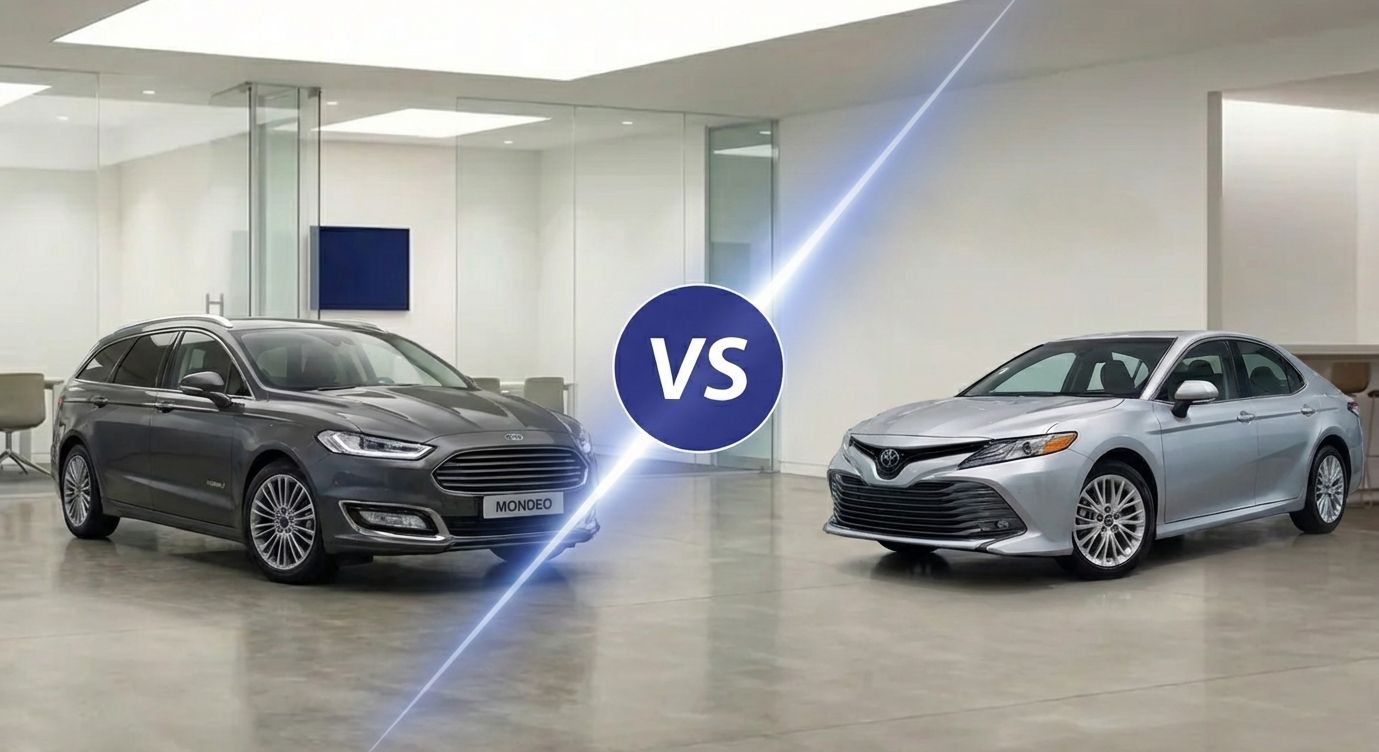
Car battle
Ford Mondeo vs Toyota Camry: Complete Comparison 2025
Ford Mondeo vs. Toyota Camry: Detailed comparison, tests, data, and verdict. Find out which sedan is the best choice for you on the used car market.
Apr 13, 2026
Articles
Car battle
Ford Ranger vs Nissan Navara (NP300) comparison. We bring real-world experience, a comparison of equipment and driving characteristics. Which used pick-up is the better choice?
April 14, 2026
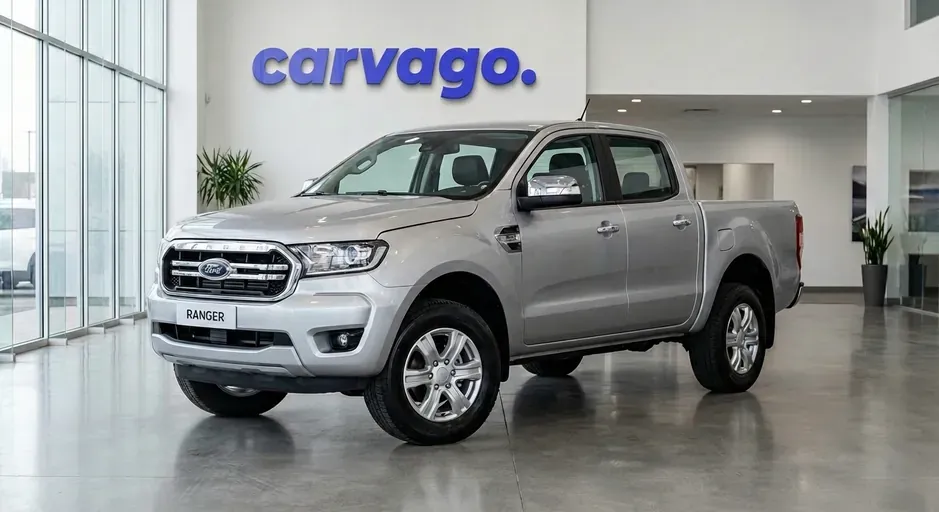
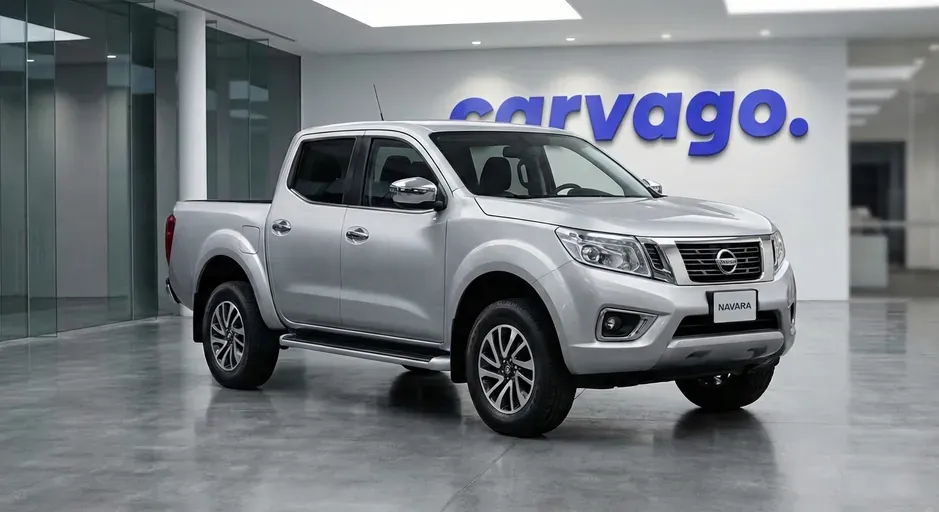
The Ford Ranger represents a long-standing benchmark among mid-size pickup trucks, having gained its global popularity by combining an uncompromisingly robust construction, modern technologies, and excellent towing and utility capabilities. Its traditional challenger is the Nissan Navara, also sold in many global markets under the names Nissan NP300 or Nissan Frontier, which has become famous for its outstanding reliability and, for the commercial vehicle class, an exceptionally comfortable ride. Let's now take a detailed look in a direct comparison to see which of these two off-road workhorses offers a better overall package for your daily work and leisure time.
Both compared vehicles, the Ford Ranger and the Nissan Navara, are typical representatives of the mid-size pickup category, which in our conditions must handle both hard work and the role of a versatile family vehicle for an active lifestyle. Exterior dimensions play a key role in these cars – every extra centimeter means more space for the crew or bulkier cargo in the bed, but at the same time, it makes daily coexistence with the vehicle in the city somewhat more difficult. Looking at the exterior shapes, the Ranger presents an overall slightly more massive build and outgrows its Japanese competitor in many respects. When deciding between these two models, you must therefore consider whether maximizing the overall size of the vehicle is more important to you, or rather slightly easier daily parking.
Upon a more detailed comparison of the most widespread versions, we find that the third-generation Ford Ranger (moving in the market of four-year-old used cars) measures up to 5,363 mm in length, while the Nissan Navara generation D231 reaches a maximum length of 5,330 mm. The most significant difference, however, occurs in the wheelbase, where the Ranger boasts a generous value of 3,220 mm, while the Navara relies on 3,150 mm. This difference of a full 70 mm in favor of the Ford significantly contributes to better directional stability when towing heavy trailers or during highway cruising. On the other hand, the shorter wheelbase and overall smaller length of the Navara guarantee better maneuverability, a smaller turning radius, and a slightly more advantageous breakover angle when overcoming sharper off-road crests.
When it comes to the width and height of the body, the standard versions of both cars have little to reproach each other for – the width without mirrors hovers around 1,850 mm for most models. However, Ford offers the extreme off-road Raptor variant in its portfolio, which, thanks to massively widened fenders and a redesigned chassis, stretches to an impressive 2,028 mm, and its height attacks almost 1.9 meters. In terms of overall choice, the Nissan Navara makes sense as a slightly more compact and versatile option for drivers who frequently navigate narrower spaces or underground garages. The Ford Ranger, on the other hand, will appeal to customers looking for uncompromising majesty who are not afraid to sacrifice a bit of agility for a dominant appearance and maximum stability.
| Parameter | Ford Ranger Pick-up | Nissan Navara Pick-up |
|---|---|---|
| Width (mm) | 1850 - 2028 | 1850 - 1885 |
| Length (mm) | 5274 - 5363 | 5225 - 5330 |
| Height (mm) | 1703 - 1873 | 1780 - 1850 |
| Wheelbase (mm) | 3220 | 3150 |
When choosing a used pickup from the roughly four-year-old market, where the Ford Ranger and Nissan Navara models play a leading role, the traditional luggage compartment is replaced by a practical open cargo bed. This parameter is absolutely crucial for buyers, as it determines how useful the vehicle will be not only as a hard worker on a construction site but also as a versatile family transporter. A properly sized loading area is invaluable for the safe transport of dirty sports equipment and guarantees that you will always have sufficient capacity for weekend shopping and longer vacations away from civilization.
If we look at the most popular variants with a full-size double cab (Double Cab), both vehicles provide huge space, albeit with a minor difference. The Ford Ranger features a basic bed volume of roughly 1,225 liters. The Nissan Navara, on the other hand, offers a slightly smaller capacity, which hovers around 1,166 liters. Although the difference is only less than sixty liters, the Ranger benefits from an overall more regular architecture of the cargo space. This fact means the desired space for a few extra suitcases, as it can easily accommodate wide Euro pallets and bulkier building materials.
In the more work-oriented versions with an extended cab (SuperCab for Ford and King Cab for Nissan), which cleverly sacrifice rear seating in favor of a longer bed, the usable volume increases significantly. Here, the Ford Ranger can boast a value of 1,466 liters, whereas the Nissan Navara offers approximately 1,322 liters. Due to the structural nature of pickup trucks, there is naturally no classic option to increase the maximum volume by folding down the seats and extending into the cabin. Interestingly, however, even in modern plug-in hybrid versions of the Ford Ranger with bulky batteries, there is no reduction in the cargo bed volume, but rather adjustments at the expense of the fuel tank and overall payload. In conclusion, it can be stated that in terms of pure cargo space dimensions, the Ford Ranger is a slightly more convincing candidate, giving its owner even greater freedom and volumetric flexibility.
| Parameter | Ford Ranger Pick-up | Nissan Navara Pick-up |
|---|---|---|
| Basic volume (liters) | 1225 | 1166 |
| Max. volume after folding seats (liters) | Not applicable | Not applicable |
Towing capacity is often one of the most important parameters for those interested in pickup trucks. Whether you need to transport heavy construction machinery, boats, or bulky horse trailers, differences in trailer weight can determine which model is right for you. Both the Ford Ranger (especially in the widespread third generation, which dominates the four-year-old used car market) and the Nissan Navara (in its latest D231 generation) represent the absolute top in this area.
The Ford Ranger, in the vast majority of its standard engine options (such as the 2.0 TDCi, 2.0 EcoBlue, or the older 3.2 TDCi), can tow both the standard and maximum capacity of a 3,500 kg braked trailer. In practice, this top value means plenty of flexibility and confidence for towing large loads, which is more than enough for weekend shopping or a longer holiday with a large caravan. A major advantage is that the new plug-in hybrid (PHEV) version of the fourth generation surprisingly retains the full 3,500 kg towing capacity.
However, you must pay attention to specific work or sports versions of the Ford:
The Nissan Navara, in its last sold generation (D231 from 2016–2022), keeps pace with the Ranger and, with the popular 2.3 dCi engine (in 120 kW and 140 kW variants), also offers a maximum towing capacity of 3,500 kg in Double Cab body versions. In some older King Cab versions, the standard value ranged from 3,010 kg, but even here, after modernization, the capacity was unified at 3.5 tons. An unbraked trailer is the legislatively mandated 750 kg for both vehicles. In practice, any hitched trailer will provide space for a few extra suitcases as well as tons of building materials.
In terms of overall evaluation, both pickups are completely equal in most common configurations. Their maximum towing capacity of 3,500 kg makes them uncompromising work machines and ideal leisure partners. When choosing from the used car market, you basically only need to be cautious with the Ford Ranger in the sports Raptor version or in the case of the weakest engine, where the reduced limit of 2,500 kg could be restrictive in extreme use.
| Model and engine | Braked trailer weight (kg) | Unbraked trailer weight (kg) |
|---|---|---|
| Ford Ranger 2.0 TDCi / EcoBlue (125-151 kW) | 3500 | 750 |
| Ford Ranger 2.3 EcoBoost PHEV (207 kW) | 3500 | 750 |
| Ford Ranger 2.0 TDCi (96 kW) | 2500 | 750 |
| Ford Ranger Raptor | 2500 | 750 |
| Nissan Navara 2.3 dCi Double Cab | 3500 | 750 |
| Nissan Navara 2.3 dCi King Cab | 3010-3500 | 750 |
When comparing the engines of the Ford Ranger and Nissan Navara models, we encounter different philosophies that fundamentally affect dynamics, fuel consumption, and everyday usability. In recent years, the Ford Ranger has offered an exceptionally wide range of powertrains – from proven economical four-cylinders to plug-in hybrids and extremely powerful six-cylinders, reflecting its position as a technological leader that transitioned to its fourth generation at the turn of 2022 and 2023. In contrast, the Nissan Navara (whose European sales, according to the database, ended in 2022) bet on the absolute simplicity and reliability of a single shared engine platform in its key D231 generation. If you are choosing a car on the market of roughly four-year-old used vehicles, you will thus be deciding between a more diverse range of advanced engines with sophisticated ten-speed automatic transmissions in the Ford and a straightforward, mechanically durable diesel unit in the Nissan. Both vehicles are united by robust all-wheel drive (4x4) and a high level of towing capacity, which is crucial in this segment.
The basic building block of the lineup for a roughly four-year-old Ford Ranger (end of the 3rd generation, on sale until 2023) are modern four-cylinder diesel engines designated 2.0 TDCi, or later 2.0 EcoBlue. While the standard version with a single turbocharger provides an output of 125 kW and 405 Nm, the most popular and sought-after Bi-Turbo variant (supercharged by two turbochargers) boasts an excellent 157 kW and a torque of 500 Nm. These modern engines most often work with a smooth ten-speed automatic transmission, or with a manual in weaker versions. On the older used car market (with production ending around 2020), you can still come across the popular 3.2 TDCi five-cylinder diesel (147 kW), which excelled in strong pull but had higher fuel consumption. The all-new fourth generation produced from 2023 moved the Ranger into a more premium sphere and enriched the market with large engines – specifically the 3.0 EcoBlue V6 diesel for demanding tasks and the top 3.0 EcoBoost petrol unit (215 kW in the EU), which powers the uncompromising sports variant Raptor. Ford is further expanding its future lineup with the 2.3 EcoBoost PHEV plug-in hybrid unit (planned for the end of 2025).
| Engine type | Fuel | Power (kW) | Torque (Nm) | Transmission |
|---|---|---|---|---|
| 2.0 EcoBlue / TDCi (Single-Turbo) | Diesel | 125 | 405 | 6MT / 6AT / 10AT |
| 2.0 EcoBlue / TDCi (Bi-Turbo) | Diesel | 151 - 157 | 500 | 10AT |
| 3.2 TDCi (discontinued 2020) | Diesel | 147 | 470 | 6MT / 6AT |
| 3.0 EcoBlue V6 (from 2023) | Diesel | 176 | 600 | 10AT |
| 3.0 EcoBoost V6 (Raptor) | Petrol | 215 | 491 | 10AT |
In the relevant generation of the Nissan Navara designated D231 (produced between 2016 and 2022), the range of powertrains is significantly slimmer and focused purely on efficiency. Looking at the market for roughly four-year-old used cars, the only available option is the reliable 2.3 dCi four-cylinder diesel. This engine was offered in two specifications. The base version with a single turbocharger provides a solid output of 120 kW and 425 Nm, which handles everyday work without any problems. More dynamic and often more sought after is the stronger Twin-Turbo variant, which uses two turbochargers and delivers 140 kW with a massive torque of 450 Nm from low revs. The engines could be combined with a six-speed manual or the proven seven-speed automatic transmission. It is important to note that although the much older generation of the Navara (D40) boasted larger 2.5 dCi and 3.0 dCi V6 units, their production ended back in 2015, and you will not come across them in the used car market for newer models. Since European production of the Navara ended completely in 2022, the vehicle does not offer any petrol or electrified variants.
| Engine Type | Fuel | Power (kW) | Torque (Nm) | Transmission |
|---|---|---|---|---|
| 2.3 dCi (Single-Turbo) | Diesel | 120 | 425 | 6MT |
| 2.3 dCi (Twin-Turbo) | Diesel | 140 | 450 | 6MT / 7AT |
| 2.5 dCi (D40, discontinued 2015) | Diesel | 106 - 140 | 356 - 450 | 6MT / 5AT |
| 3.0 dCi V6 (D40, discontinued 2015) | Diesel | 170 | 550 | 7AT |
Final recommendation:
If you are a performance-oriented driver, desire a modern, smooth-shifting ten-speed transmission, or even dream of a sporty petrol experience in tough terrain, the Ford Ranger offers an attractive and dynamic solution. It is also great for tech enthusiasts and buyers who want to choose from multiple power levels. However, if you are a budget-conscious tradesman or a driver who prefers mechanical durability and a refined, proven diesel engine, the Nissan Navara with the 2.3 dCi Twin-Turbo engine is a fantastic vehicle where you will appreciate the great compromise between real towing power and low operating costs.
Choosing the right engine is crucial for long-term satisfaction with a used pickup, which is why our recommendations are based on real-world dynamics, actual fuel consumption, owner feedback, and mechanical reliability. In the market for roughly four-year-old used cars, both vehicles represent highly sought-after workhorses with different approaches – while the Ford Ranger from the end of its third generation relies on technically advanced two-liter engines and advanced ten-speed automatics, the Nissan Navara (D231 generation), whose sales in Europe ended in 2022, relies on mechanical robustness and a proven larger displacement.
This engine (often labeled as 2.0 TDCi in used car databases up to 2023, although it belongs to the marketing-known EcoBlue series) is the absolute best choice thanks to its excellent balance of power, efficiency, and everyday usability.
Given that the availability of new Nissan Navara models in Europe definitively ended in 2022, four-year-old used cars represent some of the last well-preserved examples. The stronger 2.3 dCi engine specification is precisely the most practical and reliable choice for this vehicle.
For pickup trucks, the difference between the official stated fuel consumption and everyday reality is usually particularly vast. While the automakers' paper figures for generations roughly four years old promise average values mostly in the range of 6.9 to 7.8 liters per 100 km for both the Nissan Navara and Ford Ranger, practice shows a slightly different picture. For the most accurate comparison of the models that are most sought after on the used car market today (i.e., cars manufactured around 2022), we used real user data from the independent crowdsourcing portal Spritmonitor.de, where owners carefully record every refueling. We focused on the end of the third-generation Ford Ranger (2019–2023) equipped with 2.0 EcoBlue/TDCi engines and the competing Nissan Navara generation D231 with 2.3 dCi units.
| Model and engine | Average fuel consumption (l/100 km) |
|---|---|
| Nissan Navara 2.3 dCi 120 kW | 8.8 |
| Nissan Navara 2.3 dCi 140 kW | 9.4 |
| Ford Ranger 2.0 TDCi/EcoBlue 125 kW | 8.9 |
| Ford Ranger 2.0 TDCi/EcoBlue 157 kW | 9.6 |
| Ford Ranger 3.2 TDCi 147 kW | 10.6 |
Looking at the data in more detail, it is evident that the Nissan Navara comes out of the battle slightly more economical. Its basic turbocharged 2.3 dCi engine stays below the nine-liter mark in real-world driving, which is a very solid figure for a two-ton vehicle with the aerodynamics of a brick. The more powerful, twin-turbocharged variant (140 kW) then asks for an average of 9.4 l/100 km. The Ford Ranger went on a rather significant diet after switching to the two-liter four-cylinder EcoBlue (also marked as TDCi). The older, popular, but very heavy and fuel-thirsty 3.2 TDCi five-cylinder, which was still being sold off in 2020, routinely exceeded the 10.5-liter mark. While the modern two-liter engines have curbed this appetite, it may come as a surprise to many that the "downsizing" of small turbo engines does not reduce fuel consumption as radically as many expected. Once you fully load the vehicle, the small-displacement 157 kW biturbo has to work much harder, which raises the real average fuel consumption up to 9.6 l/100 km. Gasoline engines are practically non-existent on the European used car market in this category (with the exception of the extreme and marginal Raptor version), so diesel power and its torque remain the unrivaled choice.
For the typical user – whether it's a tradesman commuting to a construction site with equipment or a more frugal owner using the vehicle for everyday life – it makes the most sense from a purely economic perspective to reach for the Nissan Navara or the weaker version of the Ford Ranger. However, it is necessary to take into account that long highway drives at high speeds or frequent towing of three-ton trailers will quickly erase the paper advantages of modern engines. In conclusion, although the Navara statistically wins the battle for the best real-world economy, the half-liter differences between the modern two-liter diesel engines of both cars are not that significant in overall operating costs. Fuel consumption should therefore definitely not be the main deciding factor – it depends more on chassis preferences, ride comfort, or the specific equipment of the selected used car.
Looking at the market for roughly four-year-old used cars (production years 2021 to 2022), a very interesting contrast emerges. For the Ford Ranger, this period saw the blending of the very popular third facelift of the previous generation with the gradual arrival of the entirely new one. Conversely, the Nissan Navara (generation D23/NP300) definitively bid farewell to the European market at the turn of 2021 and 2022 after years of successful production. This fact is fundamentally reflected today in the usual purchase prices and the breadth of supply in used car dealerships.
The Ford Ranger has long been the best-selling pickup truck in Europe, which is logically reflected in the huge number of available nearly-new used cars. A larger selection means a wider price range; on the other hand, the Ranger manages to hold its market value surprisingly long and at a high level.
For those interested in the Nissan Navara, models from the 2021 and 2022 model years represent practically the last chance to acquire this iconic Japanese pick-up with a modern age and reasonable mileage in European specification. The Navara is significantly rarer on the secondary market than the Ranger, which is pleasantly compensated by slightly friendlier prices.
| Model | Starting price (basic condition/equipment) | Common market price (higher equipment / medium mileage) | Top editions and sports versions |
|---|---|---|---|
| Ford Ranger | from approx. €27,000 | €31,000 – €39,000 | €45,000 – €61,000+ |
| Nissan Navara | from approx. €23,000 | €27,000 – €31,000 | €31,000 – €35,000 |
From the perspective of the used car market, both representatives are great machines, however, the Ford Ranger clearly dominates with the stability of its residual value and a diverse range of cars on offer. The Nissan Navara, on the other hand, scores with customers with an overall more sympathetic average price and an interesting technical peculiarity – a sophisticated rear axle with coil springs (in Double Cab variants), which gives it an unusually comfortable character approaching passenger SUVs even after years of service.
When evaluating safety, it is important to mention that although modern pick-ups today often aim for maximum five-star ratings (which the Ford Ranger achieved, while the Nissan Navara took away a solid four stars), it is necessary to approach these gains with caution. The context and the year of testing itself are crucial. The methodology and testing protocols of the independent Euro NCAP association are constantly evolving and becoming drastically stricter over time. For this reason, percentage scores from different years cannot be directly and simply compared, as today's demands for active accident prevention are on a completely different level than in the past decade.
The current generation Ford Ranger passed the Euro NCAP tests in 2022 and was evaluated according to the latest, very strict protocols. These standards include completely new simulations of a frontal offset crash into a moving barrier, advanced detection of cyclists and pedestrians, or complex crisis scenarios at intersections. The car excelled in these demanding disciplines. The Nissan Navara generation D23/NP300, on the other hand, completed its tests back in 2015. Its results from that time thus reflect much older standards, when the evaluation focused primarily on passive structural resistance during an impact, while the requirements for safety assistants were significantly more lenient at the time and many of today's tests did not exist at all.
| Parameter | Ford Ranger | Nissan Navara |
|---|---|---|
| Year of testing | 2022 | 2015 |
| Adult occupant protection | 84 % | 79 % |
| Child occupant protection | 90 % | 78 % |
| Vulnerable road users protection | 74 % | 78 % |
| Safety assist systems | 84 % | 68 % |
A closer look at the results makes it clear what these values mean in practice. Although the Navara on the used car market at around 4 years of age still provides a decent mechanical foundation and reliable passive crew protection, its five-year certification validity has already expired from the Euro NCAP perspective. The seemingly higher result of the Nissan in the protection of vulnerable road users is due only to the fact that testing in 2015 did not place nearly as much emphasis on complex autonomous emergency braking (AEB) reacting to cyclists and pedestrians as the current methodology. The Ford Ranger, on the other hand, has a full load of modern active safety. Ford's assistance systems can not only effectively prevent collisions at high and low speeds, but the structure of the car itself is designed to be as gentle as possible to other road users in the event of an unavoidable collision.
Conclusion
In terms of current safety standards, the Ford Ranger offers an incomparably more modern and comprehensive package. Thanks to the implementation of the latest electronic assistants and excellent results in the significantly stricter tests from 2022, it represents a safer and more secure choice for both the crew itself and the surrounding road users, thereby clearly surpassing the older architecture of the Nissan Navara.
Both vehicles offer much more than just basic equipment for heavy work, and each model comes with its own distinctive approach to added value. In addition to standard work reliability, each of the models offers several unique features that can be decisive for the customer in the final selection.
Based on data from our service reports, breakdown statistics, feedback from long-term users, and detailed comprehensive vehicle inspections, we have compiled an overview of the most common problems that buyers of roughly four-year-old used cars of both models should watch out for.
The Ford Ranger is popular for its robustness, but with the arrival of more modern engines and more complex emission systems, specific service requirements are appearing in used cars.
Ford Ranger Summary:
Most of the Ford Ranger's problems are predictable and depend on the quality of service. It is a reliable workhorse if you keep an eye on the maintenance history (especially oil changes for the 2.0 EcoBlue engine) and the previous owner did not use the car exclusively for short trips.
Compared to the competition, the Navara impresses with high ride comfort, but its technical specifics bring certain weaknesses that an independent technical inspection of the car must focus on before purchase.
Nissan Navara Summary:
The Navara is an excellent compromise between a utility vehicle and an SUV. Its main pitfalls lie in the condition of the rear axle if it has been excessively overloaded, and the state of the timing system in engines with higher mileage. If you pass these two critical areas with a clean slate, you will get a very comfortable and reliable pick-up.
When buying a used car, a thorough inspection is crucial, and especially with work pick-ups, which often take a beating off-road or when towing heavy trailers, it does not pay to underestimate anything. For absolute certainty, a comprehensive car inspection is always ideal before purchase, as it will reveal any hidden defects from heavy use. Here are a few specific points to focus on for these two models from approximately 2020 to 2022.
Both vehicles handle demanding terrain with ease thanks to selectable all-wheel drive and a reduction gearbox. However, the Ford Ranger has a slight advantage due to higher ground clearance and better approach angles. For more extreme off-roading, the Ranger also offers the highly specialized and durable Raptor version.
Both cars are at the absolute top of their class and can easily tow a braked trailer with a maximum weight of up to 3,500 kg. As for the payload capacity of the bed itself, both models can load over one ton of cargo, so they are evenly matched in terms of workload. However, the Navara offers a cleverly designed factory C-Channel tie-down system for easier securing of transported items.
The Nissan Navara is renowned for its multi-link rear suspension with coil springs on the Double Cab version, which gives it SUV-like comfort on the road. The Ford Ranger, on the other hand, relies on classic leaf springs in most versions, which can be slightly unsettled on bumps with an empty bed. Nevertheless, the Ranger overall scores with excellent cabin soundproofing and significantly more precise steering.
The Ford Ranger, especially models from recent years, offers a significantly more modern interior with the advanced SYNC infotainment system and a wide range of modern driving assistants. The Nissan Navara retains a more traditional, utilitarian cabin design with an emphasis on robust mechanical controls and hard, durable plastics. If you are looking for technology and equipment closer to modern passenger cars, the Ranger is clearly the better choice in this regard.
In the popular Double Cab body version, both models offer a second row of seats and plenty of interior space for four passengers. The Navara provides the crew with a slightly smoother ride thanks to its specific chassis, while the Ranger pleases with more modern active safety features. For family travel, however, it is necessary to take into account with both vehicles that regular luggage must be stored in the bed under a lockable roller shutter or a hardtop.
Sources: ADAC, lidovky.cz, garaz.cz, mobilmania.cz, automagazin.cz, bezpecneauto.cz
This article was prepared using artificial intelligence tools. The section guarantor is Petr Dušek.
Ford Mondeo vs. Toyota Camry: Detailed comparison, tests, data, and verdict. Find out which sedan is the best choice for you on the used car market.
Apr 13, 2026
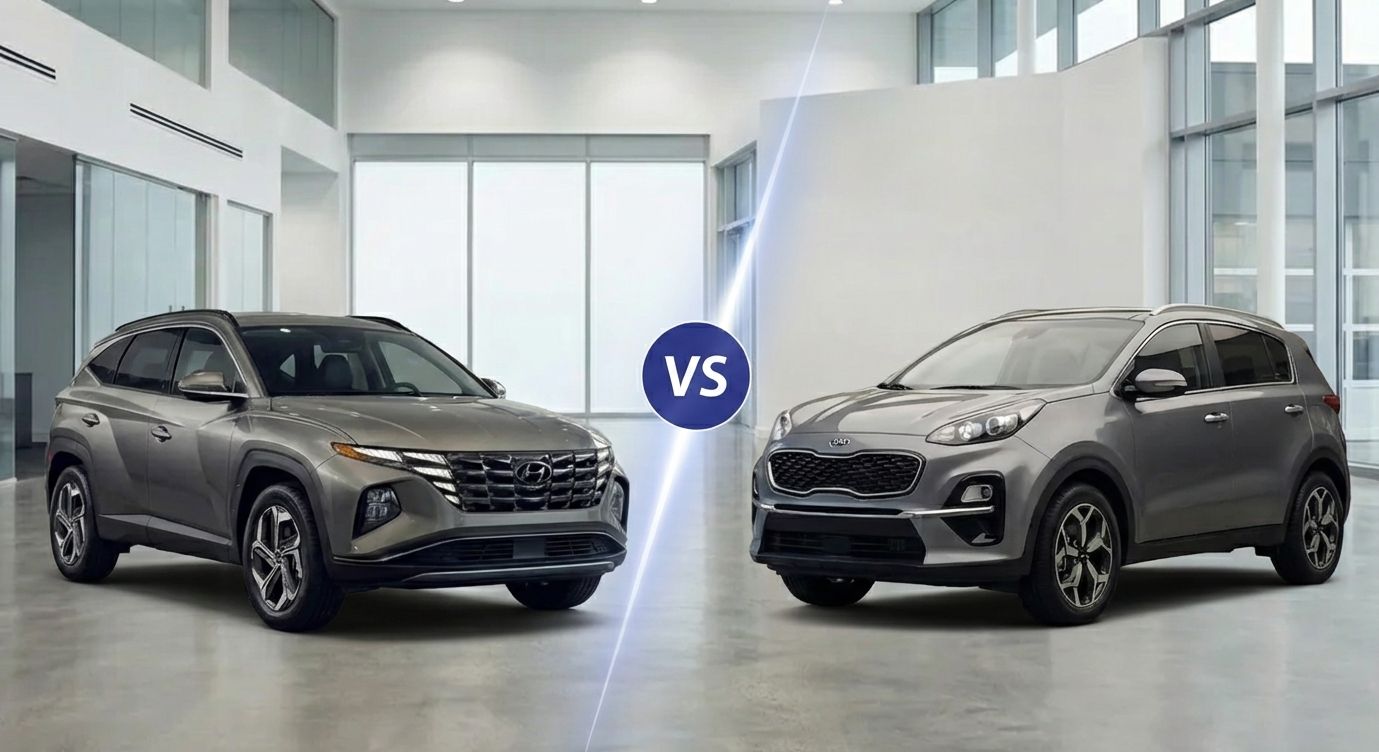
Hyundai Tucson vs. Kia Sportage: A detailed comparison of design, engines, and practicality to help you choose. Read our final verdict.
Oct 16, 2026
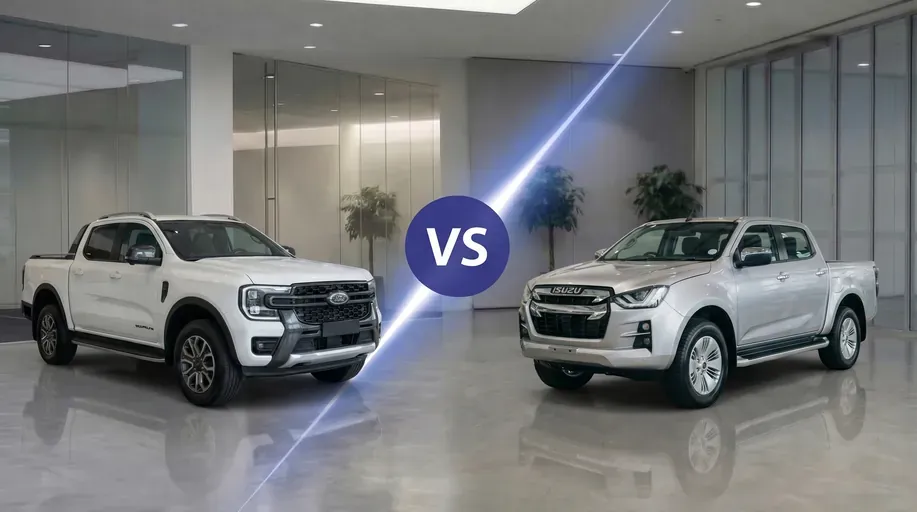
Looking for the perfect pickup truck? A detailed comparison of the Ford Ranger vs. Isuzu D-Max. We reveal the differences in off-road performance, reliability, and equipment to help you choose the best one.
Oct 16, 2026