Car battle
Ford Mondeo vs. Volkswagen Passat: Complete Comparison 2025
Ford Mondeo vs. Volkswagen Passat: Detailed comparison, reviews, engines, and verdict. Find out which of these popular cars is the better choice for you.
Apr 13, 2026
Articles
Car battle
Ford Mondeo vs. Toyota Camry: Detailed comparison, tests, data, and verdict. Find out which sedan is the best choice for you on the used car market.
April 13, 2026
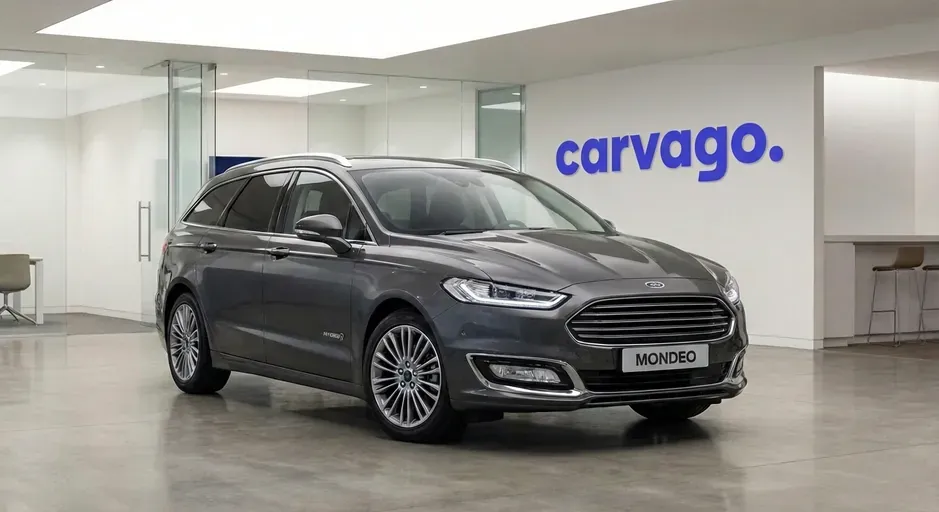
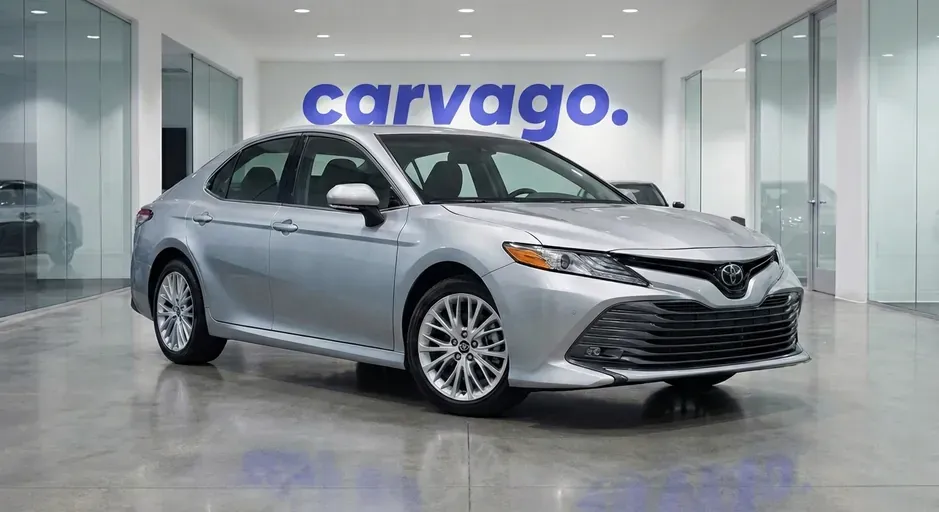
The Ford Mondeo, a staple on European roads and also known in America as the Ford Fusion, has long been synonymous with a spacious and well-handling family car. Against it stands the global bestseller Toyota Camry, which has built a worldwide reputation as a reliable and comfortable sedan. Let's take a closer look at how these two mid-size titans fare in a direct comparison and which one might be the right choice for you.
At first glance, it's clear that both the Ford Mondeo and the Toyota Camry are large cars, with dimensions approaching the upper mid-size class. The main difference, however, lies not in centimeters but in the range of body styles. While the modern generation of the Toyota Camry is offered exclusively as a classic sedan in the European market, the Ford Mondeo gives customers a choice between a practical wagon (Turnier), an elegant sedan, and a versatile liftback.
At 4885 mm, the Toyota Camry is a negligible 14 mm longer than the Mondeo sedan/liftback version. This minimal difference plays no role in practice. More interesting is the wheelbase, where the Mondeo wins with a value of 2850 mm, a difference of 25 mm. A longer wheelbase usually translates into more space for the crew, especially for the knee room of rear-seat passengers, and also contributes to better stability at higher speeds.
In terms of width, the Mondeo is 12 mm more robust, which can mean a bit more shoulder room inside the car. Conversely, the Toyota Camry, at 1445 mm, is a noticeable 37 mm lower than the Mondeo sedan. This gives it a sportier and more elegant silhouette. A lower center of gravity can also lead to more confident handling in corners. The Mondeo, with its taller body structure, offers easier entry and potentially more generous headroom. For families, the Wagon version is the clear choice, being the tallest of the four.
| Parameter | Ford Mondeo Wagon (V) | Ford Mondeo Liftback (V) | Ford Mondeo Sedan (V) | Toyota Camry Sedan (XV70) |
|---|---|---|---|---|
| Length (mm) | 4867 | 4871 | 4871 | 4885 |
| Width (mm) | 1852 | 1852 | 1852 | 1840 |
| Height (mm) | 1501 | 1482 | 1482 | 1445 |
| Wheelbase (mm) | 2850 | 2850 | 2850 | 2825 |
When choosing a family or executive car, the volume of the luggage compartment is a key parameter. In this respect, the Ford Mondeo and the Toyota Camry differ fundamentally, primarily due to the variety of body styles offered by the Mondeo. While the Camry is available exclusively as a sedan in the European market, the Mondeo offers a choice between a practical liftback, a spacious wagon, and a classic sedan.
The Ford Mondeo in the liftback variant offers a generous basic volume of 550 liters. After folding down the rear seats, the space expands to 1446 liters, making it a very flexible companion. The wagon (Turnier) version goes even further, holding 525 liters in its basic configuration, but offering a cavernous 1630 liters after folding the seats. This is a value that is easily sufficient for a large family vacation or for transporting bulkier items.
As a sedan, the Toyota Camry's 524-liter volume is very close to the Mondeo wagon version, which is an excellent value for a sedan. The problem, however, is its limited versatility – folding the seats only creates a pass-through, and the total space cannot be utilized as effectively as with liftback or wagon bodies. An interesting comparison is between the hybrid versions, where the Camry has the upper hand. Its trunk remains at 524 liters, while the Mondeo Hybrid (available as a sedan and wagon) pays the price for its batteries. The sedan offers only 383 liters, and the wagon 403 liters (1508 l when folded).
| Parameter | Ford Mondeo Liftback | Ford Mondeo Wagon (Turnier) | Toyota Camry Sedan |
|---|---|---|---|
| Basic Volume (liters) | 550 l (Hybrid: -) | 525 l (Hybrid: 403 l) | 524 l (Hybrid only) |
| Maximum Volume (liters) | 1446 l (Hybrid: -) | 1630 l (Hybrid: 1508 l) | - |
When choosing a car, the ability to tow a trailer is a key factor for many drivers. And it is in this discipline that the Mondeo and Camry differ fundamentally. The Ford Mondeo is a versatile workhorse, while the Toyota Camry specializes exclusively in comfortable passenger transport and does not account for towing trailers at all.
The fifth-generation Ford Mondeo, especially with diesel engines, is an excellent tower. The most powerful versions, such as the 2.0 EcoBlue (140 kW), can handle a braked trailer weighing up to 2000 kg. This is easily enough for a large caravan, a boat trailer, or for transporting horses. Even the petrol variants are not to be outdone, typically managing between 1250 and 1800 kg. The hybrid version is an exception. While the Mondeo Hybrid sedan is not homologated for towing a trailer at all, the more practical Mondeo Turnier Hybrid wagon can only tow a light unbraked trailer up to 750 kg.
On the other hand, there is the Toyota Camry generation XV70 (from 2019), which was sold in Europe exclusively with a hybrid powertrain. For this model, the manufacturer does not allow the installation of a towing device, and its official permitted weight for both braked and unbraked trailers is zero kilograms. For owners of cottages, cabins, or anyone who needs to haul something occasionally, this is a major limitation.
The choice in this regard is therefore absolutely clear. If you plan to use a tow hitch, the Ford Mondeo is the only and a very capable option. For those interested in the Toyota Camry, this parameter is simply not relevant.
| Model and Engine | Braked Trailer Weight (kg) | Unbraked Trailer Weight (kg) |
|---|---|---|
| Ford Mondeo 2.0 EcoBlue (140 kW) | 2000 | 750 |
| Ford Mondeo 1.5 EcoBoost (121 kW) | 1250 - 1450 | 750 |
| Ford Mondeo Turnier 2.0 Hybrid | 750 | 750 |
| Toyota Camry 2.5 Hybrid | 0 | 0 |
When looking at the engine offerings, the Ford Mondeo and Toyota Camry reveal two completely different approaches that define their character. The Ford Mondeo, true to its European tradition, offers a diverse range of options including economical diesel engines, turbocharged petrol units, and for the first time in its history, a practical hybrid variant in the estate body style. On the other hand, the Toyota Camry, upon its return to the European market, bet on a single, yet highly specialized card – its proven and exceptionally efficient full hybrid system. This choice directly influences which driver the car is ideal for. While the Mondeo will satisfy conservative drivers and corporate fleets with high annual mileage, the Camry targets exclusively those seeking maximum efficiency, quiet operation, and legendary reliability.
The last European generation of the Ford Mondeo (produced until 2022) offered engines that tried to cater to various preferences. After the 2019 facelift, a modernization occurred, focusing primarily on the new EcoBlue diesel engines and the expansion of the hybrid powertrain offering. The 1.5 EcoBoost petrol engine was gradually phased out and became more of a choice in the early years of this generation's production. Thus, diesels and the hybrid took the main stage.
A specialty of the Mondeo was the all-wheel drive (AWD) option, which was available exclusively with the most powerful diesel engine and an automatic transmission, making it a safe and capable choice for driving in more demanding conditions. Another trump card that the Camry could not offer was the hybrid powertrain in the estate body style (Turnier), combining spaciousness with low fuel consumption in the city.
| Engine Type | Fuel | Power (kW) | Torque (Nm) | Transmission |
|---|---|---|---|---|
| 1.5 EcoBoost | Petrol | 121 | 240 | 6-speed manual / 6-speed automatic |
| 2.0 EcoBlue | Diesel | 88 | 300 | 6-speed manual |
| 2.0 EcoBlue | Diesel | 110 | 400 | 6-speed manual / 8-speed automatic |
| 2.0 EcoBlue | Diesel | 140 | 400 | 8-speed automatic (FWD/AWD) |
| 2.0 Hybrid (HEV) | Petrol/Electric | 138 (combined) | 173 (petrol) | e-CVT |
Note: The 1.5 EcoBoost petrol engine was withdrawn from the lineup in many markets after the 2019 facelift.
Toyota chose a completely unambiguous strategy for the European Camry – it was available only with one, time-tested hybrid powertrain. This combines a 2.5-liter naturally aspirated four-cylinder petrol engine operating on the Atkinson cycle with a powerful electric motor. The result is a smooth, quiet, and above all, economical ride, especially in urban and suburban traffic.
Unlike the Mondeo, there is no choice between a manual and an automatic transmission – the system always uses an e-CVT planetary gearbox, which ensures optimal power distribution. Similarly, an all-wheel-drive variant was not offered. The Camry simply does not try to be a car for everyone, but it excels in its specialization in hybrid propulsion. The 2021 facelift focused more on design and technology; the powertrain remained unchanged.
| Engine Type | Fuel | Power (kW) | Torque (Nm) | Transmission |
|---|---|---|---|---|
| 2.5 Hybrid Dynamic Force | Petrol/Electric | 160 (combined) | 221 (petrol) + 202 (electric) | e-CVT |
Choosing the right engine is absolutely key to long-term satisfaction with a car. With the Ford Mondeo and Toyota Camry, buyers face a fundamental choice between a European classic in the form of powerful and economical diesels, and a Japanese bet on a single, time-tested hybrid system. Our recommendations are based on a combination of performance, real-world fuel consumption, owner feedback, and mechanical reliability.
For a large and comfortable cruiser, which the Mondeo undoubtedly is, the 2.0 EcoBlue diesel engine, offered after the 2019 facelift, represents the most sensible choice. It offers an ideal combination of power and running costs, especially for those who frequently drive longer distances. The more powerful version with 140 kW (190 hp) and 400 Nm of torque provides confident dynamics for overtaking even a fully loaded car. The weaker 110 kW variant is more than sufficient and slightly more economical. In real-world driving, both versions can achieve a fuel consumption of between 5.5 and 6.5 l/100 km.
An interesting alternative to consider is the 2.0 Hybrid version (https://carvago.com/en/cars/ford/mondeo), which is particularly economical in the city. After the 2019 facelift, it was also available in the practical estate body style, making it a direct competitor to the Camry.
With the eighth-generation Toyota Camry (from 2019), the choice is simple – on the European market, it was offered with a single, yet excellent, engine option. This is the fourth generation of the hybrid system, which combines a 2.5-litre naturally aspirated four-cylinder petrol engine with an electric motor. This system is synonymous with reliability and extremely low running costs.
Official fuel consumption figures are one thing, but the day-to-day reality on the road is often different. To get the most accurate picture, we focused on data from real drivers, available on portals like the German Spritmonitor.de. This shows how both cars perform in normal traffic, and the results reveal interesting differences between diesel and hybrid technology.
In our comparison, we focus on the latest model years relevant to the used car market. For the Ford Mondeo, this primarily means the facelifted versions of the fifth generation (approx. 2019-2022) with the 2.0 EcoBlue diesel engine and the hybrid powertrain. It is pitted against the Toyota Camry XV70 generation (from 2019), which was available in Europe exclusively with the 2.5 Hybrid system.
| Model and Engine | Average Real-World Consumption (l/100 km) |
|---|---|
| Ford Mondeo 2.0 EcoBlue (140 kW) | 6.0 – 7.0 |
| Ford Mondeo 2.0 Hybrid | 5.6 – 6.2 |
| Toyota Camry 2.5 Hybrid | 5.4 – 6.0 |
The table shows that in the real world, both hybrid systems are very close in terms of fuel consumption, with a slight advantage for the Toyota. Its time-proven hybrid system can be extremely efficient, especially in urban and suburban traffic where energy is frequently recuperated. Drivers with a calm driving style can achieve consumption figures below 5 l/100 km in the city. According to hundreds of users, the average consumption is around 5.9 l/100 km.
The Ford Mondeo Hybrid is a worthy competitor, consuming only a few tenths of a litre more on average. Its strength is the ability to run on electricity even at higher speeds, which helps reduce consumption outside the city as well. Long-term user averages are most often just under the 6 l/100 km mark.
The 2.0 EcoBlue diesel engine in the Mondeo represents a more traditional choice, and its consumption is highly dependent on driving style. On calm motorway journeys, it's possible to get close to 6 litres, but in combined traffic and with a more dynamic driving style, you should expect figures between 6.5 and 7 l/100 km.
For the typical user, this means a clear decision based on preferred routes. If you spend most of your time in the city or on country roads, the hybrid powertrain is clearly the more economical choice, with the Toyota Camry having a slight edge. For drivers who cover thousands of motorway kilometres annually, the diesel Mondeo may still make economic sense, although its fuel economy advantage on the motorway is not dramatic compared to the hybrids. Fuel consumption is therefore an important, but not the only, deciding factor – the choice depends primarily on your driving profile.
A look at the used car market clearly shows the main differences in pricing policy between the Ford Mondeo and the Toyota Camry. While the Mondeo represents a more affordable and diverse choice, the Camry maintains a significantly higher price even after several years of operation, reflecting its reputation for reliability and the popularity of its hybrid powertrain.
The Ford Mondeo, whose production for the European market ended in 2022, offers a very wide price range on the used car market. Models that are approximately four years old (2020-2021) can be purchased for prices starting at around €11,000. For this amount, you'll typically get versions with the 2.0 EcoBlue diesel engine and higher mileage.
The middle ground ranges from €14,000 to €18,000. Here you will find well-equipped units in Titanium or ST-Line trim, often with an automatic transmission and reasonable mileage. Hybrid versions (HEV), whether as a sedan or wagon, also appear in this price range, with their price being comparable to better-equipped diesel models.
The most expensive used Mondeos are nearly new cars in the highest Vignale trim or hybrid models with very low mileage. Their price can exceed €21,000, and the best-preserved examples can approach up to €25,000.
| Engine | Approximate price range (2020-2021) |
|---|---|
| 2.0 EcoBlue (Diesel) | €11,000 - €18,000 |
| 2.0 Hybrid (Petrol/Electric) | €16,000 - €22,000 |
| Top versions (Vignale, low mileage) | €18,000 - €27,000+ |
The Toyota Camry is perceived as a more premium commodity on the used car market. Thanks to its exclusively hybrid powertrain and a reputation for being nearly indestructible, it holds its value extremely well. Four-year-old models rarely drop below the €21,000 mark.
Most of the cars offered from 2020 and 2021 are in the price range of €21,000 to €27,000, depending on the trim level (Comfort, Prestige, Executive) and the number of kilometers driven. Even for cars with over 150,000 km, the price does not fall as dramatically as with the competition.
Nearly new cars with minimal mileage or in the highest specification can easily approach the €29,000 mark or more, bringing them close to the prices of new cars. This phenomenon is due not only to high demand but also to the limited availability of used units on the market.
When it comes to safety, both the Ford Mondeo and the Toyota Camry can boast the highest ratings. However, it is important to look at the context of these results. Euro NCAP's testing protocols are constantly being tightened, which means that a five-star rating from 2019 is not directly comparable to a rating from earlier years, as the demands on active and passive safety are constantly increasing.
The latest generation of the Ford Mondeo underwent Euro NCAP tests in 2019 and came away with a full five stars. It achieved excellent results in the individual categories: adult occupant protection was rated at 96% and child occupant protection at 87%. In the area of protecting vulnerable road users, such as pedestrians and cyclists, the Mondeo scored 70%, and for assistance systems, 73%. However, it should be noted that the validity of this rating has already expired according to the Euro NCAP methodology, which means that the car has not been assessed according to the latest and strictest standards.
For the generation of the Toyota Camry that is relevant to the used car market (from 2017), there is no direct rating from the European organization Euro NCAP. However, the car underwent very similar and respected tests by the Australian organization ANCAP in 2017, where it received the maximum five-star rating. This rating applies to cars manufactured from September 2017 to January 2021. Although the methodologies are similar, a direct comparison of the percentage results with Euro NCAP tests from a different year is not possible. The standard equipment of the Camry at that time already included key features such as autonomous emergency braking (AEB) and a lane-keeping assist system.
Both cars are among the very safe in their class. The Ford Mondeo has clearly documented results from the 2019 European Euro NCAP tests, which show an exceptionally high level of occupant protection. Although its certification has now expired, this is a very solid result. While the Toyota Camry does not have a direct Euro NCAP rating for the generation in question, its five-star result from the similar ANCAP organization and its standard modern assistance systems confirm its high safety standard. The choice between them in terms of safety is therefore more a matter of trust in a particular test methodology.
| Parameter | Ford Mondeo | Toyota Camry |
|---|---|---|
| Year of testing | 2019 (Euro NCAP) | 2017 (ANCAP) |
| Adult occupant protection | 96 % | Data from Euro NCAP not available |
| Child occupant protection | 87 % | Data from Euro NCAP not available |
| Vulnerable road user protection | 70 % | Data from Euro NCAP not available |
| Safety assist systems | 73 % | Data from Euro NCAP not available |
In addition to the standard equipment, each of the models offers several unique features that may be decisive for the customer. While Ford focuses on a wide range of technologies and variants, Toyota concentrates on efficiency and safety.
The Ford Mondeo, especially in its fourth generation (2014–2022), was designed to appeal to a wide spectrum of European customers. This is reflected in its diversity and technological features, which often targeted comfort and practicality.
The eighth-generation Toyota Camry (from 2017) came to the European market with a clear strategy: to offer a spacious and comfortable saloon with a highly efficient and reliable hybrid powertrain and uncompromising safety equipment.
Advantages:
Disadvantages:
Advantages:
Disadvantages:
Based on our own comprehensive vehicle inspections, breakdown statistics from the German TÜV, and feedback from owners, we have compiled an overview of the most common problems that used car buyers should look out for. Although both cars are considered reliable in their class, they have specific weaknesses that are worth knowing about.
The fifth-generation Ford Mondeo is a mechanically robust car, but several areas require increased attention, especially depending on the engine and transmission.
Summary for the Mondeo: The key to satisfaction is choosing the right version. Avoid neglected examples with a PowerShift transmission without a clear service history. Conversely, a car with a manual transmission or the newer eight-speed automatic and a carefully serviced engine is a reliable and comfortable choice. A thorough technical inspection of the car before purchase is crucial here.
The eighth-generation Toyota Camry maintains its reputation as an exceptionally reliable car. Most reported problems relate to minor annoyances rather than serious mechanical faults.
Summary for the Camry: The Toyota Camry is a safe bet. Its mechanical foundation is designed to last for hundreds of thousands of kilometres without serious investment. Minor shortcomings in the form of an occasionally troublesome infotainment system are a small price to pay for otherwise exceptional reliability and low running costs. A physical inspection of a used model is unlikely to reveal any hidden mechanical disasters.
When buying a used car, a thorough inspection is key. Even with reliable models like the Ford Mondeo and Toyota Camry, it pays to focus on specific areas that can reveal potential problems.
The PowerShift dual-clutch transmission requires regular oil changes (every 60,000 km). During a test drive, check that shifting is smooth, without jerking or delays, even when driving slowly in traffic. Any hesitation or jerky starts can signal worn clutches or a problem with the mechatronics, which would require a costly repair.
The Mondeo is known for its good driving characteristics, but pay attention to noises from the chassis. While driving over bumps, listen for any knocking or creaking. In an empty parking lot, turn the steering wheel fully to both sides several times and watch for cracking sounds, which may indicate wear on the front axles. A thorough physical inspection of the car on a lift will reveal any play in the suspension.
Electrical systems can be a source of occasional problems. Carefully test all the functions of the SYNC 3 infotainment system – its response should be fast and smooth. Check the functionality of all electric windows, heated seats, parking sensors, and keyless entry. The slightest anomaly can be a symptom of bigger problems in the control unit.
For TDCi diesel engines, a cold start is key. The engine should start immediately and without excessive vibration. Listen for a rattling sound after starting, which could indicate problems with the dual-mass flywheel. During the drive, watch for excessive smoke from the exhaust, which could point to problems with the DPF filter or injectors.
With the hybrid version, focus on the smoothness of transitions between the electric and combustion engine. During the test drive, try the EV mode and see how long the car can run purely on electricity. In the infotainment menu, check the state of charge and any battery condition history. Although Toyota's batteries are very reliable, their lifespan is not infinite, and a potential replacement is expensive.
The automatic transmissions in the Camry (both the e-CVT in hybrids and the 8-speed automatic in gasoline versions) are generally reliable, but in the first years of the eighth generation (around 2018), there were complaints about slower responses or jerking. During the drive, try sharper acceleration and see if the transmission reacts without hesitation and if there are any unusual noises, such as humming.
Some owners of the eighth generation have complained about interior materials that may be more prone to scratching, and about a thinner layer of paint. Carefully inspect the condition of the plastics, upholstery, and especially the front of the car to see if it has suffered more than usual from stone chips. Any shortcomings are a good argument for negotiating the price.
Although the Camry is a benchmark of reliability, minor electronic faults can occur. Thoroughly test the infotainment, the responsiveness of the touchscreen, and the functionality of all assistance systems. Owners occasionally complain about the weak range of the keyless remote – test it from a greater distance. Even seemingly small problems can be annoying in daily use.
Both brands are considered reliable, but the Toyota Camry has a slight edge in this regard, as confirmed by owner ratings. Its hybrid system is proven over years, and it generally has fewer minor faults. With the Mondeo, problems with electronics or the PowerShift dual-clutch transmission in non-hybrid versions can occasionally occur.
The Ford Mondeo, especially in the estate version, is the clear winner in practicality thanks to its huge luggage compartment (up to 1630 liters). The Toyota Camry is not produced as an estate, and its sedan trunk of 524 liters, while sufficient, is less versatile. On the other hand, the Camry may offer slightly more legroom in the rear seats.
Both models are offered with an economical hybrid powertrain, where their fuel consumption is very similar, hovering around 5-6 liters per 100 km in real-world driving. Apart from the hybrid versions, the Mondeo also offered efficient diesel engines, which can be more advantageous on long highway journeys. Toyota focuses exclusively on hybrid technology, which is most effective in the city and during smooth driving.
The Ford Mondeo is renowned for its excellent driving characteristics, offering a more agile and enjoyable ride with precise steering and a stiffer chassis. The Toyota Camry, on the other hand, is primarily focused on comfort; the ride is smoother, quieter, and more relaxed overall. For drivers looking for a sportier experience, the Mondeo is the better choice; for maximum comfort, the Camry is the one.
The Toyota Camry's interior feels more conservative, but it relies on quality materials and exemplary ergonomics. The Ford Mondeo has a more modern-cut interior with a digital instrument cluster and the SYNC infotainment system, which may be more user-friendly for some. In terms of equipment, the cars are similar, but some versions of the Mondeo offered features like massage seats, which were not available in the Camry.
Sources: ADAC, aktualne.cz, denik.cz, automagazin.cz, techfocus.cz, carstyle.cz
This article was prepared using artificial intelligence tools. The section guarantor is Petr Dušek.
Ford Mondeo vs. Volkswagen Passat: Detailed comparison, reviews, engines, and verdict. Find out which of these popular cars is the better choice for you.
Apr 13, 2026
Detailed comparison of used Mazda 6 vs. Škoda Superb. We reveal real-world experiences, fuel consumption, and spaciousness, and provide a clear verdict to help you make the right choice.
Apr 2, 2026
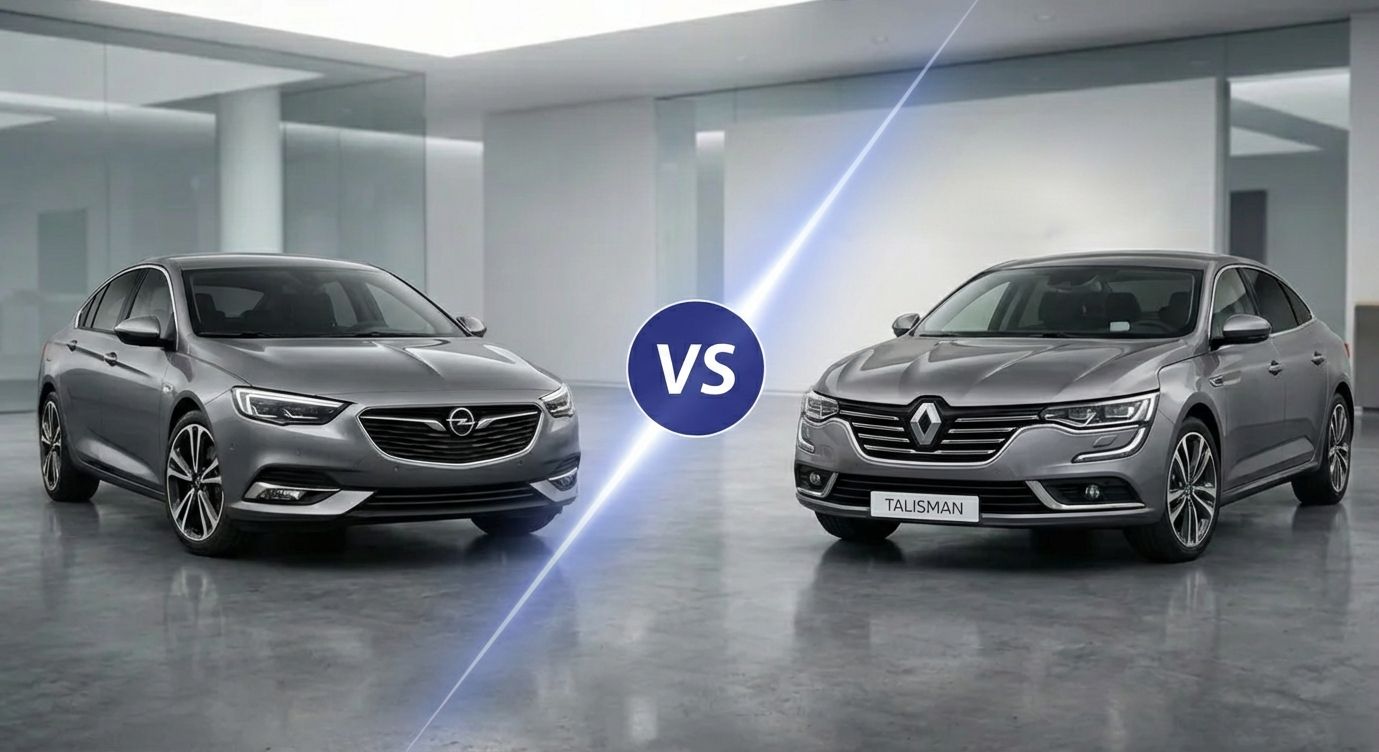
Opel Insignia vs Renault Talisman: A Detailed Comparison. Find out which executive sedan is the better choice. Real data, features, and verdict.
Apr 14, 2026