Car battle
Ford Mondeo vs Toyota Camry: Complete Comparison 2025
Ford Mondeo vs. Toyota Camry: Detailed comparison, tests, data, and verdict. Find out which sedan is the best choice for you on the used car market.
Apr 13, 2026
Articles
Car battle
Ford Mondeo vs. Volkswagen Passat: Detailed comparison, reviews, engines, and verdict. Find out which of these popular cars is the better choice for you.
April 13, 2026
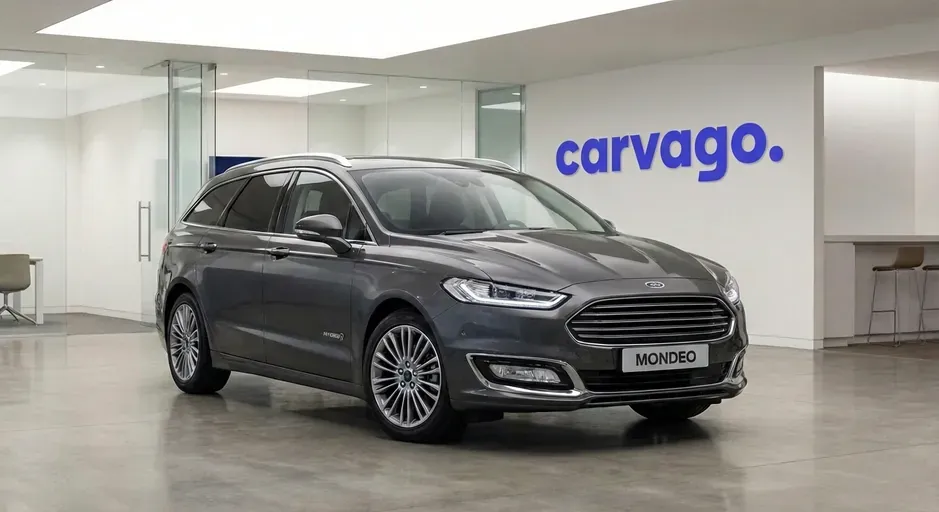
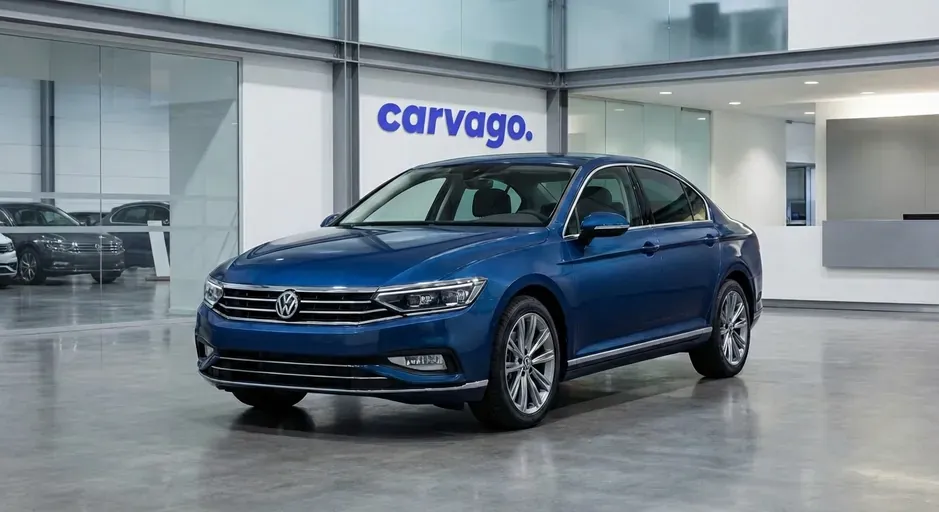
The Ford Mondeo has been a staple in the mid-size class for many years, popular for its excellent driving characteristics and spacious interior, and was also known as the Ford Fusion in some markets. Standing against it is the Volkswagen Passat, the benchmark of its category and a symbol of German precision, which wins over customers with its quality workmanship, comfort, and a wide range of versions, and has also been sold under names like Dasher or Santana throughout its history. In this comparison, we will take a detailed look at the key differences between these two rivals and help you decide which one better suits your needs.
When looking at the exterior dimensions, it is immediately clear that although the Ford Mondeo and Volkswagen Passat fall into the same mid-size class, they have different philosophies. The Mondeo is a larger car in all key aspects. This difference is not negligible and significantly affects both the look and feel of the car, as well as its practical features in everyday use.
The biggest difference is in the overall length. Both the liftback and estate versions of the Mondeo approach the 4.9-metre mark, significantly outgrowing the Passat. For example, the Mondeo Estate is a noticeable 9.4 cm longer than the Passat Estate. This gives the Ford a more majestic presence on the road, but at the same time makes it a slightly less agile companion in narrow city streets and car parks. With its more compact dimensions, the Passat appears more restrained and is easier to manoeuvre.
The Mondeo also wins in width, being 2 cm wider than the Passat, which has a positive effect on the interior space, especially in the shoulder area. However, the crucial difference is in the wheelbase, where the Mondeo has an extra 6.4 cm. This parameter is key for the interior space for the crew, especially for the knee room of rear-seat passengers, and also contributes to better stability and comfort at motorway speeds. While the Passat is not cramped, the Mondeo offers an almost full-size experience in this regard.
| Parameter | Ford Mondeo Liftback | Volkswagen Passat Saloon | Ford Mondeo Estate | Volkswagen Passat Estate |
|---|---|---|---|---|
| Length (mm) | 4871 | 4767 - 4775 | 4867 | 4767 - 4773 |
| Width (mm) | 1852 | 1832 | 1852 | 1832 |
| Height (mm) | 1482 | 1476 | 1501 | 1516 |
| Wheelbase (mm) | 2850 | 2786 | 2850 | 2786 |
Practicality and luggage space are key factors in the mid-size class that often decide a purchase. In this respect, the Ford Mondeo and Volkswagen Passat differ significantly, targeting slightly different priorities. While the Mondeo offers a very solid and usable space, the Passat traditionally excels in this discipline and often defines the standards for the entire category. For families or business customers who frequently transport bulky loads, this difference can be decisive.
The Volkswagen Passat, especially in the estate version (Variant), is renowned for its huge luggage compartment. The B8 generation (produced from 2014) offers an incredible 650 litres in its basic configuration. Folding down the rear seats creates a space of up to 1780 litres, making the Passat one of the biggest load-luggers in its class. The saloon version is also at the top with 586 litres, surpassing most competitors. The fifth-generation Ford Mondeo (from 2014) in the practical liftback body style offers a basic volume of 550 litres and 1446 litres with the seats folded down. The estate version, known as the Turnier, provides 525 litres in its basic configuration and a maximum volume of 1630 litres. Although these are still very good figures, it loses more than 100 litres to the Passat in a direct comparison.
It is also important to mention the hybrid versions, which sacrifice some of the luggage space due to the placement of the batteries. In the Mondeo Hybrid (available as a saloon and later also as an estate), the volume drops to 383 litres (saloon) and 403 litres (estate) respectively. The Passat GTE is similar, with its boot shrinking to 483 litres for the Estate version and 402 litres for the saloon. Even in the electrified variants, the Passat maintains a slight lead. In the end, the choice is clear: those looking for the absolute maximum luggage space will find it in the Volkswagen Passat. While the Ford Mondeo is still a very spacious car, its main strength lies in areas other than record-breaking boot volume.
| Parameter | Ford Mondeo Liftback (Gen V) | Volkswagen Passat Saloon (Gen B8) | Ford Mondeo Estate (Gen V) | Volkswagen Passat Estate (Gen B8) |
|---|---|---|---|---|
| Basic volume (litres) | 550 | 586 | 525 | 650 |
| Maximum volume (litres) | 1446 | - | 1630 | 1780 |
If the ability to tow heavy trailers is crucial for you, the Volkswagen Passat generally has the upper hand in this battle. While both models are very capable towers, the Passat, especially in its more powerful diesel specifications, offers a higher maximum trailer weight, which will be appreciated by owners of caravans, boats, or horse trailers.
The fifth-generation Ford Mondeo (2014-2022) offers a wide range of towing capacities. While basic petrol engines like the 1.0 EcoBoost can only handle a small trailer (up to 1100 kg), the two-litre diesel engines are ideal for serious towing. The 2.0 TDCi and the newer 2.0 EcoBlue engines can easily tow a braked trailer of up to 2000 kg. However, the hybrid version is a major disappointment. While the saloon is not officially allowed to tow at all, the Mondeo Turnier Hybrid estate can only manage a mere 750 kg, which is only enough for the lightest unbraked trailers.
The Volkswagen Passat B8 generation (2014-2023) pushes the limits even further. The top versions with the 2.0 TDI engine, often paired with 4MOTION all-wheel drive, can handle a braked trailer weighing up to 2200 kg. This is a figure that directly competes with the Mondeo and in some cases surpasses it. Even the less powerful diesel engines like the 1.6 TDI offer a solid 1500 kg. A key advantage of the Passat is its GTE plug-in hybrid variant, which, despite its ecological focus, can tow an excellent 1600 kg, making it an incomparably more practical choice for those who want to combine economical operation with the ability to tow a caravan.
| Model and Engine | Braked trailer weight (kg) | Unbraked trailer weight (kg) |
|---|---|---|
| Ford Mondeo 2.0 TDCi/EcoBlue | 1800 - 2000 | 750 |
| Ford Mondeo 1.5 EcoBoost | 1250 - 1650 | 750 |
| Ford Mondeo 2.0 Hybrid (Turnier) | 750 | 750 |
| Volkswagen Passat 2.0 TDI | 2000 - 2200 | 750 |
| Volkswagen Passat 1.5 TSI | 1600 | 750 |
| Volkswagen Passat GTE (Plug-in Hybrid) | 1600 | 750 |
When choosing an engine, the Ford Mondeo and Volkswagen Passat exhibit slightly different philosophies, but they target a similar customer. Both cars offer a wide range of diesel and petrol engines, complemented by hybrid variants. While the Mondeo long relied on its acclaimed EcoBoost petrol engines and economical TDCi (later EcoBlue) diesels, its hybrid version was a conventional full-hybrid. Volkswagen, on the other hand, was renowned for its refined TSI engines and punchy TDI diesels. Its answer to the call for eco-friendliness was the plug-in hybrid Passat GTE, with the option of driving on pure electricity. For a used car buyer, this means that whether they are looking for an economical motorway cruiser or an agile car for shorter trips, they will find a suitable option in both models.
The engine range for the fifth-generation Mondeo was truly diverse, although it was simplified over the years. Initially, small 1.0 and 1.5 EcoBoost petrol engines were available, later joined by a more powerful 2.0 EcoBoost. However, diesels played the main role, initially the 1.5 TDCi and 2.0 TDCi, which were replaced after the 2019 facelift by the more modern and refined 2.0 EcoBlue units. A unique feature in the range was the 2.0 Hybrid full-hybrid powertrain, which was initially sold only as a saloon but became available in the more practical estate body style after the update. For drivers who frequently drive in the city and don't want to deal with charging, it was an interesting option.
Available engines for Ford Mondeo (2014-2022):
| Engine Type | Fuel | Power (kW) | Torque (Nm) | Gearbox |
|---|---|---|---|---|
| 1.0 EcoBoost | Petrol | 92 | 170 | 6-speed manual |
| 1.5 EcoBoost | Petrol | 121 | 240 | 6-speed manual / 6-speed automatic |
| 2.0 EcoBoost | Petrol | 149/177 | 345 | 6-speed automatic |
| 1.5 TDCi | Diesel | 88 | 270 | 6-speed manual |
| 2.0 TDCi | Diesel | 110/132 | 350/400 | 6-speed manual / 6-speed PowerShift |
| 2.0 TDCi Bi-Turbo | Diesel | 154 | 450 | 6-speed PowerShift |
| 2.0 EcoBlue | Diesel | 88/110/140 | 300/370/400 | 6-speed manual / 8-speed automatic |
| 2.0 Hybrid | Petrol/Electric | 138 | 173 (petrol) | eCVT |
Note: After the 2019 facelift, the EcoBoost petrol engines and older TDCi diesels were gradually replaced by 2.0 EcoBlue units and the hybrid powertrain.
The Volkswagen Passat B8 generation built its range on the proven engines of the VW Group. The foundation was the TSI petrol units, initially the 1.4 TSI (also with ACT cylinder deactivation), later replaced by the more modern 1.5 TSI Evo. For more dynamically-oriented drivers, there was the powerful 2.0 TSI. However, the absolute dominant and most frequent choice for customers were the TDI diesel engines. The basic 1.6 TDI was complemented by the ubiquitous 2.0 TDI in several power variants. The top of the range and a technical treat was the 2.0 BiTDI engine with two turbochargers, producing 176 kW and coming standard with 4MOTION all-wheel drive. For environmentally-conscious drivers, the plug-in hybrid Passat GTE was available, offering the ability to travel several tens of kilometres on pure electricity.
Available engines for VW Passat (2014-2023):
| Engine Type | Fuel | Power (kW) | Torque (Nm) | Gearbox |
|---|---|---|---|---|
| 1.4 TSI | Petrol | 92/110 | 200/250 | 6-speed manual / 7-speed DSG |
| 1.5 TSI | Petrol | 110 | 250 | 6-speed manual / 7-speed DSG |
| 1.8 TSI | Petrol | 132 | 250/320 | 6-speed manual / 7-speed DSG |
| 2.0 TSI | Petrol | 140/162/200/206 | 320/350/350/370 | 6/7-speed DSG |
| 1.6 TDI | Diesel | 88 | 250 | 6-speed manual / 7-speed DSG |
| 2.0 TDI | Diesel | 103/110/140 | 320/340/400 | 6-speed manual / 6/7-speed DSG |
| 2.0 BiTDI | Diesel | 176 | 500 | 7-speed DSG |
| 1.4 TSI GTE | Petrol/Electric | 160 (system) | 400 (system) | 6-speed DSG |
Note: The 1.4 TSI engine was replaced in 2018 by the more modern 1.5 TSI Evo unit. The range also differed before and after the 2019 facelift.
Choosing the right engine is absolutely crucial for long-term satisfaction with a car. In this category, where both cars excel as motorway mile-eaters, our recommendations are primarily based on a combination of performance, real-world fuel consumption, owner feedback, and mechanical reliability. Although both models also offered interesting petrol alternatives, the time-tested and economical diesel engines remain the most sensible choice for most buyers.
This engine is an ideal choice for the Mondeo, perfectly matching its character as a comfortable and stable car for long journeys. Whether you opt for the older TDCi version (meeting the Euro 6 standard, developed in collaboration with PSA) or the more modern EcoBlue variant (from 2019, with AdBlue to meet Euro 6d-TEMP), you get a unit with 110 kW (150 hp) of power and 350 Nm of torque, which handles the large car with ease.
The 2.0 TDI engine, designated EA288, is synonymous with reliability and economy in the B8 generation. This is a power unit that restored the reputation of older problematic VW diesels and became the benchmark in its class. With 110 kW (150 hp) of power and 340 Nm of torque, it gives the Passat commanding performance while maintaining incredibly low fuel consumption.
Official consumption figures often differ from reality, which is why it's always better to rely on data from real drivers. Information from community websites, such as the German Spritmonitor.de, where owners meticulously track their refuelling, gives us a much more accurate picture. In the battle between the Ford Mondeo and the Volkswagen Passat, it turns out that both models offer very economical diesel engines, but they differ in their approach to petrol and hybrid powertrains.
For comparison, we have selected the most common engine versions from the generations most relevant to the used car market – the fifth-generation Ford Mondeo (from 2014) and the eighth-generation Volkswagen Passat B8 (from 2014).
| Model and Engine | Average Real-World Consumption (l/100 km) |
|---|---|
| Ford Mondeo 1.5 EcoBoost (118 kW) | 7.7 |
| Ford Mondeo 2.0 TDCi / EcoBlue (110 kW) | 5.8 - 6.3 |
| Ford Mondeo 2.0 Hybrid (138 kW) | 5.5 - 6.0 |
| Volkswagen Passat 1.5 TSI (110 kW) | 6.5 - 7.0 |
| Volkswagen Passat 2.0 TDI (110 kW) | 5.5 - 6.0 |
| Volkswagen Passat GTE (Plug-in Hybrid) | 4.5 - 5.5 (with a depleted battery) |
From the table, it is clear that in the diesel engine department, the two cars are very evenly matched. The two-litre diesels with around 110 kW (150 hp) represent the gold standard, and their real-world consumption is consistently slightly below six litres per 100 km. For drivers who cover tens of thousands of kilometres annually, mostly on motorways, both the Mondeo 2.0 TDCi and the Passat 2.0 TDI are excellent and economical choices.
More significant differences are found in the petrol engines. Here, Volkswagen has the upper hand, as its 1.5 TSI engine is about a litre more economical in real-world driving than Ford's 1.5 EcoBoost. The latter demands a bit more fuel for its solid performance and refinement, which can be noticeable during frequent city driving.
The hybrid versions are a chapter in themselves. The Mondeo offers a classic full-hybrid that operates without the need for external charging, and its greatest benefit is seen in the city and during smooth driving, where it can bring consumption down to around 5.5 litres. The Passat GTE, on the other hand, is a plug-in hybrid. Its fairytale-like official consumption figures are only valid if you charge it regularly and drive short distances on electricity. Once the battery is depleted, the consumption of the 1.4 TSI petrol engine in combined mode ranges from 5.5 to 7 litres, which doesn't make it a more economical companion than the diesel versions on longer journeys without charging.
Ultimately, fuel consumption for the key diesel engines is not the deciding factor that would clearly determine a winner. Both cars are practically comparable in this regard. The differences only become apparent when choosing a petrol engine, where the Passat is more economical, and with the hybrid systems, which target completely different types of users. The choice will therefore depend more on the annual mileage and the driver's preferences.
When choosing a used car, price plays a key role. The Ford Mondeo and Volkswagen Passat, two titans of the mid-size class, behave differently on the used car market. While the Passat is known for holding its value, the Mondeo can be a more affordable alternative with an attractive price-to-utility ratio.
For cars that are approximately four years old (2020–2022 models), the price gap between these two competitors is clearly visible.
| Model | Approximate Price Range (2020-2022) |
|---|---|
| Ford Mondeo | €14,000 – €27,000 |
| Volkswagen Passat | €16,000 – €37,000 |
Besides the year of manufacture and mileage, several other factors play a major role for both models.
In conclusion, if your main criterion is the best possible price, the Ford Mondeo will offer a comparable car for less money. The Volkswagen Passat, on the other hand, holds its value better, which you will appreciate when you later sell it, but the initial investment will be higher.
At first glance, it may seem that both cars are comparable in terms of safety – after all, both the Mondeo and the Passat boast a five-star rating from Euro NCAP. However, the context is key, specifically the year the tests were conducted. The methodology for crash tests is constantly becoming stricter, and percentage results from different years cannot be directly compared.
The last generation of the Ford Mondeo underwent Euro NCAP tests in 2019. Achieving five stars according to the then-current, already quite strict criteria is a solid result. The car excelled particularly in the protection of adult occupants, where it achieved an impressive 96%. It also performed very well in the protection of child occupants with 87%. The score for the protection of vulnerable road users (pedestrians and cyclists) was 70%, and for assistance systems, the Mondeo received 73%. These results prove that even towards the end of its life cycle, the Mondeo offered a high standard of passive and active safety.
The Volkswagen Passat B8 generation, which is the most common on the used car market for this age group, received its five stars back in 2014. However, the methodology at that time was significantly more lenient than in 2019. Although it was a top result for its time, the individual scores are lower from today's perspective. The Passat scored 85% for adult protection, 87% for child protection, 66% for pedestrian protection, and 76% for assistance systems. It is important to realise that the 2014 tests, for example, did not evaluate advanced assistant functions such as cyclist detection or more complex intersection scenarios.
Although both cars are among the safest in their respective generations, the Ford Mondeo has an advantage thanks to its significantly more recent 2019 test. Its rating better reflects the car's ability to cope with the demands of modern traffic and stricter safety standards. The Passat is undoubtedly a very safe car, but its five stars come from a time when the requirements for assistance systems and the protection of vulnerable road users were lower. Therefore, if safety judged by the most current standards is key for you, the Mondeo provides a more transparent and modern guarantee.
| Parameter | Ford Mondeo | Volkswagen Passat |
|---|---|---|
| Year of testing | 2019 | 2014 |
| Adult Occupant Protection | 96% | 85% |
| Child Occupant Protection | 87% | 87% |
| Vulnerable Road Users | 70% | 66% |
| Safety Assist | 73% | 76% |
In addition to standard equipment, each model offers several unique features that can be decisive for the customer. The Mondeo focuses on luxury and sporty versions, while the Passat counters with digital technologies and sophisticated ergonomics.
The Ford Mondeo stands out primarily for its specialized trim levels and a unique hybrid powertrain, which was not available in the estate body style from its competitors.
After its 2019 update, the Volkswagen Passat B8 generation focused on digitalization and advanced assistance systems, making it a technologically advanced partner for long journeys.
Advantages:
Disadvantages:
Advantages:
Disadvantages:
Based on our own CarAudit inspections, breakdown statistics, and service reports, we have compiled an overview of the most common problems that used car buyers should watch out for. Although both models are considered relatively reliable, neither has escaped a few typical faults.
The fifth-generation Mondeo is a robust and durable car, but it has its specifics that require attention. Overall, its problems are not fatal if they are addressed with timely care.
Summary for the Mondeo: Most problems relate to wear and tear and neglected maintenance, especially with the PowerShift transmission. With proper servicing, however, it is a reliable and durable car.
The Passat B8 is a technically advanced car, which also brings the risk of more complex and expensive repairs. Its reputation for reliability is strong, but some components require careful inspection.
Summary for the Passat: Problems often relate to sophisticated technology, such as the DSG transmission and assistance systems. The mechanical foundation is very solid, but the cost of electronics repairs can be higher. A meticulous service history is an absolute must.
When buying a used car, a thorough inspection is key. Although the Ford Mondeo and Volkswagen Passat are generally reliable cars, both models have specific areas to focus on to prevent expensive repairs.
The PowerShift dual-clutch transmission, especially in pre-facelift cars, is the most common source of problems. During the test drive, focus on the smoothness of the gear shifts. Any jerking, shuddering on take-off, delayed reactions, or vibrations signal a potential problem with the mechatronics or worn clutches. Repairs can run into the thousands. Make sure the transmission oil has been changed regularly every 60,000 km.
The SYNC system can sometimes act up. During the inspection, test pairing it with a phone, the navigation, and the responsiveness of the touchscreen. Also focus on the functionality of the air conditioning – problems with temperature sensors sometimes occur, leading to unpredictable behaviour. Also check the keyless entry and LED headlights, which can be expensive to repair.
The Mondeo is known for its comfortable chassis, but on a test drive over uneven surfaces, listen for any knocking or creaking from the front axle. This can indicate worn control arm bushings or stabiliser links. While these are fixable problems, they can give a clue about the overall condition and mileage of the vehicle. Any comprehensive car inspection should reveal these sounds.
If you are considering the Mondeo Hybrid, focus on the smoothness of the transitions between the electric and combustion engines. Test how the car brakes and recuperates – the process should be smooth. Inquire about the battery's condition and verify that the real electric range corresponds to the expected values for its mileage. Reduced capacity can mean the battery is nearing the end of its life.
Similar to the Mondeo, it is crucial to check the DSG automatic transmission in the Passat. The 7-speed dry-clutch version (DQ200), fitted to less powerful engines, can be more prone to problems, especially with frequent city driving. Watch out for any jerking when crawling in traffic or confused shifting. The wet-clutch versions (e.g., in the 2.0 TDI engine) are considered more reliable, but regular oil changes are crucial for them as well.
If the car has a panoramic sunroof, carefully check the headliner and the area around the pillars for any signs of moisture. The drainage channels can get clogged, leading to water leaking into the interior and subsequent expensive electrical problems. Wet carpets or a musty smell are warning signs. This check is an important part of any physical inspection of a used car.
The Passat B8 is equipped with a range of assistance systems. During the drive, test the adaptive cruise control, Front Assist system, and others. Error messages like "Front Assist not available" can signal a problem with the sensor in the grille, which is not cheap to replace. Also check the function of the electric boot opening and all electric windows.
With the popular 2.0 TDI engines, problems can occur with the water pump, which is usually part of the timing belt kit. Verify when the timing belt was last changed and look for any coolant leaks. In cars with higher mileage, problems with the AdBlue system or the diesel particulate filter (DPF) can also occur, especially if the car was driven mostly on short routes.
The Ford Mondeo is traditionally praised for its excellent handling and agile chassis, which offers more fun behind the wheel. The Volkswagen Passat, on the other hand, focuses primarily on maximum ride comfort, a quiet cabin, and smooth absorption of bumps, making it an ideal companion for long motorway journeys. The choice therefore depends on the preference between a sportier and a more comfortable ride.
Both models are among the most spacious in their class, but with slight differences. The Volkswagen Passat Variant (estate) generally offers a slightly larger basic boot volume (around 650 litres) than the Ford Mondeo Estate (around 525 litres). However, the Mondeo in the liftback body style counters with a huge and easily accessible luggage compartment, which may be more practical for some than the classic saloon on the Passat.
For the Ford Mondeo, the 2.0 TDCi engine is considered the best choice, as it is proven and reliable. The newer 2.0 EcoBlue engine (from 2019) initially had problems with injection and fluid leaks, so caution is advised with early model years. In the case of the Volkswagen Passat, the 2.0 TDI engine is generally reliable, with its newer 'Evo' version (post-facelift) offering even more refined running and lower consumption.
Both cars use dual-clutch automatic transmissions that require regular servicing. The Volkswagen has a DSG gearbox, for which regular oil changes (typically every 60,000 km) are crucial for smooth operation. Ford used the PowerShift gearbox, which can be more prone to problems, especially when paired with the more powerful BiTurbo engines; newer models with the EcoBlue engine already have a more reliable eight-speed automatic with a torque converter.
With the Ford Mondeo, check the functionality of the multimedia system (the older Sync 2 version can be slow and unreliable), and for 2.0 EcoBlue engines from the first years of production (2019-2020), inquire about the service history related to the injection system. With the Volkswagen Passat, it's a good idea to check the condition of the coolant, which can turn brown in 2.0 TDI engines, signalling problems in the cooling circuit or with the EGR valve. For both cars, a verifiable service history for the automatic transmission is essential.
Sources: ADAC, pistonheads.com, whatcar.com, autonews.com, wardsauto.com, greenreport.it
This article was prepared using artificial intelligence tools. The section guarantor is Petr Dušek.
Ford Mondeo vs. Toyota Camry: Detailed comparison, tests, data, and verdict. Find out which sedan is the best choice for you on the used car market.
Apr 13, 2026
Detailed comparison of used Mazda 6 vs. Škoda Superb. We reveal real-world experiences, fuel consumption, and spaciousness, and provide a clear verdict to help you make the right choice.
Apr 2, 2026
Opel Insignia vs Renault Talisman: A Detailed Comparison. Find out which executive sedan is the better choice. Real data, features, and verdict.
Apr 14, 2026