Car battle
Ford Mondeo vs Toyota Camry: Complete Comparison 2025
Ford Mondeo vs. Toyota Camry: Detailed comparison, tests, data, and verdict. Find out which sedan is the best choice for you on the used car market.
Apr 13, 2026
Articles
Car battle
Opel Insignia vs Renault Talisman: A Detailed Comparison. Find out which executive sedan is the better choice. Real data, features, and verdict.
April 14, 2026
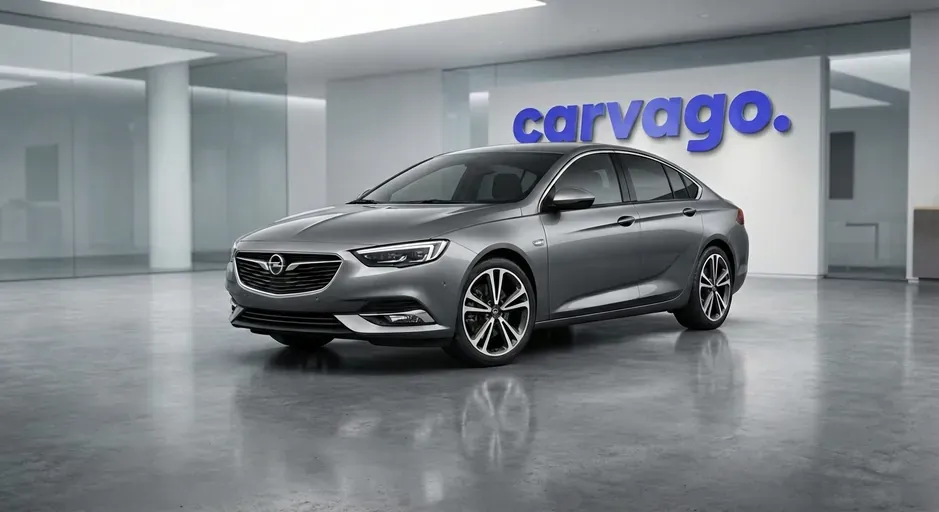
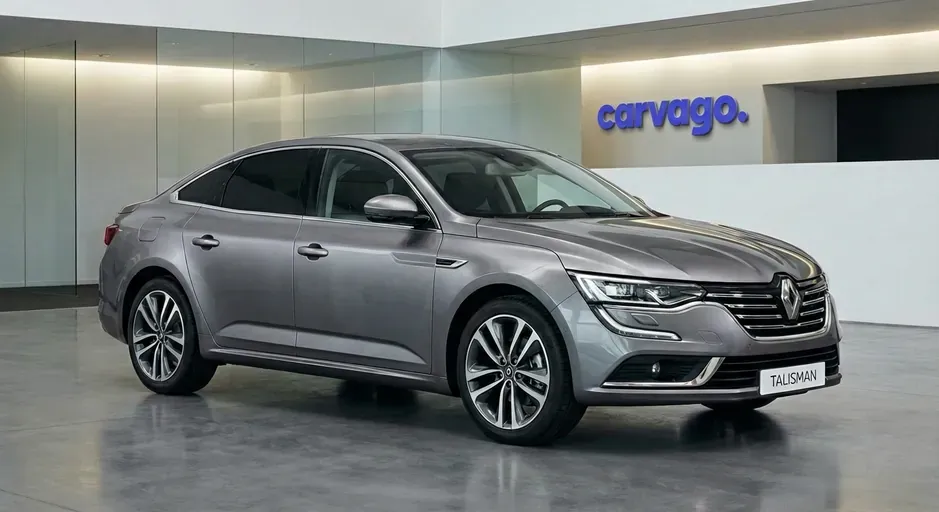
The Opel Insignia, a German mid-size contender also known as the Vauxhall Insignia, has long been a popular choice for families and corporate fleets. Against it stands its French competitor, the Renault Talisman, which, as the successor to the Laguna, has tried to captivate with its elegant design and modern technology. Let's take a detailed look at how these two cars stack up in a head-to-head comparison.
At first glance of the Opel Insignia and Renault Talisman, it's clear that both cars are among the largest representatives of their segment. However, a direct comparison of the numbers reveals that the Opel Insignia is noticeably more substantial in key parameters. This difference is most evident in the overall length, where the Insignia significantly outgrows its French competitor, promising generous interior space and a commanding presence on the road.
The biggest difference is noticeable in the estate body variants. The Insignia Sports Tourer measures an impressive 4986 mm in length, while the Talisman Grandtour is 4865 mm. A difference of 12 centimetres is substantial in this class and suggests that the Insignia will dominate in boot and interior space. For the liftback (Insignia Grand Sport) and saloon (Talisman) variants, the difference is smaller but still noticeable – with a length of 4897 mm, the Insignia is almost 5 cm longer than the Talisman (4849 mm). For the driver, this means the Insignia has a more majestic presence on the road, but manoeuvring and parking in tight urban conditions can be slightly more challenging.
A key figure for interior space is the wheelbase, where the Insignia wins again. With a wheelbase of 2829 mm, it offers 21 mm more space between the axles than the Talisman (2808 mm). This seemingly small difference translates in practice to more legroom for rear-seat passengers. In terms of width, however, both cars are virtually equal at around 1865 mm, meaning a comparable feeling of spaciousness inside. The differences in height are interesting – while the Insignia estate is 3.5 cm taller, the liftback is, conversely, almost a centimetre lower than the Renault saloon, which underscores its more sportily cut silhouette.
| Parameter | Opel Insignia Liftback (Grand Sport) | Renault Talisman Saloon | Opel Insignia Estate (Sports Tourer) | Renault Talisman Estate (Grandtour) |
|---|---|---|---|---|
| Length (mm) | 4897 | 4849 | 4986 | 4865 |
| Width (mm) | 1863 | 1868 | 1863 | 1868 |
| Height (mm) | 1455 | 1463 | 1500 | 1465 |
| Wheelbase (mm) | 2829 | 2808 | 2829 | 2808 |
One of the key parameters when choosing a mid-size car is undoubtedly practicality and the size of the luggage compartment. And it is here that the Opel Insignia and Renault Talisman engage in a very interesting duel, where the winner is not immediately obvious and depends heavily on the chosen body style and the owner's preferences. While the cars are surprisingly similar in the estate category, the difference between the basic liftback and saloon versions is vast.
If we focus on the versions without an extended rear, the Renault Talisman as a classic saloon absolutely dominates in basic volume. It offers a huge 608 litres, a figure that puts even many cars in the class above to shame. Its boot is deep and perfectly usable for standard luggage like suitcases and bags. The Opel Insignia Grand Sport, as a five-door liftback, counters with a much more modest basic volume of 490 litres. However, its strength becomes apparent when you need to transport something bulky. Thanks to its tailgate and the ability to fold down the seats, it offers up to 1450 litres and much better accessibility for bulky loads, a discipline in which the Talisman saloon logically loses out.
With the more practical estate variants, the Insignia Sports Tourer and the Talisman Grandtour, the situation is much more balanced. In the basic configuration, the Talisman Grandtour offers 572 litres, while the Insignia Sports Tourer offers only slightly less, at 560 litres. After folding down the rear seats, the balance of power shifts slightly in favour of the Talisman, which provides a maximum volume of 1681 litres compared to 1665 litres in the Insignia. In the real world, these differences are negligible, and both cars represent the pinnacle of practicality, capable of serving a large family on holiday or a tradesperson transporting materials without any problems.
| Parameter | Opel Insignia Grand Sport | Renault Talisman Saloon | Opel Insignia Sports Tourer | Renault Talisman Grandtour |
|---|---|---|---|---|
| Basic volume (litres) | 490 | 608 | 560 | 572 |
| Maximum volume (seats folded, litres) | 1450 | - | 1665 | 1681 |
When choosing a large family or executive car, towing capacity plays a key role for many drivers. And it is here that one of the biggest differences between the Opel Insignia and the Renault Talisman becomes apparent. While both models offer enough power for everyday needs, the Insignia in its top versions clearly dominates and will appeal to those who need to tow really heavy trailers.
The second-generation Opel Insignia (B), produced since 2017, offers a very wide range of towing capacities. The basic petrol engines, such as the 1.5 DI Turbo, can handle a trailer weighing around 1400 kg. However, the real strength lies in the two-litre engines. The 2.0 Diesel and especially the petrol 2.0 DI Turbo, often paired with all-wheel drive, can tow a braked trailer weighing up to an impressive 2200 kg. This is a value that is easily sufficient for a large caravan or a boat trailer.
The Renault Talisman takes a slightly different approach. Its figures are more consistent but do not reach the extremes of its German competitor. Most engine options, including the popular BLUE dCi diesel variants, offer a maximum braked trailer weight of 1800 to 1850 kg, with the Grandtour estate version often having the higher value. The TCe petrol engines are slightly weaker in this regard, typically handling 1500 kg. Although the Talisman doesn't reach the 2.2 tonnes of the Insignia, its capacity of over 1.8 tonnes is perfectly adequate for the vast majority of users and will comfortably cover the needs of a family holiday with a caravan.
For unbraked trailers, the standard limit of 750 kg applies to both models. In the end, the choice is clear: if you are looking for a reliable partner for towing medium-weight trailers, the Talisman will not disappoint. But if you are one of those who need the maximum possible towing capacity, the Opel Insignia with a two-litre engine is the clear winner.
| Model and Engine | Braked trailer weight (kg) | Unbraked trailer weight (kg) |
|---|---|---|
| Opel Insignia 1.5 DI Turbo (121 kW) | 1405 | 750 |
| Opel Insignia 2.0 Diesel (128 kW) | 1625 - 1950 | 750 |
| Opel Insignia 2.0 DI Turbo 4x4 (191 kW) | 2200 | 750 |
| Renault Talisman TCe 160 GPF (117 kW) | 1500 - 1800 | 750 |
| Renault Talisman BLUE dCi 160 (118 kW) | 1800 - 1850 | 750 |
| Renault Talisman Grandtour BLUE dCi 200 (147 kW) | 1850 | 750 |
When it comes to engine selection, the Opel Insignia and Renault Talisman take different paths, giving buyers a clear choice based on their priorities. The second-generation Opel Insignia (known as Insignia B) relies on a wide range of engines, including economical diesels, powerful four-cylinder petrol engines, and even all-wheel drive. In contrast, the Renault Talisman focuses more on smaller, highly efficient units, often preferring to pair them with an EDC dual-clutch automatic transmission for the most comfortable ride. While the Insignia can also appeal to drivers looking for a sportier experience, the Talisman is aimed at calmly and economically covering motorway miles.
The second generation of the Opel Insignia (2017–2022) offered a diverse range of engines that changed throughout its production, especially after the 2020 facelift. The basis of the petrol range was the 1.5 Turbo engine in two power variants (103 kW and 121 kW), which provided solid dynamics for everyday driving. For more demanding drivers, there was the powerful 2.0 Turbo with up to 191 kW (260 hp), which came standard with all-wheel drive and an automatic transmission. The top of the range was the GSi version, which got the most out of this engine. After the facelift, new, more efficient two-litre petrol engines appeared. The diesel range was even wider, starting with the economical 1.6 CDTI (81 kW and 100 kW), ideal for company fleets and high-mileage drivers. The larger 2.0 CDTI offered more power (125 kW) and torque. At the top was the twin-turbocharged 2.0 BiTurbo CDTI with 154 kW, which combined power with reasonable fuel consumption and was often paired with 4x4 drive.
| Engine Type | Fuel | Power (kW) | Torque (Nm) | Transmission |
|---|---|---|---|---|
| 1.5 DI Turbo | Petrol | 103 / 121 | 250 | 6MT / 6AT |
| 1.6 DI Turbo | Petrol | 147 | 300 | 6MT / 6AT |
| 2.0 DI Turbo | Petrol | 147 / 169 / 191 | 350 / 400 | 9AT / 8AT |
| 1.5 Diesel | Diesel | 90 | 300 | 6MT / 8AT |
| 1.6 CDTI | Diesel | 81 / 100 | 300 / 320 | 6MT / 6AT |
| 2.0 CDTI | Diesel | 125 | 400 | 6MT / 8AT |
| 2.0 BiTurbo CDTI | Diesel | 154 | 480 | 8AT |
The Renault Talisman (2015–2022) opted for modern turbocharged engines with smaller displacements. The petrol range initially consisted of the 1.6 TCe engines (110 kW and 147 kW), which were always paired with a 7-speed EDC dual-clutch transmission. Later, they were replaced by units developed in collaboration with Mercedes: the 1.3 TCe (117 kW) and the powerful 1.8 TCe (165 kW), known from the Alpine A110. The diesel engines underwent a similar evolution. It started with the 1.5 dCi (81 kW) and 1.6 dCi (96 kW and a bi-turbo 118 kW) units. With stricter emission standards came the modernised Blue dCi engines. The range included the 1.7 Blue dCi (88 kW and 110 kW) and the top-of-the-line 2.0 Blue dCi with 118 kW and 147 kW, which finally gave the Talisman respectable dynamics for long journeys. Most diesel engines were available with both manual and EDC automatic transmissions.
| Engine Type | Fuel | Power (kW) | Torque (Nm) | Transmission |
|---|---|---|---|---|
| 1.3 TCe GPF | Petrol | 117 | 270 | 7EDC |
| 1.6 TCe | Petrol | 110 / 147 | 220 / 260 | 7EDC |
| 1.8 TCe GPF | Petrol | 165 | 300 | 7EDC |
| 1.5 dCi / Blue dCi | Diesel | 81 / 88 | 260 / 300 | 6MT / 6EDC |
| 1.6 dCi | Diesel | 96 / 118 | 320 / 380 | 6MT / 6EDC |
| 1.7 Blue dCi | Diesel | 88 / 110 | 300 / 340 | 6MT |
| 2.0 Blue dCi | Diesel | 118 / 147 | 360 / 400 | 6EDC |
Choosing the right engine is absolutely crucial for long-term satisfaction with a car. In the following lines, we will therefore present the recommended engine options for both models, which we have selected based on their performance, real-world fuel consumption, owner feedback, and mechanical reliability.
For the large and heavy Opel Insignia, the two-litre diesel engine is the ideal choice. Whether you opt for the pre-facelift version (2.0 CDTI, 125 kW) or the newer variant (2.0 Diesel, 128 kW) introduced in 2020, you get a powerful and proven engine that is perfect for eating up motorway miles. Its greatest advantage is its massive 400 Nm of torque, which ensures confident in-gear acceleration even when fully loaded. In real-world driving, expect fuel consumption of between 6 and 7 litres of diesel per 100 km, which is a very respectable figure for such a large car. The engine is an evolution of reliable units originating from Fiat and, with proper maintenance, does not suffer from serious mechanical failures.
While the Insignia relies on proven technology, the post-2018 Talisman came with a more modern two-litre Blue dCi engine, which replaced the older and more maintenance-intensive 1.6 dCi unit. The 118 kW (160 hp) version, paired with the EDC dual-clutch automatic transmission, represents the best compromise in the range. The engine, developed in collaboration with Nissan, is characterised by its exceptionally refined and quiet operation, making long-distance travel very pleasant. With 380 Nm of torque, it offers more than enough performance, and its real-world fuel consumption is easily kept below 6.5 litres per 100 km.
The on-paper consumption figures provided by manufacturers are one thing, but real-world driving and the experiences of hundreds of drivers are another. We focused on real-world data, primarily from the German database Spritmonitor.de, when comparing the running costs of the Opel Insignia and the Renault Talisman. We are comparing the relevant generations for the used car market, namely the second-generation Insignia (from 2017) and the first-generation Talisman (from 2016).
Both models offer a wide range of engines, from economical diesel units to powerful turbocharged petrols. The real-world figures vary not only by engine but also by driving style and the predominant type of routes.
| Model and engine | Average real-world consumption (l/100 km) |
|---|---|
| Opel Insignia B (2017-2022) | |
| 1.5 Turbo (petrol, 121 kW) | 7.8 |
| 1.6 Turbo (petrol, 147 kW) | 8.2 |
| 2.0 Turbo (petrol, 191 kW) | 9.5 |
| 1.6 CDTI (diesel, 100 kW) | 6.0 |
| 2.0 CDTI (diesel, 125 kW) | 6.6 |
| 2.0 BiTurbo Diesel (154 kW) | 7.5 |
| Renault Talisman (2016-2022) | |
| 1.3 TCe (petrol, 117 kW) | 6.9 |
| 1.6 TCe (petrol, 147 kW) | 8.1 |
| 1.8 TCe (petrol, 165 kW) | 8.5 |
| 1.6 dCi (diesel, 96 kW) | 6.1 |
| 1.7 Blue dCi (diesel, 110 kW) | 5.8 |
| 2.0 Blue dCi (diesel, 147 kW) | 6.8 |
The table shows that the Renault Talisman is generally slightly more economical, in both petrol and diesel variants. The more modern and smaller turbocharged 1.3 TCe engine in the Talisman shows noticeably lower consumption than the basic 1.5 Turbo in the Insignia. With the more powerful petrol engines, the differences are slightly less pronounced, but the Talisman still maintains a slight lead.
With diesel engines, the situation is more balanced. For drivers who spend most of their time on motorways, the two-litre diesels in both cars are the ideal choice. The Opel Insignia with the 2.0 CDTI (125 kW) engine consumes an average of 6.6 litres, while the more powerful Renault Talisman 2.0 Blue dCi (147 kW) has a similar appetite at around 6.8 l/100 km. Surprisingly, the smaller 1.6-litre diesels are not as much more economical in practice as one might think, which is due to the need to rev them more to keep pace with the heavier cars.
For the typical driver who combines city, country roads, and motorways, the Renault Talisman with the 1.7 Blue dCi or the newer 1.3 TCe engine seems to be the most sensible choice in terms of fuel consumption. For the Opel, the 2.0 CDTI engine is a safe bet, offering a great compromise between performance and consumption. In the end, however, the differences in consumption are not so dramatic as to be the sole deciding factor. The choice should depend more on the overall condition of the specific car and personal preferences.
When looking at the used car market, we find that the price range for the second-generation Opel Insignia and the Renault Talisman is quite similar, but with a few key differences that may influence a buyer's decision. Both models offer a lot of value for money, but their prices vary depending on the year of manufacture, engine, equipment, and mileage.
The range of used second-generation Opel Insignia cars on the market is very wide. This gives potential buyers a good selection to choose from.
Although the Renault Talisman has been on the market a little longer, as a used car it holds its price slightly lower than its German competitor, making it an attractive choice for buyers on a more limited budget.
| Price Category | Opel Insignia B (approx. 2018-2021) | Renault Talisman (approx. 2018-2021) |
|---|---|---|
| Lower Class | €10,000 - €14,000 | €9,000 - €14,000 |
| Middle Class | €14,000 - €19,000 | €14,000 - €18,000 |
| Upper Class | over €19,000 | over €18,000 |
In general, the Renault Talisman is slightly cheaper than the Opel Insignia for a comparable age, mileage, and equipment level. The difference is not dramatic, but it can amount to several thousand euros, which can be a deciding factor for many buyers. The Insignia holds its value slightly better, which may be due to brand perception and a wider range of engines, including all-wheel-drive variants that the Talisman lacks. The choice between these two cars will therefore, in terms of price, depend mainly on preferences for a specific engine, equipment, and acceptable mileage.
Looking at the safety ratings, it might seem that there is not much difference between the Opel Insignia and the Renault Talisman – both models boast the highest five-star rating from Euro NCAP. However, the context is key, especially the year in which the tests were conducted. The methodology of crash tests is constantly becoming stricter, and the percentage results from different years are not directly comparable.
The second-generation Opel Insignia underwent Euro NCAP crash tests in 2017 and came away with a full five stars. The tests were already conducted according to stricter rules that placed greater emphasis on pedestrian protection and the functionality of assistance systems. The Insignia achieved an excellent result of 93% in adult occupant protection, which testifies to the high strength of the bodywork. It also did very well in child protection (85%). A score of 78% for pedestrian protection was also supported by the presence of a standard active bonnet. In the area of assistance systems, the car received 69%, reflecting the standard equipment of the time, which included an autonomous emergency braking system and lane keeping assist.
The Renault Talisman was tested two years earlier, in 2015, and also received five stars. Although this is a great result, it was achieved under slightly less stringent conditions than the Insignia. In adult occupant protection, the Talisman scored 86% and a very similar 84% for child protection. In the pedestrian protection category, its score was 68%. An interesting feature is the high rating for assistance systems (76%), where the Talisman scored thanks to the presence of a speed limiter and a lane departure warning system, although some more advanced features like automatic braking were not included in the basic equipment of the tested car at the time.
Although both cars are among the safest in their class, the newer test and stricter criteria slightly favour the Opel Insignia. Its higher score in adult and especially pedestrian protection points to a more modern design and more advanced safety features, such as the active bonnet. While the Renault Talisman offered a very good level of passive safety at the time of its test, its rating is now older. For the used car buyer, the Insignia therefore represents a bet on a slightly more proven and, by current standards, more comprehensive safety package.
| Parameter | Opel Insignia | Renault Talisman |
|---|---|---|
| Year of testing | 2017 | 2015 |
| Adult occupant protection | 93 % | 86 % |
| Child occupant protection | 85 % | 84 % |
| Vulnerable road user protection | 78 % | 68 % |
| Safety assist systems | 69 % | 76 % |
Both models offer more than just basic equipment, and each has its own distinctive approach to features that make everyday use and long journeys more pleasant. While the Insignia relies on German precision and ergonomics, the Talisman counters with French charm and technological innovations.
With the second-generation Insignia, Opel focused on features that will be especially appreciated by drivers who spend a lot of time behind the wheel. The practical and technologically advanced solutions are primarily aimed at increasing comfort and safety.
Renault positioned the Talisman as its flagship model, which is reflected in the range of technologies that were unusual for its class and time. The goal was to offer an experience approaching that of premium cars.
Advantages:
Disadvantages:
Advantages:
Disadvantages:
Based on our own CarAudit inspections, failure statistics, and service data, we have compiled an overview of the most common problems that used car buyers should watch out for. Neither model suffers from fatal flaws, but there are specific areas that require increased attention.
The second generation of the Insignia is generally considered a reliable car, but some engine versions and components require a more careful inspection of the used vehicle.
Summary for Opel Insignia: Most of the Insignia's problems are related to specific engine versions and their maintenance. These are more partial and solvable faults rather than major design flaws. However, a thorough technical inspection of the car before purchase is crucial.
The Talisman is an elegant and comfortable car, but its reputation is affected by several known weaknesses, especially in the transmission and electronics.
Summary for Renault Talisman: The main risk with the Talisman is the EDC dual-clutch transmission, the condition of which must be thoroughly checked. Other problems are of a more minor nature and relate to the electronics. When choosing, it is crucial to focus on units with a transparent service history and to undergo a comprehensive vehicle inspection.
When buying a used car, a thorough inspection is key. Here are a few specific points to focus on with these two models, as both have their known weaknesses, and identifying them can save you future worries and costs.
The Opel Insignia in the Sports Tourer estate version usually has a slightly smaller boot (approx. 560 litres) than the Renault Talisman Grandtour (approx. 572 litres). However, the difference is minimal, and both cars are average in their class. More important than the volume itself is the practicality and shape of the boot, where preferences may vary.
Both cars show average reliability. The Renault Talisman may more frequently experience minor electrical problems or creaks in the interior. With the Opel Insignia, some owners complain about problems with the automatic transmission in cars with higher mileage or AdBlue system failures in diesel engines.
The Renault Talisman is often rated as slightly more comfortable, mainly due to its more comfort-tuned suspension. The Opel Insignia also offers a high level of comfort, especially with the optional ergonomic AGR seats, but its suspension can feel a bit stiffer.
Both cars are very capable as family vehicles, especially in their estate versions. The Insignia may offer slightly more space in the rear seats. The Talisman, on the other hand, counters with a slightly larger and well-usable boot and an overall more comfortable ride.
With a used Renault Talisman, check the functionality of all electronics and the EDC dual-clutch gearbox. With the Opel Insignia, focus on the smoothness of the automatic transmission's shifting, and with the 2.0 CDTI diesel engines, pay attention to the condition of the turbocharger and the AdBlue system.
Sources: ADAC, forbes.cz, lidovky.cz, elektromobil.cz, automix.cz, logistika.ihned.cz
This article was prepared using artificial intelligence tools. The section guarantor is Petr Dušek.
Ford Mondeo vs. Toyota Camry: Detailed comparison, tests, data, and verdict. Find out which sedan is the best choice for you on the used car market.
Apr 13, 2026
Ford Mondeo vs. Volkswagen Passat: Detailed comparison, reviews, engines, and verdict. Find out which of these popular cars is the better choice for you.
Oct 16, 2026
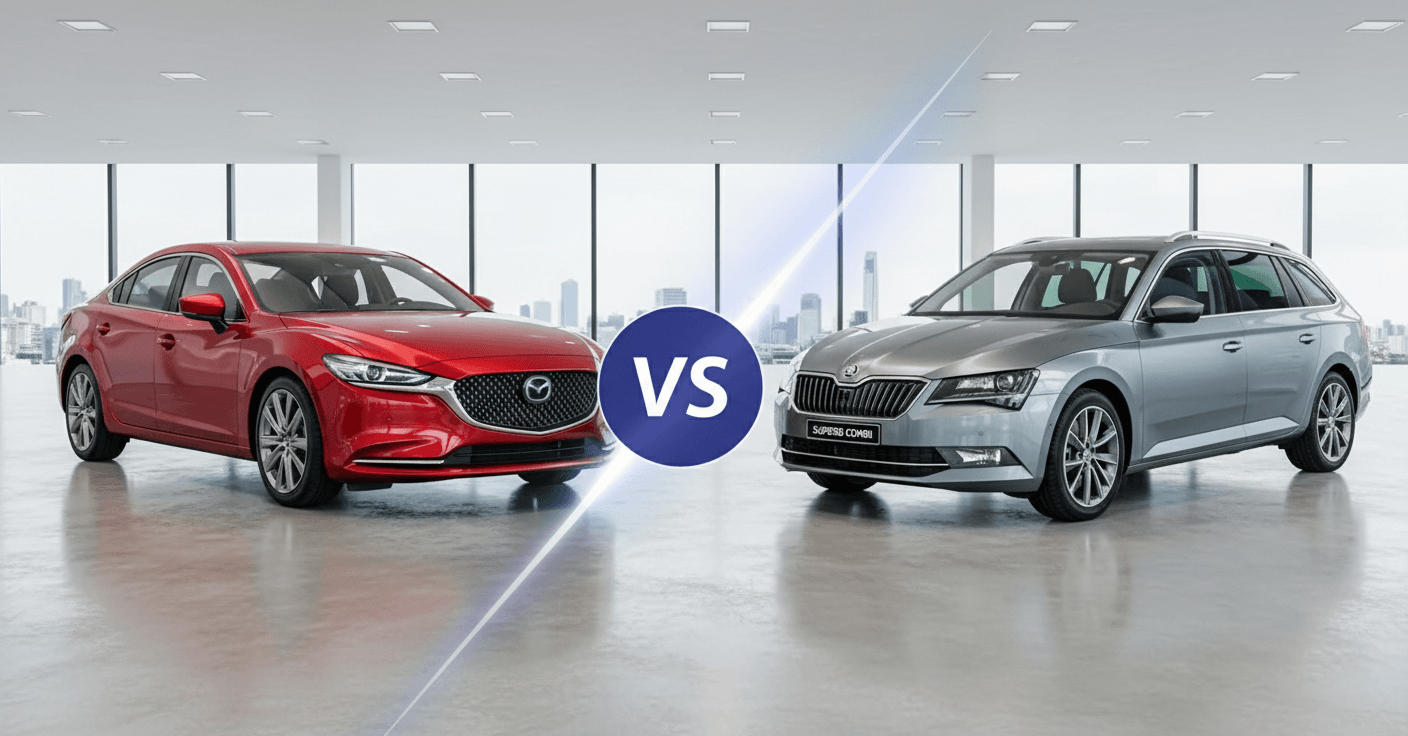
Detailed comparison of used Mazda 6 vs. Škoda Superb. We reveal real-world experiences, fuel consumption, and spaciousness, and provide a clear verdict to help you make the right choice.
Apr 2, 2026