Car battle
Isuzu D-Max vs. Nissan Navara: Complete comparison 2026
Isuzu D-Max vs. Nissan Navara: Which pick-up is better? Our detailed comparison, tests, and verdict will help you choose the right vehicle.
Apr 14, 2026
Articles
Car battle
Detailed comparison: Mitsubishi L200 (Triton) vs Toyota Hilux. Find out which used pick-up offers better equipment, performance, and price. Our verdict here!
April 14, 2026
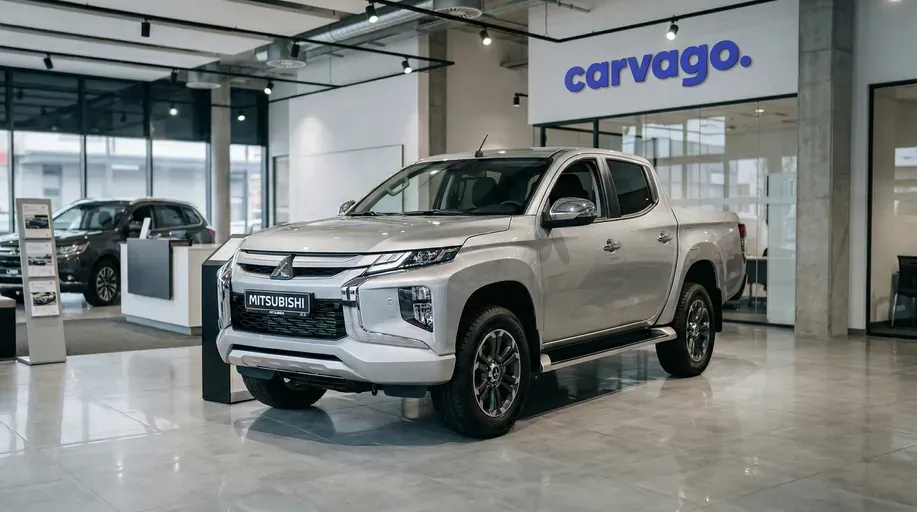
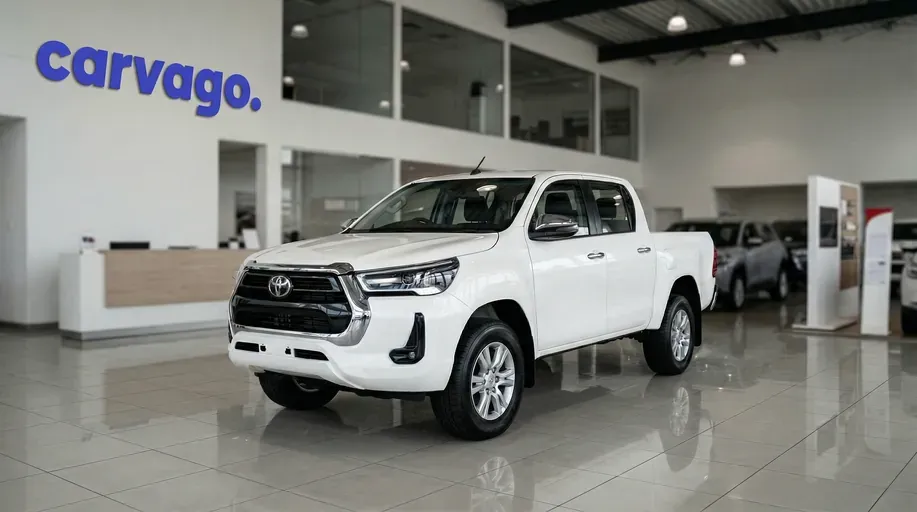
Mitsubishi L200, available on various global markets also under the names Mitsubishi Triton, Strada, or as part of a recent collaboration as the Fiat Fullback, is a proven and versatile representative of the mid-size pick-up category with excellent off-road capabilities. Facing it is the iconic Toyota Hilux, a world-renowned off-road workhorse that has built a well-deserved reputation as a virtually indestructible and highly reliable machine over its rich history. Let's take a look together at how this duel between two tough Japanese rivals turns out in a direct comparison and which of them makes more sense on the market for roughly four-year-old used cars.
When choosing a roughly four-year-old work pick-up, external dimensions play an absolutely key role, both in terms of the size of the loading area and cabin spaciousness, and for everyday maneuverability. Focusing on models on the used car market from 2021 to 2022 (i.e., the 3rd generation for Mitsubishi and the current AN1P generation for Toyota), we find that although both cars respect the classic robust build, the Toyota Hilux is overall slightly more massive. Mitsubishi, on the other hand, sticks to a somewhat more compact format.
Toyota Hilux reaches a length of up to 5330 mm and its wheelbase is a respectable 3085 mm. In contrast, the Mitsubishi L200 is slightly shorter. Its length, depending on the chosen cabin version (most often Club Cab or Double Cab), ranges between 5195 and 5305 mm, with a shorter wheelbase of exactly 3000 mm. The 85 mm difference in wheelbase plays into Toyota's hands regarding directional stability on the highway and a smoother ride with a heavy load. The L200, on the other hand, benefits significantly from its shorter wheelbase in challenging terrain or cramped workspaces, where it offers a noticeably better turning radius and more agile maneuvering.
A similar trend is also evident in the width and overall height of the vehicle. Standard variants of the Toyota Hilux boast a width of up to 1855 mm and a height of around 1815 mm. The Mitsubishi L200, with its maximum width of 1815 mm, is exactly 4 centimeters narrower and slightly lower. In practice, this means that while the Toyota offers the crew slightly more transverse space at shoulder level inside, the Mitsubishi will more easily squeeze through narrow forest paths and be a bit friendlier when parking in cramped city streets, where every missing centimeter of the bodywork counts.
| Parameter | Mitsubishi L200 Pick-up | Toyota Hilux Pick-up |
|---|---|---|
| Width (mm) | 1785 - 1815 | 1800 - 1855 |
| Length (mm) | 5195 - 5305 | 5325 - 5330 |
| Height (mm) | 1775 - 1780 | 1795 - 1815 |
| Wheelbase (mm) | 3000 | 3085 |
Overall, it can be said that the choice between these two vehicles based on external dimensions depends on your primary use case. If you are looking for maximum highway stability, robustness, and a slightly airier cabin, the Toyota Hilux will be the ideal candidate for you. Conversely, if you regularly drive in dense forests, weave through narrower paths, and appreciate above-average agility, the Mitsubishi L200 emerges from this comparison as the more rational and driver-compliant choice.
When choosing a roughly four-year-old used vehicle in the pickup category, such as the 3rd generation Mitsubishi L200 (production years 2015–2022) and the AN1P generation of the Toyota Hilux (from 2016), the perspective on transport capacity shifts from a traditional trunk to an open bed. For many buyers on the used car market, these vehicles represent not only indestructible workhorses but also versatile family cars. The volume and overall dimensions of the cargo area therefore play a key role. Whether it's for business transport of construction materials or loading sports equipment for an active family, differences in bed proportions can determine which vehicle better suits your lifestyle.
While in regular passenger cars, trunk volume is measured up to the luggage cover, in pickups, standard capacity is calculated to the upper edge of the side walls. In the most sought-after Double Cab version, which is the most common choice on the market, the Mitsubishi L200 offers a bed volume of approximately 1,061 liters. The Toyota Hilux fares better thanks to a slightly wider and longer loading area, providing a volume of roughly 1,127 liters. For more work-oriented versions with an extended cab (Club Cab for the L200 and Extra Cab for the Hilux), the capacity increases to 1,291 liters and 1,337 liters, respectively. If you are looking for the absolute maximum and choose the two-seater Single Cab version, Mitsubishi offers 1,581 liters of space, while the Hilux boasts a massive volume of 1,750 liters. It is important to mention, however, that unlike SUVs or estates, you cannot compare the maximum volume with the rear seats folded in pickups – the passenger cabin and the cargo bed are strictly separate units.
In practice, these volumes bring immense freedom. A capacity of over 1,000 liters in Double Cab models is perfectly sufficient for weekend shopping or a longer vacation, especially if you equip the bed with a practical hardtop or a lockable roller shutter. Furthermore, both models easily accommodate a standard Euro pallet. It is worth noting that the Toyota Hilux also received a mild-hybrid variant for newer model years (within the AN1P generation), but since the small battery is hidden under the rear seats in the cabin, the bed volume remains completely unaffected. In the end, both vehicles offer generous space for several extra suitcases compared to any family estate, but Toyota has a slight edge in all body styles.
| Parameter | Mitsubishi L200 Pickup Double Cab | Toyota Hilux Pickup Double Cab | Mitsubishi L200 Pickup Club Cab | Toyota Hilux Pickup Extra Cab | Mitsubishi L200 Pickup Single Cab | Toyota Hilux Pickup Single Cab |
|---|---|---|---|---|---|---|
| Base volume (liters) | 1061 | 1127 | 1291 | 1337 | 1581 | 1750 |
| Max. volume with seats folded (liters) | N/A | N/A | N/A | N/A | N/A | N/A |
Although both pickups easily meet the demands of an active family and heavy work, the Toyota Hilux offers several dozen extra liters in each version thanks to its larger bed, giving it a slight practical advantage.
When choosing a work pickup, towing capacity often plays a crucial role. The trailer weight that the Mitsubishi L200 and Toyota Hilux can tow differs slightly, which has a direct impact on their practicality when towing heavy construction equipment, boats, or large caravans. Focusing on models around four years old, the Toyota Hilux (AN1P generation, especially models from 2020 onwards) generally offers higher towing power. This vehicle can tow a braked trailer with a maximum weight of up to 3500 kg. The competing Mitsubishi L200 (in its 3rd generation sold between 2015 and 2022) lags only slightly behind – the maximum braked trailer weight here reaches 3100 kg for the five-seater Double Cab version and exactly 3000 kg for the shortened Club Cab variant.
It is important to point out some differences within the models themselves. Older versions of the Toyota Hilux with the 2.4 D-4D engine (2016–2020 models) could handle a maximum of 3200 kg. After 2020, however, this increased to a full 3.5 tonnes, and the most modern 2.8 D-Mildhybrid powertrains maintain this maximum capacity without compromise. The weight of an unbraked trailer is often not specifically listed in technical tables because, for legislative reasons, it remains limited to the standard 750 kg for both vehicles within Europe.
In practice, these extra few hundred kilograms can be a decisive factor for a purchase. The 3100 kg value for the Mitsubishi L200 is perfectly sufficient for transporting standard construction materials for the weekend, towing a large family caravan, or a medium-heavy boat. However, the full 3500 kg capacity of the Toyota Hilux benefits from the absolute legislative maximum on our roads. In real life, this means room for an extra pallet of bricks or the necessary reserve for the heaviest dual-axle horse trailers.
If you are choosing a pickup as an off-road all-rounder for an active family and expect occasional material transport, the Mitsubishi L200 will certainly not limit you with its capacities. But if your daily priority is ultimate work use and regular legal towing of the heaviest possible trailers, the newer generation of the Toyota Hilux is demonstrably the better choice thanks to its 3.5-tonne capacity.
| Model and motorization | Braked weight of trailer (kg) | Unbraked weight of trailer (kg) |
|---|---|---|
| Mitsubishi L200 3rd Gen 2.2 Diesel / 2.4 DI-D (Club Cab) | 3000 | 750 |
| Mitsubishi L200 3rd Gen 2.2 Diesel / 2.4 DI-D (Double Cab) | 3100 | 750 |
| Toyota Hilux AN1P 2.4 D-4D (2016–2020 models) | 3200 | 750 |
| Toyota Hilux AN1P 2.4 D-4D / 2.8 D-4D (from MY 2020) | 3500 | 750 |
| Toyota Hilux AN1P 2.8 D-Mildhybrid (from MY 2024) | 3500 | 750 |
When choosing a used pickup truck from around 2022, engine options play an absolutely crucial role. While the emphasis in this segment used to be primarily on towing power and durability for heavy off-road use, today's vehicles must also offer reasonable fuel consumption, low emissions, and refinement for daily use. Both Japanese legends, the Mitsubishi L200 and Toyota Hilux, rely exclusively on diesel four-cylinder engines. The main difference between these competitors in the market for roughly four-year-old used cars lies in the variety of power levels. While Mitsubishi bet on a single, highly optimized 110 kW (150 hp) power unit, Toyota added a larger and much more powerful 2.8 D-4D engine to its base engine after its major facelift in 2020, giving it a significant advantage for demanding users with heavy trailers.
Under the hood of the Mitsubishi L200 (generation produced between 2015–2022), you will come across two main units, whose presence on the market depends on the year of manufacture. In older models from 2015 to 2019, the 2.4 DI-D engine was very popular, delivered with up to 133 kW (181 hp) and characterized by decent dynamics. However, if you are looking for a typical four-year-old used car, you will only find the newer 2.2 DI-D four-cylinder under the hood, which the brand introduced in 2019 due to stricter European emission limits.
The 2.2 DI-D engine has 110 kW (150 hp) and a generous 400 Nm of torque. Although it may seem a bit reserved on paper compared to its predecessor or more powerful competition, in practice, its operation is exceptionally smooth. Cabin soundproofing has also significantly improved, and the unit works perfectly with the new six-speed automatic (or manual) transmission. It is worth keeping in mind that European sales of the L200 ended in 2022, so these engines will slowly become a rarity on the used car market.
| Engine type | Fuel type | Power (kW) | Torque (Nm) | Transmission |
|---|---|---|---|---|
| 2.4 DI-D (until 2019) | Diesel | 113 / 133 | 380 / 430 | 6MT / 5AT |
| 2.2 DI-D (2019–2022) | Diesel | 110 | 400 | 6MT / 6AT |
The eighth-generation Toyota Hilux (especially AN1P models from the facelift in late 2020) offers significantly more diverse options on the used car market. The standard remains the very durable 2.4 D-4D turbodiesel with 110 kW and 400 Nm of torque. This unit is practically a direct competitor to the engine in the L200 in terms of dynamics, is extremely reliable, and is more than sufficient for regular tradespeople and travelers. Moreover, most used cars with this engine hold their value very well.
However, Toyota's major trump card became the 2.8 D-4D unit, which arrived on the European market with the 2020 facelift. The engine produces a confident 150 kW (204 hp). With a manual transmission, it provides a solid 420 Nm, while with an automatic, it moves up to a massive 500 Nm, ensuring a huge reserve for overtaking and towing 3.5-ton trailers. For completeness, the latest 2.8 D-Mildhybrid version introduced at the end of 2024 can also be mentioned, but it won't be available in the four-year-old used car category for a long time.
| Engine type | Fuel type | Power (kW) | Torque (Nm) | Transmission |
|---|---|---|---|---|
| 2.4 D-4D | Diesel | 110 | 400 | 6MT / 6AT |
| 2.8 D-4D (from 2020) | Diesel | 150 | 420 / 500 | 6MT / 6AT |
| 2.8 D-Mildhybrid (from 2024) | Diesel | 150 | 500 | 6AT |
In an overall comparison, the Toyota Hilux comes out better in terms of flexibility. The arrival of the powerful 2.8-liter unit makes it the ideal choice for performance-oriented drivers, highway travelers, or those who often tow boats, caravans, and heavy equipment. However, it also has its downside – the more powerful versions of the Toyota are priced significantly higher on the used car market. The Mitsubishi L200, on the other hand, will primarily appeal to customers and tradespeople with a clearly defined budget. Although the 2.2 DI-D engine does not reach the dynamics of the Toyota on paper, it is an extremely refined, tough, and reliable unit that handles daily work without breaking a sweat and often comes with a more attractive price tag.
While the Toyota Hilux with the more powerful 2.8 D-4D engine clearly dominates when towing the heaviest trailers, the Mitsubishi L200 will please more economical types with its excellently soundproofed 2.2 DI-D engine with smooth operation, which is perfectly sufficient for regular work and trips.
Choosing the right engine for work pickups is crucial for long-term satisfaction, as these vehicles commonly face heavy loads and demanding conditions. Our recommendations are based on real-world experience, mechanical reliability, actual fuel consumption, and feedback from owners of four-year-old used cars. It is interesting to see how the two Japanese automakers approached stricter emission standards differently: while Mitsubishi reduced displacement and power during its 2019 update by switching to a more efficient 2.2-liter unit, Toyota, with the facelifted Hilux in 2020, addressed complaints about sluggishness and added a completely new, effortless four-cylinder with a massive 2.8-liter displacement to its lineup.
In the generation sold between 2019 and 2022, the primary and very rational choice for the used car market is the 2.2 Diesel (110 kW / 150 hp) four-cylinder, often commercially referred to as DI-D. Compared to the older 2.4 DI-D engine from previous years, it has slightly lower power, but it makes up for it with noticeably quieter operation, much better cooperation with the new six-speed automatic transmission, and more favorable real-world fuel consumption, which ranges between 8 and 9 liters. In terms of reliability, it is a very robust unit, but it has specifics to watch out for when buying a used car. A major risk is the clogging of the diesel particulate filter (DPF) during predominantly city driving – you can recognize a clogged filter by the engine jerking unpleasantly at idle, losing power, or the engine warning light coming on. This problem can be easily eliminated by regular highway driving (at least 20 minutes at speeds above 2000 rpm), which allows the soot to burn off. Another important point is the fuel system. If the previous owner neglected to change the fuel filter or used the cheapest non-additivated diesel, premature wear of the high-pressure pump can occur. This manifests as difficult cold starts and a significant loss of power under load. To prevent this problem, shorten the fuel filter replacement interval, ideally to 40,000 km. This engine is ideal for drivers who use the pickup for longer distances and regular work, not for short trips around town.
For the Toyota Hilux from 2020 to 2024 (AN1P generation), we clearly recommend going for the more powerful 2.8 D-4D engine with 150 kW (204 hp) and up to 500 Nm of torque. While the smaller base 2.4 D-4D engine is mechanically almost indestructible, it feels very sluggish when towing heavy trailers or on hills. The 2.8 D-4D version makes the Hilux a significantly more dynamic, smoother, and more comfortable car, where you don't have to worry about fully utilizing the 3.5-ton towing capacity. A technical advantage is the massive pull from low revs, which works perfectly with the automatic transmission, while real-world fuel consumption even with such a large engine stays within reasonable limits around 9.5 liters per 100 km. The mechanical durability of this engine is on par with Toyota's legendary quality; however, as a mechanic, I recommend carefully checking the condition of the fuel injectors when inspecting a used car. Especially in cars that have been driven in harsh conditions with poor fuel quality, the injectors can start to knock. During the test drive, listen for a typical metallic rattling and notice if the engine runs irregularly at idle (so-called "stumbling"). As with the L200, frequent short trips are not good for the DPF filter. The 2.8 D-4D engine is without question the best choice in the range – it is tailor-made for demanding users, long trips with a heavy load behind them, and drivers who require effortless overtaking from a pickup.
Official manufacturer fuel consumption figures often differ significantly from what the trip computer shows in real-world driving. For large work pickups like the Mitsubishi L200 and Toyota Hilux, this is doubly true. Factors such as a high curb weight exceeding two tons, specific boxy aerodynamics, and frequent work with heavy loads come into play. To gain an objective and unbiased idea of the actual appetite of current used cars around four years old, we utilized extensive real-world data directly from long-term users on the Spritmonitor.de community platform.
| Model and engine | Average consumption (l/100 km) |
|---|---|
| Mitsubishi L200 2.2 DI-D 110 kW | 9.8 |
| Toyota Hilux 2.4 D-4D 110 kW | 9.3 |
| Toyota Hilux 2.8 D-4D 150 kW | 10.4 |
Looking at real-world driving data, several interesting trends clearly emerge:
For typical used pickup buyers, the conclusions are quite clear. If you spend most of your time with the vehicle unloaded, drive frequently in suburban traffic, or are primarily interested in smooth commuting to off-road sites with light tools, the proven 2.4 D-4D unit from Toyota, or the 2.2 DI-D from Mitsubishi, will help you keep fuel costs safely in check. Experienced drivers and professionals who, on the other hand, regularly cruise highways at a brisker pace, tackle long climbs, or fully utilize the maximum permitted payload in the bed and on the tow hitch, will clearly appreciate the more robust 2.8 D-4D engine more. Smaller four-cylinders struggle with excessive loads at higher RPMs, while the more powerful unit always has a power reserve, which quickly narrows the difference in consumption under load.
In summary, fuel consumption should definitely not be the main and deciding factor that tips the scales toward one of these vehicles. Differences in a normal driving cycle between comparable vehicles amount to a maximum of half a liter of diesel per hundred kilometers, which, from the overall perspective of operating costs and the relatively expensive maintenance of similarly sized off-roaders, does not play a major role. It is much more important to choose the power unit and model primarily according to your actual daily usage profile and the necessary power reserve.
When looking for a reliable off-road pickup on the used car market, typically around four years old (2021–2022 models), you will encounter quite significant price differences between these two Japanese rivals. Although both cars are among the most respected workhorses in their segment, their residual value and price depreciation dynamics behave differently on the market.
The Mitsubishi L200 has always been considered a more affordable and pragmatic alternative, which is fully reflected in used car dealerships. For approximately four-year-old examples, prices remain at relatively favorable levels.
In contrast, the Toyota Hilux has long benefited from its global reputation as an indestructible machine. Four-year-old models – especially those equipped with the more powerful and desirable 2.8 D-4D engine, which arrived with the facelift in late 2020 – hold their value in an exemplary manner.
| Model | Starting price (basic trim / higher mileage) | Price of well-preserved units (top trims) | Rate of depreciation |
|---|---|---|---|
| Mitsubishi L200 | ~ €23,000 | ~ €35,000 | Medium to high |
| Toyota Hilux | ~ €31,000 | ~ €45,000+ | Very low |
The Mitsubishi L200 represents unbeatable value for money for a used car buyer and a cheaper entry point into the world of pickups, while the Toyota Hilux requires a significantly higher initial investment, which is reliably compensated for by its premium value retention.
When evaluating the safety of used cars, it is always necessary to consider the context and the year of testing. Although customers often rely on the fact that modern cars automatically meet five-star Euro NCAP standards, results for robust pick-ups tend to be more variable. Furthermore, the assessment protocols of independent tests are constantly evolving and becoming stricter over time. Tests from earlier years lack simulations of the latest scenarios, such as intersection collisions, stricter frontal impacts against a mobile barrier, or cyclist detection when reversing. Percentage scores from different years cannot be directly compared, even for cars from the same decade, because the criteria for awarding stars change fundamentally.
Mitsubishi L200 underwent Euro NCAP crash tests in 2015, from which it received an overall rating of four stars. The main reason for losing the fifth star was the absence of autonomous emergency braking (AEB) in the standard equipment of that time. However, the passive occupant protection itself is at a decent level. The vehicle achieved 81% for adult occupant protection and 84% for child occupant protection. The cabin remained relatively stable during impacts, although average chest protection was recorded for the driver in a frontal collision. From the perspective of active safety, the L200 earned a rating of only 64% for safety assistance systems, which from today's point of view means rather basic functionality without modern prevention features.
Toyota Hilux headed for the Euro NCAP barriers a year later, in 2016. For this model, the commissioners applied the so-called Dual Rating system. In the base equipment without advanced assistants, the Hilux earned only three stars. However, a fundamental difference was brought by versions with the optional Toyota Safety Sense safety package, which gained the coveted five stars. With this package, the car achieved an excellent 93% for adult occupant protection, while child protection ended at 82%. Advanced assistance systems including emergency braking with pedestrian detection earned the vehicle 83% for the protection of vulnerable road users. When choosing a used Hilux, it is therefore crucial to find out whether the specific unit actually possesses this safety equipment.
In conclusion, it can be summarized that the certifications of both vehicles are already outdated from the perspective of the latest and much stricter Euro NCAP protocols. Nevertheless, the Toyota Hilux – assuming the presence of the Safety Sense package – offers an overall more modern and safer package. Its body provides better structural protection for the adult crew, and the integration of active emergency braking gives the driver significantly higher confidence in crisis situations. The Mitsubishi L200 represents a sturdy and safe work tool, but it lags behind its Japanese rival in the area of technological prevention and overall point rating.
| Parameter | Mitsubishi L200 | Toyota Hilux (with Safety Sense package) |
|---|---|---|
| Year of testing | 2015 | 2016 |
| Adult occupant protection | 81 % | 93 % |
| Child occupant protection | 84 % | 82 % |
| Vulnerable road user protection | 76 % | 83 % |
| Safety assistance systems | 64 % | 63 % |
Although both cars are structurally strong, the Toyota Hilux with the safety package offers demonstrably better adult protection and more modern assistants, making it the safer choice in this comparison.
In addition to standard equipment, each of the models offers several unique features that can be decisive for the customer and bring a specific approach to added value.
For the Mitsubishi L200 (especially models after the significant 2019 facelift), engineers focused not only on a more aggressive design but also on maneuverability and unique off-road technologies that make it an exceptionally versatile car for every day.
The eighth-generation Toyota Hilux (especially after the extensive 2020 update) benefits from its legendary reputation as an indestructible workhorse but adds modern technology, more powerful engines, and luxury features for more demanding users.
Excellent Super Select II four-wheel drive system (allows 4x4 driving even on dry asphalt)
Great price-to-utility ratio on the used car market
Smaller turning radius for easier maneuvering in tight spaces
Striking "Dynamic Shield" front grille design from recent model years
Reliable 2.2 DI-D diesel engine with reasonable fuel consumption
Lower maximum braked towing capacity (3.1 tonnes compared to the standard 3.5 tonnes of competitors)
Outdated graphics and slower response of the infotainment system
Smaller overall dimensions of the loading area compared to main rivals
Higher engine noise and wind noise at highway speeds
The Mitsubishi L200 is an ideal choice for those looking for a more affordable yet highly capable pickup with superior four-wheel drive features. Thanks to its excellent maneuverability and the Super Select II system, it will particularly appeal to drivers who often use their pickup in mixed use and on paved roads in poor weather conditions.
Legendary reliability and extreme mechanical durability in heavy terrain
Excellent residual value ensuring minimal price drop upon resale
High towing capacity of up to 3,500 kg and superior payload capacity
Powerful and flexible 2.8 D-4D diesel engine (available in post-2020 facelift models)
Robust chassis construction that can withstand even the roughest treatment
Significantly higher purchase price on the used car market
Very stiff and bouncy suspension when driving with an empty bed
Lack of a center differential prevents the use of 4x4 on dry asphalt
In lower trim levels, interior materials feel strictly utilitarian
The Toyota Hilux represents an uncompromising work tool for users who demand absolute certainty, maximum towing power, and resistance to harsh treatment. Despite the higher initial investment, this model pays off handsomely with its long lifespan, top-tier off-road capabilities, and unrivaled value retention over time.
Based on long-term user experience, service reports, failure statistics, and our own data provided by an independent technical inspection of the vehicle, we have compiled an overview of the most common problems that buyers of roughly four-year-old used pick-ups should watch out for.
Mitsubishi L200 is considered a reliable workhorse, but models from recent years with the 2.2 DI-D engine show specific issues mainly related to emission systems and wear in heavy-duty use.
The Mitsubishi L200 is a robust pick-up whose biggest weaknesses are diesel engine emission systems sensitive to short trips and weaker factory anti-corrosion protection of the chassis frame. If the car receives regular maintenance and is not driven predominantly in the city, it serves very reliably.
Toyota Hilux has long held a reputation as one of the most durable cars on the planet, however, even its current generation (post-facelift) with 2.4 D-4D and 2.8 D-4D engines shows several typical weaknesses to focus on.
The Toyota Hilux remains the absolute benchmark for mechanical reliability, with the biggest concerns usually being a clogged DPF filter due to inappropriate use and a slower onboard system. In terms of overall longevity and component durability, it has no competition in its class.
When buying a used car, a thorough inspection is crucial, and this is doubly true for work pick-ups, as these machines often face demanding terrain and harsh conditions. Before you decide on one of these Japanese workhorses, a comprehensive car inspection is in order to reveal any hidden defects or neglected maintenance. Here are some specific points to focus on for these two models:
Toyota Hilux can tow a braked trailer weighing up to 3,500 kg, which is the absolute standard in this class. Mitsubishi L200 offers a maximum towing capacity of 3,100 kg, which may be limiting for some users with heavy trailers. However, both cars can easily carry about one ton of cargo in the bed.
The Mitsubishi L200 stands out with its advanced Super Select 4WD-II system, which, thanks to a center differential, allows for permanent all-wheel drive even on dry asphalt. In contrast, the Toyota Hilux relies on a classic part-time four-wheel drive system without a center differential. Therefore, on paved surfaces, the Hilux requires switching to rear-wheel drive to avoid excessive strain on the drivetrain.
The Toyota Hilux has a long-standing reputation as one of the most durable and reliable cars in the world, confirmed by years of experience in extreme working conditions. The Mitsubishi L200 is also very robust and reliable, but in terms of overall longevity and the trouble-free availability of spare parts, Toyota has a slight edge. However, with regular and careful maintenance, both models will not let you down even after hundreds of thousands of kilometers.
The fuel consumption of both vehicles in real-world combined driving is very similar, usually between 8 and 9 liters of diesel per 100 km. The Mitsubishi L200 with the 2.2 DI-D engine tends to be slightly more economical during calm driving due to its lower curb weight. While the Toyota Hilux with the more powerful 2.8 D-4D engine has a slightly higher appetite, it rewards you with significantly better pull when fully loaded.
The Mitsubishi L200 is often rated as a slightly more comfortable vehicle with a smaller turning radius, making daily maneuvering in the city easier. The Toyota Hilux has stiffer rear suspension, which ideally settles down only when the bed is loaded, although facelifts after 2020 have significantly improved overall comfort. If you plan to drive more often with an empty bed, the L200 will be a generally more pleasant and compliant choice for you on regular roads.
Sources: ADAC, lidovky.cz, garaz.cz, autorevue.cz, motorvize.cz, f1sport.cz
This article was prepared using artificial intelligence tools. The section guarantor is Petr Dušek.
Isuzu D-Max vs. Nissan Navara: Which pick-up is better? Our detailed comparison, tests, and verdict will help you choose the right vehicle.
Apr 14, 2026
Ford Ranger vs Nissan Navara (NP300) comparison. We bring real-world experience, a comparison of equipment and driving characteristics. Which used pick-up is the better choice?
Apr 14, 2026
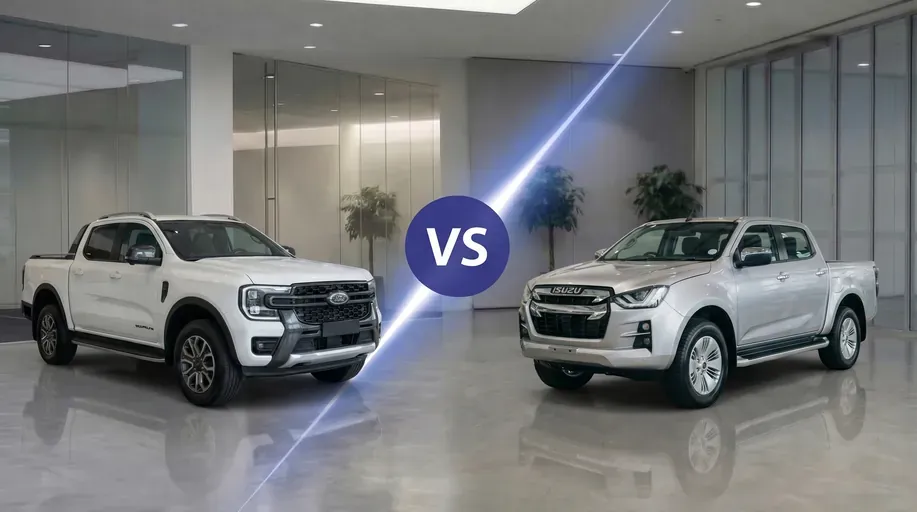
Looking for the perfect pickup truck? A detailed comparison of the Ford Ranger vs. Isuzu D-Max. We reveal the differences in off-road performance, reliability, and equipment to help you choose the best one.
Apr 13, 2026