Ford Ranger vs. Nissan Navara: Complete comparison 2026
Ford Ranger vs Nissan Navara (NP300) comparison. We bring real-world experience, a comparison of equipment and driving characteristics. Which used pick-up is the better choice?
Apr 14, 2026
Articles
Car battle
Detailed comparison of the Isuzu D-Max and Volkswagen Amarok. Find out which pickup offers better reliability and equipment. Read our verdict before buying a used car!
April 17, 2026


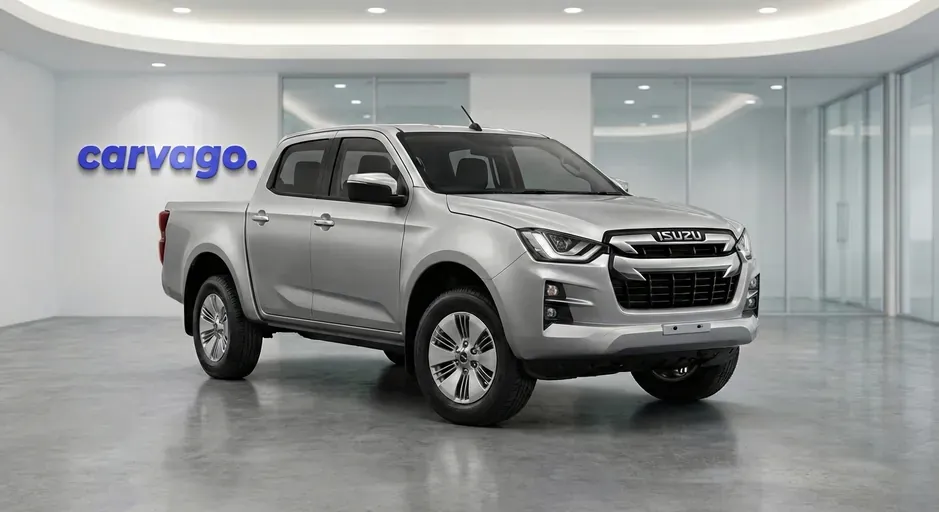
Isuzu D-Max, also sold in some overseas markets under the names Chevrolet D-Max, Holden Colorado, or the more luxurious Isuzu V-Cross, is a robust Japanese pick-up that has built a strong global reputation as an indestructible workhorse with excellent off-road capabilities. Standing against it is the Volkswagen Amarok, the European representative of a premium approach to utility vehicles, which, by contrast, has long scored points for its excellent driving comfort approaching that of classic SUVs, powerful engines, and a sophisticated interior. The following comparison will show you in detail which of these two different approaches to a practical utility vehicle represents the best choice for your daily needs on the market for approximately four-year-old used cars.
Both vehicles represent classic representatives of the pickup segment, but their exterior dimensions reveal slightly different priorities of the two automakers. If we focus on the models that are currently most relevant on the market for roughly three- to five-year-old used cars (i.e., the 3rd generation Isuzu D-Max from 2020–2024 and the subsequent 2nd generation Volkswagen Amarok from 2023), the German representative makes a more massive overall impression. With a length of 5350 mm, the Amarok is slightly longer than the D-Max (5270–5310 mm depending on the cab type). This fact, combined with a significantly longer wheelbase (3270 mm for the Amarok compared to 3125 mm for the Isuzu), gives the Volkswagen an undeniable advantage in directional stability on the highway and more generous longitudinal space for the crew. The shorter wheelbase and overall slightly shorter length of the D-Max, on the other hand, mean better agility on narrow roads and a better breakover angle when overcoming terrain breaks, making it a more pragmatic choice for demanding work off paved roads.
As for width and height, the Volkswagen Amarok clearly demonstrates its focus on maximum comfort and a representative appearance. With a width of 1910 mm, it surpasses the Isuzu D-Max (1810–1870 mm) by a significant 40 to 100 mm, which in practice results in a noticeably airier cabin space, especially in the shoulder area. The Amarok is also noticeably taller (measuring up to 1884 mm compared to a maximum of 1790 mm for the D-Max), giving the driver a sense of total superiority and the car a more dominant stance on the road. From a user perspective, however, this size advantage means you have to be much more careful with the Amarok when entering older underground garages or parking at shopping centers, while the D-Max's more compact build represents a much smaller compromise when maneuvering in urban areas.
| Parameter | Isuzu D-Max Pickup | Volkswagen Amarok Pickup |
|---|---|---|
| Length (mm) | 5270 - 5310 | 5350 |
| Width (mm) | 1810 - 1870 | 1910 |
| Height (mm) | 1770 - 1790 | 1871 - 1884 |
| Wheelbase (mm) | 3125 | 3270 |
When choosing a roughly four-year-old used off-road pick-up, such as the third-generation Isuzu D-Max (from 2020) and the Volkswagen Amarok (where popular models from the end of the first and the start of the second generation meet on the used car market), the cargo bed volume plays an absolutely crucial role. In these vehicles, the "luggage compartment" (i.e., the open bed) is not only used for transporting pallets or work tools but increasingly serves as a full-fledged family boot. Whether you need to safely store camping gear, sports equipment, or just ensure you have space for a few extra suitcases, the cargo bed capacity of both vehicles is more than sufficient for a weekend grocery run or a longer adventurous holiday.
The base volume differs slightly between these two rivals. The Volkswagen Amarok, in its most popular Double Cab body style, traditionally scores points with a huge bed offering a base volume of a respectable 1,280 litres. Furthermore, it is structurally widened so that a standard Euro pallet fits easily between the rear wheel arches. The third-generation Isuzu D-Max, on the other hand, has a cargo volume of approximately 1,100 litres. Although the space in the Japanese representative is on paper about 180 litres smaller, in practice, it is such a generous volume that you will hardly notice the difference in family use. For tradespeople who don't need to carry more than two passengers, both brands offer Single Cab versions (or Space Cab for Isuzu), where the bed is significantly lengthened at the expense of the cabin, adding tens to hundreds of extra litres of usable space.
Pick-ups differ from conventional passenger cars like estates or SUVs in that their bed is completely physically separated from the passenger compartment. From a structural point of view, it is therefore naturally not possible to simply increase the luggage space by folding down the rear seats. To achieve the absolute maximum capacity of covered transport space, the vast majority of owners opt for the installation of a hardtop. With this, the usable protected volume of both models jumps to around 2,400 to 2,500 litres (for Isuzu, a value of over 2,430 litres is stated with a hardtop), which reliably overshadows even the largest family cars. The Volkswagen Amarok thus offers a slightly wider storage area in absolute numbers, but the Isuzu D-Max remains a rational choice thanks to its deep and easily accessible bed, which will serve most users with an unwavering reserve.
| Parameter | Isuzu D-Max Pick-up | Volkswagen Amarok Pick-up |
|---|---|---|
| Base volume (litres) | 1100 | 1280 |
| Max volume with seats folded down (litres) | Not applicable (separate bed) | Not applicable (separate bed) |
The Volkswagen Amarok scores with a slightly larger bed and overall cargo width, but with the practically usable 1,100 litres of the Isuzu D-Max, you certainly won't suffer from a lack of space for heavy work or family trips.
Towing capacity is an absolutely key parameter for pickup trucks, as these workhorses often have to deal with heavy machinery, construction materials, or large trailers. Both the Isuzu D-Max and the Volkswagen Amarok target customers who need to tow as much as possible, and both excel in this regard. If we focus on models ideal for the market of roughly four-year-old used cars, we come across the third-generation Isuzu D-Max (produced since 2020), which, with the 1.9 Diesel engine in the Double Cab and Space Cab body versions, offers a confident and fully unified braked towing capacity of exactly 3,500 kg. Only the purpose-built Single Cab work version can start at 2,500 kg in some configurations, while still being able to reach the maximum of 3,500 kg. The Volkswagen Amarok requires a bit more attention when choosing a used car. The maximum of 3,500 kg can be reliably achieved with the popular top-of-the-line 3.0 V6 TDI six-cylinder engines (both in models from the end of the first generation until 2020 and in the second generation from 2023). However, if you come across older or less powerful Amarok engines (for example, the earlier 2.0 BiTDI or weaker V6 versions), the towing capacity may be limited to values between 2,800 kg and 3,200 kg. The new generation Amarok from 2023 with the 2.0 TDI engine then offers a range from 3,200 to 3,500 kg.
In practice, this means that both vehicles can easily tow a heavy two-horse trailer, a large yacht, or a low-loader with a construction excavator. The maximum weight of an unbraked trailer is legally limited to the standard 750 kg for both vehicles, which creates generous space for hauling garden waste or a weekend purchase of construction materials on a classic trailer. The battle in this category is very close, but if you are looking for the absolute certainty of 3.5 tonnes on the tow bar in a used car without having to complicatedly research the engine code, the newer Isuzu D-Max is a safe bet thanks to its more uniform parameters. The Volkswagen Amarok, on the other hand, offers these maximum parameters primarily in combination with the popular and powerful six-cylinder engine.
| Model and engine | Braked trailer weight (kg) | Unbraked trailer weight (kg) |
|---|---|---|
| Isuzu D-Max 1.9 Diesel Double/Space Cab (3rd gen) | 3,500 | 750 |
| Isuzu D-Max 1.9 Diesel Single Cab (3rd gen) | 2,500 - 3,500 | 750 |
| VW Amarok 3.0 V6 TDI (Double Cab, end of 1st gen) | 2,900 - 3,500 | 750 |
| VW Amarok 3.0 V6 TDI (Double Cab, 2nd gen) | 3,500 | 750 |
| VW Amarok 2.0 TDI (Double Cab, 2nd gen) | 3,200 - 3,500 | 750 |
When choosing a roughly four-year-old pick-up on the used car market, the Isuzu D-Max and Volkswagen Amarok represent two completely different approaches to power units, which is often the most important decision-making factor for buyers. While the Isuzu D-Max bets on maximum frugality, low operating costs, and uncompromising reliability with a single efficient engine, the Volkswagen Amarok attracts with highway refinement, premium character, and the immense power of its six-cylinder engines. The choice between these vehicles is therefore largely a choice between purely work-related use, where the durable and lightweight Japanese engine excels, and lifestyle use, where the Amarok confidently crushes most of the competition with its dynamic parameters and towing power. For the recent generations we are considering on the European market, both manufacturers rely exclusively on proven diesel engines, with complex plug-in hybrid powertrains not yet featuring here.
The engine range for the Isuzu D-Max is extremely simple and purely functional in the context of four-year-old used cars (3rd generation, produced since late 2020). The manufacturer narrowed the range for our market and put its full trust in a single unit – the proven four-cylinder 1.9 Ddi turbodiesel (code name RZ4E). This engine produces a reliable 120 kW (163 hp) and 360 Nm of torque. Although its paper specifications cannot match larger competitors, it scores points with a significantly lighter construction, the absence of complicated technologies, and better fuel consumption, which is particularly appreciated by fleet customers. Buyers can choose between a six-speed manual gearbox and a robust six-speed automatic, with selectable four-wheel drive being standard on the vast majority of units sold. Although older generations (until 2017) also offered larger 2.5 and 3.0 Diesel units, you will no longer encounter them in the current search for four-year-old used cars.
| Engine type | Fuel | Power (kW) | Torque (Nm) | Transmission |
|---|---|---|---|---|
| 1.9 Diesel (3rd generation) | Diesel | 120 | 360 | 6MT / 6AT |
| 2.5 Diesel (1st and 2nd generation)* | Diesel | 100 - 120 | 280 - 400 | 5MT / 5AT |
| 3.0 Diesel (1st generation)* | Diesel | 120 - 130 | 333 - 360 | 5MT / 4AT |
*These larger engine options were no longer offered for cars approximately 4 years old (i.e., since the arrival of the 3rd generation in 2020).
The Volkswagen Amarok, on the other hand, offers a noticeably more diverse and significantly more powerful range of engines. Among used cars approximately four years old, you will encounter an interesting generational transition and a production hiatus. The final years of the original 1st generation (produced until 2020) became famous for the fantastic 3.0 V6 TDI engine from Audi, with power up to 190 kW (258 hp) and mammoth torque of 580 Nm. These models, almost exclusively paired with 4MOTION permanent all-wheel drive and a lightning-fast eight-speed automatic, are among the most dynamic pick-ups on the secondary market. After a short break, the completely new 2nd generation arrived in 2023, sharing technology with the Ford Ranger. This brought back efficient 2.0 TDI (125 kW) and twin-turbocharged 2.0 BiTDI (154 kW) four-cylinders. However, the true highlight of the modern range is once again the three-litre six-cylinder with 177 to 184 kW and massive torque of 600 Nm, which perfectly utilizes the new ten-speed automatic transmission for smooth power delivery to the wheels.
| Engine type | Fuel | Power (kW) | Torque (Nm) | Transmission |
|---|---|---|---|---|
| 2.0 TDI / BiTDI (2nd generation) | Diesel | 125 / 154 | 405 / 500 | 6MT / 10AT |
| 3.0 V6 TDI (1st generation, until 2020) | Diesel | 120 - 190 | 500 - 580 | 6MT / 8AT |
| 3.0 V6 TDI (2nd generation, from 2023) | Diesel | 177 - 184 | 600 | 10AT |
| 2.0 TDI / BiTDI (1st generation)* | Diesel | 90 - 132 | 340 - 420 | 6MT / 8AT |
*1st generation four-cylinders were withdrawn from sale in 2016 (replaced by the six-cylinder), so they practically do not appear among newer used cars.
While the Isuzu D-Max, with its single but exceptionally durable 1.9 Ddi engine, is the ideal choice for purely work-related use and reasonable operating costs, the Volkswagen Amarok fully satisfies more demanding drivers who require crushing performance and the exemplary highway refinement of majestic six-cylinder engines.
Choosing the right engine is absolutely crucial for long-term satisfaction with a vehicle, especially for workhorses like pickups, because the engine determines daily performance, real-world fuel consumption, and mechanical reliability. While older Isuzu D-Max models offered larger 2.5 Diesel and 3.0 Diesel engines (which are no longer available for our market in the current third generation since 2020 and thus do not appear on the market for younger used cars), today, for four-year-old vehicles, you must rely on a smaller but extremely efficient four-cylinder. In contrast, the Volkswagen Amarok went through an unusual production hiatus – its first generation ended in 2020, and the second generation, developed in cooperation with Ford, arrived in 2023. Nevertheless, both of these recent generations have retained the iconic and powerful V6 diesel in their lineup, which plays by far the most important role when choosing a used Amarok.
For the third-generation D-Max on the European market, Isuzu has bet exclusively on the reliable 1.9 Ddi (code RZ4E) diesel four-cylinder with 120 kW and 360 Nm of torque. Although the displacement on paper might seem modest for a heavy pickup, as a mechanic, I can confirm that this engine is designed for the toughest work with a huge mechanical reserve.
Whether you are looking for late examples from the end of the first generation or lightly used models from the succeeding second generation (from 2023), the large-displacement 3.0 V6 TDI is an absolute must for the Amarok and the main reason to want this car at all. Among used cars around 4 years old, you will most often encounter the popular top-of-the-line 190 kW (258 hp) and 580 Nm version from the first generation, or the more modern 177 kW (240 hp) and massive 600 Nm tuning in vehicles from 2023 onwards.
Official fuel consumption figures provided by manufacturers often differ from reality in actual operation, especially for large and heavy pickup trucks. Their real-world consumption increases significantly depending on the load, aerodynamics, and route profile. To get a more accurate picture, it is therefore best to look at data from the owners themselves. The values listed below are based on long-term records from real users on the popular German portal Spritmonitor.de, where drivers diligently record their refueling. To ensure the comparison matches the market for roughly four-year-old used cars, we focused primarily on third-generation Isuzu D-Max models and representatives of the first and second-generation Volkswagen Amarok, which you would most often choose in this age and price category.
| Model and engine | Average consumption (l/100 km) |
|---|---|
| Isuzu D-Max 1.9 Diesel | 8.5 |
| Volkswagen Amarok 2.0 TDI | 8.8 |
| Volkswagen Amarok 3.0 V6 TDI | 10.1 |
Looking at the table, it is clear that all the most common engine options for both pickups rely exclusively on diesel, as the presence of petrol versions for these work vehicles on the European market is practically non-existent. The downsizing trend is most evident in the Isuzu, whose small 1.9 Ddi engine shows the best average consumption; however, it may come as a surprise that the savings compared to the larger 2.0-liter TDI engine in the Amarok are negligible in the real world. Physics simply cannot be cheated, and moving a vehicle weighing over two tons with air resistance resembling a flying brick requires roughly the same amount of fuel regardless of the paper displacement of the smaller four-cylinder. Conversely, the powerful 3.0 V6 TDI six-cylinder in the Volkswagen, which is highly sought after for its effortless dynamics and velvety refinement, logically demands an average of over 10 liters for its services.
For typical users, this means a clear division of roles. If you are budget-conscious buyers and use the car for frequent shorter trips around town and the surrounding area or to construction sites without constantly hauling maximum loads, smaller four-cylinder engines like the 1.9 Ddi or 2.0 TDI will serve you well and keep operating costs in check. However, drivers traveling long distances on the highway or those who regularly tow heavy trailers with horses or construction equipment should definitely consider the more powerful six-cylinder in the Amarok. Although it has a higher average consumption, its appetite does not increase as dramatically when towing excessive loads as that of a "struggling" small engine.
In conclusion, fuel consumption itself is unlikely to be the main and only deciding factor between these two vehicles. Customers will ultimately choose between the austere Japanese utility and renowned reliability of the Isuzu D-Max on one hand, and the much more premium performance and comfort of the Amarok on the other.
If you are looking for a reliable pick-up with a production year around 2021 to 2022 (i.e., cars roughly 4 years old), you will encounter very different market realities for these two models. While the third-generation Isuzu D-Max was in full swing as an affordable newcomer at that time, the Volkswagen Amarok was experiencing a forced hiatus in Europe. Production of the highly successful first generation ended in 2020, and the brand-new second generation (sharing a platform with the Ford Ranger) did not arrive until the turn of 2022 and 2023.
For better orientation in the used car market, we have compared the real price levels you will most often encounter in European and Czech dealerships today:
| Model | Generation and Year | Approximate Price Range | Typical Buyer |
|---|---|---|---|
| Isuzu D-Max | 3rd generation (2021–2022) | €27,000 – €39,000 | Looking for an indestructible workhorse with reasonable operating costs. |
| VW Amarok | End of 1st gen (2019–2020) | €31,000 – €43,000 | Requires a powerful diesel six-cylinder and premium highway comfort. |
| VW Amarok | Start of 2nd gen (2023) | €47,000 – €66,000+ | Wants the latest technology and doesn't mind a substantially higher budget. |
The Isuzu D-Max scores with an excellent price-to-utility ratio. With a four-year-old vehicle, the most significant initial drop in value is behind you, while the robust technology and durable, economical diesel engine (1.9 turbodiesel) guarantee that hundreds of thousands of kilometers of trouble-free work lie ahead. Depreciation after the fourth year of operation is very gradual.
Conversely, the Volkswagen Amarok functions partly as a luxury item in the pick-up segment. Especially models from the end of the first generation's production in top trims like Aventura suffer minimal depreciation. There are very few six-cylinder pick-ups on the market, which drives their prices up. If you decide on an Amarok, expect to pay more upfront, but in return, you get a vehicle whose residual value is almost unbeatable within the European market.
While a used Isuzu D-Max represents a more affordable and durable workhorse with an excellent price-performance ratio, with the Volkswagen Amarok, you pay significantly more for exceptional comfort, image, and almost zero depreciation of the popular six-cylinder versions.
Both models, the Isuzu D-Max and the Volkswagen Amarok, boast a maximum five-star rating in Euro NCAP crash tests. However, when comparing the safety of used cars, it is crucial to consider the context and the year of testing. Euro NCAP protocols are constantly evolving and becoming more stringent over time, meaning that percentage results from different years cannot always be compared directly. Modern tests place much greater emphasis on active safety assistants, the ability to prevent accidents at intersections, or the early detection of vulnerable road users such as pedestrians and cyclists. Both vehicles, however, were tested according to very strict modern standards.
The Isuzu D-Max first underwent Euro NCAP testing in 2020, with the rating being updated and confirmed in 2022 based on improvements to the knee airbag. The vehicle earned a full five stars. A significant safety feature of this generation is the deployment of a center airbag, which prevents dangerous collisions between the driver and passenger during a side impact. The D-Max offers a highly stable cabin with excellent structural rigidity. However, due to its robust construction and high weight, test commissioners noted the vehicle as a somewhat more aggressive partner in the event of a frontal collision with a smaller passenger car. Active safety systems, such as autonomous emergency braking (AEB) with pedestrian detection or lane-keeping assist, function at a very high level.
The new generation of the Volkswagen Amarok, developed in close cooperation with Ford (technically and structurally based on the Ranger model), underwent rigorous testing in 2022. This vehicle also achieved the highest five-star rating without hesitation. The Amarok benefits from a very modern architecture and offers an exceptionally wide range of active assistance systems even in the base trim. It achieved particularly strong results in child occupant protection, where it surpassed the Isuzu by several percentage points. As with the D-Max, the Amarok has certain limitations in protecting vulnerable road users (e.g., in the area of the front edge of the hood) due to its large proportions and front-end design, although it offers highly reliable predictive systems to prevent collisions.
In terms of both passive and active safety, both vehicles represent the absolute top of the pickup segment in the market for roughly four-year-old used cars. The Volkswagen Amarok leads slightly in child occupant and vulnerable road user protection, making it a slightly better and safer choice for those who often use a pickup as a family car. The Isuzu D-Max, on the other hand, offers a slightly better score in adult protection, features an innovative center airbag, and demonstrates excellent cabin strength. A buyer certainly won't make a mistake with either model in terms of safety.
| Parameter | Isuzu D-Max | Volkswagen Amarok |
|---|---|---|
| Year of testing | 2022 | 2022 |
| Adult occupant protection | 86 % | 84 % |
| Child occupant protection | 86 % | 90 % |
| Vulnerable road user protection | 69 % | 74 % |
| Safety assist systems | 83 % | 84 % |
Both vehicles offer top-tier five-star safety according to strict 2022 standards. However, the Volkswagen Amarok provides slightly better protection for child passengers and pedestrians, which you will appreciate especially when using the vehicle for a family.
In addition to standard equipment, each of the models offers several unique features that can be decisive for the customer. Both vehicles have long since left the category of austere work tools and bring a specific approach to added value to the world of pick-ups.
In the generation sold around 2021, Isuzu made a massive leap towards a more premium interior concept and technological maturity, while maintaining its renowned off-road durability.
For four-year-old used cars, the late phase of the first-generation Amarok is typical on the market. In this era, Volkswagen established itself as the king of dynamics and highway comfort, appealing to buyers looking for an alternative to large luxury SUVs.
Renowned reliability and robust construction for the toughest work tasks
Excellent off-road capability with a wading depth of up to 800 mm
Lower purchase price on the used car market and favorable operating costs
Maximum towing capacity of 3.5 tons and a payload exceeding 1 ton
Rich standard equipment of assistance systems (5 stars in Euro NCAP tests)
The 1.9 turbodiesel engine lags dynamically behind more powerful competitors
Stiffer chassis tuning causes a bouncy ride when the bed is unladen
Noticeably worse cabin soundproofing at highway speeds
Simpler plastics in the interior and more outdated infotainment graphics
The Isuzu D-Max is an uncompromising work tool aimed at farmers, foresters, and builders for whom reliability is more important than luxury. Its main strengths are off-road toughness and low operating costs, for which users are happy to forgive its less refined driving behavior on the highway.
Powerful V6 diesel engines with smooth operation and great dynamics
Top-tier interior craftsmanship and ergonomics approaching premium SUVs
Excellent driving comfort and exemplary stability on paved roads
Modern onboard technology and a very fast multimedia system
Above-average residual value on the used car market
Significantly higher purchase price and potentially more expensive servicing
Higher fuel consumption due to more powerful and larger-displacement engines
For everyday rough work use, the vehicle feels almost too luxurious
Rich equipment and heavier engines slightly reduce the total payload
The Volkswagen Amarok represents the ideal choice for drivers looking for a representative, powerful, and exceptionally comfortable pick-up. It is perfect for an active lifestyle and towing heavy trailers over long distances, offering the crew comfort and equipment comparable to classic high-end passenger cars.
Based on our own CarAudit inspections, breakdown statistics, service reports, and long-term user experience, we have compiled an overview of the most common problems that buyers of roughly four-year-old used cars should watch out for.
The Japanese workhorse is famous for its mechanical durability, but even roughly four-year-old examples of the current generation have not escaped certain ailments, especially in combination with strict emission systems and heavy-duty work use.
The D-Max is an exceptionally tough workhorse whose greatest enemies are short city routes clogging emission systems and extreme mechanical overloading of the body off-road without proper maintenance.
The Amarok, which most commonly appears on the used car market at this age with the popular 3.0 V6 TDI engine, is considered a very sturdy vehicle, yet it hides several expensive traps stemming from the complexity of the group's technology.
The six-cylinder Amarok is a driving-wise superior pick-up approaching premium SUVs, but damage to the fuel system, timing chain, or mere neglect of automatic transmission maintenance can mean astronomical amounts for service.
When buying a used car, a thorough inspection is key. Here are some specific points to focus on for these two models to avoid unpleasant and expensive surprises.
When choosing an Isuzu D-Max:
When choosing a Volkswagen Amarok:
Isuzu D-Max stands out as an uncompromising work tool with a robust construction and a reputation for absolute reliability in demanding conditions. While the Volkswagen handles off-road terrain excellently, it is tuned more as a premium and lifestyle pickup. For daily hard work on a construction site or in the forest, the Japanese model is the more rational choice.
Amarok is significantly more comfortable on the road thanks to its more advanced chassis and excellent cabin soundproofing, feeling more like driving a classic SUV. The D-Max uses stiffer rear axle suspension optimized for heavy loads. With an empty bed, the Isuzu can therefore bounce more on bumps and feel harsher.
Isuzu relies primarily on an economical 1.9-liter four-cylinder diesel engine, which excels in mechanical durability and very favorable fuel consumption. In newer generations, Volkswagen attracts buyers mainly with powerful V6 diesel engines with huge torque and great dynamics. However, the Amarok's higher power and weight naturally come at the cost of higher fuel consumption.
Both cars in their modern generations (roughly from 2020 onwards) can easily handle a braked trailer with a maximum permitted weight of 3,500 kg. However, thanks to the more powerful six-cylinder engines, towing a heavy load with the Amarok is significantly easier and smoother, even on hills. While the Isuzu can pull the same load, the smaller four-cylinder engine has to work at noticeably higher revs under maximum load.
Thanks to its simpler construction and lack of excessive complex electronics, the Isuzu is generally cheaper for routine maintenance and potential repairs. Volkswagen uses more complex technologies and premium equipment features, which entails more expensive genuine spare parts and more demanding service tasks. As an affordable car with low long-term operating costs, the D-Max wins.
The choice between a nearly new Isuzu D-Max and a Volkswagen Amarok ultimately depends primarily on your daily priorities and available budget. If you are looking for an indomitable workhorse with excellent off-road capability, low operating costs, and exceptionally durable technology, the Isuzu D-Max is a rational choice that will stand up to even the toughest conditions. Conversely, the Volkswagen Amarok represents the ideal solution for more demanding drivers who appreciate the confident performance of a six-cylinder engine, premium comfort approaching that of luxury SUVs, and exemplary stability when towing heavy trailers on the highway. While the Japanese pick-up clearly wins with its great price-to-utility ratio, its German competitor easily justifies its significantly higher purchase price with representative craftsmanship and excellent value retention on the used car market.
Sources: ADAC, auto.cz, forbes.cz, autoweb.cz, hybrid.cz, autoemotion.cz
This article was prepared using artificial intelligence tools. The section guarantor is Petr Dušek.

Ford Ranger vs Nissan Navara (NP300) comparison. We bring real-world experience, a comparison of equipment and driving characteristics. Which used pick-up is the better choice?
Apr 14, 2026

Isuzu D-Max vs. Nissan Navara: Which pick-up is better? Our detailed comparison, tests, and verdict will help you choose the right vehicle.
Apr 14, 2026

Looking for the perfect pickup truck? A detailed comparison of the Ford Ranger vs. Isuzu D-Max. We reveal the differences in off-road performance, reliability, and equipment to help you choose the best one.
Apr 13, 2026