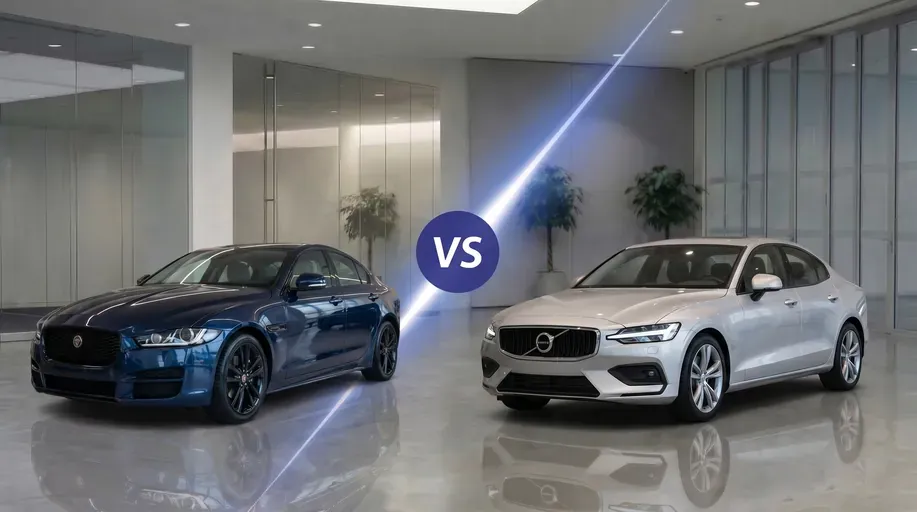
Car battle
Jaguar XE vs. Volvo S60: Complete comparison 2026
Detailed comparison of the Jaguar XE vs Volvo S60. Learn all about the features, reliability, and driving dynamics of these used cars, and read our verdict before you buy.
May 4, 2026
Toyota Camry (XV80) review: real owner impressions, hybrid efficiency, cabin comfort and expert verdict on the 2024 executive sedan.
November 6, 2026
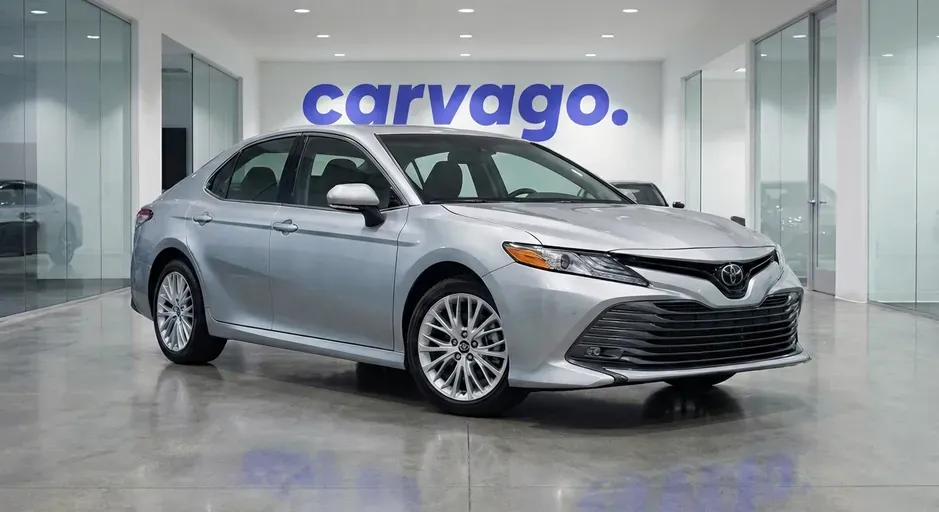
The ninth-generation Toyota Camry (XV80) represents a traditional mid-size saloon in a European market increasingly populated by crossovers. Following its global debut on 14 November 2023, European order books opened on 03 June 2024, with the first customer deliveries arriving in dealerships in October 2024. Production and sales continue through 2026, with no facelifts introduced to date.
Across European markets where it is officially catalogued—primarily in Central and Eastern Europe—the XV80 is offered exclusively as a four-door sedan paired with a front-wheel-drive hybrid powertrain. Alternative body shapes, non-hybrid combustion options, and all-wheel-drive variants are not part of the European line-up.
This generation primarily attracts company fleets, chauffeur and taxi operators, and private buyers looking for a dedicated long-distance cruiser built around a traditional three-box silhouette. This review examines what the hybrid Toyota Camry saloon delivers to prospective owners on the secondary market.
Customer deliveries of the ninth-generation Toyota Camry began in Europe in the fourth quarter of 2024. Because this generation has been on European roads for a relatively short time, long-term mechanical durability and high-mileage wear patterns cannot yet be evaluated. The sole European powertrain—a front-wheel-drive petrol hybrid with an electronic continuously variable transmission—shares its core architecture with other contemporary Toyota models, but independent multi-year fleet data for this specific iteration is not yet established.
Early owner reports highlight an exterior assembly issue on 2025–2026 cars. Owners report that the front bumper cover can unseat directly below the headlight assemblies, most frequently where the bumper meets the front wings, as road vibrations and thermal expansion can cause the plastic retaining clips to release. Pressing the fascia back into position by hand typically provides only temporary relief; in some cases, resolving the issue requires workshop replacement of the underlying mounting brackets and fastener clips, or where tabs have warped, replacing the bumper cover itself.
Two major worldwide safety recalls coordinated through European authorities encompass the ninth-generation hybrid Toyota Camry, both involving electronic control software.
| Campaign Subject | Build Window | Reach | Stated Defect & Remedial Action |
|---|---|---|---|
| Instrument Cluster Display Failure | 21 February 2022 to 6 May 2025 (includes other Toyota and Lexus models) | Worldwide (approx. 2.1 million vehicles) | Flawed combination meter programming causes memory deterioration, leaving the display blank without a speedometer or warning lights. Workshops reprogram the control unit or replace the instrument cluster assembly if memory is permanently corrupted. |
| Reversing Camera Display Freeze | 31 March 2021 to 9 September 2025 (includes other Toyota and Lexus models) | Worldwide (approx. 3.27 million vehicles) | The parking assist control unit may cause the camera image to freeze when reverse gear is selected shortly after starting, or fail to display if restarted quickly. Dealers apply a software update to the parking assist control unit. |
When evaluating a used vehicle, buyers should confirm with CarAudit or an authorised dealer that these software updates have been logged in the digital service network.
In European markets, the ninth-generation Toyota Camry is offered exclusively with a single powertrain configuration: a front-wheel-drive petrol full hybrid paired with an electronic continuously variable transmission. The manufacturer provides no alternative engine displacements, manual gearboxes, or all-wheel-drive options in this territory.
| Engine | Fuel | Power | Gearbox | Model years |
|---|---|---|---|---|
| 2.5 Hybrid Dynamic Force (Hybrid 230) | Petrol hybrid | 169 kW (230 hp) | Automatic (e-CVT) | 2024–present |
Because buyers choose from a single mechanical specification, assessing the hybrid Toyota Camry depends on aligning your daily driving routes with the functional characteristics of the planetary hybrid drive.
City commuting and short trips: Urban traffic is where the petrol-electric system functions to its greatest advantage. The responsive transaxle electric motor handles low-speed maneuvers and stop-start queues on battery power, while the combustion engine cuts in and out smoothly as demand shifts. Regenerative braking captures kinetic energy during frequent slowing, keeping brake wear minimal in dense traffic.
Mixed daily use: On regional roads and outer-urban commutes, the powertrain balances electric torque and petrol propulsion seamlessly. The electric motor supplies immediate acceleration when exiting corners or pulling away from junctions, allowing the four-cylinder petrol unit to operate without unnecessary strain during routine overtaking maneuvers.
Long motorway journeys: At steady motorway speeds, the combustion engine operates at lower revolutions than in earlier iterations, resulting in quiet cruising. However, when demanding sudden passing power or climbing sustained motorway inclines, the planetary transmission holds the engine at elevated revolutions under heavy throttle, generating an audible four-cylinder cabin note until a steady pace resumes.
Towing: Pulling trailers or caravans is not possible with this European-specification Toyota Camry saloon, as the vehicle is not homologated for trailer towing in European markets.
For details on component durability and verified service campaigns, refer to the owner experiences section.
The Toyota Camry sedan accommodates tall occupants in the rear with sufficient knee clearance and headroom beneath the saloon roofline. Practicality varies by seat configuration: standard versions feature split-folding rear seatbacks to extend cargo utility, whereas higher trims replace this mechanism with a fixed bench equipped with electrically reclining outer backrests and an integrated central ski hatch. Across all versions, the boot offers a broad loading area, though professional tests note that exposed gooseneck hinges can intrude on rigid suitcases when closing the lid.
| Dimension / Capacity | Toyota Camry Sedan |
|---|---|
| Length | 4,920 mm |
| Width (excluding mirrors) | 1,840 mm |
| Height | 1,445 mm |
| Wheelbase | 2,825 mm |
| Boot volume (seats upright) | 493 l |
| Boot volume (seats folded) | Not published |
Professional road tests describe the hybrid Toyota Camry saloon as a calm, long-distance cruiser. Its suspension filters broken pavement and road ripples effectively, keeping the body composed through corners without wallowing. The steering is light and predictable, prioritising stability over sporting feedback. Cabin acoustic insulation shows clear progress over the previous generation, largely eliminating the prolonged engine flare typical of earlier hybrid setups. Even so, suspension thump remains audible over coarse surfaces, and the combustion engine can be heard kicking in after quiet electric running.
Inside, the cabin retains functional ergonomics over digital showmanship. Physical switches and a traditional gear lever accompany the touchscreen, keeping basic functions intuitive on the move. Soft-touch materials cover primary contact areas, while harder plastics are restricted to the lower console. Seating comfort produces slight disagreement among testers: taller drivers report that the front seat cushions feel somewhat short with forward-angled headrests.
Evaluations agree on the sedan's relaxed touring character, but criticise intrusive electronic safety alerts and occasional navigation routing errors. Because this generation has not undergone a facelift, its road manners and cabin environment remain consistent from its launch.
All the charts in this section are drawn from Carvago's listings of the whole Toyota Camry model family, including other generations represented in the data, not only the reviewed generation. Because the dataset spans multiple production cycles without isolating individual iterations, this chart does not establish a separate price level for the reviewed generation. Across the available stock, the median asking price spans from €23,500 for 2019 models to €31,500 for 2023 cars. For the most recent manufacturing dates, the median asking price stands at €38,700 for 2024 vehicles and €41,300 for 2026 examples.
The number of active Toyota Camry listings moved from 879 in May 2026 down to 809 in August 2026 before climbing to 946 in October 2026. The chart below traces the count of advertised cars across these six months.
Active listings over time
| Month | Toyota Camry |
|---|---|
| 2026-05 | 879 |
| 2026-06 | 860 |
| 2026-07 | 835 |
| 2026-08 | 809 |
| 2026-09 | 914 |
| 2026-10 | 946 |
Source Carvago
Shoppers have access to substantial choice across the market, with monthly availability fluctuating between 809 and 946 vehicles over the recorded period.
Across used listings advertised today, the median asking price of cars built in 2019 is €23,500, compared to €41,300 for cars built in 2026. The distribution across these build years shows a higher median figure for each successive model year, with the largest difference appearing between 2023 and 2024.
Median advertised price by year of manufacture
| Model year | Toyota Camry |
|---|---|
| 2019 | 23 500 |
| 2020 | 25 500 |
| 2021 | 26 300 |
| 2022 | 28 300 |
| 2023 | 31 500 |
| 2024 | 38 700 |
| 2025 | 38 900 |
| 2026 | 41 300 |
Source Carvago
A buyer targeting a 2021 model year encounters a median asking price of €26,300, whereas a 2023 car reflects a median asking price of €31,500. For more recent model years, the median asking price reaches €38,700 for a 2024 car and €41,300 for a 2026 car.
The chart tracks the number of advertised cars per month across different fuel types, starting in May 2026 with 782 hybrid listings and 97 petrol models.
Supply composition by fuel type
Petrol
Hybrid
| Month | Petrol | Hybrid |
|---|---|---|
| 2026-05 | 97 | 782 |
| 2026-06 | 95 | 765 |
| 2026-07 | 97 | 738 |
| 2026-08 | 95 | 714 |
| 2026-09 | 105 | 809 |
| 2026-10 | 121 | 825 |
Source Carvago
Hybrid powertrains dominate the selection, accounting for 825 of the active listings in October 2026 compared to 121 petrol cars and zero for any other fuel type. Buyers will find that hybrid options make up the vast majority of the available supply, while purely petrol models represent a much smaller share of what is currently on offer.
The chart below tracks the average asking price for the Toyota Camry from May 2026 to October 2026, beginning at €26,100.
Average price development over time
| Month | Toyota Camry |
|---|---|
| 2026-05 | 26 100 |
| 2026-06 | 25 300 |
| 2026-07 | 24 800 |
| 2026-08 | 24 600 |
| 2026-09 | 25 200 |
| 2026-10 | 24 900 |
Source Carvago
Across the six-month span, the average asking price shifted from €26,100 down to €24,900, touching a low of €24,600 in August 2026 before fluctuating within a narrow range.
Composed suspension that filters road ripples and broken pavement effectively
Accommodating rear passenger space with ample knee clearance and headroom
Intuitive dashboard ergonomics retaining physical switches and a traditional gear lever
No alternative powertrains, transmissions, or all-wheel drive in European markets
Not homologated for towing trailers or caravans
Front seat cushions feel short for taller drivers with forward-angled headrests
Long-term durability data is not yet established as European deliveries began in late 2024. Systemic mechanical failures have not emerged on the Toyota Camry, though owners report minor exterior bumper clip issues.
The sole European specification is the front-wheel-drive petrol full hybrid with an electronic continuously variable transmission. The hybrid Toyota Camry works to its greatest advantage in urban driving, though the petrol engine becomes audible under hard acceleration.
No, the European-specification model is not homologated for trailer towing. Any fitted rear hitch fixture is restricted strictly to carrying vertical loads, such as bicycle racks.
Verify the car's VIN with an authorised dealer to confirm that software updates for the instrument cluster and parking assist have been completed. Also check that the front bumper fascia sits flush below the headlights.
Sources: newsroom.toyota.eu, ec.europa.eu, kba-online.de, auto-swiat.pl, auto.cz
This article was prepared using artificial intelligence tools. The section guarantor is Petr Dušek.
Detailed comparison of the Jaguar XE vs Volvo S60. Learn all about the features, reliability, and driving dynamics of these used cars, and read our verdict before you buy.
May 4, 2026
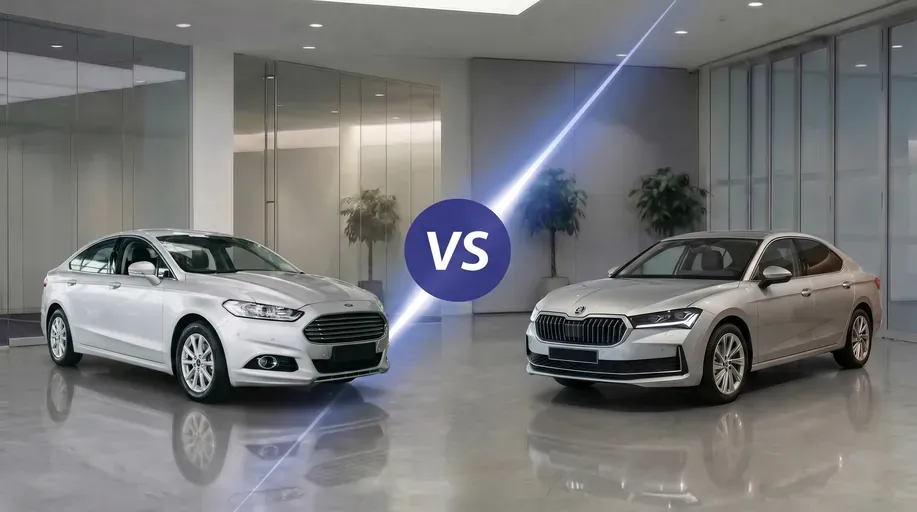
Detailed comparison: Ford Mondeo vs. Škoda Superb. Which used car offers better space, engines, and driving dynamics? Read our verdict and choose wisely.
Nov 12, 2026
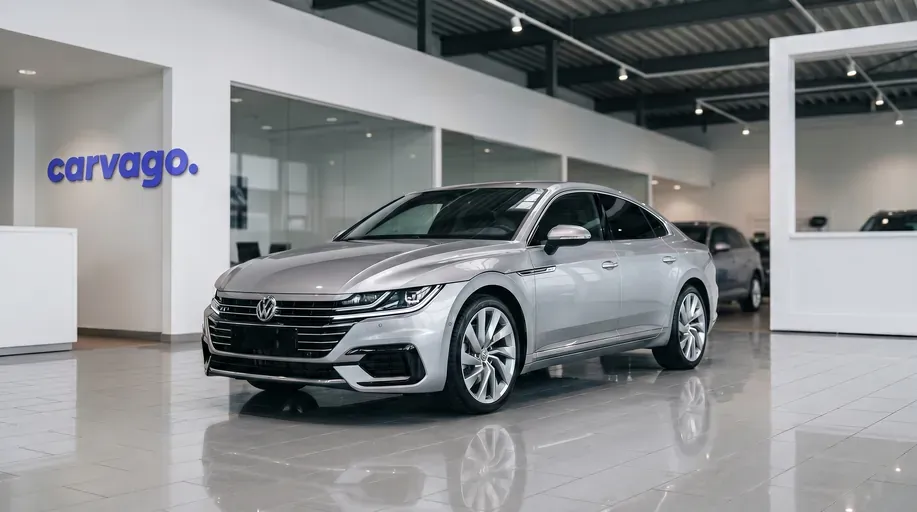
Volkswagen Arteon review: real owner experience, common faults, running costs, and used prices — everything you need before buying.
Oct 27, 2026