Car battle
Opel Insignia vs. Škoda Superb: Complete comparison 2026
Detailed comparison: Opel Insignia vs. Škoda Superb. Find out which car offers better space, reliability, and driving characteristics. Read our verdict!
May 20, 2026
Volkswagen Arteon review: real owner experience, common faults, running costs, and used prices — everything you need before buying.
October 27, 2026
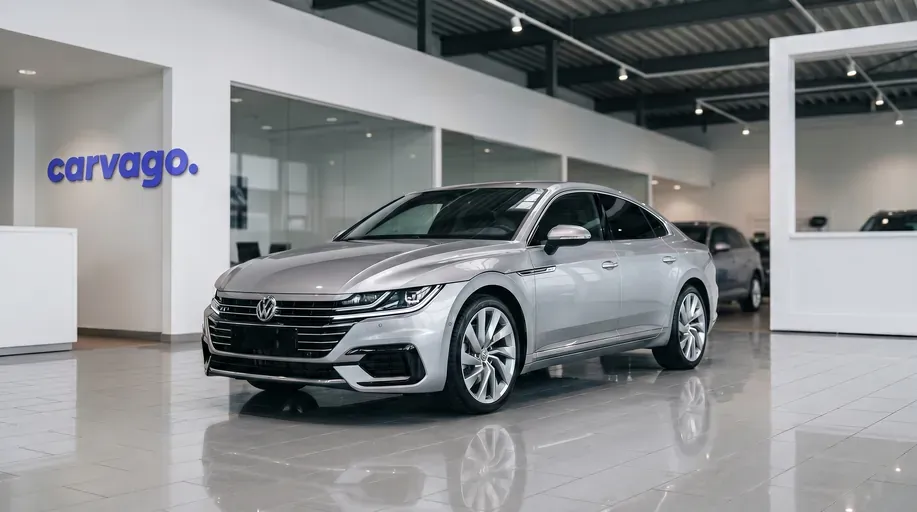
The Volkswagen Arteon debuted in March 2017 as the brand’s flagship executive five-door fastback, with European showroom deliveries starting in June 2017. Positioned above the Passat, it combined a low-slung, coupé-like roofline with the functional packaging of a large liftback, aimed primarily at long-distance motorway drivers and company-car fleets seeking distinctive styling within the upper mid-size segment.
This review covers the first generation throughout its European production run. In June 2020, Volkswagen premiered a mid-cycle facelift that refreshed exterior lighting and front-end styling while updating the dashboard architecture. The update also expanded the range with a second body style: the Volkswagen Arteon Shooting Brake, an estate-profile wagon designed to blend expressive aesthetics with everyday utility.
The model range broadened further in late 2020, ahead of order books opening for the plug-in hybrid eHybrid in January 2021 and the market launch of the performance-focused Arteon R in April. Fastback production concluded at the Emden plant in late 2023, while assembly of the Shooting Brake at the Osnabrück facility continues through 2026.
On owner forums and across European specialist evaluations, the Volkswagen Arteon displays mostly solid mechanical foundations, but post-facelift cars (2020 to 2023) generate frequent complaints regarding cockpit electronics. The most widespread grievance involves the capacitive touch-sensing steering wheel fitted alongside the optional or higher-trim Travel Assist semi-autonomous driving package. The integrated sensor foil inside the rim fails to detect the driver's hands, triggering recurring warning chimes and instrument cluster alerts stating that Travel Assist is temporarily unavailable. These alerts can loop continuously while cruising on motorways. Dealership firmware revisions often fail to resolve the underlying physical sensing flaw, leaving replacement of the steering wheel assembly as the primary lasting remedy.
A related pattern of software instability centers on the Modular Infotainment Matrix 3 (MIB3) setup introduced with the mid-cycle refresh. Owners report sporadic central display freezes, reboot loops, and intermittent loss of communication with the roof-mounted Online Connectivity Unit. When this module goes offline, the car displays a persistent instrument cluster warning indicating an emergency call system fault, alongside an amber caution light. While workshop firmware updates resolved system stability for many cars, persistent communication drops or memory errors have in some cases required physical replacement of the telematics control unit or the central head unit.
Safety recalls for European models cover several distinct manufacturing runs. A worldwide safety recall announced in January 2024 affects right-hand-drive cars built between 13 May 2019 and 20 November 2023 fitted with an automatic gearbox and an electromechanical brake servo. In affected vehicles, thermal protection between the brake force booster and the emissions control device in front of the brake fluid reservoir coupling support may have been incorrectly fitted, creating a risk that the support melts, leaks brake fluid, and ignites on hot components. Technicians inspect the heat protection mat and correct or replace the thermal shielding.
Earlier European recalls addressed fire risks in specific powertrains. In March 2022, a recall covering 2020 to 2022 production runs of 2.0 TSI petrol engines addressed loose engine design covers that could detach during sporty driving or over rough surfaces and contact hot exhaust parts; workshops removed the covers and subsequently fitted redesigned units. In that same month, plug-in hybrid models built between 12 April 2019 and 22 February 2022 were recalled worldwide because high-voltage system fuses contained insufficient extinguishing sand, creating a rupture, electric shock, and fire risk during a short circuit. Workshops inspected the fuse assembly and added an insulating mat over the high-voltage switchbox. A smaller recall in April 2021 addressed plug-in hybrids built between 10 March 2020 and 29 March 2021, where reversed positive battery and monitoring cable connections left the 12-volt lead without proper fuse protection.
Mechanical assemblies warrant careful physical inspection on high-mileage examples, which can be verified through a professional CarAudit. Independent evaluations note that the composite water pump and thermostat housing across both petrol and diesel engines can distort with age, producing gradual coolant weeping visible as dried pink residue in the lower engine bay. On all-wheel-drive versions such as the Arteon R and the Volkswagen Arteon Shooting Brake 4MOTION, the pre-charge pump mesh strainer in the coupling can become clogged with clutch friction debris if routine fluid changes do not include physically removing the pump to clean the mesh, potentially preventing rear-axle torque transfer.
The engine lineup for the Volkswagen Arteon spans front- and all-wheel-drive four-cylinder units, ranging from economical long-distance cruisers to performance variants and a plug-in hybrid.
| Engine | Fuel | Power | Gearbox | Drivetrain | Model years |
|---|---|---|---|---|---|
| 1.5 TSI ACT | Petrol | 110 kW (150 hp) | Manual | Front-wheel drive | 2017 – 2020 |
| 1.5 TSI OPF ACT | Petrol | 110 kW (150 hp) | Automatic | Front-wheel drive | 2017 – 2020 |
| 1.5 TSI ACT | Petrol | 110 kW (150 hp) | Manual | Front-wheel drive | 2020 – 2023 |
| 2.0 TSI | Petrol | 140 kW (190 hp) | Automatic | Front-wheel drive | 2017 – 2020 |
| 2.0 TSI OPF | Petrol | 140 kW (190 hp) | Automatic | Front-wheel drive | 2020 – 2024 |
| 2.0 TSI | Petrol | 206 kW (280 hp) | Automatic | All-wheel drive | 2017 – 2018 |
| 2.0 TSI OPF | Petrol | 200 kW (272 hp) | Automatic | All-wheel drive | 2018 – 2020 |
| 2.0 TSI OPF | Petrol | 206 kW (280 hp) | Automatic | All-wheel drive | 2021 – 2024 |
| Arteon R | Petrol | 235 kW (320 hp) | Automatic | All-wheel drive | 2020 – 2026 |
| 1.4 eHybrid OPF | Petrol Plug-in Hybrid | 160 kW (218 hp) | Automatic | Front-wheel drive | 2020 – 2023 |
| 2.0 TDI SCR | Diesel | 110 kW (150 hp) | Manual | Front-wheel drive | 2017 – 2020 |
| 2.0 TDI SCR | Diesel | 110 kW (150 hp) | Automatic | Front-wheel drive | 2017 – 2026 |
| 2.0 TDI SCR | Diesel | 140 kW (190 hp) | Automatic | Front-wheel drive | 2017 – 2020 |
| 2.0 TDI SCR | Diesel | 140 kW (190 hp) | Automatic | All-wheel drive | 2017 – 2020 |
| 2.0 TDI SCR | Diesel | 147 kW (200 hp) | Automatic | Front-wheel drive | 2020 – 2026 |
| 2.0 TDI SCR | Diesel | 147 kW (200 hp) | Automatic | All-wheel drive | 2020 – 2026 |
| 2.0 BiTDI SCR | Diesel | 176 kW (240 hp) | Automatic | All-wheel drive | 2017 – 2020 |
Choosing the right powerplant depends largely on operating profiles and annual mileage. For urban driving with regular access to home or workplace charging, the plug-in hybrid Volkswagen Arteon offers quiet electric commuting around town. However, once the high-voltage battery depletes on prolonged journeys, its smaller petrol engine must work harder to haul the vehicle's substantial weight.
For mixed everyday commuting, the mid-tier front-wheel-drive petrol Volkswagen Arteon functions as the most balanced compromise, offering quiet cruising without the sluggishness under full load noted on entry-level models. Drivers seeking brisk performance and all-weather traction can look to the more powerful all-wheel-drive petrols or the flagship Arteon R, though rapid cross-country pace comes with significantly higher petrol consumption.
For high-mileage motorway cruising or frequent towing duties, the diesel Volkswagen Arteon remains the most effective choice. The base diesel provides low-rev touring capability, while the higher-output versions add the reserve pulling power and optional all-wheel drive needed for hauling heavy trailers across long distances.
For a detailed analysis of known mechanical weaknesses, software quirks, and official manufacturer recalls, consult the owner experiences section of this review.
The Volkswagen Arteon hatchback prioritises grand tourer proportions with its stretched wheelbase and sweeping roofline, yet everyday usability remains close to that of a conventional family estate. In the rear, legroom accommodates tall passengers comfortably even behind a tall driver, matching the space found in larger executive saloons. Headroom in the fastback is marginally compromised by the raked tailgate line, whereas the Volkswagen Arteon estate body style extends the roof further back to provide noticeably more rear head clearance.
The rear bench is fixed fore and aft, folding in an asymmetrical split with an integrated load-through ski hatch for longer cargo. A wide-opening tailgate makes loading bulky items simple, though the lower seating position requires taller occupants to duck slightly when entering.
| Body Style / Variant | Length (mm) | Width (mm) | Height (mm) | Wheelbase (mm) | Boot Volume (Seats Up / Folded, L) |
|---|---|---|---|---|---|
| Fastback | 4,862–4,866 | 1,871 | 1,428–1,460 | 2,835–2,838 | 563 / 1,557 |
| Shooting Brake | 4,866 | 1,871 | 1,434–1,451 | 2,836–2,838 | 565 / 1,632 |
| Fastback eHybrid | 4,866 | 1,871 | 1,460 | 2,835 | 445 / unverified |
| Shooting Brake eHybrid | 4,866 | 1,871 | 1,451 | 2,836 | 455 / unverified |
Plug-in hybrid eHybrid variants have reduced luggage capacity due to high-voltage battery placement beneath the boot floor.
Professional road tests consistently portray the Volkswagen Arteon as a composed, high-speed motorway cruiser rather than an agile sports saloon. Testers praise the stability provided by the adaptive chassis (standard on higher-output models and optional on lower tiers), noting that it absorbs large road undulations smoothly over long distances. Disagreement arises over low-speed ride comfort, where European testers on smoother tarmac describe the setup as pliant, while UK evaluations point out that optional large wheels create an abrupt, clunky ride over broken surfaces. Even on the range-topping performance model with torque vectoring, reviewers advise keeping the adaptive dampers in their comfort setting for daily driving to prevent excessive vertical body motions.
Handling is universally rated as secure, neutral, and predictable, backed by high lateral grip and reassuring composure during emergency avoidance manoeuvres. However, testers find the progressive steering overly detached and sterile, offering little road feel to engage the enthusiast. Cabin refinement earns mixed marks: road and wind noise remain subdued at cruising speeds, but the hard-worked four-cylinder engines—both the throaty biturbo diesel and the smaller petrol plug-in hybrid under sudden kickdown—disrupt the quiet executive atmosphere.
Inside, early road tests noted that the dashboard was borrowed almost wholesale from the mainstream Passat, feeling insufficiently distinguished for a flagship model. The mid-life facelift addressed this aesthetic shortfall with stitched dash toppers and distinctive cabin contours, particularly on the Volkswagen Arteon Shooting Brake. That aesthetic improvement came with an ergonomic step backward: testers almost unanimously criticize the post-facelift capacitive sliders on the climate control panel and the steering wheel, reporting that the touch-sensitive pads feel fiddly and frequently suffer accidental inputs on the move.
All charts in this section are drawn from Carvago listings across the entire Volkswagen Arteon model family, meaning the figures reflect the broader market offer rather than establishing an isolated price level for a single production phase. Across the available model years, median asking prices begin at €25,000 for 2019 vehicles and climb steadily to €31,400 for 2021 examples, reflecting the introduction of the versatile estate body style and updated cabin technology. Values continue upward to €42,000 for 2025 cars, while 2026 listings show a median of €32,900, heavily influenced by specific configurations and mileage profiles available on the pre-owned market.
Between April and September 2026, active Volkswagen Arteon listings fell from 5,436 to 4,473 cars. The chart below tracks how monthly advertised numbers shifted across this six-month span.
Active listings over time
| Month | Volkswagen Arteon |
|---|---|
| 2026-04 | 5 436 |
| 2026-05 | 5 258 |
| 2026-06 | 5 131 |
| 2026-07 | 4 826 |
| 2026-08 | 4 441 |
| 2026-09 | 4 473 |
Source Carvago
Although listings drifted down over the summer to a low of 4,441 in August 2026, buyers continue to have a broad selection with 4,473 vehicles advertised in September 2026.
The median asking price of cars advertised today built in 2019 is €25,000, while the median asking price of cars advertised today built in 2025 is €42,000. The chart below illustrates how these median asking prices compare across build years, where newer models generally command higher figures aside from 2026 listings.
Median advertised price by year of manufacture
| Model year | Volkswagen Arteon |
|---|---|
| 2019 | 25 000 |
| 2020 | 27 500 |
| 2021 | 31 400 |
| 2022 | 32 800 |
| 2023 | 35 900 |
| 2024 | 38 500 |
| 2025 | 42 000 |
| 2026 | 32 900 |
Source Carvago
For buyers planning a purchase, 2020 models show a median asking price of €27,500, whereas 2024 cars record a median asking price of €38,500. The figures across model years are not strictly ascending, as listings built in 2026 record a median asking price of €32,900 compared to €42,000 for 2025 models.
Active listings are tracked by fuel type from April to September 2026, starting at 2828 diesel and 1849 petrol listings. The monthly counts across all recorded powertrains are shown below.
Supply composition by fuel type
Petrol
Diesel
Hybrid
| Month | Petrol | Diesel | Hybrid |
|---|---|---|---|
| 2026-04 | 1 849 | 2 828 | 759 |
| 2026-05 | 1 834 | 2 702 | 722 |
| 2026-06 | 1 752 | 2 708 | 671 |
| 2026-07 | 1 574 | 2 641 | 611 |
| 2026-08 | 1 488 | 2 410 | 543 |
| 2026-09 | 1 467 | 2 480 | 526 |
Source Carvago
In September 2026, diesel remained the most common option with 2480 listings, followed by 1467 petrol and 526 hybrid cars. Buyers will encounter the widest selection among diesel and petrol models, while hybrid alternatives represent a much smaller portion of the available stock.
Between April 2026 and September 2026, the average asking price for the Volkswagen Arteon started at €28,600 before reaching €28,700 in May. The chart below shows how these advertised averages developed across the period.
Average price development over time
| Month | Volkswagen Arteon |
|---|---|
| 2026-04 | 28 600 |
| 2026-05 | 28 700 |
| 2026-06 | 28 200 |
| 2026-07 | 27 600 |
| 2026-08 | 27 400 |
| 2026-09 | 27 300 |
Source Carvago
From €28,600 in April to €27,300 in September, the average asking price dropped by roughly 5% overall. That shift is relatively small in proportion to the asking prices themselves, with the monthly averages remaining within a narrow range.
Stable and composed long-distance cruising manners on adaptive suspension
Plentiful rear-seat legroom and practical hatchback cargo access
Broad engine selection including economical diesels and plug-in hybrid options
Fiddly touch-sensitive capacitive climate sliders and steering wheel controls on post-facelift cars
Persistent cockpit electronics glitches including Travel Assist sensor faults and infotainment freezes
Detached steering feel and an abrupt low-speed ride over broken surfaces on large wheels
Mechanically, the Volkswagen Arteon is solid, but post-facelift examples can suffer from capacitive steering wheel sensor faults and infotainment software glitches. Curing recurring steering wheel alerts typically requires hardware replacement rather than firmware updates.
For motorway travel, the diesel Volkswagen Arteon is the most capable choice thanks to low-rev cruising efficiency and available all-wheel drive. Mixed commuters are best served by the mid-tier front-wheel-drive petrol, while the plug-in hybrid suits only drivers who charge regularly.
Check by VIN with an official dealer to confirm that all European safety recall work has been carried out. On the test drive, verify that steering wheel hands-on detection operates without false alerts and inspect the engine bay for signs of coolant leaks.
Yes, the Volkswagen Arteon Shooting Brake provides more rear headroom and greater total cargo capacity with the seats folded. Both body styles share identical rear legroom and wide hatchback apertures.
Sources: volkswagen-newsroom.com, vwpress.co.uk, adac.de, autocar.co.uk, autoexpress.co.uk
This article was prepared using artificial intelligence tools. The section guarantor is Petr Dušek.
Detailed comparison: Opel Insignia vs. Škoda Superb. Find out which car offers better space, reliability, and driving characteristics. Read our verdict!
May 20, 2026
Volkswagen Arteon vs Volvo S60 Comparison: Which premium car to choose? We reveal the differences in equipment, driving characteristics, and the reliability of used cars.
Oct 16, 2026
Detailed comparison of the Honda Accord and Renault Talisman. We compared the engines, reliability, and equipment of these used cars. Find out which sedan earns our final verdict!
May 3, 2026