Car battle
Lexus IS vs. Volvo S60: Complete comparison 2026
Lexus IS vs Volvo S60: A detailed comparison of premium sedans. Discover the key differences in driving characteristics, equipment, and reliability before your purchase.
Oct 16, 2026
Articles
Car battle
Detailed comparison of the Honda Accord and Renault Talisman. We compared the engines, reliability, and equipment of these used cars. Find out which sedan earns our final verdict!
May 3, 2026
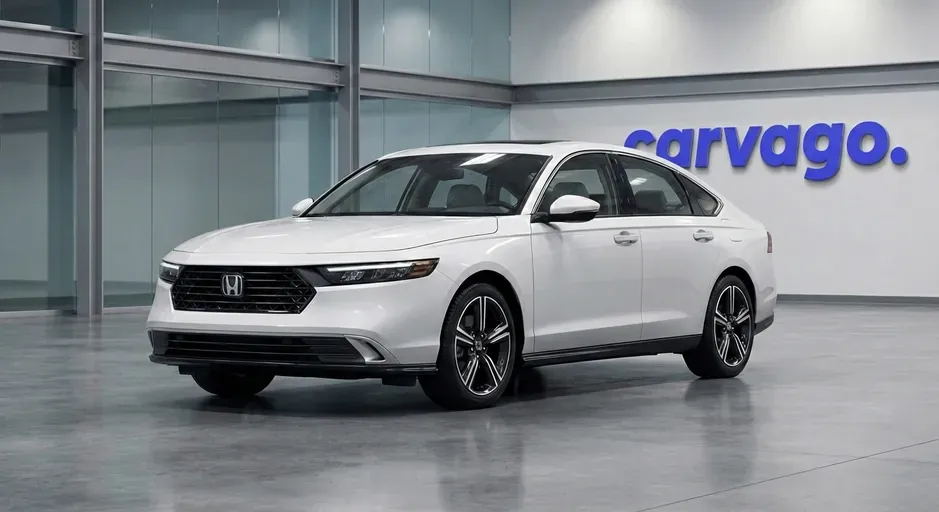
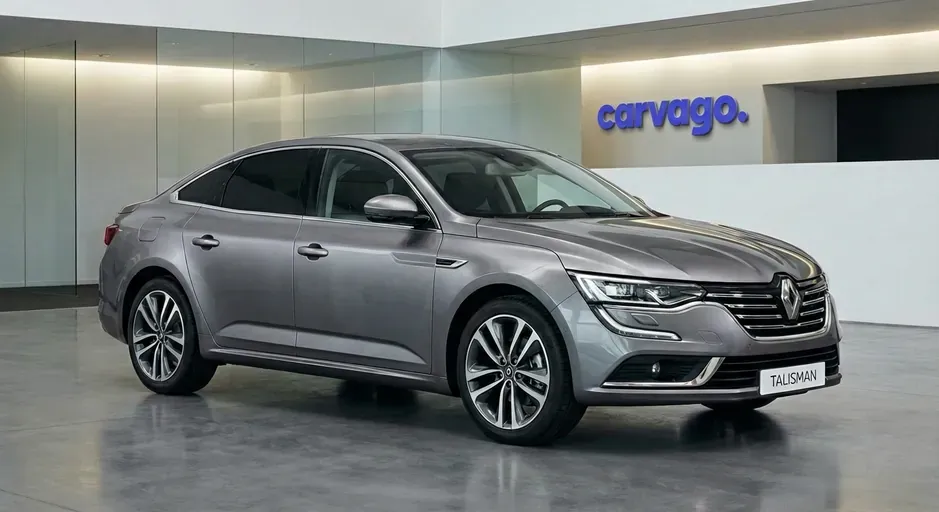
The Honda Accord, also known as the Honda Inspire in some markets, is a globally recognized mid-size car that has long built a reputation for reliability and driver appeal. Facing it is the French challenger, the Renault Talisman, which is sold in South Korea as the Renault Samsung SM6 and wins over customers primarily with its refined, elegant design, emphasis on comfort, and exceptionally spacious interior. In the following comparison, we will take a detailed look at how these two completely different approaches to a family and executive car stack up against each other to determine which one is the smarter choice on the used car market.
When comparing the exterior dimensions of both cars, a generational shift and a different approach to mid-size design are evident at first glance. While the Renault Talisman (represented here by its only generation available on the used car market from roughly the last 4 years) represents the modern trend of maximizing interior space and an imposing exterior appearance, the Honda Accord in its last European iteration (8th generation) bets on much more compact and sporty proportions. This difference makes the Talisman look like a much more majestic car, while the Accord gives an athletic, driver-oriented impression.
Looking at the specific numbers, the Renault Talisman sedan measures 4849 mm in length, surpassing the Honda Accord (4725 mm) by a substantial 124 mm. In the case of the more practical estate bodies, this difference narrows slightly, but the Talisman Grandtour, with a length of 4865 mm, still dominates the Accord Tourer (4750 mm) by 115 mm. The French representative also has the upper hand in width, thanks to a value of 1868 mm compared to 1840 mm for the Japanese car. In practice, this means for the driver that the Talisman offers a slightly airier interior with more shoulder room, but the Accord will be noticeably easier to maneuver in narrow streets and easier to park in crowded city centers.
However, a key parameter for interior spaciousness is the wheelbase. The Renault Talisman has a generous wheelbase of up to 2809 mm, while the Honda Accord offers 2705 mm. This difference of more than ten centimeters (104 mm) is a fundamental advantage for the Renault, whose rear-seat passengers will enjoy significantly more legroom. In terms of height, both cars are quite similar and stay within the range of dynamically tuned sedans and estates (around 1440 to 1470 mm), which ensures a favorable center of gravity for both. Overall, the dimensions predetermine the Talisman for the role of an ideal family and highway cruiser for those who require maximum spaciousness, while the Accord, with its more compact dimensions, targets drivers who appreciate nimbleness, agility, and better handling on winding backroads.
| Parameter | Honda Accord Sedan | Renault Talisman Sedan | Honda Accord Estate | Renault Talisman Estate |
|---|---|---|---|---|
| Length (mm) | 4725 | 4849 | 4750 | 4865 |
| Width (mm) | 1840 | 1868 | 1840 | 1868 |
| Height (mm) | 1440 | 1456 - 1463 | 1470 | 1456 - 1465 |
| Wheelbase (mm) | 2705 | 2808 - 2809 | 2705 | 2808 - 2809 |
When choosing a used mid-size car to serve as both a representative company car and a family cruiser, luggage capacity plays one of the most important roles. The size of the boot largely defines the overall practicality of the vehicle and often determines how easily you can handle daily logistics with children, sports activities, or weekend trips. While some carmakers take the path of maximum interior space for passengers and luggage, others prioritize a more attractive exterior design even at the cost of lower transport capacities. In this comparison, the spacious first-generation Renault Talisman (an ideal candidate on the four-year-old used car market) faces off against the eighth-generation Honda Accord, which represents slightly older models but still holds its own as a driver-focused choice in its class.
If we focus on the sedan body styles, the differences in liters are quite striking. Renault Talisman offers a staggering 600 to 608 liters in its basic configuration depending on the specific engine, placing it comfortably at the very top of the segment. In contrast, the Honda Accord sedan provides a more modest 467 liters. The French representative literally offers space for several extra suitcases, which you will appreciate especially when transporting bulkier luggage without having to fold down the rear seatbacks.
An even more pronounced contrast is offered by a comparison of the popular estate body styles. The Renault Talisman Grandtour has a basic volume of 564 to 572 liters, which is space fully sufficient for weekend shopping and longer holidays. Furthermore, after folding down the rear seats, the capacity grows to a generous 1673 to 1681 liters. With its eighth generation, the Honda Accord Tourer (estate) consciously sacrificed practicality for attractive sporty lines and offers a significantly below-average 406 liters in the base and a maximum of 1252 liters with the seats folded. An advantage in this comparison for both models on the used car market is the absence of plug-in hybrid batteries in common internal combustion versions, so the stated values are not reduced by the installation of battery packs.
| Parameter | Honda Accord Sedan | Renault Talisman Sedan | Honda Accord Estate | Renault Talisman Estate |
|---|---|---|---|---|
| Base volume (liters) | 467 | 600 - 608 | 406 | 564 - 572 |
| Max. volume with seats folded (liters) | - | - | 1252 | 1673 - 1681 |
Note: For comparison, values for the eighth-generation Honda Accord and the first-generation Renault Talisman are used. Maximum boot volume values for the sedan body style are not fully provided by the manufacturer for these models.
Whether you choose the sedan or the estate body style, the Renault Talisman easily beats the design-focused but space-limited Honda Accord with its generous luggage compartment.
The ability to tow a trailer is often a key parameter for drivers planning to transport a caravan, construction materials, or just attach a smaller trailer. When comparing these mid-size representatives on the used car market, however, it is necessary to take into account the age difference of the available generations – while the Renault Talisman represents its 1st generation here (offered until 2022 and available as a typical four-year-old used car), with the Japanese Honda, we do not encounter a European specification on the market for younger used cars, and for a realistic comparison, it is necessary to reach for the last 8th generation officially sold here, which ended in 2015. Despite this age difference, both cars offer very solid towing capacity, but with significantly different practical limits.
Standard and maximum weight of a braked trailer
For braked trailers, the capabilities of both cars vary mainly according to the chosen powertrain. The standard weight of a braked trailer starts at 1,500 kg for the Renault Talisman, which mainly concerns the common TCe petrol engines. The proven ENERGY dCi and more modern Blue dCi diesel units have significantly higher potential, reliably towing a maximum of 1,800 to 1,850 kg (especially in the practical Grandtour body style). The generation-older Honda Accord holds its own in a slightly narrower spectrum, but still stands with honor. The basic 2.0 i-VTEC petrol variants can reliably handle 1,500 kg, while the more powerful 2.4 i-VTEC unit raises the bar to 1,600 kg. The clear favorite for towing is the popular 2.2 i-DTEC diesel engine, which has a maximum of 1,700 kg.
Limits for unbraked trailers and restricted versions
Although neither of these models falls into the category of modern hybrid variants with strictly reduced towing capacity (where zero values of permitted load can be encountered), there is a fundamental difference between the two rivals regarding unbraked trailers. The Renault Talisman fully supports towing the classic legislative maximum of 745 to 750 kg (depending on equipment). This capacity is perfectly sufficient for weekend shopping or a longer holiday, easily providing space for a few extra suitcases if you attach a small trailer to the car. In contrast, the Honda Accord has a technical limit for an unbraked trailer set at a very low 500 kg. Such a limited capacity means that after subtracting the weight of the steel trailer itself, you are left with space for only very light cargo.
Final evaluation
If you are looking for a reliable workhorse for towing large or heavy loads, the French Renault Talisman is a significantly more practical choice thanks to its newer design and overall higher maximum limits. A capacity exceeding 1.8 tonnes will easily handle the transport of most caravans, and the full 750 kg limit on the unbraked "ball" will solve common cottage routines. Despite its older production date, the Honda Accord is a strong competitor when towing braked trailers, but its unusually restrictive limit for unbraked trailers somewhat loses points for everyday versatility.
| Model and motorization | Braked weight of trailer (kg) | Unbraked weight of trailer (kg) |
|---|---|---|
| Honda Accord 2.0 i-VTEC (115 kW) | 1500 | 500 |
| Honda Accord 2.4 i-VTEC (148 kW) | 1600 | 500 |
| Honda Accord 2.2 i-DTEC (110-132 kW) | 1700 | 500 |
| Renault Talisman TCe / ENERGY TCe (110-165 kW) | 1500-1850 | 745-750 |
| Renault Talisman dCi / BLUE dCi (81-147 kW) | 1600-1850 | 745-750 |
When comparing the engine lineups of the Honda Accord and the Renault Talisman, we encounter a fundamental generational difference that is absolutely crucial for the market of approximately four-year-old used cars. While the Renault Talisman was successfully sold in Europe until 2022 and offers modern turbocharged units meeting the latest emission standards, sales of the Honda Accord on the old continent ended with its 8th generation as early as 2015. For those looking for a newer used car, this means a clear choice: the Talisman provides modern fuel-saving technologies, dual-clutch transmissions, and gasoline particulate filters (GPF) even for petrol engines. Conversely, with the Honda, buyers must accept that the vehicles are older than the desired four years. Their reward, however, will be the excellent mechanical durability of the legendary naturally aspirated i-VTEC engines and indirect injection systems, which still stand as a benchmark of reliability for drivers who want to avoid complex modern technologies.
Given the end of sales on the European market in 2015, the 8th generation Honda Accord offers "old school" engine options. Buyers of this car on the used market won't get a car that is only four years old, but they will get proven Japanese technology with immense longevity. The petrol engine range is built exclusively on naturally aspirated four-cylinder 2.0 i-VTEC and the more powerful 2.4 i-VTEC, which excel in very smooth operation, immediate throttle response, and linear power delivery, albeit at the cost of slightly higher rated fuel consumption and the need to rev the engine more for spirited driving. For drivers who spend a lot of time on long routes, a very refined all-aluminum 2.2 i-DTEC turbodiesel was available with 110 kW, or in the more powerful Type S version tuned to 132 kW (180 hp). The engines were paired with a precise six-speed manual or a reliable, though now slower, five-speed automatic.
| Engine type | Fuel | Power (kW) | Torque (Nm) | Transmission |
|---|---|---|---|---|
| 2.0 i-VTEC | Petrol | 115 | 192 | 6MT / 5AT |
| 2.4 i-VTEC | Petrol | 148 | 234 | 6MT / 5AT |
| 2.2 i-DTEC | Diesel | 110 | 350 | 6MT / 5AT |
| 2.2 i-DTEC 180 | Diesel | 132 | 380 | 6MT |
In the four-year-old used car market, the Renault Talisman fully represents the modern era, and its engine range from roughly 2018–2022 consists exclusively of turbocharged engines equipped with the latest emission reduction systems. After the facelift, the petrol portfolio included the compact but flexible 1.3 TCe (TCe 160 GPF) unit developed in cooperation with Mercedes-Benz. Top-tier dynamics were then provided by the 1.8 TCe 225 GPF engine, which is related to the one powering the Alpine A110 sports car and delivers an excellent 165 kW. From the perspective of long highway journeys, the Blue dCi diesel range is noteworthy, meeting the strictest standards thanks to AdBlue injection. The smaller 1.7 Blue dCi four-cylinder (88 and 110 kW) relies purely on a manual, while the more powerful two-liter units (118 to 147 kW) are exclusively supplied with the very well-functioning six-speed EDC dual-clutch transmission. Petrol versions then received a seven-speed variant of this dual-clutch.
| Engine type | Fuel | Power (kW) | Torque (Nm) | Transmission |
|---|---|---|---|---|
| 1.3 TCe 160 GPF | Petrol | 118 | 270 | 7EDC |
| 1.8 TCe 225 GPF | Petrol | 165 | 300 | 7EDC |
| 1.7 Blue dCi 120 | Diesel | 88 | 300 | 6MT |
| 1.7 Blue dCi 150 | Diesel | 110 | 340 | 6MT |
| 2.0 Blue dCi 160 | Diesel | 118 | 360 | 6EDC |
| 2.0 Blue dCi 190 | Diesel | 140 | 400 | 6EDC |
| 2.0 Blue dCi 200 | Diesel | 147 | 400 | 6EDC |
While the Renault Talisman is the ideal choice for buyers looking for a modern 4-year-old used car with fuel-efficient turbo engines and a dual-clutch automatic, the Honda Accord, despite its greater age, makes sense for traditionalists who demand the absolute mechanical durability of naturally aspirated units without complex emission technology.
Choosing the right engine is absolutely crucial for your long-term satisfaction with the car, and our recommendations are based on real-world performance ratings, actual fuel consumption, owner feedback, and mechanical reliability. The Honda Accord and Renault Talisman represent two completely different eras and philosophies of engine design. While the Accord (available as the 8th generation only between 2008 and 2015) is no longer available as a roughly four-year-old used car, it became famous for its indestructible naturally aspirated petrol engines that can handle high revs and high mileage. In contrast, the significantly newer Talisman (available from 2016–2022) reflects the era of strict European emission standards and relies primarily on efficient and torquey turbodiesels (Blue dCi) or small-displacement turbocharged petrol units (TCe). With the Honda, you are betting on older but mechanically very simple and reliable technology, while with the Renault, you get a modern, highly efficient powertrain that requires a more careful approach to turbocharger and emission system maintenance in return.
Given that the 8th generation (produced 2008–2015) is the last available version of the Accord on our market and is therefore logically no longer available as a typical four-year-old used car, you must choose from older model years. The best choice from the range at the time is the exceptionally reliable 2.0 i-VTEC four-cylinder petrol engine with 115 kW. Unlike the 2.2 i-DTEC diesel version, which at its advanced age often suffers from very expensive DPF filter failures and worn clutches with dual-mass flywheels, the naturally aspirated 2.0-liter petrol engine is practically trouble-free with basic maintenance. Its technical advantages include absolute simplicity, linear power delivery, and very quiet operation with real-world fuel consumption of around 7.5 to 8 liters. The main risk with cars of this age is oil consumption in neglected units and occasional failure of the expensive stability control system module.
How to spot a potential problem and why it matters:
This 2.0-liter petrol engine is best suited for calmer drivers and mixed routes, including city driving, where, unlike diesels, it is not harmed by short distances and constant starts.
If you are looking for a roughly four-year-old car (within the generation available from 2016 to 2022), the ideal choice for the Talisman is the 2.0 Blue dCi 160 diesel engine with 118 kW, which became established on the market especially after the facelift. This unit very successfully replaced the older, often problematic and over-complicated 1.6 dCi engines and offers an excellent compromise between dynamics, reliability, and overall efficiency. Technically, it impresses primarily with its well-tuned flat torque curve from low revs and real-world fuel consumption on long trips, which consistently stays below 6 liters per 100 km. The weaker link of this modern powertrain can be the EDC dual-clutch automatic transmission, which is sensitive to regular oil changes, and naturally, the risk of diesel particulate filter (DPF) clogging during continuous and unsuitable city operation.
How to spot a potential problem and why it matters:
This engine is perfect primarily for high-mileage motorway drivers and people who mostly drive long distances, where the diesel unit can fully demonstrate its operational efficiency and reliably regenerate all emission systems.
When choosing a used mid-size car, real-world fuel consumption is often one of the most important parameters, as it can differ significantly from the official figures provided by the manufacturer. To gain an objective perspective, it is best to look at statistics from independent user databases where drivers record their refuelings over the long term. In this regard, we will rely on real data from the popular German portal Spritmonitor.de. When comparing the Renault Talisman and Honda Accord on the used car market, we must consider one key fact: while with the Talisman we are targeting popular roughly four-year-old cars (end of the first generation, models around 2020–2022), the Honda Accord withdrew from Europe as early as 2015. Thus, on the market, the modern French sedan stands against the slightly older, yet still highly sought-after eighth generation of the Japanese car due to its reliability. Below are the average values for the most common engine options of both vehicles.
| Model and Engine | Average Consumption (l/100 km) |
|---|---|
| Honda Accord 2.0 i-VTEC 115 kW | 7.8 |
| Honda Accord 2.4 i-VTEC 148 kW | 8.8 |
| Honda Accord 2.2 i-DTEC 110 kW | 6.4 |
| Renault Talisman 1.3 TCe 160 117 kW | 6.8 |
| Renault Talisman 1.8 TCe 225 165 kW | 8.5 |
| Renault Talisman 2.0 Blue dCi 160 118 kW | 6.2 |
| Renault Talisman 2.0 Blue dCi 200 147 kW | 6.5 |
Interpretation of this data clearly shows the technological development and differing philosophies of the two automakers:
What do these findings mean for the average user, and which engine will ultimately appeal to whom?
Final verdict on fuel efficiency
So, does fuel consumption remain the absolutely key factor that ultimately decides the battle between these two models? For petrol variants, certainly yes – the generationally newer Renault Talisman with efficient turbocharged engines wins here and significantly saves the family budget in daily driving. In the more prestigious category of highway diesel cruisers, however, the performance gaps unexpectedly disappear. Despite its older production date, the Japanese Accord maintains excellent fuel efficiency; therefore, when buying a used diesel, the scales will tip much more towards design preferences and requirements for modern onboard equipment.
When choosing a roughly four-year-old used car from 2020 to 2022, you will encounter a completely different market situation for these two models. While the Renault Talisman is a typical representative of the European mid-size class with a strong presence in used car dealerships, the tenth-generation Honda Accord was not officially sold in Europe during this period. Every unit on the market is therefore an individual import (most often from North America), which significantly affects both the purchase price and the residual value.
The Talisman underwent a facelift in 2020, which improved the interior, on-board technology, and reliability. There is plenty to choose from on the used car market, with diesel engines (especially the 2.0 Blue dCi) and the more practical Grandtour (estate) body versions dominating.
The tenth-generation Honda Accord is a true rarity on the Central European used car market. Most of the cars offered boast a sedan body and turbocharged petrol engines (1.5 VTEC Turbo or the excellent 2.0 VTEC Turbo), or an efficient hybrid powertrain.
| Model (MY 2020–2022) | Market Availability | Typical Body Style | Approximate Price |
|---|---|---|---|
| Renault Talisman | High | Estate (Grandtour) | €12,000 – €18,000 |
| Honda Accord | Very low (import) | Sedan | €18,000 – €27,000 |
Note: Prices may vary depending on the specific engine, equipment, and documented vehicle history.
While the Renault Talisman represents an exceptionally good value on the used car market due to steeper depreciation, the imported Honda Accord is an exclusive commodity for whose reliability and uniqueness you have to pay a significant premium.
Both of these cars have an excellent reputation for safety in their history and boast numerous awards. However, when choosing modern used cars, it is crucial to view safety tests in the context of time. Euro NCAP methodology is constantly evolving and becoming stricter – tests from earlier years did not include such demanding frontal crash simulations, sophisticated cyclist detection, or junction crisis situations as current ones do. Therefore, one cannot simply compare percentage scores from different years and take a historical five-star rating as an absolute guarantee of today's standards.
If you are interested in a roughly four-year-old Honda Accord (i.e., the tenth generation), you will encounter a European peculiarity. The automaker withdrew this model from major EU markets years ago, which is why Euro NCAP has not tested it at all in recent years. The last European test took place back in 2009 for the then eighth generation, which is completely irrelevant for comparing nearly new used cars. However, this does not mean the car lags behind in safety. On the contrary, it excels on the international stage – in the extremely strict American IIHS tests, it received the highest rating Top Safety Pick+ and also earned a full star count from the Asian ASEAN NCAP measurement. Furthermore, the car is exceptionally equipped with the advanced Honda Sensing active assistant package. Due to the lack of a modern test according to Euro NCAP methodology, we do not list any percentage values for the Accord model in the table.
The Renault Talisman underwent European Euro NCAP tests in 2015 upon its market launch and received a full five-star rating at the time. The car demonstrated very solid protection for adult occupants (86 %) and children (84 %). It recorded a weaker result in the protection of vulnerable road users (68 %), which corresponded to the hood and front bumper shaping limits of that time. In terms of assistance systems, it scored 76 %. It is necessary to keep in mind that this safety certificate is now considered older. A 2015 score would likely not be enough for a maximum result in today's much stricter testing conditions, primarily due to the older generation of active assistants at the time and a different crash assessment methodology.
| Parameter | Honda Accord | Renault Talisman |
|---|---|---|
| Year of testing | Unavailable | 2015 |
| Adult occupant protection | - | 86 % |
| Child occupant protection | - | 84 % |
| Vulnerable road user protection | - | 68 % |
| Safety assistance systems | - | 76 % |
In conclusion, while the Renault Talisman offers a tangible safety guarantee confirmed by European methodology, these are data dating back to 2015. Although the Honda Accord lacks a Euro NCAP table score for nearly new used cars, its excellent global results and the presence of advanced technologies clearly show that it meets the most modern standards in terms of active and passive crew protection. For those interested in top-tier safety technologies, the Accord may, despite the missing European certificate, paradoxically be the more modern and advanced choice.
Renault Talisman relies on its five-star Euro NCAP score from 2015; while the Honda Accord lacks European data for newer generations, it makes up for it with top-tier modern assistants and maximum ratings from overseas.
In addition to standard equipment, each of the models offers several unique features and technological solutions that go beyond the common basics and can be decisive in the final selection.
Excellent driving characteristics with precise steering and an agile chassis
Reliable and efficient powertrains (especially hybrid versions and fuel-efficient turbocharged engines)
Very spacious interior with high build quality
Great ergonomics and intuitive physical controls for onboard systems
Excellent reputation for reliability and slower depreciation
Limited availability on the European market and potentially more difficult sourcing of specific spare parts for newer generations
Higher levels of road and tire noise entering the cabin at highway speeds
Complete absence of a practical estate body style
Higher purchase price for used imported models
The Honda Accord represents an excellent choice for more enthusiastic drivers who appreciate top-tier reliability, precise driving dynamics, and a spacious, well-crafted cabin. Although it is somewhat of a rarity on the European used car market due to the lack of official sales of newer generations, it rewards owners with exceptionally trouble-free operation and slow depreciation.
Advanced four-wheel steering system (4Control) ensuring excellent maneuverability and stability
Exceptionally comfortable front seats with optional massage and ventilation functions (in higher Initiale Paris trims)
Huge and well-utilizable luggage space, especially in the practical Grandtour (estate) version
Elegant and representative design complemented by a modern and distinctive light signature
Great price-to-equipment ratio on the used car market
Slower response and occasional software glitches in the infotainment system (especially with the older R-Link 2 system)
Noticeably reduced suspension comfort when using large 19-inch wheels on poor surfaces
More limited headroom for rear passengers in the sedan version
Faster and steeper depreciation compared to Asian and German competitors
The Renault Talisman is an ideal highway cruiser for drivers and families primarily seeking maximum travel comfort, rich equipment, and a representative appearance at a very affordable purchase price. Furthermore, the Grandtour version adds immense practicality for everyday use, making the Talisman an attractive alternative to more established European estates.
Based on our own CarAudit inspections, breakdown statistics from technical inspection stations, service reports, and long-term owner experience, we have compiled an overview of the most common problems that buyers of these roughly four-year-old used cars should watch out for.
The tenth generation of the Honda Accord is considered an above-average reliable car worldwide; however, even it has several known weaknesses that require attention.
Overall, the Accord is a very durable and trouble-free car, where the biggest bogeyman is oil dilution in the 1.5 Turbo engine and a more susceptible air conditioning system. However, careful selection and timely fluid changes reliably minimize these risks.
The Renault Talisman attracts with maximum comfort and French design, but its service history tends to be more varied and requires a much more cautious selection for a used car.
The Talisman can be troublesome with moody onboard electronics, occasional jerking of the EDC dual-clutch transmission, and more expensive servicing of the complex chassis with 4Control technology. It requires a truly detailed diagnosis before purchase.
When buying a used car, a thorough inspection is key. Although these are relatively recent used cars about four years old, both models have their specifics and weak points. Here are several specific points to focus on during a test drive, although a professional and detailed physical inspection of the used car should always be the final step before signing the purchase agreement.
Renault Talisman offers a significantly larger luggage compartment, with a volume of 608 liters for the sedan version. The Honda Accord has a trunk with a volume of 473 liters, which is sufficient for everyday needs but falls noticeably behind its French competitor. Furthermore, you can also get the Talisman in a very practical estate (Grandtour) body style, which further increases space variability.
The Honda Accord is renowned for its more dynamic chassis tuning, precise steering, and overall sportier character. In contrast, the Renault Talisman focuses on maximum smoothness and ride comfort, with its unique 4Control all-wheel steering system ensuring excellent maneuverability. The choice thus depends on whether you prefer driving fun and responsiveness or a quiet and comfortable ride over long distances.
The Japanese Honda Accord has long excelled with above-average reliability of its petrol and hybrid engines, which is positively reflected in lower costs for unplanned repairs. While the Renault Talisman features very durable diesel engines, its more complex onboard electronics and 4Control system may require more careful and expensive maintenance in used cars. In terms of long-term peace of mind and reliability, the Accord is the safer choice.
A fundamental difference is that the Renault Talisman has historically dominated the European market with fuel-efficient dCi diesel engines, which are ideal for long highway journeys. Conversely, the Honda Accord built its lineup exclusively on powerful turbocharged petrol engines and an advanced hybrid powertrain. Therefore, if you are specifically looking for an economical diesel, only Renault offers it, while fans of refined petrol engines and hybrids will likely prefer the Honda.
For family use, the Renault Talisman is the more practical choice, primarily due to the existence of a spacious estate version, which makes transporting strollers and family luggage easier. The Honda Accord is produced exclusively as a sedan, whose trunk type naturally limits variability when loading larger items. However, both cars provide very generous space for passengers in the rear seats, including child car seats.
Sources: ADAC, denik.cz, idnes.cz, autohome.cz, autorevue.cz, autickaruvblog.cz
This article was prepared using artificial intelligence tools. The section guarantor is Petr Dušek.
Lexus IS vs Volvo S60: A detailed comparison of premium sedans. Discover the key differences in driving characteristics, equipment, and reliability before your purchase.
Oct 16, 2026
Detailed comparison of Ford Mondeo vs. Renault Talisman. Discover the differences in equipment, engines, and reliability, and read our verdict to make the right choice.
Oct 16, 2026
Detailed comparison of Jaguar XE vs Volkswagen Arteon. Discover the differences in driving characteristics, equipment, and reliability, and choose the best used car for you.
Apr 26, 2026