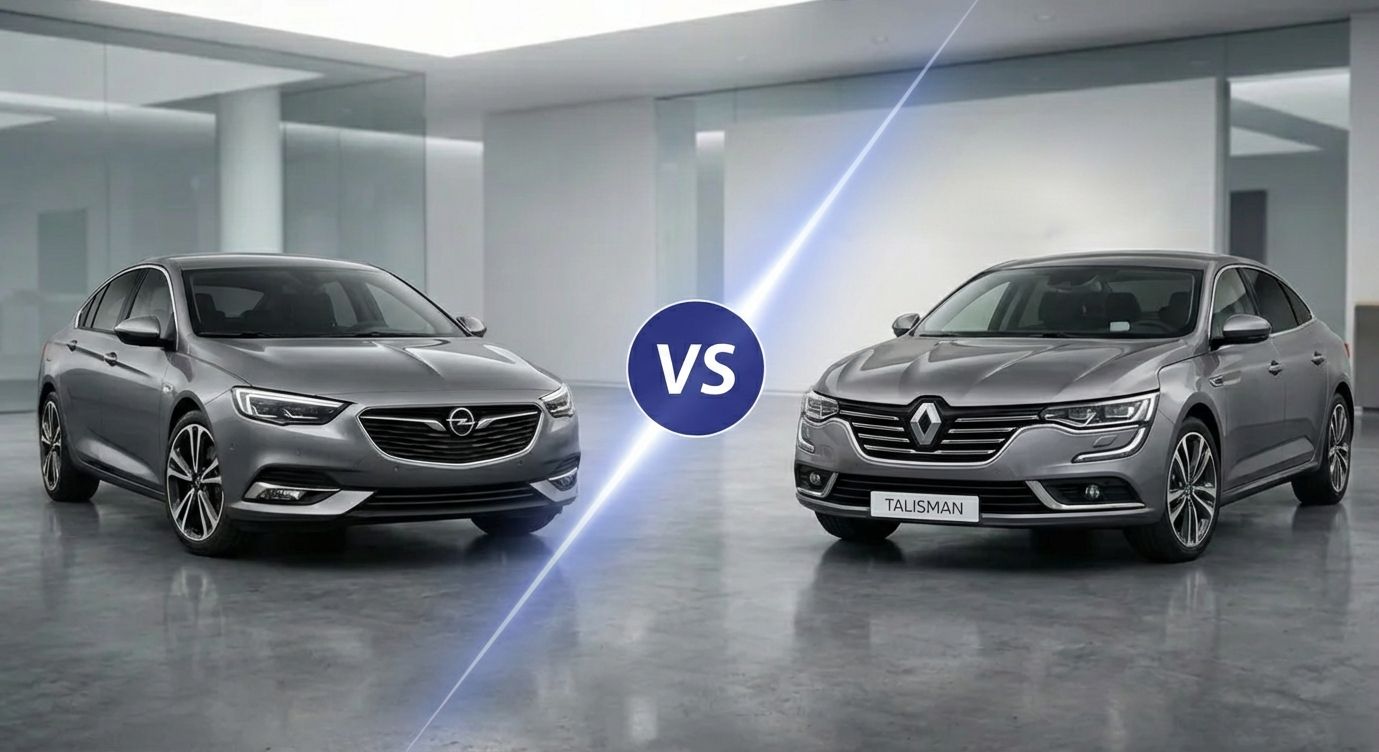
Car battle
Opel Insignia vs. Renault Talisman: Complete comparison 2026
Opel Insignia vs Renault Talisman: A Detailed Comparison. Find out which executive sedan is the better choice. Real data, features, and verdict.
Apr 14, 2026
Articles
Car battle
Lexus IS vs Volvo S60: A detailed comparison of premium sedans. Discover the key differences in driving characteristics, equipment, and reliability before your purchase.
October 16, 2026
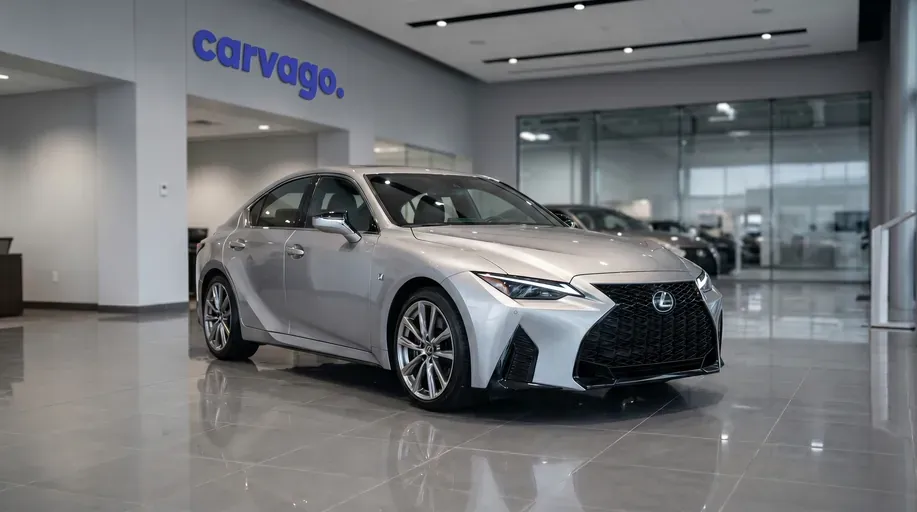
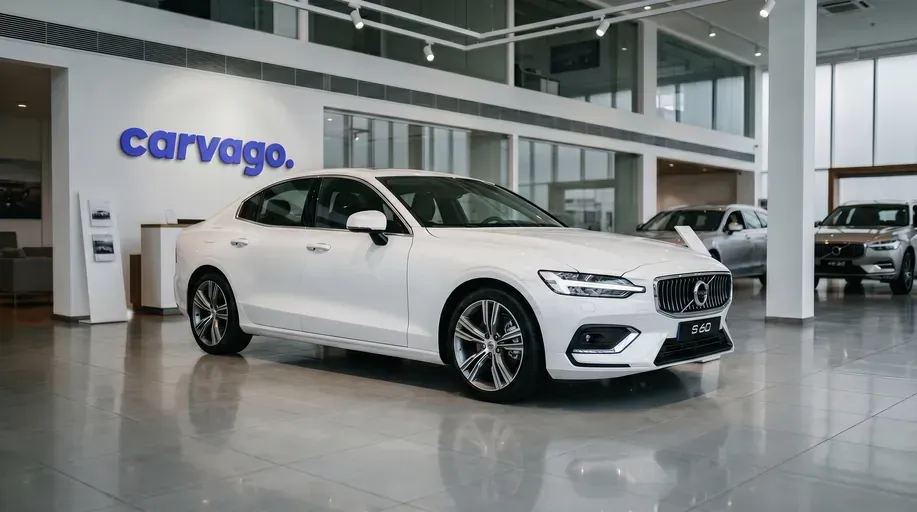
The Japanese premium sedan Lexus IS has long relied on sporty elegance, agile driving characteristics, and legendary reliability, making it a very attractive choice on the used car market. Its rival today, the Swedish Volvo S60, is characterized by a refined minimalist design, maximum travel comfort, and a traditionally unrivaled emphasis on innovative safety systems. In the following comparison, we will take a detailed look at the key differences between these two models with distinct characters to help you make a decision when choosing your future car.
In a direct comparison of the exterior dimensions of roughly four-year-old used examples of these premium mid-size models, it is clear that both automakers have taken slightly different paths. The third-generation Volvo S60 takes up a bit more space on the road, giving it a more majestic stance. With a length of 4778 mm, the Swedish representative is 68 mm longer than the Lexus IS (after a significant 2020 update), which measures 4710 mm. This difference is reflected not only in the overall bulk of the car but also has a direct impact primarily on the interior space available.
The most important parameter for cabin spaciousness is the wheelbase, where Volvo clearly dominates. With a value of 2872 mm, it surpasses its Japanese competitor by a significant 72 mm. In practice, for the Volvo S60, this means more generous legroom for rear-seat passengers, which you will appreciate especially during longer trips with adult passengers. The Lexus IS, with a wheelbase of 2800 mm, instead bets on a tighter, cockpit-like layout. While this reduces space in the back, on the other hand, it enhances the feeling of connection between the driver and the car and contributes to better mass centralization.
In terms of width and height, the differences are rather cosmetic, yet they play a role in daily usability. The Volvo S60, at 1850 mm, is one centimeter wider than the Lexus IS (1840 mm), while the height of both sedans ranges around a sporty low 1431 to 1440 mm, giving them a low center of gravity and a dynamic silhouette. The more compact proportions play into the Lexus's hands when you need to maneuver the car in tight underground garage spaces or parallel park in the city. The choice is thus a matter of priorities: the Volvo S60 makes sense for more family-oriented use with an emphasis on spaciousness and comfort, while the Lexus IS will please drivers looking for a more compact and agile sports sedan.
| Parameter | Lexus IS Sedan | Volvo S60 Sedan |
|---|---|---|
| Width (mm) | 1840 | 1850 |
| Length (mm) | 4710 | 4778 |
| Height (mm) | 1430 - 1440 | 1431 |
| Wheelbase (mm) | 2800 | 2872 |
When it comes to choosing a premium executive or family sedan, trunk capacity often plays a key role in everyday practicality. Although neither the Lexus IS nor the Volvo S60 are typical "haulers" and their main territory isn't trips to the cottage with a full load of building materials, the size of the trunk still determines how easily you can pack the family for a long holiday or load up gear for a weekend of golf. The practicality of both cars is naturally limited by the sedan body style and a smaller opening, but even so, we find surprisingly significant differences between them.
Looking at the base capacity, the Japanese representative fares noticeably better. Standard gasoline versions of the Lexus IS (within the third generation, which is relevant in the market for nearly new four-year-old used cars) offer a very respectable 480 liters. This space is perfectly sufficient for a few extra suitcases or a bulky family grocery run. In contrast, the third-generation Volvo S60 offers a significantly more modest 427 liters in its standard internal combustion or mild-hybrid engine options. In both models, the rear seatbacks can of course be folded down to transport longer items, but the total maximum trunk volume "to the roof" is traditionally and officially not stated by manufacturers for these body styles.
A specific chapter today is the highly sought-after hybrid powertrains, where concessions must be made due to the placement of traction batteries. If you opt for the popular and economical Lexus IS 300h hybrid, the trunk capacity decreases to 450 liters, which is still a very solid and usable value. However, the Swedish competitor loses valuable space even more significantly in the case of the powerful Volvo S60 Recharge plug-in hybrid versions (T8 engine), with its trunk shrinking to just 390 liters (or 391 liters depending on the specific model year). For those interested in electrified driving who need to carry more, the Japanese automaker is much more generous.
| Parameter | Lexus IS Sedan | Volvo S60 Sedan |
|---|---|---|
| Base capacity (liters) | 450 - 480 | 390 - 427 |
| Maximum capacity with seats folded (liters) | Not published | Not published |
In terms of overall transport capacity, the Lexus IS is the clear winner of this comparison, as even in its hybrid version it can hold more luggage than the Volvo S60 with a standard internal combustion engine. This represents a significant advantage for both families and executives for whom usable trunk space is one of the main criteria when choosing a premium car.
While the Volvo S60 bets on Scandinavian minimalism, safety, and elegance, the Lexus IS offers a larger trunk even in its hybrid variants, making it a noticeably more practical choice for everyday use.
The ability to tow a trailer differs diametrically between these two premium sedans, which is a crucial parameter for those interested in towing a caravan or transporting heavier loads. While one car is built as a versatile workhorse for everyday tasks, the other focuses more on driving comfort, and towing capacity plays a marginal role.
If we focus on roughly four-year-old models on the used car market, the Swedish representative clearly dominates in this discipline. The third generation of the Volvo S60 offers a standard braked trailer weight of a very solid 1,800 kg for common mild-hybrid and petrol engines (e.g., B4, B5, T4, and T5 versions). Interestingly, Volvo's powerful plug-in hybrid models (T6 and T8) do not reduce towing capacity at all; on the contrary, they push the maximum limit up to a respectable 2,000 kg. The unbraked trailer weight then stops at the legislative standard of 750 kg. In contrast, with the Lexus IS, you will encounter significant compromises. Due to its specific design and the presence of an efficient powertrain, the most widespread hybrid version on the European market, the IS 300h, has its capacity reduced to just 750 kg for both braked and unbraked trailers. Furthermore, for the model year itself, official manufacturer database records for the tow bar are often missing, which only confirms that towing loads is not part of this Japanese car's primary repertoire. For this reason, the Lexus is also not included in the final overview.
In practice, these differences mean completely different usability for both cars. The 750 kg limit on the Lexus will safely serve for hitching a light trailer, which is perfectly sufficient for a weekend trip to a DIY store or transporting a few bikes on a rack. However, the Volvo S60, with a capacity of up to two tons, is in a completely different league – it is not intimidated by a large family caravan, a heavy boat trailer, or a horse trailer. For active families, its towing capacity is thus sufficient for any long and demanding holiday.
In conclusion, if you know you will be using the tow bar regularly for heavier loads, the Volvo S60 represents the only rational choice in this comparison. The Lexus IS will please you with its excellent driving smoothness, but it remains significantly behind in the role of a towing vehicle.
| Model and motorization | Braked weight of trailer (kg) | Unbraked weight of trailer (kg) |
|---|---|---|
| Volvo S60 B4, B5, T4, T5 (3rd Generation) | 1,800 | 750 |
| Volvo S60 T6, T8 (3rd Generation) | 2,000 | 750 |
When choosing a roughly four-year-old premium sedan, the Lexus IS and Volvo S60 represent two completely different approaches to powertrain, which has a fundamental impact on fuel consumption, dynamics, and long-term reliability. The generation of the Volvo S60 currently most available as a used car (the 3rd generation, produced since 2019) has bet on a purely petrol and electrified future. As one of the first models of the brand, Volvo completely phased out diesel engines from the range and relies primarily on mild-hybrid or very powerful plug-in hybrid units. In contrast, the Lexus IS (the last 3rd generation sold in Europe) maintains its more conservative but exceptionally reliable face, dominated by a full hybrid system (HEV) with a naturally aspirated engine without the need for external charging from a socket. While the Volvo will appeal to drivers looking for maximum pull and occasional pure electric driving, the Lexus is the ideal choice for calmer drivers and those who appreciate legendary maintenance-free operation in urban and suburban traffic.
In the engine range for the Lexus IS (on the European market for roughly four-year-old cars), the brand focused primarily on smoothness and low fuel consumption. The IS 300h version, which combines a 2.5-liter naturally aspirated four-cylinder with an electric motor, became the clear European standard. The total system output reaches 164 kW and is linearly transmitted to the rear wheels via a reliable e-CVT planetary gearbox. Outside Europe or in rarer imports, you can find purely petrol versions like the IS 300 (two-liter turbo, 180 kW) and IS 350 (six-cylinder, 232 kW). If you were to come across the uncompromising eight-cylinder flagship Lexus IS F with 311 kW in automotive databases, it is necessary to keep in mind that this model belongs to the older, second generation produced only until 2015. In the segment of 4-year-old used cars, you will therefore not directly encounter this legendary athlete, and the very efficient and durable hybrid will dominate the market.
| Engine type | Fuel | Power (kW) | Torque (Nm) | Transmission |
|---|---|---|---|---|
| IS 300h | Full hybrid (HEV) | 164 | 221 / 300 (electric) | e-CVT |
| IS 300 | Petrol | 180 | 350 | 8-speed automatic |
| IS 350 | Petrol | 232 | 380 | 8-speed automatic |
| IS F (until 2015) | Petrol | 311 | 505 | 8-speed automatic |
In the third-generation Volvo S60 (produced since 2019), you will no longer find any diesel engine under the hood – diesel units labeled D2 to D5 ended for good with the previous generation. The Swedish carmaker decided to offer exclusively two-liter petrol four-cylinders. In slightly older models (produced roughly until 2020), you will still encounter traditional petrol engines such as the T4 (140 kW) or T5 (184 kW). In more modern four-year-old used cars, however, these have been completely replaced by advanced mild-hybrids labeled B4 (145 kW) and B5 (184 kW). These powertrains use a 48V electrical system, which offers a smoother start-stop mode, gentler take-offs, and slight fuel savings, always in conjunction with an eight-speed Geartronic automatic. The absolute pinnacle of the S60 family are the T8 Recharge and the tuned Polestar Engineered versions – plug-in hybrid vehicles with all-wheel drive (AWD) that can combine power approaching the 300 kW mark (around 400 hp) and a massive torque of up to 670 Nm for lightning-fast acceleration.
| Engine type | Fuel | Power (kW) | Torque (Nm) | Transmission |
|---|---|---|---|---|
| B4 | Petrol (Mild-hybrid) | 145 | 300 | 8-speed automatic |
| B5 | Petrol (Mild-hybrid) | 184 | 350 | 8-speed automatic |
| T4 (until 2020) | Petrol | 140 | 300 | 8-speed automatic |
| T5 (until 2020) | Petrol | 184 | 350 | 8-speed automatic |
| T6 (until 2020) | Petrol | 228 | 400 | 8-speed automatic |
| T8 Recharge | Plug-in hybrid | 288 - 298 | 640 - 670 | 8-speed automatic |
While the Volvo S60 scores with customers for the great performance of its plug-in hybrids, sophisticated all-wheel drive, and more aggressive dynamics, the Lexus IS 300h remains the clear choice for drivers looking for maximum durability, mechanical reliability, and low fuel consumption without the need to deal with cables and grid charging.
Choosing the right engine is crucial for long-term satisfaction with a vehicle, which is why the following recommendations are based on real-world performance, actual fuel consumption, owner feedback, and mechanical reliability. When comparing the powertrains of these two premium cars, we see a very interesting trend: both manufacturers have completely abandoned the once-popular diesel engines in their newer models. With the third-generation S60, Volvo made a radical move, creating the brand's first modern model available exclusively with petrol and partially electrified units. Lexus embarked on the path of massive electrification even earlier. Although some databases often reflect older sports versions of the Lexus IS, in the reality of the market for roughly four-year-old cars, the best-selling third-generation full hybrid powertrain absolutely dominates.
This hybrid powertrain, combining a naturally aspirated 2.5-liter petrol four-cylinder operating on the efficient Atkinson cycle with a powerful electric motor, represents the absolute best and most rational choice for the IS. Its main technical advantage is uncompromising mechanical reliability due to the absence of delicate parts – the system lacks a conventional starter, alternator, manual clutch, or turbocharger. Thanks to the e-CVT planetary gearbox, power is delivered extremely smoothly, and in real-world suburban driving, combined consumption easily stays below 6 liters per 100 km, while robust regeneration significantly saves brake pads. However, there are specific pitfalls that require your attention:
Thanks to these characteristics, the Lexus IS 300h is primarily designed for defensive drivers and commuters within cities and suburban areas who demand absolute reliability and a relaxing, quiet cabin.
In the purely petrol and hybrid lineup of the third-generation Volvo S60 (the more modern versions of which have been appearing on the market since roughly 2020), the B4 engine is a safe bet and a perfect compromise between operating costs and power. This "golden mean" combines a turbocharged 2.0-liter four-cylinder producing 145 kW (197 hp) with a sophisticated 48V mild-hybrid system. The technical advantage of this solution is the integrated electric motor, which subtly masks any turbo lag during take-off and ensures one of the smoothest start-stop systems on the market. The result is a velvety cooperation with the eight-speed automatic and an easily sustainable real-world consumption of around 7 liters per 100 km. However, you should not underestimate the following weaknesses when choosing:
The Volvo S60 with the B4 engine makes sense primarily as a highway cruiser for drivers and families looking for exceptional Nordic comfort, maximum safety, and a carefree touring character.
The difference between the official values provided by manufacturers and real-world fuel consumption in everyday driving is often vast. To get the most accurate picture of actual costs, we rely on real data directly from drivers on the popular community platform Spritmonitor.de, where owners record their fuel stops over the long term. For comparison, we focused on approximately four-year-old cars (manufactured around 2022). In the case of the Volvo S60, this means the current third generation. The Lexus IS stands out in the four-year-old used car market primarily with its third generation (XE30 generation), where the exceptionally popular 300h full-hybrid powertrain holds absolute dominance in terms of fuel economy.
| Model and powertrain | Average consumption (l/100 km) |
|---|---|
| Lexus IS 300h (Full hybrid - HEV) | 6.2 |
| Volvo S60 B4 (Mild-hybrid petrol) | 7.8 |
| Volvo S60 B5 (Mild-hybrid petrol) | 8.2 |
| Volvo S60 T8 Recharge (Plug-in hybrid) | 4.5 |
The collected data clearly shows interesting trends and a completely different approach by both manufacturers to fuel saving.
Is fuel consumption a deciding factor when choosing between these two used cars? Certainly. If your absolute priority is consistently low consumption with minimal effort from the driver, the Lexus IS wins. The Volvo S60, on the other hand, targets customers who prefer fresh Scandinavian design, are not afraid of higher fuel costs for the internal combustion versions, or can "earn" their savings in operation through diligent charging of the plug-in hybrid variant.
When looking at the market for nearly new and used cars around four years old (approximately 2020–2022 models), we encounter a rather different market situation for these two premium sedans. This is mainly due to the fact that Lexus gradually withdrew the IS model range (3rd generation) from the European market between late 2020 and 2021. Volvo, on the other hand, continued on the European market with the current 3rd generation of the S60 model (since 2019) in the following years, which significantly affects the overall supply.
The Lexus IS from the end of its European era is offered on our market almost exclusively in the reliable IS 300h hybrid powertrain. The overall supply on the secondary market is quite limited, which keeps the prices of these vehicles at a consistently higher level.
For the Swedish sedan manufactured in the USA, the situation is much more varied from a buyer's perspective. You can choose from traditional petrol engines (T4, T5), later mild-hybrids (B3, B4, B5), or powerful plug-in hybrids (Recharge).
| Parameter | Lexus IS (IS 300h) | Volvo S60 |
|---|---|---|
| Starting price (high mileage) | from ~ €23,000 | from ~ €16,000 |
| Average price (mileage approx. 80k km) | €29,000 – €35,000 | €25,000 – €31,000 |
| Most expensive/top versions | rarely over €35,000 | €37,000+ (PHEV and nearly new) |
| Market availability | Very low | Medium to high |
| Expected depreciation | Slow | Average |
The Volvo S60 offers a significantly wider choice and a lower entry price on the used car market; however, if you don't mind paying extra and are looking for a long-term keeper with very slow depreciation, the rarer Lexus IS is a bet on hybrid certainty.
Both cars, the Lexus IS and the Volvo S60, earned the maximum five-star rating in Euro NCAP crash tests. However, it is crucial to put these results into the correct context and consider, above all, the different years in which the tests were conducted for each vehicle.
Euro NCAP test protocols evolve constantly over the years and become much stricter. While older tests focused primarily on passive safety and mitigating the consequences of the impact itself, newer versions place an enormous emphasis on active accident prevention. This includes the presence of advanced assistance systems, smart cyclist detection, or the ability for emergency braking at intersections. For this reason, percentage scores from different years cannot be directly and equally compared.
Lexus IS (third generation) underwent Euro NCAP tests in 2013, at the time of its initial market launch. It achieved excellent results back then, with 91% for adult protection and 85% for child protection. It also performed very well in the protection of vulnerable road users (80%), where an active pop-up hood significantly helped. In the safety assist category, however, it only received 66%. This result reflects the standards of the time and the fact that the model simply did not have today's range of advanced sensors. Due to the gradual withdrawal of the Lexus IS from many European markets around 2020, the car did not undergo newer testing according to stricter methodologies.
Volvo S60, on the other hand, was tested in 2018 (Euro NCAP derives the rating from the technically identical V60 estate). The testing methodology at that time was already very strict and thoroughly tested automatic emergency braking systems, lane keeping, and cyclist and pedestrian detection. The S60 model excelled with 96% in adult protection. Child protection reached 84% and vulnerable road user protection 74%. The safety assist rating of 76% is an excellent result given the significantly tougher and more modern tests, confirming the robustness of the City Safety system of that time.
| Parameter | Lexus IS | Volvo S60 |
|---|---|---|
| Year of testing | 2013 | 2018 |
| Adult occupant protection | 91 % | 96 % |
| Child protection | 85 % | 84 % |
| Vulnerable road user protection | 80 % | 74 % |
| Safety assist systems | 66 % | 76 % |
From the perspective of current safety requirements, the Volvo S60 is the clear favorite in this comparison. Although the Lexus IS was an exceptionally safe car in its time, the Volvo S60 underwent a substantially tougher testing methodology. As a result, the Swedish sedan offers a more advanced construction, a much more complex set of assistance features, and reacts to crisis situations with a speed and precision that older platforms simply cannot offer.
Although both cars boast five stars, the Volvo S60 underwent significantly stricter tests and, thanks to more modern assistance systems, offers a demonstrably higher and more comprehensive level of protection within the used car market.
In addition to standard equipment, each of the models offers several unique elements and technologies that give them a distinctive character and can be absolutely decisive for the customer during the final selection. Each car manufacturer approaches the premium segment differently, which is reflected in the details and top-tier technologies.
Legendary reliability and long lifespan of the hybrid powertrain
Economical and exceptionally quiet operation in the city and on country roads (IS 300h version)
More engaging driving dynamics and excellent weight distribution thanks to rear-wheel drive
Premium interior build quality with excellent soundproofing
Holds its value excellently and has very low depreciation on the used car market
Outdated and slower infotainment with uncomfortable touchpad control
Limited legroom and headroom for rear-seat passengers
Smaller and less accessible luggage compartment
Sound profile of the e-CVT continuously variable transmission ("vacuum cleaner effect") during hard acceleration
The Lexus IS is the perfect choice for drivers who appreciate uncompromising reliability, long lifespan, and economical hybrid operation with low maintenance costs. It impresses with premium craftsmanship and confident driving dynamics with rear-wheel drive, but requires a compromise in terms of multimedia and interior spaciousness.
Top-tier level of active and passive safety with an excellent Euro NCAP rating
Elegant minimalist interior and some of the most comfortable seats in its class
Range of very powerful plug-in hybrid powertrains (Recharge/T8)
Well-tuned chassis that filters out bumps excellently and offers high driving comfort
Less engaging and rather detached driving experience due to the primarily front-wheel-drive layout
Most functions, including climate control, are operated via the touchscreen, which can be distracting
Electronically limited top speed of 180 km/h (on models from 2020 onwards)
Faster depreciation on the used car market compared to Japanese competitors
The Volvo S60 will primarily appeal to drivers looking for maximum safety, top-tier travel comfort, and refined Scandinavian design for long journeys. It is an ideal family or executive car for a more relaxed drive, especially if you take advantage of the plug-in hybrid powertrain with regular home charging.
Based on data from reliability statistics, long-term owner experiences, and records from our own independent CarAudit inspections, we have compiled an overview of the most common problems for both cars. Given that buyers most often focus on approximately four-year-old models, a detailed physical inspection of a used car is a reliable way to uncover potential risks before purchase.
The Japanese premium sedan, following a significant update (from 2021), has long been a benchmark for reliability, yet several typical ailments appear due to older technology or sporty tuning.
The Lexus IS offers absolutely above-average mechanical durability and build quality within its class. Its weaknesses lie more in faster tire wear and an older approach to transmission systems.
The third generation of the Swedish sedan, built on the modern SPA platform, excels with breathtaking design and top-tier safety, but due to higher weight and advanced software equipment, it requires a significantly larger maintenance budget.
The Volvo S60 is a fantastically safe car, but it suffers from rapid brake wear and frequent software glitches. In terms of total service costs, it represents a greater burden than the competing Lexus.
When buying a used car, a thorough inspection is key. Here are some specific points to focus on for these two models to avoid expensive surprises and ensure years of reliable operation.
Lexus has long reigned supreme in reliability rankings, and the IS model, thanks to its proven hybrid and naturally aspirated engines, is among the least prone to breakdowns in its class. Volvo S60 is also very well-built, but its more complex turbocharged engines and advanced electronics may require professional service more frequently over the years.
The Volvo S60 features powerful plug-in hybrid versions (Recharge) that allow for daily driving on pure electricity and offer very high combined power. The Lexus IS, on the other hand, relies on a traditional full hybrid system without the need for plug-in charging, which excels in unmatched reliability and smooth, economical driving, especially in the city.
The Volvo S60 provides passengers with slightly more rear legroom and an overall airier interior with a clean Scandinavian design. The boot size is comparable for both sedans; the Volvo offers a capacity of 442 liters, while the Lexus IS has 450 liters (the value is slightly lower for hybrid versions due to the batteries).
The Lexus IS, with its classic rear-wheel-drive layout and precisely tuned chassis, offers a purer and much more engaging driving experience in the corners. The Volvo S60, with front or all-wheel drive (AWD), focuses instead on confident traction, maximum comfort, and a quiet, smooth ride on long journeys.
Volvo has historically been synonymous with safety, and the current generation of the S60 offers some of the most advanced active assistance systems on the market. However, the Lexus IS does not lag behind in either passive or active safety and comes standard with the excellent and comprehensive Lexus Safety System+ package.
Sources: ADAC, auto.cz, forbes.cz, automix.cz, motorvize.cz, f1sport.cz
This article was prepared using artificial intelligence tools. The section guarantor is Petr Dušek.
Opel Insignia vs Renault Talisman: A Detailed Comparison. Find out which executive sedan is the better choice. Real data, features, and verdict.
Apr 14, 2026
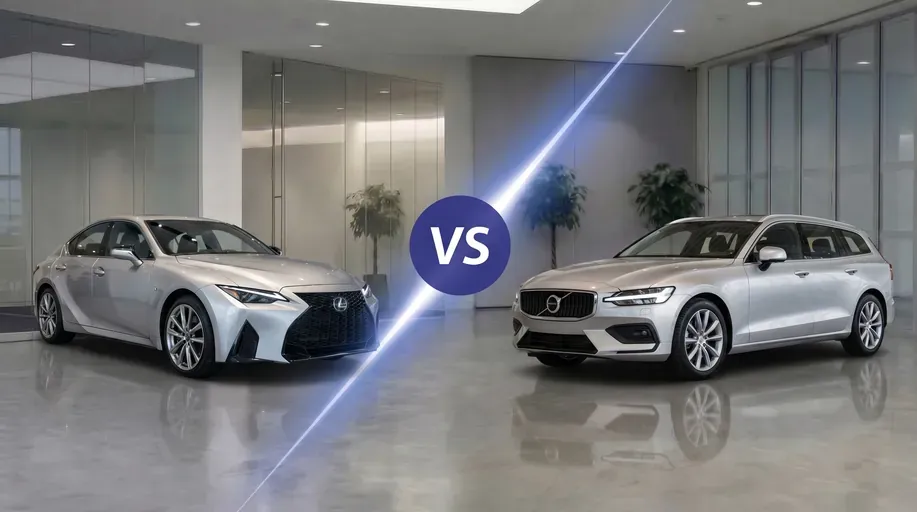
Detailed comparison of Lexus IS vs Volvo V60. Discover the differences in driving characteristics, equipment, and reliability of used cars. Read our clear verdict before buying.
Oct 16, 2026
Detailed comparison of used Mazda 6 vs. Škoda Superb. We reveal real-world experiences, fuel consumption, and spaciousness, and provide a clear verdict to help you make the right choice.
Apr 2, 2026