Articles

Car battle

Lexus IS vs. Volvo V60: Complete comparison 2026

Detailed comparison of Lexus IS vs Volvo V60. Discover the differences in driving characteristics, equipment, and reliability of used cars. Read our clear verdict before buying.

April 20, 2026

VS
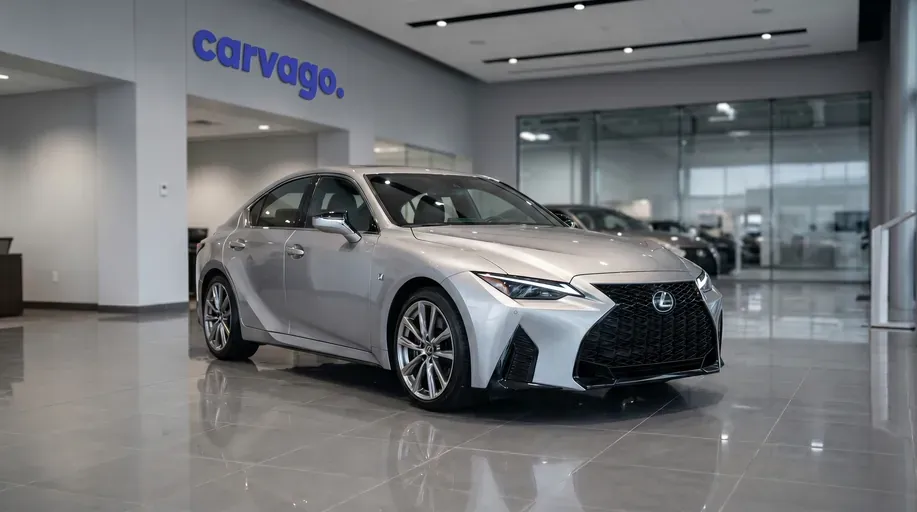
Lexus IS

Lexus IS

Volvo V60

Volvo V60

Introduction

Lexus IS, which was historically known as the Toyota Altezza on the Japanese market, is a premium sports sedan that attracts with its agile handling, aggressive design, and renowned Japanese reliability. Standing against it is the Volvo V60, an exceptionally safe and elegant Swedish estate that offers its occupants first-class travel comfort, thoughtful minimalist luxury, and excellent everyday practicality. Let's take a detailed look at how a direct comparison of these two completely different approaches to premium motoring turns out, so you can find out which of these attractive cars better suits your requirements on the used car market.

Comparison of External Dimensions

When we place approximately four-year-old models of these two premium brands side by side, the difference in their body concepts and overall proportions is immediately apparent. The Volvo V60 represents a classic estate car with maximum utility for the family, while the Lexus IS (after its extensive modernization for the 2021 model year) honors the shapes of an athletically cut sports sedan. The Swedish representative, with its length of 4,778 mm, is exactly 68 mm longer than its Japanese rival, which measures 4,710 mm in length. In everyday use, this external difference means that the Lexus feels slightly more agile and is easier to maneuver during parallel parking, while the Volvo, with its extended dimensions, creates a more majestic impression and hides much greater potential for cargo transport.

An even more fundamental difference is shown in the wheelbase parameter, which is key to the vehicle's internal spaciousness. The Volvo V60 offers a generous 2,872 mm, which is a full 72 mm more than the Lexus IS with its 2,800 mm. Conversely, the width of both cars is very balanced – the Nordic estate is wider by a barely perceptible 10 mm at 1,850 mm. This longer and slightly wider stance gives the Swedish model not only more stability at high highway speeds but, above all, brings a crucial advantage for rear-seat passengers, who can benefit from substantially more knee room.

An interesting point of the entire comparison is the overall height of the vehicles. Even though the V60 primarily serves as a practical family estate, it stays very close to the road with a height of only 1,432 mm. Paradoxically, the Lexus is 3 mm taller at 1,435 mm. Ultimately, these specific external dimensions influence the choice quite clearly: for frequent travel with family or adult friends, the longer and more spacious Volvo V60 is objectively the more rational choice, while the more compact and tighter footprint of the Lexus perfectly suits drivers who expect maximum sporting agility from their car on country roads.

ParameterLexus IS SedanVolvo V60 Estate
Width (mm)18401850
Length (mm)47104778
Height (mm)14351432
Wheelbase (mm)28002872

Trunk Volume

When it comes to practicality and everyday family use, the different body styles of these two models are fully evident in the nearly-new used car market. While the Lexus IS represents a classic elegant sedan oriented primarily towards the driver and style, the Volvo V60 is a premium estate (wagon) that has practicality right in its DNA. For buyers who often transport bulkier cargo, strollers, or sports equipment, the shape and accessibility of the luggage compartment is an absolutely key factor. Thanks to its body design, Volvo offers not only a larger base volume but, above all, maximum variability and a generous loading opening.

Looking at specific numbers for generations with an average age of around four years, the Volvo V60 offers a luggage compartment with a volume of 519 liters in its standard configuration. After folding down the rear seats, this space grows to a massive 1,431 liters, which is easily enough for moving small furniture or packing for a long family vacation. The Lexus IS, as a traditional sedan, provides a base volume of 480 liters. This value is fully sufficient for a regular weekend grocery run or several classic suitcases. However, for the sedan, the maximum volume with the seats folded down is not listed, as the rigid body partition does not allow for the safe and comfortable transport of tall or atypical items.

An important aspect is also the electrified versions, which are highly sought after in used cars from recent years. In the popular hybrid model Lexus IS 300h, the stored batteries reduce the total storage space by 30 liters, leaving the buyer with 450 liters available. In contrast, Swedish engineers at Volvo placed the batteries for the V60 Recharge (plug-in hybrid) exceptionally cleverly in the center tunnel. As a result, the occupants do not lose precious space, and even the hybrid version retains a great 519 liters. From a family use perspective, this means space for several extra suitcases and a huge advantage compared to its Japanese competitor.

ParameterLexus IS SedanVolvo V60 Estate
Base volume (liters)480519
Max volume with seats folded down (liters)N/A1431

A Clear Choice for the Family 🧳

While the Lexus IS offers a solid trunk ideal for regular travel for two, the Volvo V60 is an unrivaled winner for active families thanks to its practical estate body and clever battery layout.

Discover the true condition of the car thanks to an independent inspection

Order CarAudit™

Trailer Weights

Towing capacity is a key factor for many buyers, especially if you plan family holidays with a caravan or need to regularly transport heavier loads. In this regard, there is a vast difference between the two cars, stemming from the very design focus of both models.

While the third-generation Volvo V60 (an ideal and highly sought-after choice on the market for approximately four-year-old used cars) excels as an exceptionally practical family estate, the Lexus IS represents the embodiment of a dynamic sedan focused on a sporty experience. In the available data for the Lexus IS (especially for older high-performance generations and specific versions like the IS F), official towing capacity values are completely missing. In practice, this means that this car is usually not factory-homologated for towing trailers at all, and legal installation of a tow bar is usually not possible here.

In contrast, the Volvo V60 offers an exemplary level of utility. The standard braked trailer weight for entry-level diesel engines, such as the D3 (110 kW), ranges from 1,600 to 1,800 kg. The popular petrol mild-hybrid B3 version can then tow 1,800 kg. However, the maximum braked trailer weight for more powerful versions, such as the B4 Diesel (145 kW) or the high-performance B6 engine, climbs to an excellent 2,000 kg. A huge benefit of the Swedish estate is the fact that even heavy plug-in hybrid powertrains (T6 and T8 Twin Engine) maintain a maximum capacity of 2,000 kg. Unlike many competitors, these hybrid variants do not suffer from reduced towing capacity due to the additional weight of the batteries. The unbraked trailer weight is a standard 750 kg for all versions.

In terms of everyday practicality, these differences are enormous. With the Volvo V60, you can tow a large caravan or a practical trailer without any trouble, giving you additional space for several extra suitcases. The total transport capacity is thus perfectly sufficient for weekend shopping and longer holidays for the whole family. With the Japanese sedan, on the other hand, you will have to rely purely on the internal boot capacity and roof racks.

Conclusion: If a tow bar is a necessity for you and you plan to hitch up any trailer or caravan, the Volvo V60 is the clear and unrivaled winner. You will have to completely rule out the Lexus IS from your selection as a potential tow vehicle due to the absence of towing capabilities.
Model and motorizationBraked weight of trailer (kg)Unbraked weight of trailer (kg)
Volvo V60 B3 (120 kW)1800750
Volvo V60 D3 (110 kW)1600 - 1800750
Volvo V60 B4 Diesel (145 kW)2000750
Volvo V60 T8 Twin Engine (228 kW)2000750

Overview of Most Common Motorizations

The engine range of the Lexus IS and Volvo V60 models represents two completely different technical and philosophical approaches, which plays a key role for buyers looking for the ideal balance between performance, running costs, and reliability. While the Japanese Lexus IS, in the market for approximately four-year-old used cars, relies primarily on one precisely tuned full-hybrid unit that does not require plug-in charging and excels in extreme mechanical durability, the Volvo V60 offers customers a choice from a very wide range of four-cylinder engines. The Swedish representative combines fuel-efficient mild-hybrids with high-performance plug-in hybrid systems that, with regular charging, can handle daily commutes purely on electricity. The decision between these cars is thus primarily a choice between the renowned Japanese maintenance-free reliability in city traffic and Nordic turbocharged power, which offers a significantly more dynamic drive and broader options to suit the specific needs of the driver (from motorway diesel variants to sporty PHEV models).

In its third generation (which was officially offered on European markets until roughly the end of 2020, with the youngest models coming either from the very end of sales or from individual imports), the Lexus IS maintains a narrow but very rational offering. The absolute standard and the only sensible choice for the vast majority of used car buyers in Europe is the IS 300h powertrain. This relies on a naturally aspirated 2.5-liter four-cylinder engine combined with an electric motor for a solid combined output of 164 kW. Power is transmitted to the rear wheels exclusively via a planetary electronic e-CVT transmission, ensuring incredibly smooth operation without jerking and fuel consumption easily falling towards the 5.5 l/100 km mark in both urban and suburban cycles. In foreign markets (or via import), one can occasionally come across the purely petrol turbocharged two-liter IS 300 or the powerful naturally aspirated IS 350 V6, which are complemented by classic eight-speed automatics and the option of all-wheel drive (AWD). The older legendary eight-cylinder IS F version (offered between 2008–2015) no longer falls into the category of four-year-old nearly new cars. The Japanese offering thus scores points especially with bulletproof reliability, but on motorways, it does not achieve the same flexibility as its European turbocharged competitors.

Engine typeFuel typePower (kW)Torque (Nm)Transmission
2.5 IS 300hPetrol / HEV164221 / 300e-CVT
2.0 IS 300Petrol1803508AT
3.5 IS 350Petrol2323808AT

In contrast, the third generation of the Volvo V60 brings an exceptionally diverse range of two-liter engines that cover the requirements of corporate fleets, economically minded drivers, and performance enthusiasts alike. The market for four-year-old used cars is clearly dominated by modern mild-hybrid engines (designated by the letter B), which gradually replaced the older purely internal combustion units. The previously very popular D3 and D4 diesel versions (or T4 and T5 petrol versions) from the beginning of production ended around 2020 and 2021. Today, the base consists of the B3 (120 kW) and B4 (145 kW) petrol mild-hybrids, joined by the fuel-efficient B4 Diesel mild-hybrid with a massive 420 Nm of torque as the ideal choice for high mileage. These variants standardly use smooth-shifting 7-speed dual-clutch (DKG) or 8-speed Geartronic automatic transmissions. For technology enthusiasts and those seeking instant performance, the top of the range is represented by the Recharge plug-in hybrids – the standard T6 (257 kW) and the extreme T8 Polestar Engineered producing a sporty 335 kW. The strength of the Swedish estate is its versatility, the availability of all-wheel drive (AWD), and the sheer power of the PHEV versions; the weakness is logically the higher structural complexity, the need for regular charging, and the higher kerb weight of the battery systems.

Engine typeFuel typePower (kW)Torque (Nm)Transmission
2.0 B3Petrol / MHEV1202657DKG / 8AT
2.0 B4Petrol / MHEV1453007DKG / 8AT
2.0 B4 DieselDiesel / MHEV1454208AT
2.0 B5Petrol / MHEV1843508AT
2.0 T6 RechargePetrol / PHEV2576598AT
2.0 T8 RechargePetrol / PHEV3357098AT
2.0 D4 (until 2020)Diesel1404006MT / 8AT

Electrified Reliability vs. Nordic Versatility ⚡

While the Lexus IS with the 300h hybrid represents an ideal and virtually maintenance-free choice for drivers preferring smoothness and low fuel consumption in the city, the Volvo V60 triumphs with its wide range of mild-hybrid and powerfully strong plug-in hybrid engines that will thrill motorway travelers and lovers of sharper dynamics alike.

Choosing the right engine is absolutely crucial for your long-term satisfaction with the car, its reliability, and real operating costs. When we compare used cars around 4 years old, we encounter completely different engineering approaches. Lexus sticks to its bulletproof naturally aspirated hybrid, while Volvo has bet on sophisticated turbocharged four-cylinders combined with mild-hybrid technology. The available data clearly shows a fundamental difference: the 3rd generation Volvo V60 model range offers a wide range of current model years (2021–2024). Conversely, the 3rd generation Lexus IS withdrew from the European market in early 2021 – cars around four years old are thus the very last officially delivered units to Europe. The database for the Japanese sedan even primarily records only the extremely rare collector's version IS F with a five-liter V8 from 2008 to 2015, which is no longer relevant from the perspective of a typical four-year-old used car for daily driving. Given that these older high-performance engines cannot be purchased for newer model years, the table and recommendations below focus primarily on units that you can realistically and safely buy on the market for slightly used cars.

ModelRecommended enginePowerMarket availability
Lexus IS300h (2.5 Hybrid)164 kW / 223 hp3rd gen. (new cars in EU discontinued 2021)
Volvo V60B4 (2.0 Mild-hybrid)145 kW / 197 hp3rd gen. (commonly available 2021 – 2024+)

As the table demonstrates, while you can commonly find a four-year-old Volvo family estate with the modern B4 engine, a potential Lexus IS buyer will have to look for the last hybrid model years produced before the end of European sales.

For the Lexus IS, we recommend: 300h (2.5 Hybrid, 164 kW / 223 hp)

The 2.5-liter naturally aspirated four-cylinder combined with an electric motor and an e-CVT planetary gearbox represents a total safe bet for the third-generation IS. In the range of realistically available nearly new used cars, it is the unrivaled best choice, combining luxurious cabin silence, exemplary operating economy, and legendary mechanical reliability. The main technical weapon of this full-hybrid powertrain is the absence of problematic components – you won't find traditional friction clutches, a classic starter, alternator, or even toothed belts. Real fuel consumption, despite the large naturally aspirated displacement, remains very pleasant even in stop-and-go city traffic, ranging between 5.5 and 6.5 l/100 km. The internal combustion engine is mechanically almost immortal; however, as a used car buyer, you must closely monitor the aging of the traction battery. You can recognize depleted cells if the car starts the combustion engine too often, or if the battery indicator shows it charging quickly and then immediately discharging. This risk can be easily avoided by checking the history: always insist on providing a "Hybrid Health Check" report from an authorized service center, which allows the battery system to maintain an active warranty for up to ten years from production. This car perfectly suits calmer, composed drivers who spend most of their time in the city or on suburban roads. If you are looking for a sharp weekend drive with quick throttle response, the behavior of the e-CVT gearbox would likely bother you, but for comfortable and maximum worry-free driving, the 300h is an absolute gem.

For the Volvo V60, we recommend: B4 (Mild-hybrid petrol or diesel, 145 kW / 197 hp)

In the exceptionally wide database offering of the third-generation Volvo V60 family estate, the B4 specification, whether petrol or diesel, stands out as the absolute centerpiece for the four-year-old used car market. These two-liter units directly replaced the older T4 and D4 versions and introduced an integrated 48V starter-generator (ISG). The B4 engine is an absolutely ideal all-rounder because it offers a generous 197 hp necessary for safe overtaking with a fully loaded car, but does not require the extreme purchase and service costs associated with the complex T6 and T8 plug-in hybrids. Technically, the most significant positive is the mild-hybrid module, which ensures perhaps the smoothest operation of the start-stop system on the market and successfully masks turbo lag during takeoff with its electric "kick". However, the greater complexity of the powertrain requires a more knowledgeable approach, especially with the B4 Diesel variant. The emission systems of diesel engines (EGR valve and DPF filter) have a strong tendency to clog quickly if the car serves as a city taxi for shopping trips. When buying a used diesel, don't be fooled by just a clean paint job – listen to the engine at idle, observe the smoothness of the pull from low revs during a test drive, and unconditionally demand a diagnostic scan to reveal DPF regeneration intervals. If you already know that the vast majority of your trips consist of short city "hops", we strongly recommend choosing the petrol B4. Conversely, the B4 Diesel will please any long-distance driver or family man looking for a quiet and exceptionally safe highway cruiser with a range that pure electric cars still only dream of today.

Real Fuel Consumption

The difference between official fuel consumption figures and reality can unpleasantly surprise many owners, even in the era of the stricter WLTP methodology. To get the most accurate picture of the real appetite of both cars compared at around four years of age (generations currently widely available on the used car market), we looked into the databases of the popular community portal Spritmonitor.de, where drivers share their real long-term values.

Model and EngineAverage Consumption (l/100 km)
Lexus IS 300h (Full hybrid petrol, 164 kW)6.1
Volvo V60 B3 (Mild-hybrid petrol, 120 kW)6.9
Volvo V60 B4 (Mild-hybrid petrol, 145 kW)7.2
Volvo V60 B4 Diesel (Diesel, 145 kW)5.8
Volvo V60 T6 Recharge (Plug-in hybrid, 257 kW)4.5

The collected data clearly shows the different approaches both manufacturers have taken. While Lexus bets on one refined technology, the third-generation Swedish estate covers the entire spectrum with its engine options.

  • Full hybrid certainty: For the popular IS 300h generation, Lexus relies exclusively on its time-tested hybrid system without the need for external charging. A value just above the six-liter mark is an excellent result for a relatively heavy premium rear-wheel-drive sedan.
  • Limits of petrol mild-hybrids: In the Volvo V60, petrol mild-hybrids (B3 and B4) do not bring the savings that many drivers might expect based on the spec sheets. Real consumption reaching seven liters confirms a frequent finding with used cars: downsized turbocharged engines under the hood of a robust and heavy vehicle don't perform miracles in practice and don't save much fuel.
  • Diesel doesn't give up: The B4 Diesel remains the traditional highway cruiser for Volvo. With its values, it can realistically and reliably stay below the six-liter mark, making it clearly the most sensible choice for efficiency on long journeys.
  • The deceptive plug-in hybrid: The stated average of around 4.5 l/100 km for the top-of-the-line T6 Recharge version must be taken with a grain of salt. If you consistently charge the car every day at home and at work, you can drive with minimal petrol. However, as soon as you set off on a longer trip with a depleted battery, the appetite of the heavy PHEV vehicle suddenly exceeds the consumption of standard conventional models.

What do these findings mean for a typical used car buyer? If you spend most of your time in the city, in suburban traffic, or in bypass traffic jams, the Lexus IS 300h will absolutely excel. You will save a significant amount of money on fuel without ever being dependent on finding a public charging network. The Swedish Volvo V60 with petrol engines makes more sense for calmer drivers with lower annual mileage. For drivers who, on the other hand, crisscross the entire country, the good old diesel version is by far the most rational choice thanks to its unwavering efficiency.

In the end, fuel consumption can become the main factor influencing the final choice. If you are looking for low-maintenance efficiency for a versatile mix of short and medium routes without any compromises, the precisely tuned Japanese hybrid sedan wins. Volvo counters with a very wide range – it cannot cover all scenarios with one universal engine as elegantly as Lexus, but if you know exactly how you will use the car (from highway stretches with a diesel to purely electric commuting to the office with a PHEV variant), it can offer you a tailor-made and ultimately more efficient solution.

Price Range and Used Car Offerings

When looking at the market for used vehicles approximately 4 years old (production years 2020–2022), you will encounter a completely different market reality for these two premium cars. While the Swedish estate is a typical fleet favorite with a massive presence in European used car dealerships, the Japanese sedan is more of an exclusive item. Furthermore, Lexus officially said goodbye to the IS model in Europe in 2021 (the fourth generation did not arrive here), so on the secondary market, you will mostly be hunting for cars from the end of the third generation's production or rare individual imports.

Overview of estimated used car prices

The following table shows the estimated price range for models from 2020 to 2022 on the current Central European used car market (prices may vary slightly depending on exact mileage and vehicle history):

ModelStarting price (high mileage / base trim)Average price (great condition / mid trim)Price for premium versions (PHEV / full trim)
Lexus IS (3rd generation)from €19,000approx. €23,000up to €29,000
Volvo V60 (2nd generation)from €18,000approx. €25,000up to €37,000 and more

Engine range and availability

  • Huge choice with Volvo: The Volvo V60 is ubiquitous in used car lots and will satisfy almost everyone. You can very easily find the classic and extremely popular diesel versions (D3, D4), which maintain friendly prices, but also newer and quiet mild-hybrid petrols (B3, B4). At the very top of the used car price ladder are the technologically advanced plug-in hybrids labeled T6 and T8 Recharge.
  • Narrower choice with Lexus: There are far fewer used Lexus IS cars, and in the vast majority of cases, it is a single engine: the economical petrol hybrid IS 300h. However, the more modest choice is compensated by unprecedented peace of mind – customers looking for this type of car place great importance on a verifiable service history, and you will hardly ever come across poorly maintained units.

Depreciation and investment stability

The difference in the drop in value over time (so-called depreciation) is very interesting for both vehicles:

  • Volvo V60 prices drop quite steeply in the first three to four years, which happens with most fleet-purchased estates. For those interested in a 4-year-old used car, however, this is great news – you get the highest level of passive and active safety and a modern family cruiser for a fraction of the original list price.
  • Lexus IS holds its price much more strongly and stably. Its more conservative, yet literally bulletproof hybrid powertrain with a naturally aspirated 2.5-liter four-cylinder represents the ultimate safe bet. The low loss of value stems from a legendary reputation for durability and the fact that the market for luxury used sedans of such quality simply does not have broad competition.

A safe bet or the king of choice 💰

While the Volvo V60 offers a vast number of variants and, thanks to rapid depreciation, a fantastic price-to-utility ratio, the slightly rarer Lexus IS represents a bet on extreme reliability and excellent future value retention.

Safety and Euro NCAP Rating

Both models, the Lexus IS and the Volvo V60, boast a maximum five-star rating in independent Euro NCAP crash tests. However, when comparing these used cars, it is crucial to put the results into the context of the time the tests were performed. The test methodology is constantly evolving and becoming stricter. Percentage scores from different years cannot be directly compared, as newer tests take into account much more demanding criteria, such as collisions with cyclists, pedestrian detection in poor lighting conditions, or advanced assistance systems at intersections.

The relevant generation of the Lexus IS underwent Euro NCAP tests in 2013. At that time, it performed excellently, earning 91% for adult occupant protection and also scoring well in the protection of vulnerable road users (80%), where it was significantly aided by an innovative active hood that mitigates the consequences of a collision with a pedestrian. Although the basic structural and passive safety of the Lexus body remains highly rated even years later, from the perspective of today's regulations, its certification has already expired. In the area of assistance systems, where it scored 66% back then, the model naturally lags behind the latest standards, as the testing protocols of that time did not require the presence of modern autonomous braking functions.

The Volvo V60, on the other hand, was tested in 2018, according to significantly stricter and more complex rules. The rating for adult occupant protection reached a top-tier 96%, and child occupant protection was 84%. Although Volvo has seemingly similar percentage figures for vulnerable road users (74%) and safety assistants (76%) as the older Lexus, it earned these points in a completely different and much more demanding regime. The V60 benefits from its sophisticated standard City Safety system, which in modern tests demonstrated an excellent ability for automatic emergency braking not only in front of other vehicles but also in front of pedestrians and cyclists at higher speeds.

From the overall comparison of both cars, the Volvo V60 emerges as the winner, offering a much more modern and comprehensive active safety package. While the Lexus IS was among the safest cars on the market in its time, from the perspective of today's strict standards for electronic accident prevention, it no longer keeps up with its Swedish competitor.

ParameterLexus ISVolvo V60
Year of testing20132018
Adult occupant protection91 %96 %
Child occupant protection85 %84 %
Vulnerable road user protection80 %74 %
Safety assistance systems66 %76 %

Safety first 🛡️

Both cars are mechanically very safe, but thanks to its more recent testing year and advanced City Safety autonomous braking, the Volvo V60 offers a generation more modern protection for the occupants and surroundings.

Comparison of Interesting Equipment Features

In addition to standard equipment, each of the models offers several unique features that can be decisive for the customer, and each approaches added value in its own way.

Lexus IS: Japanese Precision and Sporty Character

  • Infotainment and Premium Audio: The foundation of onboard entertainment is a multimedia system with Apple CarPlay and Android Auto support, whose touchscreen has been moved closer to the driver in newer model years for better ergonomics. A real highlight, however, is the optional 17-speaker Mark Levinson audio system, which offers one of the purest musical experiences in this automotive class.
  • Iconic Design and Driver's Zone: The IS model is characterized by its unmistakable spindle grille. If you opt for the more dynamic F Sport trim, you get not only more aggressive bumpers but also a unique instrument cluster. It features a sliding digital dial whose mechanical movement is directly inspired by the legendary Lexus LFA supercar.
  • Chassis and Electrified Powertrain: The rear-wheel-drive architecture and high body rigidity make the Lexus IS a very agile car. In the European used car market (approx. 2020–2022), you will mainly encounter the reliable full-hybrid IS 300h powertrain with an e-CVT automatic transmission. For performance enthusiasts, the F Sport trim offers Adaptive Variable Suspension (AVS), which instantly adjusts damper stiffness based on the current driving situation.
  • Comfort and Craftsmanship: The interior is based on the Japanese Takumi craftsmanship philosophy. The seats can be upholstered in innovative NuLuxe synthetic leather, which weighs half as much as genuine leather, is highly breathable, and provides excellent thermal comfort.
  • Advanced Electronics and Safety: The Lexus Safety System+ package includes, among other things, an enhanced Pre-Collision System that, thanks to advanced radar and camera technology, can detect pedestrians or cyclists even in very poor lighting conditions.

Volvo V60: Scandinavian Minimalism and Family Practicality

  • Smart Storage Solutions: As a traditional Swedish estate, the V60 excels in everyday practicality. The luggage compartment features a unique flip-up floor panel that serves as an organizer and includes hooks for hanging shopping bags. This prevents groceries from sliding around the trunk during more spirited driving.
  • Infotainment and Acoustics: The center of the dashboard is a vertically oriented Sensus touchscreen (on the latest used models, a system built on Google Automotive). A true gem for audiophiles is the optional Bowers & Wilkins audio system with "Room Transformation" technology, which can faithfully simulate the acoustics of the famous Gothenburg Concert Hall inside the car.
  • Signature and Iconic Elements: The exterior immediately catches the eye with the unmistakable "Thor's Hammer" daytime running light signature. In higher trim levels (e.g., Inscription or Recharge), the interior experience is enhanced by an automatic gear selector crafted from genuine Swedish Orrefors crystal.
  • Orthopedic Seats: Volvo has long been famous for its seats, which the automaker develops in collaboration with leading orthopedists. They offer unrivaled spinal support even on the longest journeys, wide adjustment options, and higher trims also feature ventilation or massage functions.
  • Powertrain and Safety Assistants: The powertrain range for cars approximately 4 years old includes efficient mild-hybrids (labeled B) and very popular plug-in hybrids (Recharge) paired with a smooth 8-speed automatic. Safety systems such as City Safety (active braking with large animal detection) and Pilot Assist (advanced adaptive cruise control with lane centering) make the V60 one of the safest cars on the market.

Key Advantages and Disadvantages

Lexus IS

Pros

Renowned reliability and above-average component lifespan

Very efficient and quiet hybrid powertrain with low real-world fuel costs

Attractive sporty design and excellent build quality

Engaging driving dynamics thanks to the classic rear-wheel-drive layout

Excellent cabin soundproofing even at highway speeds

Cons

Limited rear-seat space and an overall smaller trunk

Outdated and less intuitive multimedia system (often still with a touchpad)

Lack of a more practical station wagon body style, available exclusively as a sedan

Higher prices for specific spare parts and authorized service

The Lexus IS is a great choice for drivers looking for premium quality, maximum reliability, and an efficient hybrid powertrain. Thanks to its rear-wheel drive and sportier character, it is better suited for individuals or couples who don't mind a lesser emphasis on overall practicality and spaciousness.

Volvo V60

Pros

Top-tier active and passive safety with excellent assistance systems

Exceptionally spacious and highly usable trunk in the station wagon body style

Some of the most comfortable seats in the segment, ideal for long journeys

Elegant, clean Scandinavian interior design with premium materials

Wide range of powerful plug-in hybrid powertrains (Recharge)

Cons

Controlling most functions, including climate control, is tedious via the central touchscreen

More detached and less sporty driving experience compared to the Lexus

Higher depreciation in the first years of operation on the used car market

On optional large wheels, the suspension can be unnecessarily harsh over bumps

The Volvo V60 represents the ideal premium family car for those who prioritize safety, top-tier travel comfort, and generous space. Its practical body and calming driving character are perfect for daily family logistics and long highway trips.

Common Problems and Owner Complaints

Based on long-term user feedback, data from service reports, and insights from CarAudit inspections, during which a detailed independent check of the car's technical condition always takes place, we have compiled an overview of the most common problems you should watch out for with these approximately four-year-old used cars.

Lexus IS

The third-generation Lexus IS (especially in the popular 300h hybrid version) is considered one of the most reliable cars in its class, yet it can still suffer from some specific ailments, primarily concerning the chassis and older technologies.

  • Chassis and tires: The most well-known problem with this model is excessive and premature wear of the inner edges of the front tires. This phenomenon is caused by very soft front arm bushings and factory geometry settings. Owners often solve this by installing stiffer polyurethane bushings.
  • Infotainment and interior: The touchpad-controlled multimedia system is often criticized for its lack of clarity and slower response times. In pre-facelift models, it occasionally freezes or restarts spontaneously. In the interior, units with higher mileage may also produce minor rattles from the dashboard during significant temperature changes.
  • Electronics: In hybrid variants, users encounter faster discharge of the standard 12V car battery. This problem occurs especially when the vehicle sits for a long time or is used only for very short city trips, where the system does not have time to recharge the battery.
  • Powertrain and brakes: The hybrid drive itself is exceptionally durable and shows no systematic defects. However, due to strong regenerative braking, the rear brakes often do not engage sufficiently, leading to faster corrosion and the need for premature replacement of the brake discs.

Lexus IS: A benchmark of reliability with minor compromises

The Lexus IS has long been breaking records for reliability, and its hybrid drive is practically indestructible with basic maintenance. Most potential problems are limited to faster wear of the front tires and outdated on-board technology.

Volvo V60

The second generation of the Volvo V60 offers top-tier passive safety and minimalist Nordic design, but from a long-term reliability perspective, it is significantly more complex and requires a more careful approach and regular maintenance from the owner.

  • Infotainment and software: The Sensus central touch system is responsible for controlling most of the car's functions, including the air conditioning. For models around the year 2020, users often report very slow startup after the vehicle starts, occasional screen blackouts, or parking camera failures. Most of these issues are successfully resolved by a software update at an authorized service center.
  • Engines and emission systems: In popular diesel engines (especially D3 and D4), clogged EGR valves and cracking EGR coolers occur more frequently, manifesting as a loss of coolant. In newer mild-hybrid versions (labeled B), a comprehensive car inspection occasionally reveals faults in the 48V battery or the integrated starter-generator.
  • Electronics and assistants: The complex network of IntelliSafe safety systems and radars is very sensitive to sensor contamination. False error messages about the unavailability of lane-keeping assist or the emergency braking system often appear, which usually disappear on their own after restarting.
  • Chassis and brakes: Versions equipped with optional rear air suspension may suffer from air leaks from the bellows or compressor wear after approximately 150,000 kilometers, which represents a relatively expensive repair. Compared to the Lexus, the front brake pads on the Volvo also wear out sooner due to the vehicle's higher weight.

Volvo V60: Safety at the cost of higher maintenance requirements

The Volvo V60 impresses with unmatched comfort and technology; however, it is more prone to software errors and problems related to emission systems in diesel versions. A carefully documented service history is an absolute necessity when buying this Swedish estate.

Tips for Buying a Used Car

When buying a used car, a thorough inspection is key. Here are some specific points to focus on for these two premium models to avoid unpleasant surprises after purchase.

When choosing a Lexus IS:

  • Hybrid system condition (300h version): Check the smoothness of the transition between purely electric and combustion power. Jerking, unnatural noises, or a delayed response can signal a problem. The real capacity and health of the traction battery are best revealed by diagnostics, which are included in the Comprehensive Car Audit.
  • Uneven tire wear: A known and common issue with this generation is excessive wear on the inner edges of the front tires. This is usually caused by softer front arm bushings. When inspecting the car, always carefully check the tread depth across the entire width of the tread; from the outside, the tire might look fine.
  • Infotainment and touchpad functionality: Controlling the onboard system via the integrated touchpad on the center console takes practice, but the touchpad itself must not stick and must respond smoothly. Also check the screen response speed and the functionality of the rear parking camera, whose lenses can become cloudy over time due to moisture.
  • Brake caliper and chassis condition: Although the Lexus IS is renowned for its above-average mechanical reliability, in cars operated in aggressive winter conditions full of salt, the brake caliper guide pins can seize. During the test drive, watch if the car pulls to one side when braking or if the wheels overheat excessively.

When choosing a Volvo V60:

  • Electric Rear Axle Drive (ERAD): If you are buying a plug-in hybrid version (T6 or T8 Recharge), listen carefully during acceleration. Whining, humming, or inappropriate clicking from the rear axle under load can mean wear of the ERAD module. Its potential repair or replacement is extremely costly.
  • Onboard system speed and stability: Older models use the Sensus system, which has a reputation for a very slow startup immediately after starting the engine. For newer models with the Android Automotive (Google) platform, check if the system has the latest updates downloaded, if it doesn't suffer from "freezing," and if maps and apps load smoothly.
  • Air conditioning functionality: A common weakness of cars on the SPA platform is a leaking AC evaporator, where refrigerant can escape. During the test drive, test if the car blows ice-cold air immediately after starting and setting the minimum temperature.
  • Vibrations during braking and axle play: Heavier engine versions – and especially plug-in hybrids weighted down by batteries – put significantly more strain on the braking system and front axle components. If the steering wheel vibrates strongly when braking from highway speeds, the brake discs are ready for replacement. Any other hidden play in the chassis parts will be safely revealed by an independent physical car inspection on a lift.

FAQ: Most Frequently Asked Questions

The Volvo V60 as a full-fledged estate clearly dominates with a trunk volume of 529 liters and excellent versatility. The Lexus IS on the other hand is a sedan with a smaller trunk of 450 liters and a much more limited loading opening. For family use or frequent moving of larger items, the Swedish model is a significantly more practical choice.

The Japanese brand has long been a benchmark for reliability, especially thanks to its sophisticated and time-tested hybrid system without a turbo. The Swedish competitor is very robust, but its more complex turbocharged engines may require more expensive service as age and mileage increase. In terms of long-term service costs, the Japanese sedan is a safer bet.

Lexus excels in urban and suburban traffic, where its traditional hybrid system can drive with consumption around 5 to 6 liters per 100 km. The Volvo V60, on the other hand, excels on highway routes with diesel engines, or on short routes with plug-in hybrid versions, provided regular charging. The choice of a more economical car should therefore depend on your most frequent driving profile.

The Lexus IS benefits from a classic rear-wheel drive layout and a lower center of gravity, which brings sportier and more precise handling in corners. The Volvo V60, on the other hand, bets on maximum ride smoothness, excellent isolation from the outside world, and top-notch ergonomic seats. While the Swedish estate is ideal for calm and long travel, the Japanese sedan will please more enthusiastic drivers.

Both brands are among the absolute top in passive and active passenger safety. However, Volvo traditionally maintains a slight lead thanks to exceptionally advanced and sensitive collision avoidance assistance systems. Furthermore, the newer generation of the Swedish model offers a more modern infotainment system with better connectivity, which the multimedia system in the Lexus often lags behind slightly.

Conclusion: Which Model to Choose?

Our Verdict

The decision between the Lexus IS and the Volvo V60 represents a classic dilemma between the bulletproof Japanese reliability of a sports sedan and the maximum family practicality of a Nordic estate. While the agile and exceptionally fuel-efficient hybrid Lexus will primarily please individuals or couples looking for agile driving characteristics, excellent value retention, and worry-free city operation, its Swedish competitor targets a completely different audience. Thanks to its voluminous luggage compartment, top-tier safety assistants, and great towing capabilities, the Volvo V60 becomes an unbeatable motorway cruiser and an ideal solution for active families. So, if you prefer long-term durability and a driving experience regardless of interior space, go for the Lexus; conversely, for maximum daily utility, comfort on long journeys, and state-of-the-art technology, the spacious Volvo is the clear choice.

Find your ideal car

Sources: ADAC, novinky.cz, denik.cz, chytreauto.cz, autozive.cz, autoemotion.cz

This article was prepared using artificial intelligence tools. The section guarantor is Petr Dušek.

Related articles

Car battle

Alfa Romeo Giulia vs. Mercedes-Benz C-Class: Complete comparison 2026

Alfa Romeo Giulia vs Mercedes-Benz C-Class comparison. We compared driving characteristics, engines, and equipment. Find out in our verdict which used sedan to choose.

Apr 19, 2026

Car battle

Opel Insignia vs. Renault Talisman: Complete comparison 2026

Opel Insignia vs Renault Talisman: A Detailed Comparison. Find out which executive sedan is the better choice. Real data, features, and verdict.

Apr 14, 2026

Car battle

Ford Mondeo vs Toyota Camry: Complete Comparison 2025

Ford Mondeo vs. Toyota Camry: Detailed comparison, tests, data, and verdict. Find out which sedan is the best choice for you on the used car market.

Apr 13, 2026

We accept online card payments as well as wire transfers.

visa payment provider logovisa-electron payment provider logomastercard payment provider logomaestro payment provider logodiners-club payment provider logodiscover payment provider logo