Ford Mondeo vs. Škoda Superb: Complete comparison 2026

Detailed comparison: Ford Mondeo vs. Škoda Superb. Which used car offers better space, engines, and driving dynamics? Read our verdict and choose wisely.

November 12, 2026

VS
Ford Mondeo

Ford Mondeo

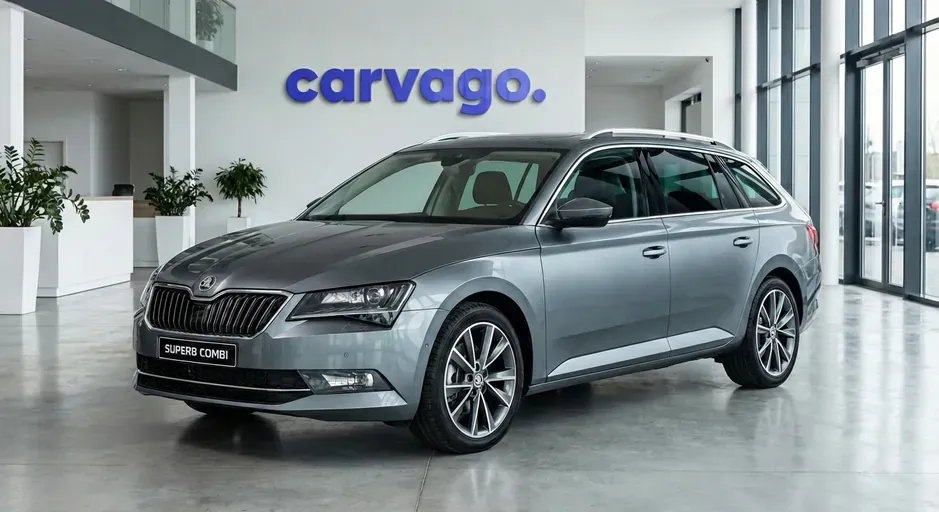
Škoda Superb

Škoda Superb

Introduction

Ford Mondeo, also known as the Ford Fusion in some overseas markets, is a traditional representative of the mid-size class that wins drivers over primarily with its excellent driving characteristics and dynamic design. Standing against it is the Škoda Superb, the flagship of the Czech carmaker, which dominates the market thanks to its unrivaled interior space, clever practical solutions, and high travel comfort. So let's take a detailed look at which of these two popular family and executive cars represents a better choice today.

Comparison of External Dimensions

When looking at the used car market for vehicles around four years old, we are talking about the fifth-generation Ford Mondeo and the third-generation Škoda Superb. Both models are among the largest representatives of the mid-size class (D-segment) and command a certain level of respect on the road with their proportions. In terms of overall length, it is an extremely close match – both cars measure just under 4.9 meters. The Mondeo, at 4,871 mm (in the liftback/sedan version), is only a negligible 2 to 10 mm longer than the Superb. When maneuvering in tight city garages, you will feel that both cars approach the five-meter mark, and they will require sufficiently large parking spaces.

The most significant differences are found in the width and height of the body. The Škoda Superb is 1,864 mm wide, making it 12 mm wider than the Ford Mondeo (1,852 mm). This fact gives the Czech representative a slightly wider and more stable stance, which also translates positively into interior airiness at shoulder level. Conversely, the Ford Mondeo is noticeably taller. Especially in the more popular and practical estate variant, the Mondeo (1,501 mm) towers over its rival from Mladá Boleslav (1,477 mm) by a significant 24 millimeters. This feature may slightly favor taller passengers, offering them more generous headroom.

The wheelbase is also an interesting parameter, as it is crucial for interior space and highway stability. The Ford Mondeo offers a wheelbase of 2,850 mm, surpassing the Škoda Superb (2,841 mm) by 9 mm. The result is the Mondeo's excellent directional stability during long highway journeys. However, thanks to brilliant space packaging, Škoda can conjure up literally royal and class-leading legroom for rear passengers even from a slightly shorter wheelbase. In the final tally, the exterior dimensions are very similar; however, the Superb bets on a wider, lower, and more aggressive silhouette, while the Mondeo benefits from a slightly longer wheelbase and a taller body structure.

Overview of Exterior Dimensions

ParameterFord Mondeo (Hatchback/Sedan)Škoda Superb (Liftback)Ford Mondeo (Estate)Škoda Superb (Combi)
Length (mm)48714861 - 486948674856 - 4862
Width (mm)1852186418521864
Height (mm)14821468 - 146915011476 - 1477
Wheelbase (mm)28502839 - 284128502841

Trunk Volume

When choosing a used mid-size car and considering family needs, the luggage compartment volume often becomes one of the most crucial parameters. Both of these vehicles are among the largest representatives in their category in terms of overall dimensions, yet they approach the use of interior space quite differently. While one model relies more on a dynamic lifestyle-oriented rear design, the other has long been the unwritten benchmark for practicality, which is invaluable when searching for the ideal family car.

Looking at the specific figures for typical four-year-old used cars (5th generation Ford Mondeo and 3rd generation Škoda Superb), the dominance of the Mladá Boleslav-based car is unquestionable. The Škoda Superb liftback offers a massive 625 litres in its basic configuration and 1,760 litres with the seats folded. If you opt for the Estate version, the capacity increases to 660 litres, or 1,950 litres after folding the rear bench. In contrast, the Ford Mondeo hatchback has a solid 550 litres (1,446 litres when folded). An interesting specific of the Mondeo is that the estate version offers a basic volume of only 525 litres up to the load cover, which paradoxically lags behind the hatchback in its basic layout. Only after fully folding the backrests does the estate's volume increase to a more useful 1,630 litres. In practice, this significant difference in total capacity means space for several extra suitcases in the Superb, which you will greatly appreciate when packing for longer trips or transporting larger items.

Modern plug-in hybrid and hybrid versions are a specific chapter today, where built-in traction batteries take up a significant portion of the cargo space. In the Škoda Superb iV, the volume drops to 485 litres for the liftback and 510 litres for the estate. However, the hybrid Mondeo suffers from a more substantial reduction – its spaciousness in the estate version falls to a very below-average 403 litres. Despite these compromises in electrified versions, it can be summarized that in standard internal combustion variants, the trunk in both cars is safely sufficient for weekend shopping and longer holidays.

ParameterFord Mondeo HatchbackŠkoda Superb LiftbackFord Mondeo EstateŠkoda Superb Estate
Basic volume (litres)550625525660
Maximum volume with seats folded (litres)1446176016301950

When it comes to pure transport capacity, the final choice in this comparison is exceptionally clear. While Ford scores with fully acceptable spaciousness, especially in the five-door hatchback, Škoda simply sets its own class standards. From the perspective of the luggage compartment, the Superb is the clear number one, and its transport limits are unlikely to catch you off guard.

Škoda is the king of haulers 👑

If maximum trunk volume is your priority, the Škoda Superb clearly outclasses the Ford Mondeo in both body styles with its enormous capacity and practicality.

Trailer Weights

Towing capacity is often a decisive parameter for drivers who need to regularly transport bulky cargo, whether it's a caravan, a boat, or just a small trailer. Looking at models roughly four years old—the fifth-generation Ford Mondeo and the third-generation Škoda Superb—surprisingly large differences in towing capacity come to light. The Škoda Superb shows overall greater variability in this discipline and offers more generous limits, making its utility wider for both family and work purposes.

While standard diesel engines in the Ford Mondeo (e.g., 2.0 EcoBlue) can pull a braked trailer weighing from 1,500 to an impressive 2,000 kg, weaker petrol versions are often limited to just 1,250 to 1,450 kg. A significant drop is represented by some eco-tuned ECOnetic versions, which are limited to a mere 400 kg. The Škoda Superb, on the other hand, is designed much more generously. For most common petrol and diesel versions, the towing capacity starts at 1,500 to 1,600 kg, and the maximum weight of a braked trailer for the top 2.0 TDI and 2.0 TSI engines reaches an excellent 2,200 kg. A completely different situation also prevails with hybrid powertrains. While the Mondeo Hybrid can only handle a modest 750 kg, the plug-in hybrid Superb iV boasts more than double the capacity at 1,600 kg.

In practice, these differences are immediately apparent. The Superb's towing capacity, even in the case of the aforementioned hybrid version, is perfectly sufficient for weekend shopping or a longer holiday with a heavy caravan in tow. Furthermore, if you lack space in the boot, a smaller trailer attached even behind the base engine will safely offer space for several extra suitcases without the car feeling overloaded. The Ford Mondeo, conversely, requires more careful selection – with the hybrid or very fuel-efficient versions, the strictly low limit restricts you to only the lightest trailers.

In summary, if towing trailers plays an important role in your life, the Škoda Superb represents a much more versatile and reliable choice, as it does not suffer from significant drops in capacity even with its alternative powertrains.
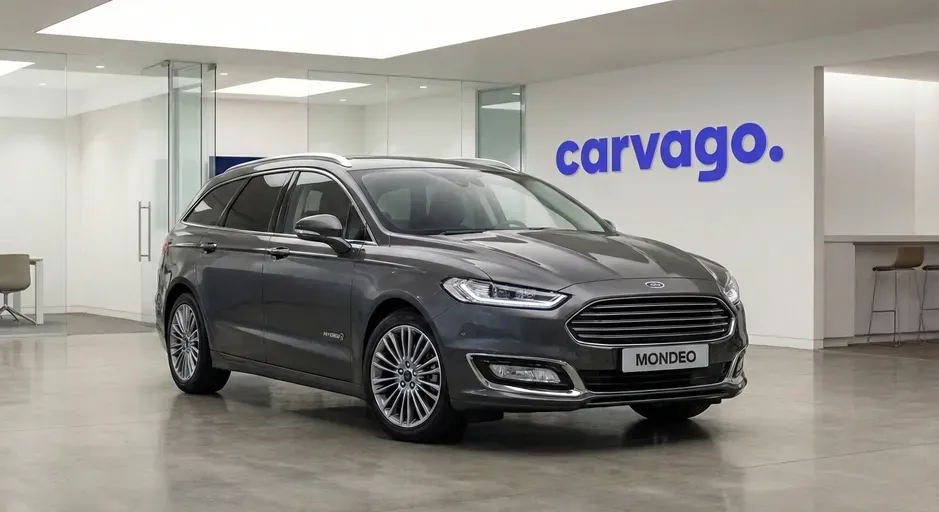
Model and engineBraked trailer (kg)Unbraked trailer (kg)
Ford Mondeo 1.5 EcoBoost (121 kW)1250 - 1450750
Ford Mondeo 2.0 EcoBlue (110 kW)1650 - 2000750
Ford Mondeo 2.0 Hybrid (103 kW)750750
Škoda Superb 1.5 TSI (110 kW)1600750
Škoda Superb 2.0 TDI (110 kW)2000750
Škoda Superb 2.0 TDI (147 kW)2000 - 2200750
Škoda Superb 1.4 TSI iV (115 kW)1600750

Overview of Most Common Motorizations

When choosing a roughly four-year-old used car, the engine ranges for the fifth-generation Ford Mondeo and the third-generation Škoda Superb differ quite fundamentally, which is of great importance to buyers in terms of fuel consumption, dynamics, and purchase costs. While Ford bets on maximum efficiency and a calm journey, best demonstrated by its full-hybrid (HEV) 2.0 Hybrid with 138 kW (which doesn't need charging from the grid) or the refined 2.0 EcoBlue diesel engine, Škoda takes the approach of a wide choice and uncompromising dynamics in its top versions. The Superb boasts powerful turbocharged 2.0 TSI petrol engines (up to 206 kW), giving it acceleration comparable to sports cars, as well as a modern plug-in hybrid (PHEV) 1.4 TSI iV, which can cover dozens of kilometers purely on electricity. Both cars, of course, offer proven diesel engines for drivers with high annual mileage. The Mondeo will make the most sense for frugal drivers looking for calm and exceptionally reliable hybrid technology for suburban commuting, or the tireless 2.0 EcoBlue highway diesel. The Superb, on the other hand, will be appreciated by those interested in a more spirited petrol drive or those for whom the combination of a powerful 2.0 TDI diesel engine and all-wheel drive—which is significantly more accessible across the range at Škoda—is key.

Ford Mondeo Engines

The engine range for the fifth-generation Ford Mondeo (with an emphasis on post-facelift cars from roughly 2019 onwards) is very rational. The basic and only purely petrol choice from the newer model years is the turbocharged 1.5 EcoBoost four-cylinder with 121 kW (165 hp). For fleets and long distances, the advanced 2.0 EcoBlue diesel was designed, offered in versions with 110 kW (150 hp) and 140 kW (190 hp). With these diesels, it was possible to choose between a manual and an eight-speed automatic, while the more powerful version could also offer 4x4 drive. The Mondeo also scores with its very economical naturally aspirated 2.0 Hybrid engine with an e-CVT planetary gearbox. If you were looking for older cars up to the 2018 model year, you would come across units that were no longer available later—for example, the 1.6 TDCi diesel, the very powerful 2.0 TDCi Bi-Turbo (unavailable from 2018), or older 2.0 EcoBoost petrol versions. The following table therefore reflects the most relevant engines for today's used car market for vehicles around four years old.

Engine typeFuelPower (kW)Torque (Nm)Transmission
1.5 EcoBoostPetrol1212426MT / 6AT
2.0 EcoBlueDiesel110 / 140370 / 4006MT / 8AT
2.0 HybridHybrid (HEV)138 (system total)173 (combustion engine)e-CVT

Škoda Superb Engines

The third-generation Škoda Superb is an absolute phenomenon in used car dealerships precisely because of the massive variability of its power units, which cover the spectrum from economical family haulers to prestigious executive cars. A popular entry point is the turbocharged 1.5 TSI petrol four-cylinder with Active Cylinder Technology (ACT) producing 110 kW (150 hp). More demanding buyers often choose the powerful 2.0 TSI units, which in their top version reach up to 206 kW and drive all four wheels as standard. The 1.4 TSI iV model also left a significant mark on the market—a plug-in hybrid offering a total system output of 160 kW with the possibility of charging the battery from the grid. Traditional highway cruisers naturally reached for the proven 2.0 TDI diesels in 110 kW and 147 kW versions. However, those interested in newer used cars should watch out for discontinued engines from the pre-facelift period: units such as the earlier 1.4 TSI (non-iV), the smaller 1.8 TSI, or the basic 1.6 TDI diesel completely disappeared from the range over the years with the arrival of stricter standards.

Engine typeFuelPower (kW)Torque (Nm)Transmission
1.5 TSI ACTPetrol1102506MT / 7DSG
2.0 TSIPetrol140 / 206320 / 4007DSG
1.4 TSI iVPlug-in Hybrid160 (system total)400 (system total)6DSG
2.0 TDIDiesel110 / 147340-360 / 4006MT / 7DSG

Purpose and heart decide 🏁

While the Mondeo impresses with its extremely economical full-hybrid that doesn't require charging and its very quiet EcoBlue diesel for long-distance travel, the Superb wins with the dynamics of its 2.0-liter petrol engines and the wide availability of 4x4 drive.

Choosing the right engine is absolutely crucial for long-term satisfaction with a car, which is why the following recommendations are based on real-world dynamics, actual fuel consumption, owner feedback, and mechanical reliability. The 5th generation Ford Mondeo and 3rd generation Škoda Superb are traditional rulers of long motorway journeys, which is clearly reflected in their engine line-ups. While Ford introduced the updated 2.0 EcoBlue diesel with very quiet operation for the Mondeo (in its final years of production until 2021), Škoda opted for extremely efficient TDI Evo generation units and newly introduced iV plug-in hybrid technology for the refreshed Superb. In the four-year-old used car market, you will encounter technically advanced power units in both cases, where it makes the most sense to go for the proven diesel classics.

For the Ford Mondeo, we recommend: 2.0 EcoBlue, 110 kW (150 hp)

This engine, which replaced the older TDCi units in 2019, is the absolute ideal for the heavy Mondeo. It offers an excellent compromise between purchase price, running costs, and dynamics, which is more than enough for safe overtaking even in a fully loaded estate.

  • Strengths and technology: The engine stands out for its top-tier soundproofing and exceptionally refined operation, with minimal noise transferred to the cabin. The 110 kW output and 370 Nm of torque provide the car with linear pull. Real-world fuel consumption in combined driving and at motorway speeds ranges between a favourable 5.5 to 6.0 litres per 100 km. It can be found with either a six-speed manual gearbox or a smooth eight-speed automatic.
  • Risks and what to watch out for:
  • Wet belt: The EcoBlue engine uses a timing belt immersed in oil. Why it matters: If prescribed oil changes are not followed or if the wrong specification is used, the belt begins to crumble and can clog the oil pickup strainer, leading to fatal engine seizure. How to detect it: Insist on a documented service history with oil changes every 15,000 km at most. If the engine whistles suspiciously at idle, it could be the belt tensioner – it requires immediate inspection.
  • DPF clogging: Like any modern diesel, it is sensitive to short trips. Why it matters: The diesel particulate filter doesn't get a chance to complete regeneration. How to detect it: On a used car, check the exhaust tips (they must be perfectly clean, without black soot) and during the test drive, watch for any fluctuations in engine RPM.
  • Who it's for: An ideal choice for drivers covering long motorway miles, families travelling long distances, and anyone who drives over 20,000 km per year. This engine is not suitable for purely urban use.

For the Škoda Superb, we recommend: 2.0 TDI Evo, 110 kW (150 hp)

For the 3rd generation Superb (especially facelifted models from 2020 onwards), the improved 2.0 TDI from the EA288 Evo family is the undisputed king of the used car market. It is arguably the most versatile and reliable engine you can have under the bonnet of this spacious cruiser.

  • Strengths and technology: The "Evo" generation brought a significant reduction in internal friction and component weight. A major innovation is the Twin Dosing technology (double AdBlue injection), which radically reduces nitrogen oxide emissions, so you don't have to worry about future emission restrictions. The engine pulls strongly from low revs (360 Nm) and excels in fascinating efficiency – with gentle driving outside the city, it's realistically possible to achieve under 5 litres per 100 km. The 7-speed DSG dual-clutch transmission works perfectly with this engine.
  • Risks and what to watch out for:
  • Coolant leaks and water pump: Although the water pump was updated for the Evo generation, it still poses a slight risk. Why it matters: A stuck water pump shroud or a slight leak can lead to engine overheating. How to detect it: Check the coolant expansion tank to see if the level is below the MIN mark, and during the test drive, monitor the temperature gauge to ensure it stays stable at 90 °C and doesn't fluctuate.
  • Condition of the DSG dual-clutch transmission: For cars with mileage around 120,000 - 150,000 km (typical for 4-year-old ex-fleet cars). Why it matters: Worn clutches or neglected transmission oil mean an expensive repair. How to detect it: The car must not jerk when pulling away. When shifting from D to R and back, the transmission should not make metallic clicking sounds or show a long delay.
  • Who it's for: A perfect companion for sales representatives, cottage owners, and large families with frequent weekend trips. While it can handle urban traffic better than older diesels, you will only appreciate its true potential and efficiency on the open road and motorway.

Real Fuel Consumption

Official fuel consumption figures provided by manufacturers often differ significantly from reality on the road. Especially with used cars, knowing what to expect in everyday traffic is much more important for a realistic assessment of future costs. To provide you with objective data, we have drawn information from the well-known crowdsourcing portal Spritmonitor.de, where thousands of drivers accurately record every refueling over the long term.

In this comparison, we focused on cars roughly four years old (approximately model years 2019–2022), specifically the proven third-generation Škoda Superb and models from the end of the fifth-generation Ford Mondeo's production.

Based on this data, our editorial team analyzed the average consumption of the most common engine variants on the used car market:

Model and engineAverage consumption (l/100 km)
Diesel engines
Škoda Superb 2.0 TDI 110 kW5.5
Ford Mondeo 2.0 EcoBlue / TDCi 110 kW6.1
Petrol engines
Škoda Superb 1.5 TSI 110 kW6.6
Škoda Superb 2.0 TSI 140 kW7.5
Ford Mondeo 1.5 EcoBoost 121 kW7.6
Ford Mondeo 2.0 EcoBoost 176 kW8.8
Hybrid engines
Škoda Superb 1.4 TSI iV (PHEV) 160 kW4.2
Ford Mondeo 2.0 Hybrid 138 kW5.6

How to interpret these trends?

A detailed look at real-world data reveals several interesting trends that debunk myths about small, economical engines:

  • Diesel victory on long hauls: Traditional two-liter diesel engines (the popular 2.0 TDI and Ford's 2.0 EcoBlue) remain unbeatable in this class. However, the Škoda Superb benefits here from exceptionally good aerodynamics and a slightly lower kerb weight. Achieving an average of 5.5 liters for such a massive family cruiser is a fantastic result, with the Mondeo trailing by just over half a liter per 100 km.
  • Small turbos aren't always the savior: Entry-level 1.5-liter petrol engines may look tempting in the brochure. However, moving relatively heavy mid-size cars takes effort, which is reflected in real-world consumption. While the Škoda 1.5 TSI can quite reliably be driven under 6.6 l/100 km, Ford's 1.5 EcoBoost unit is noticeably thirstier, typically hovering around the 7.6-liter mark.
  • Completely different approach to hybrids: Ford opted for a full-hybrid (self-charging) system that is easy to operate, doesn't need to be plugged in, and works brilliantly in city traffic jams, where it significantly reduces consumption. In contrast, Škoda introduced a plug-in hybrid with the Superb iV. This can be driven with extremely low consumption (often under 4 liters), but its efficiency stands or falls on whether you consistently plug it into the grid at home or at work.

What does this mean for your daily driving?

The choice of a specific powertrain should be 100% based on your daily routine:

  • For highway cruisers and sales reps: If you drive tens of thousands of kilometers a year and commute on highways, the two-liter diesel from either brand is an absolute safe bet.
  • For city drivers and families on shorter trips: Short trips are death for diesel particulate filters (DPF). Go for petrol. The Škoda 1.5 TSI offers significantly better savings for the family budget here than the Mondeo.
  • For tech enthusiasts and the city: If you spend your days crawling through congested city centers and live in an apartment building without charging options, the Mondeo Hybrid will serve you perfectly. However, if you have a garage with a socket at home and your commute is a few dozen kilometers, the Superb iV is a brilliant and unbeatably economical choice.

Is fuel consumption the deciding factor?

In the final tally, consumption plays a truly pivotal role in this duel. The 3rd generation Škoda Superb clearly emerges from the battle as the more economical and fuel-efficient car. Especially in the most popular standard diesel and petrol engine variants, the Czech representative will be significantly kinder to your wallet at the gas station. The Ford Mondeo lags slightly behind its rival in terms of efficiency, mainly due to its older technical architecture and overall more robust (and heavier) body construction, which even the presence of a full-hybrid alternative cannot save. Therefore, if the main key to your decision is the total TCO (Total Cost of Ownership) of the vehicle, the Škoda Superb will be the more sensible choice.

Current offers Škoda Superb

View full offer

Price Range and Used Car Offerings

When searching for a roughly four-year-old car (typically with a production year between 2021 and 2022), you will encounter completely different pricing policies for these two family and executive mainstays. The used car market clearly reflects the popularity of brands in Central Europe, which can especially benefit those looking for more affordable models.

Ford Mondeo: The King of Value for Money

Ford Mondeo ended its long European production at the beginning of 2022. Cars from the last years of production thus represent some of the youngest available used cars of their generation on the market today. The main advantage of the Mondeo is its historically steeper depreciation in the first years of operation. This makes it an exceptionally good deal from a buyer's perspective on the secondary market.

  • Common company cars: Trim levels such as Titanium with proven 2.0 EcoBlue diesels and higher motorway mileage can often be purchased well below the price of comparable competition.
  • Luxury for a fraction of the price: Even the top-tier Vignale trim with a premium leather interior or the advanced Hybrid powertrain represent very affordable luxury on the used car market.

Škoda Superb: Premium Price Tag, but a Stable Investment

The third-generation Škoda Superb (in its modernized post-facelift form) is a phenomenon. Demand for it is so huge that used cars hold their value exceptionally well. Compared to the Mondeo, buying a four-year-old Superb requires a significantly deeper reach into your pocket; however, this higher investment often pays off for owners during future resale, when the loss of value will be minimal.

  • Popular specifications: The market is dominated by popular two-litre diesel engines (2.0 TDI). Even for standard Style and Ambition versions, expect high purchase prices.
  • Most expensive pieces: Used cars in the Sportline design trim or with top-tier Laurin & Klement luxury hold their price absolutely confidently, especially if they feature 4x4 drive.

Approximate Price Comparison

For a better overview, we have prepared a comparison of the average price range for vehicles with a production year of 2021 to 2022.

Used Car CategoryFord MondeoŠkoda Superb
Basic models and higher mileage (over 120,000 km)€16,000 – €18,000€21,000 – €24,000
The golden middle ground (mileage up to 80,000 km, solid equipment)€18,000 – €23,000€25,000 – €30,000
Top-tier trims (Vignale / L&K, Sportline) and nearly new condition€23,000 – €27,000€31,000 – €37,000

Reason versus budget 💰

While the Ford Mondeo offers a huge piece of a proven car at a very favorable price thanks to rapid depreciation, the Škoda Superb requires a higher starting budget, which it will repay with excellent value retention and trouble-free resale in the future.

Safety and Euro NCAP Rating

Both the Ford Mondeo and the Škoda Superb earned the maximum five-star rating in prestigious Euro NCAP tests, making both cars an exceptionally safe choice for family purposes. However, it is necessary to view these results in the context of the time when the cars underwent testing. The methodology and protocols of the independent Euro NCAP organization are constantly evolving and becoming stricter over time, primarily with regard to the implementation of new assistance systems and the protection of pedestrians or cyclists at urban intersections. For this reason, percentage point gains from different years cannot be compared directly, as five stars from earlier years represent a slightly more lenient technical standard than the same rating awarded in later years.

The Ford Mondeo (in its fifth generation) successfully passed an updated assessment in 2019 following its facelift. Due to the more recent testing date, this model's results very well reflect the stricter standards and take into account modern pre-collision systems, such as automatic emergency braking with pedestrian and cyclist detection. In this test, the Mondeo achieved an excellent rating of 96% for adult occupant protection and 87% for child protection. Vulnerable road user protection was rated at a solid 70%, and the reliability of safety assistance systems earned 73%. The results confirm that even at the end of its European production cycle, the Mondeo maintained excellent passive and active protection for the occupants.

The third-generation Škoda Superb – the version you will most often encounter among four-year-old used cars – was last fully certified at its market launch in 2015. At the time of testing, it demonstrated excellent structural safety and earned 86% for both adult and child occupant protection. Pedestrian protection earned 71%, and assistance systems achieved a then above-average 76%. Although the validity of this rating formally expired in 2022 (which is standard procedure for older generations within the organization), the car is still considered exceptionally safe on the used car market. Furthermore, models produced after the 2019 facelift received extensive upgrades to assistance systems, such as predictive cruise control or an improved blind-spot monitoring system, which further advance active safety.

Looking at current four-year-old used cars, both models offer a robust and well-built construction that absorbs kinetic energy excellently in the event of an impact. While the Ford Mondeo can boast a more recent official test proving the effectiveness of its modernized safety assistants, the third-generation Škoda Superb after its facelift certainly does not lag behind in its safety and technological equipment and remains a safe and very reliable cruiser with many modern features for daily driving.

Euro NCAP Results Comparison

ParameterFord MondeoŠkoda Superb
Year of testing20192015
Adult occupant protection96 %86 %
Child protection87 %86 %
Vulnerable road user protection70 %71 %
Safety assistance systems73 %76 %

🛡️ Five-Star Assurance

While the Ford Mondeo builds on a more recently updated rating from 2019, the third-generation Škoda Superb, with its advanced construction and improved assistants from the facelift, offers a completely comparable, highly above-average sense of safety.

Comparison of Interesting Equipment Features

In addition to standard equipment, each of the models offers several unique features that can be decisive for the customer, with both cars taking their own and very different approach to added value.

Ford Mondeo: Driving Nature and a Smart Hybrid

  • Infotainment and Connectivity: Cars from the last years of production (around 2021) rely on the proven SYNC 3 multimedia system with an 8-inch touchscreen. It excels primarily in speed and reliable integration of Apple CarPlay and Android Auto. It also includes a built-in modem allowing the use of the FordPass app for remote vehicle access.
  • Engines and Recuperation: At the end of its European career, the Mondeo scored points with its popular full-hybrid powertrain (2.0 HEV) combined with a smooth e-CVT transmission, or traditional and economical 2.0 EcoBlue diesels. With the hybrid, you'll appreciate the clever "Brake Coach" assistant – it advises on the display how to brake as efficiently as possible to recover up to 90% of energy from otherwise lost heat back into the battery.
  • Chassis and Sound Insulation: Throughout its existence, the Mondeo maintained a reputation as one of the best-driving cars in its class. An interesting technological specialty, available on hybrid versions and top trim levels, is the Active Noise Control system. Using a set of microphones and speakers, it actively emits sound waves that cancel out engine and road noise in the cabin.
  • Smart Design and Winter Comfort: A traditional and very popular feature of the Ford family is the Quickclear heated windshield with an almost invisible mesh of wires, which is an invaluable function on frosty mornings. In terms of ergonomics, higher trim levels also offer massage and ventilated front seats.
  • Sporty and Luxury Lines: Ford managed to target its offering at different types of drivers. While the ST-Line package adds more aggressive bumpers, stiffer sports suspension, and an interior with a dark headliner and red stitching, the Vignale specification elevates the Mondeo to a premium level thanks to a specific grille, quilted leather, and generous use of chrome.

Škoda Superb: King of Space and Simply Clever Details

  • Infotainment and Onboard Technology: The modernized Superb (the so-called facelift produced from 2019 to 2023) replaced the classic dials in most used cars with a digital Virtual Cockpit with a 10.25" diagonal, which offers wide personalization options. A great feature is the wireless SmartLink and the improved Phone Box, which not only charges the phone wirelessly but also boosts its signal.
  • Engines and Drivetrain: In addition to the classic and highly sought-after TDI and TSI engines (often in combination with 4x4 drive), this generation brought a major innovation – the Superb iV plug-in hybrid. After charging from a socket, it allows a range of several dozen kilometers purely on electricity, which perfectly covers common daily commutes.
  • Adaptive Chassis: The option to pay extra for the DCC (Dynamic Chassis Control) system makes the Superb a car of two faces. Electronically controlled dampers allow a smooth transition from the maximally floating and soothing Comfort mode to a stiffer, confidence-focused Sport mode.
  • Advanced Lighting Technologies: A huge technological leap is represented by the Full LED Matrix headlights with their typical crystalline design. Using a camera behind the windshield, they detect surrounding traffic and can constantly shadow (mask) oncoming vehicles, so you can drive with high beams permanently on without dazzling others.
  • Simply Clever Details: What the Superb scores points with in daily use are small clever ideas. You'll find hidden umbrellas in the front doors, an ice scraper under the fuel filler flap, and a clever integrated funnel on the washer fluid reservoir. For long trips for families with children, the optional "Sleep Package" with fold-out side wings on the rear headrests and blankets is phenomenal.
  • Specific Versions: The used car market offers very attractive visual differentiation. While the Sportline level adorns the car with black accessories, lowered suspension, and excellent sports seats upholstered in Suedia material, the top-of-the-line Laurin & Klement (L&K) trim bets on absolute elegance, premium leathers, and the maximum available equipment.

Key Advantages and Disadvantages

Ford Mondeo

Pros

Excellent driving characteristics and an outstanding compromise between comfort and handling

Above-average cabin soundproofing even at highway speeds

More favorable purchase price on the used car market due to faster depreciation

Availability of an economical and very reliable hybrid version (2.0 HEV)

Generous interior space, especially in terms of overall interior width

Cons

More dated dashboard design and occasionally cheaper plastics in the interior

Smaller trunk capacity compared to competitors, further significantly limited in the hybrid version

Visually older and less responsive SYNC 3 multimedia system

End of production in 2022 limits the current supply of nearly-new four-year-old examples

Ford Mondeo is a great choice for drivers looking for an excellent-driving, comfortable, and quiet car for long distances at a very affordable price. Given the faster depreciation, it offers an excellent price-to-value ratio as a used car, although this is traded for an older interior concept and a smaller trunk.

Škoda Superb

Pros

Unrivaled longitudinal legroom for rear-seat passengers

Huge and exceptionally practical luggage compartment (625 liters for the liftback, 660 liters for the estate)

Very slow depreciation and huge demand on the used car market

Wide range of great engines, including reliable 2.0 TDIs and powerful 2.0 TSIs

More modern infotainment systems and a long list of practical "Simply Clever" solutions

Cons

Significantly higher purchase price on the used car market compared to the Mondeo

Less engaging driving experience with an often floatier chassis

Occasional jerking of the seven-speed DSG gearbox when crawling at low speeds

Increased risk of theft and associated higher insurance costs

Škoda Superb represents the ultimate highway cruiser and family hauler, completely dominating in the disciplines of interior space and everyday practicality. Although it requires a substantially higher initial investment, it rewards the owner with more modern technologies, a more premium feel, and excellent value retention for resale.

Common Problems and Owner Complaints

Based on long-term user experience, service reports, technical inspection records, and practical insights from our independent car condition check, we have compiled an overview of the most common problems to watch out for with these models.

Ford Mondeo

The fifth generation of the Ford Mondeo is considered an overall robust vehicle for long journeys, but even it has its weak points that need to be focused on in detail when choosing a used car.

  • Engine and exhaust system: By far the most sought-after 2.0 TDCi diesel engines are mechanically very reliable. However, if the car spent a lot of time in the city, problems with a clogged diesel particulate filter (DPF) or a clogged EGR valve often occur. Occasionally, coolant leaks around the water pump also occur.
  • Transmission: PowerShift dual-clutch automatic transmissions are more sensitive to maintenance and strictly require an oil change every 60,000 km. If this interval is neglected, there is a risk of rapid clutch plate wear, jerking when shifting, and expensive mechatronics repairs. Newer 8-speed torque converter automatics from later production years are more reliable, but can sometimes shift jerkily.
  • Chassis: Due to the higher weight of the vehicle, especially in the popular estate body style, faster wear of the rear axle silentblocks occurs. This manifests as reduced stability and play in the steering.
  • Electronics and infotainment: In older versions of the infotainment (SYNC 2), users complained about slow responses and lack of clarity. The newer SYNC 3 system is significantly better, but occasionally suffers from screen freezing, sound dropouts, or problems with Bluetooth phone pairing, which is usually only resolved by a software update.

Ford Mondeo: A robust workhorse with a sensitive automatic

The Ford Mondeo is generally a reliable mile-muncher, where it is essential to verify the regular servicing of the automatic transmission and have the condition of the chassis checked.

Škoda Superb

The third-generation Škoda Superb is a benchmark for corporate fleets and family cars, yet typical Group ailments can appear after years, which do not avoid even sister models.

  • Engine and cooling: In the popular 2.0 TDI diesel and 2.0 TSI petrol engines, water pump leaks or thermostat failures are not uncommon. In TDI engines with higher mileage, problems with AdBlue system injectors, which can crystallize, or with EGR valves also regularly appear.
  • Transmission (DSG): In the 7-speed automatic transmission with dry clutches (DQ200), which is paired with weaker engines, there is a risk of faster clutch wear and unpleasant jerking. Versions with wet clutches (DQ250 or the newer DQ381) are mechanically more durable, but if the oil was not changed every 60,000 km, mechatronics failure is a risk.
  • Chassis: The optional DCC adaptive chassis often suffers from creaking and knocking from the front axle when driving over bumps or speed bumps. Furthermore, replacing the electronically controlled shock absorbers themselves is significantly more expensive than with a standard chassis.
  • Electronics and interior: A common ailment is the creaking of interior plastics, especially around door handles, the dashboard, or a loose sunroof frame. The infotainment (Columbus or Amundsen) can suffer from spontaneous restarts, SmartLink system crashes, or parking camera failures.

Škoda Superb: A spacious classic that requires care

The third-generation Superb offers great technology and huge space, but for trouble-free operation, it requires strict adherence to DSG transmission service intervals and preventive attention to the cooling system.

Tips for Buying a Used Car

When buying a used car, a thorough inspection is key, and a professional comprehensive car inspection can save you a lot of trouble in the future. For both of these popular executive and family models, at around four years of age, there are specific details and sensitive areas you should focus on during the test drive and inspection.

When choosing a Ford Mondeo:

  • Automatic transmission behavior: In newer models with EcoBlue engines (from 2019), Ford replaced the dual-clutch Powershift with a classic eight-speed automatic with a torque converter. During the test drive, try changing modes from P to D and R – shifting must be smooth, without jerking or metallic sounds. Any delays can indicate neglected oil changes.
  • Chassis condition and bushing wear: The Mondeo is a relatively heavy car. While driving over bumps, listen for any dull thuds coming from the rear multi-link axle. A worn rear trailing arm or play in the front ball joints can degrade the car's otherwise excellent handling. A thorough physical inspection of the used car on a lift will reliably reveal these issues.
  • DPF and injection system condition in diesel engines: For 2.0 EcoBlue and older TDCi engines, pay attention to the engine's behavior after a cold start. The RPMs should not fluctuate, and the idle should stabilize quickly. If the car was driven mainly on short trips, the diesel particulate filter (DPF) may be prematurely clogged. Insist on a diagnostic check that shows the filter's regeneration history.
  • SYNC 3 infotainment responsiveness and functionality: While the SYNC 3 system is user-friendly, it occasionally suffers from freezing or loss of Bluetooth connection. During the inspection, try pairing your phone via Apple CarPlay or Android Auto, go through the menus, and check how quickly the screen and parking camera respond after shifting into reverse.
  • Smoothness of transitions in hybrid versions (HEV): If you are buying a Mondeo Hybrid variant, carefully monitor the cooperation between the two-liter naturally aspirated engine and the electric motor. Switching between pure electric and internal combustion power must be almost imperceptible while driving. Jerking or irregular operation can signal a problem with the hybrid system's control electronics or wear on the planetary gearbox (eCVT).

When choosing a Škoda Superb:

  • Smoothness of the DSG dual-clutch transmission: The Superb very often uses a seven-speed DSG transmission. During the test drive, focus on starting from a standstill on a hill and crawling in traffic. The transmission must not jerk, hesitate to downshift, or make clicking sounds. Jerking during a slow start often indicates excessively worn clutches or a malfunctioning mechatronics unit.
  • Coolant leaks in 2.0 TDI engines: In the widely used diesel engines, problems with a leaking water pump appear quite frequently. Check the coolant level in the expansion tank and look at the side of the engine block for any visible pink or white deposits from dried coolant. Ignoring this problem can lead to engine overheating.
  • Stability of the MIB3 infotainment (from 2020): The updated MIB3 system is known for its teething troubles and software bugs. Check if the system freezes, requires unnecessary restarts, and if it loads online services and navigation correctly. Always verify if the car has the latest software version installed.
  • Condition of DCC adaptive dampers: Many used Superbs are equipped with the DCC adaptive chassis. During the drive, gradually test the Comfort and Sport modes – the difference in stiffness should be noticeable. On bumps, listen for any squeaking from the front axle (a common issue with control arm bushings) and have the dampers checked for oil leaks. Replacing them is significantly more expensive than with a standard chassis.
  • Battery capacity and charging for the Superb iV (Plug-in hybrid): For the plug-in hybrid version, check the estimated pure electric range on a full charge in the trip computer, which will tell you more about battery degradation. Also, physically check the charging port connector in the front grille – the cover and the pins themselves must be completely intact, with no signs of oxidation or mechanical damage from rough handling. For peace of mind, in this case, it is worth getting an independent technical inspection of the car, which will check the exact SoH (State of Health) of the traction battery via diagnostics.

FAQ: Most Frequently Asked Questions

The Škoda Superb is the clear winner in this regard, as the estate version offers a massive 660 liters of volume compared to 525 liters for the Mondeo. For the liftback versions, the difference is also noticeable, with the Superb boasting 625 liters while the Mondeo provides 541 liters. Additionally, it is important to remember that the hybrid versions of the Ford significantly reduce the trunk space due to the battery placement.

The Ford Mondeo has long been the benchmark of the mid-size segment in terms of driving dynamics, offering excellent steering feedback and a very agile chassis. The Škoda Superb, on the other hand, is tuned more for maximum supple comfort and highway cruising, especially when equipped with the DCC adaptive suspension. For drivers who want to enjoy a more engaging drive on country roads, the Ford is the better candidate.

The Škoda Superb is famous for its unrivaled legroom for rear passengers, often surpassing even luxury cars from higher segments. While the Ford Mondeo is wider overall, which may slightly help when carrying three people side-by-side, it lags significantly behind its Czech rival in terms of longitudinal space. For long trips with adult passengers in the rear seats, the Superb is clearly the more comfortable choice.

Škoda traditionally bets on the proven and sought-after 2.0 TDI diesel engines while also offering a wide range of TSI petrol units with various power outputs. Following its last facelift, the Mondeo in Central Europe focused primarily on the fuel-efficient 2.0 EcoBlue diesels and a specific full-hybrid powertrain, with classic petrol engines gradually disappearing from the lineup. If you are looking for a powerful pure petrol engine without hybrid assistance, you will find a much wider selection with a used Superb.

In the Czech Republic, the Škoda Superb has a huge advantage in the form of a dense network of authorized and independent service centers and excellent availability of affordable spare parts. The Ford Mondeo may be slightly more attractive in terms of purchase price on the used market; however, some of its specific repairs can be slightly more expensive. Furthermore, thanks to its immense popularity, the Superb generally holds its residual value much better for eventual resale.

Conclusion: Which Model to Choose?

Sources: ADAC, lidovky.cz, forbes.cz, autosalon.tv, fdrive.cz, ceskyautoblog.cz

This article was prepared using artificial intelligence tools. The section guarantor is Petr Dušek.

Related articles

Car battle

Honda Accord vs. Volkswagen Passat: Complete comparison 2026

Detailed comparison of Honda Accord vs. Volkswagen Passat. Read real-world experiences, a detailed equipment analysis, and a clear verdict that will make your choice easier.

Oct 16, 2026

Car battle

Lexus IS vs. Volvo V60: Complete comparison 2026

Detailed comparison of Lexus IS vs Volvo V60. Discover the differences in driving characteristics, equipment, and reliability of used cars. Read our clear verdict before buying.

Oct 16, 2026

Car battle

Ford Mondeo vs. Volkswagen Passat: Complete Comparison 2026

Ford Mondeo vs. Volkswagen Passat: Detailed comparison, reviews, engines, and verdict. Find out which of these popular cars is the better choice for you.

Oct 22, 2026

We accept online card payments as well as wire transfers.

visa payment provider logovisa-electron payment provider logomastercard payment provider logomaestro payment provider logodiners-club payment provider logodiscover payment provider logo