Car battle
Toyota Camry vs. Honda Accord: A Complete 2026 Comparison
Toyota Camry vs. Honda Accord: Which sedan to choose? Our detailed comparison helps you find the right car based on key differences and our verdict.
Oct 23, 2026
Articles
Car battle
Detailed comparison of Honda Accord vs. Volkswagen Passat. Read real-world experiences, a detailed equipment analysis, and a clear verdict that will make your choice easier.
October 16, 2026
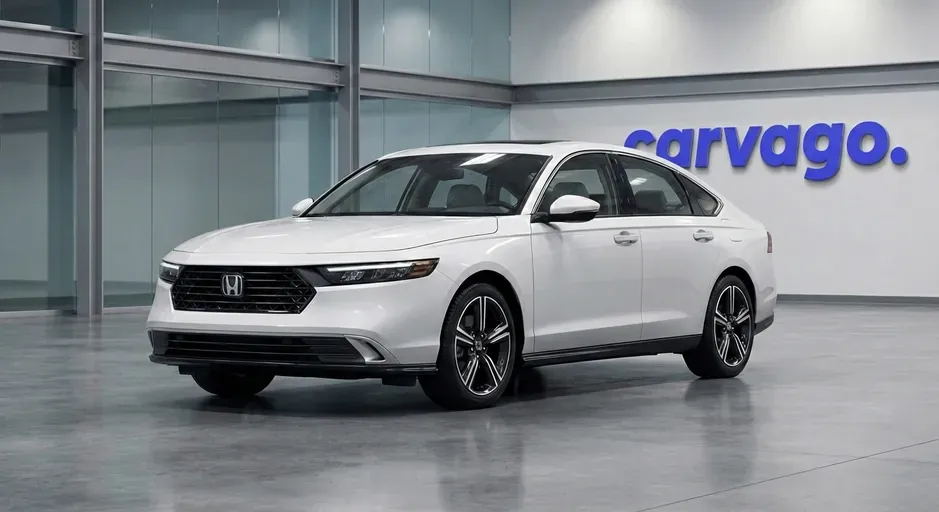
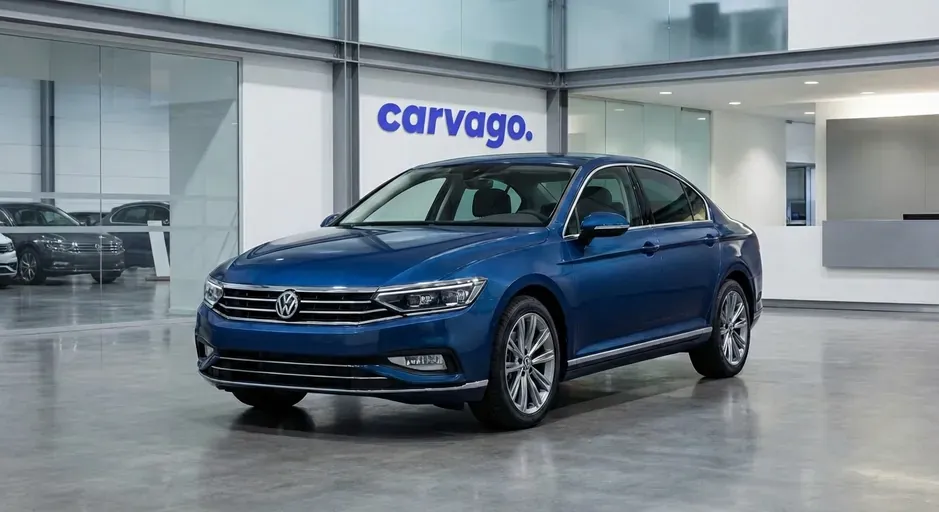
Honda Accord, also sold under the name Honda Inspire in some Asian markets, represents the Japanese vision of a dynamic and reliable mid-size car with excellent driving characteristics. In contrast, the Volkswagen Passat, also known as the Volkswagen Magotan in certain regions, has long been considered the benchmark for European practicality, superior comfort, and precise craftsmanship. In the following comparison, we will focus in detail on the most important differences between the two models on the nearly-new used car market to help you make a decision when choosing your next vehicle.
When comparing the external dimensions of these two popular mid-size representatives, it is necessary to take into account an important specific of the European market. While the Volkswagen Passat in the popular B8 generation (produced between 2014 and 2023) is an absolute staple and ranks among the most sought-after used cars around four years old, the Honda Accord officially bid farewell to European customers with its 8th generation (available until 2015). Even so, their confrontation is extremely interesting because it perfectly illustrates two completely different approaches to building a family or executive car.
Looking at the overall length and wheelbase, the Volkswagen Passat has a clear advantage. With a wheelbase reaching 2786 mm (up to 2791 mm for the GTE plug-in hybrid version), it surpasses the Accord with its 2705 mm by a very noticeable 8 centimetres. In practice, this means significantly more legroom for rear-seat passengers and overall better longitudinal spaciousness, making the Passat an uncompromisingly more comfortable motorway cruiser for an adult crew. The Passat's body itself is also about 40 to 50 mm longer depending on the chosen variant.
On the other hand, the Honda Accord benefits from its sportier and more emotional focus. Surprisingly, it is 8 mm wider than the Passat (1840 mm versus 1832 mm) while maintaining a lower overall profile. The sedan body of the Honda measures only 1440 mm in height, giving the car a visually very dynamic and more "crouched" stance on the road with a lower centre of gravity. The Volkswagen Passat Estate (Variant), by contrast, grows in height up to 1521 mm, which, while detracting from its sporty appearance, brings a clear advantage when loading bulky luggage and provides passengers with more headroom. So, if you are looking for a compromise between driving passion and style, the wider Accord will please you, while the Passat remains an unbeatable master of efficient use of space for pragmatic buyers.
| Parameter | Honda Accord Sedan | Volkswagen Passat Sedan | Honda Accord Estate | Volkswagen Passat Estate |
|---|---|---|---|---|
| Length (mm) | 4725 | 4767 - 4775 | 4750 | 4767 - 4773 |
| Width (mm) | 1840 | 1832 | 1840 | 1832 |
| Height (mm) | 1440 | 1456 - 1483 | 1470 | 1477 - 1521 |
| Wheelbase (mm) | 2705 | 2786 - 2791 | 2705 | 2786 - 2791 |
When choosing a used executive or family car, trunk capacity often plays a decisive role. Although the Honda Accord ceased sales on the European market with the end of its eighth generation (around 2015), it remains an attractive alternative on the used car market to the popular Volkswagen Passat B8 generation, whose production began exactly in the years when the Accord was ending in Europe. While the Passat is traditionally considered the uncrowned king of interior space and practicality, Honda focused primarily on dynamic design for its model, which took a toll on the actual trunk size.
The differences in the official figures for both models clearly show two different approaches to space utilization:
From a practical standpoint, the Passat easily provides space for several extra suitcases. It is an ideal choice for families with small children, as it easily swallows an unfolded stroller along with all the gear necessary for a longer vacation. The Honda Accord's trunk is, of course, sufficient for weekend shopping or a shorter trip, but for bulkier items, it requires much more discipline when packing. It is also important to mention the Passat GTE plug-in hybrid version. Here, the installation of traction batteries in the floor reduces the basic capacity to 483 liters for the Variant version and 402 liters for the sedan. The eighth-generation Honda Accord with conventional engines does not suffer from a similar loss of liters.
| Parameter | Honda Accord Sedan | Volkswagen Passat Sedan | Honda Accord Tourer | Volkswagen Passat Variant |
|---|---|---|---|---|
| Basic capacity (liters) | 467 | 586 | 406 | 650 |
| Max. capacity with seats folded (liters) | Not specified | 1,152 | 1,252 | 1,780 |
The Volkswagen Passat B8 offers absolutely unrivaled transport capacity, while the Honda Accord prioritizes a dynamic look at the expense of moving the maximum amount of cargo.
When it comes to towing power and trailer connection options, there are fundamental differences between the two cars that active drivers and lovers of family caravan holidays should especially consider. Given that sales of the Honda Accord on the European market ended with the 8th generation (available until 2015), we are comparing this car with the significantly more modern Volkswagen Passat of the popular B8 generation (produced until 2023), which you can commonly find on the four-year-old used car market. This age difference is also reflected in the structural and weight limits themselves.
Standard petrol versions of the Honda Accord can safely tow a braked trailer weighing 1500 to 1600 kg. If you need to get the absolute maximum out of this Japanese sedan or estate, you have to go for the more powerful 2.2 i-DTEC diesel engine, which pushes the towing limit to exactly 1700 kg. The Volkswagen Passat, on the other hand, is a born workhorse. While its basic power units (such as the 1.4 TSI or 1.6 TDI) start at a similar 1500 kg, the more powerful two-litre models (e.g., 2.0 TDI SCR or 2.0 TSI) push the maximum towing capacity up to a confident 2200 kg.
Differences can also be found in the range of alternative drives, which are becoming increasingly important in the used car market. The Honda Accord in its eighth generation did not offer a hybrid powertrain in Europe at all. The Volkswagen Passat, on the other hand, provides the popular GTE plug-in hybrid version. However, it is necessary to keep in mind that due to very heavy batteries and the protection of a more complex powertrain, this version has a braked trailer capacity reduced to 1600 kg.
In practice, these figures clearly show that the Honda Accord is perfectly sufficient for weekend transport of building materials on an unbraked trailer (where the limit for the Accord is set at only 500 kg) or for towing a lighter boat and a smaller caravan. On the other hand, if your goal is to hitch up a heavy twin-axle caravan or a spacious horse trailer, the Volkswagen Passat will provide you with an incomparably larger power reserve and better overall stability of the combination. Furthermore, with an unbraked trailer, most versions of the Passat can handle up to the maximum legal limit of 750 kg.
If you are considering frequent towing of heavier loads, the Volkswagen Passat becomes the clear and much more versatile winner, perfectly prepared for the role of a "workhorse". The Honda Accord will certainly serve you well for occasional and weight-undemanding tasks, but the limits of the older design are simply noticeable here.
| Model and motorization | Braked weight of trailer (kg) | Unbraked weight of trailer (kg) |
|---|---|---|
| Honda Accord 2.0 i-VTEC (8th generation) | 1500 | 500 |
| Honda Accord 2.4 i-VTEC (8th generation) | 1600 | 500 |
| Honda Accord 2.2 i-DTEC (8th generation) | 1700 | 500 |
| Volkswagen Passat 1.4 TSI / 1.5 TSI (B8) | 1500 - 1600 | 710 - 750 |
| Volkswagen Passat 2.0 TDI (B8) | 1800 - 2200 | 750 |
| Volkswagen Passat GTE Plug-in Hybrid (B8) | 1600 | 750 |
The selection of engines for the Honda Accord and Volkswagen Passat models represents a clash of two completely different automotive eras and technological philosophies. This contrast is fundamental, especially if you are searching the market for a car approximately four years old. While the Volkswagen Passat B8 generation (introduced in 2014 and significantly updated in 2019) is a showcase of the modern era with a wide range of highly efficient powertrains, the Honda Accord officially left the European market back in 2015 (8th generation). As a result, you simply cannot buy a four-year-old used Honda Accord here, and buyers must limit themselves to significantly older vehicles. Volkswagen confidently dominates today's market for younger used cars with sophisticated 2.0 TDI diesels, powerful 2.0 TSI petrol units, and eco-friendly plug-in hybrids. Although the Japanese automaker cannot technologically compete with its rival in the field of modern fuel-saving systems, it has left a huge mark on the used car market in the form of legendarily reliable old-school units with robust mechanicals.
If you have your eye on a Honda Accord, you will have to focus on older 8th generation cars (manufactured until 2015), where production in Europe ended for good. There is a complete lack of engines relevant to four-year-old and newer used cars, which severely limits the choice compared to the Passat. The offering was very sparse by both then and today's standards, but renowned for its absolutely bulletproof mechanical durability. The base was a naturally aspirated 2.0 i-VTEC petrol engine with 115 kW. Significantly more aggressive and highly valued by drivers was the 2.4 i-VTEC engine with 148 kW. These units did not have any turbocharger, so power had to be extracted at higher revs for active driving. This classic was complemented by a fantastically soundproofed and refined all-aluminum 2.2 i-DTEC diesel four-cylinder, standardly tuned to 110 kW. More demanding drivers could seek out the even sharper Type S (180) version, which extracted 132 kW and 380 Nm from the same diesel block. While the diesel units were a reliable option with excellent fuel consumption, neither mild-hybrid nor plug-in hybrid versions existed here. Power was transmitted exclusively to the front axle by exceptionally precise six-speed manual transmissions, or optional (though slower by today's standards) five-speed automatics with a torque converter.
| Engine type | Fuel | Power (kW) | Torque (Nm) | Transmission |
|---|---|---|---|---|
| 2.0 i-VTEC | Petrol | 115 | 192 | 6MT / 5AT |
| 2.4 i-VTEC | Petrol | 148 | 234 | 6MT / 5AT |
| 2.2 i-DTEC | Diesel | 110 | 350 | 6MT / 5AT |
| 2.2 i-DTEC 180 | Diesel | 132 | 380 | 6MT |
The situation with the Volkswagen Passat is diametrically different, and it is precisely its B8 generation (along with the facelift) that today unwaveringly reigns over the market for young used cars. The model range shows immense sophistication for practically any customer profile. The standard in the petrol spectrum since the facelift is the technologically advanced 1.5 TSI unit with 110 kW, which features active cylinder deactivation and is suitable mainly for calmer highway travel or suburban traffic. However, those who demand a top level of dynamics can easily acquire the petrol flagship 2.0 TSI (tuned up to 206 kW), which automatically transforms the car into a very fast machine paired with all-wheel drive. The true hero of fleets and long routes remains the popular 2.0 TDI diesel four-cylinder – it offers a perfectly sufficient 110 kW in its base form, while significantly more powerful 140 kW derivatives and the rarer BiTDI with a massive 176 kW of power and 500 Nm of torque are also in circulation. The Passat has not fallen behind in terms of current ecological trends either, as evidenced by the GTE version – a brisk and sophisticated plug-in hybrid whose internal combustion engine, in cooperation with an electric motor, gives a combined output of 160 kW. Regarding the drivetrain and transmissions, even after four years, the Passat easily satisfies drivers insisting on a precise six-speed manual, but sales are clearly driven by the brilliant, smooth-shifting DSG dual-clutch gearbox along with the popular and reliable 4MOTION all-wheel drive for more powerful specifications.
| Engine type | Fuel | Power (kW) | Torque (Nm) | Transmission |
|---|---|---|---|---|
| 1.5 TSI | Petrol | 110 | 250 | 6MT / 7DSG |
| 2.0 TSI | Petrol | 140 / 200 / 206 | 320 / 350 / 400 | 7DSG |
| 1.6 TDI | Diesel | 88 | 250 | 7DSG |
| 2.0 TDI | Diesel | 110 / 140 / 147 / 176 | 340 / 400 / 500 | 6MT / 7DSG |
| 1.4 TSI GTE | Petrol / Electric | 160 (system) | 400 (system) | 6DSG |
While the Volkswagen Passat appeals to rational buyers of current used cars with an inexhaustible range of efficient diesels and modern automatics, the Honda Accord, long unavailable on the market, remains a secret tip for an exceptionally reliable (though older) classic with robust mechanicals for conservative drivers.
Choosing the right engine is crucial for long-term satisfaction with a car, and our recommendations are based on performance, real-world fuel consumption, owner feedback, and documented mechanical reliability. When comparing these two legendary models, we encounter one very interesting and fundamental fact that clearly emerges from market availability data: while you can easily find a Volkswagen Passat (generation B8 and the newer B9) as an ideal, approximately four-year-old used car, the Honda Accord definitively ended its journey on the European market with the 8th generation in 2015. Those interested in the Japanese car must therefore target older vehicles, which, thanks to the phenomenal manufacturing quality of the Japanese brand, does not necessarily mean a step in the wrong direction. The Passat, on the other hand, offers the most modern and highly efficient power units at around four years of age.
The 2.0-liter naturally aspirated four-cylinder petrol engine is the absolute benchmark for reliability for the 8th generation Accord and the most rational choice. This engine stands out with its beautifully linear power curve, surprising willingness to pull from mid-range revs, and real-world combined fuel consumption that, with a light foot, hovers around an excellent 7.5 liters per 100 km. Its main technical advantage is simplicity – you won't find sensitive turbochargers or complicated direct injection here, so the engine does not suffer from dangerous carbon buildup. However, when inspecting a used example, watch out for oil consumption. In cars where owners neglected oil changes, piston rings can become stuck. Always check the oil dipstick and watch for bluish smoke from the exhaust during a cold start (or sharp revving), which would indicate lubricant entering the combustion chamber. Also, look through the service history for regular valve clearance adjustments (roughly every 40,000 km), which is crucial for the refined operation of i-VTEC engines. This unit is best suited for urban and suburban users with a calmer driving style, for whom modern diesels would only bring expensive worries on short trips.
For an approximately four-year-old Volkswagen Passat (B8 generation after the facelift), the uncrowned king of the range is the 110 kW 2.0 TDI diesel. This engine represents the perfect compromise between agility, everyday practicality, and phenomenal efficiency – on highway trips, consumption can reliably drop to the 4.5 to 5.0 liters per 100 km mark. Meanwhile, the massive 340 Nm of torque ensures safe overtaking even in a fully loaded car. Modern versions of these engines (EA288 EVO series) have already been cured of their teething troubles; however, the main enemy remains predominantly urban traffic. This prevents proper regeneration of the diesel particulate filter (DPF) and can lead to system clogging. To prevent this, simply take the engine regularly for longer highway drives where the exhaust system can naturally burn off the soot. During the test drive, monitor the coolant behavior and its possible loss – a leaking water pump is an occasional nuisance. Furthermore, pay attention if the car vibrates or jerks during smooth acceleration from low revs; this is often a signal of a worn dual-mass flywheel (especially in combination with the DSG gearbox), the replacement of which is not the cheapest. This engine is built specifically for drivers who swallow long highway stretches and those who want to cross half of Europe on a single tank.
When choosing a used car, there is often a vast difference between the consumption figures stated by the manufacturer and what the trip computer shows in real-world traffic. To achieve the most accurate comparison possible, we used data from the independent community portal Spritmonitor.de, where thousands of regular drivers share their long-term refueling records. Since we are primarily targeting the used car market with an age of around 4 years, for the Volkswagen Passat we focused on the widely represented and modern B8 generation. Conversely, for the Honda Accord, we must take into account that its sales on the European market ended with the 8th generation in 2015. We are thus comparing a modern four-year-old used car with an older, yet still very popular and reliable representative of the Japanese school on the market.
| Model and engine | Average consumption (l/100 km) |
|---|---|
| Volkswagen Passat 2.0 TDI 110 kW (B8) | 5.4 |
| Honda Accord 2.2 i-DTEC 110 kW (8th gen.) | 6.1 |
| Volkswagen Passat 1.5 TSI 110 kW (B8) | 6.4 |
| Honda Accord 2.0 i-VTEC 115 kW (8th gen.) | 7.5 |
| Volkswagen Passat 2.0 TSI 140 kW (B8) | 7.8 |
| Honda Accord 2.4 i-VTEC 148 kW (8th gen.) | 8.8 |
Looking at the real data, trends based on the technological and age difference between the two models are clearly visible. Diesel engines traditionally score with the most favorable values. The modern Passat B8 with the class benchmark, the 2.0 TDI engine, typically averages around 5.4 liters per 100 km, making it a fantastic fuel-efficient cruiser. The older, though extremely reliable 2.2 i-DTEC diesel unit in the Honda Accord, asks for a bit more – an average of 6.1 l/100 km. This is clearly due to the overall older design and different aerodynamics of the car.
Among the petrol units, the efficiency of VW's turbocharged engines is surprising. While the relatively small 1.5 TSI four-cylinder runs in the spacious Passat with a real average of 6.4 liters without much effort for an "eco-rally", for the Honda Accord, the now rare but popular naturally aspirated engines take the lead. The basic 2.0 i-VTEC petrol two-liter needs an average of 7.5 liters for its life, while the larger 2.4 i-VTEC version uncompromisingly attacks the 9-liter mark. Downsizing in the form of small turbocharged engines can indeed significantly save fuel in normal and suburban traffic, although this advantage may be partially erased at a sharp highway pace or with a fully loaded car.
What does this mean for the typical user?
Overall, fuel consumption is a crucial factor when comparing these two cars. The Passat benefits massively here from its technology, which is several years newer, and proves that the evolution towards reducing operating costs works. However, those primarily concerned with pure durability who don't mind paying extra for fuel in exchange for the legendary robustness of a Japanese car will find an excellent companion in the older but durable Accord, even with slightly higher consumption.
When looking at the market for roughly 4-year-old used cars (2021–2022 models), we encounter completely different market realities. While the Volkswagen Passat (B8 generation facelift) is a long-standing staple of European roads and one of the most affordable used executive cars on the market, the Honda Accord (10th generation) represents a rare and often much more expensive choice for buyers, typically arriving via individual import.
| Model (2021–2022 models) | Starting price of used car (€) | Price of premium units (€) | Typical origin of used car |
|---|---|---|---|
| Volkswagen Passat (B8) | ~ €14,000 | ~ €27,000 | Europe (often corporate fleets) |
| Honda Accord (10th gen) | ~ €25,000 | ~ €33,000+ | Individual import (typically USA / Asia) |
If you are looking for the maximum ratio of price, modern equipment, and ease of service, the used Passat wins overwhelmingly due to its huge supply, while the very rare and more expensive 10th generation Accord will appeal more to die-hard automotive enthusiasts.
Both cars have an excellent reputation and have achieved numerous safety awards throughout their history, including five-star crash test ratings. However, when evaluating modern used cars, it is important to view safety ratings in the context of time. Euro NCAP testing protocols are constantly evolving and becoming significantly stricter. In recent years, new simulations of complex frontal and side impacts, intersection emergency situations, and sophisticated pedestrian and cyclist detection have been added to the evaluation. Therefore, percentage results obtained in different years cannot be simply compared – a car that earned five stars ten years ago would likely not achieve the maximum rating under today's requirements for active safety and assistance systems.
If you are looking for a Honda Accord on the market comparable to a four-year-old used car (referring to the tenth or upcoming eleventh generation), you will encounter a European peculiarity. The automaker withdrew the Accord model from major EU markets, and therefore Euro NCAP has not officially tested it at all in recent years (the last available test was in 2009 for the eighth generation, which is irrelevant for comparing today's used cars). This does not mean, however, that the car is not safe. From the perspective of global institutions, the Accord possesses an exemplary level of safety – for example, in the strict American IIHS tests, it received the highest prestigious Top Safety Pick+ award, and it also earned a full star rating from the Asian ASEAN NCAP measurements. Furthermore, the car is exceptionally equipped with the advanced Honda Sensing suite of assistants. Due to the lack of a modern test according to the current Euro NCAP methodology, European percentage data for the Honda Accord model is not available, and therefore we do not list any values for it in the table.
Unlike its Japanese competitor, the Volkswagen Passat is a mainstay that Euro NCAP carefully attends to with the launch of every generation. Although for roughly four-year-old used cars we are mainly talking about the popular B8 generation (whose excellent safety structure earned five stars in 2014, though from today's perspective this is an older certification), the automaker demonstrated current technological standards in the most recent tests. The new generation (B9) tested in 2024 faced the strictest Euro NCAP protocols and walked away with 5 stars with absolute ease. An excellent level is shown particularly in adult occupant protection with an incredible 93% and a solid 87% child occupant protection. Modern assistance features rated at 80% also play a major role in the currently valid five-star standard, including advanced Car2X infrastructure communication, intersection turn assist, or autonomous braking for cyclists (82% in the vulnerable road users category).
While the Honda Accord proves its top-tier construction and advanced systems on the international stage and in markets outside Europe, the Volkswagen Passat offers a clear and tangible safety guarantee confirmed by the most modern and toughest local methodology. If you require precisely measured and verifiable test data according to current European standards for your car, the Passat represents a much clearer and more "exact" choice.
| Parameter | Honda Accord | Volkswagen Passat |
|---|---|---|
| Year of testing | Not tested (in the EU) | 2024 |
| Adult occupant protection | - | 93% |
| Child occupant protection | - | 87% |
| Vulnerable road users protection | - | 82% |
| Safety assist systems | - | 80% |
While the Honda Accord excels in overseas safety statistics, a used Volkswagen Passat provides the European buyer with a more tangible guarantee thanks to continuously verified standards and excellent results in the latest and strictest Euro NCAP tests.
In addition to standard equipment, each of these models offers several unique features and innovations that change the daily experience of living with the car. Each automaker relies on a completely different approach to added value, which is reflected not only in the technology but also in the overall concept of comfort and design.
The tenth generation of the Honda Accord, which forms the core of the slightly used car market, relies on an aerodynamic fastback body and sophisticated technical solutions that will be especially appreciated by drivers oriented toward the driving experience.
The B8 generation after its modernization (the so-called facelift) is the benchmark of the European mid-size class. With this model, Volkswagen has honed ergonomics to perfection and added technologies that were until recently reserved only for the premium segment.
Excellent driving characteristics with precise steering and a sporty feel
Very spacious cabin, especially above-standard legroom in the rear seats
Reliable and efficient powertrains (including a very successful hybrid version)
High residual value and legendary mechanical durability
Ergonomic interior with clear controls and retention of physical buttons for the air conditioning
Absence of a practical estate body style, which limits trunk variability
Poorer chassis soundproofing and more noticeable road noise from the wheels at highway speeds
Lower driving position and poorer rear-quarter visibility may not suit everyone
Very limited availability on the European used car market (often individual imports)
The Honda Accord is an ideal choice for drivers who want to enjoy a bit of dynamics and fun behind the wheel without sacrificing interior space and daily usability. Its exemplary reliability and well-tuned engines make it a car that will serve long-term with minimal issues, albeit at the cost of a missing estate body style and the need to look more on the imported car market.
Available as an exceptionally practical and popular estate (Variant) with a huge trunk
High-quality interior workmanship with a premium feel and top-notch ergonomics
Wide range of economical diesel engines (TDI), which are perfect for long highway journeys
Great cabin soundproofing and high ride comfort even on poorer roads
Advanced and reliable assistance systems (e.g., Travel Assist) making driving easier
Very conservative exterior and interior design, which can appear inconspicuous or even boring
The DSG dual-clutch automatic transmission can occasionally jerk when crawling in traffic jams
Significantly higher costs for authorized service and maintenance of more complex systems
Software glitches and occasional freezing of the infotainment (especially in versions with the MIB3 system after the facelift)
The Volkswagen Passat represents the uncrowned king of the European mid-size class, impressing primarily families and corporate fleets looking for maximum practicality, comfort, and economy. The Variant version offers unrivaled carrying capacity, and although it is not among the most fun to drive, it excels in overall refinement and unwavering highway composure.
Based on our own breakdown statistics, service reports, recall data, and insights from CarAudit, we have compiled an overview of the most common problems you should watch out for with these approximately four-year-old used cars.
The tenth-generation Honda Accord is generally considered a very reliable car; however, even it exhibits specific faults associated primarily with electronics and certain powertrains.
Overall, the Japanese sedan is above-average in reliability, provided you keep an eye on regular servicing, timely oil changes, and thoroughly check the condition of the air conditioning.
The Volkswagen Passat (B8 generation after the facelift) benefits from years of technical refinement, yet we record several typical weaknesses that only a physical inspection of the car can reveal.
The Passat is a very solid motorway mile-muncher, for which, however, a documented service history and proper maintenance of the DSG dual-clutch transmission are critically important.
When buying a used car, a thorough inspection is key, and it always pays to rely on a professional physical inspection of a used car. Here are some specific points to focus on for these two models during a test drive and inspection.
Volkswagen Passat offers a significantly larger luggage compartment, especially in the sought-after estate version (Variant), which holds up to 650 liters. The Honda Accord is sold exclusively as a sedan, and its 473-liter trunk naturally falls behind the Passat. If you often transport bulkier cargo or travel with your family, the Passat is a much more practical choice.
The Honda Accord has long maintained an excellent reputation for overall reliability, both with gasoline and hybrid powertrains. With the Volkswagen Passat, more attention needs to be paid to the maintenance history, especially regarding DSG automatic transmissions and more complex electronic systems. Generally, the Accord is considered a vehicle with a slightly lower risk of expensive faults on the used car market.
Both cars can be very economical, but each targets a different type of driving. The Honda Accord excels in its hybrid version, which is exceptionally efficient and economical, especially in city and suburban traffic. The Volkswagen Passat, on the other hand, excels on long highway journeys thanks to its legendary fuel-efficient TDI diesel engines.
The Honda Accord is more engaging to drive, offering more communicative steering, a lower center of gravity, and an overall sportier suspension setup. The Volkswagen Passat, by contrast, focuses on maximum passenger comfort, smoothness on rough roads, and top-tier cabin soundproofing. The choice thus depends on whether you prefer dynamics and feedback behind the wheel, or rather effortless highway comfort.
The interior of the Volkswagen Passat relies on a conservative design but excels with top-tier ergonomics, a logical layout of elements, and high-quality fit and finish of premium materials. The Honda Accord provides slightly bolder dashboard shapes and offers surprisingly more legroom for rear-seat passengers. Among roughly four-year-old used cars, the Passat tends to have slightly more advanced infotainment options and a wider range of optional driver assistance systems.
Sources: ADAC, aktualne.cz, svetmotoru.cz, dopravniinfo.cz, fdrive.cz, automotorsport.cz
This article was prepared using artificial intelligence tools. The section guarantor is Petr Dušek.
Toyota Camry vs. Honda Accord: Which sedan to choose? Our detailed comparison helps you find the right car based on key differences and our verdict.
Oct 23, 2026
Detailed comparison of used Mazda 6 vs. Škoda Superb. We reveal real-world experiences, fuel consumption, and spaciousness, and provide a clear verdict to help you make the right choice.
Apr 2, 2026
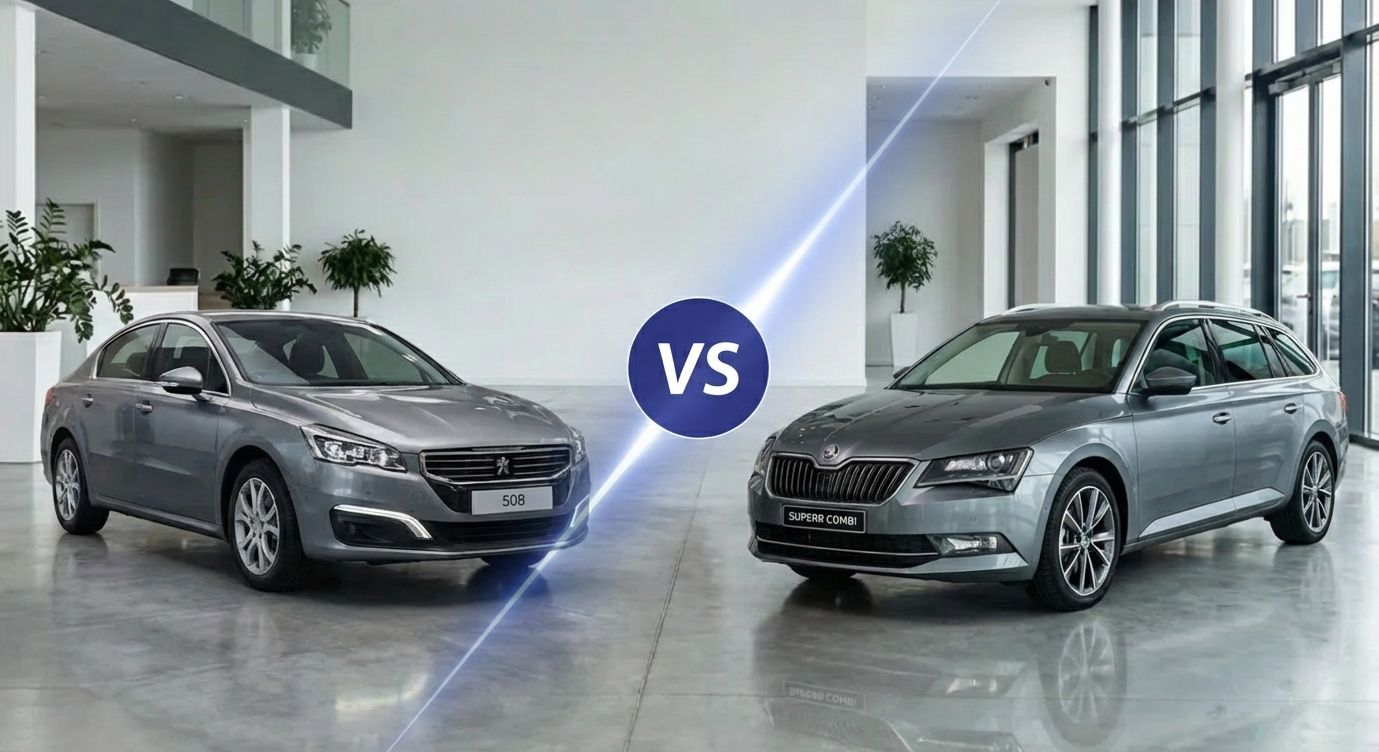
Peugeot 508 vs. Škoda Superb: Detailed comparison, real-world experiences, and the verdict to help you choose the best executive car.
Oct 23, 2026