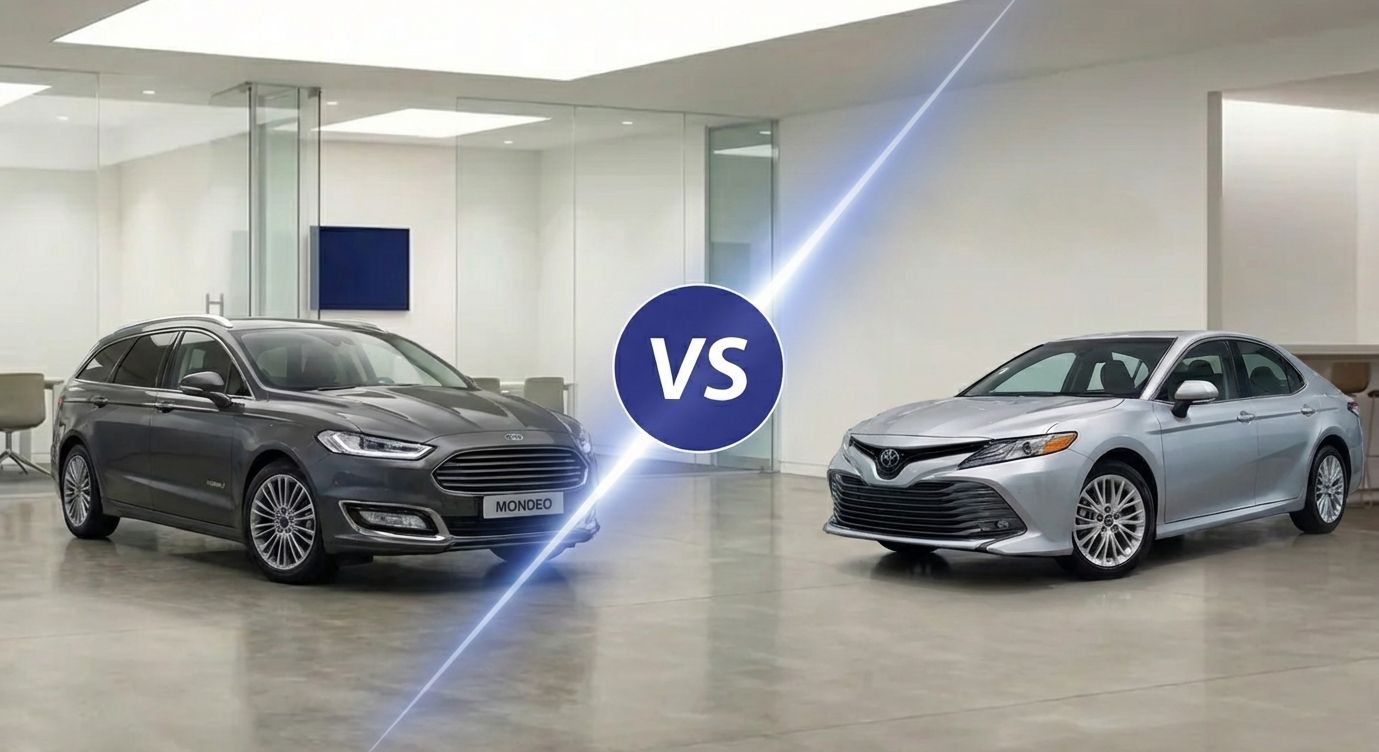
Car battle
Ford Mondeo vs Toyota Camry: Complete Comparison 2025
Ford Mondeo vs. Toyota Camry: Detailed comparison, tests, data, and verdict. Find out which sedan is the best choice for you on the used car market.
Apr 13, 2026
Articles
Car battle
Toyota Camry vs. Honda Accord: Which sedan to choose? Our detailed comparison helps you find the right car based on key differences and our verdict.
April 13, 2026
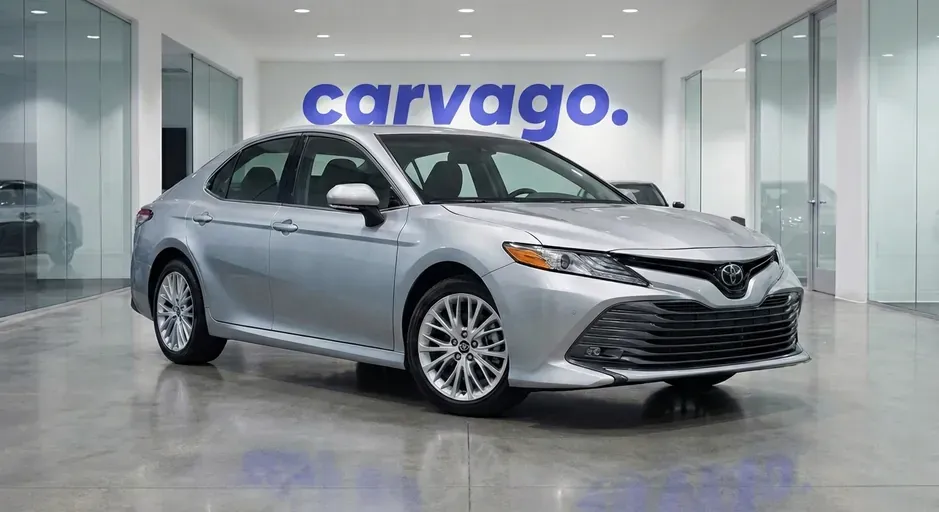
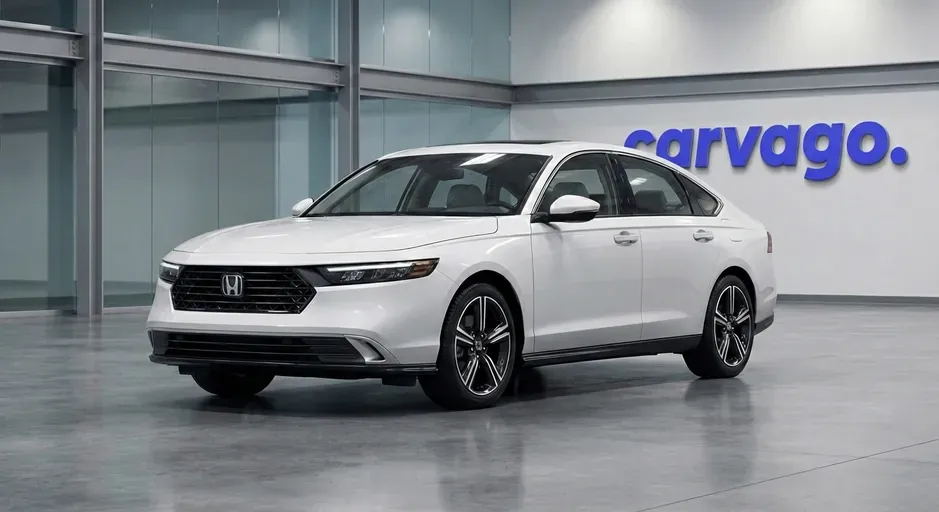
The Toyota Camry, known for years in some regions as the Daihatsu Altis or Toyota Aurion, has long been a pillar in the mid-size sedan segment, prized for its reliability and comfort. Standing against it is the Honda Accord, also known as the Honda Inspire for some generations in Japan and China, which has built a reputation for its sportier character and excellent driving dynamics. This article takes a detailed look at both of these iconic models, comparing their key features to help you decide which one is right for you.
The Toyota Camry and Honda Accord are traditional rivals in the large sedan segment, and their dimensions only confirm this. Although both cars have a majestic presence on the road and offer generous interior space, a closer look at the numbers reveals small but significant differences. These distinctions can affect everything from manoeuvrability in the city to interior comfort for the occupants.
When comparing the generations relevant to the used car market, specifically the Toyota Camry (XV70, from 2019) and the Honda Accord (10th generation, from 2018), we find that both cars are very similar in length and height. At 4885 mm, the Toyota Camry is a negligible 3 mm longer than the Accord. The difference in height is similarly minimal. However, the key difference is in the width and wheelbase. The Honda Accord is a noticeable 22 mm wider, which can have a positive effect on the feeling of spaciousness in the interior, especially in the shoulder area. The Accord's longer wheelbase of 5 mm, in turn, theoretically promises a slightly smoother ride on the motorway.
In practice, these differences mean that while both cars are very similar in their space requirements, the Accord may feel a bit more planted and stable. Conversely, the Camry's slightly narrower body can be a small advantage when weaving through narrow city streets or parking in tight garages. The choice between them in terms of dimensions thus depends on the driver's preferences – whether they prefer maximum interior width or a slightly more compact footprint.
| Parameter | Toyota Camry Sedan | Honda Accord Sedan |
|---|---|---|
| Length (mm) | 4885 | 4882 |
| Width (mm) | 1840 | 1862 |
| Height (mm) | 1445 | 1450 |
| Wheelbase (mm) | 2825 | 2830 |
Practicality and luggage space are key in large sedans, and this is where one of the biggest differences between the Toyota Camry and the Honda Accord emerges. If boot volume is a priority for you, for example, for family holidays or transporting bulkier loads, the Toyota Camry offers significantly more space and is the clear winner in this contest.
The Toyota Camry XV70 generation (on sale from around 2019) has a generous 524 litres of boot space in the hybrid version, which dominates the European used car market. This is a figure that surpasses many competitors and is even close to estate cars a class below. This volume is comfortably sufficient for the luggage of an entire family on a longer holiday.
In contrast, the tenth-generation Honda Accord (produced approximately from 2017–2022) offers a boot with a volume of 473 litres. Although this is still a decent and perfectly adequate figure for everyday use, the difference of more than 50 litres in favour of the Toyota is noticeable in practice. It means space for one extra small suitcase or several bags. Of course, the rear seats can be folded down in both models to transport longer items, but the basic volume speaks clearly in favour of the Camry.
| Parameter | Toyota Camry Sedan | Honda Accord Sedan |
|---|---|---|
| Basic volume (litres) | 524 | 473 |
| Max. volume with seats folded (litres) | N/A | N/A |
The ability to tow a trailer is diametrically different between these two sedans and can be a deciding factor for many buyers. While the older Honda Accord was a versatile and practical car in its day, the modern hybrid Toyota Camry completely omits this option, which fundamentally changes its usability for those who need to transport larger loads.
The modern Toyota Camry XV70 generation (on sale since 2019) is available exclusively with a 2.5 Hybrid powertrain. This specification has a maximum braked and unbraked trailer weight set at 0 kg from the factory. In practice, this means the car is not approved for towing any kind of trailer. The reason is to protect the complex hybrid system. For owners who never tow anything, this is not a problem, but for anyone who might want to attach even a small trailer with building materials or a boat, the Camry is unfortunately completely unsuitable.
On the other hand, the Honda Accord, whose last European 8th generation was sold until 2015, offered much more in this regard. Depending on the engine, it could pull really heavy loads. The petrol versions could handle a braked trailer weighing from 1500 kg (2.0 i-VTEC engine) to 1600 kg (2.4 i-VTEC). The diesel 2.2 i-DTEC variant was the best, managing up to 1700 kg. For all engine versions, the unbraked trailer weight was a solid 500 kg. This makes the Accord a much more practical choice for active families, cottage owners, and anyone who needs the flexibility to transport bulkier items.
So, if a tow bar is on your list of requirements, the choice is clear. Despite its age, the Honda Accord offers incomparably more utility in this discipline than the modern, economical, but impractical-for-towing Toyota Camry.
| Model and engine | Braked towing capacity (kg) | Unbraked towing capacity (kg) |
|---|---|---|
| Toyota Camry 2.5 Hybrid (XV70) | 0 | 0 |
| Honda Accord 2.0 i-VTEC (8th gen) | 1500 | 500 |
|---|---|---|
| Honda Accord 2.4 i-VTEC (8th gen) | 1600 | 500 |
| Honda Accord 2.2 i-DTEC (8th gen) | 1700 | 500 |
When it comes to engine selection, the paths of the Toyota Camry and Honda Accord diverge dramatically. While Toyota bet everything on one card for the European market – an efficient hybrid powertrain – Honda, with its tenth generation (which was not officially imported to Europe but is available through private imports), offered a wider range including modern turbocharged petrol engines and its own hybrid system. This different philosophy fundamentally influences which driver the car is more suitable for. The Camry targets quietness, low fuel consumption, and maximum reliability. The Accord, on the other hand, can appeal to those looking for a more dynamic drive and more choice.
On the European used car market, you will encounter this generation of the Camry with exclusively one engine option. This is the time-tested fourth-generation hybrid system, which combines a naturally aspirated 2.5-litre four-cylinder petrol engine running on the Atkinson cycle with an electric motor. This system is paired with an e-CVT planetary gearbox. The goal is not sporty performance, but maximum efficiency, smoothness, and quiet operation, especially in the city. For drivers who spend a lot of time in traffic jams or prefer a relaxed driving style, it is an almost perfect choice.
| Engine Type | Fuel | Power (kW) | Torque (Nm) | Transmission |
|---|---|---|---|---|
| 2.5 Hybrid Dynamic Force | Hybrid | 160 | 221 (comb. engine) | e-CVT |
Although the tenth generation Accord was not officially sold in the Czech Republic, imported cars appear on the used car market, offering interesting alternatives to the Camry. The base engine is the turbocharged 1.5 VTEC Turbo petrol engine, which provides solid dynamics with reasonable fuel consumption. For more demanding drivers, there is the powerful 2.0 VTEC Turbo, whose technical basis comes from the sharp Civic Type R, guaranteeing a sporty experience. The third option is the sophisticated 2.0 i-MMD hybrid, which is a direct competitor to the Camry hybrid and offers similarly low fuel consumption, but with a different driving character.
| Engine Type | Fuel | Power (kW) | Torque (Nm) | Transmission |
|---|---|---|---|---|
| 1.5 VTEC Turbo | Petrol | 143 | 260 | CVT / 6-speed manual |
| 2.0 VTEC Turbo | Petrol | 188 | 370 | 10-speed automatic / 6-speed manual |
| 2.0 i-MMD Hybrid | Hybrid | 158 | 315 (electric motor) | e-CVT |
Who is each choice for?
Choosing the right engine is key to long-term satisfaction with a car. In the case of the Camry and Accord, we encounter completely different philosophies that the automakers have applied in the European market in recent years. While Toyota bet everything on a single, proven hybrid card, Honda officially withdrew the Accord from Europe. The following recommendations are therefore based on a combination of performance, real-world fuel consumption, owner feedback, and mechanical reliability, taking into account privately imported Accord models.
For the XV70 generation (produced since 2019), which returned to the European market after a long 14 years, this engine is the only choice. Fortunately, it is an excellent choice. Here, Toyota has combined the best of its technologies: a large 2.5-litre naturally aspirated four-cylinder engine operating on the efficient Atkinson cycle with a powerful electric motor. The result is a system output of 160 kW (218 hp), which gives the car respectable dynamics while excelling in fuel consumption.
This powertrain is an ideal choice for drivers who are primarily looking for comfort, quietness, and low running costs. In city traffic and during calm journeys, the Camry often runs purely on electricity, bringing real-world fuel consumption down to around 5.5 l/100 km, which is an impressive figure for such a large sedan. A strong point is the legendary reliability of the entire Toyota hybrid system. The A25A-FXS engine is considered one of the most durable units on the market. The only negative for dynamically-oriented drivers may be the behaviour of the e-CVT planetary gearbox, which holds the engine at high revs during hard acceleration, accompanied by a monotonous sound. However, this is not a fault, but a characteristic of the system. For a calm and smooth ride, on the other hand, it is an ideal partner.
It is crucial to mention that the tenth generation of the Honda Accord (produced since 2018), which is a direct competitor to the described Camry, was not officially sold in Europe. Used units are therefore exclusively from private imports (most often from the USA). If you decide to go this route, the 1.5 VTEC Turbo engine is an excellent and the most widespread choice. It offers exactly what some drivers might miss in the Camry – a traditional driving experience with a lively engine.
The turbocharged four-cylinder engine with an output of 143 kW (192 hp) and 260 Nm of torque gives the Accord very brisk dynamics and a feeling of lightness. Unlike the hybrid, it offers an immediate throttle response and escalating power, which you'll appreciate when overtaking or on country roads. The engine is most often paired with a superbly tuned CVT automatic transmission, which is among the best of its kind and effectively masks the typical drawbacks of this solution. Real-world fuel consumption is between 7 and 8 litres per 100 km. In early models of the L15B7 series engine (also used in other Honda models), there were cases of oil dilution with gasoline during frequent short trips in cold weather. Honda addressed the issue with a software update, so it is crucial to check the car's service history. This engine is ideal for the driver who wants a large and comfortable saloon but doesn't want to give up the joy of driving and a direct connection with the car.
The paper values for fuel consumption provided by manufacturers often differ from real-world operation. That's why we looked at data from drivers themselves, primarily from the German portal Spritmonitor.de, to find out how both cars perform in everyday life. In this comparison, we focus on generations relevant to the used car market: the Toyota Camry (XV70, from 2019) and the last widely available Honda Accord in Europe (8th generation, 2008-2015). The difference in the age of the technologies is key here.
In a direct battle for the lowest running costs, Toyota's generational and technological lead is evident. While the Accord relies on excellent, but now classic, combustion engines, the Camry benefits from a modern and sophisticated hybrid system.
| Model and Engine | Average Real-World Consumption (l/100 km) |
|---|---|
| Toyota Camry 2.5 Hybrid | 5.8 |
| Honda Accord 2.0 i-VTEC | 8.2 |
| Honda Accord 2.4 i-VTEC | 9.1 |
| Honda Accord 2.2 i-DTEC (110 kW) | 6.5 |
As the table shows, the hybrid Camry has a clear advantage. Its real-world consumption is around 5.8 l/100 km, and in the city, where the electric drive is most effective, it's not uncommon to drive on less than five litres. This makes it an ideal choice for drivers who spend a lot of time in urban and suburban traffic.
The eighth-generation Honda Accord offers a different character. Its naturally aspirated i-VTEC petrol engines are renowned for their reliability and refined operation, but they demand significantly more fuel for their services. The two-litre version averages 8.2 litres, while the more powerful 2.4 requires over nine litres per hundred kilometres. The 2.2 i-DTEC diesel engine is significantly more economical and represents a golden mean with an average of around 6.5 l/100 km, making it a great companion for long motorway journeys.
For the typical user, the conclusion is clear. If your priority is the lowest possible consumption, especially with frequent city driving, the modern Toyota Camry Hybrid is an unbeatable choice. However, if you prefer a traditional driving experience, are looking for a reliable car for long trips, and are willing to accept higher fuel costs, the Accord with its petrol and especially its economical diesel engine still offers a very attractive package. In this duel, fuel consumption is one of the main and most significant differences, clearly reflecting the different philosophies and eras of the two cars.
When comparing the prices of used Toyota Camry and Honda Accord cars on the Czech market, we encounter a fundamental difference in availability. While the eighth-generation Camry (from 2017) is commonly represented on the used car market, finding a roughly four-year-old tenth-generation Accord (from 2018) is almost impossible.
After its return to European markets in 2017, the Toyota Camry became a stable part of the used car offering. Four-year-old models, typically from 2021 and 2022, are on the market in a relatively wide price range, which depends on the equipment, mileage, and overall condition.
The situation with the Honda Accord is completely different. The tenth generation, which would be a direct competitor to the used Camry, was not officially imported to the Czech market. This results in its extreme rarity in used car dealerships. The few units available come from individual imports, and their price does not reflect the real market situation.
Conclusion: For a buyer looking for a modern, approximately four-year-old mid-size saloon, the choice is clear in terms of availability and price predictability – the Toyota Camry. The tenth-generation Honda Accord is more of a rarity than a real alternative on the Czech used car market.
When evaluating the safety of the Toyota Camry and Honda Accord for generations relevant to the used car market (approximately from 2018 onwards), we encounter a crucial fact: neither of these models was tested by the European organisation Euro NCAP during that period. This fact is an important finding for European customers. Both cars were primarily aimed at the North American and Asian markets, where they underwent local, very stringent tests, but a European rating, which is constantly becoming stricter, is missing for them. A direct comparison of percentage results is therefore not possible.
The Toyota Camry XV70 generation, sold in Europe since 2019, does not have an official rating from Euro NCAP. For context, however, it is useful to mention that in 2017, its sister organisation ANCAP (for Australia and New Zealand) awarded it a maximum five-star rating. The car was praised at the time for its robust occupant protection. However, it must be emphasised that the ANCAP testing methodology was different and cannot be directly compared with today's much stricter European standards, which place greater emphasis on active assistance systems and the protection of vulnerable road users.
A similar situation applies to the tenth-generation Honda Accord, which appeared only marginally on European markets and never underwent Euro NCAP tests. However, the car performed excellently in overseas tests by the American IIHS (Insurance Institute for Highway Safety), where it regularly received the highest "Top Safety Pick+" award. This attests to a sophisticated design and a high level of passive safety. However, as with the Camry, results from other regions are not directly transferable to the European context due to different testing procedures and evaluated parameters.
The conclusion in this case is clear – if a key criterion for you is verified safety with a valid five-star rating from Euro NCAP, neither of these saloons from around 2018–2022 will offer you this certainty. Although both models demonstrably meet high safety standards in other global markets and are equipped with modern safety features, the absence of a European test is a noticeable gap. Buyers must therefore rely on indirect evidence of their safety and evaluate the standard equipment, which includes key assistance systems in both cars.
In addition to the standard equipment, each model offers several unique features that may be decisive for the customer. Both cars try to appeal with smart technologies and thoughtful details, but each does so in its own distinctive way.
Toyota relies on its extensive experience with hybrid technology and a sophisticated package of assistance systems that brings features more common in premium cars.
Honda focuses on creating a spacious and user-friendly interior combined with driving characteristics that will please even more demanding drivers.
Advantages:
Disadvantages:
Advantages:
Disadvantages:
Based on our own CarAudit inspections, breakdown statistics, and owner feedback, we have compiled an overview of the most common problems that used car buyers should look out for. Although both models are considered benchmarks for reliability, no car is completely flawless.
The Toyota Camry has long built a reputation as a bulletproof reliable car, and the eighth generation continues this trend. Serious mechanical problems are rare, but a few minor shortcomings can be found.
Summary for the Camry: Problems are rather isolated and relate to minor shortcomings in the electronics. From a mechanical point of view, it is an exceptionally reliable car. A thorough independent inspection of the car's technical condition before purchase is nevertheless recommended, especially to verify the history and condition of the hybrid system.
The tenth-generation Accord maintains the high standard of reliability typical of the Honda brand, but compared to the Camry, it has a few more frequently discussed issues, especially with the turbocharged 1.5 VTEC Turbo engine.
Summary for the Accord: The Accord is still a very reliable car, but the 1.5 VTEC Turbo engine requires increased attention, especially in older model years. For a buyer looking for maximum peace of mind, the naturally aspirated hybrid Camry or an Accord with the 2.0 VTEC Turbo engine is a safer choice.
When buying a used car, a thorough inspection is key, and these famously reliable sedans are no exception. Here are a few specific points to focus on for both models to avoid potential problems.
The Honda Accord generally offers a more spacious interior, especially more legroom in the rear seats. It also has a slightly larger boot space than the Toyota Camry. This can make the Accord seem like a more practical choice for families who need maximum interior space.
The Toyota Camry has slightly lower stated fuel consumption in its hybrid versions than the Honda Accord. In real-world driving, however, the differences can be minimal and depend on driving style and specific conditions. Both cars are very economical in their hybrid variants.
The Honda Accord is often rated as a car with slightly more engaging and sportier driving characteristics. The Toyota Camry, on the other hand, focuses more on comfort and a smooth ride, with its hybrid system perceived as very refined and quiet. The Accord is also slightly faster in acceleration.
Both cars, the Toyota Camry and the Honda Accord, are synonymous with high reliability and long service life, which is typical for both brands. Thanks to this reputation, they also hold their value very well on the used car market. Choosing between them in terms of reliability is practically risk-free.
Sources: ADAC, whatcar.com, motor1.com, automotive-fleet.com, thetruthaboutcars.com, evobsession.com
This article was prepared using artificial intelligence tools. The section guarantor is Petr Dušek.
Ford Mondeo vs. Toyota Camry: Detailed comparison, tests, data, and verdict. Find out which sedan is the best choice for you on the used car market.
Apr 13, 2026
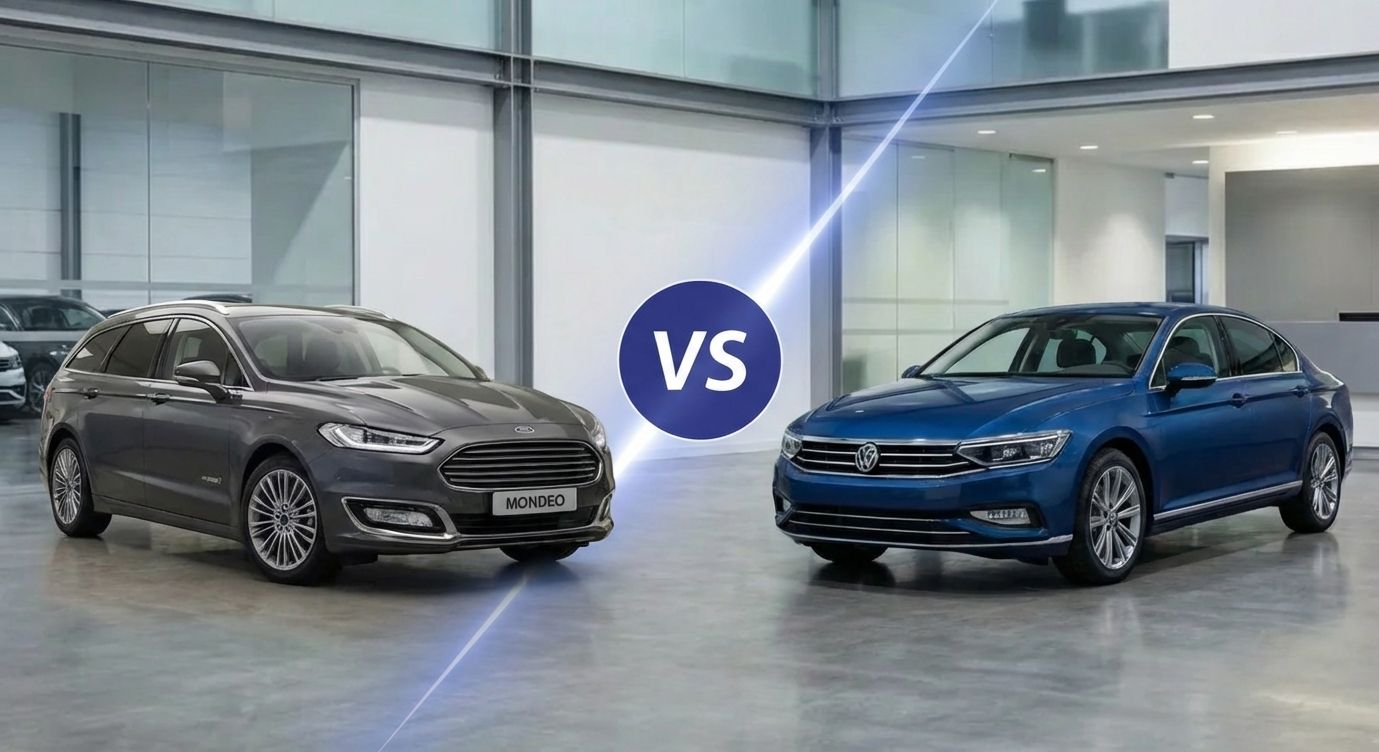
Ford Mondeo vs. Volkswagen Passat: Detailed comparison, reviews, engines, and verdict. Find out which of these popular cars is the better choice for you.
Apr 13, 2026
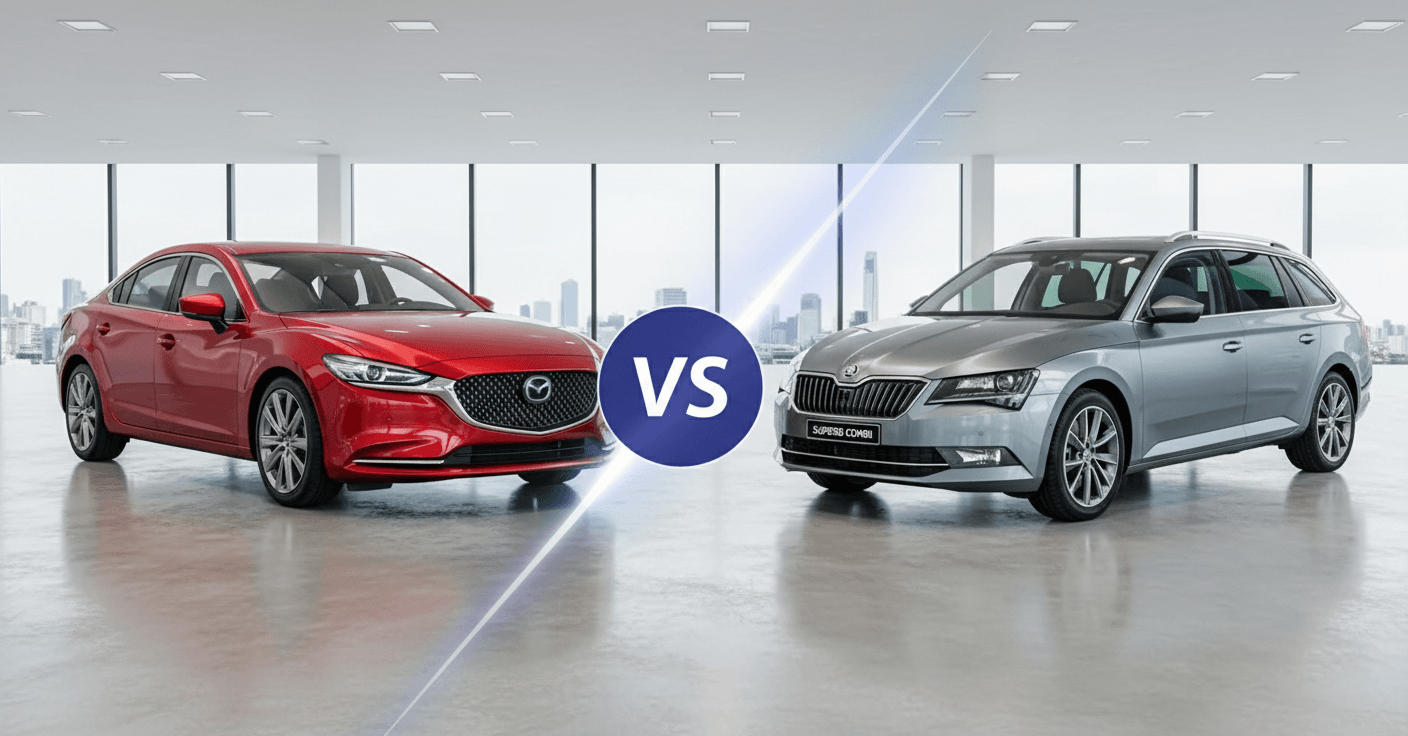
Detailed comparison of used Mazda 6 vs. Škoda Superb. We reveal real-world experiences, fuel consumption, and spaciousness, and provide a clear verdict to help you make the right choice.
Apr 2, 2026