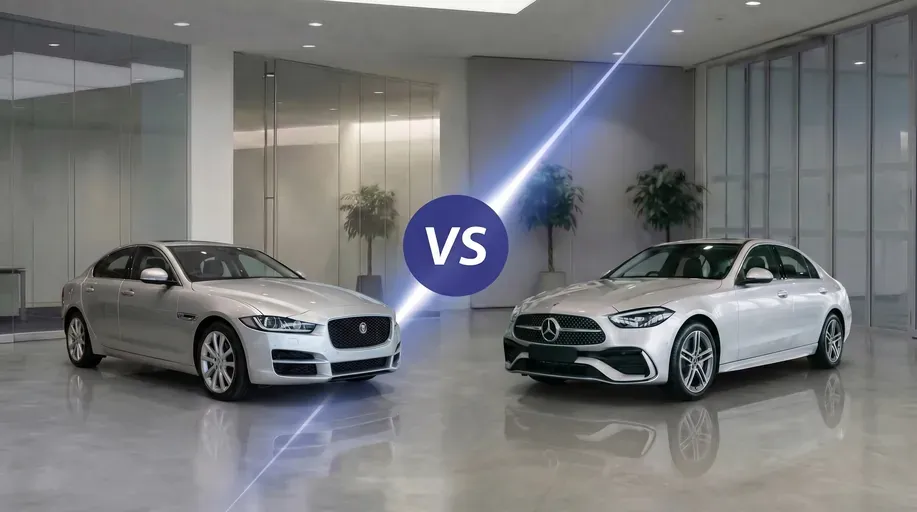
Jaguar XE vs. Volvo S60: Complete comparison 2026

Detailed comparison of the Jaguar XE vs Volvo S60. Learn all about the features, reliability, and driving dynamics of these used cars, and read our verdict before you buy.

May 4, 2026

VS
Jaguar XE

Jaguar XE

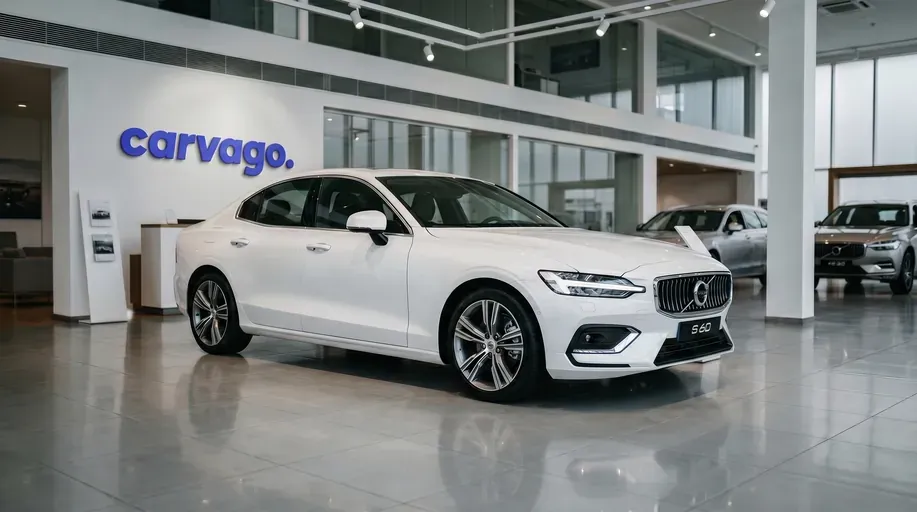
Volvo S60

Volvo S60

Introduction

The Jaguar XE, also known in some markets in its long-wheelbase version as the Jaguar XEL, is a premium sports sedan that brings unmistakable British elegance to the segment, combined with excellent driving dynamics focused primarily on the driver. Facing it in today's battle is the Volvo S60, which has also appeared in selected Asian markets under the designation Volvo S60L. This Swedish mid-size representative boasts an unwavering reputation as a leader in safety, attracting buyers with its minimalist Scandinavian design and top-tier travel comfort. In this comparison, we will take a detailed look under the surface of both these charismatic cars and find out whether your garage would be better suited by the sharper British temperament or rather the calm Swedish harmony full of clever innovations.

Comparison of External Dimensions

When looking at the models that most frequently appear on the nearly new used car market today (roughly four-year-old vehicles from the 2020–2022 model years), you will quickly find that although the Jaguar XE and Volvo S60 fall into the same category of premium mid-size sedans, their physical proportions tell different stories. The main difference lies in the overall body philosophy – while the British representative bets on an aggressive and low-slung stance, the Swedish one focuses on maximizing longitudinal space.

The third-generation Volvo S60, with a total length of 4778 mm, is exactly 100 mm longer than the Jaguar XE (4678 mm). This difference, supported by a 37 mm longer wheelbase (2872 mm for the Volvo compared to 2835 mm for the Jaguar), translates in real life primarily into more generous legroom for rear-seat passengers. On the other hand, the Volvo's greater length may represent a slight disadvantage when maneuvering and parallel parking in narrow city streets.

The Jaguar XE, by contrast, counters with a significantly lower and wider stance. With an impressive width of 1967 mm, it surpasses the Volvo by a substantial 117 mm. This above-standard width, combined with a slightly lower body height (1410–1425 mm for the Jaguar vs. 1431 mm for the Volvo), gives the British sedan not only an unmistakable, athletic look but also contributes to excellent directional stability and cornering dynamics. However, it is important to remember that such a wide car requires more caution in narrow garages or cramped parking spaces in shopping centers.

If your priority is interior spaciousness for the family and quiet long-distance travel, the proportions of the Volvo S60 will make more sense to you. But if you are looking for a car that clearly signals its sporting ambitions with its wide stance and you don't mind the wider body, the Jaguar XE will offer a more emotive physical presence on the road.

Comparison of Exterior Dimensions

The table below compares average values relevant to nearly new and roughly four-year-old models on the used car market (post-facelift Jaguar XE and 3rd generation Volvo S60).

ParameterJaguar XE SedanVolvo S60 Sedan
Length (mm)46784778
Width (mm)19671850
Height (mm)1410 - 14251431
Wheelbase (mm)28352872

Trunk Volume

When choosing a premium mid-size sedan, trunk capacity may not be the absolute priority, but it plays a very important role in everyday practicality and family use. The compared models, Jaguar XE and Volvo S60 (focusing on models approximately four years old), represent two different approaches to interior layout. If you plan to regularly load your future car with luggage, you should pay attention – their capacities differ quite significantly, even based on the chosen engine.

The Swedish third-generation Volvo S60 (model years 2020 and newer) provides a solid base trunk capacity of 427 liters in its standard variants, such as the B4 or B5 engines. However, if you are considering the T8 plug-in hybrid variant, expect a capacity reduction to 390 liters due to the placement of the traction battery. On the British side, the facelifted Jaguar XE (model years 2021 and newer) with P250 and P300 gasoline engines has a base capacity of 394 liters. Choosing the D200 mild-hybrid diesel version reduces this space even further to 356 liters. In both models, which fall exclusively into the sedan category, the rear backrests can be folded to transport longer items. However, neither manufacturer specifies the official maximum total trunk volume up to the roof for this body style, as is customary with traditional three-box bodies.

In practice, these numerical parameters mean that the Volvo S60 can hold significantly more luggage. Its larger trunk is easily sufficient for weekend shopping and longer holidays for two people, while also benefiting from a slightly more regularly shaped loading opening. The Jaguar XE, with its smaller trunk, targets individuals or couples who only need space for carry-on luggage for a business trip or a golf bag. The net difference of roughly thirty to seventy liters in favor of the Volvo actually means exactly that space for a few extra suitcases, which you might noticeably miss in the British car if you set off on a longer journey.

Trunk Capacity Comparison

ParameterJaguar XE SedanVolvo S60 Sedan
Base capacity (liters)356 – 394390 – 427
Max. capacity with seats folded (liters)Not specifiedNot specified

Swedish Spaciousness Wins 🧳

Volvo S60 offers a more voluminous and better-utilized trunk space, making it a more practical choice for everyday use and more frequent travel compared to the sportier Jaguar XE.

Trailer Weights

Towing capacity is often a decisive parameter for drivers who demand flexibility and maximum practicality from their vehicle, whether it's towing a caravan for a summer holiday or safely transporting a heavier load. If we focus on used cars on the market that are roughly four years old – namely the British Jaguar XE of the single X760 generation and the third-generation Swedish Volvo S60 – both premium sedans prove that even an elegant sedan can handle hard work. The standard braked towing capacity for both vehicles is a very solid 1,800 kg. This capacity is fully sufficient for weekend shopping involving the transport of bulky materials as well as for longer holidays with a standard-sized family caravan.

Interesting differences emerge, however, when looking more closely at specific engine options and maximum possible values. The Jaguar XE consistently maintains its 1,800 kg across all modern petrol and diesel four-cylinder engines, although it is worth keeping in mind that on its older, maximum-efficiency-oriented E-Performance versions, this capacity was structurally reduced to 1,600 kg. The Volvo S60, on the other hand, brings one big trump card with its top-of-the-line engines. While for many other brands, plug-in hybrid powertrains tend to limit towing capacity due to the weight of the batteries themselves, the Volvo S60 in its powerful T6 and T8 Twin Engine versions can pull an impressive 2,000 kg on the hitch. In practice, the Volvo will offer safe space for a few extra suitcases in a heavier caravan during travels. In conclusion, it can be stated that both sedans will serve you perfectly for normal use, but if you plan to tow truly heavy loads or spacious boats, the plug-in hybrid Volvo S60 represents a slightly more capable and versatile choice thanks to its higher permitted weight.

Model and engineBraked towing capacity (kg)Unbraked towing capacity (kg)
Jaguar XE D200 (150 kW)1800750
Jaguar XE P250 (184 kW)1800750
Volvo S60 B4 (145 kW)1800750
Volvo S60 B5 (184 kW)1800750
Volvo S60 T8 Twin Engine (228 kW)2000750

Overview of Most Common Motorizations

When comparing the engine options of the Jaguar XE and Volvo S60 in the market for approximately four-year-old used cars, we encounter one fundamental difference – a different approach to diesel engines and electrification. While Jaguar kept an economical diesel engine complemented by mild-hybrid technology in its agile XE sedan, the third-generation Volvo S60 became the first model in the Swedish carmaker's history to completely abandon diesel engines. For these generations, both brands relied exclusively on two-liter four-cylinder engines paired with eight-speed automatic transmissions, but they use completely different drive concepts. Jaguar maintains a traditional sporty architecture with primary rear-wheel drive, which will please enthusiastic drivers. Volvo, on the other hand, is based on a front-wheel-drive platform but counters with the presence of an extremely powerful plug-in hybrid version, to which the British cat simply cannot respond.

The range of power units for the Jaguar XE relies on its own modular Ingenium engine family. Proponents of long motorway journeys will be very pleased with the D200 engine, which is a two-liter diesel with an output of 150 kW (204 hp), offering a solid 430 Nm of torque and exemplary fuel consumption thanks to the support of a 48V mild-hybrid system. For petrol lovers, there are the brisk turbocharged P250 units with 184 kW and the top-of-the-line P300 tuned to 221 kW. While the weaker petrol version sends power exclusively to the rear wheels, emphasizing the car's playful and agile character, the most powerful P300 variant comes standard with reliable all-wheel drive (AWD). It is important to mention that older engines such as the D180, 25t, or the diesel 25d from early production were phased out after the facelift around 2020 and will no longer be found in roughly four-year-old units.

EngineFuelPower (kW)Torque (Nm)Transmission
D200Diesel (MHEV)1504308-speed auto
P250Petrol1843658-speed auto
P300Petrol2214008-speed auto

Under the hood of the Volvo S60 (3rd generation), you will find exclusively electrified two-liter four-cylinder engines in newer model years. Conventional internal combustion variants were replaced after 2020 by mild-hybrid units designated "B" – the base is the B4 with 145 kW (197 hp) and front-wheel drive, while the more powerful B5 has 184 kW (250 hp) and can also be found as an all-wheel drive (AWD). However, the true technological pinnacle of the range is the T8 Recharge plug-in hybrid version. This combines a turbocharged internal combustion engine with a powerful electric motor on the rear axle. Depending on the year of manufacture, this system provides a dazzling combined output of 288 to 335 kW (390–455 hp) and a massive torque range of 640 to 709 Nm. Despite the complete absence of diesels, Volvo can thus appeal to drivers looking for low operating costs, provided they have the opportunity to regularly charge the car for purely electric commuting. Older and purely petrol engines designated T4 and T5 are no longer available in model years 2021 and newer.

EngineFuelPower (kW)Torque (Nm)Transmission
B4Petrol (MHEV)1453008-speed auto
B5Petrol (MHEV)1843508-speed auto
T8 RechargePetrol (PHEV)288 - 335640 - 7098-speed auto

Sharp RWD vs. Nordic Plug-in ⚡

With its sophisticated D200 diesel engine, the Jaguar is the clear choice for long-distance motorway drivers, while the Volvo excels with its brutally powerful and efficient T8 plug-in hybrid for those with access to a charging point.

Choosing the right engine is absolutely crucial for long-term satisfaction with a used car. The following recommendations are based on performance characteristics, real-world fuel consumption, mechanical reliability, and feedback from owners in practice. When searching for used cars around four years old, you will encounter a very interesting and radical transformation in the engine lineup for both models (as suggested by the availability data for individual versions). The third-generation Volvo S60 became one of the early pioneers when, around 2020 and 2021, it completely phased out older pure petrol units (T4, T5) and popular diesels (D3, D4) from its portfolio, relying fully on mild-hybrids and plug-in hybrids. Similarly, Jaguar narrowed the range for the XE model, definitively ending production of the fantastic six-cylinder (last available as the 35t around 2018) and older diesels (20d, D180), and introduced modernized four-cylinder engines from the Ingenium family with mild-hybrid assistance.

For the Jaguar XE, we recommend: 2.0 P250 (184 kW / 250 hp)

  • Why it's the best choice: If you are looking for a Jaguar XE around 4 years old, you will primarily come across the Ingenium two-liter engine family. Although D200 diesel versions with excellent fuel economy are offered, British diesels in this model have historically had issues with stretching timing chains and complications with the diesel particulate filter (DPF). The P250 petrol version removes these concerns from the equation and, from a long-term perspective, appears to be a much safer mechanical bet, which also perfectly complements the car's phenomenally handling chassis.
  • Technical advantages: The engine has a very solid torque of 365 Nm, which works excellently with the reliable ZF eight-speed automatic transmission and precise rear-wheel drive. In real-world driving, fuel consumption ranges from 8 to 9 liters per 100 km, which is a very acceptable value considering the 250 hp output.
  • Risks and what to watch out for: Even Ingenium petrol engines can be very sensitive to neglected maintenance. To prevent timing gear wear and camshaft failure, it is absolutely essential to shorten the oil change interval to a maximum of 15,000 km or 1 year. During inspection, start the car completely cold and listen carefully for any rattling from the top of the engine. Also, arm yourself with patience regarding the infotainment and occasional minor electronic glitches.
  • Who it's best for: An ideal choice for drivers who love more dynamic drives on backroads, do not cover huge annual mileages, and spend enough time in the city and on shorter routes where a diesel engine would suffer unnecessarily and be unable to regenerate the DPF.

For the Volvo S60, we recommend: 2.0 B4 (145 kW / 197 hp)

  • Why it's the best choice: After the phase-out of older non-electrified engines, the mild-hybrid B4 represents the "golden mean" of the range. It eliminates concerns about expensive servicing for the extremely powerful but very complex and heavy plug-in hybrids (T8 and older T6 versions). The B4 version has more than enough power for daily driving and perfectly harmonizes with the nature of the Volvo S60 itself, which is not about carving corners but about absolute peace, quiet, and passenger safety.
  • Technical advantages: Thanks to the integrated 48V starter-generator, this engine benefits from incredibly smooth engine restarts via the start-stop system and smoother responses at lower revs before the turbocharger spools up. The Aisin automatic transmission shifts exceptionally imperceptibly, and the real-world fuel consumption of such a heavy and robust sedan can very often drop to a pleasant 7 to 7.5 liters per 100 km.
  • Risks and what to watch out for: Japanese Aisin eight-speed transmissions are famous for their solid durability, but only if they receive fresh oil on time. It is essential to insist on changing it every 60,000 km, which many owners in fleet operations neglected. At the same time, keep in mind that cars around the 2022 model year often transitioned from the original Sensus infotainment to the Android Automotive system, which (especially in versions without current updates) can suffer from software bugs or restarts.
  • Who it's best for: This engine perfectly suits highway travelers, families, and more composed drivers who appreciate the car's low maintenance requirements, excellent seats, quiet cabin, and balanced comfort even on poorer roads.

Real Fuel Consumption

The difference between official fuel consumption figures provided by manufacturers and real-world values in everyday driving is often significant. To get the most accurate picture of how much fuel these roughly four-year-old cars actually consume, we analyzed real-world data from thousands of drivers. We used the community portal Spritmonitor.de as a reference platform and focused on the most logical engine options currently most common on the used car market for the Jaguar XE (facelifted versions) and Volvo S60 (3rd generation).

Detailed data comes from the Spritmonitor.de portal and database.

Model and engineAverage consumption (l/100 km)
Jaguar XE D200 (Diesel, 150 kW)6.0
Volvo S60 B4 (Petrol, 145 kW)7.8
Volvo S60 B5 (Petrol, 184 kW)8.2
Jaguar XE P250 (Petrol, 184 kW)9.5
Volvo S60 T8 (PHEV, 288 kW)4.5

The real-world figures reveal fairly clear and sometimes surprising trends. In the diesel engine category, the Jaguar XE with the D200 engine excels. Here, the advantage of a carefully tuned diesel supported by a mild-hybrid system is fully evident, powering the relatively heavy British sedan with an excellent average consumption of exactly 6.0 l/100 km. In contrast, the Swedish Volvo radically removed diesel engines from the lineup for its third-generation S60, which is reflected in a slightly higher appetite. The B4 and B5 petrol mild-hybrids realistically require about 7.8 to 8.2 liters, which is a perfectly adequate value for powerful petrol engines. A relatively surprising finding is the consumption of the smaller petrol turbo engine in the Jaguar XE P250 – theoretically, it should save fuel, but in real conditions, it proves to be quite "thirsty," with consumption commonly reaching 9.5 liters. The plug-in hybrid Volvo S60 T8 is a chapter of its own. Its impressive average of around 4.5 l/100 km is strictly conditional on consistently charging the vehicle from the grid.

What does this mean for the typical user? If you commute long distances daily and spend hours on highways, the diesel Jaguar XE D200 remains the unbeatably most economical choice and the best highway express. For city drivers and people commuting shorter distances, the petrol Volvo S60 in the B4 variant is a much more rational solution, as it handles stop-and-go traffic better than the British turbo petrol. For budget-conscious buyers who also have the option to conveniently charge at home or at work, the S60 T8 plug-in hybrid appears to be the king of operating savings – however, expect that as soon as you set off on a longer trip with a discharged battery, consumption will quickly catch up with conventional petrol units.

In conclusion, the average fuel consumption of this premium duo represents an absolutely pivotal decision factor. While the Jaguar XE maintains a significant lead for long-distance drivers thanks to its economical and modern diesel, the Volvo S60, with its lack of diesel, targets buyers who can tolerate corresponding petrol consumption, or those ready to fully exploit the economic potential of daily plug-in hybrid charging.

Current offers Volvo S60

View full offer

Price Range and Used Car Offerings

Comparison of Used Car Market Prices

When choosing a used premium mid-size sedan, we most often focus on cars approximately 4 years old (model years 2021–2022). In this case, the Jaguar XE (1st generation after the extensive 2019 facelift) and the Volvo S60 (3rd generation, sold since 2018) face off. Both cars represent a great alternative to the established German competition, but their price development and used market availability differ significantly.

Jaguar XE (1st generation, facelifted version)

The Jaguar XE is something of a rarity on the used market, which can be a big advantage for those looking for a visually fresh car. In terms of purchase prices, the XE faces a slightly steeper depreciation in the first years, making it a very attractive and affordable choice for used car buyers.

  • Base price range: 2021–2022 models with over 100,000 km (typically economical D200 diesel versions) start on the market at approximately €23,000.
  • Golden middle ground: In the range of €27,000 to €31,000, you can find very well-maintained petrol engines (e.g., P250) or popular sportier R-Dynamic trims with mileage around 50,000 to 70,000 km.
  • Top models: All-wheel drive versions, the more powerful P300 petrol engine, top-tier equipment, and minimal mileage range from €33,000 upwards.

Volvo S60 (3rd generation)

Unlike its British rival, the Volvo S60 holds its value significantly better. This is due to its perceived robustness, the brand's overall popularity in Europe, and its emphasis on advanced safety systems. Furthermore, the selection of these cars in dealerships is much more diverse.

  • Base price range: Well-maintained units with basic mild-hybrid engines (B3 or B4) usually start at around €27,000.
  • Golden middle ground: For an amount between €31,000 and €35,000, you get proven models with the more dynamic B5 engine, very often equipped with AWD and in higher trim levels (Inscription or R-Design).
  • Premium versions: If you are aiming for powerful plug-in hybrid units (Recharge T8), which combine over 300 hp with the possibility of pure electric driving, expect prices from €39,000 to €47,000, depending on overall condition and equipment.

Indicative Price Comparison (cars approx. 4 years old)

Model (year of manufacture ~2022)Starting price (higher mileage)Golden middle ground (good condition)Premium versions and PHEV (low mileage)
Jaguar XEfrom approx. €23,000€27,000 – €31,000€33,000 and more
Volvo S60from approx. €27,000€31,000 – €35,000€39,000 and more

Market Value Summary:
The Jaguar XE is an excellent choice if you are looking for the best possible ratio of driving experience to price; its faster depreciation on the used market makes it a hidden gem. The Volvo S60, on the other hand, is a safe bet – its value drops more slowly, it offers a much wider selection of modern electrified engines, and it promises a significantly easier resale in the future.

Reason or emotion? 💰

While you can buy a used Jaguar XE more advantageously thanks to its steeper price drop and get an exceptional driver's sedan, the Volvo S60 represents a more stable investment with slower depreciation and a wider market selection.

Safety and Euro NCAP Rating

When evaluating safety, it is important to emphasize that although both the Jaguar XE and Volvo S60 received a full five-star rating in tests by the independent organization Euro NCAP, their results must be placed in the correct temporal context. Crash test methodology and requirements have become increasingly stringent over the years, meaning that percentage scores achieved in different years cannot be directly compared. While older tests focused primarily on passive protection during the impact itself, newer protocols place enormous emphasis on sophisticated assistance systems capable of preventing collisions altogether.

The Jaguar XE underwent crash testing in 2015. At the time, the car excelled with its exceptionally strong aluminum construction and even received an award for the safest model in its class. Standard equipment already included autonomous emergency braking (AEB) and an active hood to mitigate the consequences of a potential collision with a pedestrian. However, given the year of testing, the validity of this five-star certification formally expired in January 2022, which is common practice for Euro NCAP reflecting the natural aging of standards.

The Volvo S60 was evaluated in 2018 (the results are, according to Euro NCAP custom, taken from identical tests of its sister estate, the V60). In that year, much stricter testing protocols were already in place, which for the first time examined in detail the reactions of assistance systems to cyclists or emergency interventions to keep the vehicle in its lane. Even under these significantly more demanding conditions, the Swedish representative demonstrated absolute structural dominance in adult occupant protection. The validity of this evaluation formally ended at the beginning of 2025.

ParameterJaguar XEVolvo S60
Year of testing20152018
Adult occupant protection92 %96 %
Child occupant protection82 %84 %
Vulnerable road user protection81 %74 %
Safety assistance systems82 %76 %

At first glance at the table, it might seem that the British sedan slightly beats the Volvo in some areas of active safety. However, do not be misled. The lower relative percentages for the Swedish car in the categories of assistance systems and vulnerable road user protection are a direct result of the substantially harsher and broader methodology from 2018. From the perspective of today's standards, the Volvo S60 offers an overall more modern and comprehensive safety package, relying on the newer generation of City Safety preventive technologies.

Safety under Swedish leadership 🛡️

While both cars provide excellent structural strength and reliable passenger protection, the Volvo S60 benefits from development according to newer and stricter standards, making it a more confident and safer choice for the challenges of today's traffic.

Comparison of Interesting Equipment Features

In addition to standard equipment, each of the models offers several unique features that can be decisive for the customer and bring a completely different approach to added value in everyday use.

Jaguar XE: Sporty DNA and Innovative Technology

The British sedan focuses primarily on the driver, excellent driving characteristics, and modern digital gadgets that enhance the premium feel of the car.

  • Infotainment and Digitalization: Modernized versions rely on the advanced Pivi Pro system (or Touch Pro Duo with two displays), which excels in fast response and supports over-the-air (OTA) software updates. The driver thus always has the latest map data and functions available without needing to visit a service center.
  • Camera Rear-View Mirror: A very innovative and practical feature is the ClearSight technology. The digital interior rear-view mirror can switch to a wide-angle image from a camera located in the roof fin at the touch of a button. This elegantly solves poor rear visibility through the narrow rear window or situations where the rear seats are fully occupied.
  • Chassis and Architecture: The body is 75% aluminum, which reduces weight and increases rigidity. The double-wishbone front axle is directly derived from the Jaguar F-Type sports model. The result is top-tier handling and steering precision.
  • Sporty Accents: After the facelift, the original rotary gear selector was replaced by a more traditional but sportier SportShift "joystick." Customers often opt for variants with the R-Dynamic package, which adds more aggressive bumper styling and significantly anatomically shaped sports seats.
  • Powertrain and Driving Modes: Efficient diesel and gasoline engines from the Ingenium family are available, often complemented by mild-hybrid technology. The JaguarDrive Control system allows changing the car's characteristics (steering, throttle response, and shifting of the 8-speed ZF transmission) from comfort to sharp sport mode.
  • Electronics and Audio: Top-tier British Meridian audio systems take care of the musical experience. Long journeys are then made easier by the driver fatigue monitoring system and reliable adaptive cruise control.

Volvo S60: Scandinavian Luxury and Unrivaled Safety

The Swedish representative follows the path of calming minimalism, electrification, and smart solutions that reduce stress behind the wheel and maximize passenger comfort.

  • Infotainment and Connectivity: A vertically oriented touchscreen forms the center of the car's control. In newer model years, Volvo switched to the Android Automotive operating system directly from Google. In practice, this means native integration of Google Maps, assistants, and apps like Spotify, making navigation and voice control one of the best experiences on the market.
  • Safety and ADAS: Volvo traditionally dominates in safety. The standard City Safety system detects not only vehicles and pedestrians but also cyclists and large animals, and can automatically activate the brakes in the event of an imminent collision. Also worth mentioning is the optional Pilot Assist system, which offers very advanced semi-autonomous driving ideal for long highway journeys.
  • Crystal and Ergonomics: The interior is a showcase of Scandinavian design with an emphasis on sustainable and high-quality materials. A unique rarity in higher trim levels (e.g., Inscription) is the automatic transmission selector knob made of genuine Swedish Orrefors crystal. The front seats were developed in collaboration with orthopedists and are among the absolute best in terms of comfort on long journeys.
  • Absence of Diesels and Emphasis on Hybrids: The third generation S60 was the first modern Volvo to say a definitive goodbye to diesel engines. Used cars thus offer either gasoline mild-hybrids (labeled B) or powerful plug-in hybrids (Recharge / formerly T8), which can travel dozens of kilometers purely on electricity.
  • Polestar Engineered Sport Version: For enthusiastic drivers, Volvo created a special top-tier version in collaboration with the Polestar division. In addition to the massive power of the plug-in hybrid system, it brings manually adjustable dampers from the renowned Öhlins brand, forged wheels, and powerful Brembo (or Akebono) brakes, turning the elegant sedan into a disguised athlete.
  • Concert Hall on Wheels: For music lovers, the premium Bowers & Wilkins audio system is a huge draw. It features not only the iconic tweeter located on the dashboard but also a unique acoustic mode that precisely simulates the sound response of the Gothenburg Concert Hall.

Key Advantages and Disadvantages

Jaguar XE

Pros

Excellent driving characteristics and an agile chassis with a rear-axle preference

Very precise and communicative steering that will delight enthusiastic drivers

Attractive and sporty exterior design that ages very slowly

Significantly improved interior material quality following the 2019 facelift

Excellently tuned and smooth-shifting eight-speed ZF automatic transmission

Cons

Below-average rear-seat space, especially in terms of legroom and headroom

Smaller and less accessible luggage compartment (410-liter volume)

Ingenium engines can have a coarser and noisier acoustic profile under load

Faster depreciation on the used car market compared to German competitors

The Jaguar XE is an ideal choice for enthusiastic drivers who demand a sporty experience and top-tier handling from a premium mid-size sedan. Although it loses points in overall practicality and spaciousness, it makes up for it with its unique British character and a chassis that is among the best in its segment.

Volvo S60

Pros

Unrivaled seat comfort, ideal for long highway journeys

Top-tier level of active and passive safety with advanced assistance systems

Elegant and minimalist Scandinavian interior design with premium craftsmanship

Availability of very powerful and efficient plug-in hybrid versions (Recharge / T8)

Slightly better rear legroom compared to the Jaguar

Cons

Less engaging driving characteristics and a lack of sporty focus

More tedious control of most functions (including climate control) exclusively via the central touchscreen

Top speed limited to 180 km/h (applies to models manufactured from 2020 onwards)

Shallower luggage compartment (442 liters) with a narrower loading opening typical of sedans

The Volvo S60 will appeal to customers looking for maximum safety, peace on board, and first-class comfort in a clean design package. It is a perfect choice for drivers who prefer a smooth and relaxed ride, or who want to take advantage of advanced plug-in hybrid technology, rather than sharp cornering.

Common Problems and Owner Complaints

Based on long-term user experience, service reports, and our own findings provided by independent car technical inspection, we have compiled an overview of the most common problems you should watch out for in these approximately four-year-old models.

Although the Jaguar XE improved its reliability and build quality after the facelift, typical ailments can still occur, which are worth focusing on when choosing a used car, especially with diesel engines.

  • Engines and exhaust system: 2.0-liter diesel engines from the Ingenium family are sensitive to oil quality and driving style. Frequent short trips lead to problems with diesel particulate filter (DPF) regeneration and oil dilution with diesel. It is also important to monitor the timing chain, which can start to stretch prematurely in cars with delayed servicing or higher mileage.
  • Electronics and infotainment: The newer Pivi Pro system is significantly more stable than the previous interface, yet users occasionally report freezing of the center screen, Apple CarPlay/Android Auto connection drops, or error messages from parking sensors.
  • Chassis and suspension: Due to the stiffer, sportier-tuned suspension and often larger wheel diameters, there is faster wear of the bushings and ball joints on the front axle. This manifests as audible knocking when driving over bumps and reduced vehicle stability.
  • Interior build quality: In the cabin of earlier produced units, rattles and squeaks from plastics may appear, primarily in the area of the center console and inner door panels.

Jaguar XE: Driving experiences redeemed by diesel risks

The British sedan attracts with a great chassis, but requires careful inspection of the service history, especially for Ingenium diesel engines, which do not tolerate neglected maintenance and city traffic well.

The third generation of the Volvo S60 is generally considered a solidly built car and one of the safest choices in its class, however, due to its high curb weight and very complex powertrain technology, it is not immune to specific faults.

  • Complex hybrid units: Recharge powertrains (plug-in hybrids) combine a turbocharger, supercharger, and electric motor, increasing the risk of expensive repairs. In the past, there were problems with the ERAD unit (electric rear axle drive), which manifested as unpleasant humming or loss of power.
  • Electronics and software: Cars equipped with the older Sensus system tend to be slower after startup. In newer model years with the Android Automotive system, users initially reported software freezes and occasional GPS or assistance system outages. However, the automaker addresses most of these issues through over-the-air (OTA) updates.
  • Fast brake wear: The S60 is a relatively heavy sedan, and especially the powerful plug-in hybrid versions reach high weights. This results in significantly faster wear of brake pads and discs.
  • Body and interior: A known and relatively expensive problem is the clogging of the drain channels of the optional panoramic sunroof. If they are not cleaned regularly, water can leak into the interior, leading to fatal damage to the floor electronics.

Volvo S60: Robust build with complex powertrain

Volvo offers exceptional safety and a top-tier interior, but potential owners should expect faster brake wear and ensure they check the complex hybrid components and sunroof drains.

Tips for Buying a Used Car

When buying a used car, a thorough inspection is key. Although both of these premium mid-size representatives offer a great ride and modern technology, they have their specifics and potential weak points that are worth watching out for. For maximum peace of mind, it is always ideal to undergo an independent technical inspection of the car.

When choosing a Jaguar XE:

  • Performance of Ingenium engines (especially diesels): With the two-liter diesel units, listen carefully to the engine during a cold start. Rattling or unusually rough running can signal a stretched timing chain. For cars that have been driven mainly on short city trips, focus on the condition of the DPF filter – look for warning messages on the instrument cluster or excessive soot in the exhaust tip.
  • Infotainment and electronics responsiveness: On-board systems (Touch Pro or the newer Pivi Pro) can suffer from slow responses or freezing in unupdated versions. During the test drive, try pairing a phone via Bluetooth, check the smoothness of the navigation, and ensure that the parking cameras come on without delay.
  • Behavior of the ZF eight-speed gearbox: This automatic is among the best on the market, but it must shift absolutely smoothly. If you feel jerking or hear dull thuds when downshifting or when changing from P to D and R, it could mean a neglected oil change or the need to reflash the gearbox software.
  • Condition of the aluminum chassis: The Jaguar XE has fantastic driving characteristics thanks to its more complex suspension. During the test drive, take the car on a rougher road and listen for any metallic sounds or squeaking coming from the front or rear axle. These sounds reveal worn bushings and ball joints, the replacement of which is usually not the cheapest.
  • Bodywork and panel alignment: The XE makes extensive use of aluminum body panels, which makes repairs after accidents more difficult and expensive. During a physical inspection of a used car, pay close attention to the gaps between individual panels and check the paint quality to rule out a poorly executed accident repair.

When choosing a Volvo S60:

  • Speed of the Sensus or Android Automotive system: The large vertical display handles almost all car functions from climate control to the radio. Test the system immediately after starting – it should respond smoothly. Long loading times or audio dropouts mean a software update is needed; this was a common teething problem in older versions.
  • Condition of the traction battery in the Recharge (PHEV) version: If you are considering a plug-in hybrid (T6 or T8 versions), check the real-world electric-only range on a full charge. During the drive, test the transition between electric and combustion modes – the engagement of the gasoline engine must be soft and without a noticeable jolt.
  • Smoothness of the Aisin automatic: The eight-speed automatic transmission in Volvos is tuned more for comfort. Focus on its behavior when crawling in traffic and during sudden acceleration (kickdown). Hesitation from the gearbox or shocks during gear changes signal wear or old oil.
  • Wear of the front axle and brakes: The heavier front end of the car (especially in hybrids) combined with large 19" or 20" wheels places high demands on the suspension and brakes. When driving over bumps, watch for any knocking felt through the steering wheel. Also check the condition of the brake discs, which on heavier specifications can show faster wear or warping.
  • Service regularity and engine condition: The four-cylinder engines of the Drive-E family are complex units (often combining a turbo and a supercharger). During a comprehensive car inspection, it is absolutely crucial to thoroughly check the service history with an emphasis on timely oil changes and to physically verify that no fluids are leaking from the engine compartment.

FAQ: Most Frequently Asked Questions

The British sedan is the clear choice for enthusiastic drivers thanks to its agile rear-wheel drive and precisely tuned chassis. While the Volvo S60 has very powerful engines available, its steering is rather detached and tuned primarily for a safe and smooth ride. In corners, the XE feels much more confident and fun than its Nordic rival.

The Swedish representative clearly dominates in cabin spaciousness, especially in the rear seats, where it offers passengers significantly more legroom. The Volvo's 442-liter trunk is also slightly more usable than the Jaguar's (410 liters), which also suffers from a narrower loading opening and a more cramped second row of seats. For family use and frequent transport of adult passengers in the back, the S60 is therefore a much more suitable choice.

Volvo excels with top-tier comfort, excellent cabin soundproofing, and legendary ergonomic seats that don't tire the body even after hundreds of kilometers. While the British competitor's interior is very luxurious and driver-oriented, the chassis has a noticeably stiffer characteristic even in its basic setting. On broken roads, the S60 irons out bumps with much more grace and smoothness.

If you are looking for advanced electrified technologies, the S60 offers excellent plug-in hybrid versions (Recharge) with a pure electric range that is more than enough for daily city commuting. In its final model years, the XE relies primarily on reliable mild-hybrid diesel and gasoline engines from the Ingenium family, which reduce fuel consumption but do not allow for pure electric driving. Volvo is therefore ideal for those who want to combine high performance with locally emission-free operation.

Both premium brands achieve maximum results in independent crash tests and provide a very rigid body. However, the Swedish model traditionally pushes active safety standards a bit further and is equipped as standard with one of the most advanced collision prevention and semi-autonomous driving systems, Pilot Assist, on the market. Although the XE offers all the important assistants, it doesn't quite match the systems from the north in terms of complexity and sensitivity of interventions.

Conclusion: Which Model to Choose?

Sources: ADAC, e15.cz, mdcr.cz, automagazin.cz, autojournal.cz, autoskola-testy.cz

This article was prepared using artificial intelligence tools. The section guarantor is Petr Dušek.

Related articles

Car battle

BMW 3 Series vs. Mercedes-Benz C-Class: Complete comparison 2026

Detailed comparison of the BMW 3 Series and Mercedes-Benz C-Class. Discover real-world experiences, differences in equipment, and read the verdict to help you choose the right car.

Oct 22, 2026

Car battle

Škoda Superb vs. Toyota Camry: Complete comparison 2026

Škoda Superb vs. Toyota Camry: A detailed comparison with real-world experience, an analysis of driving characteristics, and a clear verdict. Find out which car to choose.

Oct 16, 2026

Car battle

Jaguar XE vs. Mercedes-Benz C-Class: Complete comparison 2026

Jaguar XE vs. Mercedes-Benz C-Class comparison. Read a detailed comparison of used cars, driving characteristics, and equipment to find out which one to choose.

Apr 22, 2026

We accept online card payments as well as wire transfers.

visa payment provider logovisa-electron payment provider logomastercard payment provider logomaestro payment provider logodiners-club payment provider logodiscover payment provider logo