Car battle
Jaguar XE vs. Mercedes-Benz C-Class: Complete comparison 2026
Jaguar XE vs. Mercedes-Benz C-Class comparison. Read a detailed comparison of used cars, driving characteristics, and equipment to find out which one to choose.
Apr 22, 2026
Articles
Car battle
Škoda Superb vs. Toyota Camry: A detailed comparison with real-world experience, an analysis of driving characteristics, and a clear verdict. Find out which car to choose.
October 16, 2026
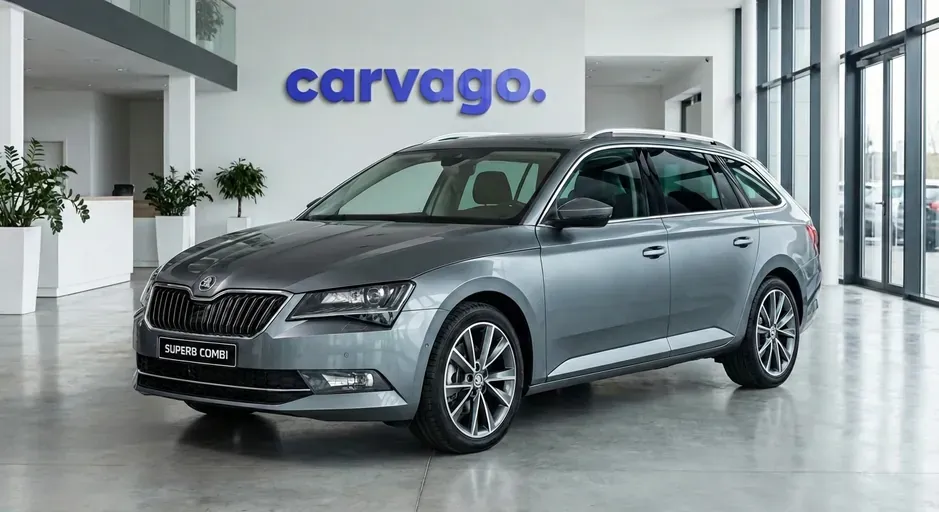
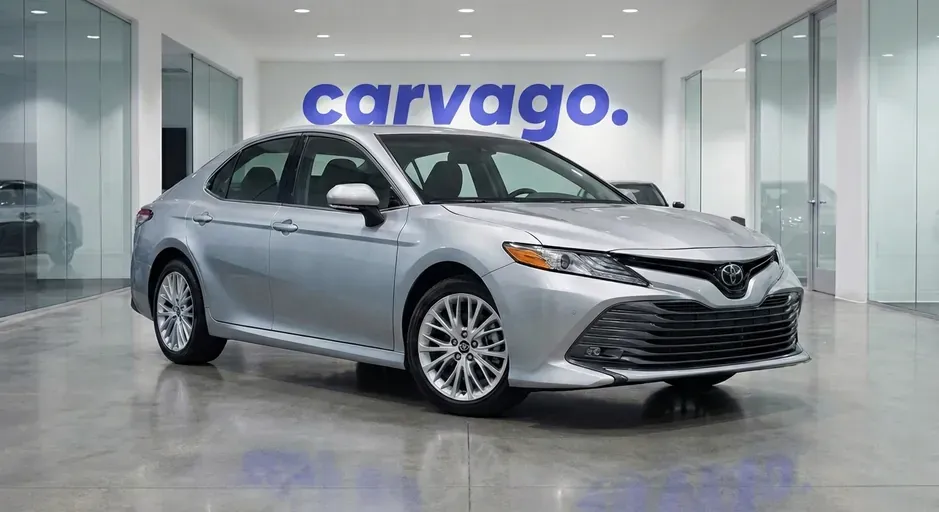
Škoda Superb, the traditional flagship of the Czech carmaker, represents for many drivers an unsurpassed benchmark of spaciousness, practicality, and travel comfort. Standing against it is the global bestseller Toyota Camry, also sold in some markets as the Daihatsu Altis, which has earned a worldwide reputation as an exceptionally reliable sedan focused on efficient hybrid propulsion and a smooth ride. The following comparison will provide a detailed look at the strengths and weaknesses of both these exceptional models and help you decide which one will better suit your daily needs.
When choosing a used mid-size car, typically around four years old, exterior dimensions play a key role in both interior spaciousness and trouble-free daily parking. When comparing the third-generation Škoda Superb and the eighth-generation Toyota Camry (XV70 generation), we are looking at two different approaches to body construction. While the Japanese automaker relies exclusively on a traditional sedan with an elegantly low silhouette, the Czech representative counters with a very practical liftback with a rear hatch and the exceptionally popular estate (Combi) variant on our market.
A detailed look at the specifications may reveal a surprise: the Toyota Camry, with a total length of 4 885 mm, is 16 mm longer than the Škoda Superb liftback (4 869 mm). This difference gives the Toyota a slim and elongated profile. The Superb, on the other hand, dominates in terms of width, where its 1 864 mm surpasses its Japanese rival by a noticeable 24 mm. In practice, this extra width means not only a more stable stance on the road and better lateral maneuverability but, above all, valuable extra millimeters for the shoulders of adult passengers inside the cabin.
A crucial measure for rear passenger comfort is the wheelbase. Here, Škoda has a slight edge with a value of 2 841 mm, which is 16 mm more than the Camry (2 825 mm). The Superb also has a taller body structure – the liftback measures up to 1 469 mm in height and the estate 1 477 mm, while the Toyota is significantly lower at 1 445 mm. While the low build helps the Toyota achieve a sportier and more aerodynamic appearance, from a purely practical standpoint, the longer wheelbase, wider track, and higher roof predispose the Škoda Superb to the role of king of interior space. For buyers, the deciding factor will be whether they prefer the dynamic style of an elegant Japanese sedan or the maximized family spaciousness of the Czech car.
| Parameter | Škoda Superb Liftback | Škoda Superb Combi | Toyota Camry Sedan |
|---|---|---|---|
| Width (mm) | 1864 | 1864 | 1840 |
| Length (mm) | 4861 - 4869 | 4856 - 4863 | 4885 |
| Height (mm) | 1468 - 1469 | 1476 - 1477 | 1445 |
| Wheelbase (mm) | 2841 | 2841 | 2825 |
For buyers of used family cars and executive cruisers, trunk volume is often one of the main decision criteria. In this regard, roughly four-year-old third-generation Škoda Superb and Toyota Camry (XV70 generation) models represent two completely different approaches to interior space utilization. While the Superb excels in absolute maximization of transport capacity thanks to its liftback and estate body styles, Toyota bets on a classic sedan body design, which naturally prioritizes a representative appearance and better separation of the cabin from the trunk at the expense of hauling capabilities.
The Czech representative traditionally dominates not only its class in terms of spaciousness. The standard Škoda Superb with its practical liftback body offers a massive basic trunk volume of 625 liters, which grows to 1,760 liters after folding the rear seats. If you choose the even more family-oriented estate variant, you get 660 liters as standard and a staggering 1,950 liters after folding the backrests. It is worth mentioning the widely represented plug-in hybrid versions labeled iV, where the capacity is slightly reduced due to battery placement to 485 liters for the liftback and 510 liters for the estate. In practice, however, this still means space for several extra suitcases and trouble-free packing for the whole family for a long trip.
On the other hand, the Toyota Camry, available on the European market exclusively as a hybrid sedan, offers a trunk with a solid basic volume of 524 liters. Although the rear seat backrests can be folded (standard 60:40 split) to transport longer items, the rigid structure of the rear part of the body does not allow for loading tall boxes up to the roof, which is why the maximum volume for the Camry is understandably not specified. The value of 524 liters is fully sufficient for weekend shopping and longer holidays for two or with one child. You will only notice the difference when you try to load a stroller or bulky sports equipment – here, the Japanese car hits the limits of its smaller loading opening.
Thanks to these characteristics, it is clear that both cars target slightly different audiences. If you regularly transport large items and are looking for ultimate and maximally usable space, the Superb has almost no competition on the used car market. The Camry, on the other hand, will appeal to drivers for whom the trunk is just a place to put travel bags and who do not expect their car to play the role of a family mover.
| Parameter | Škoda Superb Liftback | Škoda Superb Estate | Toyota Camry Sedan |
|---|---|---|---|
| Basic volume (liters) | 625 | 660 | 524 |
| Max. volume with seats folded (liters) | 1760 | 1950 | - |
If unlimited transport capacity and easy access to luggage thanks to the giant tailgate are your priorities, the Škoda Superb is the clear winner, while the Toyota Camry will serve perfectly those for whom a solid volume and the elegantly separated space of a traditional sedan are enough.
The ability to tow a trailer is a key parameter for many drivers, fundamentally influencing the overall utility of a car. When comparing roughly four-year-old used cars, specifically the 3rd generation Škoda Superb and the Toyota Camry generation XV70, we encounter a vast difference in this discipline. These two models approach towing loads quite differently.
In this regard, the Škoda Superb proves to be a highly versatile vehicle. Its standard braked trailer weight for the base 1.5 TSI petrol engine starts at 1600 kg. For the more powerful 2.0 TSI and TDI versions, the maximum braked trailer weight ranges from an impressive 1800 to 2200 kg. An unbraked trailer can weigh the traditional 750 kg. This capacity is perfectly sufficient for weekend shopping or a longer holiday with a large family caravan. Alternatively, it provides space for a few extra suitcases in a small trailer. A major advantage is that even the plug-in hybrid variant, the Superb iV (1.4 TSI), offers a solid braked towing capacity of 1600 kg.
At the opposite end of the spectrum stands the Toyota Camry. The XV70 generation is available on the European market exclusively with the reliable 2.5 Hybrid powertrain. However, the price for this fuel-efficient hybrid technology is a radically reduced utility in terms of towing. To protect the complex hybrid system, this model does not have an approved towing capacity for our market, and the maximum permitted weight for both braked and unbraked trailers for the Camry is 0 kg. Any tow bar will therefore serve exclusively as a mount for a bike rack.
In terms of overall practicality for towing, the result of this comparison is clear. The Toyota Camry is completely out of the running for those who need to transport bulky loads regularly or occasionally, while the Škoda Superb remains an unbeatable workhorse.
| Model and engine | Braked trailer weight (kg) | Unbraked trailer weight (kg) |
|---|---|---|
| Škoda Superb 1.5 TSI (110 kW) | 1600 | 750 |
| Škoda Superb 2.0 TSI (140 - 206 kW) | 1800 - 2200 | 750 |
| Škoda Superb 2.0 TDI (110 - 147 kW) | 2000 - 2200 | 750 |
| Škoda Superb 1.4 TSI iV PHEV (115 kW) | 1600 | 750 |
The approach of both carmakers to engine options shows two completely different worlds. While Škoda follows a traditional European path with the Superb model, offering a wide range of turbocharged petrol, diesel, and plug-in hybrid engines, Toyota Camry bets on Japanese efficiency and narrows its European offering to a single, yet perfected hybrid system without the need for external charging. For buyers of used cars roughly four years old (from model years 2020–2022), this means a clear choice: either you choose a powertrain at Škoda tailored exactly to your annual mileage and preferences (from an efficient diesel for long distances to a powerful all-wheel drive), or at Toyota, you opt for a universal, famously reliable, and incredibly fuel-efficient full-hybrid system in the city, which saves you the worry of choosing an engine or dealing with cables.
The third-generation Škoda Superb after its facelift offers a rich palette of powertrains covering the requirements of all types of drivers. The entry-level petrol choice is the 1.5 TSI four-cylinder with cylinder deactivation technology, while for more demanding users, a powerful 2.0 TSI two-liter is available, which in its top variant was also paired with all-wheel drive. The proven 2.0 TDI turbodiesel remains the king of the highway and a sought-after fleet used car, tuned to 110 kW or 147 kW. A plug-in hybrid variant, the 1.4 TSI iV, is also available in this age category, combining a petrol engine with an electric motor, where the system output of 160 kW is complemented by the possibility of pure electric range. Most available engines rely on the popular DSG dual-clutch automatic transmissions, although more basic versions also offered a manual.
| Engine | Fuel | Power (kW) | Torque (Nm) | Transmission |
|---|---|---|---|---|
| 1.5 TSI | Petrol | 110 | 250 | 6MT / 7DSG |
| 2.0 TSI | Petrol | 140 / 206 | 320 / 400 | 7DSG |
| 2.0 TDI | Diesel | 110 / 147 | 340-360 / 400 | 6MT / 7DSG |
| 1.4 TSI iV | Plug-in Hybrid | 160 (system) | 400 (system) | 6DSG |
In the case of the Toyota Camry XV70 generation (sold in Europe since 2019), the situation in the used car market is significantly simpler. The customer simply chooses a full hybrid powertrain (HEV) that does not require external charging. It consists of an efficiently operating 2.5-liter naturally aspirated petrol four-cylinder and a powerful electric motor. The total system output is a generous 160 kW (218 hp). The battery is constantly recharged through regenerative braking and excess energy from the engine. Driving force is smoothly transmitted exclusively to the front wheels via a reliable electronically controlled e-CVT planetary gearbox. This powertrain scores with silky quiet operation in the city, exemplary operational reliability, and real-world combined fuel consumption that can easily compete with modern diesels.
| Engine | Fuel | Power (kW) | Torque (Nm) | Transmission |
|---|---|---|---|---|
| 2.5 Hybrid | Hybrid (Petrol) | 160 (system) | 221 (combustion) / 202 (electric motor) | e-CVT |
Škoda Superb excels in diversity with engines ranging from the efficient 2.0 TDI for highways to the powerful 2.0 TSI with all-wheel drive, while Toyota Camry scores with a worry-free, maximally reliable, and highly efficient full hybrid powertrain ideal for suburban and urban traffic.
Choosing the right engine is absolutely crucial for long-term satisfaction with a car, which is why our recommendations are based on performance, real-world fuel consumption, owner feedback, and proven mechanical reliability. Looking under the hood of both cars, you encounter two completely different worlds and approaches to modern motoring. While the 3rd generation Škoda Superb benefits from the enormous variability of the VW Group and offered a wide range of petrol, plug-in hybrid, and diesel power units during its production years, Toyota bet everything on a single card. An interesting fact clearly emerges from the available data: the Toyota Camry generation XV70 was sold on our market in the relevant years (2019 to 2021) exclusively with one naturally aspirated hybrid engine. In contrast to the Superb, which tries to satisfy everyone from thrifty managers to highway speedsters with 200kW petrol engines, the Camry offers a unified recipe focused on extreme durability and worry-free operation.
If you are choosing a Superb roughly 4 years old, the two-liter diesel from the EA288 series (often in the newer EVO specification) is the uncrowned king of the used car market. It is the best choice thanks to a fantastic balance between daily dynamics, reliability, and minimal operating costs. Technically, it offers 340 Nm of torque, which is more than enough even for a loaded estate, and at normal highway or combined speeds, it can drive with an impressive real-world consumption between 4.5 and 5.5 liters per 100 km. In terms of risks, however, it is necessary to remember that this is a modern diesel. It is bothered by long-term stop-and-go city driving, where it doesn't have time to regenerate the DPF (diesel particulate filter) – you can recognize a blockage by reduced pull or an engine warning light. Pay close attention to the seven-speed dual-clutch DSG transmission with wet clutches. For its survival, changing the oil every 60,000 km is critical. During the test drive, focus on whether the car pulls away completely smoothly; any jerking or hesitation from the transmission indicates neglected service and an expensive problem. For the engine itself, preventively shorten the nonsensical "long-life" oil change intervals from 30,000 km to a maximum of 15,000 km. This engine is by far most suitable for drivers who travel long distances, swallow up highway kilometers, and drive at least 20,000 km per year.
As already mentioned, with the Toyota Camry XV70 between 2019 and 2021, you have only one available engine choice, but fortunately, it is a structural masterpiece that is the embodiment of the word reliability. The technological advantage is the perfect synchronization of a large 2.5-liter naturally aspirated four-cylinder with an electric motor through an e-CVT planetary gearbox. This system provides a combined 160 kW, which is enough for a sprint from zero to a hundred in 8.3 seconds, and yet it does not have a traditional starter, alternator, turbocharger, or complex friction clutches. The result is a practically immortal powertrain that drives smoothly and quietly in congested cities or on country roads with consumption between 5 and 6 liters of petrol. Risks and weaknesses are minimal, but you should still check the air intake grille for cooling the traction battery on a used car (located in the cabin under the rear seats). If it is covered in dust or hair from the interior, the battery overheats, which significantly shortens its lifespan – a clean grille, on the other hand, indicates a conscientious previous owner. A specific feature that must be tested during a test drive is the behavior of the e-CVT transmission itself. When the accelerator is pressed hard, it revs the engine to high RPMs and holds it there steadily until you release the pedal. This "vacuum cleaner effect" might not suit everyone. The hybrid Camry is thus most suitable for calmer, smooth-driving drivers, people living in suburban areas, and those who require absolutely maintenance-free luxury with minimal risk of expensive repairs.
Official fuel consumption figures provided by manufacturers often differ significantly from the harsh reality on the roads, which is why it is always more valuable to rely on the experiences of real owners when choosing a used car. To compare roughly four-year-old cars—the 3rd generation Škoda Superb (facelift) and the Toyota Camry generation XV70—we used long-term data from the independent community portal Spritmonitor. While the Škoda's turbocharged petrol and diesel engines show traditional deviations from the norms depending on driving style, Toyota demonstrates that its full hybrid powertrain maintains surprisingly stable and very favorable figures regardless of laboratory tests.
| Model and Engine | Average consumption (l/100 km) |
|---|---|
| Škoda Superb 2.0 TDI 110 kW | 5.4 |
| Toyota Camry 2.5 Hybrid 160 kW | 5.5 |
| Škoda Superb 1.5 TSI 110 kW | 6.6 |
| Škoda Superb 2.0 TSI 206 kW | 8.4 |
A look at real-world consumption brings extremely interesting findings for both vehicles. The classic two-liter diesel (2.0 TDI) from Škoda remains the unbeatable king of long highway journeys, representing the benchmark of efficiency with a long-term average of 5.4 liters of diesel per 100 km. However, the result of the Toyota Camry is technologically even more compelling. Although its powertrain relies on a large-displacement 2.5-liter naturally aspirated engine combined with an electric motor, it shows almost identical consumption (5.5 l/100 km) to the diesel Superb. Yet, this large limousine does not have a cable for external battery charging. An expected disappointment in terms of maximizing savings may be Škoda's turbocharged petrol engines. The base 1.5 TSI is noticeably "thirstier" than its diesel counterpart, averaging 6.6 liters, while the powerful top-of-the-line 2.0 TSI requires more than 8 liters of fuel for its performance.
The liter average alone will not decide the final verdict when buying a four-year-old used car, as both vehicles can drive with impressive modesty for their category. Ultimately, the profile of your journeys is decisive. While the Škoda with the TDI engine is a perfectly tuned tool for swallowing thousands of highway kilometers at a time, the Toyota Camry with 2.5 Hybrid technology represents an absolutely brilliant all-rounder. Outside the city, it claims a fuel allowance like a good diesel, but in the urban jungle, it brings savings that classic internal combustion engines can only dream of.
When looking at the market for roughly four-year-old used cars (2021 to 2022 models), you encounter two completely different worlds. While the domestic Škoda Superb is an absolute phenomenon and one of the most common cars in Czech used car dealerships, the Japanese Toyota Camry is more of a niche alternative for a more specific target group. This is fundamentally reflected not only in the total number of available cars but also in the dynamics of their value depreciation on the secondary market.
Thanks to its massive presence in corporate fleets, the selection of used Superbs is huge. This also brings significant price variability. The lowest price tags (starting around €18,000) are for cars with mileages well exceeding 150,000 kilometres, mostly with the base 1.5 TSI engine or the popular 2.0 TDI diesel in lower trim levels.
At the opposite end of the price spectrum, we find top-equipped Sportline variants or the luxurious Laurin & Klement with a powerful 2.0 TSI engine and all-wheel drive, or the iV plug-in hybrid versions. These attractive cars with lower mileage can easily exceed the €33,000 mark even after four years. Customers thus have a huge range of choices exactly according to their budget and body style preferences (both liftback and the more practical estate).
The supply of used Toyota Camry cars on the Czech and European markets is significantly smaller. The eighth-generation Camry is sold in the Old Continent exclusively as a full-hybrid sedan (2.5 Hybrid e-CVT), which means the absence of any cheaper "entry-level" engine with a manual transmission. The starting price on the used car market is thus noticeably higher, beginning at roughly €23,000 for four-year-old cars.
A major advantage for owners (and less so for buyers) is, on the other hand, the legendary reliability of the Japanese hybrid system, thanks to which the Camry holds its residual value fantastically. The depreciation curve is flatter and the price range narrower – well-maintained models in the top Executive VIP trim can usually be found for up to €33,000.
| Indicator | Škoda Superb III (Facelift) | Toyota Camry VIII |
|---|---|---|
| Starting price (high mileage) | from approx. €18,000 | from approx. €23,000 |
| Average price of a well-maintained unit | €25,000 – €27,000 | €27,000 – €29,000 |
| Body style options | Liftback, Estate | Sedan only |
| Market availability | Huge (hundreds of units) | Limited (dozens of units) |
| Value retention (Depreciation) | Faster decline for fleet versions | Very slow decline |
While the huge selection of used Škoda Superb models allows for pushing the purchase price down for fleet used cars, the Toyota Camry holds its value better thanks to the legendary reliability of its hybrid powertrain and promises a lower financial loss upon resale.
Although both cars are often associated with a five-star safety rating (NCAP) on a global scale, when choosing a roughly four-year-old used car, it is absolutely crucial to know the exact context and the year of the specific testing. The protocols of the independent Euro NCAP organization are constantly evolving and becoming significantly stricter. Tests conducted in earlier years placed slightly less emphasis on active accident prevention and did not include today's modern scenarios, such as advanced detection of cyclists, pedestrians, or vehicle behavior at intersections. For this reason, percentage results across different eras of methodology cannot be simply and directly compared.
The third generation of the Škoda Superb, which today forms the main offering among four-year-old used cars, was tested by Euro NCAP in 2015. According to the standards of that time, which are now somewhat milder, it achieved a full five stars with very solid partial results. Although the validity of this specific certificate officially expired at the beginning of 2022 and the tests did not include modern simulations of intersection networks, the car's passive safety remains at a high level. For completeness and with regard to the brand's long-term safety tradition, let us add that in the very latest tests from 2024, the completely new fourth generation of the Superb model again defended five stars (with an excellent 93% for adults and 80% for assistance systems), which proves the high engineering standard of the car over the years.
Conversely, with the eighth generation of the Toyota Camry, which arrived on the European market in 2019, we encounter a specific detail – this model was not officially tested by Euro NCAP at all during its European production. For this reason, there are no European percentage data for it, and thus the column in our table remains without numerical values. However, this in no way means that it is a less safe car. The car passed with flying colors in 2017 the closely related and very strict Australian ANCAP tests (which share a similar evaluation philosophy) with a full gain of five stars. Furthermore, Toyota compensates for the absence of a European test by installing an exceptionally rich standard active safety equipment, Toyota Safety Sense, in the Camry. This includes:
In terms of current standards, both cars guarantee great passive safety for the family. However, from today's perspective, the Toyota Camry may appear as a more comprehensively protected vehicle in the area of active prevention, thanks to its rich standard equipment of intelligent assistants. On the other hand, the Škoda Superb has an indisputable advantage in the form of clear and transparent European Euro NCAP certification, from which European buyers can easily look up the official characteristics of the crumple zones.
| Parameter | Škoda Superb | Toyota Camry |
|---|---|---|
| Year of testing | 2015 | - |
| Adult occupant protection | 86 % | - |
| Child occupant protection | 86 % | - |
| Vulnerable road users protection | 71 % | - |
| Safety assist systems | 76 % | - |
While the Škoda Superb provides peace of mind thanks to the official European rating from Euro NCAP tests, the Toyota Camry makes up for the absence of this data with a global reputation and top-tier assistance systems in its standard equipment.
In addition to standard equipment, each of the models offers several unique elements and a specific approach to added value, which can often be key to the customer's final decision. While the Czech representative bets on its legendary practicality and wide range of individualization options, the Japanese sedan brings proven hybrid technology and unexpected luxury for rear passengers to the mid-size class.
The flagship from Mladá Boleslav has long been the benchmark for interior spaciousness, but it also scores with a huge number of practical details and modern technologies that make everyday life easier.
The Camry approaches the executive sedan category differently. It doesn't try to impress with the number of body styles but focuses on maximum reliability, cabin quietness, and technologies inspired by the premium Lexus brand.
Unrivalled interior space, especially in terms of rear legroom
Huge and easily accessible luggage compartment thanks to the liftback body or the popular estate (combi) version
Wide range of engines including economical diesels (TDI), powerful petrol engines (TSI), and a plug-in hybrid
Option of all-wheel drive (4x4) for better traction in winter months
Excellent availability of spare parts and a dense network of authorized and independent service centers
The DSG dual-clutch transmission can sometimes hesitate and jerk during slow crawling in traffic jams
Newer generations of infotainment rely more on touch controls, which occasionally leads to software glitches
Higher risk of theft and the need for thorough security due to the model's high popularity on the market
Škoda Superb represents the absolute pinnacle of practicality and is ideal for families or managers who frequently cover long distances and need to transport bulky luggage. A wide selection of power units and body styles makes it an exceptionally versatile and desirable car that easily adapts to almost any need.
Truly legendary reliability and longevity of the naturally aspirated engine combined with a hybrid system
Exceptionally low real-world fuel consumption, especially in city and suburban traffic
Very quiet, smooth, and comfortable ride with an emphasis on passenger comfort
Traditionally high residual value with a very slow price depreciation on the used car market
Rich standard equipment even in base versions, with a strong focus on assistance and safety systems
The sedan body style limits practicality; the boot is smaller and less accessible than in the Superb
Outdated-looking and slower infotainment with a less intuitive user interface
Limited choice on the European market – only a single hybrid engine is available, with no 4x4 option
Significantly limited towing capacity compared to its Czech competitor
Toyota Camry is a perfect choice for calmer drivers looking for an understated yet maximally reliable and economical cruiser that won't require unexpected service investments. Its sophisticated hybrid powertrain excels in daily traffic, but due to the lack of a more practical estate version, it will appeal more to those for whom moving large cargo is not a priority.
Based on service records, long-term user experiences, and our own detailed used car inspections as part of the CarAudit service, we have compiled a detailed overview of the most common problems to look out for when choosing roughly four-year-old cars.
The third-generation Skoda Superb (especially after the 2019 facelift) is a generally sturdy car, but its more modern technological equipment brings with it several specific weaknesses.
The Superb benefits from top-notch mechanics and an unrivaled amount of space; the main shortcomings in roughly four-year-old used cars remain the glitchy onboard software and premature chassis wear from long motorway journeys.
The eighth-generation Toyota Camry (code-named XV70) is considered a global benchmark for durability. Any potential problems are usually not mechanical in nature and relate more to user comfort and design compromises.
Technically and mechanically, a used Camry is at the absolute top of its segment. A potential buyer of a four-year-old car can realistically be put off mainly by the prehistoric onboard system, more sensitive paint, and a less prestigiously finished interior.
When buying a used car, a thorough inspection is key. Here are a few specific points to focus on for these two models, and before the purchase itself, a detailed Independent car technical inspection is always worth it.
The Škoda Superb offers a significantly larger and more practical luggage space thanks to its body design. While the Toyota Camry sedan has a basic volume of 524 liters, the Superb as a liftback offers 625 liters and even 660 liters in the estate version. Access to the trunk is also much more convenient in the Škoda thanks to the large tailgate.
The Toyota Camry excels in the city and on suburban routes thanks to its sophisticated hybrid powertrain, which typically operates with a fuel consumption of around 5 l/100 km. In contrast, the Škoda Superb with the 2.0 TDI engine dominates on highways, where it achieves similarly low values and offers a significantly longer range on a single tank. The choice thus primarily depends on your most frequent driving profile and environment.
The Toyota Camry is globally considered the absolute benchmark for reliability, especially thanks to its robust and time-tested hybrid system without complex transmissions and turbochargers. The Škoda Superb is also durable and well-built, but used models may require increased service attention for the DSG dual-clutch transmissions and diesel engine systems. While the service network is more accessible for the Škoda in the Czech Republic, Toyota has a slight edge in the expected lifespan of components.
The Škoda Superb is a very versatile model, as it offers both body variants (liftback and estate) and many engines can be combined with all-wheel drive (4x4). Since roughly 2019, the Toyota Camry has been sold on the European market exclusively as a classic sedan with strictly front-wheel drive. Therefore, if you need maximum traction in the mountains or need to move large items, the Superb is the only possible choice.
Both cars are at the top of their class and offer above-average legroom, so they can comfortably carry even tall adult passengers. However, the Škoda Superb provides slightly more headroom, especially in the estate version, which significantly increases overall comfort on long journeys. The Toyota Camry has exceptionally comfortable rear seats, but its elegantly sloping roofline on the sedan may slightly limit headroom for taller passengers.
Sources: ADAC, svetmotoru.cz, e15.cz, autozive.cz, autosalon.tv, carstyle.cz
This article was prepared using artificial intelligence tools. The section guarantor is Petr Dušek.
Jaguar XE vs. Mercedes-Benz C-Class comparison. Read a detailed comparison of used cars, driving characteristics, and equipment to find out which one to choose.
Apr 22, 2026
Detailed comparison of the Mercedes-Benz C-Class vs Volkswagen Arteon. Discover the differences in driving, used car features, and read our final verdict.
Apr 27, 2026
Peugeot 508 vs. Škoda Superb: Detailed comparison, real-world experiences, and the verdict to help you choose the best executive car.
Apr 13, 2026