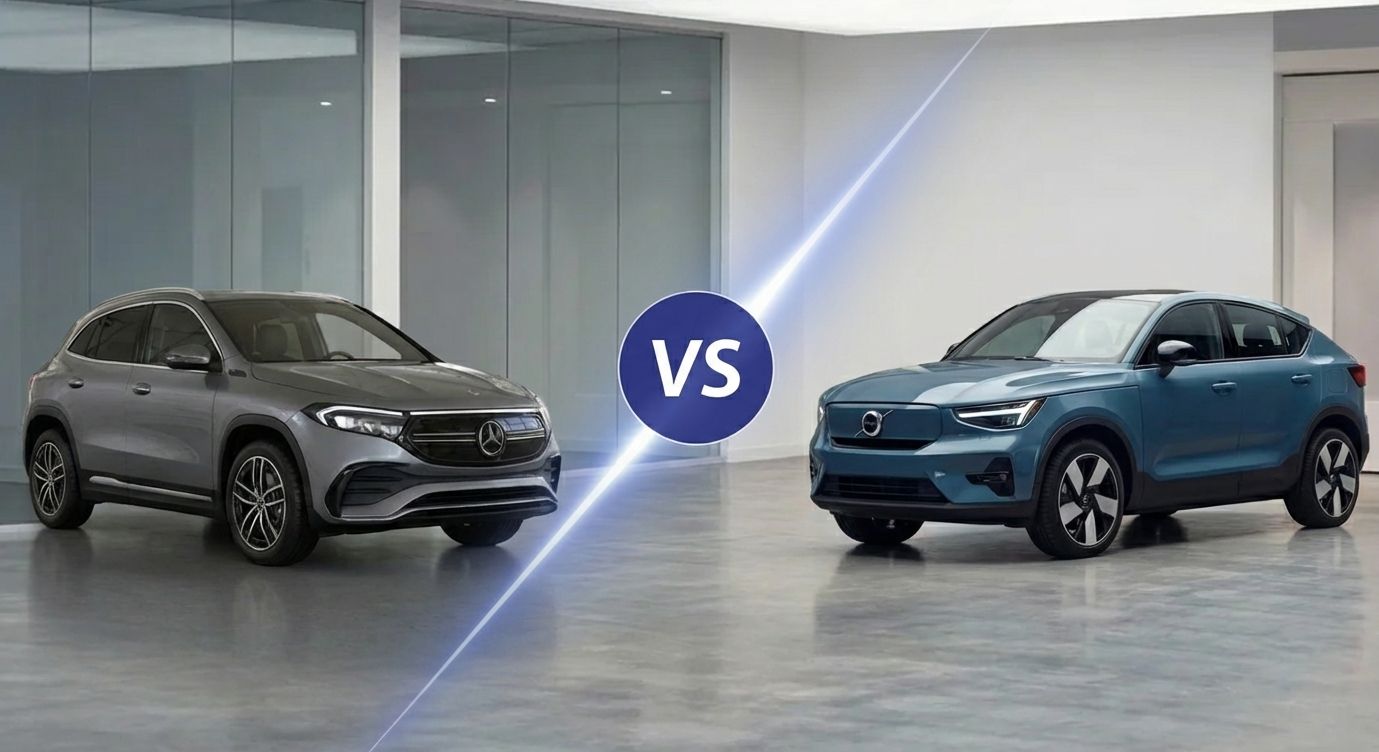
Car battle
Mercedes-Benz EQA vs. Volvo C40 Recharge: Complete comparison 2026
Mercedes-Benz EQA vs. Volvo C40 Recharge. Which premium electric SUV is better? A detailed comparison of range, performance, and price will help you decide.
Apr 14, 2026
Articles
Review
Tesla Model X review: real owner experience, common faults, real-world range, and used prices — everything you need to know before buying.
November 2, 2026
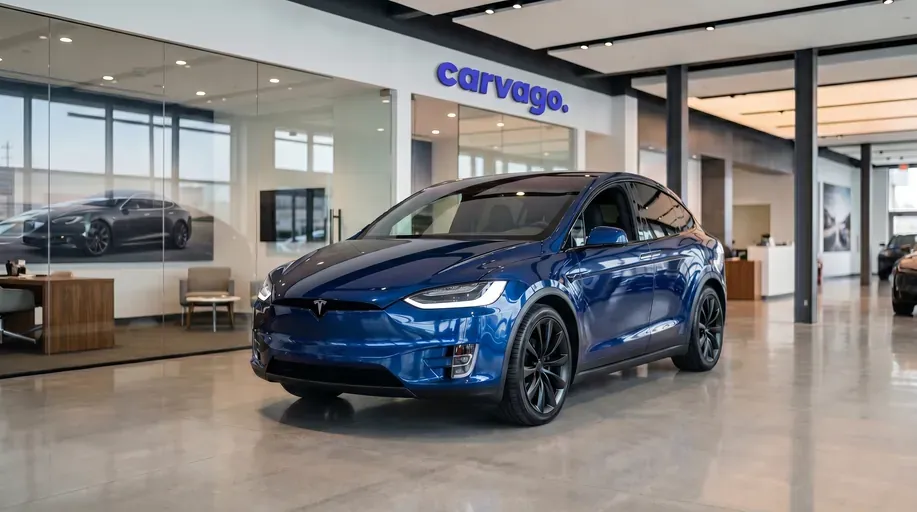
The electric Tesla Model X SUV sits at the top of the brand's passenger lineup as a full-size luxury utility vehicle, distinguished by its tall roofline, standard all-wheel drive, and upward-opening rear doors. This review covers the first-generation Tesla Model X, which entered global production in September 2015, arrived with initial European customer deliveries in June 2016, and concluded assembly in May 2026.
A comprehensive technical and visual refresh was announced in January 2021, bringing a redesigned cabin architecture with a landscape touchscreen display, alongside updated dual-motor and tri-motor drivetrains. Deliveries of these facelifted models reached European customers in December 2022, followed by a final hardware revision in June 2025. Offered exclusively as a five-door sport utility vehicle, it was configured with five-, six-, or seven-seat interior layouts.
In the pre-owned market, the Model X targets buyers requiring multi-passenger seating, factory-rated towing capacity, and high-speed charging capability for long trips without stepping into van-derived alternatives.
Owners of the Tesla Model X frequently report vibrations and shuddering through the steering wheel and dashboard under acceleration between 30 and 80 km/h. This vibration is caused by steep operating angles of the front drive unit half-shafts, which accelerate wear on the inner constant velocity tripod joints, particularly when the adaptive air suspension is set to standard or elevated ride heights. While replacing the half-shaft assemblies provides temporary relief, owners report recurring wear if hard acceleration is used regularly at higher suspension settings. In addition, professional workshop tests and roadworthiness inspections show accelerated wear along the inner shoulders of the rear tyres across all model years, caused by factory negative camber settings coupled with automatic suspension lowering at motorway speeds.
The motorized Falcon Wing rear doors represent another recurring area of owner complaints. Tests describe sensor drift in the ultrasonic sensors embedded inside the door panels, which causes "ghost" obstacle detection where doors halt travel midway or refuse to open fully in clear spaces. Mechanical pinch strips can wear out, misaligned multi-axis hinges can cause the doors to rub against the body jambs down to bare metal, and deteriorating upper glass seals have led to water ingress into the cabin. On pre-facelift vehicles built between 2015 and early 2018, the original media control unit suffered from premature flash memory wear-out due to excessive data logging, resulting in total touchscreen blackout, loss of defrost controls, and failure of the reversing camera until an updated memory board or complete infotainment retrofit was installed.
Suspension components also endure heavy cyclic loads from the vehicle's unladen weight and instant torque. Service bulletins indicate that road salt and moisture can enter the rear lower control arm plug cavities on vehicles built between 2015 and 2021, leading to internal corrosion, cracking, and audible creaking over uneven surfaces. Minor contamination is addressed with sealed replacement plugs, while visible corrosion requires complete bilateral replacement of the rear lower control arms. Prospective buyers can verify the structural and mechanical condition of these components before purchase through CarAudit.
Remote Over-The-Air firmware updates have resolved multiple software issues across various model years. These include a July 2024 update for 2021–2024 models where the front latch failed to detect an unlatched bonnet, a September 2024 update addressing an unbuckled driver seat belt reminder failure covering vehicles built up to 06 May 2024, and a July 2025 update restoring eCall emergency call audio functionality on 2022 to 2024 models, and a November 2023 update for 2021 to 2023 models resolving a sensor software error that prevented low brake fluid detection. In addition, mechanical issues on the Tesla Model X required mandatory physical workshop inspections across Europe.
| Announcement Date | Affected Production Window | European & Global Reach | Defect & Mandated Remedy |
|---|---|---|---|
| November 2017 | 28 October 2016 – 01 September 2017 | European Union | Second-row fold-flat seatback latching cable could be misadjusted, allowing the backrest to move forward in a crash. Workshop inspects and recalibrates the adjustment cable. |
| February 2021 | 17 September 2015 – 31 July 2016 | Worldwide (12,308 vehicles) | Defective adhesive bonding could cause roof and spine trim appliques to detach into following traffic. Workshop tests retention force and reapplies urethane adhesive or replaces trim. |
| November 2023 | 18 February 2021 – 24 June 2023 | European Union & Worldwide | Front seat belt could be improperly fastened to the lap pretensioner anchor, increasing injury risk in an impact. Workshop inspects and retorques or replaces the fastener. |
| October 2025 | 2021–2025 model years | Worldwide (91 vehicles) | Incorrect horn pad fitted during replacement driver airbag service, leaving the horn inoperative. Workshop inspects and installs the correct airbag assembly. |
Throughout its production run, the Tesla Model X was offered exclusively with all-wheel-drive electric powertrains paired with a single-speed automatic transmission. The lineup evolved from early battery-capacity designated models to the updated Long Range and Performance editions, culminating in the refreshed dual-motor and tri-motor Plaid variants.
| Engine | Fuel | Power | Gearbox | Model Years |
|---|---|---|---|---|
| Model X 60D | Electric | 245 kW (328 hp) | Automatic | 2016–2017 |
| Model X 75D | Electric | 245 kW (328 hp) | Automatic | 2016–2019 |
| Model X 90D | Electric | 311 kW | Automatic | 2016–2017 |
| Model X P90D | Electric | 345 kW | Automatic | 2016 |
| Model X 100D | Electric | 386 kW | Automatic | 2017–2019 |
| Model X P100D | Electric | 568 kW | Automatic | 2017–2019 |
| Model X Standard Range | Electric | 205 kW | Automatic | 2019 |
| Model X Long Range | Electric | 310 kW | Automatic | 2019–2021 |
| Model X Performance | Electric | 449 kW | Automatic | 2019–2021 |
| Model X Dual Motor AWD | Electric | 493 kW (670 hp) | Automatic | 2021–2026 |
| Model X Plaid | Electric | 750 kW (1,020 hp) | Automatic | 2021–2026 |
For short urban trips and local driving, entry-level versions such as the early 60D, 75D, or Standard Range serve adequately as a used car purchase, though the vehicle's heavy unladen mass naturally limits low-speed efficiency around town.
For mixed everyday driving, the 90D and 100D strike a practical balance between usable performance and reduced charging frequency.
For frequent long motorway journeys, the 100D, the Long Range, and the refreshed dual-motor Tesla Model X are the most sensible options, providing sufficient cruising endurance between rapid charging pauses.
For heavy towing, the larger energy capacity of the Long Range and post-facelift dual-motor electric Tesla Model X is essential to absorb the steep range reduction caused by trailer weight and aerodynamic drag.
The high-output P90D, P100D, Performance, and tri-motor Plaid variants deliver rapid straight-line acceleration, but they are recommended strictly for performance enthusiasts willing to accept elevated running costs. Driveline hardware is generally durable, though specific mechanical wear patterns are detailed in the owner experiences section.
Owner reports highlight that real-world driving range contracts noticeably in sub-zero winter temperatures, driven by the energy required to heat the spacious cabin and condition the battery pack. Scheduling departure pre-conditioning while connected to a home wallbox helps preserve stored energy before setting off. On long-distance trips, DC fast-charging speeds peak early at lower battery percentages and taper off progressively, making fifteen-to-thirty-minute charging stops up to eighty percent the most time-efficient travel strategy.
| Parameter | Pre-facelift (2015–2020) | Facelift (2021–2026) |
|---|---|---|
| Length (mm) | 5,052 | 5,057 |
| Width excl. mirrors (mm) | 1,999 | 1,999 |
| Height (mm) | 1,684 | 1,680–1,740 |
| Wheelbase (mm) | 2,965 | 2,965 |
| Boot volume, upright / folded (l) | 357 / 2,189–2,486 | 420–1,050 / 2,375–2,492 |
| Front trunk volume (l) | 187 | 183 |
Note: Dimensions and luggage capacities apply across all dual-motor and tri-motor powertrains. Listed cargo volumes reflect manufacturer-published maximum enclosed liquid displacement; standardized European VDA block measurements are not published. Upright rear luggage volume varies according to the five-, six-, or seven-seat interior layout.
The Tesla Model X SUV accommodates adult passengers across its seating rows, though everyday cargo versatility depends heavily on the chosen cabin configuration. Buyers can find the Tesla Model X configured with five, six, or seven seats. In five- and seven-seat arrangements, the second row folds forward to create a flat, continuous load floor. In contrast, the six-seat layout features individual second-row captain's chairs mounted on powered pedestals; while these provide walk-through access to the rearmost row, they do not fold down, which limits the ability to carry long or bulky items. The two third-row seats fold flush into the floor when not in use, leaving an unobstructed load deck complemented by deep sub-floor storage wells and an enclosed front trunk designed for charging cables and smaller bags. The upward-opening rear doors assist entry in tight parking spaces, but their opening path requires clearance monitoring under low ceilings.
On open motorways, the standard air suspension in the Tesla Model X delivers a settled, quiet ride, with tyre roar and wind flutter kept well in check. At lower speeds, however, testers note that the chassis turns restless over broken urban asphalt and reacts abruptly to sharp transverse ridges, particularly when fitted with optional larger wheels. Thanks to the heavy battery pack mounted low in the floor, cornering stability is secure with minimal body lean, although the steering feels inert and completely isolated from the road surface.
Testers consistently criticise early production years for uneven exterior shut-lines and interior plastics that fall short of established executive SUV standards. While the sweeping panoramic windscreen provides expansive forward visibility, concentrating nearly every secondary function into the central touchscreen proves distracting while driving.
The mid-cycle update brought welcome gains in cabin materials and sound insulation. However, testers were critical of the revised ergonomics. Replacing traditional steering stalks with capacitive buttons and touchscreen sliders complicates simple manoeuvres such as indicating through roundabouts. Professional reviews ultimately agree that the Tesla Model X SUV provides secure cruising manners, but disagree on whether its stiffly damped chassis achieves genuine luxury comfort.
All data and charts in this section are drawn from Carvago listings covering the broader Tesla Model X model family across all represented years rather than the reviewed generation in isolation, so they do not establish a separate price level for specific production phases. Across the current European listings, the median asking price stands at €47,500 for 2019 models and €51,400 for 2021 models. Later model years reflect higher asking prices, with medians reaching €78,300 for 2022 cars and €126,000 for 2026 examples.
Between May and October 2026, the count of advertised Tesla Model X vehicles rose from 249 to a peak of 335 listings in September. The chart below tracks how active listings developed across this period.
Active listings over time
| Month | Tesla Model X |
|---|---|
| 2026-05 | 249 |
| 2026-06 | 270 |
| 2026-07 | 308 |
| 2026-08 | 288 |
| 2026-09 | 335 |
| 2026-10 | 333 |
Source Carvago
With active listings finishing at 333 in October 2026, buyers currently face a broad pool of options, though available stock shifted up and down over the observed months.
Among used listings advertised today, the median asking price of cars built in 2019 is €47,500, while the median asking price of cars built in 2026 stands at €126,000. The chart below compares median asking prices across each available model year.
Median advertised price by year of manufacture
| Model year | Tesla Model X |
|---|---|
| 2019 | 47 500 |
| 2020 | 47 900 |
| 2021 | 51 400 |
| 2022 | 78 300 |
| 2023 | 81 400 |
| 2024 | 87 500 |
| 2025 | 88 700 |
| 2026 | 126 000 |
Source Carvago
Buyers comparing model years from 2019 through 2021 encounter median asking prices between €47,500 and €51,400, while listings from 2022 to 2025 sit between €78,300 and €88,700 before reaching €126,000 for 2026 vehicles.
Advertised listings for the model are exclusively electric, moving from 249 cars in May 2026 to 333 cars in October 2026. The monthly counts across each fuel type are shown below.
Supply composition by fuel type
| Month | Electric |
|---|---|
| 2026-05 | 249 |
| 2026-06 | 270 |
| 2026-07 | 308 |
| 2026-08 | 288 |
| 2026-09 | 335 |
| 2026-10 | 333 |
Source Carvago
Every other fuel type recorded 0 listings across the tracked period, leaving electric power as the only option on the market. Buyers will find no alternative powertrains to consider, with all 333 active listings in October 2026 being fully electric.
Between May 2026 and October 2026, the average asking price for the Tesla Model X rose from €59,200 to a peak of €80,500 in September.
Average price development over time
| Month | Tesla Model X |
|---|---|
| 2026-05 | 59 200 |
| 2026-06 | 62 500 |
| 2026-07 | 68 400 |
| 2026-08 | 72 700 |
| 2026-09 | 80 500 |
| 2026-10 | 80 300 |
Source Carvago
Overall, the average advertised price increased from €59,200 at the start of the period to €80,300 in October, with consecutive monthly gains through September followed by a slight dip in the final month.
Settled, quiet motorway ride with secure cornering stability and minimal body lean
Practical seating configurations for five, six, or seven passengers plus front trunk storage
Standard all-wheel drive with time-efficient fast-charging capability on long journeys
Complex Falcon Wing doors prone to sensor glitches, seal leaks, and low-ceiling restrictions
Front half-shaft acceleration shudder and accelerated inner rear tyre wear
Restless low-speed ride on broken surfaces and distracting touch-based cabin controls
Reliability is mixed, as the vehicle's heavy curb weight and complex motorized systems lead to frequent suspension, tyre, and door issues. A thorough pre-purchase inspection of the chassis and motorized components is essential.
The 100D, Long Range, and refreshed dual-motor Tesla Model X offer the best balance of range and efficiency between rapid-charging stops. High-output performance variants deliver faster acceleration but increase tyre and running costs.
Focus on the suspension, motorized rear doors, and inner tyre wear during a physical test drive. In addition, verify through the vehicle identification number that all official safety recall campaigns have been completed.
The five- and seven-seat configurations deliver the best cargo versatility because their second-row seats fold flat for continuous luggage space. The six-seat layout eases third-row access with individual captain's chairs, but those seats do not fold down for bulky cargo.
Sources: tesla.com, adac.de, ec.europa.eu, autocar.co.uk, autoexpress.co.uk
This article was prepared using artificial intelligence tools. The section guarantor is Petr Dušek.
Mercedes-Benz EQA vs. Volvo C40 Recharge. Which premium electric SUV is better? A detailed comparison of range, performance, and price will help you decide.
Apr 14, 2026
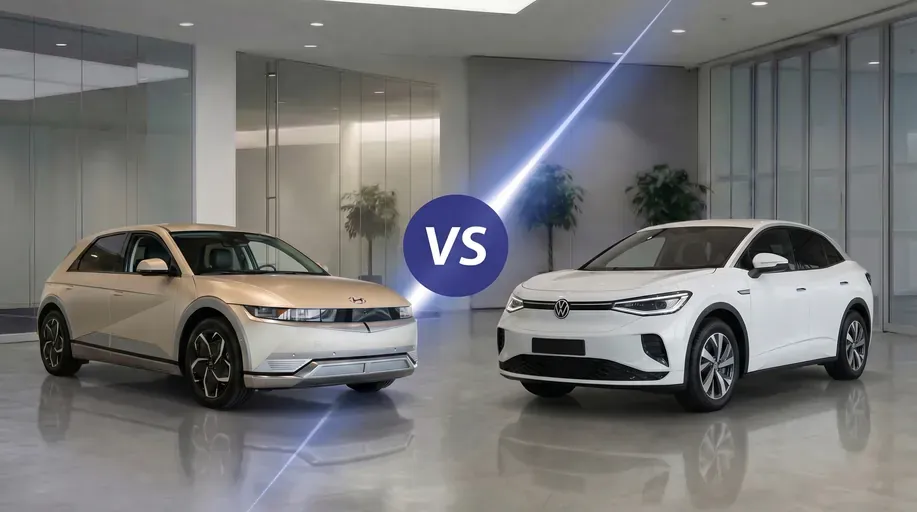
Detailed comparison of Hyundai Ioniq 5 vs. Volkswagen ID.5. Discover the real differences in range, practicality, and equipment. Read our verdict and make the right choice!
Apr 19, 2026
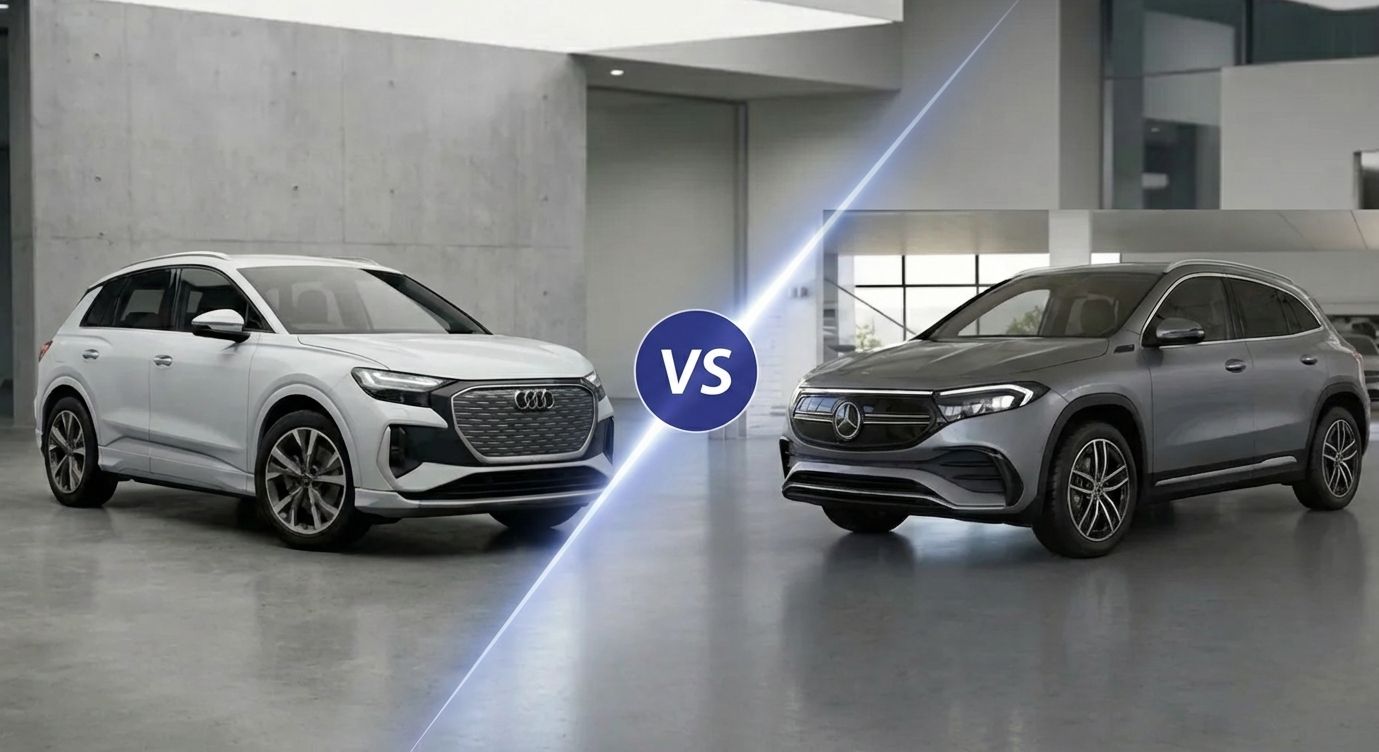
Comparison: Audi Q4 e-tron vs. Mercedes-Benz EQA. Discover the real-world range, differences in equipment, and our clear verdict for choosing the right premium used SUV.
Apr 13, 2026