Car battle
BMW iX1 vs. Mercedes-Benz EQB: Complete comparison 2026
BMW iX1 vs. Mercedes-Benz EQB: Which electric SUV to choose? Read a detailed comparison of range, space, and equipment and find out our final verdict.
Apr 15, 2026
Articles
Car battle
Detailed comparison of Hyundai Ioniq 5 vs. Volkswagen ID.5. Discover the real differences in range, practicality, and equipment. Read our verdict and make the right choice!
April 19, 2026
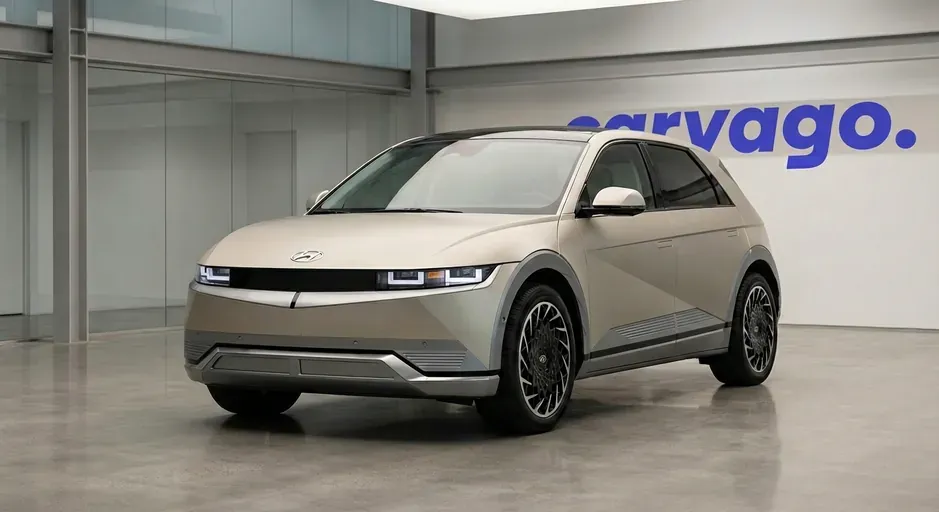
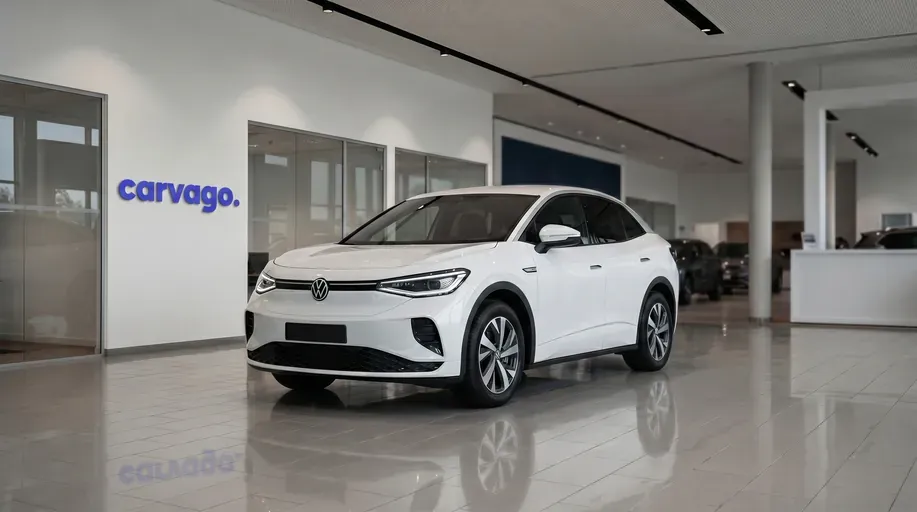
The South Korean Hyundai Ioniq 5 brings a bold retro-futuristic design to the world of electromobility, combined with an exceptionally spacious interior and top-tier 800V architecture for lightning-fast charging. Facing off against it is the German Volkswagen ID.5, which, as a more elegant coupe-SUV variant of the popular ID.4 model, relies on smooth aerodynamic lines, refined driving comfort, and proven group technology. Let's take a detailed look in this direct comparison at how these two attractive family electric cars perform in key areas and which one will be the right choice for your garage.
Looking at the exterior dimensions of both electric vehicles, it might seem at first glance that they play in the same league, but closer examination reveals a completely different approach to spatial proportions. While the Volkswagen ID.5 bets on a slightly more traditional compact SUV cut with a sloping rear (so-called SUV-coupe), the Hyundai IONIQ 5 visually deceives and its retro-futuristic design resembles an oversized hatchback, even though its exterior dimensions place it fully in the SUV category.
The most fundamental difference, which users will feel mainly in the interior space, is hidden in the wheelbase. The Hyundai IONIQ 5 boasts a stunning wheelbase of exactly 3000 mm, which is a staggering 230 mm more than in the case of the Volkswagen ID.5 (up to 2773 mm). Thanks to the Hyundai platform pushing the wheels to the very corners of the body, the car offers regal legroom for passengers that boldly competes with executive limousines from higher classes. The South Korean model is also nearly 4 centimeters longer in its base version and, with a width of 1890 mm, is also 38 mm wider than its German rival.
On the other hand, the slightly more compact footprint of the Volkswagen ID.5 (length just under 4.6 meters and width 1852 mm) brings a practical advantage in the form of easier maneuverability. If you often park the car in narrow underground garages with small spaces or weave through cramped city streets daily, you will likely appreciate the slimmer profile of the Volkswagen in everyday life. In terms of height, both cars are very similar, hovering around the 1.6-meter mark, which ensures comfortable entry and an elevated view of the road for both models.
In terms of the final choice, it depends primarily on where and how you will use the car most often. If maximum interior space for the family is your absolute priority and you don't mind slightly more robust exterior proportions that make parking more difficult, the Hyundai IONIQ 5 clearly leads with its proportions. However, if you prefer a compromise between generous interior space and still good everyday agility in an urban environment, the slightly narrower and shorter Volkswagen ID.5 will be a more pleasant choice for city life.
| Parameter | Hyundai IONIQ 5 SUV | Volkswagen ID.5 SUV |
|---|---|---|
| Length (mm) | 4635 – 4715 | 4582 – 4599 |
| Width (mm) | 1890 – 1940 | 1852 |
| Height (mm) | 1585 – 1605 | 1601 – 1618 |
| Wheelbase (mm) | 3000 | 2770 – 2773 |
Luggage space is a key factor for many buyers of used family electric cars, as it directly affects the daily practicality and usability of the vehicle. When comparing approximately four-year-old Hyundai Ioniq 5 and Volkswagen ID.5 models from the first years of production, we find interesting differences that reflect a different approach to design. While the Volkswagen ID.5 is characterized by a sloping rear in the style of an SUV-coupe, the Ioniq 5 bets on more angular retro-futuristic shapes. This has a direct impact on how effectively the interior space can be used, whether for a family holiday or daily transport of larger items.
In terms of specific numbers, the Volkswagen ID.5 offers a basic luggage capacity of 549 liters, slightly surpassing its Korean rival. The Hyundai Ioniq 5 has a 527-liter trunk in its standard configuration. However, the situation reverses when the rear seats are folded down. The maximum usable volume for the ID.5 is 1,561 liters, while the Ioniq 5 can offer up to 1,587 liters of space. Furthermore, the Hyundai scores with great variability thanks to sliding rear seats, which allow for a seamless adjustment of the ratio between passenger space and trunk volume. A significant advantage of the Ioniq 5 is also the presence of a front trunk (so-called frunk). In the rear-wheel-drive (2WD) version, this adds a valuable 57 liters, while in the all-wheel-drive (AWD) variant, the capacity is reduced to 24 liters due to the additional electric motor. In contrast, the Volkswagen ID.5 does not have a front trunk at all.
In practice, these differences mean that both cars offer a trunk that is perfectly sufficient for weekend shopping as well as longer holidays. Thanks to its slightly deeper base, the Volkswagen ID.5 provides theoretical space for a few extra suitcases in a five-seat configuration; however, its sloping roof can awkwardly limit the transport of taller boxes. The Hyundai Ioniq 5, on the other hand, is a master of interior variability. If you need to move bulkier items, simply slide or fold the seats, and thanks to the more vertical rear, you can much more easily fit even awkward cargo. In terms of overall usability for a dynamic family life, the Korean car thus offers a slightly more flexible and versatile solution.
| Parameter | Hyundai Ioniq 5 SUV | Volkswagen ID.5 SUV |
|---|---|---|
| Basic volume (liters) | 527 | 549 |
| Max. volume with seats folded (liters) | 1587 | 1561 |
While the Volkswagen ID.5 pleases with a slightly larger basic trunk, the Hyundai Ioniq 5 scores with overall variability, sliding seats, and practical storage space under the front hood.
Towing capacity plays a key role for many people interested in a family electric SUV. Whether it's towing a smaller caravan, transporting construction materials, or just securely attaching a rack for several e-bikes for a family trip, differences in towing capacity can significantly affect the car's utility.
In this category, both models on the market for roughly four-year-old used cars differ quite noticeably. The Hyundai Ioniq 5 in versions with the larger battery (72.6 kWh or 77.4 kWh) from 2021 to 2024 offers a maximum braked trailer weight of a respectable 1600 kg. However, for the base version with the smaller 58 kWh battery, the capacity is reduced, and the car can only tow a braked trailer up to 750 kg.
For the Volkswagen ID.5 from the first years of production (2022–2024), the values are different. The standard Pro, Pure, and Pro Performance variants can tow a braked trailer weighing 1000 kg. The more powerful dual-motor GTX version from these years then offers a slightly improved value of 1200 kg. The maximum weight for an unbraked trailer is limited to the common European standard of 750 kg across all generations and powertrains of both vehicles.
What does this mean in practice?
Final evaluation
If you plan to use the towing hitch primarily for transporting bicycles or for occasional hauling of lighter loads, both electric cars in any specification will suffice without problems. However, if you are looking for a more versatile car with which you can confidently head to a campsite even with a caravan, a roughly four-year-old Hyundai Ioniq 5 equipped with the larger battery is clearly a more practical and capable choice thanks to its significantly higher towing capacity.
| Model and powertrain | Braked trailer weight (kg) | Unbraked trailer weight (kg) |
|---|---|---|
| Hyundai IONIQ 5 (58 kWh) | 750 | 750 |
| Hyundai IONIQ 5 (72.6 / 77.4 kWh) | 1600 | 750 |
| VW ID.5 Pure / Pro / Pro Performance | 1000 | 750 |
| VW ID.5 GTX (2022–2024) | 1200 | 750 |
Both of these fully electric SUVs with aerodynamic bodies target families and drivers with higher demands for space and dynamics, yet they approach the powertrain itself quite differently. The main and absolutely key difference for end users is the chosen onboard electrical architecture. While the Volkswagen ID.5 relies on a standard 400V system focused on smoothness and proven group efficiency (with fast charging up to 135 kW for older model years), the Hyundai Ioniq 5 has bet on a more advanced 800V architecture originating from the special E-GMP platform. In real-world operation, this means that although the cars provide very similar ranges, the Ioniq 5 can take in more than 230 kW at appropriate charging stations and charge from 10 to 80% capacity in about 18 minutes. For a buyer looking for a reliable used car three to four years old, this presents a dilemma: would you rather choose the lightning-fast charging and aggressive South Korean, or the smoother, quieter, and more efficient German?
The South Korean representative entered the market with immense variability, allowing customers to configure the car exactly according to their financial and performance requirements. Right at the start of production in mid-2021, it was possible to choose a battery with a usable capacity of 58 kWh, or opt for a more powerful version with a larger 72.6 kWh battery. In both cases, customers could choose between rear-wheel drive (2WD) with a single electric motor or a very dynamic all-wheel drive (4WD) consisting of two independent motors. From the perspective of buying on the used car market, it is extremely important that the 72.6 kWh version was in production for just over a year and was removed from price lists in July 2022 to make way for the updated 77.4 kWh variant. Batteries with capacities of 63 and 84 kWh followed in mid-2024, but it is still too early for those in the category of typical 4-year-old used cars. A smooth single-speed automatic transmission handles the transfer of massive torque (up to 605 Nm in the case of the top-tier AWD models).
| Powertrain | Fuel | Power (kW) | Torque (Nm) | Transmission |
|---|---|---|---|---|
| 58 kWh 2WD | Electric | 125 | 350 | 1-speed auto. |
| 58 kWh 4WD | Electric | 173 | 605 | 1-speed auto. |
| 72.6 kWh 2WD | Electric | 160 | 350 | 1-speed auto. |
| 72.6 kWh 4WD | Electric | 225 | 605 | 1-speed auto. |
| 77.4 kWh 2WD | Electric | 168 | 350 | 1-speed auto. |
| 77.4 kWh 4WD | Electric | 239 | 605 | 1-speed auto. |
The concept of the German Volkswagen is much more conservative and clearer compared to the Ioniq 5, which makes it easier to navigate the used car market. The manufacturer relied primarily on a single battery with a large usable capacity of 77 kWh for all ID.5 versions from the start. It all started with the base rear-wheel-drive version called Pro with 128 kW and continued to the Pro Performance version with an increased output of 150 kW and better torque of 310 Nm. True sporty driving was then exclusively handled by the top-of-the-line GTX model with 220 kW, which the manufacturer equipped with a small asynchronous unit at the front (providing 4MOTION drive) in addition to the rear synchronous electric motor. A very interesting fact about the first ID.5 model years is that the very popular middle ground – the more aggressive Pro Performance version – was only produced between May 2022 and October 2023, after which it was completely phased out for this generation. Newer model years from 2024 onwards already have a range updated with the Pure variant (52 kWh) or a more powerful Pro variant, but these younger units usually exceed the requirements of someone looking for a four-year-old used car.
| Powertrain | Fuel | Power (kW) | Torque (Nm) | Transmission |
|---|---|---|---|---|
| Pro (77 kWh) | Electric | 128 | 235 | 1-speed auto. |
| Pro Performance (77 kWh) | Electric | 150 | 310 | 1-speed auto. |
| GTX (77 kWh) 4MOTION | Electric | 220 | 460 | 1-speed auto. |
Choosing the right battery capacity and electric motor is absolutely crucial for long-term satisfaction with a used electric vehicle. Our recommendations are based on a balance of real-world range, energy efficiency, user feedback, and mechanical and software reliability. While the Hyundai Ioniq 5 has scored points from the start with its very advanced 800V architecture, which was previously the domain of only premium sports cars and allows for extremely fast charging, the Volkswagen ID.5 relies on the established 400V technology of the MEB platform. It compensates for this with the excellent aerodynamics of its SUV-coupe body, with a drag coefficient of just 0.26, which helps it achieve stable efficiency, especially on the highway. Focusing on the used car market with vehicles around four years old, we find specific, very interesting specifications for both vehicles. As highlighted in the table below, the powertrains we recommend are no longer produced as new (they were replaced by more powerful derivatives with slightly larger batteries in subsequent years), but on the used car market, they currently represent by far the most sensible ratio of purchase price, utility value, and operating costs.
| Model | Recommended powertrain | Power | Battery capacity (usable) | Availability as a new car |
|---|---|---|---|---|
| Hyundai Ioniq 5 | 72.6 kWh 2WD | 160 kW | 72.6 kWh | 2021 – 2022 (Discontinued) |
| Volkswagen ID.5 | Pro Performance | 150 kW | 77.0 kWh | 2022 – 2023 (Discontinued) |
For the first model years (2021–2022) of this retro-futuristic crossover, the single-axle drive (2WD) version with the larger 72.6 kWh battery is a safe bet. The 160 kW (217 hp) output is more than sufficient for a large family car, while the absence of a front electric motor (compared to the 4WD version) reduces the vehicle's weight and positively impacts real-world consumption. As a result, the car can typically cover just under 400 km on a single charge. The absolute technological peak is the charging speed at ultra-fast stations, where you can recharge the battery from 10 to 80% in less than 18 minutes. What to watch out for: When choosing a used unit, it is absolutely critical to check the service history regarding the ICCU (Integrated Charging Control Unit). Why it matters: Failures of this unit were among the most common and most dangerous faults of the early model years – in the event of failure, it stops charging the 12V battery, the car loses power, and eventually becomes completely immobilized. How to detect the problem: Before buying, request confirmation from the service center that the vehicle has undergone a recall campaign or a preventive software update of the ICCU unit and check the condition of the standard 12V car battery. We recommend this version especially for drivers who regularly travel longer distances, use powerful highway chargers, and demand unrivaled interior space with an airy interior.
In Volkswagen's portfolio on the four-year-old used market (2022–2023 models), the Pro Performance specification is the ideal middle ground. It features a large battery with a usable capacity of 77 kWh, with which you can count on a real-world consumption of around 17.5 kWh/100 km in a combined cycle and a range easily exceeding 400 km. The 150 kW (204 hp) output guarantees much safer flexible acceleration and a smoother ride than the sluggish base Pro version (128 kW), but unlike the top-of-the-line GTX version (220 kW), it does not suffer from unnecessarily high electricity consumption and more expensive maintenance. What to watch out for: The MEB platform had significant gaps in the smoothness of the infotainment software in its early days. Why it matters: The old system can occasionally freeze, responds more slowly, and lacks some optimizations important for charging and battery thermal management. How to detect the problem: During the test drive, go to the settings and check the vehicle's operating system version. Insist that the software be updated at least to version 3.2 (ideally at an authorized service center if over-the-air updates have failed). In addition to a much more stable interface, the newer system also offers an increased peak charging power of 135 kW. The ID.5 Pro Performance is primarily aimed at users with a calmer driving style, families with children, and drivers for whom the priority is top-tier damping of road imperfections, an exemplarily soundproofed cabin, and smart predictive cruise control for relaxed covering of hundreds of kilometers.
When buying a second-hand electric car, one of the most important parameters is real energy consumption, which often differs significantly on the road from WLTP laboratory values. While official figures for Hyundai Ioniq 5 and Volkswagen ID.5 models from 2021 to 2023 promise an optimistic consumption in the range of 15.7 to 18.1 kWh/100 km, everyday practice shows a different picture. A significant influence on the real range of an electric car is not only the smoothness of the drive and the use of the on-board heater, but above all higher speeds on motorways, where the car's aerodynamics are fully manifested.
For the most accurate comparison possible, we did not just use factory tables, but reached for real data from the users themselves. The following values reflect the long-term averages of the most common engines and battery versions on the used car market (approximately 4 years old).
Data source: Spritmonitor.de
| Model and powertrain | Average consumption (kWh/100 km) |
|---|---|
| Volkswagen ID.5 Pro (128 kW) | 18.5 |
| Hyundai IONIQ 5 (58 kWh) RWD | 18.8 |
| Volkswagen ID.5 Pro Performance (150 kW) | 19.5 |
| Hyundai IONIQ 5 (72.6 / 77.4 kWh) RWD | 19.5 |
| Hyundai IONIQ 5 (72.6 / 77.4 kWh) AWD | 21.0 |
| Volkswagen ID.5 GTX (220 kW) AWD | 21.5 |
A closer look at the data reveals several interesting trends:
The data found has clear implications for typical used electric car buyers. If you move mainly in the city and on suburban routes, both cars will perform extremely similarly, and you won't even notice any difference in consumption on your electricity bill.
On the contrary, for drivers who regularly swallow hundreds of motorway kilometres, the Volkswagen ID.5 will be a slightly more pleasant choice. Thanks to better aerodynamics, its range does not drop as quickly at speeds above 120 km/h as that of its Korean competitor.
In conclusion, energy consumption itself should probably not be the main argument for choosing one model or the other. While the Volkswagen ID.5 leads slightly thanks to more economical operation on motorways, the Hyundai Ioniq 5 uncompromisingly erases this minor shortcoming with its lightning-fast charging, which can significantly shorten stops on long routes thanks to the 800V network. Your final choice should therefore be based more on design preferences, interior space requirements, and whether lower motorway consumption or the speed of recharging at a charging station is more important to you.
Looking at the market for used cars around four years old (2021 and 2022 models), both of these electric vehicles are reaching very attractive price levels. Electric vehicles typically experience a steeper drop in value in their early years, making them an excellent choice on the used market in terms of price-to-performance ratio compared to their original list prices.
Hyundai Ioniq 5 (2021–2022 models)
Prices for used Ioniq 5s vary significantly on the market depending on the chosen battery capacity and trim level. Basic versions with the smaller 58 kWh battery can currently be found for under €25,000. Better-equipped models with the larger 72.6 kWh battery and all-wheel drive typically range between €31,000 and €39,000. A major advantage of a used Ioniq 5 is its advanced 800V architecture, thanks to which, even as a four-year-old used car, it offers charging speeds that even brand-new competitor vehicles often lack.
Volkswagen ID.5 (2022 models)
Since the ID.5 model entered the market slightly later (early 2022), these are at most four-year-old models on the used market in this category. The car is priced quite favorably. Standard Pro Performance versions (with a usable battery capacity of 77 kWh) start in dealerships at around €23,000 to €27,000. The sportier GTX version with 4Motion all-wheel drive and higher performance holds its value slightly better, ranging from approximately €32,000 to €37,000. The entry price for an ID.5 with a large battery is currently slightly lower on the used market than for a comparably equipped representative from South Korea.
| Model | Starting Price (approx.) | Price of Fully Equipped Version (approx.) |
|---|---|---|
| Hyundai Ioniq 5 | €24,000 | €39,000 |
| Volkswagen ID.5 | €23,000 | €37,000 |
Note: Prices are indicative and reflect average values on the used car market for 2021–2022 vehicles with mileage corresponding to their age.
Both cars offer an excellent price-to-value ratio on the four-year-old used market, with the Volkswagen ID.5 being slightly cheaper to purchase, but the Hyundai Ioniq 5 compensates for everything with its unrivaled fast 800V charging.
Both models, the Hyundai Ioniq 5 and the Volkswagen ID.5, boast a maximum five-star rating in crash tests by the independent organization Euro NCAP. However, when comparing safety on the used car market, it is always necessary to take into account the context and the year in which the testing took place. This is because the testing methodology gradually evolves and becomes stricter. While older standards focused primarily on the impact itself, tests in recent years place much greater emphasis on advanced assistance systems, active accident prevention, protection of vulnerable road users, and complex real-world intersection scenarios. For this reason, percentage results from different years cannot always be directly and unreservedly compared.
The Hyundai Ioniq 5 underwent rigorous Euro NCAP tests in 2021. In the area of passive protection for adult occupants, the car achieved an excellent score of 88% and received 86% for child protection. A significant aid to occupant safety is the presence of a center airbag between the front seats, which was introduced in this generation of cars in response to newer protocols. The rating for safety assistance systems was an above-average 88%, proving that its active equipment meets very strict modern standards. A certain weakness for this Korean electric car was the protection of vulnerable road users (pedestrians and cyclists), where the Ioniq 5 scored only 63%.
The Volkswagen ID.5 was also certified based on 2021 standards, with its five-star Euro NCAP rating directly derived from tests of the technically identical ID.4 model. In terms of overall passive safety, the German representative performed slightly better than its rival. Adult occupant protection reached a top-tier 93% and child protection 89%. Volkswagen also had a significant lead in consideration for pedestrians and cyclists with a much more confident rating of 76%. Active safety systems were rated at 85% by experts, with the intelligent Travel Assist system receiving high praise for providing an excellent level of automation and support for highway driving.
When evaluating both cars from the perspective of a buyer of a roughly four-year-old used car, in both cases you get the absolute safety pinnacle with modern active assistants that have not yet undergone significant obsolescence. However, the Volkswagen ID.5 overall offers a better-balanced and slightly more comprehensive safety package, from which not only the occupants inside the car but also pedestrians and cyclists in its vicinity benefit in the event of critical situations.
| Parameter | Hyundai Ioniq 5 | Volkswagen ID.5 |
|---|---|---|
| Year of testing | 2021 | 2021 |
| Adult occupant protection | 88 % | 93 % |
| Child occupant protection | 86 % | 89 % |
| Vulnerable road users protection | 63 % | 76 % |
| Safety assist systems | 88 % | 85 % |
Although both electric cars achieved the maximum five stars and offer excellent modern assistants, the Volkswagen ID.5 shows slightly better and more balanced results in most key passive safety categories.
In addition to standard equipment, both models offer much more than just basic electric mobility, and each approaches added value in its own way. While one bets on radical architecture and unprecedented variability, the other scores with sophisticated software integration and aerodynamic design.
Extremely fast charging thanks to 800V architecture (from 10 to 80% in approx. 18 minutes)
Unique retro-futuristic design that ages very slowly
Huge and airy interior space thanks to a long wheelbase and flat floor
V2L (Vehicle-to-Load) function allowing external electrical devices to be powered
Very comfortable suspension setup for peaceful travel
Lack of wireless Apple CarPlay and Android Auto connectivity (requires a cable)
Boxier shape worsens aerodynamics, which slightly shortens real-world highway range
Larger turning radius making maneuvering in narrow city streets difficult
The front trunk (frunk) is only symbolic in the all-wheel-drive version
The Hyundai Ioniq 5 is a perfect choice for tech enthusiasts and families looking for maximum interior space and who don't want to spend unnecessary time at chargers. With its distinctive look and innovative V2L function, it will appeal to anyone who expects an extraordinary experience and high onboard comfort from a used electric car.
Attractive smooth SUV-coupe lines with excellent aerodynamics and solid highway range
Great maneuverability and a surprisingly small turning radius (especially in rear-wheel-drive versions)
Well-usable luggage space with a volume of 549 liters
Frequent over-the-air (OTA) software updates, which have improved system stability in used cars
Confident and balanced driving characteristics that won't surprise drivers transitioning from internal combustion engine vehicles
Slower maximum charging power compared to the more advanced 800V system in the Hyundai
Impractical touch surfaces on the steering wheel and an unlit temperature adjustment bar below the display
Impaired rear-diagonal visibility due to the significantly sloping roof
Occasional slower infotainment responses in vehicles from older model years
The Volkswagen ID.5 targets drivers who prefer the sporty-elegant look of an SUV-coupe but don't want to make significant compromises in daily practicality and trunk volume. It is a very rational and agile choice for those who are comfortable with the more conservative driving behavior typical of the VW brand and good efficiency on longer routes.
Based on our thorough used car inspection, breakdown statistics, service reports, and long-term owner experiences, we have compiled an overview of the most common problems that buyers of these used electric vehicles should watch out for.
Owners of the Hyundai Ioniq 5 most frequently report issues related to electronics and charging architecture, although mechanically it is a very reliable car.
Most teething problems with the Ioniq 5 are related to software bugs and the ICCU unit. Before any purchase, have an independent technical inspection confirm that the car has undergone all recalls and that the 12V battery is in perfect condition.
While the Volkswagen ID.5 benefits from the bugs fixed in its older siblings, the ID.3 and ID.4 (it came to market directly with the improved generation 3.0 software), it still hasn't avoided some typical ailments of the MEB platform.
The ID.5 is a robust car mechanically and hardware-wise, without fatal problems with the battery or drivetrain. The main issues are concentrated more on the temperamental infotainment and the questionable ergonomics of the touch controls in the interior.
A thorough inspection is crucial when buying a used car. Here are some specific points to focus on for these two models to ensure you choose a reliable unit and avoid expensive repairs for specific teething troubles.
The Hyundai Ioniq 5 offers significantly faster charging than the Volkswagen ID.5 thanks to its 800V architecture. On a compatible ultra-fast charger, the Korean model can recharge from 10 to 80% capacity in just 18 minutes. The Volkswagen, with its traditional 400V system, needs about 30 minutes for the same task.
The Volkswagen ID.5 offers a slightly more voluminous rear trunk with a basic capacity of 549 liters compared to 527 liters for the Ioniq 5. However, Hyundai compensates for this minor shortcoming with a practical front trunk (so-called frunk), which holds an additional 24 to 57 liters depending on the drive version. Overall, the transport capacity of both cars is very comparable and sufficient for normal family use.
The Volkswagen ID.5, with its larger battery with a usable capacity of 77 kWh, offers better aerodynamics, which results in a slightly higher range slightly exceeding 500 kilometers according to the WLTP standard. The Ioniq 5 pays for its specific retro-futuristic design with sharper edges, which results in an average of 30 to 50 kilometers shorter real-world range. However, the significantly faster charging of the Hyundai model successfully erases this difference during long highway trips.
The Hyundai Ioniq 5 features a massive wheelbase of exactly 3000 mm and sliding rear seats, ensuring absolutely premium legroom. While Volkswagen also benefits from a cleverly designed electric platform, it offers less headroom due to the sloping SUV-coupe style roof. For regular transport of adults or taller people in the rear seats, the Ioniq 5 is therefore a more suitable and comfortable choice.
Volkswagen deployed a newer generation of software in the ID.5 model, which solved a number of previous teething problems, but control still takes place almost exclusively via the touchscreen and unlit touch sliders. The system in the Ioniq 5 is often rated as clearer and smoother, but older model years lack wireless support for Apple CarPlay and Android Auto. Fortunately, both cars allow remote updates over the internet (OTA), through which system stability and functions are gradually improved.
Sources: ADAC, e15.cz, lidovky.cz, autoservis.cz, automagazin.cz, autospektrum.cz
This article was prepared using artificial intelligence tools. The section guarantor is Petr Dušek.
BMW iX1 vs. Mercedes-Benz EQB: Which electric SUV to choose? Read a detailed comparison of range, space, and equipment and find out our final verdict.
Apr 15, 2026
Hyundai Ioniq 5 vs. Kia EV6: Which electric car is better? A detailed comparison of range, technology, and price to help you make the right decision.
Apr 13, 2026
Nissan Ariya vs. Škoda Enyaq iV Comparison: Which electric SUV is better? We reveal real-world range, spaciousness, and equipment. Read our final verdict!
Apr 14, 2026