Articles

Car battle

Hyundai Ioniq 5 vs. Kia EV6: Complete Comparison 2025

Hyundai Ioniq 5 vs. Kia EV6: Which electric car is better? A detailed comparison of range, technology, and price to help you make the right decision.

April 13, 2026

VS
Hyundai Ioniq 5

Hyundai Ioniq 5

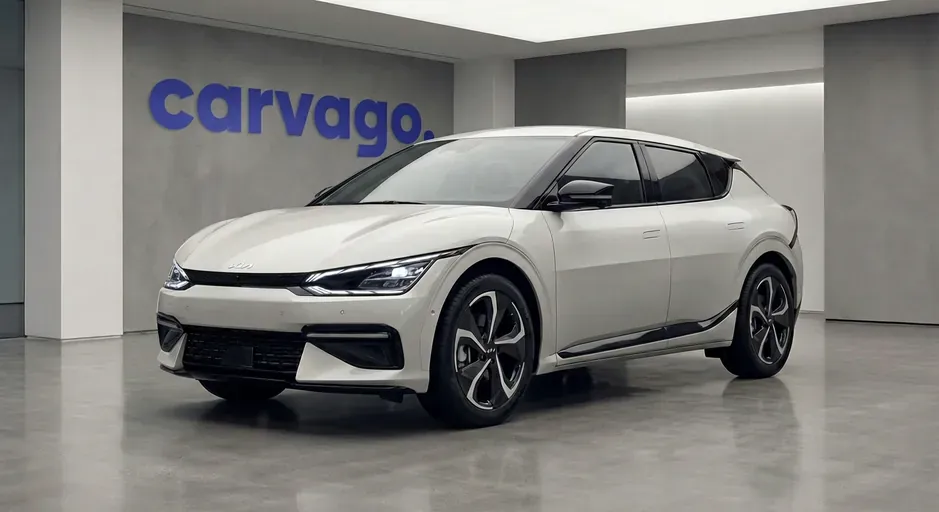
Kia EV6

Kia EV6

Introduction

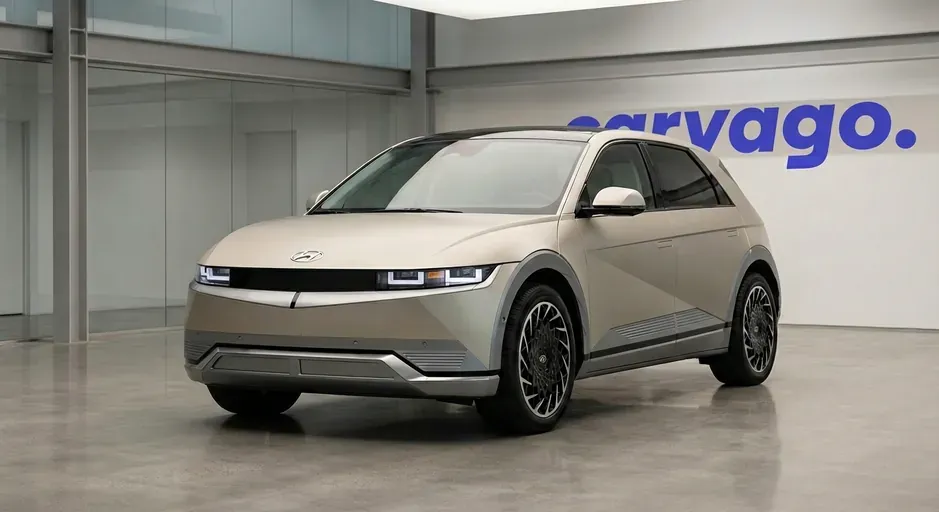
The Hyundai Ioniq 5 is a pioneering electric crossover that captivates at first glance with its distinctive retro-futuristic design and exceptionally spacious, innovative interior. Against it stands its corporate sibling, the Kia EV6, which presents itself as a sleek and sporty electric crossover with a design focused on dynamics and a driver-oriented cockpit. Although both cars share the same advanced E-GMP electric platform, each offers a completely different experience and approach to electromobility, which we will now compare in detail.

Comparison of External Dimensions

Exterior Dimensions: A Battle of Concepts on the Same Platform

Although the Hyundai Ioniq 5 and Kia EV6 share the same E-GMP technical platform, their creators took completely different approaches to the exterior dimensions. At first glance, it's clear that each model targets a different type of customer. While the Ioniq 5 bets on a retro-futuristic design with an emphasis on maximum interior space, the EV6 profiles itself as a sportier and more aerodynamic crossover.

The biggest difference that defines the character of both cars is the ratio of length to wheelbase. The Kia EV6 is about 5 centimetres longer overall, giving it a sleeker, more elongated silhouette. However, the Hyundai Ioniq 5 turns this handicap into its greatest advantage: despite its shorter body, it offers a full 10 centimetres longer wheelbase. This almost unprecedented figure of 3000 mm, more typical of luxury saloons, is the key to an exceptionally airy interior and generous legroom for rear passengers.

Another key difference is in height. The Ioniq 5 is approximately 5.5 centimetres taller, giving it the appearance of a classic SUV. The taller build makes getting in and out easier and gives occupants a better view of the road. The Kia EV6, on the other hand, is noticeably lower, which underscores its sporty character and contributes to better aerodynamics. In terms of width, both cars are practically identical, meaning a stable and confident stance on the road for both models. The choice is therefore clear: do you prefer the practicality and airiness of a taller body, or the dynamic look of a lower crossover?

ParameterHyundai IONIQ 5 SUVKia EV6 SUV
Length (mm)46354680 - 4695
Width (mm)18901880 - 1890
Height (mm)16051545 - 1550
Wheelbase (mm)30002900

Trunk Volume

Boot Space: Practicality First

Spaciousness and practicality are key factors when choosing a family car, and in this discipline, the paths of the two Korean electric vehicles diverge. Although both models are built on the same platform, the Hyundai Ioniq 5 focuses on maximising space and offers a noticeably larger boot, making it a clear favourite for families who often travel with a lot of luggage. Its boxier body shape has a positive effect on volume and usability.

The Hyundai Ioniq 5 in its standard configuration (2021-2024 models) impresses with a basic volume of 527 litres. This is a value that is easily sufficient for a large family shop or a longer holiday. With the rear seats folded down, the space expands to an impressive 1587 litres, allowing for the transport of very bulky items. On the other hand, the Kia EV6, with its sportier silhouette, pays the price with a smaller boot. The basic volume is 490 litres, which is still a decent figure, but with the seats folded down, it offers a maximum of 1300 litres. This difference of almost 300 litres in favour of the Hyundai is really noticeable in practice.

Both cars also have a small storage space under the front bonnet, a so-called 'frunk'. This is particularly useful for storing charging cables. Its size varies depending on whether you have the rear-wheel drive or all-wheel drive version. In the Ioniq 5, it has a volume of 24 to 57 litres, while the EV6 is similar with a range of 20 to 52 litres. As a result, if maximum transport capacity is your absolute priority, the Ioniq 5 is clearly the more practical choice. While the EV6 offers enough space for everyday needs, its sibling is better suited for moving furniture or trips with really large luggage.

ParameterHyundai Ioniq 5 SUV/Off-roadKia EV6 SUV/Off-road
Basic volume (litres)527490
Max. volume with seats folded (litres)15871300

Leave it to Carvago CarAudit™

Order CarAudit™

Trailer Weights

Towing Capacity

The ability to tow a trailer is an increasingly important parameter for electric cars and can be a deciding factor for many buyers. In this regard, both the Hyundai Ioniq 5 and the Kia EV6 offer very competitive figures, which vary depending on the selected battery capacity. Both models thus prove that electric cars can also be practical helpers for transporting cargo or for weekend trips with a caravan.

A simple rule applies to both cars: the larger the battery, the higher the permitted trailer weight. The basic versions with the smaller battery (58 kWh) can handle a braked trailer weighing 750 kg in both models. This is sufficient for a smaller unbraked trailer for transporting garden materials or small luggage. However, the real potential is unlocked in the versions with the larger battery (72.6 kWh and 77.4 kWh for the Ioniq 5 and 77.4 kWh for the EV6), which can handle a braked trailer weighing up to 1600 kg. This value already allows for towing most medium-sized caravans or a trailer with a boat, making both cars fully-fledged family vehicles for an active lifestyle. For unbraked trailers, the same 750 kg limit applies to both models.

As a result, the Ioniq 5 and EV6 are practically identical in terms of towing capacity. The choice between them in this regard will therefore depend more on the availability of a specific version with the desired battery than on differences in technical parameters.

Model and PowertrainBraked trailer weight (kg)Unbraked trailer weight (kg)
Hyundai IONIQ 5 (58 kWh)750750
Hyundai IONIQ 5 (72.6 / 77.4 kWh)1600750
Kia EV6 (58 kWh)750750
Kia EV6 (77.4 kWh)1600750
Kia EV6 GT (77.4 kWh)1600750

Overview of Most Common Motorizations

Powertrain Comparison: Common Foundation, Different Character

The Hyundai Ioniq 5 and Kia EV6 share the same E-GMP technical platform, which means their range of power units and batteries is fundamentally very similar. Both models offer rear-wheel or all-wheel drive variants and a choice of several battery capacities, allowing used car buyers to choose the ideal combination of range and performance. The main differences are in the tuning, available combinations, and especially in the concept of the top sports versions. While the Ioniq 5 initially focused more on comfort and a wider offering in the lower performance spectrum, the EV6 targeted more sport-oriented drivers from the start, culminating in the high-performance GT version.

Hyundai Ioniq 5 Powertrains

The range of powertrains for the Ioniq 5 from 2021-2024 is diverse and covers a wide spectrum of requirements. The base was the version with the smaller 58 kWh battery, which was offered with both rear-wheel and all-wheel drive. For those who desired a longer range, variants with a larger battery were available – first with a capacity of 72.6 kWh (until mid-2022) and later with an increased capacity of 77.4 kWh. Performance varies depending on the battery capacity and the chosen drive type. The rear-wheel drive (RWD) versions have one electric motor at the rear, while the all-wheel drive (AWD) versions add a second, smaller motor to the front axle, providing higher performance and better traction. All models use a single-speed reduction gear transmission.

Engine TypeFuelPower (kW)Torque (Nm)Transmission
Standard Range RWD (58 kWh)Electric125350Single-speed
Standard Range AWD (58 kWh)Electric173605Single-speed
Long Range RWD (72.6 kWh)Electric160350Single-speed
Long Range AWD (72.6 kWh)Electric225605Single-speed
Long Range RWD (77.4 kWh)Electric168350Single-speed
Long Range AWD (77.4 kWh)Electric239605Single-speed

Note: The 72.6 kWh battery was replaced by the larger 77.4 kWh battery in mid-2022.

Kia EV6 Powertrains

The Kia EV6 had a slightly sportier focus from the beginning, which is also reflected in its powertrain offerings from 2021-2024. The base model also featured a 58 kWh battery and rear-wheel drive, but unlike its sibling, the Ioniq 5, this smaller battery was not available with all-wheel drive. The main focus of the range was on versions with the larger, 77.4 kWh battery, which could be purchased with either rear-wheel drive for maximum range or all-wheel drive for impressive dynamics. The top of the range and a real attraction for enthusiastic drivers was the EV6 GT version, which offered stunning performance and supercar-level acceleration, clearly defining Kia's sporting ambitions in the era of electromobility.

Engine TypeFuelPower (kW)Torque (Nm)Transmission
Standard Range RWD (58 kWh)Electric125350Single-speed
Long Range RWD (77.4 kWh)Electric168350Single-speed
Long Range AWD (77.4 kWh)Electric239605Single-speed
GT AWD (77.4 kWh)Electric430740Single-speed

Verdict: Which Powertrain to Choose?

The choice between the Ioniq 5 and the EV6 in terms of powertrain depends purely on your priorities. If you are looking for the widest selection and a more affordable all-wheel-drive option, the Ioniq 5 with the smaller 58 kWh battery and AWD is an interesting choice that Kia did not offer during this period. For drivers who prioritize maximum range, the rear-wheel-drive versions with the larger battery (77.4 kWh) are the ideal choice for both models, offering nearly identical parameters. However, if your main criteria are adrenaline and maximum performance, the clear choice is the Kia EV6 GT, which at the time represented the pinnacle of what the E-GMP platform could offer, leaving the standard Ioniq 5 versions far behind. For everyday driving and family use, however, both all-wheel-drive variants with the larger battery are perfectly adequate and offer a great compromise between performance, range, and traction.

Choosing the right powertrain is key to long-term satisfaction with an electric vehicle. Our recommendations are based on a combination of performance, real-world range, owner feedback, and overall reliability. Although the Hyundai Ioniq 5 and Kia EV6 share the same E-GMP technical platform with an advanced 800V architecture, their character and offerings differ slightly. While the Ioniq 5 places a greater emphasis on comfort and space, the EV6 targets more sport-oriented drivers. During production, both automakers replaced the original 72.6 kWh battery with a more modern 77.4 kWh variant, which is the ideal choice for the used car market.

For the Hyundai Ioniq 5, we recommend: The version with the 77.4 kWh battery and rear-wheel drive (168 kW)

This variant, available from the 2022 model year, represents the ideal compromise between price, range, and performance. With 168 kW (229 hp) of power and 350 Nm of torque, it offers more than enough dynamism for daily driving and longer journeys. Acceleration from 0 to 100 km/h in 7.3 seconds is brisk, and thanks to the rear-wheel drive, the car is pleasantly agile. The main advantage, however, is its real-world range, which is between 400 and 480 km in combined use, making it a fully-fledged family car. Thanks to its 800V architecture, it can charge from 10% to 80% in just 18 minutes at compatible stations. Compared to the all-wheel-drive version, the RWD is more economical and lighter. When choosing a used car, focus on models produced from the summer of 2022 onwards, which came standard with battery pre-heating, significantly speeding up charging in the winter months. For drivers who primarily drive in the city, the basic 58 kWh version may also be of interest, while the all-wheel-drive (AWD) version will appeal to those who require maximum traction and performance at the cost of a slightly shorter range.

For the Kia EV6, we recommend: The version with the 77.4 kWh battery and rear-wheel drive (168 kW)

As with its sibling model, the version with the larger battery and rear-wheel drive is the most sensible choice for most buyers of the EV6. It offers the longest official range in the entire model line-up (up to 528 km according to WLTP), while in the real world, you can expect 420 to 500 km on a single charge. The 168 kW of power and 350 Nm of torque are identical to the Ioniq 5 and ensure confident dynamics. However, the Kia is tuned to be a bit sportier – it has a stiffer chassis and sharper steering, which drivers who enjoy the ride will appreciate. Thanks to its lower and more aerodynamic body, the EV6 achieves slightly lower average consumption than the Ioniq 5, especially at motorway speeds. The risks are minimal and identical to the Ioniq 5; this is very reliable technology. This version is ideal for drivers looking for an electric car with a long range, a sporty feel, and an attractive design. For those who crave maximum performance, there is an AWD version with 239 kW or the top-of-the-line GT variant with a stunning 430 kW, but these are less efficient and few will ever use their full potential.
Real Fuel Consumption

Real-world Consumption: A Close Battle on Every Kilometre

Official consumption figures, measured according to the WLTP cycle, are one thing, but the day-to-day reality on the road is often different. This is doubly true for electric vehicles, as driving style, temperature, and route profile come into play. To get the most accurate picture, we compared data from real users, for example from the German portal Spritmonitor.de, with the results of editorial tests. Both cars, built on the same E-GMP platform, are very close in terms of efficiency, but there are still minor differences to be found.

Thanks to its more aerodynamic and lower body, the Kia EV6 has a slight advantage, which is particularly noticeable at higher motorway speeds. In contrast, the Hyundai Ioniq 5, with its retro-futuristic and boxier design, creates slightly more air resistance. In urban and suburban traffic, the differences are practically negligible.

Model and version (battery)Average real-world consumption (kWh/100 km)
Hyundai Ioniq 5 (58 kWh, RWD)17.5 – 19.5
Hyundai Ioniq 5 (77.4 kWh, RWD)18.0 – 20.5
Hyundai Ioniq 5 (77.4 kWh, AWD)19.0 – 22.0
Kia EV6 (58 kWh, RWD)17.0 – 19.0
Kia EV6 (77.4 kWh, RWD)17.5 – 20.0
Kia EV6 (77.4 kWh, AWD)18.5 – 21.5
Hyundai Ioniq 5 N (84 kWh, AWD)22.0 – 28.0+
Kia EV6 GT (77.4 kWh, AWD)21.0 – 26.0+

As is clear from the table, in a direct comparison of comparable versions, the Kia EV6 tends to be more economical by a few tenths of a kilowatt-hour per hundred kilometres. In practice, this translates to an extended range of about 10 to 20 kilometres on a single charge in favour of the Kia, which is not a dramatic, but still a measurable, difference. Users with a calm driving style who travel mostly in the city can achieve even better figures with both models, often below 17 kWh/100 km. Conversely, on the motorway at speeds of around 130 km/h, it's not uncommon for both cars to exceed 22–24 kWh/100 km, especially in the winter months.

For a driver who often travels long distances on motorways, the Kia EV6's slightly lower consumption can be a small but welcome bonus. For most other users, however, the difference in consumption is unlikely to be a deciding factor. Both cars are among the most efficient electric vehicles in their class, and thanks to their 800V architecture, they offer lightning-fast charging that easily negates any minor difference in consumption.

Price Range and Used Car Offerings

Used Car Price Range: The Ioniq 5 as a More Affordable Entry Point

When looking at the used car market, the Hyundai Ioniq 5 and Kia EV6, both built on the same E-GMP platform, move in similar yet distinct price ranges. Generally, the Ioniq 5 often represents a slightly more affordable option, which can be a key factor for many buyers.

Hyundai Ioniq 5: Wider Selection and More Favourable Prices

Older Hyundai Ioniq 5 models, especially from 2021 and 2022, can be found on the market with price tags starting at around €25,000. These cars typically have a few tens of thousands of kilometers on the clock and are base versions with the smaller battery (58 kWh) and rear-wheel drive.

  • Base models (2021-2022): Prices range from €25,000 to €31,000.
  • Higher trims and larger batteries (72.6 kWh / 77.4 kWh): Cars with all-wheel drive, higher trim levels (e.g., Style, Premium), and a longer range typically range from €31,000 up to the €41,000 mark, depending on age, mileage, and specific configuration.

Kia EV6: A Sportier Design for a Slightly Higher Price

As a used car, the Kia EV6 holds its value slightly better than its corporate sibling. This is partly due to its sportier positioning and design. The price floor for 2022 models is slightly higher than for the Ioniq 5.

  • Base models (2022): The cheapest units appear with a price of around €29,000. These are also versions with the smaller battery and rear-wheel drive.
  • Higher trims (GT-Line, AWD): If you're eyeing the attractive GT-Line version with all-wheel drive and the larger battery (77.4 kWh), be prepared for prices that commonly range from €35,000 and can exceed €45,000 for nearly new units with minimal mileage.

What Influences the Price?

Besides the year of manufacture and mileage, several factors play a crucial role for both models:

  • Battery Capacity: Versions with the larger battery (72.6 kWh and later 77.4 kWh) are logically more expensive and in higher demand.
  • Drivetrain: All-wheel drive (AWD) models hold a higher price than rear-wheel drive (RWD) variants.
  • Trim Level: Higher trim levels like Style and Premium on the Ioniq 5 or GT-Line on the EV6 significantly increase the car's value, thanks to features such as better headlights, a premium audio system, a head-up display, or more advanced assistance systems.
  • Condition and Warranty: Given that both cars offered generous factory warranties (Hyundai 5 years with no mileage limit, Kia 7 years/150,000 km), cars with a valid warranty and a verifiable service history are logically more valuable.

Ultimately, while the Ioniq 5 may offer a slightly better price-to-utility ratio, especially in the base models, the EV6 justifies its slightly higher price with its sporty charm and often richer equipment in the popular GT-Line versions.

Safety and Euro NCAP Rating

Safety Comparison: Who Protects the Occupants Better?

Although both cars, the Hyundai Ioniq 5 and the Kia EV6, boast the highest five-star rating from Euro NCAP, it is important to look at the results in context. The testing protocols are constantly becoming stricter, and therefore, a direct comparison of percentage scores between cars tested in different years can be misleading. Newer tests place greater emphasis on advanced assistance systems and the protection of vulnerable road users.

Hyundai Ioniq 5 (Tested in 2021)

The Hyundai Ioniq 5 received its five stars in 2021. It achieved impressive numbers in the individual categories: 88% for adult occupant protection and 86% for child protection. Its results in the protection of vulnerable road users (pedestrians and cyclists) reached 63%. In the category of assistance systems that actively prevent accidents, the Ioniq 5 scored an excellent 88%. The car was praised for its robust crash protection and the standard center airbag, which prevents contact between the driver and front passenger in a side impact.

Kia EV6 (Tested in 2022)

The Kia EV6 underwent testing a year later, in 2022, and also took home a full five stars. Its score in adult occupant protection was even slightly higher – a full 90%. In child protection, it achieved the same score as the Ioniq 5, 86%. It recorded a slightly better result in the protection of vulnerable road users with 64%, and in the safety assist systems assessment, it scored 87%. Euro NCAP particularly highlighted the extremely stable passenger cabin in a frontal impact and the maximum points awarded in side impact tests, where the EV6 provided strong protection for all critical body parts.

Verdict and Summary of Results

Both cars offer a top-tier level of passive and active safety, confirmed by the highest ratings. However, the Kia EV6 was tested a year later under slightly stricter criteria and achieved a two-percentage-point better result in the key category of adult occupant protection. Although the differences are minimal, Kia holds a slight advantage in modernity and overall score. Hyundai, on the other hand, has a slight lead in the assessment of assistance systems. For the buyer, this means that you can't go wrong with either model in terms of safety.

ParameterHyundai Ioniq 5Kia EV6
Year of testing20212022
Adult Occupant Protection88 %90 %
Child Occupant Protection86 %86 %
Vulnerable Road User Protection63 %64 %
Safety Assist Systems88 %87 %

Comparison of Interesting Equipment Features

Both models offer more than just basic equipment, and each has its own distinctive approach to added value, which can be a deciding factor for potential owners.

Hyundai Ioniq 5: Emphasis on Space and Innovative Comfort

The Hyundai Ioniq 5 presents itself as a car that maximizes the advantages of its electric platform to create an exceptionally spacious and versatile interior, complemented by smart technologies.

  • Interior and Space: Thanks to its extremely long wheelbase (3000 mm), the Ioniq 5 offers an interior space comparable to cars in the next class up. A key feature is the sliding "Universal Island" center console, which allows front passengers to easily move from one side to the other and creates a feeling of openness.
  • Seats and Relaxation: The front seats are electrically adjustable and can be reclined to an almost horizontal position, creating a relaxation zone with a leg rest – ideal for resting while charging.
  • V2L (Vehicle-to-Load) Technology: The Ioniq 5 acts as a mobile power bank. Thanks to the V2L function, you can power any electrical device up to 3.6 kW from the car, both from an external socket (using an adapter) and from an internal socket under the rear seats. You can power a coffee maker, a laptop, or even charge another electric vehicle.
  • Design and Practicality: The unique "pixel" light design and minimalist look reference retro-futurism. In practice, you'll also appreciate the front trunk ("frunk") with a volume of up to 57 liters (in the rear-wheel-drive version), which is ideal for storing charging cables.

Kia EV6: Sporty DNA and Driver-Focused Technology

The Kia EV6 is built on the same platform but focuses more on dynamics, sporty performance, and technologies that enhance the driving experience.

  • Performance and GT Version: The top-of-the-line EV6 GT version offers 430 kW (585 hp) and accelerates from 0 to 100 km/h in just 3.5 seconds. A special GT button on the steering wheel instantly activates the car's sharpest settings for the ultimate sporty experience.
  • Design and Ergonomics: The EV6 has a sleeker, sportier body with a sloping roofline. The interior is more driver-oriented, with a curved digital instrument cluster and infotainment panel that wraps around the driver, making it easier to control.
  • Display and Controls: Kia cleverly combines touch and physical controls. Below the main display is an innovative touch panel that can switch between climate controls and infotainment shortcuts, saving space and simplifying access to functions.
  • Advanced Technologies: The EV6 offers an augmented reality (AR) head-up display that projects navigation instructions and driver-assist system alerts directly into the driver's field of view, as if they were part of the real world ahead. Like the Ioniq 5, the EV6 also features V2L technology.

Key Advantages and Disadvantages

Hyundai Ioniq 5

Advantages:

  • Extremely spacious and versatile interior: Thanks to its long wheelbase (3,000 mm) and flat floor, the Ioniq 5 offers interior space comparable to cars in the next class up. The rear seats are slidable, allowing you to choose between maximum legroom or more luggage space.
  • Unique retro-futuristic design: The look, inspired by the 1974 Pony model, is unmistakable and stands out from the crowd. Sharp lines and parametric lights give it a unique character.
  • Top-tier 800V ultra-fast charging: Like its sibling, the EV6, the Ioniq 5 can charge its battery from 10% to 80% in just 18 minutes at a sufficiently powerful station, which is among the absolute best on the market.
  • High level of comfort and quiet ride: The chassis is tuned primarily for comfort, filtering out bumps excellently and, along with superb cabin soundproofing, ensures a very quiet and relaxed ride.
  • V2L (Vehicle-to-Load) function: A practical feature that allows you to power external appliances up to 3.6 kW from the car, whether it's a laptop in the great outdoors or a coffee maker while camping.

Disadvantages:

  • Softer suspension limits sporty ambitions: The focus on comfort means that during spirited driving, the body rolls more, and the car doesn't feel as agile as its corporate sibling.
  • Higher energy consumption: Due to its less aerodynamic, boxier body, the Ioniq 5 has slightly higher consumption in a direct comparison with the EV6, resulting in a slightly shorter real-world range with the same battery.
  • Basic trunk volume is only average: Although the interior is huge, the basic luggage space of 527 liters is a rather standard figure in the context of its external dimensions.
  • Missing rear wiper: The design decision to omit a rear wiper can impair visibility in rain and adverse weather.

Kia EV6

Advantages:

  • Sportier design and driving characteristics: The EV6 has a more dynamic and elegant silhouette. Its chassis is stiffer, which, combined with more precise steering, delivers a more agile and enjoyable driving experience, especially in corners.
  • Slightly longer range and lower consumption: Thanks to its more aerodynamic body, the EV6 can be slightly more efficient, resulting in a slightly longer range on a single charge in comparable versions.
  • More practical controls and a more traditional cockpit: Although the interior is modern, the more driver-oriented layout and the presence of some physical buttons may be more intuitive for many users.
  • Top-tier fast-charging technology: It shares the 800V architecture with the Ioniq 5, which means extremely fast charging (10-80% in 18 minutes), which remains one of the biggest competitive advantages of the E-GMP platform.
  • Seven-year warranty: Kia's traditional benefit of a longer warranty period for the entire vehicle can mean greater peace of mind for some used car owners.

Disadvantages:

  • Less interior space for passengers: Despite having nearly identical external dimensions, the EV6 has a shorter wheelbase, resulting in slightly less space for rear-seat passengers compared to the Ioniq 5.
  • Worse rear visibility: The sloping roof and massive C-pillars restrict the view diagonally to the rear, making parking sensors and cameras an absolute necessity.
  • Smaller luggage compartment: The basic trunk volume of 490 liters is noticeably smaller than the Ioniq 5's and may be limiting for family purposes.
  • Stiffer suspension on poor-quality roads: The sportier suspension tuning means that driving on rough roads can be less comfortable than in the more cushioned Ioniq 5.

Common Problems and Owner Complaints

Based on our own CarAudit inspections, breakdown statistics, and owner feedback, we have compiled an overview of the most common problems that buyers of used Hyundai Ioniq 5 and Kia EV6 cars should watch out for. Since both models share the same E-GMP platform, some problems are common to both, but they still differ in the details.

Hyundai Ioniq 5

The Hyundai Ioniq 5 is generally considered a reliable car, but several recurring issues, especially in early models, are worth noting. Most of them can be resolved with software updates or service interventions.

  • Electrical system and charging: The most frequently mentioned problem is the failure of the Integrated Charging Control Unit (ICCU). This fault can lead to the 12V battery stopping charging, which can cause a complete loss of power even while driving. The issue was the subject of recalls, so it is crucial to verify that the necessary service has been performed on the vehicle. Related to this are frequent complaints about the spontaneous discharge of the 12V battery, which can prevent unlocking and starting the car. The solution is usually a software update or replacement of the ICCU unit.
  • Home charging issues: Some owners report interruptions in charging when using wallboxes (Level 2). The cause is often overheating of the charging port, which the control unit interprets as a risk and stops the process. Hyundai has issued a software update (TSB 23-EV-003H) that addresses the problem by reducing the charging power when a higher temperature is detected.
  • Winter charging performance (Coldgate): Models produced before 2023 were not equipped with battery preheating for fast DC charging as standard. This resulted in significantly slower charging in cold weather. The manufacturer later offered a paid software update that added this feature. In newer cars, preheating is already part of the standard equipment.
  • Software and infotainment: The system can sometimes be slow to respond, and minor software bugs appear, but these are usually resolved by a restart or an update.

Summary for the Ioniq 5: The biggest risk is a faulty ICCU unit and the associated problems with the 12V battery. It is therefore essential to check the service history and recall participation of a used car. Other problems are of a more minor nature and have often already been resolved by the manufacturer.

Kia EV6

The Kia EV6 shares its technical foundation with the Ioniq 5, and thus some of its issues. Its reliability is at a similarly high level, yet there are specific areas to check.

  • Electrical system and charging: Just like the Ioniq 5, the EV6 also experienced problems with the ICCU unit, leading to the 12V battery not charging and, in extreme cases, a loss of power. A recall was also issued for this, and its completion must be verified when buying a used car. Problems with the 12V battery are also a frequent topic on discussion forums.
  • Software and connectivity: A common, though rather minor, complaint from owners is the absence of wireless Apple CarPlay and Android Auto in versions with built-in navigation. Connecting a phone requires a cable. Newer models (post-facelift) now offer a wireless connection.
  • Chassis and aerodynamic noise: Some users complain about increased noise from the chassis and wheels, especially on rougher asphalt. There are also occasional reports of minor creaking sounds in the interior, which is good to check during a physical inspection of the used car.
  • Practical details: Owners sometimes complain about minor ergonomic shortcomings, such as the poorly visible boot release button in the dark or the lack of a rear wiper on pre-facelift models, which worsens rear visibility in the rain.

Summary for the EV6: The main technical risk, the ICCU unit, is shared with the Ioniq 5 and requires the same caution. Other problems are more minor and relate to comfort and user-friendliness. A thorough technical inspection of the car before purchase will reveal any shortcomings in soundproofing or interior build quality.

Tips for Buying a Used Car

When buying a used car, a thorough inspection is key, and this is no different for these two technologically advanced electric vehicles. Here are a few specific points to focus on.

When choosing a Hyundai Ioniq 5:

  • Software version and infotainment response: Make sure the car is running the latest available software version. Older versions can be slow, freeze, or have connectivity issues (Apple CarPlay, Android Auto). During a test drive, try all the main functions to verify the system's smoothness.
  • 12V battery condition: The Ioniq 5, like many other electric cars, uses a standard 12V battery to power the onboard systems before starting. There have been cases of it discharging quickly, making it impossible to 'start' the car. Check the age of the battery and have it tested if necessary.
  • Heat pump functionality: If the car is equipped with one (standard on higher trims), check its functionality. The heat pump significantly increases heating efficiency in winter and saves range. A malfunction will be evident by a sharp drop in range after turning on the heating.
  • Chassis noise: During the test drive, turn off the radio and focus on sounds from the axles, especially when driving over bumps at lower speeds. Some early units may have suffered from creaking or knocking from the suspension, which could signal the need for an early investment in a comprehensive car check.
  • Battery degradation: Check the estimated range at 100% charge in the onboard computer. Compare it with the stated values for the specific version. A significantly lower value (taking into account the outside temperature) may indicate excessive battery degradation.

When choosing a Kia EV6:

  • Battery cooling and preheating: Find out if the model you are buying has a battery preheating system for fast charging (it may not have been standard on older models). Its absence significantly slows down charging in the winter months. The best way to check the system's functionality is at a fast-charging station.
  • i-Pedal system (recuperation): Test all levels of recuperation, including the i-Pedal mode for one-pedal driving. The transitions between the different levels must be smooth. Any jerking or unpredictable behaviour requires a closer technical inspection of the car.
  • Aerodynamic noise: At higher speeds (above 100 km/h), pay attention to aerodynamic noise around the A-pillars and side mirrors. Some owners have reported excessive whistling, which can be caused by imprecise panel alignment or seals.
  • Functionality of the retractable door handles: Make sure all handles extend and retract smoothly when the car is unlocked and locked. Jamming, especially in freezing weather, can be a sign of a problem with the mechanism.
  • Condition and accuracy of the onboard cameras: Thoroughly check the functionality of the 360-degree camera system and all parking assistants. Check the image from all cameras to ensure it is not distorted, blurry, or damaged, which could indicate a problem with the camera itself or its calibration.

FAQ: Most Frequently Asked Questions

The Hyundai Ioniq 5 offers a more practical and spacious interior. It has a larger boot space (527 litres compared to 490 litres in the EV6) and, thanks to its taller body, more headroom for rear-seat passengers. The Ioniq 5 is therefore perceived as more airy and better suited for family use.

The Kia EV6 is focused on a sportier and more dynamic driving experience. It has a stiffer chassis that provides better stability in corners and feels more agile overall. The Hyundai Ioniq 5, on the other hand, prioritises comfort, and its softer suspension filters out bumps better, making it a more comfortable car for daily travel.

Thanks to its more aerodynamic body and slightly different powertrain tuning, the Kia EV6 generally has a slightly longer range than the Ioniq 5 with the same battery. While the Ioniq 5 focuses more on interior space, the EV6 optimises efficiency for longer journeys. However, the real-world range for both models varies significantly depending on the battery version, drive system, and driving style.

Both cars share the same 800V architecture, which allows for top-tier charging speeds. Theoretically, both models can charge from 10% to 80% in about 18 minutes on a sufficiently powerful DC charger. In practice, however, there may be slight differences depending on the battery temperature and the vehicle's current software.

Yes, design is one of the main differentiating factors. The Ioniq 5 relies on a retro-futuristic design with sharp edges and a minimalist concept, reminiscent of a "living room on wheels." The Kia EV6, in contrast, has a sporty and sleek design with a low silhouette and a driver-oriented interior that evokes a cockpit.

Conclusion: Which Model to Choose?

Our Verdict

The choice between Hyundai Ioniq 5 and Kia EV6 depends on personal priorities, although both cars share the top-tier E-GMP platform with fast charging and excellent dynamics. Hyundai Ioniq 5 is ideal for those who prioritize space, comfort, and practicality, offering an airy interior, a large trunk, and a softer suspension for families. In contrast, Kia EV6 will appeal to drivers looking for a sporty style, more dynamic driving characteristics, and more agile handling thanks to a stiffer suspension and precise steering. The decision thus depends on whether you are looking for a spacious and comfortable family SUV, or an elegant and fun crossover with a sporty spirit.

Find your ideal car

Sources: ADAC, motor1.com, autocar.co.uk, greencarreports.com, insideevs.com, electriccarsreport.com

This article was prepared using artificial intelligence tools. The section is guaranteed by Petr Dušek.

Related articles

Car battle

Audi Q4 e-tron vs. Mercedes-Benz EQA: Complete comparison 2026

Comparison: Audi Q4 e-tron vs. Mercedes-Benz EQA. Discover the real-world range, differences in equipment, and our clear verdict for choosing the right premium used SUV.

Apr 13, 2026

Car battle

Audi Q8 vs. Volkswagen Touareg: Complete comparison 2026

They share the same platform, but which one is better? A detailed comparison of the Audi Q8 and Volkswagen Touareg. We have evaluated the features and prices, and we provide a clear final verdict.

Apr 2, 2026

Car battle

BMW iX3 vs. Tesla Model Y: Complete comparison 2026

BMW iX3 vs Tesla Model Y: A detailed comparison of electric SUVs. Discover real-world range, differences in equipment, and read our verdict for an easier choice.

Apr 14, 2026

We accept online card payments as well as wire transfers.

visa payment provider logovisa-electron payment provider logomastercard payment provider logomaestro payment provider logodiners-club payment provider logodiscover payment provider logo