Car battle
Audi Q7 vs. Audi Q8: A Complete 2025 Comparison
Audi Q7 vs. Audi Q8: Which luxury SUV is better for you? A detailed comparison of design, practicality, and driving performance to help you decide.
Apr 13, 2026
Articles
Car battle
They share the same platform, but which one is better? A detailed comparison of the Audi Q8 and Volkswagen Touareg. We have evaluated the features and prices, and we provide a clear final verdict.
April 2, 2026
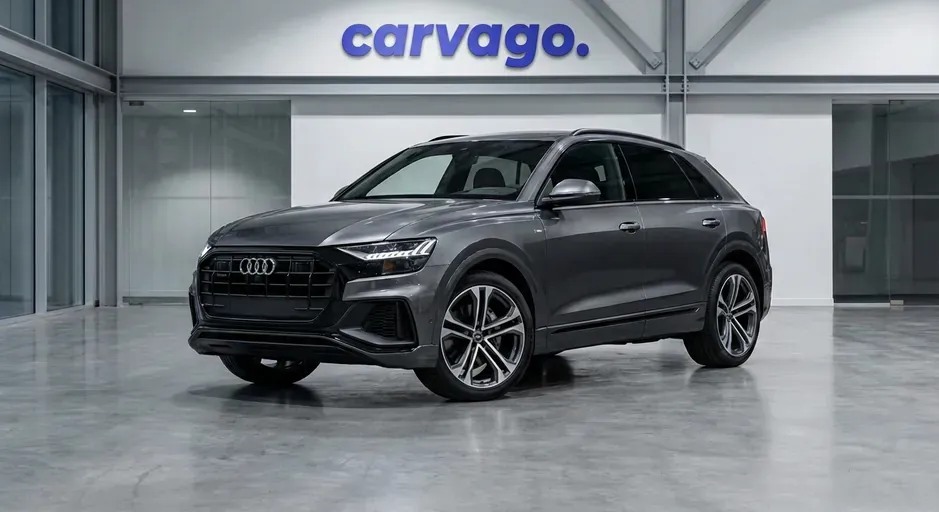
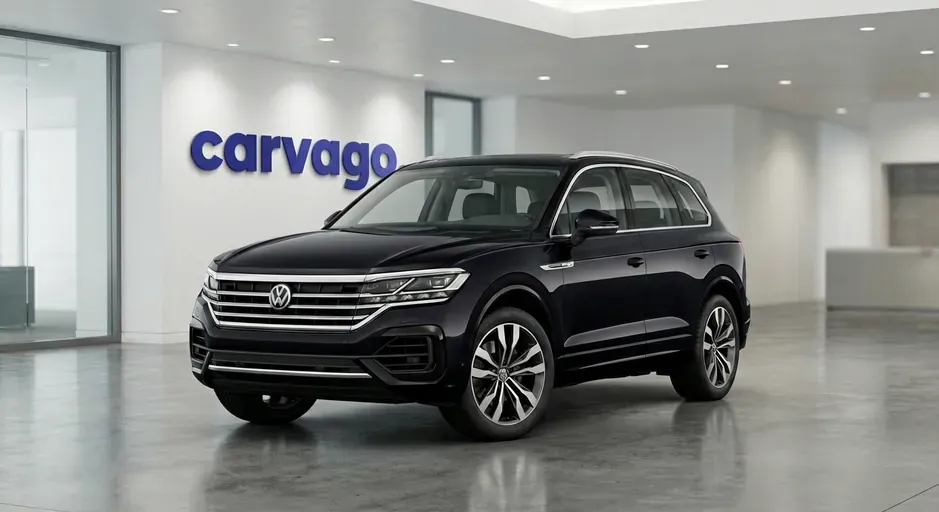
The Audi Q8 is a sportily styled luxury SUV that serves as the brand's flagship, attracting buyers with its dynamic design, premium craftsmanship, and cutting-edge technology. The Volkswagen Touareg, its direct technical sibling built on the same chassis platform, instead bets on more conservative elegance, maximum travel comfort, and versatile everyday practicality. The following comparison will detail the strengths and weaknesses of both these popular models and help you determine which one will better suit your driving needs.
Although both the Audi Q8 and the Volkswagen Touareg share the same MLB Evo chassis platform, their external dimensions and overall proportions clearly define the different characters of the two vehicles. The Audi Q8 arrives with a more dynamic, wide-stanced posture and a gently sloping roofline evoking the style of an SUV-coupe. In contrast, the third-generation Volkswagen Touareg relies on the more traditional and conservative shapes of a classic luxury SUV. These distinct differences in proportions play a key role in deciding whether you prefer a sportier look or stick to a proven classic.
Looking at specific figures for relevant used cars on the market, the Audi Q8, with a length of 4,986 mm, is a noticeable 108 mm longer than the base version of the Touareg (4,878 mm). Furthermore, the Ingolstadt representative boasts a significantly longer wheelbase. The Audi's 2,995 mm wheelbase exceeds the Touareg's (2,904 mm) by 91 mm. In practice, this means the Q8 provides rear-seat passengers with more generous legroom and slightly superior directional stability at highway speeds. However, the price for these generous dimensions and majestic width (1,995 mm compared to 1,984 mm for the VW) is paid when maneuvering in narrow city streets or underground garages, where the Touareg simply feels more agile thanks to its overall more compact footprint.
The difference in height between the two models is also interesting. At up to 1,717 mm, the Volkswagen Touareg is slightly taller than the Audi Q8, whose roof peaks at 1,705 mm. The Touareg's taller build brings a slightly better sense of airiness to the cabin and more generous headroom, which will be especially appreciated by taller rear passengers. Audi, on the other hand, sacrificed a few millimeters of absolute height in favor of a more aggressive stance and a lower center of gravity. This move underscores the Q8's sportier ambitions and appeals to drivers who want dynamic driving characteristics but do not intend to give up the format of a large premium SUV.
| Parameter | Audi Q8 SUV | Volkswagen Touareg SUV |
|---|---|---|
| Width (mm) | 1995 | 1984 |
| Length (mm) | 4986 - 4992 | 4878 - 4902 |
| Height (mm) | 1697 - 1705 | 1693 - 1717 |
| Wheelbase (mm) | 2995 - 2998 | 2899 - 2904 |
Luggage capacity is often one of the main decision criteria when choosing a premium family car on the used market. Although both the Audi Q8 (4M generation) and the Volkswagen Touareg (3rd generation) are technically based on the same chassis platform and both fall into the large SUV category, their approach to utilizing interior space differs fundamentally. This difference is primarily due to the body shape – while the Touareg relies on a more traditional, boxier rear end to maximize utility, the Audi Q8 sacrifices some liters in favor of an elegant, dynamically sloping roof. For families who travel often and need to reliably load a stroller, sports equipment, or luggage for a week-long vacation, this structural difference plays an immensely important role.
Looking at the specific numbers, it is clear that the Volkswagen Touareg plays in the league of absolute family haulers. In its basic configuration, the standard version with an internal combustion engine offers a staggering 810 liters, which is a striking difference compared to the Audi Q8, which has a still very respectable 605 liters. This 205-liter lead translates in practice into a huge advantage – the Touareg provides exactly that extra space for several more suitcases that you will appreciate when packing for longer trips. After completely folding the rear seats, the maximum capacity of the Volkswagen climbs to a cavernous 1,800 liters. For the Audi Q8, the space after folding the seats increases to a solid 1,755 liters, showing that in a two-seat configuration, the differences between the two models narrow, and both vehicles can easily transport even larger cargo.
However, it is also necessary to consider specific engine versions, where the luggage capacity values differ. We are talking about the popular plug-in hybrid versions from 2020–2022, where the traction batteries hidden under the trunk floor take away valuable liters. For the hybrid Volkswagen Touareg eHybrid / R, the basic volume is reduced to approximately 655 liters (and the maximum to 1,675 liters), while for the more eco-friendly Audi Q8 TFSI e, the capacity drops to 505 liters (or 1,625 liters after folding). From a user perspective, the trunks of both vehicles are sufficient for weekend shopping and longer vacations, but the final assessment is clear. If uncompromising spaciousness and family practicality are your priorities, the Volkswagen Touareg will be the more rational choice. The Audi Q8, on the other hand, perfectly serves drivers looking for a bolder design and for whom a slight concession in trunk volume is a perfectly acceptable price for a sportier style.
| Parameter | Audi Q8 SUV | Volkswagen Touareg SUV | Audi Q8 TFSI e SUV | Volkswagen Touareg eHybrid SUV |
|---|---|---|---|---|
| Basic volume (l) | 605 | 810 | 505 | 655 |
| Max. volume after folding seats (l) | 1,755 | 1,800 | 1,625 | 1,675 |
The ability to tow heavy trailers is a key parameter for drivers who plan to hitch up large caravans, boats, or horse trailers. Although both of these premium SUVs share a similar technical foundation, their approach to maximum towing capacity differs quite significantly and can play a crucial role in the final vehicle selection.
In practice, these differences mean that the 2,800 kg limit of a standard Audi Q8 is easily sufficient for a spacious family caravan or reliable transport of building materials for a weekend home renovation. However, if you need to transport heavy sailboats or large horse trailers for two animals, the 700 kg difference in favor of the Volkswagen is absolutely fundamental and allows for substantially heavier and larger loads. The electric 1,800 kg is more suitable for smaller trailers or lighter boats.
If towing heavy trailers is a regular routine for you, the Volkswagen Touareg is a safe bet where you don't have to scrutinize the specification tables for a particular engine. With the Audi Q8, you get a more stylish design, but to maximize towing power, you will have to specifically search for the older 60 TFSI e plug-in hybrid versions.
| Model and engine | Braked trailer weight (kg) | Unbraked trailer weight (kg) |
|---|---|---|
| VW Touareg 3.0 V6 TDI / TFSI (III) | 3,500 | 750 |
| VW Touareg 3.0 V6 eHybrid / R (III) | 3,500 | 750 |
| Audi Q8 45 TDI / 50 TDI (4M) | 2,800 | 750 |
| Audi Q8 55 TFSI (4M) | 2,700 - 2,800 | 750 |
| Audi Q8 60 TFSI e (4M, 2020–2022) | 3,500 | 750 |
| Audi Q8 e-tron (GE) | 1,800 | 750 |
Both models, the Audi Q8 and Volkswagen Touareg, share the premium MLB Evo group platform, which means their engine range is largely identical and relies exclusively on reliable and prestigious V6 engines. For those interested in an approximately four-year-old used car, this brings a clear advantage: whichever of these two variants you choose, you will always get a powerful three-liter unit paired with a sophisticated all-wheel-drive system (quattro for Audi, 4MOTION for Volkswagen) and a smooth-shifting eight-speed Tiptronic automatic transmission. The biggest differences are thus limited mainly to minor variations in torque tuning, specific plug-in hybrid (PHEV) variants, and the earlier availability of certain engines. While the economical diesel versions will please drivers with high motorway-style annual mileage, fans of quiet dynamics can opt for petrol engines or powerful hybrids, where operating costs can be significantly reduced thanks to home charging.
The range of engines for the 4M generation is logically structured and includes advanced units, most of which use at least mild-hybrid technology to slightly reduce fuel consumption. The gold standard for long journeys are the very popular 45 TDI (170 kW) and 50 TDI (210 kW) diesel V6s, which offer massive pull from low revs. Those interested in a petrol engine will appreciate the refined 55 TFSI model with 250 kW, which offers slightly higher torque (500 Nm) compared to its Volkswagen counterpart. For modern-thinking drivers, the plug-in hybrid version makes huge sense on the used car market. These can be found under the designations 55 TFSI e (280 kW) and the top-tier sporty 60 TFSI e (340 kW) version. Both hybrid powertrains combine a petrol V6 with an electric motor, ensuring smooth emission-free movement around town and dazzling dynamics on country roads. Later fully electric e-tron versions (offered from 2023) are still rare on the typical four-year-old used car market.
| Engine type | Fuel | Power (kW) | Torque (Nm) | Transmission |
|---|---|---|---|---|
| 45 TDI (3.0 V6) | Diesel | 170 | 500 | 8-speed Tiptronic |
| 50 TDI (3.0 V6) | Diesel | 210 | 600 | 8-speed Tiptronic |
| 55 TFSI (3.0 V6) | Petrol | 250 | 500 | 8-speed Tiptronic |
| 55 TFSI e (3.0 V6) | Plug-in hybrid | 280 | 600 | 8-speed Tiptronic |
| 60 TFSI e (3.0 V6) | Plug-in hybrid | 340 | 700 | 8-speed Tiptronic |
The engine range for the third-generation Volkswagen Touareg perfectly reflects the car's luxurious character. The backbone of used car sales is once again the extremely popular three-liter V6 diesel engines, the 3.0 V6 TDI, also tuned to 170 kW or 210 kW, which are the ideal and most sought-after compromise for a heavy SUV. Petrol lovers can then choose the 3.0 V6 TFSI engine with an output of 250 kW (with a slightly reduced torque of 450 Nm compared to the Q8). An ecological and dynamic alternative is the plug-in hybrid labeled 3.0 V6 eHybrid (280 kW), while the absolute top of the standard range is the exclusive sporty Touareg R version with a combined system output of 340 kW. A complete historical rarity, however, is the gigantic 4.0 V8 TDI diesel V8. This engineering gem with an incredible torque of 900 Nm was produced only in 2019 and 2020. So if you are targeting a car around four years old, you will no longer find this legendary engine in the lineup, and on the used car market, it is now an extremely valued collector's rarity.
| Engine type | Fuel | Power (kW) | Torque (Nm) | Transmission |
|---|---|---|---|---|
| 3.0 V6 TDI | Diesel | 170 / 210 | 500 / 600 | 8-speed Tiptronic |
| 3.0 V6 TFSI | Petrol | 250 | 450 | 8-speed Tiptronic |
| 3.0 V6 eHybrid | Plug-in hybrid | 280 | 600 | 8-speed Tiptronic |
| Touareg R (PHEV) | Plug-in hybrid | 340 | 700 | 8-speed Tiptronic |
| 4.0 V8 TDI* | Diesel | 310 | 900 | 8-speed Tiptronic |
*The 4.0 V8 TDI engine was only offered in 2019 and 2020; it is therefore no longer available for newer used cars.
Choosing the right engine is absolutely crucial for long-term satisfaction with a luxury SUV, and our recommendations for roughly four-year-old used cars are based on real performance, consumption, mechanical durability, and feedback from owners. Although both the Audi Q8 and Volkswagen Touareg stand on the identical MLB Evo platform and share the basic blocks of the three-liter V6s, an interesting fact from the history of these generations is their different technological approach. While Audi equipped its engines across the board with a more complex 48V mild-hybrid system (MHEV) for smoother coasting and reduced emissions, Volkswagen stuck with a classic, simpler arrangement without this network for conventional diesel engines for the Touareg, which makes it a potentially cheaper car for any post-warranty electronics service in the long run.
The 210 kW (286 hp) diesel V6 with a massive torque of 600 Nm is the ideal choice for a heavy, more than two-ton coupe-SUV. This engine represents a perfect balance between above-standard dynamics and acceptable operating costs, with real consumption ranging around 8 to 9 liters per 100 kilometers. In combination with the 48V mild-hybrid network, the engine's operation is exceptionally refined and restarting during coasting is almost imperceptible. Known characteristics include a slight delay (so-called "lag") of the Tiptronic transmission when flooring the gas from a standstill, which is a result of strict emission mapping – a behavior that takes some getting used to during more dynamic driving. When choosing a used car, pay close attention to the condition of the diesel particulate filter (DPF). Focus on how the car was used; if it was driven primarily in the city, the filter may be clogged. You can tell easily: if, during a test drive after normal warming up and subsequent engine shutdown, the radiator fans hum noticeably and for a long time, the car is likely trying in vain to complete interrupted regenerations. This engine is best used for long-distance travelers who swallow hundreds of highway kilometers a week.
Although the third-generation Volkswagen Touareg offered a fascinating and exotic diesel V8 (4.0 V8 TDI) until 2020, in terms of operating costs, reliability, and availability on the 4-year-old used car market, the clear king is the more powerful version of the 210 kW V6 diesel. This engine resonates perfectly with the more comfortable and practical character of the Touareg. The 600 Nm of power comes on very smoothly and will pull a braked trailer weighing 3,5 tons with unwavering certainty. Furthermore, mechanics without the complex 48V mild-hybrid superstructure mean one less expensive electrical circuit in used cars, which reduces the risk of expensive service interventions. The biggest enemy of this reliable unit is delayed maintenance. Therefore, carefully examine the service history when inspecting a used unit. Find out if the previous owner blindly followed the prescribed "long-life" oil change intervals (up to 30 000 km). To save the more delicate turbocharger and delay timing chain wear, we always recommend looking for units where the oil was changed after a reasonable 15 000 kilometers. You can recognize neglected oil, among other things, by a slight metallic rattling of the timing chain during a cold start, which should not last longer than a fraction of a second. This engine is an excellent workhorse and cruiser, perfectly tailored for active families, cottage owners, and towing caravans or boats.
While official tables for large premium SUVs often promise very optimistic values, real-world practice tends to be different. To get the most accurate picture of the actual operating costs of roughly four-year-old used cars, we rely on long-term data from hundreds of drivers from the independent portal Spritmonitor.de. It turns out that despite the massive onset of electrification, traditional diesel V6s remain the unsurpassed benchmark of efficiency for these heavy vehicles weighing over two tons, while the paper values of plug-in hybrids can be somewhat misleading in normal operation.
| Model and engine | Average consumption (l/100 km) |
|---|---|
| Volkswagen Touareg 3.0 V6 TDI (210 kW) | 8,6 |
| Volkswagen Touareg 3.0 V6 TFSI (250 kW) | 11,2 |
| Volkswagen Touareg R / eHybrid (up to 340 kW) | 7,8 |
| Audi Q8 45 TDI (170 kW) | 8,5 |
| Audi Q8 50 TDI (210 kW) | 8,8 |
| Audi Q8 55 TFSI (250 kW) | 11,5 |
| Audi Q8 55 / 60 TFSI e (up to 340 kW) | 7,5 |
Looking at real-world data, the interpretation of trends is quite clear. The most economical and reliable choice across both models remains the three-litre six-cylinder diesel (TDI), which can move these massive giants with an average consumption between 8.5 and 9 litres per hundred kilometres. Petrol units (TFSI), on the other hand, are downright thirsty, and their real-world consumption rarely drops below the 11-litre mark. The biggest surprise is often the plug-in hybrids (eHybrid, Touareg R, and Q8 TFSI e). Although the manufacturer declares a theoretical consumption of around 2 to 3 l/100 km, in real-world driving with a depleted battery, they function like standard petrol cars, albeit hundreds of kilograms heavier. The overall user average for both brands has settled more in the range of 7.5 to 8 litres.
For the typical user, this brings a clear conclusion. If you are looking for a vehicle for long motorway journeys and family holidays, the diesel engine is absolutely superior and the most economically sensible choice. A petrol unit will please with maximum refinement, but at the cost of significantly higher expenses at the filling station. Plug-in hybrids then make sense exclusively for drivers who commute shorter distances in the city daily and have the opportunity to charge diligently both at home and at work. Without regular access to an electrical socket, their main operational advantage completely disappears.
In conclusion, fuel consumption will certainly not be the main deciding factor when choosing between the Audi Q8 and the Volkswagen Touareg. Both cars share the exact same MLB Evo chassis platform and the same range of power units. Slight decimal differences to the disadvantage of the Audi are primarily due to wider tyres and slightly different aerodynamics of the wider body. Whether you choose the Wolfsburg SUV or Ingolstadt's aggression, with the same engine choice, running costs will be identical to the cent.
When looking at the used car market for vehicles around four years old (corresponding to production years 2021–2022), we are comparing sister models built on the same MLB Evo corporate platform: the third generation of the Volkswagen Touareg and the first generation of the Audi Q8. Although they share the technical foundation and engine range, the more premium character and dynamic SUV-coupe body of the Audi are clearly reflected in used car prices.
The Volkswagen Touareg represents a more rational choice on the used car market with an excellent price-to-value ratio. Most of the cars offered hide the popular 3.0 TDI diesel six-cylinder under the bonnet.
The Audi Q8, by contrast, holds its residual value significantly better. This is due to its stronger image, more luxurious interior finish, and consistently high demand for stylish models. Here too, the market is clearly dominated by the engine designated 50 TDI (which is the same 3.0 V6 TDI engine as in the Touareg).
| Criterion | Volkswagen Touareg (3rd gen) | Audi Q8 (1st gen) |
|---|---|---|
| Starting price | from approx. €33,000 | from approx. €43,000 |
| Typical price (good condition) | €39,000 – €47,000 | €53,000 – €65,000 |
| Price of top-tier versions | €49,000 – €57,000 | €73,000 – €102,000+ |
| Most common engine | 3.0 V6 TDI | 50 TDI (3.0 V6) |
Conclusion on prices: The Touareg is significantly more affordable for those interested in a large luxury SUV. For a used car approximately four years old, it can save roughly €8,000 to €16,000 compared to a similarly aged and equipped Audi Q8 with the same engine. Audi, on the other hand, requires a significant premium from buyers for its more attractive silhouette and more prestigious badge on the bonnet.
Both of these premium models traditionally received the maximum five-star rating in independent Euro NCAP crash tests, which is the expected standard for luxury SUVs of this size and price category. When comparing them, however, it is essential to consider the context and the specific year of testing. The Euro NCAP methodology is constantly becoming stricter over time, requiring increasingly advanced active safety systems, such as improved frontal impact simulations or early detection of cyclists and pedestrians. For this reason, percentage results from different years cannot always be directly and unconditionally compared. However, with their results and technological equipment, both cars represent generations that currently form a highly attractive offer on the market for nearly-new used cars around four years old.
The Volkswagen Touareg underwent Euro NCAP testing in 2018. Under the methodology of the time, it delivered an excellent performance, achieving 89% for adult occupant protection and 86% for child occupant protection. Furthermore, it scored significantly in the safety assist systems category, where it earned an excellent 81% thanks to its very generous standard equipment. For vehicles tested during this period, it is important to note that the official safety certificate administratively expired at the beginning of 2025. However, this is a completely standard practice of the organization after approximately seven years have passed since the test and changes absolutely nothing regarding the actual passive and active safety of the vehicle itself in everyday traffic.
The Audi Q8 underwent homologation testing a year later, in 2019. With slightly updated and again somewhat stricter criteria, it managed to achieve an outstanding 93% for adult protection and 87% for child protection, clearly confirming the exceptional structural rigidity of its body. The rating for vulnerable road user protection reached 71%, and active safety assist systems earned a solid 73%. This result reflects the very precise and reliable operation of autonomous emergency braking (AEB) and advanced lane-keeping systems.
In conclusion, both models offer a top-tier and almost uncompromising level of safety and, in terms of overall occupant protection, are among the best used SUVs you can buy on the market. While the Audi Q8 offers a slightly higher percentage score in terms of raw passive body protection, the Volkswagen Touareg impressed at the time of its testing with an overall very well-rated standard package of electronic assistants. For families and demanding travelers alike, both cars represent a highly modern and safe choice that far exceeds the requirements of today's heavy traffic.
| Parameter | Audi Q8 | Volkswagen Touareg |
|---|---|---|
| Year of testing | 2019 | 2018 |
| Adult occupant protection | 93% | 89% |
| Child occupant protection | 87% | 86% |
| Vulnerable road user protection | 71% | 72% |
| Safety assist systems | 73% | 81% |
Beyond standard equipment, each model offers more than just a basic package of features, with both cars approaching technological innovation and added value in their own distinctive ways.
Advantages:
Disadvantages:
Advantages:
Disadvantages:
Based on our own CarAudit inspections, failure statistics, and expert articles, we have compiled an overview of the most common problems that used car buyers should watch out for. We recommend not skipping a thorough used car inspection before purchase, as any neglect of maintenance can mean astronomical service costs for such premium SUVs.
Audi Q8 models around four years old (2020 and 2021 model years) have already had some "teething troubles" from the start of production resolved, yet they still experience very specific and financially costly faults that require great caution.
The biggest and by far the most frequently discussed problem with the Audi Q8 is the fatal failure of the 48V starter-generator (alternator). This fault affects models with V6 engines (both 3.0 TDI and 3.0 TFSI). When the generator overheats and is damaged, charging stops, which the onboard system indicates with a yellow and then a red battery warning light. The car then very quickly "dies" completely and becomes undrivable. When choosing a used car, it is absolutely crucial to find out from the service history whether a more reliable modified part has already been installed on the vehicle under warranty.
The 3.0 TDI diesel V6 engines (labeled 50 TDI and 45 TDI) are generally mechanically reliable. Problems mainly occur in cars operated on short city routes, where the diesel particulate filter (DPF) clogs quickly and the EGR valve becomes blocked. In the 3.0 TFSI gasoline engine (55 TFSI), increased oil consumption occasionally appears under higher loads. Rarely, coolant leaks around the water pump occur in both V6 engines.
The optional air suspension provides top-tier driving comfort, but after crossing the 100,000 km mark, it is necessary to account for the risk of air spring leaks and compressor wear. With frameless door windows, higher aerodynamic noise can occur at highway speeds due to compressed seals. Pay special attention to the sunroof as well – if its drainage channels become clogged, water can easily leak into the interior and irreversibly damage expensive control electronics.
Summary: The Audi Q8 is a luxurious and very robust SUV, but its purchase can become extremely expensive due to the failing 48V system. If this problem has been professionally resolved in the chosen unit, it is a very reliable companion that suffers only from normal wear and tear proportional to its high weight.
The third generation of the Touareg shares the premium MLB Evo platform with the Audi Q8. Models roughly four years old (2020–2022) do not suffer from major mechanical defects and are troubled more by a different spectrum of problems, primarily stemming from the area of modern software.
The Touareg amazes the crew with its huge curved Innovision Cockpit display. However, this is the source of many complaints. The system frequently freezes, the screen remains completely black after starting, or the system loads disproportionately slowly. Occasionally, there are also failures of assistance features or Bluetooth connectivity. In most cases, this problem is permanently resolved by a software update at an authorized service center; nevertheless, during the test drive, make sure that all functions are running and not crashing.
The vast majority of used models have the popular 3.0 TDI engine under the hood. Compared to Audi, it has a huge advantage in that standard combustion versions use a conventional 12V system, which eliminates the catastrophic problem with the failing 48V starter-generator. However, even here, the diesel V6 suffers from a clogged diesel particulate filter (DPF) on short trips. Owners often complain about the eight-speed automatic transmission – it occasionally jerks unpleasantly when shifting while cold and also suffers from a noticeable delay during sharp acceleration at intersections. In some cases, a software reset of adaptive values helps.
Due to a curb weight exceeding two tons, the brakes are subject to enormous thermal and physical stress. Quickly worn brake pads and warped or worn brake discs are completely standard on four-year-old cars. On models equipped with air suspension from the early production phases, the front shock absorbers occasionally failed prematurely; however, on newer models from 2020 to 2022, this weakness was largely resolved by the manufacturer.
Summary: Volkswagen Touareg is a mechanically stable safe bet, especially because it successfully avoided the problematic 48V circuit from its Audi relative. It is a rational choice for buyers who can forgive its occasional infotainment software glitches and get used to the transmission's more sluggish behavior.
| Vehicle Area | Audi Q8 (2018–present) | Volkswagen Touareg (CR, 2018–present) |
|---|---|---|
| Critical problem | 48V starter-generator failure (car shuts down) | Software freezes of the Innovision Cockpit system |
| Transmission | Mostly smooth, without major jolts | Occasional jerking when cold, delay at intersections |
| Engines (3.0 TDI) | DPF clogging, EGR wear | DPF clogging, rare coolant leaks |
| Chassis and brakes | Clogged window drains, expensive compressor repair | Extremely fast wear of brake discs |
When buying a used car, a thorough inspection is key. Both large and technologically advanced SUVs have their specifics and potential weak points. Here are several specific points to focus on for these two models, where a professional physical inspection of a used car can save a lot of money.
The Volkswagen Touareg is more practical thanks to its more traditional body and offers a generous trunk volume of 810 liters in its base configuration. The Audi Q8 has a smaller luggage compartment with a volume of 605 liters due to its sloping coupe-style roof. For family travel and transporting larger loads, the VW is objectively the better choice.
Yes, both models are based on the group's MLB Evo platform, which is also used by the Porsche Cayenne or Bentley Bentayga. Most engines, including the very popular 3.0 TDI V6 diesels, are more or less identical for both cars. The fundamental difference lies primarily in the exterior design, specific chassis tuning, and dashboard architecture.
For families with children, the Volkswagen is generally the better solution because it offers more headroom in the rear seats and better outward visibility. While the Audi scores with a more exclusive look and a sportier driving feel, it comes at the expense of the overall airiness of the cabin. Furthermore, on the four-year-old used car market, you can get the VW for a significantly more friendly purchase price.
Since the cars share many mechanical components, the prices of common aftermarket spare parts are very similar. However, the hourly rate at authorized Audi service centers is typically higher, and the Q8 model often has larger wheel diameters as standard, which makes buying tires more expensive. In the long run, the overall operation of the Volkswagen is therefore slightly cheaper.
Audi positions itself as a full-fledged premium brand, which is reflected in a wider range of luxury equipment features, more expensive materials, and slightly better cabin soundproofing. However, the current generation of the Touareg comes very close to Audi's comfort with the optional air suspension and ergoComfort seats. The main difference is in road behavior, where the Audi has a sportier and stiffer character, while the VW focuses primarily on a smooth and calm ride.
Sources: ADAC, e15.cz, auto.cz, emobility.cz, elektromobil.cz, automotorsport.cz
This article was prepared using artificial intelligence tools. The section guarantor is Petr Dušek.
Audi Q7 vs. Audi Q8: Which luxury SUV is better for you? A detailed comparison of design, practicality, and driving performance to help you decide.
Apr 13, 2026
Detailed comparison of the BMW X5 vs. BMW X7. Discover the main differences in space, equipment, and real-world driving characteristics. Read our verdict and make the right choice!
Apr 14, 2026
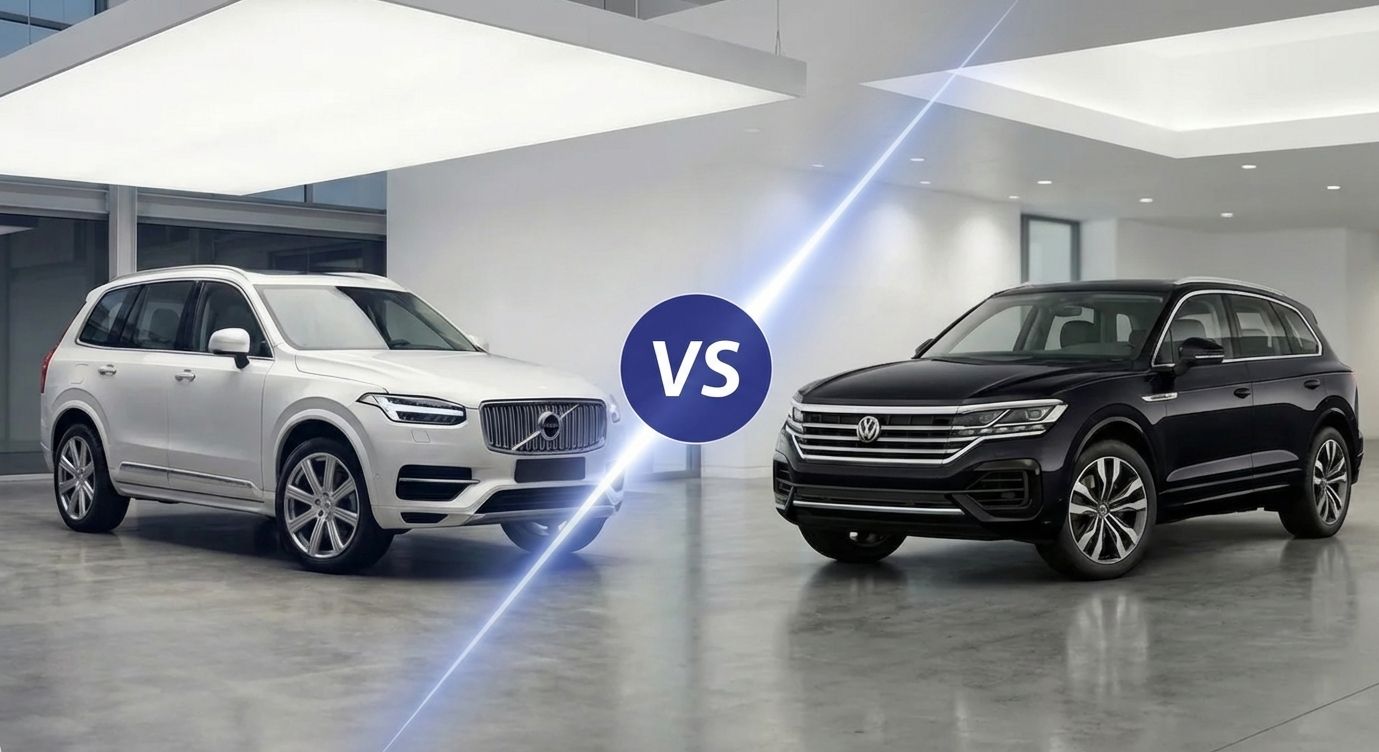
Volvo XC90 vs. Volkswagen Touareg: Which premium SUV is better? A detailed comparison, tests, and a clear verdict will help you choose.
Apr 14, 2026