Car battle
Kia EV6 vs. Volkswagen ID.4: Complete Comparison 2025
Kia EV6 vs. Volkswagen ID.4: A detailed comparison of range, charging, and performance. Find out which electric SUV is the better choice for you.
Apr 13, 2026
Articles
Car battle
BMW iX3 vs Tesla Model Y: A detailed comparison of electric SUVs. Discover real-world range, differences in equipment, and read our verdict for an easier choice.
April 14, 2026
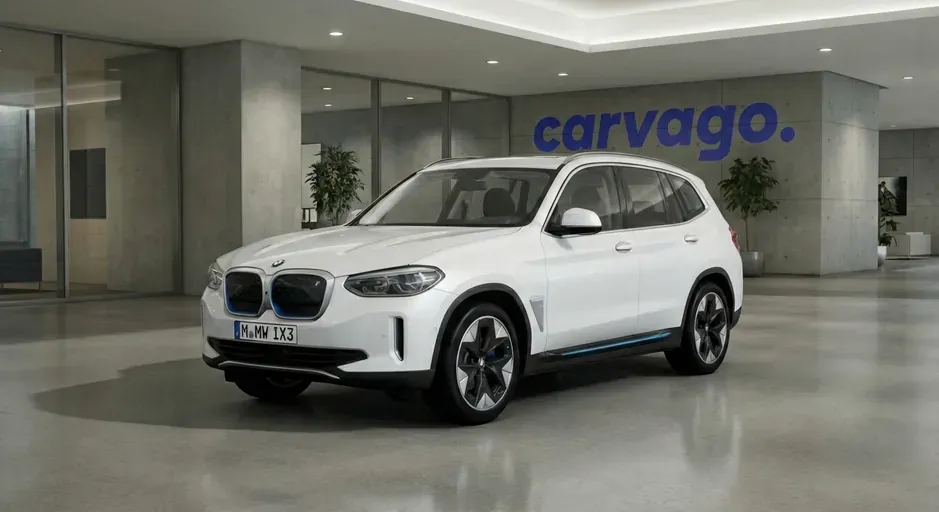
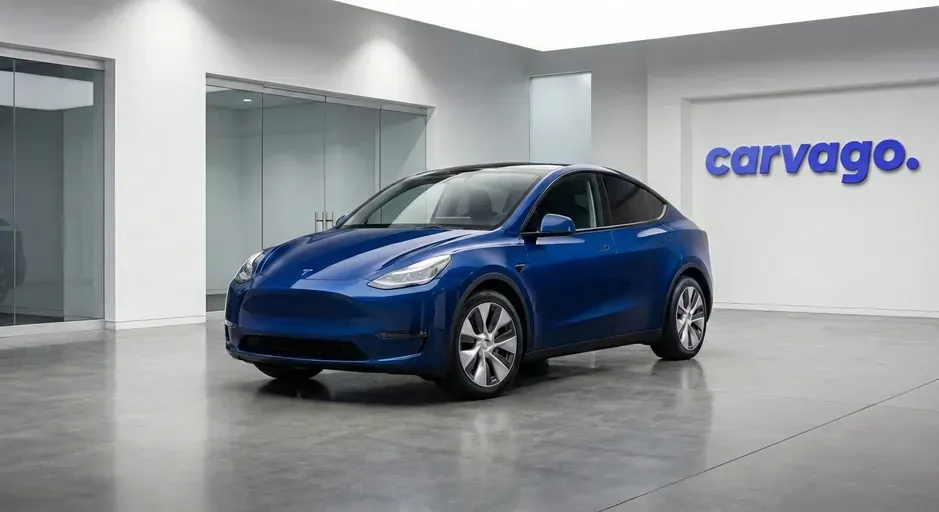
BMW iX3 represents the Munich-based automaker's first fully electric SUV based on the popular X3 model, which relies on traditional premium craftsmanship, conventional design, and proven ergonomics. Standing against it is the Tesla Model Y, the world's best-selling electric crossover sharing its technical foundation with the Model 3, which instead attracts with strict minimalism, maximum efficiency, and advanced software innovations. In the following comparison, we will take a detailed look at how these two completely different approaches to family electromobility hold up in a direct duel and which car makes more sense on the used car market.
When comparing the exterior dimensions of both premium electric SUVs, a completely different design approach is evident at first glance. The Tesla Model Y, designed from the ground up purely as an electric vehicle, is at 4751 mm in length a slight 17 mm longer than the BMW iX3 (4734 mm). However, a more significant difference can be found in the body width, where the Tesla, with a value of 1921 mm, surpasses its Bavarian competitor (1891 mm) by a noticeable 30 mm. While the wider build of the American car promises more generous shoulder room inside the cabin and a more stable stance on the road, the narrower profile of the BMW iX3 represents a significant advantage during daily maneuvering in the narrow streets of European cities or when parking in standard-sized garages.
The overall body styling philosophy is also different, which is directly reflected in the height of both vehicles. The BMW iX3 maintains more traditional, rather boxy proportions of a classic SUV with a total height of 1668 mm. In contrast, the Tesla Model Y has opted for a significantly more aerodynamic silhouette with a sloping coupe-style roof, making it 44 mm lower at 1624 mm. The taller body structure of the BMW guarantees passengers a more upright, conventional seating position behind the wheel and an airier feel overhead in the second row of seats, while the lower and more rounded profile of the Tesla primarily plays into the hands of the best possible aerodynamics, which helps maximize range on a single charge at the cost of a slight compromise in headroom for rear passengers.
The wheelbase also has a fundamental influence on the distribution of interior space and driving characteristics. The Tesla Model Y fully exploits the advantages of its specific electric platform here, offering a wheelbase of 2890 mm, which is 26 mm more than the BMW iX3 (2864 mm), which is architecturally based on the internal combustion X3 series models. In practice, the Tesla's longer wheelbase means not only more legroom for rear-seat passengers but also calmer behavior and better directional stability of the car at higher highway speeds. On the other hand, the slightly shorter wheelbase of the Bavarian SUV contributes to a perceived better maneuverability and more natural agility on winding country roads.
| Parameter | BMW iX3 SUV | Tesla Model Y SUV |
|---|---|---|
| Width (mm) | 1891 | 1921 |
| Length (mm) | 4734 | 4751 |
| Height (mm) | 1668 | 1624 |
| Wheelbase (mm) | 2864 | 2890 |
When choosing a family electric car, luggage compartment volume is often one of the key decision-making factors. Whether you are planning weekend shopping, the complex transport of a stroller and sports equipment, or a long summer holiday, trunk capacity significantly affects daily practicality and overall comfort. A direct comparison of these roughly four-year-old used cars reveals a rather profound difference in the approach of both automakers to maximizing internal space utilization.
The American Tesla Model Y (1st generation from 2021–2025) is considered the absolute champion in its class in terms of transport capacity. In the standard five-seater version, it offers a gigantic rear trunk with a basic volume of 854 liters, which increases to a staggering 2,041 liters after folding the rear seats. A major advantage is also the presence of a front trunk (the so-called "frunk") with a capacity of another 117 liters. This is absolutely ideal for separate storage of dirty charging cables, leaving clean space in the main rear part for several extra suitcases. It is worth mentioning that the rarer seven-seater variant of the Tesla offers a reduced basic space of 363 liters behind the third row of seats. Overall, however, the volume is so generous that even a long family holiday requires no painful compromises.
The Bavarian BMW iX3 (G08 generation from the same period) offers significantly more traditional figures in this regard, as it largely shares its body and platform with its internal combustion engine counterpart, the X3. The basic volume of the rear luggage compartment is 510 liters, and if you fold the rear bench (split in a practical 40:20:40 ratio), you get a maximum capacity of 1,560 liters. Although the BMW has a cleverly designed double trunk floor for storing small items or cables, an additional front trunk under the hood is unfortunately completely missing in this generation. This space is fully sufficient for weekend shopping and normal family use; however, when packing for a two-week trip, you will feel the limiting difference compared to its American rival.
In terms of total transport capacity and thoughtful variability of storage spaces, Tesla is the volume winner. BMW, on the other hand, scores with excellent craftsmanship and the regular shape of the trunk, which may perfectly suit more conservative families with standard transport needs.
| Parameter | BMW iX3 SUV | Tesla Model Y SUV |
|---|---|---|
| Basic volume (liters) | 510 | 854 |
| Max. volume with folded seats (liters) | 1560 | 2041 |
While the BMW iX3 offers a traditional and fully sufficient volume for everyday needs, the Tesla Model Y is the unattainable king of practicality among family electric cars thanks to its massive rear space and useful front frunk.
Towing capacity is often a closely watched parameter for electric vehicles, as it fundamentally affects the car's overall practicality. When looking at the models that appear most frequently on the used car market (i.e., around four years old), we find a vast difference between the BMW iX3 and the Tesla Model Y.
The BMW iX3 in the G08 generation (available from 2021 to 2025) offers rather limited towing capabilities. For both braked and unbraked trailers, its maximum permissible weight is set at 750 kg. Conversely, the first-generation Tesla Model Y represents a much more capable alternative in this regard. While it can tow an unbraked trailer up to the same weight of 750 kg, its limit for a braked trailer reaches a much more attractive 1600 kg. Although the all-new generation of the BMW iX3 (NA5) arriving after 2026 significantly increases towing capacity, for those interested in a more affordable nearly-new used car, the limiting values of the older generation remain the standard.
From a practical standpoint, these differences clearly determine how you will actually use the vehicle. With the BMW iX3, you can easily tow a light trailer with garden waste; it is also sufficient for weekend shopping of bulkier materials or for installing a bike rack. However, the Tesla Model Y adds a significant benefit for more demanding drivers – its capacity is sufficient for towing a medium-sized caravan or a trailer with several motorcycles, which you will appreciate when traveling on longer holidays.
If a tow bar is a necessity for you and you know you will be towing heavier loads than just a small trailer from a DIY store, the Tesla Model Y is a much better and more versatile workhorse compared to a roughly four-year-old BMW iX3.
| Model and powertrain | Braked trailer (kg) | Unbraked trailer (kg) |
|---|---|---|
| BMW iX3 (G08) | 750 | 750 |
| Tesla Model Y (1st generation) | 1600 | 750 |
The range of powertrains for these two popular electric SUVs differs fundamentally and perfectly reflects the different philosophies of the two automakers. For buyers in the four-year-old used car market, this practically means a choice between conservative German certainty and American extreme variability. While the BMW iX3 relies on a restrained approach with a single, albeit very well-tuned motorization, Tesla's Model Y covers the entire spectrum of needs – from efficient rear-wheel-drive versions to variants with two electric motors and massive power climbing to nearly 400 kW. The decision between these vehicles is thus not just a matter of brand, but primarily of your driving style: whether you absolutely require all-wheel drive (AWD) for peace of mind and safety in winter, seek brutal acceleration, or conversely prefer a more gradual power delivery and a balanced driving feel closer to conventional vehicles. The BMW's weakness is zero variability and the lack of all-wheel drive, while the disadvantage of the Tesla can be the fact that the sharper variants behave fiercely and may seem unnecessarily aggressive to calmer natures.
In the case of the BMW iX3 of the dominant G08 generation, which rolled off the production lines between 2021 and 2025 and currently forms the absolute core of the approximately four-year-old used car market, you will encounter a very simplified offering. The automaker equipped the model with the only possible motorization consisting of a single synchronous electric motor (eDrive) located on the rear axle. With an output of 210 kW and a solid torque of 400 Nm, the car provides fully sufficient and brisk dynamics, thereby maintaining the typical BMW fun rear-wheel drive (RWD) even in the electric era. The lack of choice for all-wheel drive or more powerful variants is, however, a compromise that used car buyers will have to accept. A significant change will only come with the completely new generation designated NA5, for which databases reveal the start of sales for powerful versions like the iX3 50 xDrive (with all-wheel drive) only in the spring of 2026. Naturally, you won't find these modern all-wheel drives on the classic used car market for a long time, so the current BMW iX3 remains the ideal choice for more budget-rational and calmer drivers with an emphasis on smoothness.
| Motor type | Fuel | Power (kW) | Torque (Nm) | Transmission |
|---|---|---|---|---|
| eDrive (RWD) | Electricity | 210 | 400 | 1-speed aut. |
In contrast, the first-generation Tesla Model Y (produced from 2021 to the present) represents a pure technological exhibition with an incomparably more diverse range of performance levels. For everyday commuting without excessive demands on dynamics, the base Tesla Model Y version with one electric motor (RWD) serves excellently, still offering a respectable 220 kW. Historically and in the used car market, however, the Maximum Range variants (known primarily as Long Range) are far more popular. These can be obtained both in the RWD version, which gradually enriched the market in 2024–2025 with an output of around 255 kW, and especially in the AWD version featuring two electric motors. The Maximum Range AWD produces a combined output of 378 kW, which completely crushes the usual competition. At the absolute top of the range for enthusiastic drivers sits the Model Y Performance with a staggering 393 kW and 660 Nm of torque, guaranteeing acceleration from the realm of true supercars. Furthermore, it is evident from the databases that newer premium specifications in the form of "Premium Maximum Range" trims are only entering the market from late 2025 and early 2026, so they cannot be expected in four-year-old car listings, and buyers' attention should be focused on the standard Maximum Range and Performance models. If you love the confident traction of all four wheels, like to floor the pedal occasionally, or commute long distances, Tesla has exactly the motorization for you.
| Motor type | Fuel | Power (kW) | Torque (Nm) | Transmission |
|---|---|---|---|---|
| Standard RWD | Electricity | 220 | 430 | 1-speed aut. |
| Maximum Range RWD | Electricity | 255 | 420 | 1-speed aut. |
| Maximum Range AWD | Electricity | 378 | 590 | 1-speed aut. |
| Performance AWD | Electricity | 393 | 660 | 1-speed aut. |
While the BMW iX3, with its single balanced 210 kW motorization and lack of all-wheel drive, targets those looking for comfort and the predictable handling of a classic rear-wheel-drive car, the Tesla Model Y crushes the competition with massive power and popular AWD all-wheel drive. The Bavarian SUV rewards with unrivaled travel serenity, but for lovers of brutal acceleration or winter trips to the mountains, the Tesla with its two electric motors is unbeatable.
Choosing the right drivetrain is crucial for long-term satisfaction with an electric vehicle, as it affects not only range and dynamics but also real-world consumption, reliability, and operational efficiency. The BMW iX3 and Tesla Model Y represent two different technical approaches. While BMW relies on the classic rear-wheel drive concept for roughly four-year-old used cars, featuring a single, precisely tuned electric motor that doesn't require rare earth metals for production, Tesla dominates with an advanced all-wheel-drive system boasting massive system power and unrivaled thermal efficiency. Our recommendations are based on real-world experience, real-world range, and feedback from owners of vehicles of a corresponding age.
In the used car market, the BMW iX3 G08 generation (produced and primarily available between 2021–2025, before the arrival of the NA5 platform with all-wheel drive) is found exclusively with a single synchronous electric motor located on the rear axle. With an output of 210 kW and instant torque of 400 Nm, this is an excellently tuned fifth-generation eDrive power unit.
In the case of a roughly four-year-old first-generation used car (from production years 2021–2025), the clear favorite and most versatile choice on the market is the Long Range AWD variant (often referred to as Maximum Range). The system of two independent electric motors ensures perfectly smooth and instant delivery of massive power to both axles.
Official consumption values provided by manufacturers according to the WLTP standard often promise very optimistic figures for electric vehicles, but the reality on the road can differ significantly. For used electric vehicles around four years old, which in this case corresponds to generations primarily available between 2021 and 2025, the best measure is a look at user data. Crowdsourcing platforms such as the German Spritmonitor.de, where thousands of drivers carefully record their actual charging and mileage, provide us with an accurate picture of how efficient these premium electric SUVs really are.
| Model and Powertrain | Average Consumption (kWh/100 km) |
|---|---|
| Tesla Model Y Standard Range / RWD | 17.5 |
| Tesla Model Y Long Range AWD | 19.1 |
| Tesla Model Y Performance AWD | 20.5 |
| BMW iX3 210 kW (G08) | 21.2 |
When comparing these real-world figures with database data, we encounter interesting differences. While factory specifications for the first generation Tesla Model Y speak of an average of 15.7 to 17.3 kWh/100 km and for the BMW iX3 generation G08 exactly 17.6 kWh/100 km, practice shows something else. Tesla leads noticeably across all versions thanks to its teardrop shape, top-tier aerodynamics, and highly efficient powertrain management. The most surprising finding is that even the most dynamic Tesla Model Y Performance with two electric motors can drive with slightly lower real-world consumption (20.5 kWh) than the BMW iX3, which relies purely on a single electric motor and rear-wheel drive (21.2 kWh).
For typical drivers, these numbers have a clear practical impact. If you are looking for a car for daily urban or suburban commuting and are interested in maximizing the reduction of operating costs, the base Tesla Model Y RWD is the clear favorite with a real average of 17.5 kWh/100 km. Its low energy appetite also means that on highway trips, you get more actual kilometers out of the available battery capacity. Conversely, the BMW iX3 pays the price for being based on the platform of the classic internal combustion X3 model. It has a conventional, significantly less aerodynamic body, which is reflected in consumption, especially at highway speeds.
In conclusion, energy consumption should definitely be one of the key factors when choosing between these two cars on the used market. For technologically and economically oriented buyers who demand absolute operational efficiency, the Tesla Model Y represents a significantly more rational choice. The BMW iX3, on the other hand, must defend its slightly higher consumption with other weapons – primarily premium soundproofing, a traditional dashboard layout, and classic driving comfort for those who do not mind a slightly higher charging bill.
When searching for a used electric SUV around four years old (typically 2021 and 2022 models), you will encounter interesting differences in how the BMW iX3 and Tesla Model Y hold their value. Both cars entered the market at roughly the same time and represent modern electromobility, but their price development has been influenced by completely different market factors.
The Bavarian representative, as an established premium SUV, holds its value significantly more stably. It targets customers looking for traditional ergonomics and top-notch build quality.
The market for used Model Ys has been heavily impacted in recent years by aggressive price cuts on new cars directly from Tesla. For those interested in a used electric car, however, this means excellent news and the possibility of significant savings.
| Model (2021–2022 models) | Indicative price from | Indicative price to | Most common version on the used market |
|---|---|---|---|
| BMW iX3 | €31,000 | €47,000 | Impressive (M Sport), RWD |
| Tesla Model Y | €27,000 | €39,000 | Long Range AWD |
Market tip for buyers: If you are looking for maximum range, modern technology, and fast charging at the lowest possible price, a used Tesla Model Y is a very good deal thanks to recent drops in market values. Conversely, the BMW iX3 will appeal to more conservative drivers who require uncompromising cabin quietness and traditional luxury, for which they will pay a slight premium on a used car.
Thanks to significant price drops for new Tesla vehicles, a roughly four-year-old Tesla Model Y offers a hard-to-beat ratio of price, range, and performance on the used market, while the BMW iX3 defends its more stable value primarily through traditional premium craftsmanship.
Although both the BMW iX3 and Tesla Model Y can boast a maximum five-star rating in Euro NCAP safety tests at first glance, it is essential to view these results in a broader context and take into account the year the vehicles underwent testing. Euro NCAP's testing methodology and protocols are constantly evolving and becoming significantly stricter over the years. For this reason, percentage scores obtained in different years cannot be directly compared, as today's tests place substantially higher demands on technology.
The BMW iX3 shares its rating with the internal combustion X3 model, which was tested back in 2017, according to significantly older and more lenient regulations. In contrast, the Tesla Model Y underwent testing in 2022 under one of the most modern and strictest methodologies of the time. For Tesla, the tests reflected more advanced scenarios – from new frontal impact simulations with a moving barrier to sophisticated cyclist detection and handling of crisis situations at complex intersections.
| Parameter | BMW iX3 | Tesla Model Y |
|---|---|---|
| Year of testing | 2017 | 2022 |
| Adult occupant protection | 93 % | 97 % |
| Child occupant protection | 84 % | 87 % |
| Vulnerable road user protection | 70 % | 82 % |
| Safety assist systems | 58 % | 98 % |
The technological shift in the safety assist systems category is most evident from the results in the table. The 58% score for the BMW iX3 reflects the level of technology at the time and a methodology several years old. Although BMW offers perfectly adequate and solid occupant protection in terms of passive safety, its original five-star rating officially expired in January 2024 because it no longer meets current methodological requirements for modern vehicles. In contrast, the Tesla Model Y earned a near-perfect 98% for safety assistants, proving that its radar and camera systems operate at the absolute technological forefront of the market.
In the overall comparison of both models, the conclusion is perfectly clear. Although you won't feel unsafe in the BMW iX3 either, the Tesla Model Y currently offers a much more modern, comprehensive, and, according to current standards, more thoroughly tested safety package.
Even though both cars met the five-star requirements in their time, the vast five-year gap in testing years makes the Tesla Model Y a significantly safer choice. While the official safety certification for the BMW iX3 has already expired, Tesla completely dominates with its advanced active assistants and flawless occupant protection.
In addition to standard equipment, both models offer much more, and each approaches added value and technological innovation in its own distinctive way.
The Munich-based SUV bets on gradual evolution, combining the world of classic premium vehicles with electric drive. It benefits primarily from top-tier build quality and technologies that do not distract the driver but, on the contrary, assist them unobtrusively.
The American representative, on the other hand, is a pure embodiment of modern technology and minimalism. The car functions more like a "computer on wheels" and offers features that are hard to find with traditional automakers.
Top-tier interior craftsmanship using premium materials
Intuitive ergonomics with the retention of traditional physical buttons
Excellent cabin soundproofing and overall very high ride comfort
Smooth and efficient recuperation with a perfectly tuned adaptive mode
Available only in rear-wheel drive version (absence of xDrive system)
Shared platform from the combustion X3 model limits more innovative use of space
Completely lacks a front trunk (frunk) for storing charging cables
Slower maximum fast-charging power (150 kW) compared to direct competitors
The BMW iX3 will appeal to traditional drivers transitioning to an electric vehicle who demand classic luxury craftsmanship, excellent soundproofing, and the logical ergonomics known from the brand's combustion models. It is an ideal choice for those who do not mind the lack of all-wheel drive and prefer silence and maximum travel comfort for their daily commute.
Unrivaled integration into the reliable Tesla Supercharger fast-charging network
Huge interior and luggage space, including a very practical and voluminous front trunk
Top-tier energy efficiency ensuring above-standard real-world range
Lightning-fast infotainment and continuous vehicle improvement via software updates (OTA)
Powerful all-wheel drive (AWD) as standard on the popular Long Range and Performance versions
Noticeably stiffer and less compliant suspension tuning, especially in older 2021 and 2022 models
Extreme interior minimalism and the need to control almost all functions via the central display
In used cars from early production, inconsistent fit and finish and detail quality are more common
The Tesla Model Y is an unquestionable technological leader, scoring points primarily with its unrivaled interior spaciousness, high efficiency, and completely hassle-free long-distance travel. The car perfectly suits modern families and tech enthusiasts who demand maximum utility and top-tier software in a used car, and can forgive the vehicle's stiffer ride or less premium interior.
Based on our own CarAudit inspections, long-term user experiences, breakdown statistics, and service bulletins, we have compiled an overview of the most common problems that buyers of approximately four-year-old used cars should watch out for.
The BMW iX3 is generally considered a reliable electric SUV, benefiting from the proven concept of the classic X3 model. However, specific faults associated with the early years of electric drive and a heavier chassis may occur.
Despite the higher weight and the specifics of the electric drive, the BMW iX3 ranks among above-average reliable cars. Potential risks in used cars lie primarily in the wear of the heavily stressed chassis and the need to verify that the vehicle has demonstrably passed all recall actions for the high-voltage battery.
The Tesla Model Y from the first years of production (especially models coming from American and early Chinese factories) struggles with well-known build quality issues and several recurring hardware problems.
The Tesla Model Y impresses with advanced software and efficiency, but for roughly four-year-old used cars, pay close attention to panel alignment, paint condition, and front axle wear. An independent comprehensive car inspection before purchase is an absolute necessity for this electric car, which can save you from expensive service procedures.
When buying a used car, a thorough inspection is key. Electric vehicles have their own specifics, and for both of these models, there are specific points you should focus on in detail during the inspection and test drive, while a comprehensive car audit can reveal even well-hidden defects before the purchase itself.
The Tesla Model Y in the Long Range version offers a longer range (both on paper and in reality) and a significantly higher maximum charging power (up to 250 kW) compared to the BMW iX3 (150 kW). As a result, you will spend less time at charging stations with the Tesla on long trips. However, the BMW iX3 is very efficient in its single rear-wheel-drive powertrain, and its range and charging are perfectly sufficient for everyday driving.
The Tesla Model Y is the clear winner thanks to its massive 854-liter rear luggage compartment, and it also offers a practical front trunk, known as a "frunk." The BMW iX3 is based on the internal combustion X3 model, so it has a smaller, though well-usable, 510-liter boot. The front storage space under the hood is completely absent in the BMW.
The BMW iX3 offers a significantly higher level of comfort, absorbs road bumps better, and excels with top-tier cabin soundproofing. The Tesla Model Y has a stiffer chassis, which is sportier and more confident in corners but can feel bouncy on broken roads. Thus, the BMW masks its weight better and provides a more traditional premium experience of a smooth ride.
Tesla relies exclusively on a giant central touchscreen, through which almost all car functions from wipers to air conditioning are controlled. In contrast, the BMW iX3 uses the excellent iDrive system with a physical rotary controller and classic hardware buttons. For many drivers, controlling the BMW while driving is much more intuitive and less distracting.
If your priority is maximum transport capacity, passenger space, and super-fast charging on family vacations, the Tesla is the better choice. On the other hand, the BMW iX3 will appeal to families and drivers looking for precise craftsmanship, high driving comfort, and the logical controls of a classic premium car without unnecessary experiments. Both cars are great for a family, but each approaches it with a completely different philosophy.
Sources: ADAC, auto.cz, e15.cz, dopravniinfo.cz, motorvize.cz, automotorsport.cz
This article was prepared using artificial intelligence tools. The section guarantor is Petr Dušek.
Kia EV6 vs. Volkswagen ID.4: A detailed comparison of range, charging, and performance. Find out which electric SUV is the better choice for you.
Apr 13, 2026
Comparison: Audi Q4 e-tron vs. Mercedes-Benz EQA. Discover the real-world range, differences in equipment, and our clear verdict for choosing the right premium used SUV.
Apr 13, 2026
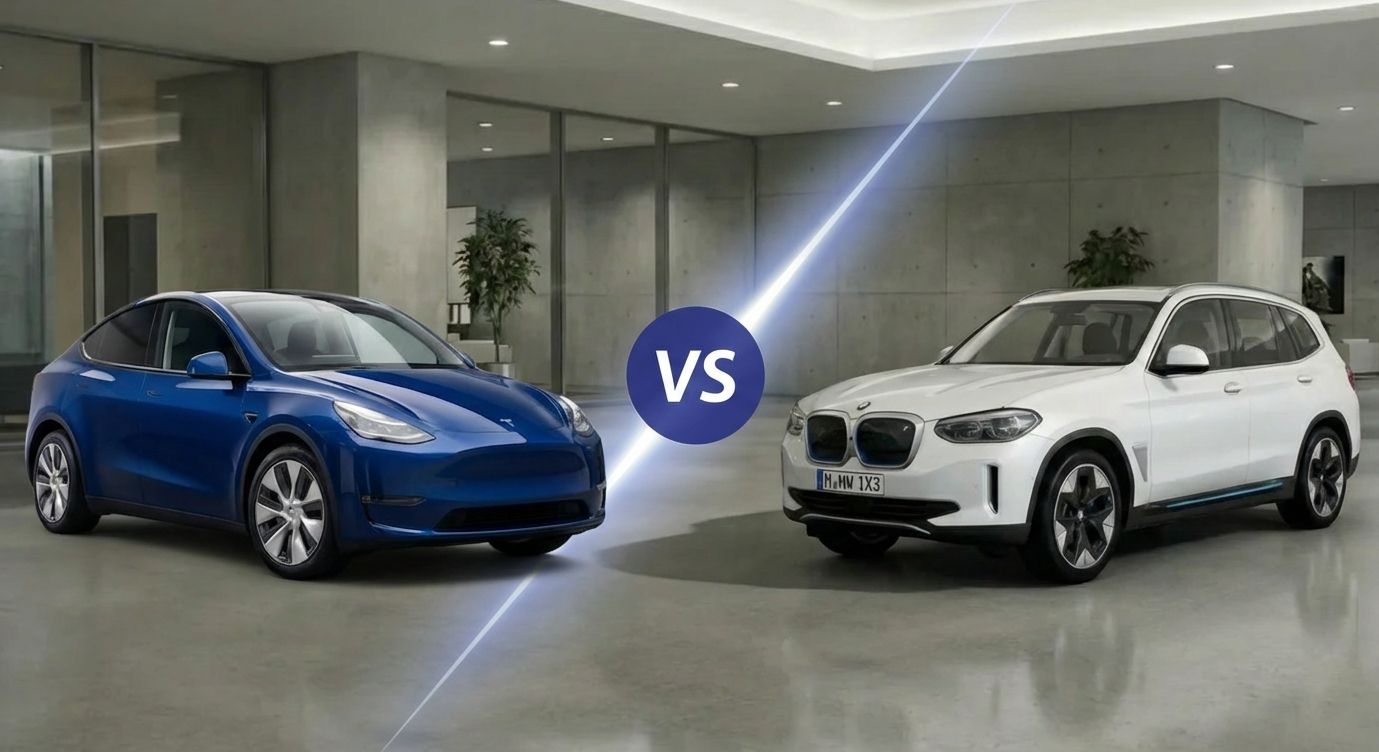
Tesla Model Y vs. BMW iX3: A detailed test of real-world range, features, and a verdict to help you choose the right electric SUV.
Apr 14, 2026