Car battle
Hyundai Ioniq 5 vs. Kia EV6: Complete Comparison 2025
Hyundai Ioniq 5 vs. Kia EV6: Which electric car is better? A detailed comparison of range, technology, and price to help you make the right decision.
Apr 13, 2026
Articles
Car battle
Comparison: Audi Q4 e-tron vs. Mercedes-Benz EQA. Discover the real-world range, differences in equipment, and our clear verdict for choosing the right premium used SUV.
April 13, 2026
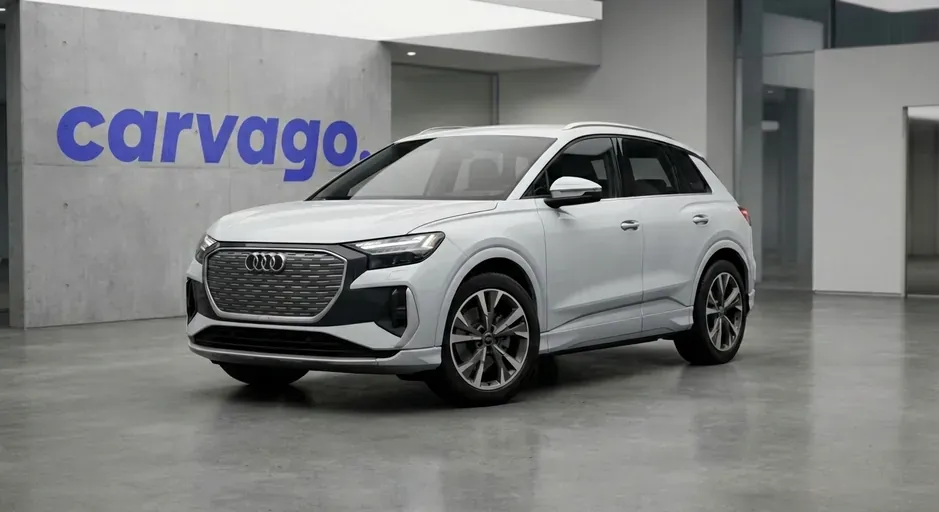
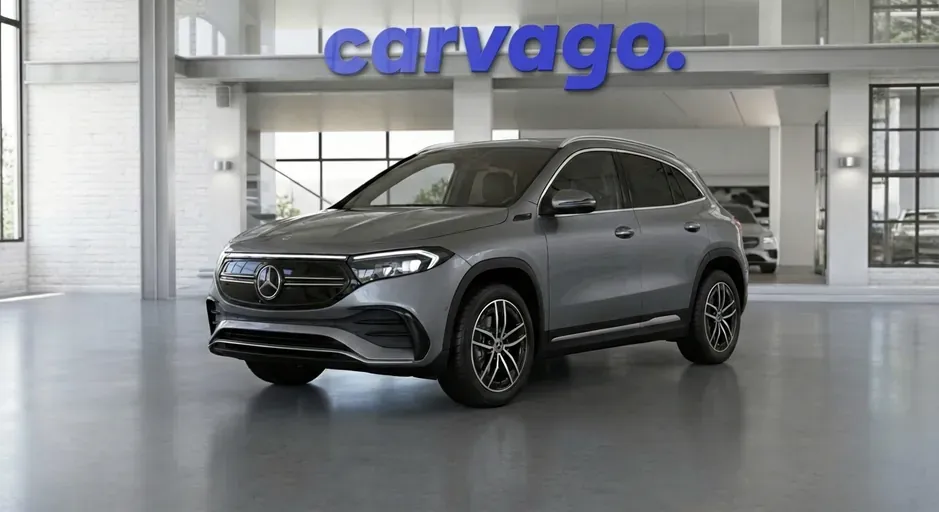
The Audi Q4 e-tron, sometimes also referred to as the Audi e-tron Q4 and also available in the more aerodynamic Sportback body style, is a premium all-electric SUV built on the dedicated MEB platform. Its direct challenger is the Mercedes-Benz EQA, a luxury compact electric crossover that is technically and visually closely related to the conventional GLA model and serves as the entry point into the world of electromobility for the Stuttgart-based brand. The following comparison will map out the key differences in technical specifications, range, spaciousness, and overall build quality in detail to help you decide between these two attractive representatives of German electric vehicles.
When you place the Audi Q4 e-tron and the Mercedes-Benz EQA side by side, the first difference you'll notice is in the overall proportions. While the Mercedes EQA feels more like a compact city crossover (based on its sister model, the GLA), the Audi Q4 e-tron has positioned itself from the start as a more robust family SUV. In terms of numbers, the Audi is a significant 125 mm longer and 31 mm wider. This difference manifests on the road with a more muscular and dominant appearance, but above all, it brings significant advantages for usable interior space.
A key parameter for longitudinal spaciousness in the cabin is the wheelbase. Here, Audi offers 2764 mm, which is 35 mm more than the Mercedes. Because the Q4 e-tron has used a dedicated electric platform (MEB) from the start, it can extract the absolute maximum for the occupants from these exterior dimensions, especially in terms of rear-seat legroom. Conversely, the Mercedes EQA, which uses a modified platform originally designed for internal combustion engines, scores primarily with its more compact exterior dimensions. With a length of just under 4.5 meters and a narrower body, it is noticeably easier to maneuver and park in tight city streets or underground garages.
The height of both models is very similar, ensuring the popular higher seating position and good visibility from the vehicle. However, Audi also offers its body in the Sportback variant, which, with a height of 1614 mm, slopes slightly towards the rear, giving the car a more aerodynamic and sporty flair. The choice between these two models from the perspective of exterior dimensions thus depends on whether you prefer maximum interior space for family trips, which Audi undoubtedly offers, or if you prefer easier navigation through the urban jungle in a slightly smaller and more agile package from Mercedes.
| Parameter | Audi Q4 e-tron SUV | Mercedes-Benz EQA SUV |
|---|---|---|
| Width (mm) | 1865 | 1834 |
| Length (mm) | 4588 | 4463 |
| Height (mm) | 1614 - 1632 | 1608 - 1620 |
| Wheelbase (mm) | 2764 | 2729 |
When choosing a family electric SUV, luggage capacity plays a key role because it directly affects daily practicality and usability for longer trips. In a direct comparison of the Audi Q4 e-tron and Mercedes-Benz EQA models from 2021 to 2023, we encounter fundamental differences stemming from the different designs of the two vehicles. While the Audi is built from the ground up on a dedicated electric platform (MEB) for maximum interior space utilization, the Mercedes-Benz EQA is based on a platform originally intended for models with internal combustion engines (specifically from its sister model, the GLA). The placement of large batteries under the trunk floor in the Mercedes thus takes its toll and significantly cuts into the available liters, which can be a deciding factor for families looking for maximum transport capacity.
Looking at the specific numbers, Audi's dominance is quite clear. The standard version of the Audi Q4 e-tron in the classic SUV shape offers a very generous 520 liters in its basic configuration. The brand also sells a design variant, the Q4 Sportback e-tron, with a sloping coupe-style roof, which on paper provides as much as 535 liters (measured up to the parcel shelf). In contrast, the Mercedes-Benz EQA has a luggage capacity of only 340 liters – regardless of whether you choose the front-wheel-drive version or the 4MATIC all-wheel drive. This is a vast difference of at least 180 liters in favor of Audi. In practice, this means that while the Mercedes is perfectly adequate for weekend shopping or carrying sports bags, the Audi easily swallows space for several extra suitcases and a stroller, making it an ideal companion even for longer family vacations. It is also important to mention that unfortunately, neither of these models offers a front trunk (so-called frunk) for storing charging cables, but both cars account for them with space under the main trunk floor.
After fully folding down the rear seats, the differences between the two vehicles blur slightly, yet Audi still maintains a very comfortable lead. The classic Audi Q4 e-tron SUV can offer a maximum capacity of up to 1,490 liters, while the more elegant Sportback version provides 1,460 liters (where the sloping roof already has a negative impact when loading boxes). The Mercedes-Benz EQA reaches 1,320 liters in this discipline. While this volume is sufficient for the occasional moving of smaller pieces of furniture or sports equipment in the Mercedes, overall the trunk is noticeably shallower and less usable for bulky items. Therefore, if interior spaciousness, versatility, and worry-free packing for the whole family are your priorities when choosing a four-year-old used electric vehicle, the Audi Q4 e-tron represents a significantly more rational and practical choice thanks to its well-thought-out electric architecture.
| Parameter | Audi Q4 e-tron SUV | Audi Q4 Sportback e-tron SUV | Mercedes-Benz EQA SUV |
|---|---|---|---|
| Base volume (liters) | 520 | 535 | 340 |
| Max volume with seats folded down (liters) | 1490 | 1460 | 1320 |
When choosing a compact electric SUV, towing capacity is often one of the key parameters for everyday usability. Whether you plan to tow a caravan, transport materials to a cottage, or just need to attach a bike rack to gain space for a few extra suitcases, the Audi Q4 e-tron and Mercedes-Benz EQA approach this challenge differently. In the generations available on the used car market (approximately from 2021 to 2023), you will find significant differences in maximum towing capacity between the two vehicles.
For the Mercedes EQA (generation 243), the chosen motorization and driven axle are absolutely crucial for towing. While the base EQA 250 and 250+ models with front-wheel drive offered a standard braked trailer weight of only 750 kg between 2021 and 2023 (matching the limit for unbraked trailers), the more powerful all-wheel-drive variants EQA 300 and EQA 350 boast a maximum capacity of up to 1800 kg. This higher value is already quite sufficient for weekend shopping of heavier materials as well as for longer holidays with a full-sized family caravan.
In its older model years, the Audi Q4 e-tron offers somewhat more conservative values, but they are distributed much more evenly. The base 35 and 40 e-tron versions can tow a braked trailer weighing up to 1000 kg, while the more powerful 45 and 50 e-tron variants standardly handle 1200 kg. If you were looking for a towing capacity of 1800 kg from Audi comparable to the Mercedes AWD models, you would have to go for the newer top-of-the-line 55 e-tron version, which only appeared on the market in 2023. The maximum weight of an unbraked trailer is the same for all versions of both competitors, at the legislative 750 kg.
While Audi, with its values of 1000 to 1200 kg, represents a reliable golden middle way for light recreation regardless of the version chosen, with Mercedes you have to choose carefully on the used car market. If you plan to regularly tow heavier loads, the Mercedes EQA in the 300 or 350 versions is the clear winner of the entire comparison thanks to its 1800 kg capacity. Conversely, the base EQA models (250 / 250+) from the first years of production, with a limit of only 750 kg, will satisfy only the least demanding users looking for occasional use for a small garden trailer.
| Model and motorization | Braked weight of trailer (kg) | Unbraked weight of trailer (kg) |
|---|---|---|
| Audi Q4 e-tron 35 / 40 (2021–2023) | 1000 | 750 |
| Audi Q4 e-tron 45 / 50 (2021–2023) | 1200 | 750 |
| Audi Q4 e-tron 55 (2023–present) | 1800 | 750 |
| Mercedes-Benz EQA 250 / 250+ (2021–2023) | 750 | 750 |
| Mercedes-Benz EQA 300 / 350 (2021–2023) | 1800 | 750 |
Both of these premium electric SUVs offer very interesting powertrain options, which, however, differ fundamentally in their concept. While the Mercedes-Benz EQA (generation H243) is based on a platform originally intended for internal combustion engine vehicles and offers front-wheel drive as standard, the Audi Q4 e-tron (generation FZ) stands on the Volkswagen Group's purely electric MEB platform, which means rear-wheel drive as standard. This difference fundamentally affects driving characteristics – the Audi feels more agile thanks to the rear-axle drive and has a better turning radius, while the Mercedes offers a more traditional sense of security from a front-wheel-drive car. Base motorizations start at 125 kW for the Audi (35 e-tron version) and 140 kW for the Mercedes (250 version). At the top of the range are powerful AWD models with two electric motors – for Audi, it's the updated 55 e-tron version with 250 kW (or the older 50 e-tron with 220 kW), and for Mercedes, the 350 4MATIC version with 215 kW. All variants rely on a single-speed automatic transmission typical for electric vehicles and exclusively electric drive. For buyers on the market for roughly four-year-old used cars, it is also crucial to follow the development of versions and batteries, as both manufacturers updated their models over the years and some older motorizations are no longer available as new.
The range of motorizations for the Audi Q4 e-tron is quite wide and has evolved significantly over time. On the four-year-old used car market, you will most often encounter the base 35 e-tron version with a smaller battery (usable capacity 52 kWh), 125 kW power, and rear-wheel drive. An extremely popular choice from this era is also the 40 e-tron version (150 kW, rear-wheel drive) with a larger 77 kWh battery, which offers an ideal compromise between price and real-world range. For those interested in quattro all-wheel drive, the 45 e-tron quattro (195 kW) and the top-of-the-line 50 e-tron quattro (220 kW) versions were available between 2021 and 2023. It is important to emphasize here that production of the 50 e-tron quattro model and the original 45 e-tron quattro version was discontinued in the autumn of 2023. These motorizations are now only available as used cars, having been replaced by the newer and more efficient 45 e-tron version (now with 210 kW available as both RWD and AWD) and the brand new, even more powerful 55 e-tron quattro version with an impressive 250 kW. All variants are fully electric and feature a single-speed reduction gear.
| Engine type | Fuel | Power (kW) | Torque (Nm) | Transmission |
|---|---|---|---|---|
| 35 e-tron | Electricity | 125 | 310 | 1A |
| 40 e-tron | Electricity | 150 | 310 | 1A |
| 45 e-tron quattro (2021-2023) | Electricity | 195 | 425 | 1A |
| 45 e-tron (from 2023) | Electricity | 210 | 545 | 1A |
| 50 e-tron quattro (2021-2023) | Electricity | 220 | 460 | 1A |
| 55 e-tron quattro (from 2023) | Electricity | 250 | 545 | 1A |
Mercedes-Benz designed the EQA primarily with front-wheel drive for standard variants, which is a slight abnormality in the luxury electric SUV segment. The most common model on the used car market is the base EQA 250, which has an output of 140 kW and a torque of 375 Nm. It uses a battery with a usable capacity of 66.5 kWh. During 2022, the highly sought-after EQA 250+ version appeared in the range, which, with the same power, brought slightly higher torque (385 Nm) and, most importantly, a larger battery (70.5 kWh) for extended range. If you require all-wheel traction (4MATIC system), Mercedes opted for a combination of an asynchronous motor at the front and a permanent magnet synchronous motor at the rear. This configuration is represented by the "golden middle ground" in the form of the EQA 300 4MATIC with 168 kW and the dynamic top of the range, the EQA 350 4MATIC. The top-of-the-line engine boasts a very solid output of 215 kW and a robust torque of 520 Nm, thanks to which it accelerates from 0 to 100 km/h in just 6 seconds. A single-speed automatic transmission is, of course, standard across the entire range.
| Engine Type | Fuel | Power (kW) | Torque (Nm) | Transmission |
|---|---|---|---|---|
| EQA 250 | Electricity | 140 | 375 | 1A |
| EQA 250+ | Electricity | 140 | 385 | 1A |
| EQA 300 4MATIC | Electricity | 168 | 390 | 1A |
| EQA 350 4MATIC | Electricity | 215 | 520 | 1A |
The decision between these two vehicles from an engine perspective depends primarily on your preferred driving style. In terms of driving dynamics and overall platform balance, the Audi Q4 e-tron comes to the fore. Its rear-wheel-drive version, the 40 e-tron, is absolutely the best and most efficient choice on the nearly-new used car market for most regular users. Drivers craving performance will appreciate the top-tier pull of the discontinued 50 e-tron quattro version, which can be purchased today at very attractive prices.
Mercedes-Benz EQA, on the other hand, excels with its unmistakably quiet and maximally comfortable operation. The base EQA 250 model is great for more conservative city drivers, while people who frequently drive long distances should look for the more efficient EQA 250+ variant. The powerful 300 and 350 4MATIC all-wheel drives represent a great solution for the mountains, albeit at the cost of slightly higher consumption and less agility in corners compared to equivalent quattro models from Audi.
Choosing the right engine – in the case of these electric vehicles, rather the combination of battery capacity and electric motor power – is absolutely crucial for long-term satisfaction. Our recommendations are based on real-world range, dynamics, user experience, and technical reliability found after several years of operation.
Both premium electric SUVs approach their construction differently, which fundamentally affects their daily usability. While the Audi Q4 e-tron has been based on the Volkswagen Group's pure electric MEB platform from the start, ensuring better interior packaging and more efficient placement of large batteries, the Mercedes-Benz EQA uses a modified MFA2 platform originally designed for internal combustion engine vehicles (the GLA model). For those interested in a roughly four-year-old used car, this means different road behavior characteristics. Audi benefits from rear-wheel drive (in base and mid-range versions) and better traction, while Mercedes relies on front-axle drive and the uncompromising acoustic comfort typical of the brand with the three-pointed star.
This version, available primarily from 2021 to 2023, represents the absolute golden middle ground in the entire model range and is the most sensible choice on the used car market.
The best-balanced specification of the compact Mercedes from 2021 to 2023 is the basic, yet very powerful engine with a single electric motor. The 250+ version with a slightly larger battery hit the market in 2022, and if you come across it in the listings at a good price, it's an excellent bonus.
While official consumption tables according to the stricter WLTP standard are a more reliable guide than older methodologies, everyday driving reality brings somewhat different numbers. For purely electric SUVs like the Audi Q4 e-tron and Mercedes-Benz EQA, total energy demand depends on many external influences – from outside temperature and heat pump usage to the ratio of highway driving. While paper values for both vehicles from 2021 to 2023 promise optimistic consumption between 15.0 and 18.6 kWh/100 km, practice shows roughly 10 to 20% higher consumption. For the most objective comparison on the market of roughly four-year-old used cars, we have therefore drawn from user data from the independent community portal Spritmonitor.de, which has long collected real-world statistics from thousands of European drivers.
news_site: Spritmonitor.de
| Model and powertrain | Average consumption (kWh/100 km) |
|---|---|
| Audi Q4 35 e-tron | 18.5 |
| Audi Q4 40 e-tron | 19.2 |
| Audi Q4 45 e-tron | 20.3 |
| Audi Q4 50 e-tron | 21.5 |
| Mercedes-Benz EQA 250 | 20.2 |
| Mercedes-Benz EQA 250+ | 18.8 |
| Mercedes-Benz EQA 300 4MATIC | 21.0 |
| Mercedes-Benz EQA 350 4MATIC | 21.5 |
Looking closely at the data, it is clear that the most efficient choices are, naturally, the single-axle drive versions. The sweet spot for Audi is the Q4 40 e-tron model, which represents a great balance between performance and reliable range with an average of around 19.2 kWh/100 km. The Mercedes-Benz EQA in the base 250 powertrain (140 kW) is slightly thirstier in practice and usually slightly exceeds 20 kWh/100 km; however, its improved EQA 250+ version introduced in 2022 focused on optimized aerodynamics and more efficient energy management, allowing it to push consumption below 19 kWh/100 km.
A slight surprise is the finding that the representative from Stuttgart loses its advantages over the competitor from Ingolstadt somewhat sooner at highway speeds. The reason is the MFA2 platform shared with the internal combustion GLA model, which does not achieve the same natural aerodynamic efficiency as the purely electric MEB architecture on which the Audi Q4 stands. Furthermore, once you opt for variants with two electric motors and all-wheel drive (Q4 50 e-tron or EQA 300/350 4MATIC), expect a real-world appetite above the 21 kWh/100 km mark for both competitors.
For the average user, several key recommendations follow from these trends. If you are a frequent highway driver and care about maximum range and the lowest possible consumption, the Audi Q4 40 e-tron or the optimized Mercedes EQA 250+ will be more efficient tools. Conversely, for drivers who spend most of their time in urban and suburban traffic, any differences in consumption will be practically negligible thanks to advanced recuperation and lower speeds.
Overall, it can be said that electricity consumption should not play the role of the main decision-making factor in this duel. Both premium SUVs from 2021 to 2023 offer very comparable efficiency in their classes, so the overall condition of the vehicle, the degree of battery degradation, interior space, and your personal preference for a specific brand or onboard software will carry much more weight when buying on the used car market.
Both premium electric crossovers entered the market in 2021. Today, as approximately four-year-old used cars from the first years of production (2021–2022), they represent an interesting choice for those interested in entering the world of luxury electromobility at a fraction of the price of new vehicles. For both models, the largest drop in value is already behind them, with price levels on the used market being surprisingly balanced.
The used Audi Q4 e-tron holds its value relatively well and offers a solid selection of available used cars on the market. Prices vary primarily according to battery capacity (versions 35, 40, and 50) and body type (classic SUV vs. more aerodynamic Sportback).
The Mercedes-Benz EQA offers a very similar price range in the used car market. A crucial role in the price here is played by the chosen performance level and the presence of the AMG Line visual package, which reliably pushes the price of a used car up.
For better orientation when choosing a premium electric vehicle, we present a clear comparison of current average prices from both the European and domestic used car markets:
| Used car category (2021–2022 models) | Audi Q4 e-tron | Mercedes-Benz EQA |
|---|---|---|
| Base price (mileage > 100k km) | from €24,000 | from €22,000 |
| Optimal choice (mileage up to 60k km) | €31,000 – €35,000 | €28,000 – €34,000 |
| Premium models (4x4, top equipment) | €37,000 – €45,000 | €35,000 – €43,000 |
Note: Prices may vary slightly depending on current market supply, the technical condition of the specific vehicle, and overall equipment. A major benefit for both models is the factory warranty on the high-voltage battery, which manufacturers standardly provide for 8 years or 160,000 km – for four-year-old used cars, the battery is thus still safely under warranty.
Both models, the Audi Q4 e-tron and the Mercedes-Benz EQA, boast a maximum five-star rating in independent Euro NCAP safety tests. However, when comparing these vehicles, it is essential to consider the context and the year the tests were conducted. Euro NCAP methodology and protocols are constantly evolving and become significantly stricter with each new iteration. Newer tests place much greater emphasis on advanced assistance systems, protection of vulnerable road users (such as cyclists and pedestrians), and vehicle behavior in complex intersection scenarios. For this reason, percentage results from different years cannot be directly and simply compared.
Audi Q4 e-tron underwent the latest Euro NCAP assessment in 2025, meaning it had to stand up to current and very strict conditions. The car achieved excellent results: 91% for adult occupant protection, 87% for child occupant protection, 79% for vulnerable road user protection, and 73% in the safety assist category. The fact that the Q4 e-tron maintained a five-star rating even under the strictest standards (including new frontal impact simulations and advanced cyclist detection) testifies to its highly modern approach to both active and passive safety.
Mercedes-Benz EQA, on the other hand, received its five-star rating in 2019. It is important to note that this result was largely carried over from the technically related B-Class model tested in the same year. The car earned impressive scores: 97% for adult protection, 90% for child protection, 81% for pedestrian protection, and 75% for assistance systems. Although these percentage figures appear higher than Audi's at first glance, they were achieved according to older and less demanding criteria. Given that Euro NCAP ratings are standardly valid for six years, this model's certification is at the very end of its valid cycle, and its older generation of assistance systems may no longer fully meet the latest market requirements.
In conclusion, while both cars provide an excellent level of safety and will protect their occupants without issue, the Audi Q4 e-tron offers an overall more modern and comprehensive safety package. Its ability to meet the latest and most demanding standards from 2025 provides a guarantee that the vehicle possesses the most up-to-date technology for accident prevention.
| Parameter | Audi Q4 e-tron | Mercedes-Benz EQA |
|---|---|---|
| Year of testing | 2025 | 2019 |
| Adult occupant protection | 91 % | 97 % |
| Child occupant protection | 87 % | 90 % |
| Vulnerable road user protection | 79 % | 81 % |
| Safety assistance systems | 73 % | 75 % |
In addition to standard equipment, each model offers several unique features that may be decisive for the customer, with both brands approaching electric added value and premium technologies in their own way.
In its compact electric SUV, Audi has bet on maximizing the use of the new MEB platform and on user-friendly innovations for everyday use.
For the EQA model, which is technically based on the combustion-powered GLA, Mercedes focused on absolute care-free operation, traditional luxury, and intelligent integration of assistance systems.
Advantages:
Disadvantages:
Advantages:
Disadvantages:
Based on data from the comprehensive CarAudit vehicle inspection, long-term user experience, service reports, and recall actions, we have compiled an overview of the most common problems that buyers of used electric vehicles should watch out for. Although both models are from premium brands and mechanically very well built, neither escaped the typical teething troubles of the first generations of modern electric vehicles.
The compact electric SUV from Audi stands on the Volkswagen Group's MEB platform, which provides it with a solid and mass-proven mechanical foundation. Most issues on the used car market thus do not concern the drive itself, but rather electronics and software.
Summary for Audi Q4 e-tron: Mechanically, it is a very robust and durable car that shows minimal faults on the chassis. If you are buying a used model, it is essential to verify whether the latest software has been uploaded to the vehicle at a service center, which resolves most of the annoying communication glitches.
The Mercedes-Benz EQA is technically based on the internal combustion GLA model (MFA2 platform). It is therefore not a purebred electric platform built from the ground up only for batteries, which brings specific compromises in the form of higher weight and more complex component packaging.
Summary for Mercedes-Benz EQA: The EQA attracts with its top-notch interior craftsmanship and very quiet ride. Common problems are mostly electronic in nature and do not require expensive mechanical repairs. The exception, however, is the EQA 250+ models, for which a thorough independent technical inspection of the car and a careful check of performed recalls are an absolute necessity for a safe and peaceful purchase.
When buying a used electric car, a thorough inspection is key. Although these vehicles do not suffer from the traditional ailments of internal combustion engines, both premium SUVs have their specifics and so-called "teething problems" that need to be focused on. Here are several specific points that a comprehensive car inspection should focus on.
The Audi Q4 e-tron offers a significantly larger trunk with a base volume of 520 liters. The Mercedes-Benz EQA suffers from its shared platform with internal combustion models, providing a trunk volume of only 340 liters. For family use, the representative from Ingolstadt is the clear winner.
The Q4 e-tron (in the 40 version) with its larger battery and usable capacity of 77 kWh can cover over 400 kilometers in real-world traffic. The competing EQA 250 has a 66.5 kWh battery, which in practice means a real-world range of around 350 kilometers. For regularly tackling longer highway routes, the Audi has a slight advantage.
Thanks to the dedicated MEB electric platform, the Q4 e-tron offers a much airier interior with a flat floor and generous rear legroom. The EQA is structurally based on the GLA combustion model, which means a more cramped rear space with a higher floor. Adult passengers will therefore feel significantly more comfortable in the back of the Audi.
Older EQA models from the first years of production support DC fast charging at a maximum of 100 kW. Depending on the version, the Audi handles 125 to 135 kW, which slightly shortens the time spent at the charging station. Despite these paper differences, you can get from 10 to 80% battery capacity in both cars in approximately 30 to 35 minutes.
Mercedes-Benz traditionally relies on top-tier cabin soundproofing and a very supple chassis that filters out city bumps excellently. The competitor with the four rings has a slightly firmer and sportier setup; on the other hand, it offers better visibility and a smaller turning radius. The choice therefore depends on whether you prefer maximum acoustic comfort or better maneuverability when parking.
Sources: ADAC, aktualne.cz, idnes.cz, motorvize.cz, autojournal.cz, autotrip.cz
This article was prepared using artificial intelligence tools. The section guarantor is Petr Dušek.
Hyundai Ioniq 5 vs. Kia EV6: Which electric car is better? A detailed comparison of range, technology, and price to help you make the right decision.
Apr 13, 2026
Mercedes-Benz EQA vs. Volvo C40 Recharge. Which premium electric SUV is better? A detailed comparison of range, performance, and price will help you decide.
Apr 14, 2026
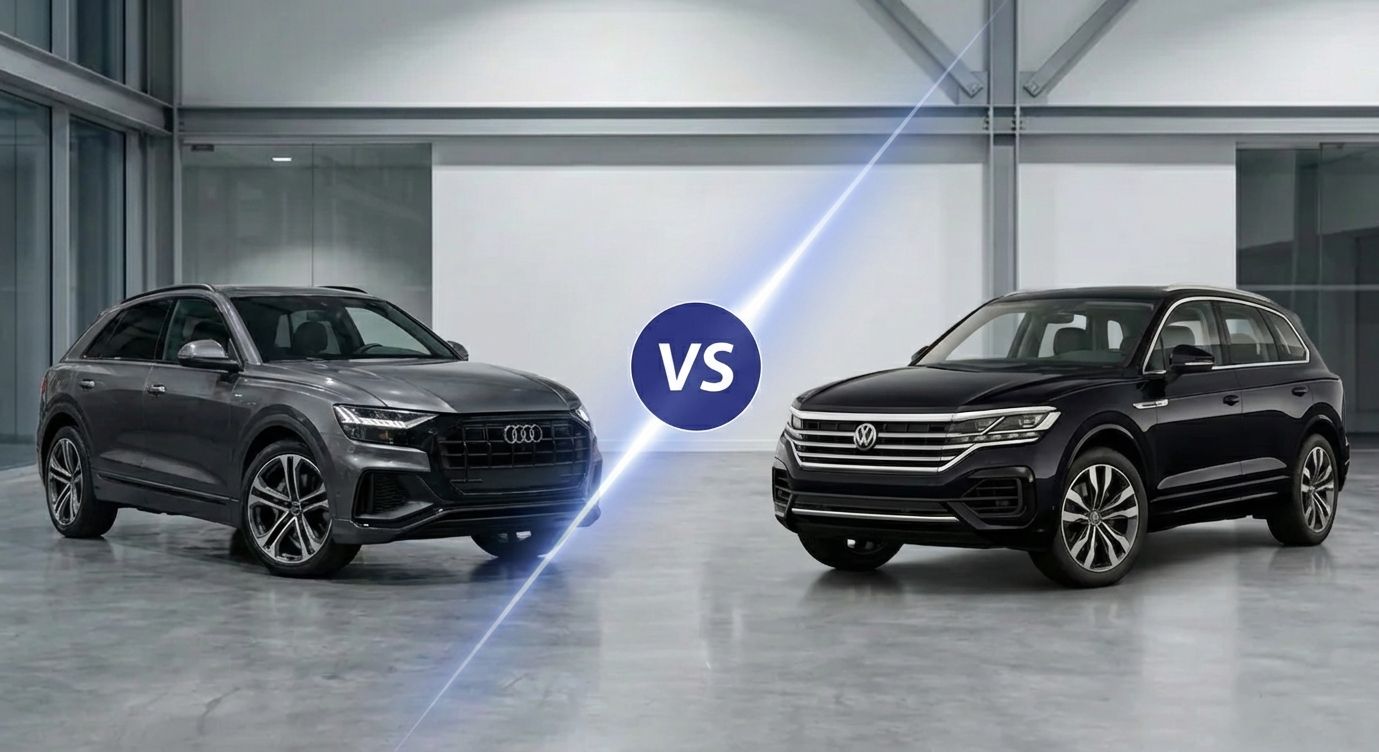
They share the same platform, but which one is better? A detailed comparison of the Audi Q8 and Volkswagen Touareg. We have evaluated the features and prices, and we provide a clear final verdict.
Apr 2, 2026