Car battle
Volvo XC40 vs. Volkswagen T-Roc: Complete comparison 2026
Undecided between a Volvo XC40 and a VW T-Roc? Our comparison will help you choose. Discover the main differences, real-world impressions, and a clear verdict.
Apr 14, 2026
Articles
Car battle
Nissan Ariya vs. Škoda Enyaq iV Comparison: Which electric SUV is better? We reveal real-world range, spaciousness, and equipment. Read our final verdict!
April 14, 2026
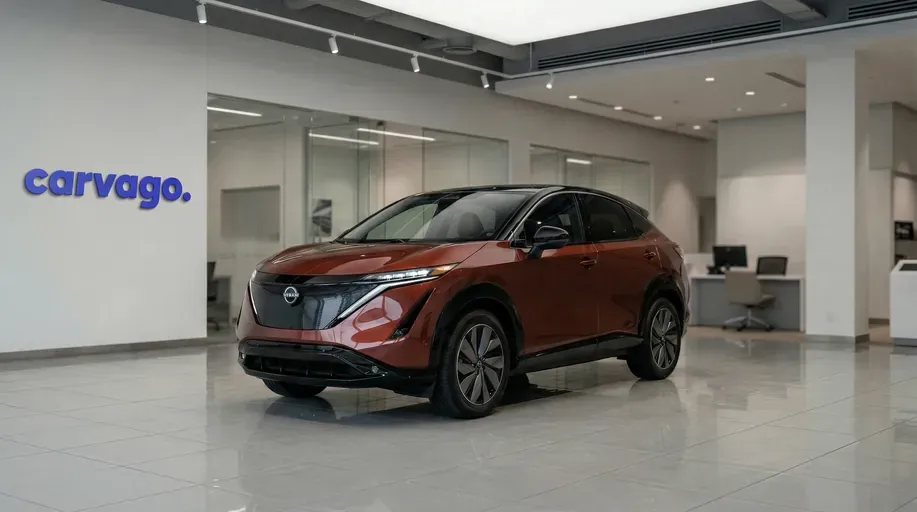
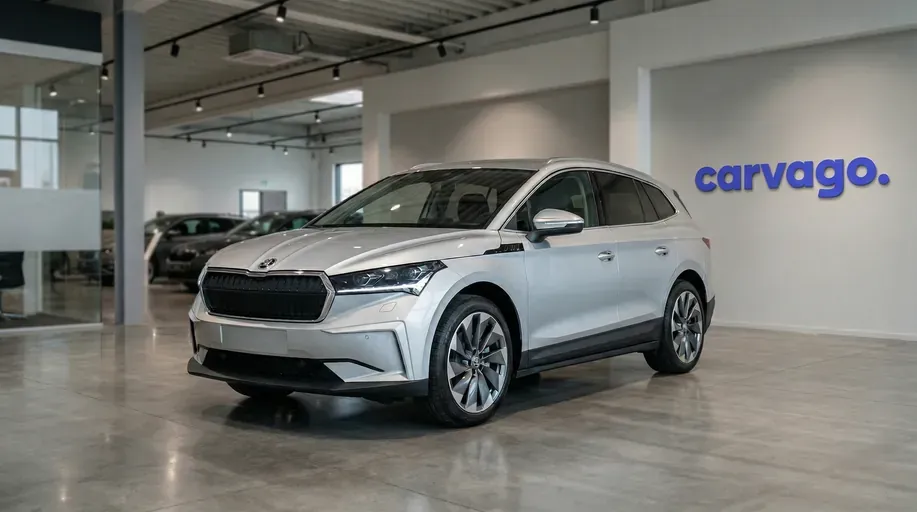
Nissan Ariya is an innovative Japanese electric crossover that brings a bold futuristic design and a highly comfortable, minimalist interior full of modern technology to the market. Its challenger today is the Škoda Enyaq iV, referred to simply as the Enyaq in newer model years, which represents an exceptionally popular, spacious, and practically-oriented family SUV from the Mladá Boleslav production. In the following comparison, we will focus in detail on the specifications, driving characteristics, and overall utility value of both cars to find out which of these different approaches to electromobility makes the most sense on the used car market and will be the best choice for you.
In a direct comparison of the exterior dimensions of these two popular electric models, you will soon find that the Škoda Enyaq iV takes up slightly more space on the road. The Czech representative, with its length of 4,649 to 4,653 mm (depending on the classic body or the Coupé version), is 54 to 58 mm longer than the Nissan Ariya, which measures 4,595 mm in length. Enyaq also has the advantage of a wider build – with a value of 1,879 mm, it surpasses its Japanese competitor by 29 mm. In practice, this means that the Škoda gives a slightly more massive impression from the outside and offers a slightly more generous interior width for passengers. On the other hand, the shorter and narrower body gives Nissan a slight advantage in daily parking and maneuvering in cramped city streets.
However, an interesting paradox arises when looking at the wheelbase and the height of the vehicles. Although the Nissan Ariya is a shorter car overall, it boasts a 10 mm longer wheelbase (2,775 mm compared to 2,765 mm for the Enyaq). Nissan's engineers thus managed to push the wheels further into the very corners of the body. The result is the maximization of longitudinal space for passengers inside the cabin, thanks to which the Ariya bravely compensates for its shorter exterior length. Furthermore, at 1,650 mm, the Japanese model is about 30 mm taller than the Enyaq, giving it a more classic upright SUV stance with a pleasantly higher driving position.
From the perspective of overall exterior dimensions, the choice between these two cars depends primarily on your driving territory. The Škoda Enyaq iV benefits from its longer and wider build, which you will appreciate if you are looking for a robust family cruiser with maximum internal volume for long journeys. The Nissan Ariya, on the other hand, excels in clever space packaging – combining a long wheelbase and a higher roof into a more compact exterior package. As a result, it maintains great passenger comfort while remaining a more agile and friendly companion for city traffic.
| Parameter | Nissan Ariya SUV | Škoda Enyaq iV SUV |
|---|---|---|
| Width (mm) | 1850 | 1879 |
| Length (mm) | 4595 | 4649 - 4653 |
| Height (mm) | 1650 | 1620 - 1621 |
| Wheelbase (mm) | 2775 | 2765 |
When choosing a used family electric car after about four years of operation, luggage space volume is usually one of the most important criteria. This is often where the line is drawn between models that focus more on flashy style and design and those that prioritize maximum daily utility. While both compared vehicles offer above-average space for the crew, the rear part of the body reveals completely different philosophies of their manufacturers, which is good to keep in mind especially when packing for family trips.
Škoda Enyaq iV does not deny its group roots and the brand's traditional reputation for unrivaled space and practicality. In the standard SUV body, it has a generous basic volume of 585 liters. This space is more than sufficient for a large weekend shop, a folded stroller, and bulky luggage for a longer family holiday without the need for difficult compromises. If you opt for the more dynamically styled Enyaq Coupé for aesthetic reasons, you only lose a negligible 15 liters, so the basic volume here is a very solid 570 liters. After folding the rear seats, the traditional SUV transforms into a practical workhorse with a maximum volume of up to 1710 liters, while the elegant Coupé still offers a respectable 1610 liters.
Nissan Ariya, on the other hand, approaches the interior layout with an emphasis on the living-room-like airiness of the passenger cabin, which takes its toll on the luggage compartment. The front-wheel-drive version offers a trunk with a basic volume of 468 liters, which is a rather average value in this class. The situation is even tighter for the e-4ORCE all-wheel-drive variants, where the second electric motor located on the rear axle takes up more space under the trunk floor and reduces the basic capacity to 415 liters. Although the Enyaq iV clearly dominates in the basic layout and offers space for several extra suitcases, the differences narrow after folding the rear backrests – the Ariya can reach a relatively solid maximum volume of 1691 liters, largely making up for its initial loss when moving larger items.
| Parameter | Nissan Ariya SUV | Škoda Enyaq iV SUV | Škoda Enyaq iV Coupé |
|---|---|---|---|
| Basic volume (liters) | 415 - 468 l | 585 l | 570 l |
| Max. volume with seats folded (liters) | 1691 l | 1710 l | 1610 l |
If you are looking for an uncompromising hauler for a large family, the Škoda Enyaq iV will convince you much more easily with its massive trunk than the slightly more luxurious inside, but more modest in the luggage compartment, Nissan Ariya.
The ability to tow a trailer is often limited in electric vehicles, yet the Nissan Ariya and Škoda Enyaq iV offer relatively solid values in this regard, significantly expanding their practicality. The presence of a towing hitch means valuable space for a few extra suitcases in a light trailer, which is a transport capacity perfectly sufficient for weekend shopping or longer holidays. When choosing a used car around four years old (model years 2021 to 2023), however, it is necessary to carefully monitor specific powertrain versions, as both models differ significantly in their capabilities.
In a direct comparison, it is clear that Škoda bets on a more universal standard, while Nissan offers the highest values only for specific versions:
If you plan on frequently towing a heavier caravan or boat, the top-tier Nissan Ariya with all-wheel drive and a 1,500 kg capacity is clearly the best choice of the pair. For more common daily use and trouble-free towing of light trailers, however, the Škoda Enyaq iV offers a much better and more stable base (1,000 kg compared to 750 kg for the Nissan), meaning you don't necessarily have to hunt for the most expensive and powerful specifications among used cars.
| Model and powertrain | Braked trailer weight (kg) | Unbraked trailer weight (kg) |
|---|---|---|
| Nissan Ariya 63 kWh | 750 | 750 |
| Nissan Ariya 87 kWh (2WD) | 750 | 750 |
| Nissan Ariya 87 kWh (AWD) | 1500 | 750 |
| Škoda Enyaq iV 60 | 1000 | 750 |
| Škoda Enyaq iV 80 | 1000 | 750 |
| Škoda Enyaq iV 80x | 1200 | 750 |
| Škoda Enyaq iV RS | 1200 | 750 |
When comparing the powertrains of the Nissan Ariya and Škoda Enyaq iV models, we are moving exclusively in the world of battery electric vehicles (BEV). Both vehicles rely on pure electric drive, which guarantees smooth, quiet, and locally emission-free travel with almost instantaneous torque delivery. However, a fundamental technical difference between these competitors lies in the motor layout concept. In its standard single-motor models, the Nissan Ariya relies on front-wheel drive (FWD), which may feel more familiar to some drivers transitioning from previous internal combustion engine cars. In contrast, the Škoda Enyaq iV utilizes the Volkswagen Group's MEB platform, where rear-wheel drive (RWD) is the default standard. This arrangement gives the Czech representative the advantage of better traction during acceleration and an excellent turning radius. Naturally, powerful dual-motor all-wheel drive (AWD) versions exist for both models. For roughly four-year-old used cars, buyers typically choose between efficient single-motor variants for the longest possible range and more powerful AWD versions aimed at demanding drivers who require uncompromising dynamics and confidence in winter conditions.
The Nissan Ariya entered the market in the autumn of 2022 and offers two usable battery capacities (63 kWh and 87 kWh). The lower-powered front-wheel-drive version has an output of 160 kW, while the model with the larger battery generates a solid 178 kW. However, those looking for maximum confidence and dynamics should focus on the all-wheel drive labeled as e-4ORCE. The basic AWD with the 87kWh battery offers 225 kW of power and a massive 600 Nm of torque. According to data tables, an even more extreme Evolve+ specification with 290 kW was available for a limited time between 2023 and 2024 (until autumn), but it was withdrawn from the portfolio and is a complete rarity on the used car market. Although a sporty Nismo edition was introduced in early 2025, it cannot be expected among four-year-old used cars for obvious reasons.
| Powertrain (Drive type) | Fuel | Power (kW) | Torque (Nm) | Transmission |
|---|---|---|---|---|
| 63 kWh (FWD) | Electricity | 160 | 300 | 1-speed automatic |
| 87 kWh (FWD) | Electricity | 178 | 300 | 1-speed automatic |
| 87 kWh e-4ORCE (AWD) | Electricity | 225 | 600 | 1-speed automatic |
| 87 kWh e-4ORCE Evolve+ (AWD) | Electricity | 290 | 600 | 1-speed automatic |
The history of Škoda Enyaq powertrains is much more diverse regarding the used car market. Between 2021 and 2023, models designated as iV dominated the range. On the secondary market, you will most often encounter the iV 60 (132 kW) versions and the variant focused on the longest possible range, the iV 80 (150 kW). These rear-wheel-drive powertrains were complemented by the dual-motor iV 80x (195 kW) and the sporty iV RS (220 kW) models. An important fact, however, is that by the end of 2023, production of practically all original "iV" units was discontinued. They were replaced by more modern 85, 85x, and improved RS variants, which use a significantly more efficient electric motor on the rear axle. The power of the 85 model thus jumped to 210 kW and the RS version to 250 kW. Therefore, if you are choosing a car around four years old, your selection will largely consist of the original reliable iV generation with slightly lower power.
| Powertrain (Drive type) | Fuel | Power (kW) | Torque (Nm) | Transmission |
|---|---|---|---|---|
| iV 50 (RWD) (discontinued 2023) | Electricity | 109 | 220 | 1-speed automatic |
| iV 60 (RWD) | Electricity | 132 | 310 | 1-speed automatic |
| iV 80 (RWD) (discontinued 2023) | Electricity | 150 | 310 | 1-speed automatic |
| iV 80x (AWD) (discontinued 2023) | Electricity | 195 | 425 | 1-speed automatic |
| iV RS (AWD) (discontinued 2023) | Electricity | 220 | 460 | 1-speed automatic |
| 85 / 85x (RWD/AWD) (from late 2023) | Electricity | 210 | 545 | 1-speed automatic |
| RS (AWD) (from late 2023) | Electricity | 250 | 545 | 1-speed automatic |
Whether you choose the front-wheel drive from Nissan with its exceptionally quiet operation or prefer the rear-wheel drive from Škoda for better maneuverability, both cars offer great experiences behind the wheel. For regular family trips, the most widespread Enyaq iV 80 represents the perfect balance of price and range, while the Ariya e-4ORCE will captivate drivers craving luxury and the performance of a massive 600 Nm.
Choosing the right powertrain and battery capacity is crucial for long-term satisfaction with an electric vehicle. Our recommendations are based on real-world range, energy efficiency, user experience, and the reliability of roughly four-year-old used cars on the market. While the Nissan Ariya utilizes the advanced CMF-EV platform with unique battery thermal management and offers the optional e-4ORCE all-wheel drive (developed with expertise from the GT-R sports model), the Škoda Enyaq iV stands on the mass-produced MEB platform, which relies on rear-wheel drive for standard versions—an interesting return to historical roots for the Mladá Boleslav-based brand. Both manufacturers offer a wide range of versions, but practice shows that the chase for extreme performance or, conversely, excessive skimping on battery capacity does not make sense in daily operation from a long-term perspective.
This version with the larger battery and front-wheel drive (primarily available in 2022 and 2023 before the automaker switched to new equipment package divisions) represents the absolute best choice, combining worry-free range with rational efficiency. Compared to the base 63 kWh version, it offers much more freedom on the road with a real combined range safely exceeding 400 kilometers. The 178 kW output provides excellent dynamics with immediate torque delivery, while the absence of a second electric motor (found in the powerful e-4ORCE version) means significantly lower weight and overall more economical operation without unnecessary battery drain. Mechanically, the car is very reliable; however, when inspecting a used unit, thoroughly check the condition of the chassis and front axle arms. A test drive and listening for noises on uneven surfaces will reveal any potential play – the front wheels must handle not only the weight of the battery-laden SUV but also the constant onslaught of high torque, which can accelerate wear on ball joints and bushings. This specification is the embodiment of comfort, ideal for families and drivers traveling longer distances who appreciate an exceptionally quiet cabin and smooth travel without range anxiety.
In the case of the Czech automaker, the most rational and market-proven model is the iV 80 version. This specification was offered within the first generation only from 2021 until the end of 2023 (subsequently replaced by the updated 85 variant), making it the most price-attractive model with a large battery on the three-to-four-year-old used car market today. Thanks to its 77 kWh usable capacity, it offers a great balance between purchase price, range, and solid mechanical durability. The 150 kW electric motor driving exclusively the rear wheels gives the car very pleasant agility, and average consumption can easily be maintained between 17 and 19 kWh per 100 km. While the iV 80x all-wheel drive has better traction, it comes at the cost of higher consumption, whereas the weaker iV 60 version is limited on highways by the need for more frequent charging. A weak point of the early model years was unrefined software – therefore, when buying, check the functionality of the infotainment and ensure the car has at least software version ME3 installed by a service center; otherwise, you risk screen freezes and assistant system failures. From a mechanical standpoint, pay close attention to even wear of the rear tires. The rear axle carries the massive weight of the battery while also transmitting all the power, so an aggressive driving style by the previous owner will quickly manifest as unevenly worn tread on the edges, indicating a need for wheel alignment. The iV 80 model is a perfect all-rounder for calmer drivers looking for maximum space, travel comfort, and reliability at reasonable operating costs.
Official consumption values provided by manufacturers according to the WLTP methodology are often more optimistic than reality. This is especially true for electric vehicles, where range and real energy consumption are significantly influenced by highway speed, outside temperature, and overall driving style. For an objective comparison, it is therefore always best to look at data directly from owners in real-world operation. Community portals such as the German Spritmonitor.de, where drivers record their charging over the long term, are an ideal source. Here we quickly find that for roughly four-year-old used cars of both models, real consumption can easily differ from the official figures by 10 to 20 percent, as physics and higher aerodynamic drag in the real world cannot be cheated.
| Model and powertrain | Average consumption (kWh/100 km) |
|---|---|
| Škoda Enyaq iV 60 (132 kW) | 15.9 |
| Škoda Enyaq iV 80 (150 kW) | 16.5 |
| Škoda Enyaq iV 80x (195 kW) | 17.2 |
| Nissan Ariya 63 kWh (160 kW) | 17.7 |
| Nissan Ariya 87 kWh (178 kW) | 19.3 |
When interpreting these trends, we can notice several interesting phenomena. Surprisingly, the Škoda Enyaq iV benefits greatly from excellent aerodynamics and efficient thermal management. It is evident from the table that a more powerful and heavier battery version (Enyaq iV 80 compared to iV 60) does not automatically mean a drastic increase in consumption – on the contrary, it stays at very favorable values around 16.5 kWh. Logically, a larger toll is only taken by the added second electric motor in the 80x version (all-wheel drive). In contrast, the Nissan Ariya is noticeably "hungrier" overall. Its robust body and different powertrain setup mean that even the base version with the smaller 63 kWh battery consumes more energy than the powerful all-wheel drive from Škoda. For the Ariya model with the large 87 kWh battery, real consumption then dangerously approaches the limit of 20 kWh per 100 km.
For the average user and those interested in a roughly four-year-old used car, this means a clear choice based on the type of use. If you are looking for a vehicle primarily for shorter commutes from suburban areas and for routine city traffic, the difference in consumption will be partially erased thanks to frequent recuperation, and both cars will operate efficiently enough. However, if you spend a lot of time on the highway or regularly drive long distances, the Japanese model will require slightly more frequent charging stops and overall operating costs will be higher. For budget-conscious buyers of older models, the representative from Mladá Boleslav is the clear favorite in terms of absolute efficiency.
In conclusion, it can be said that electricity consumption in this comparison definitely represents a very significant factor. Especially with used electric vehicles, where every kilowatt saved helps maximize real range, these values play clearly in favor of the Škoda Enyaq iV. The more efficient operation of the rear-wheel drive iV 80 makes it a rational choice, and consumption is a very compelling argument here for leaning towards the Czech brand when purchasing.
When choosing a roughly four-year-old electric SUV, we look at the 2021 and 2022 model years. While the Škoda Enyaq iV was already heavily filling company fleets and private garages at this time, the Nissan Ariya was only just entering the market. This historical context and the different sales strategies of the two manufacturers are fundamentally reflected in the current situation on the used car market.
The Czech market is literally a promised land for a used Enyaq. Thanks to massive earlier sales, buyers have a huge selection in used car dealerships, which creates downward pressure on prices.
The Japanese challenger is a rarity on the used car market compared to the Enyaq. A more limited supply and richer standard equipment mean that the Ariya maintains more confident price tags and the depreciation is not as steep.
| Model (2021–2022) | Starting price (from) | Typical price (larger battery) | Market availability |
|---|---|---|---|
| Škoda Enyaq iV | approx. €19,000 | €27,000 | Excellent |
| Nissan Ariya | approx. €33,000 | €39,000 | Limited |
From the perspective of residual value and purchase value, the Škoda Enyaq iV is the clear favorite. Four-year-old cars have lost a significant portion of their original purchase price and represent a great price-to-value ratio. The Nissan Ariya makes sense for drivers who require exclusivity, a fresh look, and don't mind a higher initial investment on the secondary market.
While the Škoda Enyaq iV attracts with a wide selection and very affordable prices for the first model years, the Nissan Ariya holds a higher value and will appeal more to those looking for a fresh design and rich standard equipment.
When choosing a family electric car from the used car market, safety is one of the most important criteria. Both the Nissan Ariya and the Škoda Enyaq iV boast a maximum five-star rating in tests by the independent organization Euro NCAP. However, it is extremely important to view these results in the context of when the vehicles were tested. The Euro NCAP methodology is constantly evolving and becoming stricter. Testing protocols from different years place different emphasis on active safety features and new types of assistants, making percentage scores from different years not entirely directly comparable.
The Nissan Ariya underwent testing in 2022, during the validity of very strict protocols. These paid great attention to new frontal crash simulations, cyclist detection, and intersection crossing scenarios. The car achieved an excellent result, particularly in the safety assist category (93%), where the advanced ProPILOT Assist system was fully demonstrated. Furthermore, a center airbag between the front seats significantly contributed to solid protection for both adults and children, effectively preventing dangerous head collisions of the occupants during a side impact.
The Škoda Enyaq iV was evaluated a year earlier, in 2021. In these tests, it recorded one of the best results in history for adult occupant protection, reaching an impressive 94%. Although the methodology for testing assistants in 2021 was slightly less comprehensive than in the following year (which is reflected in the 82% for assistance systems), the Enyaq iV clearly proved its immense structural rigidity and was even named the safest car in its class for that year by Euro NCAP.
| Parameter | Nissan Ariya | Škoda Enyaq iV |
|---|---|---|
| Year of testing | 2022 | 2021 |
| Adult occupant protection | 86 % | 94 % |
| Child occupant protection | 89 % | 89 % |
| Vulnerable road user protection | 74 % | 71 % |
| Safety assist systems | 93 % | 82 % |
Note to the table: The vehicles were tested according to different methodologies in 2021 and 2022; the resulting percentages are based on different criteria and are not entirely directly comparable.
In conclusion, it can be said with certainty that both vehicles offer the absolute maximum in terms of safety for four-year-old used cars. While the Škoda Enyaq iV relies primarily on excellent passive safety and an exceptionally rigid cabin, the Nissan Ariya offers a slightly more modern and comprehensive safety package in terms of active assistants. This reflects its stricter testing from 2022 and makes it a more comprehensively protected vehicle meeting newer standards in accident prevention.
Both models rank among the safest family electric cars on the used market; the Enyaq iV impresses with its absolutely uncompromising body rigidity, while the Ariya scores with top-tuned active assistants according to the newer Euro NCAP rules.
In addition to standard equipment, each model offers several unique features that can be decisive for the customer and clearly show that both cars provide much more than just the bare basics, with each having its own distinctive approach to added value.
Futuristic and original exterior and interior design that stands out from established standards
Premium-crafted cabin with a flat floor, high-quality materials, and a luxury lounge atmosphere
Excellent suspension comfort and top-tier soundproofing of the chassis and aerodynamic noise
Advanced e-4ORCE all-wheel-drive system ensuring perfect traction and stability
Reliable infotainment with snappy response and intuitive physical climate controls integrated into the wood trim
Smaller luggage compartment volume (468 l for the FWD version, 415 l for the AWD version) compared to direct competitors
Limited fast-charging speed (maximum 130 kW), which lags behind the class's technological leaders
Absence of a front trunk (frunk) for convenient storage of charging cables
Higher purchase price on the used car market and a smaller selection of cheaper trim levels
The Nissan Ariya will primarily appeal to drivers looking for an unusual design, premium materials, and maximum acoustic and driving comfort in an electric vehicle. It is an ideal choice for those who don't mind a slight compromise in absolute luggage volume but all the more appreciate the feeling of luxury and the sophisticated all-wheel drive.
Huge luggage compartment with a volume of 585 liters, excellent accessibility, and a regular shape
Traditional high level of practicality thanks to clever storage spaces and "Simply Clever" solutions
Generous interior space that easily accommodates adult passengers in the rear seats
Great price-to-value ratio, accompanied by a wide range of used cars on the market
Comfortable and confident driving characteristics, especially in versions equipped with DCC adaptive suspension
Slow and software-unstable infotainment in older models (especially before the update to version ME3)
Higher curb weight of the vehicle, which is noticeable during more dynamic cornering and braking
Basic powertrains (versions 50 and 60) offer more limited range and a slower charging curve
More conservative and conventional interior concept, which may not excite fans of technological innovation
The Škoda Enyaq iV is a completely rational and safe choice for families who need to maximize interior space and rely on unrivaled practicality. Although older versions of the onboard system may have their teething problems, as a whole, the Enyaq scores with great usability, more affordable servicing, and an excellent price-performance ratio on the secondary market.
Based on breakdown statistics, service center reports, user feedback, and findings from our CarAudit service, we have compiled an overview of the most common problems that buyers of used electric vehicles should watch out for.
The Nissan Ariya is a relatively innovative model that capitalizes on the brand's previous experience in the field of electromobility; however, several typical defects appeared in the first model years.
The Ariya's powertrain and traction battery are mechanically very reliable; most reported problems fall into the category of software shortcomings, which the automaker is gradually refining with updates.
The Škoda Enyaq iV, built on the group's MEB platform, is very common on the used car market at around four years of age, and therefore many of its typical teething troubles are well-documented.
The Enyaq iV is a mechanically solid family car with great space, but as a used car buyer, you must check the functionality of the steering wheel assistance systems and verify the availability of the latest key software updates.
When buying a used car, a thorough inspection is key. Here are some specific points to focus on for these two models, especially if you are choosing examples approximately three to four years old.
The Škoda Enyaq iV offers a significantly larger and more practical boot with a volume of 585 litres. The Nissan Ariya provides 468 litres as standard, while in the all-wheel-drive version (e-4ORCE), the usable capacity drops to just 415 litres. For family travel with a large amount of luggage and a pram, the Enyaq is a much more suitable choice.
Both cars offer a standard WLTP range slightly exceeding 500 kilometres in their top versions with the larger battery (Ariya 87 kWh and Enyaq 80). However, the Škoda Enyaq iV is slightly more aerodynamic and efficient, giving it a slight advantage in real-world conditions. Nissan, on the other hand, benefits from a slightly larger usable battery capacity, so the differences in normal motorway driving are minimal.
Thanks to its massive interior space and traditional SUV shape, the Škoda Enyaq iV is an ideal family car with many practical "Simply Clever" solutions. While the Nissan Ariya has a more luxurious-feeling and cosier interior in the form of an open lounge with a sliding centre console, it lags behind the Czech car in terms of overall transport capacity. If you are looking for maximum utility value, the Enyaq wins.
The Nissan Ariya combines two 12.3-inch displays with unique haptic climate control buttons that are very elegantly integrated directly into the wooden trim of the dashboard. The Škoda Enyaq iV, on the other hand, relies on a massive central touchscreen and a minimalist instrument cluster, complemented by a great head-up display with augmented reality. While the Enyaq feels like a mobile hi-tech computer, the Ariya bets on clean Zen minimalism with more intuitive tactile temperature control.
The Nissan Ariya excels with its advanced e-4ORCE all-wheel-drive system, which offers precise traction control and reduces unpleasant body roll during braking. The Škoda Enyaq iV in 80x or RS versions is also fast enough in a straight line, but its chassis tuning is oriented more towards a calm and swaying ride. For drivers looking for more agile and sportier handling in corners, the Japanese model is the more fun choice.
Sources: ADAC, novinky.cz, e15.cz, autohome.cz, elektromobil.cz, rallylife.cz
This article was prepared using artificial intelligence tools. The section guarantor is Petr Dušek.
Undecided between a Volvo XC40 and a VW T-Roc? Our comparison will help you choose. Discover the main differences, real-world impressions, and a clear verdict.
Apr 14, 2026
Kia EV6 vs. Volkswagen ID.4: A detailed comparison of range, charging, and performance. Find out which electric SUV is the better choice for you.
Apr 13, 2026
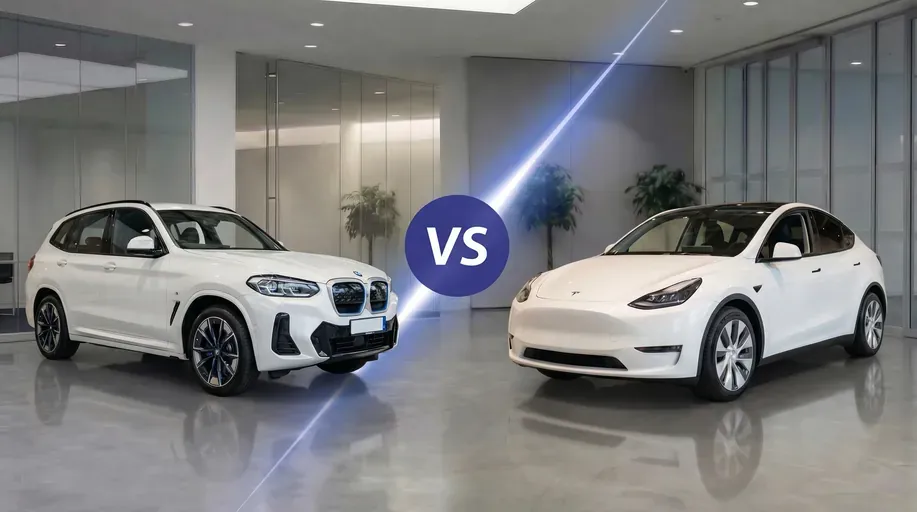
BMW iX3 vs Tesla Model Y: A detailed comparison of electric SUVs. Discover real-world range, differences in equipment, and read our verdict for an easier choice.
Apr 14, 2026