Articles

Car battle

BMW iX1 vs. Mercedes-Benz EQB: Complete comparison 2026

BMW iX1 vs. Mercedes-Benz EQB: Which electric SUV to choose? Read a detailed comparison of range, space, and equipment and find out our final verdict.

April 15, 2026

VS
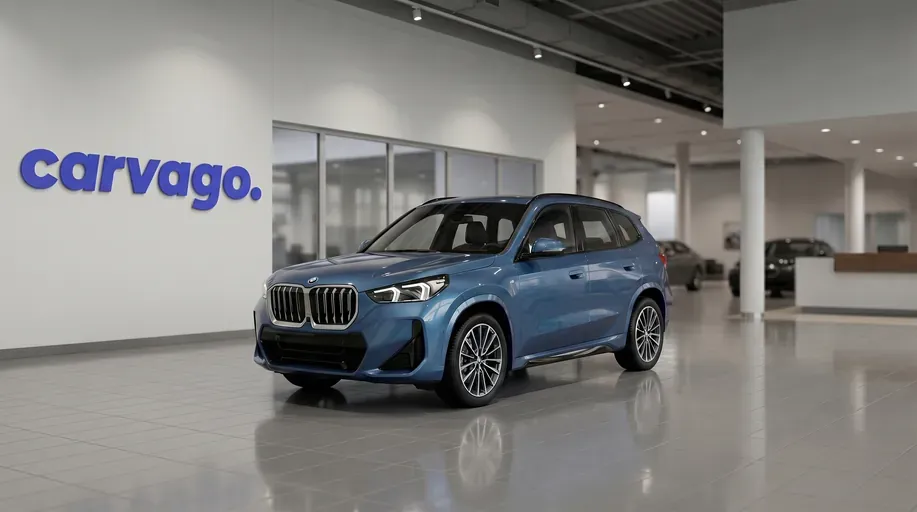
BMW iX1

BMW iX1

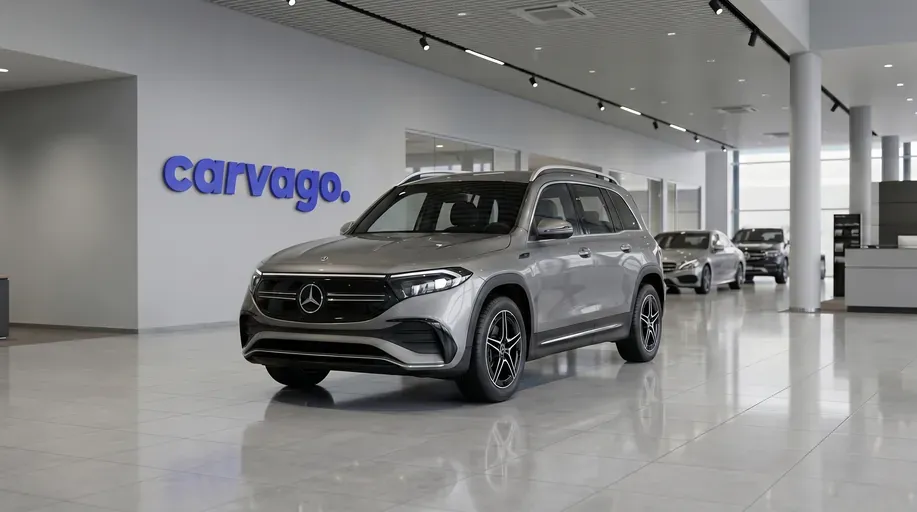
Mercedes-Benz EQB

Mercedes-Benz EQB

Introduction

BMW iX1, the fully electric variant of the popular X1 model, brings characteristic Bavarian driving dynamics combined with modern technology and precise craftsmanship to the premium compact SUV segment. Standing against it is the Mercedes-Benz EQB, a purely electric alternative to the popular GLB model, which focuses primarily on extraordinary everyday practicality and a generous interior space enhanced by the option of up to a seven-seat configuration. The following comparison will analyze in detail the strengths and weaknesses of both these German electric vehicles and help you find out which one better suits your specific needs.

Comparison of External Dimensions

When comparing the exterior dimensions of these two premium electric vehicles, you get a fairly clear picture of their different focuses. The Mercedes-Benz EQB is designed at first glance with an emphasis on maximum interior space and family practicality, which is reflected in its overall larger proportions. In contrast, the BMW iX1 bets on a more compact, athletic look with a lower build, which makes daily movement in a busy urban environment much easier.

The most significant difference can be found in the length and wheelbase. The Mercedes-Benz EQB, at 4,684 mm, is a significant 184 mm longer than the BMW iX1. A similar trend is seen in the wheelbase, where the EQB offers 2,829 mm, which is 137 mm more than its Bavarian competitor. In practice, this means that the Mercedes provides more generous longitudinal space for passengers and, thanks to its larger exterior dimensions, also allows for the installation of a third row of seats. The BMW, on the other hand, benefits from a shorter overhang and an overall smaller footprint, which you will appreciate when parking and weaving through narrow streets.

As for height and width, both cars have chosen a slightly different approach. The boxier shape of the Mercedes reaches a height of 1,691 mm, exceeding the iX1 by 75 mm and offering the advantage of more headroom. The BMW iX1, by contrast, counters with an 11 mm greater width (1,845 mm), which, combined with its lower build, gives it a visually wider, sportier stance and slightly better aerodynamics. Overall, if you are looking for maximum interior volume and airiness, the exterior dimensions clearly play into the hands of the Mercedes. However, if you prefer sportier proportions and easier maneuverability, the more compact iX1 will make more sense.
ParameterBMW iX1 SUVMercedes-Benz EQB SUV
Length (mm)45004684
Width (mm)18451834
Height (mm)16161691
Wheelbase (mm)26922829

Trunk Volume

When choosing a family premium SUV with electric drive, the luggage compartment volume plays one of the most important roles. Practicality and the ability to accommodate a stroller, sports equipment, or larger luggage for travel are key factors for buyers in the used car market. Approximately four-year-old models on today's market, specifically the BMW iX1 (U11) and Mercedes-Benz EQB (X243) generations, approach interior space solutions differently, which directly affects their daily family usability.

BMW iX1 as a compact SUV offers a trunk that is perfectly sufficient for weekend shopping and longer vacations. In the standard configuration, it provides a volume of 490 liters, while folding the rear backrests gives you a maximum space of 1,495 liters. Although it is a fully electric car, engineers managed to integrate the batteries so that the trunk did not suffer a significant loss of capacity, maintaining a very accessible and regularly shaped cargo area without significant compromises.

Mercedes-Benz EQB, however, raises the bar in terms of transport capacity and variability, mainly thanks to its boxier body and longer wheelbase. In the classic five-seater version, it offers a basic volume of 495 liters, which can be expanded to an impressive 1,710 liters by folding the seats. A huge advantage for families is the option to purchase a seven-seater variant. For this version, the basic capacity is slightly reduced to 465 liters (and 1,620 liters with the seats folded), but on the other hand, it brings highly desirable layout flexibility. The difference in maximum capacity between the two five-seater versions is a significant 215 liters in favor of the Mercedes, which in practice means that valued space for several extra suitcases and much easier moving of bulkier items.

In conclusion, these dimensions can be easily deciphered. While the BMW iX1 offers families solid space with an emphasis on a more dynamic silhouette and sportier proportions, the Mercedes-Benz EQB is a much more practical choice for larger families needing maximum transport capacity. The huge space after folding the seats makes it a much more versatile hauler on the used car market.

ParameterBMW iX1 SUVMercedes-Benz EQB SUV
Basic volume (liters)490495 (465 for 7-seater version)
Max. volume with seats folded (liters)1,4951,710 (1,620 for 7-seater version)

Family hauler vs. compact style 🧳

If your priority is maximum variability and absolute trunk size, the Mercedes-Benz EQB from the segment of ~4-year-old used cars emerges as the more practical winner with huge space after folding the seats. The BMW iX1, on the other hand, offers a solid and fully sufficient standard, which, however, prioritizes a sportier approach at the expense of extreme transport capacity.

Leave it to Carvago CarAudit™

Order CarAudit™

Trailer Weights

The ability to tow a trailer or safely transport heavy e-bikes on a tow bar is absolutely crucial for many buyers of practical family SUVs. The trailer weight directly determines the overall utility of the vehicle – it decides whether the car can only handle a weekend trip to dispose of garden waste, or if you can confidently hitch up a large family caravan for a longer holiday. However, when looking at roughly four-year-old used examples of these two premium electric vehicles, we encounter a fundamental and vast difference.

While the BMW iX1 (U11 generation, produced since 2022) supports a tow bar without issues, with a used Mercedes-Benz EQB from the early years of production (2021–2023), you will run into a major legislative problem. Early versions of the EQB model are not homologated for towing a trailer at all. If you find a factory-fitted "tow bar" on a roughly four-year-old EQB, it serves exclusively as an accessory carrier (for example, for a bike rack), but not for towing a load. Mercedes only rectified this disadvantage in the facelifted versions produced from 2024 onwards, where we can already find a maximum braked trailer weight of 1,400 to 1,700 kg depending on the version. However, these newer models are still relatively rare and significantly more expensive on the typical market for more affordable used cars.

In contrast, the BMW iX1 has provided standard and full-fledged options since the start of sales. If you opt for the more powerful xDrive30 all-wheel drive, you get a braked trailer capacity of up to 1,200 kg. This represents a very decent capacity for a few extra suitcases, or a safely sufficient value for hitching a smaller caravan or a heavier braked trailer when moving house. The base eDrive20 version with front-wheel drive has its braked trailer capacity reduced to 750 kg. However, for both powertrains, the standard value of 750 kg for an unbraked trailer remains, which is perfectly sufficient for a typical weekend trip to a DIY store or transporting light materials.

The conclusion for buyers is quite clear: If you are looking for a more affordable electric vehicle from the used car market and know that you will occasionally need to hitch up a trailer, the BMW iX1 is the only sensible choice. Older model years of the Mercedes-Benz EQB simply do not allow this due to the lack of homologation, which is why relevant towing data is missing for them in the overview.

Model and powertrainBraked trailer weight (kg)Unbraked trailer weight (kg)
BMW iX1 eDrive20 (150 kW)750750
BMW iX1 xDrive30 (230 kW)1200750

Overview of Most Common Motorizations

Both models, the BMW iX1 and Mercedes-Benz EQB, represent the modern approach of premium brands to pure electric compact SUVs. Given their market launch in 2021 and 2022, they are very advanced vehicles in the context of the market for roughly four-year-old used cars, featuring excellent thermal management and a solid range. Traditional internal combustion engines are completely absent; the fuel for all specifications is exclusively electricity. While BMW opted for a clear strategy and offers only two main power versions with a clear focus on either efficiency (eDrive20 with front-wheel drive) or sporty dynamics (xDrive30 with all-wheel drive), the Mercedes-Benz EQB provides a slightly more structured range of four variants. Although the Stuttgart competitor does not reach BMW's maximum power in absolute numbers (the top EQB 350 version ends at 215 kW, while the iX1 xDrive30 offers up to 230 kW), it makes up for it with a massive torque of up to 520 Nm in its most powerful variant. The choice between these models thus largely depends on whether you prefer the sportier Munich driving style or a comfortable, smooth pull oriented towards family use with the possibility of a seven-seat layout.

BMW iX1 (generation U11)

The BMW iX1 is available on the used car market with two fully electric powertrains that rely on advanced fifth-generation eDrive technology. The base eDrive20 model, which joined the range in 2023, features a single electric motor located on the front axle. It offers an output of 150 kW and a relatively smooth torque of 250 Nm, making it a highly efficient and fully sufficient companion for daily operation. If you are looking for the classic dynamics associated with the BMW brand, the xDrive30 variant (available since late 2022) is the clear choice. It uses a pair of electric motors for all-wheel drive, increasing the system output to a very generous 230 kW with 494 Nm of torque. Both powertrains transfer power to the wheels through a single-speed automatic transmission, ensuring a perfectly smooth and quiet ride.

PowertrainFuelPower (kW)Torque (Nm)Transmission
eDrive20Electricity150250Automatic
xDrive30Electricity230494Automatic

Mercedes-Benz EQB (generation 243)

The Mercedes-Benz EQB powertrain consists of a more diverse range of variants to satisfy customers with different requirements for dynamics and traction. The basic versions with one electric motor and front-wheel drive are represented by the EQB 250 and EQB 250+ versions, both tuned to the same output of 140 kW and a generous torque of 385 Nm. The main difference lies in the battery capacity – the 250+ model relies on a larger battery ensuring a longer range. As production data shows, the basic EQB 250 version was only produced until the end of 2023 and was subsequently completely replaced in the range by the 250+ variant, which you will encounter very often when buying a roughly four-year-old used car. For more demanding drivers and safe movement in poor grip conditions, Mercedes offers two variants with 4MATIC all-wheel drive. The EQB 300 4MATIC specification delivers a solid 168 kW and 390 Nm, while the top-of-the-line EQB 350 4MATIC boasts a massive 215 kW and 520 Nm of torque, which gives even a fully loaded SUV superior flexibility. As with BMW, all variants use a single-speed automatic transmission.

PowertrainFuelPower (kW)Torque (Nm)Transmission
EQB 250Electricity140385Automatic
EQB 250+Electricity140385Automatic
EQB 300 4MATICElectricity168390Automatic
EQB 350 4MATICElectricity215520Automatic

Electric family comfort or sporty genes? ⚡

While the Mercedes-Benz EQB impresses with its rich torque and comfort-oriented range ideal for smooth travel, the BMW iX1 will thrill dynamics lovers with its sharper xDrive30 specification, which is a step ahead in terms of performance.

Choosing the right motorization is crucial for long-term satisfaction with modern premium electric vehicles, as it fundamentally affects not only daily dynamics but, above all, real-world range, charging speed, and the car's residual value. While BMW traditionally focuses on a sportier feel and efficient use of high power in its electric models, Mercedes-Benz bets on maximum comfort and smooth power distribution, which suits the concept of a heavier family SUV. The following recommendations for roughly four-year-old used vehicles are based on performance parameters, real energy consumption, and owner feedback with regard to low maintenance requirements.

For the BMW iX1, we recommend: xDrive30 (230 kW)

Why it's the best choice: The xDrive30 version (on sale since 11/22) is the logical and de facto only sensible choice for the market of roughly four-year-old used cars. The weaker single-axle drive variant, the iX1 eDrive20, only hit the market at the end of 2023 (produced since 11/23), so you will hardly come across it in this age category. The dual-motor xDrive30 all-wheel drive provides a combined output of 230 kW (313 hp) and a massive torque of 494 Nm. This gives the compact SUV confident dynamics that fully correspond to the BMW brand DNA.

  • Technical advantages: The battery with a usable capacity of 64.7 kWh features a flat charging curve and supports fast charging (DC) with a power of up to 130 kW, which means recharging from 10 to 80% in less than half an hour. The power distribution management prefers the front axle, with the rear electric motor engaging only as needed, which effectively optimizes combined consumption.
  • What to watch out for: The immediate and massive onset of torque puts a lot of strain on the tires and suspension components. When choosing a used car, carefully check the condition of the chassis and look for uneven tire wear, which may indicate worn silent blocks. Also, expect that at highway speeds or with more dynamic driving, consumption rises to 19–21 kWh/100 km, which shortens the range per charge. Before buying, always have the health of the traction battery (SOH) read via diagnostics.
  • Who it's ideal for: For drivers who demand aggressive driving characteristics, perfect traction from both axles, and use the car mainly for suburban trips or medium-long routes in combination with the possibility of home overnight charging.

For the Mercedes-Benz EQB, we recommend: 300 4MATIC (168 kW)

Why it's the best choice: The EQB model has been on the market since the end of 2021, and for its heavy body, which unlike the BMW is also offered in a seven-seat configuration, the 300 4MATIC version represents the absolute perfect middle ground. The base 250 and newer 250+ versions only drive the front axle, which can be a hindrance for a fully loaded electric car in winter. Conversely, the 300 4MATIC variant (168 kW / 228 hp) brings the necessary all-wheel traction without the unnecessary price premium for the nominally strongest (but hardware and range-identical) 350 4MATIC version. Furthermore, the original front-wheel drive EQB 250 was only sold until October 2023, after which it was replaced.

  • Technical advantages: The concept with an asynchronous motor at the front and a synchronous motor at the rear ensures a smooth, very comfortable take-off and excellent stability. With a battery of 66.5 kWh usable capacity, you can count on a stable real-world range of around 320–350 km. The onboard system and recuperation work highly efficiently, and the car is incredibly quiet.
  • What to watch out for: The EQB uses an older electrical architecture, which results in a maximum charging power of only 100 kW. For frequent travel across Europe, this means slightly slower stops. During an inspection at a dealership, focus primarily on the shock absorbers, ball joints, and rear axle control arms. The EQB weighs nearly 2.2 tons empty, and if the car served as a family "bus," the chassis may show play after four years on poor-quality roads.
  • Who it's ideal for: For family-oriented drivers who primarily seek spaciousness, a calm smooth ride, safety in all grip conditions, and have no plans to break time records on long highway routes.

Real Fuel Consumption

Official consumption figures provided by manufacturers according to the WLTP test standard are one thing, but the reality of daily operation is often different. This fact does not escape even fully electric vehicles, where overall efficiency depends on outdoor temperature, driving style, and overall aerodynamics even more than in combustion cars. If you are considering purchasing a roughly three to four-year-old used car, it is best to rely on long-term user data. We therefore draw from the real experiences of owners from community portals, such as the German Spritmonitor.de. How do the BMW iX1 (generation U11) and Mercedes-Benz EQB (generation 243) from the first years of production (2021–2023) fare in everyday life?

Model and powertrainAverage consumption (kWh/100 km)
Single-axle drive (FWD/RWD)-
BMW iX1 eDrive2015.8
Mercedes-Benz EQB 250+16.5
Mercedes-Benz EQB 25016.8
All-wheel drive (AWD)-
BMW iX1 xDrive3017.1
Mercedes-Benz EQB 300 4MATIC18.5
Mercedes-Benz EQB 350 4MATIC18.5

From the measured values, it is clear that the overall more compact and elongated BMW iX1 achieves better operational efficiency. The most economical choice is the single-axle drive variant, the BMW iX1 eDrive20, which maintains an average comfortably below the 16 kWh/100 km mark in real-world operation. For Mercedes, the EQB 250 and its improved EQB 250+ version reach similar values, benefiting from the absence of a second electric motor and lower load. However, an important finding is the impact of adding all-wheel drive. While the iX1 xDrive30 increases its consumption by an acceptable 1.3 kWh to a final 17.1 kWh/100 km, for the Mercedes, consumption jumps to 18.5 kWh/100 km. Here, the boxy shape and higher frontal area of the EQB model take their toll, significantly increasing aerodynamic drag. An interesting trend for both EQB AWD models is the fact that the weaker 300 version consumes energy practically as fast as the more powerful 350 – the power difference no longer has a significant impact on overall consumption.

For regular users who drive mainly in the city and on suburban routes, the single-axle drive version appears to be a perfectly sufficient and, from a cost perspective, ideal choice. Both cars recuperate excellently at city speeds and guarantee a high range. However, if you regularly commute on highways or insist on the security of all-wheel drive, the aerodynamically more advanced BMW iX1 works as a significantly more economical companion for eating up the miles. This is because the consumption of the EQB model rises much more steeply at highway speeds of 130 km/h due to its more vertical frontal area.

Electricity consumption may not be the only parameter when choosing a used family SUV, but for electric vehicles, it forms a key piece of the puzzle because it affects the frequency of charging on long trips. The BMW iX1 logically wins in overall efficiency and real-world highway range. On the other hand, the higher energy appetite of a used Mercedes EQB is a perfectly justifiable compromise – for a few extra kilowatt-hours driven, you get the unique opportunity of a seven-seat layout and unrivaled interior space. The decision thus depends purely on whether you prefer maximum energy savings or maximum family flexibility.

Price Range and Used Car Offerings

Both premium German electric vehicles represent a very interesting alternative to new cars on the used market after approximately four years of operation. Thanks to the typical depreciation, which is steeper for electric models in the first years, these roughly four-year-old vehicles (model years 2022 and 2023) can be purchased for amounts well below their original list price, which commonly exceeded €62,000 at the time.

BMW iX1 (from model year 2022)

The Munich model entered the market in the autumn of 2022, and demand for it remains strong among used cars. This is reflected in slightly more confident price tags, as the vehicle holds its value better.

  • More affordable price levels: Vehicles start on the used market from approximately €33,000. For this money, you will most often find basic front-wheel-drive versions (eDrive20) or xDrive30 variants with slightly higher mileage.
  • Well-equipped versions: In the range of €39,000 to €47,000, you can find very well-maintained units with all-wheel drive (xDrive30) and the popular M Sport package. The price of a used car is also increased by specific optional features, such as the 22kW AC on-board charger, which significantly speeds up daily urban charging in practice.

Mercedes-Benz EQB (from model year 2022)

Mercedes-Benz introduced its family-oriented EQB at the turn of 2021 and 2022. The selection of used models from this period is thus relatively wide and often somewhat more affordable than in the case of the competing BMW.

  • More affordable price levels: The cheapest used EQBs from 2022 start on the European market at around €31,000. These are mostly EQB 250 models with front-wheel drive only in the Progressive equipment line.
  • Well-equipped versions: For vehicles with a price tag between €35,000 and €43,000, you get significantly more interesting configurations. These are primarily the more powerful EQB 300 4MATIC all-wheel drives or the top-of-the-line 350 4MATIC with the visually attractive AMG Line package. A huge advantage of some used units, which reliably increases their resale price, is the optional seven-seat configuration – a complete unique feature in this size class of electric vehicles.

Indicative price comparison (~4-year-old vehicles)

ModelStarting price of used carAverage price with better equipment (4x4)
BMW iX1 (2022+)approx. €33,000€39,000 – €47,000
Mercedes-Benz EQB (2022+)approx. €31,000€35,000 – €43,000

When buying a roughly four-year-old premium electric vehicle, checking the Battery State of Health (SOH) should be a matter of course. The advantage of both German brands is the high-voltage battery warranty, which typically amounts to 8 years or 160,000 km. Four-year-old used cars are thus still reliably covered by the remaining half of the original factory battery warranty.

💰 Price Verdict

When choosing a four-year-old electric vehicle, the Mercedes-Benz EQB offers a slightly more accessible entry price and unrivaled seven-seat practicality, while the slightly more expensive BMW iX1 holds its value better thanks to a more modern interior concept and more agile driving characteristics.

Safety and Euro NCAP Rating

Both models, the BMW iX1 and Mercedes-Benz EQB, boast a maximum five-star rating in independent Euro NCAP crash tests. However, when comparing safety on the used car market, it is essential to consider the context and the specific year these tests took place. Euro NCAP methodology is constantly evolving and becoming more stringent. Percentage results from different years cannot be directly compared, as newer test protocols place disproportionately greater emphasis on advanced active safety systems, cyclist detection, and more complex vehicle behavior scenarios at intersections.

The BMW iX1 underwent crash tests in 2022 according to the stricter standards of the time. The vehicle was evaluated alongside the combustion-engine X1 model, with the electric iX1 also undergoing additional tests due to its higher weight. It achieved very solid results in the evaluation: 86% for adult occupant protection, 89% for child occupant protection, and 76% for vulnerable road user protection. Particularly impressive, however, is its score of 92% in the safety assist systems category. This clearly demonstrates a high level of active safety that fully meets modern demands for autonomous braking and predictive accident prevention.

The Mercedes-Benz EQB received its five-star rating in 2021, but this rating is largely based on structural tests of its sister combustion model, the GLB, which took place back in 2019 under the milder rules of that time. While the EQB achieved excellent figures in passive safety – 95% for adult protection, 91% for child protection, and 78% for pedestrian protection – it recorded a score of only 74% in the safety assist category. Given the year of the initial testing, this certification is already considered older by current standards, and the active assistance features do not reach the level of technological advancement required by the latest testing protocols.

ParameterBMW iX1Mercedes-Benz EQB
Year of testing20222019
Adult occupant protection86 %95 %
Child occupant protection89 %91 %
Vulnerable road user protection76 %78 %
Safety assist systems92 %74 %

Although both family SUVs offer a very high level of passive safety for both adults and children, the BMW iX1 represents a more modern and comprehensive package from the perspective of today's standards. Its 2022 rating much better reflects the strict requirements for active safety and emergency assistance maneuvers, as evidenced by the significantly higher point gain for smart systems. While the Mercedes-Benz EQB is a structurally exceptionally robust vehicle, its technological arsenal was assessed according to older and demonstrably less demanding criteria.

🛡️ A safer choice for modern traffic

Although both vehicles offer excellent occupant protection with five stars, the BMW iX1 appears to be a more reliable and comprehensive choice for accident prevention in today's traffic, thanks to newer tests from 2022 and significantly better active assistants.

Comparison of Interesting Equipment Features

In addition to standard equipment, each of the models offers several unique features that can be decisive for the customer, with both cars taking their own clearly defined approach to added value.

BMW iX1: Technological Progression and Sporting Prowess

  • Infotainment and ergonomics: The cockpit is dominated by the innovative BMW Curved Display, which elegantly combines a 10.25-inch digital instrument cluster with a 10.7-inch multimedia screen under a single curved glass. The absence of many physical buttons is replaced by intuitive voice and touch control.
  • Dynamics and emotion: For more powerful variants, the Sport Boost function is available. By pressing a paddle behind the steering wheel, the driver gets the maximum possible power from the entire powertrain for 10 seconds, which is an ideal and highly addictive solution for quick and safe overtaking.
  • Acoustic experience: Electric vehicles tend to be quiet, but BMW offers the IconicSounds Electric feature. This is an artificially generated soundscape designed in collaboration with composer Hans Zimmer, which reacts to acceleration and changes its tone according to the currently selected driving mode.
  • Assistance systems: When driving in unfamiliar environments, navigation using augmented reality (AR View) excels. It projects a live image from the front camera onto the center display and inserts graphic directional arrows and navigation instructions directly into it, preventing any hesitation at complex intersections.
  • Design variants: Those interested in a more dynamic look appreciate the popular M Sport package. This not only shapes the bumpers more aggressively and adds specific alloy wheels, but often includes adaptive M suspension and sports seats, giving the iX1 that typical Munich character.

Mercedes-Benz EQB: Unrivaled Versatility and Family Comfort

  • Space and layout: The absolute trump card of this car in the compact electric SUV segment is the option of a third row of seats. The seven-seat configuration makes it an extremely practical tool for larger families or for the occasional transport of more passengers.
  • Smart interior: Versatility is underlined by the rear bench in the second row, which can be slid longitudinally by up to 140 mm. This allows the customer to choose seamlessly between maximum legroom for passengers and increasing the luggage compartment volume by dozens of liters, depending on current needs.
  • Smart navigation and telematics: The MBUX system excels with so-called Electric Intelligence. This smart navigation can perfectly plan a route, including ideal stops at charging stations, taking into account topography, weather, and current traffic flow. Furthermore, the car automatically preheats the battery so that charging takes place as quickly as possible upon arrival at the terminal.
  • Iconic EQ design: The model is clearly identified on the road thanks to LED light strips that horizontally connect the front and rear headlights. The interior is enlivened by elements specific to the EQ family, such as air vents and trim with Rose Gold details.
  • Technology and comfort: The advanced voice assistant, which responds to the command "Hey Mercedes", can recognize natural speech and understand more complex contexts. For maximum comfort and atmosphere on board, the high-end Burmester surround sound system and sophisticated ambient lighting with a choice of 64 colors are often sought-after options.

Key Advantages and Disadvantages

BMW iX1

Pros

Great driving characteristics with an emphasis on dynamics and precise handling

Premium and modern interior with precise craftsmanship and high-quality materials

Excellent electric drive efficiency with very good real-world energy consumption

Fast and smooth iDrive infotainment with brilliant display graphics

Stable DC fast charging curve, reducing time spent at the charger

Cons

More limited legroom for rear-seat passengers

Lack of an optional seven-seat layout in this class

Stiffer suspension tuning, which can reduce comfort on broken roads (especially with the M Sport package)

High prices of original optional equipment are reflected in the higher price of better-equipped used cars

The BMW iX1 is a perfect choice for drivers transitioning to electromobility who don't want to lose the agile and sportier driving feel typical of this Munich brand. It will primarily suit smaller families or couples for whom premium cabin craftsmanship and top-tier drive efficiency are more important than absolute maximization of utility space.

Mercedes-Benz EQB

Pros

Option of a seven-seat layout, which is a complete rarity in this size category

Boxy body shape ensures excellent headroom and above-standard trunk volume

Highly comfort-tuned suspension that absorbs bumps excellently and is ideal for long family trips

Practical sliding second row of seats allowing for a flexible interior layout

Very good acoustic cabin insulation even at highway speeds

Cons

Poorer aerodynamics due to the body shape increases highway consumption and slightly limits real-world range

More cumbersome and less engaging driving performance in corners

The third row of seats offers very little space and is usable exclusively for smaller children

The interior architecture and onboard systems feel somewhat older compared to the iX1

The Mercedes-Benz EQB is a typical family electric car with a premium pedigree, where absolute practicality and maximum suspension comfort play the main role. For larger families with smaller children, it represents one of the most sensible choices on the premium used electric car market thanks to its variable interior, sliding seats, and the option of a seven-seat configuration.

Common Problems and Owner Complaints

Based on long-term user experience, service reports, recall records, and data provided by a comprehensive car audit, we have compiled an overview of the most common problems that buyers of used units should watch out for. We focused primarily on models from the first years of production (approx. 2022–2023), which appear most frequently on the used car market.

BMW iX1 benefits from high-quality workmanship, but as a representative of a completely new generation of electronics and drive (U11 platform), it did not avoid several teething troubles in the early stages of production.

  • Infotainment system and software: Owners complain quite often about the iDrive system freezing (especially with the newer iDrive 9 version), dropouts of wireless Apple CarPlay and Android Auto connections, or an unreliably functioning digital key on the phone. There are also complaints about occasional spontaneous resetting of seat memory to factory settings.
  • Braking system (Recall): BMW addressed a global problem with the integrated braking system (supplied by Continental) across the board. Due to a poorly welded booster component, affected vehicles may experience reduced braking effect and failure of the ABS and DSC stabilization systems. For a used car, it is necessary to verify whether the problem was fixed in service.
  • Powertrain and high-voltage system: Early model years faced recalls for poorly secured front drive shafts (risk of power loss). A software error in the insulation monitoring was also recorded, which could lead to an unexpected safety disconnection of the high-voltage network while driving.
  • Exterior electronics: On some vehicles, adaptive LED headlights malfunction, which authorized service centers mostly solved by completely reflashing the software or restarting the relevant control units. Also, errors occasionally occur during automatic mirror folding after locking.

BMW iX1: Software bugs and important recalls

In the BMW iX1, you will mostly encounter infotainment software bugs and several more serious recalls for brakes and powertrain. However, after applying factory updates, it is a reliable car.

For the Mercedes EQB (especially from 2022 and 2023), statistics are dominated by serious problems with the high-voltage battery, which require great caution when buying a used unit and cast a shadow on an otherwise very comfortable and spacious family car.

  • High-voltage battery and fire risk: The most serious and widespread problem is defective battery cells (from supplier Farasis). These required massive recalls associated with the risk of internal short circuit and fire. Many owners were advised to charge the vehicle only to 80% and park outside until a repair or complete battery module replacement was performed.
  • Loss of power (Recall): Another serious recall addressed incorrectly tightened connections (busbar) directly inside the high-voltage battery. Loosening of these connections could cause a sudden loss of drive without any prior warning on the dashboard.
  • Charging and thermal management: In connection with software updates intended to temporarily reduce the risk of battery fire, users complain about a significant slowdown in fast charging (DC). Occasionally, charging power drops to just 30–40 kW at otherwise powerful stations. Exceptionally, coolant leaks into the battery area were also reported.
  • Infotainment and onboard systems (MBUX): Like many modern vehicles, the MBUX system in the EQB occasionally freezes, the center screen spontaneously goes black, or the car generates false warning messages that temporarily send the vehicle into limp mode until restarted.

Mercedes-Benz EQB: Battery verification is essential

When choosing a used EQB from the first years of production, it is absolutely crucial to verify via the VIN code whether the vehicle has undergone a recall and received a new battery. If this critical problem is resolved, it offers an otherwise high-quality and trouble-free ride.

Tips for Buying a Used Car

When buying a used car, a thorough inspection is crucial, and for electric vehicles, this is doubly true because of the expensive traction battery and advanced electronics. Here are some specific points to focus on for these two models, for which a comprehensive car audit is always recommended before the purchase itself.

When choosing a BMW iX1:

  • State of Health (SoH) of the traction battery: Although these are relatively young cars, it is essential to verify the battery condition via diagnostics. The battery may be more worn if the previous owner used the car primarily for long highway trips combined with frequent high-power fast charging (DC).
  • iDrive 8/9 infotainment behavior: During the test drive, carefully test the response of the giant curved display. Early software versions could suffer from slower reactions, screen freezing, or occasional restarts. Check if the car has the latest OTA (Over-The-Air) updates installed.
  • Charging port mechanism: During the inspection, have the cable connection and disconnection demonstrated. The charging port locking pin can sometimes seize due to dust and moisture, making it difficult to pull out the cable or preventing charging from starting.
  • Chassis and tire wear: The electric iX1 is significantly heavier than its combustion version. During the test drive, focus on dull thuds from the front axle when driving over bumps and visually check if the tires are worn unevenly, which usually indicates tired silent blocks or misaligned geometry.
  • Brake disc corrosion: Due to the strong recuperation of the electric motors, mechanical brakes are rarely used on the iX1. Look through the wheel rims to see if there is deep, so-called "ingrained" corrosion on the discs. This significantly reduces braking effect in a crisis situation and requires premature replacement of the brake linings.

When choosing a Mercedes-Benz EQB:

  • MBUX system functioning: For the Mercedes, try both touch and voice control of the infotainment. Focus on map loading speed and reactions when switching between user profiles. The system must not "freeze" and the display in front of the driver should not show any lag.
  • Rear axle noise: The weight of the batteries and potential full occupancy (especially in the highly sought-after seven-seater variant) take a toll on the rear suspension. During a test drive on cobblestones or a worse surface, carefully monitor for squeaking or knocking from the rear multi-link axle.
  • Condition of electric motors (especially for 4MATIC versions): During sharp acceleration or when releasing the pedal and strong recuperation, listen carefully for whistling, mechanical humming, or unwanted vibrations from the front or rear electric motor. The sound profile must remain smooth and linear.
  • Seals and aerodynamic noise: The EQB has a boxier shape, which creates more air resistance. Accelerate to highway speed and listen for any whistling around the upper edges of the doors or the panoramic roof. Worn or poorly fitted seals here easily spoil the premium silence on board.
  • Charging door servomotor reliability: Mercedes EQ family cars can have problems with the servomotor that opens the charging flap. If the flap does not respond to the first press or opens with unusual resistance, the mechanism may be at the end of its life and will require service.

FAQ: Most Frequently Asked Questions

The Mercedes-Benz EQB is more practical thanks to its boxy body and is one of the few electric SUVs in its class to offer an optional third row of seats for seven passengers. The BMW iX1 is only available as a five-seater with a trunk capacity of 490 liters, which is slightly less than the five-seater version of the EQB (495 liters). For larger families and those looking for maximum interior variability, the Mercedes is the clear winner.

Both cars offer a very similar battery capacity with a usable value of around 65 kWh and a stated WLTP range of over 410 kilometers for the all-wheel-drive versions. In real daily operation, you can expect a range of roughly 320 to 360 kilometers for both models, depending on the season, wheel size, and driving style. Overall efficiency is very comparable, however, the iX1 has a slight advantage on the highway thanks to slightly better aerodynamics.

The BMW iX1 supports DC fast charging at up to 130 kW, while the Mercedes-Benz EQB reaches a maximum of 100 kW in its base form. As a result, the BMW can replenish its battery capacity from 10 to 80% in approximately 29 minutes, which is several minutes faster than the competing Mercedes. For standard home AC charging, both models offer a standard output of 11 kW with the possibility of overnight charging.

The BMW iX1 in the xDrive30 version has 313 hp and accelerates from zero to one hundred in just 5.6 seconds, offering a significantly sportier and more aggressive ride. The most powerful Mercedes EQB 350 4MATIC provides 292 hp and is tuned more for a smooth and comfortable ride without excessive sporting ambitions. If you prefer sharper throttle response and the stiffer suspension typical of the Bavarian brand, the iX1 will be much more fun behind the wheel.

The BMW iX1 uses a modern Curved Display panel with the iDrive 8 system, which feels very futuristic but relies primarily on touch control without the traditional physical controller. The Mercedes-Benz EQB is equipped with the proven MBUX system, which excels with top-notch voice control and a logical menu structure. Both multimedia systems are at the absolute technological top of the market, so the choice depends primarily on personal preference and user habit.

Conclusion: Which Model to Choose?

Our Verdict

Both premium electric SUVs represent an excellent choice on the market for roughly four-year-old used cars, but each targets a completely different audience. The Mercedes-Benz EQB is an ideal car for larger families, offering unrivaled everyday practicality thanks to its boxy body, maximum emphasis on driving comfort, and the unique option of a seven-seat layout. In contrast, the BMW iX1 will appeal more to smaller families and demanding drivers, as it scores with more modern technological equipment, a more efficient powertrain with faster charging, full towing capability, and sportier driving characteristics. The final decision thus depends purely on your priorities: if you are looking for absolute variability and interior space for the family, go for the Mercedes, while for more aggressive dynamics and overall more economical travel, the BMW will be a better companion.

Find your ideal car

Sources: ADAC, idnes.cz, lidovky.cz, autorevue.cz, techfocus.cz, automotorsport.cz

This article was prepared using artificial intelligence tools. The section guarantor is Petr Dušek.

Related articles

Car battle

Hyundai Ioniq 5 vs. Volkswagen ID.4: Complete comparison 2026

Detailed comparison of the Hyundai Ioniq 5 and Volkswagen ID.4 electric cars. Find out the real range, equipment details, and our verdict to help you make your choice.

Apr 13, 2026

Car battle

Hyundai Ioniq 5 vs. Kia EV6: Complete Comparison 2025

Hyundai Ioniq 5 vs. Kia EV6: Which electric car is better? A detailed comparison of range, technology, and price to help you make the right decision.

Apr 13, 2026

Car battle

Tesla Model Y vs. BMW iX3: A Complete 2025 Comparison

Tesla Model Y vs. BMW iX3: A detailed test of real-world range, features, and a verdict to help you choose the right electric SUV.

Apr 14, 2026

We accept online card payments as well as wire transfers.

visa payment provider logovisa-electron payment provider logomastercard payment provider logomaestro payment provider logodiners-club payment provider logodiscover payment provider logo