
Car battle
BMW X7 vs. Porsche Cayenne: Complete comparison 2026
Detailed comparison of BMW X7 vs. Porsche Cayenne. We reveal the real differences in performance, spaciousness, and equipment. Read the verdict and choose the best SUV!
Oct 16, 2026
Rolls-Royce Cullinan review: real owner feedback, V12 running costs, reliability, used prices, and our definitive luxury SUV verdict.
November 3, 2026
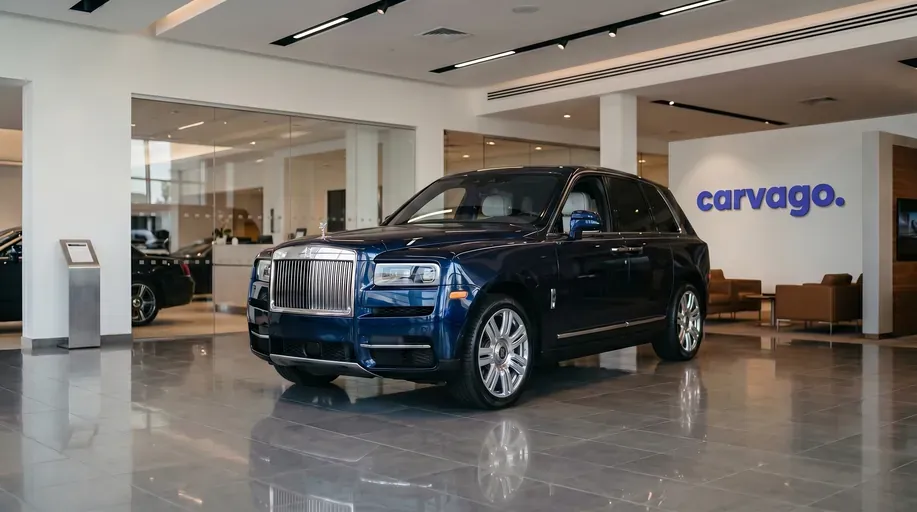
The Rolls-Royce Cullinan occupies the pinnacle of the ultra-luxury sport utility segment, representing the British marque’s first high-riding all-wheel-drive model. Following its world premiere in London on 10 May 2018, European order books opened that same month, with initial customer deliveries starting in December 2018. This review covers the first-generation model, encompassing original Series I vehicles as well as the updated Series II.
A higher-output Black Badge derivative joined the range in November 2019. On 7 May 2024, Rolls-Royce presented the Series II mid-cycle facelift alongside its Black Badge variant. The revision introduced sharpened front-end exterior styling, distinctive daytime running light signatures, and updated onboard digital interfaces. Goodwood factory production of Series II began in August 2024, followed by European customer deliveries in the fourth quarter of 2024.
Offered exclusively as a five-door Rolls-Royce Cullinan SUV, the vehicle attracts private buyers and corporate fleets requiring long-distance refinement, formal transport, and light off-pavement ability.
The first-generation Rolls-Royce Cullinan has accumulated several years of operational service across European roads. While fundamental structural defects are rare, workshop technical bulletins and owner reports highlight specific mechanical wear points within the all-wheel-drive system and a handful of targeted safety recall campaigns.
The most prominent mechanical issue reported by owners and addressed by manufacturer service bulletins involves premature wear of the front differential pinion bearing on vehicles produced before May 2023. Under vehicle load and torque, the bearing inside the front differential can wear prematurely, producing an audible whining, howling, or droning noise that penetrates the cabin at cruising speeds. If left unaddressed, severe bearing degradation risks driveshaft disengagement. In May 2023, the manufacturer introduced an updated front differential assembly with reinforced bearing internals. Workshop directives also mandate installing a revised front propeller shaft during this repair to prevent unwanted harmonic vibrations.
A separate driveline bulletin addressed an assembly error in the rear axle differential on cars built within a narrow window between 23 February 2024 and 1 March 2024. Factory documentation noted that internal retention circlips were incorrectly installed during assembly, risking mechanical failure. The official remedy requires the complete replacement of the rear axle differential assembly.
Several official safety campaigns apply to the Rolls-Royce Cullinan SUV in European markets:
Due to the vehicle's high curb weight, owners and workshops report accelerated wear on the inner shoulders of the large-diameter tyres. The complex electrical network and motorized coach doors also place continuous parasitic demand on the 12V battery. When cars are parked for extended periods without an active battery maintainer, low voltage in some cases produces temporary error messages regarding the air suspension and onboard sensors.
Throughout its production life, the Rolls-Royce Cullinan has relied on a twin-turbocharged twelve-cylinder petrol architecture paired with an eight-speed automatic gearbox and permanent all-wheel drive. Buyers choose between the standard output and the factory-calibrated Black Badge version, both of which carried over into the Series II update.
| Engine | Fuel | Power | Gearbox | Model years |
|---|---|---|---|---|
| 6.75 V12 | Petrol | 420 kW (571 PS) | 8-speed automatic | 2018–2024 |
| 6.75 V12 Black Badge | Petrol | 441 kW (600 PS) | 8-speed automatic | 2019–2024 |
| 6.75 V12 (Series II) | Petrol | 420 kW (571 PS) | 8-speed automatic | 2024–present |
| 6.75 V12 Black Badge (Series II) | Petrol | 441 kW (600 PS) | 8-speed automatic | 2024–present |
For daily driving and mixed use, the standard twin-turbo V12 provides steady pace and low mechanical noise. Its maximum torque arrives just above idle, allowing the automatic transmission to shift smoothly while using satellite navigation data to pre-select ratios for upcoming bends and gradients. For the majority of buyers seeking quiet long-distance travel, this standard configuration is the balanced choice either new or as a used car.
Drivers who prefer more immediate throttle response and a distinct engine note should consider the Black Badge derivative. Introduced in November 2019 on Series I models and continued on Series II, it features modified transmission mapping that quickens shift times under load and an active exhaust system that deepens the acoustic profile when the selector's dedicated mode is engaged.
Neither version of the petrol Rolls-Royce Cullinan is suited to repeated short urban trips. Repeated cold starts prevent the large twelve-cylinder engine from reaching proper operating temperatures and place substantial drain on the onboard electrical system. For motorway cruising and heavy towing, both engine variants provide abundant low-down pulling power, meaning the choice between them comes down to a preference for sharper throttle response rather than real-world capability.
For details on mechanical durability, including maintenance observations on differentials and ignition components, refer to the owner experiences section.
| Parameter | Measurement |
|---|---|
| Length | 5,341 mm |
| Width (without / with mirrors) | 2,000 / 2,164 mm |
| Height | 1,835 mm |
| Wheelbase | 3,295 mm |
| Boot capacity (seats up, shelf in place / removed) | 560 / 600 l |
| Boot capacity (seats folded) | 1,930 l |
Boot volume figures apply to the five-seat layout; four-seat models with individual chairs feature a fixed glass bulkhead and non-folding backrests.
Rear-seat access in the Rolls-Royce Cullinan SUV is handled by rear-hinged coach doors. Due to the high chassis sill, passengers step up into the cabin rather than sliding across. Rear passenger space differs considerably depending on the seating layout. The standard three-passenger bench accommodates tall adults with substantial headroom and legroom, while the optional four-seat layout replaces the middle place with two individual multi-adjustable armchairs separated by a fixed centre console.
Luggage loading on the Rolls-Royce Cullinan uses a two-piece split tailgate, with the lower section dropping down to act as a loading bench. On five-seat examples, the backrests fold down electronically. Folding them initially creates a step in the floor, which is brought level by activating an electric cargo floor lifter to provide a flat continuous surface. Choosing the four-seat specification trades versatility for acoustic and thermal insulation: a fixed glass partition seals the passenger compartment from the cargo area, preventing the rear seats from folding down.
Professional road tests describe the Rolls-Royce Cullinan SUV as an unhurried long-distance cruiser. Its air suspension glides smoothly over undulations, and extensive acoustic insulation isolates wind roar and mechanical noise almost completely. However, testers agree that the chassis cannot disguise substantial mass. Pushing hard into tight bends produces pronounced body roll and early understeer, while large alloy wheels transmit an occasional thud across sharp urban ridges. Steering remains light and decoupled from road kickback, with standard all-wheel steering aiding lower-speed manoeuvres.
Inside, road testers highlight the tactile ergonomics. Cold-touch metal rotary dials and traditional organ-stop ventilation pulls take precedence over complex submenus, retaining physical simplicity. The commanding driving position delivers expansive forward sightlines, with instruments positioned intuitively within the driver's natural line of sight.
The mid-cycle revision left mechanical ride qualities unchanged while updating cabin technology. The Rolls-Royce Cullinan gained a full-width glass dashboard incorporating modernised digital instrumentation and passenger display artwork, updating the interface without discarding its physical knurled controls.
The market charts across this section reflect Carvago listings for the entire Rolls-Royce Cullinan model family rather than isolating the reviewed generation, meaning these figures do not establish a separate price level for specific series revisions. Across advertised vehicles, the median asking price starts at €364,900 for 2019 and €377,400 for 2020 examples. Later production reaches a median asking price of €510,000 for 2024 and €612,800 for 2025, alongside €583,100 for 2026 listings. Secondary market positioning across these model years is primarily shaped by bespoke equipment, optional seating layouts, and factory specification packages.
The chart tracks the number of Rolls-Royce Cullinan listings advertised each month from May 2026 to October 2026, opening at 236 and ending at 190.
Active listings over time
| Month | Rolls-Royce Cullinan |
|---|---|
| 2026-05 | 236 |
| 2026-06 | 227 |
| 2026-07 | 220 |
| 2026-08 | 213 |
| 2026-09 | 221 |
| 2026-10 | 190 |
Source Carvago
Buyers had between 213 and 236 vehicles to choose from across most of the period, before availability contracted to 190 listings in October 2026.
Among used listings advertised today, the median asking price is €364,900 for cars built in 2019 and reaches €612,800 for models built in 2025. The chart below details these median asking prices across available build years.
Median advertised price by year of manufacture
| Model year | Rolls-Royce Cullinan |
|---|---|
| 2019 | 364 900 |
| 2020 | 377 400 |
| 2021 | 409 900 |
| 2022 | 475 000 |
| 2023 | 499 900 |
| 2024 | 510 000 |
| 2025 | 612 800 |
| 2026 | 583 100 |
Source Carvago
Buyers comparing earlier model years will find median asking prices of €364,900 for 2019 and €377,400 for 2020, whereas listings from 2025 and 2026 stand at €612,800 and €583,100.
The chart tracks the volume of advertised cars by fuel type from May 2026 to October 2026, beginning with 236 petrol listings and finishing at 190.
Supply composition by fuel type
| Month | Petrol |
|---|---|
| 2026-05 | 236 |
| 2026-06 | 227 |
| 2026-07 | 220 |
| 2026-08 | 213 |
| 2026-09 | 221 |
| 2026-10 | 190 |
Source Carvago
Petrol represents all available stock throughout this period, with zero listings recorded for diesel, hybrid, or electric options. Anyone shopping for a Cullinan will realistically be choosing exclusively from petrol-powered vehicles.
The chart displays the average asking price for Rolls-Royce Cullinan listings from May 2026 to October 2026, starting at €530,300.
Average price development over time
| Month | Rolls-Royce Cullinan |
|---|---|
| 2026-05 | 530 300 |
| 2026-06 | 507 400 |
| 2026-07 | 502 900 |
| 2026-08 | 491 500 |
| 2026-09 | 498 400 |
| 2026-10 | 509 500 |
Source Carvago
After reaching a low of €491,500 in August 2026, the average climbed back to €509,500 in October 2026, finishing down roughly 4% across the six-month period.
Smooth air suspension and quiet cabin insulation during long-distance cruising
Tactile interior ergonomics retaining physical metal controls alongside modern digital displays
Ample low-end pulling power and smooth response from the twin-turbo V12
Substantial weight causes noticeable body roll and early understeer in tight bends
Premature front differential bearing wear on models built before May 2023
Four-seat layout cannot fold rear backrests due to a fixed glass bulkhead
On models produced before May 2023, listen for whining from the front axle indicating premature pinion bearing wear in the front differential. Buyers should also verify by vehicle identification number (VIN) that all safety recall campaigns have been completed.
The standard twin-turbo V12 is the balanced choice for daily driving and motorway travel, providing quiet cruising and ample low-end pulling power. The Black Badge derivative suits drivers who prefer quicker transmission shifts and a deeper exhaust note, though neither variant is recommended for repeated short urban trips.
The standard five-seat layout offers greater versatility because its rear backrests fold down electronically to expand the cargo area. The optional four-seat configuration features individual rear armchairs and a fixed glass partition that prevents folding the seats.
On the secondary market, early Rolls-Royce Cullinan models command a median asking price from around €364,900. Final market pricing across all model years depends primarily on bespoke options, condition, and factory specification packages.
Sources: newsroom.rolls-roycemotorcars.com, adac.de, check-vehicle-recalls.service.gov.uk, autocar.co.uk, autoexpress.co.uk
This article was prepared using artificial intelligence tools. The section guarantor is Petr Dušek.
Detailed comparison of BMW X7 vs. Porsche Cayenne. We reveal the real differences in performance, spaciousness, and equipment. Read the verdict and choose the best SUV!
Oct 16, 2026

Detailed comparison of the BMW X7 vs. Mercedes-Benz GLS. Discover the real differences in equipment, driving characteristics, and spaciousness, and choose the right luxury SUV for you.
Oct 16, 2026
Porsche Cayenne Electric review: real owner experience, practical boot space, performance specs, and our verdict on the new luxury SUV.
Nov 1, 2026